On a historic Sunday morning at Florida’s Kennedy Space Center, NASA’s revolutionary next-generation astronomical observatory, the Nancy Grace Roman Space Telescope, has successfully launched aboard a SpaceX Falcon Heavy rocket, marking the start of a mission poised to transform humanity’s understanding of the cosmos. Roughly 30 minutes after liftoff, the telescope separated cleanly from the launch vehicle and began its 100-day cruise toward its permanent observing position, a gravitationally stable orbital vantage point located approximately one million miles from Earth — the same halo orbit occupied by the 2021-launched James Webb Space Telescope.
Named for NASA’s pioneering first chief astronomer and the agency’s earliest female executive, Nancy Grace Roman (1925–2018), the observatory honors a trailblazer widely known as the “Mother of Hubble” for her critical work securing congressional approval for the iconic Hubble Space Telescope in the 1960s. Roman herself later highlighted the discovery of dark energy as Hubble’s most compelling finding, making the new next-generation telescope a fitting continuation of her legacy.
Boasting cutting-edge optical technology, the Roman Telescope features a panoramic field of view at least 100 times wider than that of the Hubble Space Telescope, which has operated in low Earth orbit roughly 300 miles above Earth’s surface since 1990. Even compared to James Webb, Roman offers far broader cosmic coverage, enabling it to capture sweeping, high-resolution surveys of the sky that were impossible with earlier observatories. The mission has a planned five-year primary science operation period, with provisions to extend operations to a full decade.
NASA officials outlined the telescope’s ambitious science objectives, which range from solving one of physics’ greatest puzzles — the nature of dark energy and dark matter — to discovering and characterizing thousands of new exoplanets orbiting stars outside our solar system. Scientists estimate that invisible dark matter and dark energy together make up roughly 95% of the total mass-energy of the universe: dark matter acts as an invisible gravitational glue holding galaxies together, while dark energy is the poorly understood repulsive force driving the accelerating expansion of the universe. Beyond cosmology, Roman will map billions of galaxies across cosmic time, study the growth and behavior of supermassive black holes, and even conduct observations of objects within our own solar system.
One of the mission’s most anticipated contributions is advancing the search for habitable worlds beyond our solar system. “One of our main goals at NASA is answering the question: are we alone in the universe?” Nicky Fox, a NASA administrator, told reporters at a post-launch news conference Sunday. “With Roman, we are going to make this giant leap forward… that is going to allow us to look at these distant, distant worlds and start to really resolve the atmosphere around them to let us know: could they be habitable?” Fox added that the mission is expected to discover tens of thousands, and potentially as many as 100,000, new exoplanets, drastically expanding the current catalog of known worlds outside our solar system.
Marking the milestone, former U.S. President Donald Trump joined the mission’s post-launch news conference via phone call to congratulate the team of scientists and engineers behind the decades-long project. “You’re the hottest in space, and we have the hottest country anywhere in the world. So let’s keep it all going. You’re a big part of it,” Trump told the assembled team.
NASA officials say that once Roman reaches its orbital vantage point and completes initial on-orbit instrument calibration, it will begin delivering its first full science data, opening an unprecedented new window into the origins and evolution of the universe. “Roman is going to change the way we look at the universe,” Fox emphasized, echoing the widespread expectation that the mission will deliver paradigm-shifting discoveries that reshape modern astronomy.
博客
-

Nasa launches powerful new space telescope to explore mysteries of the Universe
-
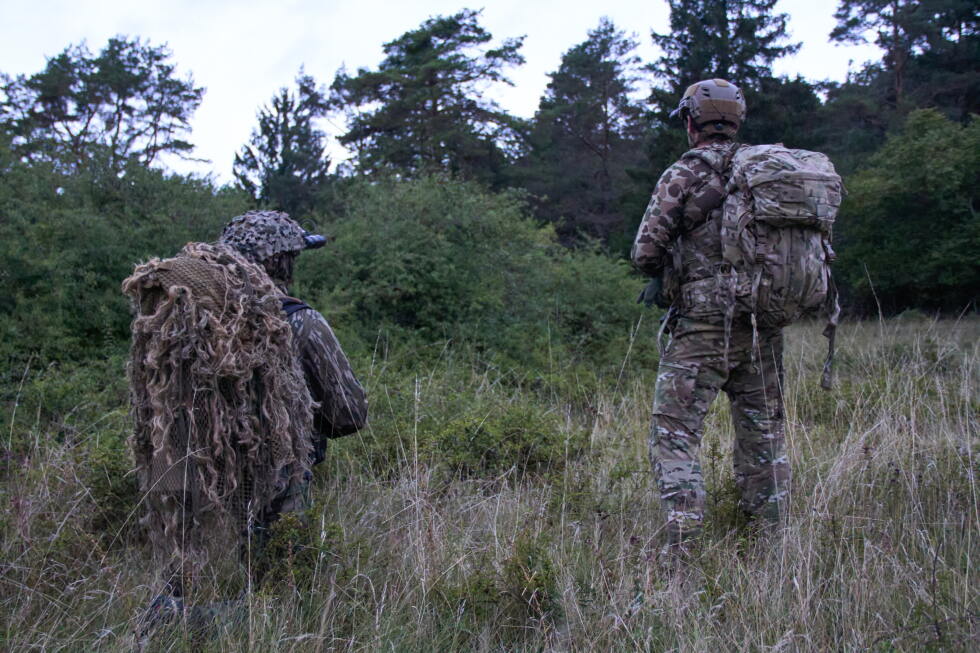
AP Exclusive: US coaches Polish forces in a drone-focused drill based on lessons from Ukraine
Deep in the Bavarian alpine countryside of southern Germany, under a rain-soaked, moonless sky, a team of Polish special forces slipped out of a dilapidated mock church structure on Friday. Silently advancing toward the distant tree line, with rugged hills rising behind them, the unit began the first ever Ukraine-inspired special operations exercise hosted by U.S. Army Green Berets for a NATO ally.
Developed just months ago and modeled directly on the real-world combat challenges Ukrainian forces have faced in their 4.5-year war against Russian invasion, the drill is designed to test elite troops’ ability to infiltrate enemy lines, cross hundreds of kilometers of contested territory, and execute a precision drone strike on a high-value enemy target. Originally created for U.S. special operations units, this exercise has only been run twice before in 2025, both times by separate Green Beret teams, making Poland’s participation a landmark step for NATO collective military training.
The Associated Press was granted rare, unrestricted access to the 3,000-square-kilometer training complex at the Joint Multinational Readiness Center Hohenfels, located roughly an hour southeast of Nuremberg. The multi-day scenario places Polish special forces against a U.S. Army airborne infantry unit cast in the role of enemy forces, which parachuted into the restricted training area to establish a fortified front line. If Polish troops successfully slip past the defensive line, they must traverse 100 kilometers of mixed terrain—including working German farms, populated villages, private and government surveillance cameras, and a mid-sized civilian town—to reach a second training site in Grafenwoehr, where they will destroy a simulated strategic target.
Every element of the drill is designed to replicate the risks of operating behind enemy lines, just as Ukrainian forces do in Russian-occupied territory. Unaware local German civilians act as an unscripted test of the special forces’ ability to blend into civilian populations: if troops are spotted and residents report suspicious activity to police, that intelligence is passed to opposing forces to track down the infiltrating team. “This is supposed to be Russia, and you’re going to stand out in Russia,” a senior enlisted special operations instructor told the AP, speaking on condition of anonymity per U.S. military policy that prohibits public identification of special forces personnel. In prior iterations of the exercise, Green Beret trainees removed their military uniforms specifically to practice blending into civilian areas without being spotted.
Opposing forces also deploy a fleet of more than 100 surveillance drones to hunt for the infiltrating team. If the Polish unit is detected, the scenario assumes that the full “Russian arsenal” would target their position, and opposing forces can dispatch canine-trained military police patrols or redirect additional drones to intercept the team, with troops marked as captured or killed if caught, just as in live combat.
U.S. instructors emphasize that every aspect of the exercise draws directly on combat lessons emerging from the war in Ukraine. “We’re using lessons learned from Ukraine,” a Green Beret officer assigned to the training complex explained. “All of those effects that we’re seeing either Russia or Ukraine having to overcome — we’re doing our best to replicate.”
The drill shines a spotlight on a growing push across U.S. and NATO military circles to adapt to modern drone warfare tactics, which have been pioneered and refined by Ukrainian forces throughout their defense against Russia. It also underscores the deepening military collaboration between the U.S., NATO allies, and Ukraine to prepare for potential future Russian aggression, even as the Trump administration’s ongoing force review for European deployments has created uncertainty around future U.S. troop levels, with repeated signals of potential drawdowns. Just this week, CIA Director John Ratcliffe traveled to Moscow to issue a formal warning to Russian leadership against any direct military attack on NATO territory, The Wall Street Journal reported.
Three Western officials, speaking anonymously Friday to discuss sensitive intelligence, confirmed that while Russian leadership seeks to avoid open direct confrontation with NATO, Moscow maintains the capability and intent to carry out large-scale sabotage and cyberattacks against NATO member states. This heightened tension has spurred growing interest across the alliance in Ukraine’s battlefield expertise. Training organizers told the AP they expect to run the exercise several times annually, and anticipate that most, if not all, of NATO’s 32 member states will request to send special forces units to train.
Interest in Ukraine’s drone warfare knowledge extends far beyond NATO: In March, Ukrainian President Volodymyr Zelenskyy confirmed that his country was already assisting five nations in the Middle East and Gulf region countering Iranian drone attacks, while multiple U.S. and European countries have also requested Ukrainian support for modernizing their own military tactics. The need for this updated training has been underscored by a recent rise in mysterious drone incursions across Europe: earlier this month, two unidentified drones were spotted over a German military base, and an explosive-laden drone was recovered at a major German cargo airport.
Despite broad consensus on the value of modern drone warfare training, the message around alliance collaboration has been muddled in recent weeks. President Trump’s repeated shifts on plans for drawing down U.S. troops in Europe have sown confusion among NATO allies, and last week the U.S. Army’s top leadership disbanded a specialized elite drone warfare unit, a move that has sparked debate among military planners.
-
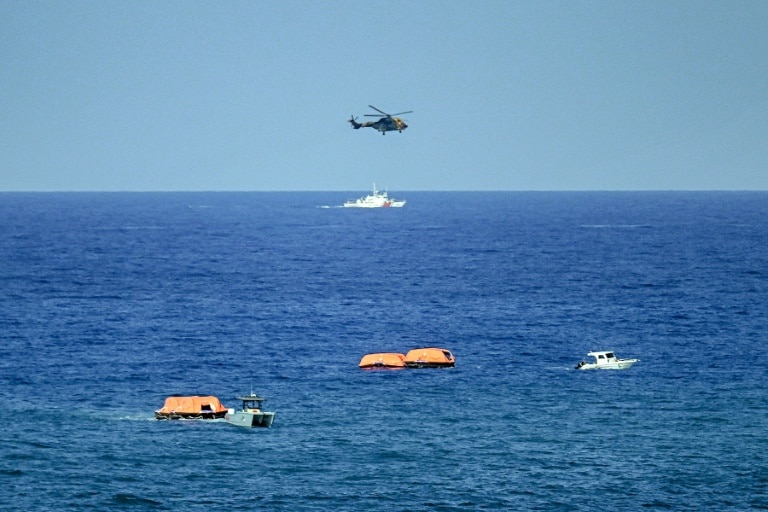
At least seven die in ferry capsize off Northern Cyprus; 23 missing
A devastating maritime disaster has unfolded off the coast of Northern Cyprus, where a passenger ferry carrying hundreds of people capsized and sank on Sunday, leaving at least seven dead and 23 others unaccounted for as multi-agency rescue teams continue search operations, local and Turkish officials have confirmed.
The ill-fated vessel departed from the Northern Cypriot port of Kyrenia (Girne in Turkish) bound for the Turkish mainland port of Tasucu, and overturned just 6.5 kilometers (four miles) from shore mere minutes after setting sail. By the evening, the ferry had settled completely on the seabed at a depth of 514 meters (1,686 feet), according to the Turkish Republic of Northern Cyprus (TRNC) Transport Minister Erhan Arikli.
Investigators have not yet confirmed the root cause of the disaster, but one rescued passenger has given a chilling firsthand account of an explosion moments before the ferry capsized. The 50-something unnamed survivor, who spent 90 minutes adrift in open water before being pulled out, told local TRNC television that a blast erupted in the bow of the vessel before it rolled over. “The front part exploded, they tried to turn around. And the side windows blew out. The boat starting taking on water,” he recalled. He added that many passengers were trapped below decks as water rushed in, and claimed the ship’s captain was among the first to abandon the vessel without coordinating an evacuation. Photographs broadcast on Turkish television showed survivors clinging to the upturned orange hull of the ferry while waiting for rescue, all wearing life vests.
Official counts confirm the ferry was carrying 267 people in total. As of the latest update, 172 people have been rescued from the water. Of those survivors, 161 have been transported to local hospitals for evaluation and treatment, while 76 have already been released and returned to their families, Arikli told Turkish public broadcaster TRT.
A large-scale rescue operation has been mobilized in response to the incident, drawing resources from both Northern Cyprus and Turkey. Private civilian boats were first on the scene to pull survivors from the water, and they have been joined by six Turkish naval vessels, a military helicopter and additional emergency response teams. Turkish Vice President Cevdet Yilmaz confirmed via the social platform X that Ankara is providing all necessary support for search and rescue efforts. “All necessary preparations are being made for a swift response from rescue and health services,” the TRNC’s health ministry said in a statement, adding that all hospitals across the territory had been placed on high alert to receive casualties.
Addressing the disaster during a public appearance on Sunday, Turkish President Recep Tayyip Erdogan said search efforts for the 23 missing people were continuing nonstop. “We hope to receive positive news from these efforts,” he added. Erdogan is scheduled to travel to Northern Cyprus on Monday for a pre-planned meeting with newly elected TRNC President Tufan Erhurmann, in what will be his first visit to the territory since 2023.
The TRNC, a self-declared independent state that controls the northern third of divided Cyprus, is recognized only by Turkey. The island has been split since 1974, when Turkish forces occupied the northern region in response to a Greek Cypriot coup backed by Athens that aimed to unite the island with Greece. Today, regular sea and air routes connect the TRNC directly to Turkey, the only country that maintains formal diplomatic relations with the territory.
-

Saved by a lunch break: Nepal floods destroyed many schools, but students at this school survived
DHADING, Nepal — When catastrophic flash floods roared through central Nepal last Wednesday, the small mountain district of Dhading stood among the hardest-hit regions. What could have been a devastating tragedy for a local school, however, turned into a story of extraordinary luck and quick thinking, as nearly all of its students escaped the rising waters unharmed.
For the group of children who survived, a routine daily break proved to be the difference between life and death. The first group of pupils had already left their classroom for lunch when the floodwaters began approaching the school grounds. Other students, still seated in their classrooms, were ushered out immediately by alert teachers who spotted the oncoming disaster, ordering pupils to abandon their personal belongings and evacuate to higher ground immediately.
“The teachers told them, ‘There is a flood, leave your bags and lunch boxes behind,’” recalled Lakshmi Shrestha, mother of one student at the school. “That quick decision is the only reason our children are alive today.”
Four days after the flood struck, Shrestha joined dozens of other grieving but relieved parents and children as they returned to the destroyed school compound on Sunday, sifting through the mud and wreckage to recover what little could be saved. Family representatives confirmed that the vast majority of the school’s students survived the disaster, a small miracle amid widespread loss of life across the country.
Walking through the destroyed campus leaves no doubt of the flood’s power. Thick layers of muddy brown and gray sediment coat every surface: wooden classroom benches, concrete walls, and waterlogged notebooks alike. The open school courtyard is completely filled with silt and debris, and dark water lines streaked across interior walls show how rapidly the floodwaters rose, reaching several meters high in mere minutes. Small mud-caked backpacks, many still strung with colorful key chains that hint at their young owners, are piled across benches and floors, waiting to be claimed by their families.
Even for parents who left empty-handed, the survival of their children outweighs any material loss. Kopila Mizar, another mother whose child escaped unharmed, could not locate her son’s backpack during Sunday’s search, but she remained upbeat about the outcome. “My son is alive, that is my biggest happiness,” she said simply.
This small school is far from the only educational institution impacted by the disaster. According to global nonprofit Save the Children, at least 69 schools across Nepal’s flood-ravaged districts have been fully destroyed or severely damaged, disrupting access to education for nearly 19,000 children. The organization warned that this number is almost certain to rise in coming days, as rescue and recovery teams reach more remote cut-off communities that have been unreachable since the floods hit.
In the immediate aftermath of the disaster, the Nepali government ordered all schools and universities across affected regions to close for three days, pausing all scheduled university examinations as well. With national weather services continuing to issue flood warnings urging communities to evacuate to higher, safer ground, it remains unclear when normal classes will be able to resume across the hardest-hit areas.
As of Sunday, Nepal’s national disaster management agency confirmed that the national death toll from the floods and accompanying landslides has climbed to 788, with an additional 2,502 people still reported missing across the country. Across the border in southern Tibet, Chinese authorities have reported 16 deaths and 546 people missing. Among the missing are hundreds of citizens from more than a dozen countries, who were in the Himalayan region for work, trekking, or pilgrimage to a sacred mountain peak. Chinese state media confirmed Sunday that 261 foreigners are currently missing in Tibet, including more than 100 Nepali citizens and dozens of people from other nations around the world.
-
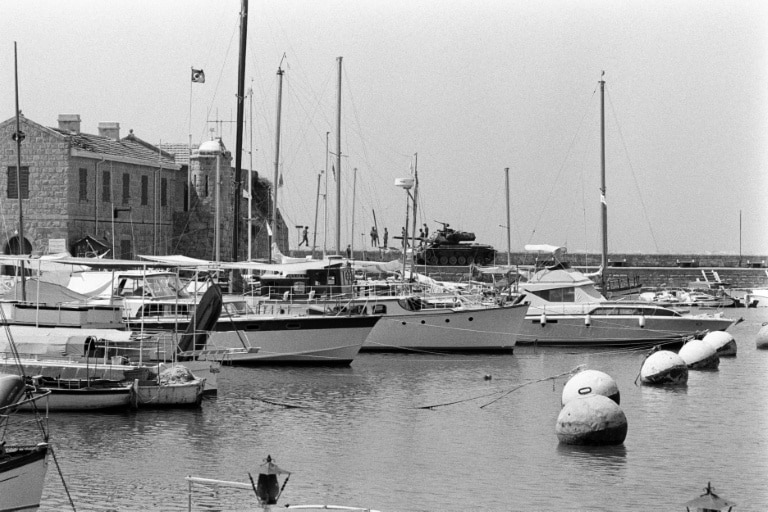
At least six die in ferry capsize off Northern Cyprus
A passenger ferry carrying hundreds of people capsized shortly after leaving the Northern Cypriot port of Kyrenia early Sunday, leaving at least six passengers dead and triggering a large-scale cross-border search and rescue operation between Turkey and the self-declared Turkish Republic of Northern Cyprus.
Preliminary casualty figures shared with Turkish media by Unal Ustel, prime minister of the TRNC, confirm six fatalities so far. Ustel told Turkey’s state-run Anadolu News Agency that the vessel was carrying 267 total passengers and crew when it overturned almost immediately after departing for the southern Turkish port of Tasucu. As of Sunday afternoon, 172 people had been pulled from the Mediterranean waters alive, with rescue teams continuing efforts to locate and evacuate the remaining people on board.
Ali Murat Basceri, Turkey’s ambassador to Nicosia, independently confirmed the deaths in an interview with Turkish public broadcaster TRT, though he declined to share a specific toll. In his remarks, Basceri noted that the large majority of the 259 recorded passengers had already been pulled from the water by rescue teams.
Footage broadcast across multiple Turkish television outlets on Sunday shows the fully overturned ferry floating off the coast, with dozens of survivors clinging to the orange inverted hull while wearing life vests. Multiple civilian and official rescue vessels were deployed to the scene, with witnesses reporting calm, sunny conditions at the time of the incident. As of Sunday, officials have not released any details on what caused the vessel to capsize.
The TRNC, a self-declared state that controls the northern third of divided Cyprus, is recognized exclusively by the international community by Turkey. The island has been split along political lines since 1974, when Turkey deployed military forces to northern Cyprus in response to a Greek nationalist coup backed by the Athens government that sought to annex the entire island to Greece. Today, regular air and sea passenger routes connect the TRNC directly to Turkey.
Local emergency authorities have activated full response protocols to handle the disaster. “All necessary preparations are being made for a swift response from rescue and health services,” the TRNC Ministry of Health said in an official statement Sunday, adding that all hospitals across the territory had been placed on high alert to receive injured survivors and provide emergency care as needed.
Turkey, which provides political, economic and logistical support to the TRNC, has mobilized its own resources to support the operation. Turkish Vice President Cevdet Yilmaz announced via the social platform X Sunday that the Turkish government was providing all necessary assistance to the search and rescue effort.
The disaster comes just one day before a planned visit by Turkish President Recep Tayyip Erdogan to the TRNC, scheduled for Monday. The trip will mark Erdogan’s first visit to the territory since 2023, and is intended to hold talks with newly elected TRNC President Tufan Erhurman, who won the territory’s presidential election last October.
-
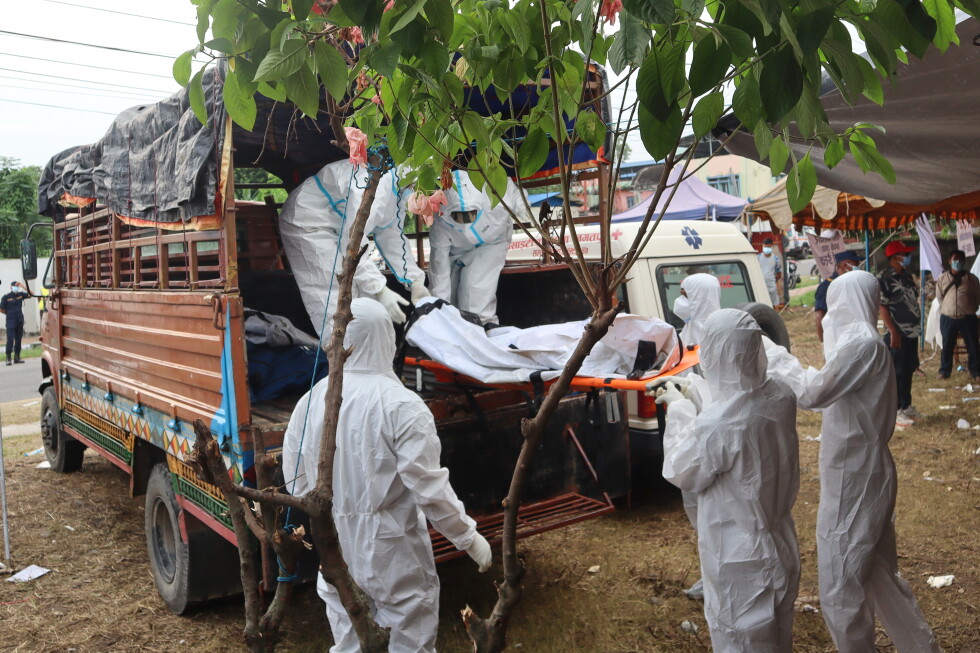
In one Nepal district, flood catastrophe is measured in bodies and burial trenches
In the wake of catastrophic flash floods and mudslides that tore through the Himalayan region earlier this week, authorities in Nepal’s south-central Chitwan district have been forced to take unprecedented action: burying hundreds of unidentifiable disaster victims in temporary communal graves, a move that has sparked fierce public debate over cultural traditions and disaster response protocols.
The disaster, which struck Wednesday, has already claimed at least 800 lives across Nepal and the Tibet Autonomous Region of China, with more than 3,000 people still unaccounted for. Many of the bodies recovered in Chitwan were swept hundreds of kilometers downstream along the Bhotekoshi River from the flood’s hardest-hit epicenter, leaving local officials overwhelmed by the sudden influx of remains. As of Saturday, around 250 bodies were still waiting for identification, and officials confirmed that roughly 100 victims had already been laid to rest in hastily dug temporary trenches in a forested area of the district, with another 50 set for burial on Sunday after DNA samples are collected.
Local law enforcement coordinating the operation say the rushed burials are a necessary response to a cascade of overlapping crises. Anil Thapa, a police inspector leading the body management effort, explained that most remains spent up to four days submerged in rushing floodwaters, and decomposition was already well advanced by the time they were recovered. Compounding this challenge, Chitwan faces severe limits to its forensic infrastructure and morgue capacity, unable to accommodate the surge of bodies brought in by the flood. Sweltering heat and high regional humidity have further sped decomposition, and public health officials have warned that leaving decomposing remains unburied poses a serious risk of infectious disease outbreaks.
The logistical challenges have been exacerbated by fresh natural hazards in the region. On Sunday, new landslides blocked the key highway connecting Nepal’s capital Kathmandu to Chitwan, just one day after the route was partially reopened. This disruption has complicated both the movement of remains into the capital and the delivery of critical relief supplies to flood-impacted communities. Across the flood zone, the scale of destruction remains visible: homes, vehicles, and farm equipment are still left half-buried in thick mud deposited by the mudslides.
The decision to proceed with temporary burials has drawn sharp criticism from local residents, families of the missing, and prominent public figures, particularly given Nepal’s status as a majority-Hindu nation where traditional custom requires cremation of the dead, often conducted on riverbanks in the presence of immediate family. Ruby Chaudhary, a local resident who is still waiting for news of two missing relatives, said authorities had no right to proceed with burials without family consent. “The dead deserve to be treated with dignity,” Chaudhary said. “Our tradition is to cremate them on the riverbank, surrounded by their immediate family.”
Former Nepali prime minister Baburam Bhattarai also joined the criticism, arguing that disposing of unidentified bodies before search and rescue operations are concluded, and without broader consultation with affected families, is inappropriate. In a social media post Saturday night, Bhattarai noted that if permanent morgue space was insufficient, authorities could have mobilized emergency resources to set up temporary cold storage facilities instead of rushing to burials.
Nepali officials have defended the measure, emphasizing that the burials are only a temporary solution, not a permanent disposition of remains. Thapa stressed that authorities have taken steps to preserve future identification: DNA samples are collected from all victims, photographs of distinguishing features are taken, other identifying details are recorded, and each body is assigned a unique reference number to allow families to claim remains at a later date. “If someone is able to verify the identity later using the available information, they can take back the body and perform the appropriate funeral rites,” Thapa explained.
Amrit Bahadur Rai, Nepal’s foreign secretary, added that the process aligns with internationally accepted disaster management standards, including protocols established by the International Committee of the Red Cross. Speaking at a press briefing in Kathmandu, Rai confirmed that once identities are confirmed through matching records, families will be permitted to exhume the remains to carry out traditional funeral rituals.
-
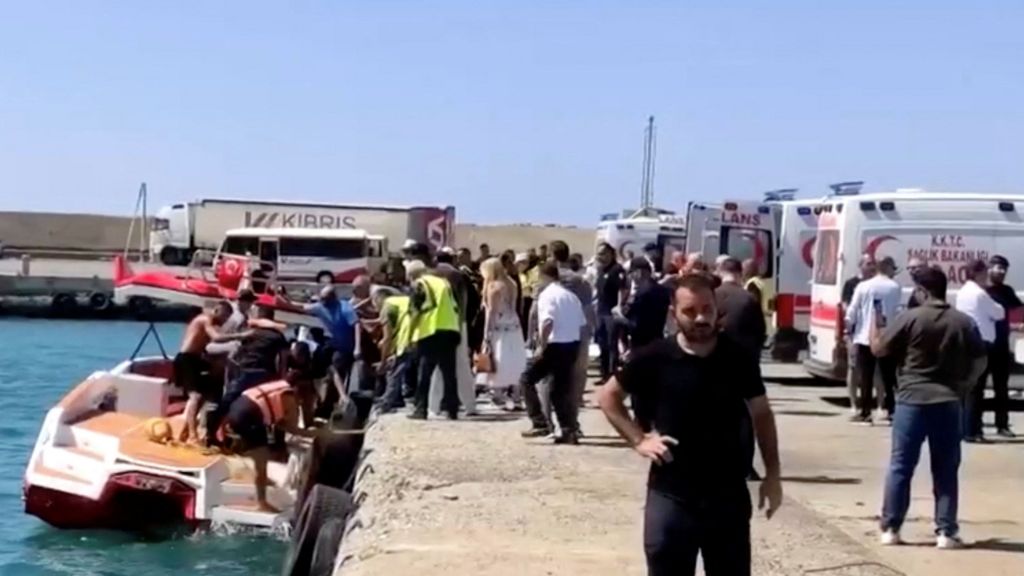
Boat carrying some 270 people capsizes off northern Cyprus – reports
A major maritime emergency is unfolding off the coast of northern Cyprus, after a passenger boat carrying approximately 270 people overturned in open water, triggering an urgent search and rescue operation, local media has confirmed.
According to Murat Senkul, mayor of the coastal Kyrenia town, rescuers have so far made contact with 159 of the passengers onboard the capsized vessel. Senkul described the ongoing incident as extremely serious, in remarks to Turkish broadcaster CNN Turk.
The boat started taking on water roughly four nautical miles from the northern Cypriot shore, local reports indicate. Footage broadcast by regional television outlets shows the ferry completely overturned in the water, with dozens of passengers clinging to the upturned hull while wearing life vests to stay afloat.
Emergency response teams have deployed multiple assets to the accident site: both military and civilian helicopters are conducting air searches, while coastguard vessels are maneuvering around the capsized hull to pull survivors from the water. On the nearby shore, ambulance teams have set up staging points to receive rescued passengers and deliver emergency medical care.
Erhan Arikli, transport minister for the self-proclaimed Turkish Republic of Northern Cyprus (TRNC), told reporters that 100 passengers have successfully been brought to land as of the latest update.
Contextually, the TRNC controls the northern third of the island of Cyprus, which has been divided into two administrative regions since a 1974 Turkish military intervention. The entity is only recognized as a sovereign state by Turkey, with no broader international endorsement.
This is an active breaking news story, and new details are expected to be released as rescue operations continue. Readers can access real-time updates via the BBC News mobile application, or by following the BBC Breaking account on X for the latest alerts.
-
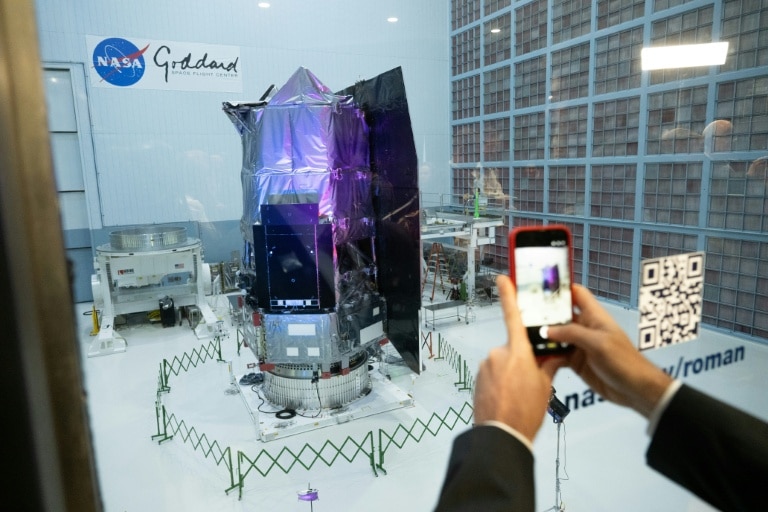
NASA launches Roman telescope on cosmic mapping mission
In a landmark moment for space exploration, NASA launched its next-generation flagship observatory, the Nancy Grace Roman Space Telescope, on Sunday from the Kennedy Space Center in Florida. Lifting off aboard a SpaceX Falcon Heavy rocket at 7:26 a.m. local time (1126 GMT), the 12-meter-tall telescope begins a multi-year mission to construct the most comprehensive map of the cosmos ever created and tackle long-standing unsolved questions in fundamental physics.
The $4 billion project, more than a decade in development, honors Nancy Grace Roman, a pioneering American astronomer widely known as the “Mother of Hubble” for her foundational work on NASA’s iconic Hubble Space Telescope. Speaking at a pre-launch ceremony at NASA’s Houston headquarters Friday, former President Donald Trump emphasized the telescope’s transformative potential, noting it will open new windows into understanding the universe’s deepest secrets.
Unlike existing space observatories, Roman boasts a revolutionary field of view more than 100 times larger than Hubble’s, and far wider than that of the James Webb Space Telescope. Positioned at a vantage point 1.5 million kilometers from Earth — a journey that will take roughly 100 days to complete — the telescope will work in tandem with other leading observatories, including Webb, to advance multiple branches of astronomical research.
Among its core science goals, Roman is tasked with discovering thousands of exoplanets outside our solar system and cataloging tens of thousands of supernovae, the violent death throes of massive stars. “It will be the biggest catalog of astronomical objects anybody’s ever produced, and it will help us understand how common solar systems like our own are,” Dave Content, Roman’s technical manager, told Agence France-Presse.
The mission’s highest-profile objective is unpacking the nature of dark matter and dark energy, two invisible phenomena that together account for roughly 95 percent of the entire universe. While dark matter is hypothesized to act as an invisible gravitational glue holding galaxies together, dark energy is the repulsive force driving the accelerating expansion of the universe. Equipped with advanced infrared capabilities, Roman can detect light that originated from celestial objects billions of years ago, effectively allowing astronomers to peer back into the universe’s earliest history and trace the evolution of these mysterious forces.
Roman’s data will also complement ongoing work by the Vera C. Rubin Observatory in Chile and the European Space Agency’s Euclid probe, and scientists say the mission could upend long-held models of cosmic evolution. Senior project scientist Julie McEnery noted that recent astronomical observations have cast doubt on the standard cosmological model that underpins modern understanding of the universe’s early expansion. “Recent observations hint that our standard model of the universe is incorrect,” she told reporters Saturday ahead of launch. “Roman will definitively say, ‘Yeah, the model works, or it doesn’t.’ And if it doesn’t, it’s going to provide us with the precision and quality of data that will allow us to start to distinguish between those options.”
All data collected by Roman will be made publicly available to scientists and casual enthusiasts worldwide, though the scale of data collection presents unique logistical challenges. The telescope will generate roughly 1.3 terabytes of new data every day, a volume too large for most personal computing devices to store or process. For McEnery, however, the massive dataset is part of the mission’s greatest promise. “I very much hope, and in fact expect, that the most exciting science from Roman will be a surprise, something we couldn’t predict, and that will set the stage for the next deeper set of questions for future missions to address,” she said.
-

At least 7 dead after ferry carrying nearly 270 passengers and crew capsizes off northern Cyprus
A maritime disaster off the northern coast of Cyprus has left at least seven people dead and 24 others unaccounted for, according to Turkish media reports of Sunday’s capsizing incident. The catamaran ferry, carrying a total of 269 passengers and crew, was en route from the port of Kyrenia (also called Girne) in the Turkish-administered northern region of ethnically split Cyprus to Tasucu, a Turkish port located in Mersin province.
Northern Cyprus Prime Minister Unal Ustel confirmed to Turkey’s state-owned TRT news outlet that 237 people have been pulled from the water alive by rescue teams. Search and rescue operations are still actively underway to locate the 24 passengers and crew who remain missing following the incident.
Per Prime Minister Ustel’s account, the vessel encountered severe, unfavorable weather conditions shortly after it departed its starting port. Just 15 minutes after leaving the dock, the ferry began taking on water, and an emergency distress call was dispatched immediately to local authorities. TRT further specified that the water intrusion began roughly 7.5 kilometers, or 4 nautical miles, off the northern Cypriot coast.
Kyrenia Mayor Murat Senkul added that the sunken vessel is owned by Turkish ferry operator Filo Denizcilik, and capsized in waters close to Diana Beach on Northern Cyprus’ coastline. Raw video footage captured from the disaster zone shows survivors clad in life vests treading water around the overturned hull of the ferry, waiting for extraction by rescue teams.
-

A British woman is fatally stabbed at a station in Germany. Police detains a suspect
BERLIN – Law enforcement officials in Germany have confirmed that a suspect has been taken into custody following a fatal knife attack that claimed the life of a 31-year-old British national early Sunday in the Bavarian town of Rosenheim.
The violent assault unfolded at Rosenheim’s central train station, where the woman was found with critical stab wounds, Rosenheim Police Department announced in a public statement. Responding medical teams immediately transported the victim to a local acute care hospital, but medical staff were unable to save her life, and she was pronounced dead shortly after arrival due to the severity of her injuries.
Immediately after the attack, local law enforcement requested backup from federal police units, who arrived at the scene rapidly and apprehended the 27-year-old suspect without further incident. Investigators have confirmed the suspect is a German citizen who resides in the neighboring county of Fürstenfeldbruck, located roughly 60 kilometers from Rosenheim.
In adherence to strict German data privacy regulations, authorities have declined to disclose the full names of both the victim and the accused. As of the latest update, the investigation remains in its active early phase, with detectives still working to piece together the full sequence of events and establish a clear motive for the deadly attack.
Investigators have issued a public appeal for information, asking any members of the public who were present at the Rosenheim train station between late Saturday night and early Sunday morning to come forward. Specifically, law enforcement is seeking details from any witnesses who may have observed a verbal dispute or physical confrontation in the station during that time frame, which could provide critical context to the attack.