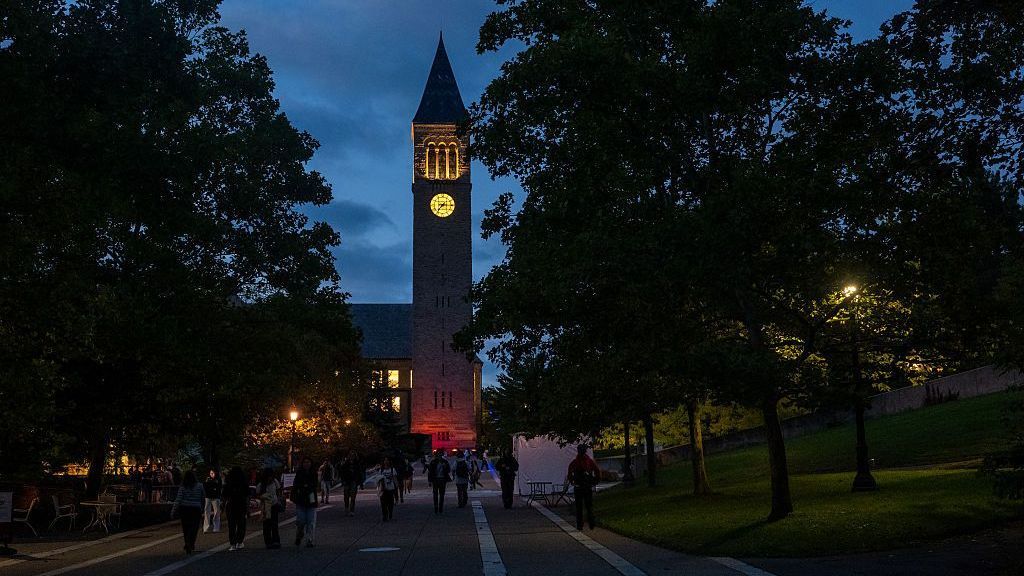
Nestled among the rolling hills of upstate New York, Cornell University’s iconic ivy-covered campus usually glows with warm autumn foliage at this time of year. For students, faculty, and alumni, however, a two-year-old alleged gang rape case has descended over the elite Ivy League institution like an unshakable dark cloud, igniting widespread outrage over the university’s handling of the incident and reigniting long-simmering debates about toxic fraternity culture on campus.
Tensions boiled over in recent weeks as the 2024 case resurfaced publicly, following a September 16 civil lawsuit filed by the accuser, known only anonymously as Jane Doe. In her legal filing, Jane Doe claims she was drugged and sexually assaulted by a group of seven men — dubbed the “Cornell Seven” — at a Chi Phi fraternity house on campus. She alleges that university leadership failed to protect her and did not deliver adequate disciplinary action against the men accused of the attack. The Chi Phi chapter at the center of the allegations was shut down in 2024 and remains permanently barred from Cornell’s campus, but students say that is far from enough accountability.
At a public student assembly held Thursday, hundreds of members of the Cornell community packed the room to vent their years-long frustration with the institution’s response. Many attendees labeled the perceived lack of transparent justice a disgrace to Cornell’s centuries-old prestige, with dozens calling for sweeping, systemic changes to how the university handles sexual assault claims. Undergraduate Sophia Riley Sim, one of the student speakers at the assembly, told the crowd that the university must prioritize student safety over its own carefully curated reputation. “We deserve to know that our institution values our safety more than its reputation,” Sim said, adding that she had been too distraught over the case’s outcome to attend classes for the entire previous week.
Freshman Eliana Dolven-Miller echoed that anger, telling reporters she felt disgusted paying tuition to an institution that she says has failed survivors of sexual violence. “There was a lot of anger in that room, I was very angry,” she said. Eeshaan Chaudhuri, chair of the student assembly, opened the meeting by affirming the campus community’s unified support for sexual violence survivors. “We don’t tolerate it here on campus, and I think I can speak for every single one of us, and I can say we’re absolutely ashamed of the events that happened on our campus,” Chaudhuri stated. The student body has advanced a formal resolution demanding that Cornell release a full public accounting of its handling of the case, including details of evidence collected and timelines for when law enforcement was notified.
University leadership has pushed back against criticism, defending its prior investigative work. Cornell officials note that the institution launched an extensive, months-long investigation immediately after receiving the initial report, and that all processes aligned with federal civil rights requirements. The university adds that its internal hearing panel issued a range of sanctions following the probe, including expulsions and suspensions for involved students. Cornell says it is legally barred from publicly disclosing specific individual disciplinary outcomes, a restriction that administrators acknowledge has fueled widespread frustration among the student body. The university has also agreed to a new independent investigation into Jane Doe’s allegations.
Shortly after Thursday’s assembly, New York Governor Kathy Hochul announced a major shift in the criminal probe: she has appointed state Attorney General Letitia James as special prosecutor to take over the case, saying she had lost confidence in Tompkins County District Attorney Matthew Van Houten, who previously led the investigation. Van Houten’s office initially closed the case after concluding evidence did not meet the threshold for criminal charges, but the office reopened the criminal probe last week in response to the new civil lawsuit, a move Cornell has publicly supported.
Across the campus, community tension remains palpable. A tenured faculty member who spoke to the BBC on condition of anonymity described the overall campus mood as dismal, noting that most staff lack specialized training to support distressed students amid the ongoing controversy. She added that the incident is far from an isolated case, and that fraternity-related problems have plagued the campus for years. Even first-year students, who only arrived on campus last month, say the case has overshadowed their excitement about starting at an Ivy League school. One first-year male student said he and his peers are deeply disturbed by what happened to Jane Doe, and that the controversy has cast a pall over their first semester.
Student organizers are already preparing for a large-scale “Justice for Survivors” protest scheduled for October 5, with flyers advertising the demonstration posted across every part of the campus. Organizers are demanding concrete action: Cornell must expel the alleged perpetrators and revoke any degrees awarded to them, rewrite the university’s sexual assault disciplinary policies, launch a full external investigation into institutional handling of the case, and mandate ongoing sexual violence prevention training for all campus police.
Alumni have also added their voices to the calls for reform, with more than 1,300 Cornell graduates signing an open letter published in the campus student newspaper that demands swift, far-reaching action. The letter challenges Cornell leadership to confront the systemic problem of sexual violence on campus, rather than shying away from reform to protect the university’s global brand. “This is not an isolated incident,” the letter warns.