分类: world

  • Russia presses its barrages of Ukraine as Trump talks of possible peace and Kyiv is emboldened

    Russia presses its barrages of Ukraine as Trump talks of possible peace and Kyiv is emboldened

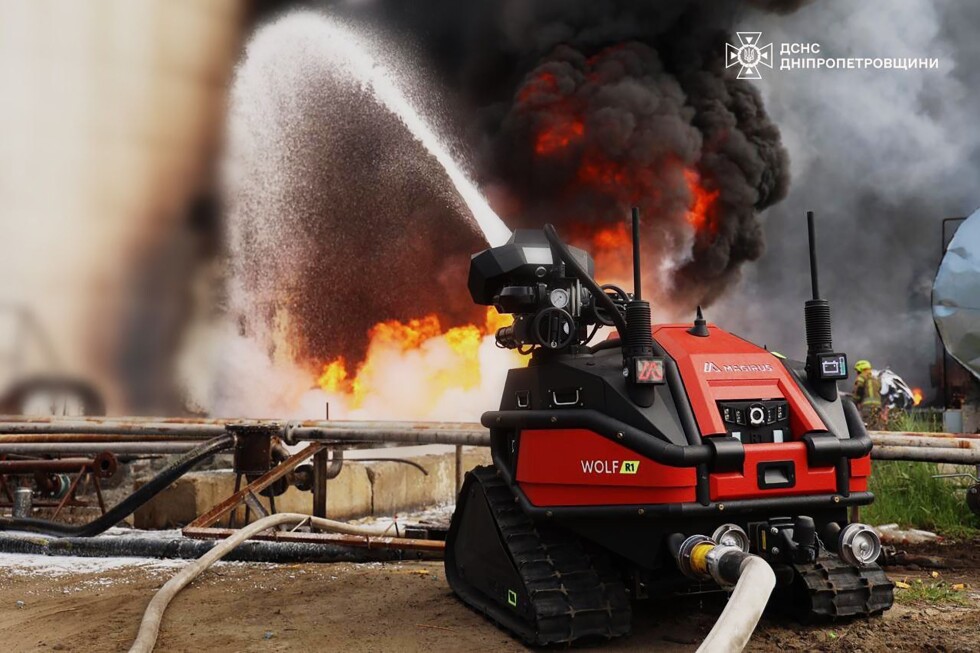
    In a fresh wave of brutal attacks on Ukraine, Russian forces launched over 100 drones across multiple Ukrainian regions on Wednesday, Ukrainian President Volodymyr Zelenskyy confirmed. The assault came just hours after an earlier barrage on civilian areas claimed the lives of at least eight people, marking another escalation in Moscow’s unrelenting campaign against its neighbor.

    Zelenskyy took to social media platform X to condemn the strikes, emphasizing that Russian forces are deliberately targeting critical civilian and infrastructure sites across the country. According to the Ukrainian leader, overnight attacks hit residential neighborhoods and railway networks in central Ukraine’s Dnipro region and northeastern Kharkiv, port facilities in the southern Odesa region, and energy installations in the central Poltava region. He added that attacks spanned 14 Ukrainian regions throughout Tuesday, underscoring the broad scope of Moscow’s current offensive.

    In his statement, Zelenskyy made a direct appeal to the international community, warning that waning global media attention on the conflict — a shift largely driven by world focus turning to escalating tensions in Iran — only emboldens Russia to intensify its aggression. “It is important to support Ukraine and not remain silent about Russia’s war. Every time the war disappears from the top of the news, it encourages Russia to become even more savage,” he said.

    The latest attacks come against a backdrop of surprising claims from both former U.S. President Donald Trump and Russian President Vladimir Putin that the nearly three-year-long conflict could be nearing an end. Speaking to reporters ahead of his departure from the White House for a Beijing summit Tuesday, Trump stated he believes Moscow and Kyiv will soon reach a negotiated settlement to end the fighting. “The end of the war in Ukraine I really think is getting very close,” Trump said. “Believe it or not, it’s getting closer.”

    Putin echoed this sentiment in a speech over the weekend, claiming his full-scale invasion of Ukraine was possibly “coming to an end.” Neither leader has provided any evidence to back up these assertions, nor has either elaborated on what factors have led them to suggest peace is on the horizon for Europe’s largest and longest conflict since World War II.

    Previous U.S.-led diplomatic efforts to broker a ceasefire and peace deal over the past year have stalled completely, failing to make progress on core sticking points that have divided the two sides since the invasion began. Key unresolved issues include Russia’s refusal to withdraw from illegally occupied Ukrainian territory and international efforts to create permanent security guarantees to deter future Russian aggression. Meanwhile, some European governments — which have spent years isolating Putin and enforcing sweeping economic sanctions on Russia in response to the invasion — are now debating whether to open direct diplomatic talks with the Kremlin.

    Despite the claims of an imminent end to the war, recent military momentum has shifted in Ukraine’s favor, according to independent defense analysts. Ukraine has built up its domestic drone manufacturing sector over the course of the conflict, and it now even shares its battlefield-proven counterattack expertise with other allied nations, after spending the early months of the war pleading for international military support.

    Ukrainian long-range drone and missile strikes have repeatedly disrupted Russian energy infrastructure and military manufacturing deep inside Russian territory, with three Russian regions confirming Ukrainian strikes on Wednesday. The Russian Defense Ministry claimed its air defense systems intercepted and destroyed 286 Ukrainian drones across western Russia, the illegally annexed Crimean Peninsula, and the Azov and Black Seas.

    Along the 780-mile front line stretching across eastern and southern Ukraine, Russia’s much larger and better-equipped army has seen its advance slow steadily every month since October 2024, according to the Washington-based Institute for the Study of War (ISW). The think tank reported that Russia’s much-vaunted 2025 spring offensive has faltered badly, with Russian forces recording a net loss of captured territory in the past month — the first time this has happened since 2024.

    “Not only are Ukrainian defensive lines holding, but Ukrainian forces have managed to contest the tactical initiative in several areas of the front line even as Russia continues to lose disproportionate amounts of manpower to achieve minimal gains,” the ISW said in a Tuesday analysis.

  • Alleged scammer extradited after  hacking attempt on BTS star

    Alleged scammer extradited after hacking attempt on BTS star

    In a high-profile cross-border cybercrime case that has drawn international attention, a 40-year-old Chinese national accused of masterminding a multi-million dollar hacking operation that counted BTS member Jungkook among its high-profile victims has been handed over to South Korean authorities following extradition from Thailand.

    South Korea’s Ministry of Justice has laid out detailed charges against the unnamed suspect, accusing him and his criminal network of stealing a total of 38 billion won, equal to approximately $25.4 million or £18.8 million, from a wide range of targets. The group’s illegal activities included breaking into digital accounts tied to both government agency websites and the personal profiles of prominent public figures, according to official allegations.

    One of the most high-profile attempted heists targeted the BTS vocalist: the hacking ring gained unauthorized access to a securities account registered under Jungkook’s name, and attempted to siphon off 8.4 billion won worth of shares the K-pop star holds in Hybe, BTS’s parent entertainment and management company. Local South Korean media outlets confirmed that the suspicious transfer was halted before it could be completed, after Hybe’s internal security team moved quickly to freeze the compromised account.

    Court and law enforcement records show the string of cyberattacks linked to the group took place over a 20-month period, running from August 2023 through April 2025. Beyond the Jungkook case, the criminal network also targeted other high-profile individuals across South Korea, including the chair of a large domestic conglomerate and the chief executive of a local venture capital firm, reporting from Agence France-Presse confirmed.

    Prior to his extradition, the suspect had been residing in Bangkok, Thailand. This is not the first extradition connected to the same hacking ring: back in August 2024, a 36-year-old Chinese national also linked to the group was extradited to South Korea from Thailand. That defendant was formally indicted in September 2024 and is currently on trial facing cybercrime and theft charges in a South Korean court.

    South Korean law enforcement officials confirmed that following the suspect’s arrival in the country, investigators will first conduct a formal interrogation and process evidence collected from across the investigation. After completing this initial phase, police announced they intend to submit an application for an arrest warrant to formally detain the suspect ahead of upcoming judicial proceedings.

  • Ghana to evacuate 300 from South Africa over anti-immigrant protests

    Ghana to evacuate 300 from South Africa over anti-immigrant protests

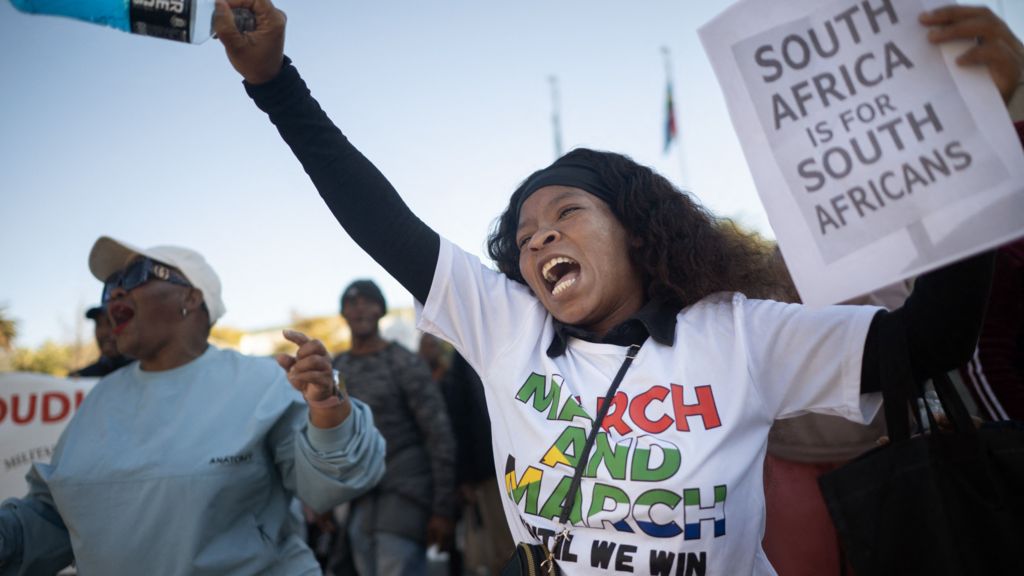
    A spreading wave of anti-foreign-national protests across major South African cities has triggered a regional diplomatic crisis, with Ghana launching an emergency evacuation plan for hundreds of its citizens trapped in the unrest.

    Ghana’s Foreign Minister Samuel Okudzeto Ablakwa announced via a post on X Tuesday that the country’s president has formally signed off on the immediate evacuation of 300 at-risk Ghanaians. All the affected, described as “distressed” by the foreign ministry, have already registered with Ghana’s Pretoria embassy to arrange for safe passage back to their home country. The evacuation follows a formal travel advisory Ghana issued last week after the latest round of xenophobic violence targeting foreign residents.

    Thousands of South African demonstrators have joined the recent protests, rallying against unregulated illegal immigration. Protesters argue that undocumented migrants have strained local access to employment, affordable housing, and contributed to rising community crime rates, amplifying long-simmering public frustration and pushing demands for mass deportations of people without legal residency.

    In response to escalating tensions, the Ghanaian embassy in Pretoria issued an updated safety warning Tuesday, urging all Ghanaian citizens in South Africa to exercise extreme caution, avoid all large public gatherings, and close all businesses in the coastal city of Durban ahead of a planned anti-immigration protest scheduled for Wednesday.

    South African officials have pushed back against widespread claims of targeted attacks, denying that any xenophobic violence has occurred in recent weeks and asserting that viral videos circulated online showing purported attacks are fabricated. In a public address Monday, South African President Cyril Ramaphosa acknowledged that recent “protests and criminal acts directed at foreign nationals” do not align with the country’s official government policy, framing the unrest as isolated criminal activity rather than coordinated, systemic hostility. Ramaphosa also reaffirmed the government’s commitment to migration regulation, border security, and consistent enforcement of national immigration laws. The South African government added that it has “nothing to hide” and condemned the spread of disinformation via fake visual content.

    The diplomatic fallout has already spread across the continent. Both Ghana and Nigeria have summoned South African diplomatic envoys in their capitals to formally protest the mistreatment and harassment of their citizens living in South Africa. Ghana has also taken the extra step of formally requesting the African Union place the issue on its agenda for discussion, arguing that the ongoing unrest poses an unacceptable “serious risk to the safety and wellbeing” of African residents in South Africa.

    Ghana is not alone in issuing warnings: Kenya, Malawi, Lesotho, and Zimbabwe have all followed suit, urging their citizens residing in South Africa to take extra safety precautions amid the unrest.

    Official demographic data puts the total foreign-born population in South Africa at more than 3 million, accounting for roughly 5% of the country’s total population. However, analysts estimate that a far larger number of undocumented migrants currently reside within South Africa’s borders, a reality that has kept anti-immigration sentiment a persistent flashpoint in national politics. Xenophobic hostility has a long history in the country, with sporadic deadly attacks on foreign nationals recorded over the past several decades.

  • ‘Short of blue-collar workers’: Ukraine’s battle for labour

    ‘Short of blue-collar workers’: Ukraine’s battle for labour

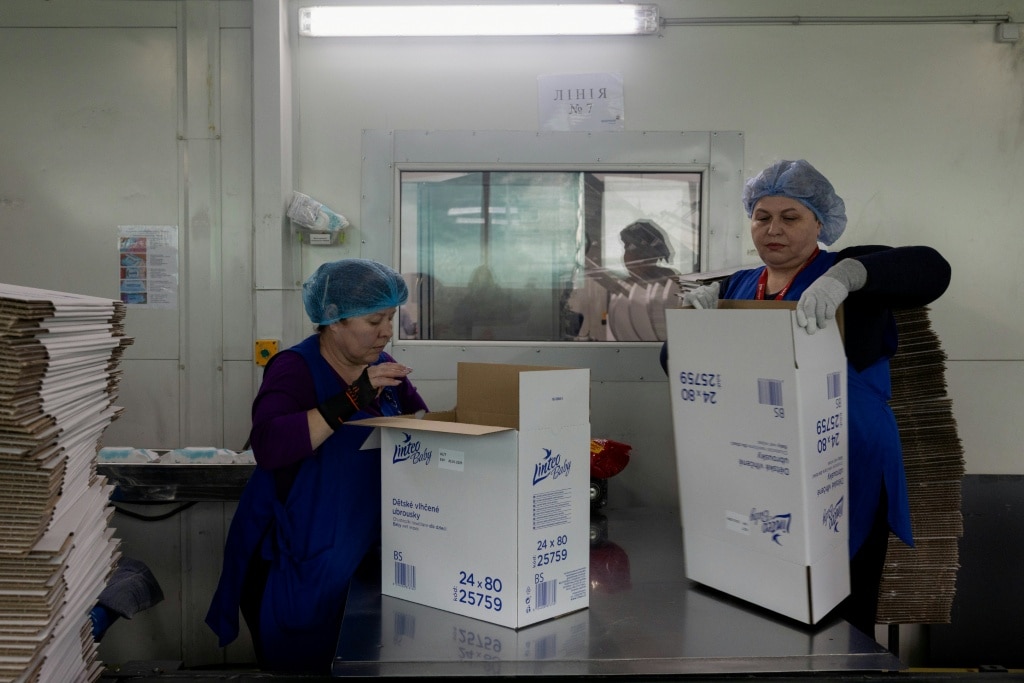
    When Anatoliy Synkov fled Russian advancing forces from the ruined city of Bakhmut and resettled in the central industrial hub of Dnipro, he encountered a rare opportunity in a war-battered economy: immediate job offers poured in from local employers desperate for staff. The 55-year-old former forester landed a position on a household goods production line at Biosphere Corporation within seven days, an unusually quick hiring process that underscores a growing, existential crisis for Ukraine’s wartime economy: severe, widespread labor shortages that have left hundreds of businesses struggling to operate.

    Even months after starting his new role, Synkov says he still receives frequent unsolicited job offers from other Ukrainian companies, even as employers have hiked wages to attract scarce candidates. The scale of Ukraine’s labor crisis is rooted in the massive population displacement and human cost of the full-scale Russian invasion, which began in 2022. Before the war, Ukraine had a population of roughly 40 million. Today, hundreds of thousands of working-age men have been drafted into military service, with tens of thousands killed or wounded in combat, while the United Nations estimates that around 5.7 million Ukrainians still remain refugees in European and other countries outside of Ukraine.

    Biosphere, one of Ukraine’s largest household goods manufacturers, has felt the labor crunch acutely — even after surviving a direct Russian missile strike on one of its Dnipro warehouses in April 2025 that killed one worker and injured 11 others, leaving a gutted, blackened structure still standing at the site. Today, the Dnipro plant employs just 500 workers, down from 800 before the 2022 invasion, according to Olena Shpitz, the facility’s human resources director. Around 100 of Biosphere’s former employees have joined the Ukrainian armed forces, and recruitment has become a constant, uphill battle.

    “The number of candidates has dropped significantly,” Shpitz explained. Positions that once took just seven days to fill now take six times that long, and the company has even rolled out employee referral bonuses, offering cash rewards to current workers who help recruit relatives to fill open roles.

    The labor shortage is not limited to civilian manufacturing. It has also hit Ukraine’s rapidly expanding military production sector, which is critical to supporting frontline forces against Russia. Kvertus, a leading Ukrainian manufacturer of anti-drone jamming systems, told AFP that critical skilled specialists are often impossible to find in sufficient quantities to meet growing military demand.

    New data from the European Business Association (EBA) underscores the scope of the crisis: at the start of 2026, 78 percent of EBA member companies operating in Ukraine reported widespread shortages of skilled workers. Economist Lyubov Yatsenko, a researcher at Ukraine’s National Institute for Strategic Studies, told AFP the war has compounded long-term demographic and structural challenges that predated the invasion, including steady population decline dating back to the collapse of the Soviet Union and a persistent mismatch between the skills taught by Ukraine’s education system and the needs of modern employers.

    The most acute gaps are for blue-collar manual labor roles, alongside public sector positions including doctors, teachers and agricultural administrators. These roles have long suffered from low pay and low social prestige, Yatsenko noted, making them even less attractive amid the upheaval of war.

    Paradoxically, crippling labor shortages coexist with double-digit unemployment in Ukraine. Official employment data is not published during wartime, but polling firm Info Sapiens estimated the national unemployment rate hit 15.5 percent in March 2026. The disconnect stems from a major skills mismatch: the market has a surplus of accountants, corporate economists and lower-level managers, but far too few trained manual workers. To bridge this gap, Yatsenko has called for expanded retraining programs and targeted policies to draw underutilized groups — including young people, refugees, war veterans and older workers — into understaffed sectors.

    Biosphere already employs 19 war veterans at its Dnipro plant, but company leaders say they need additional government support to hire more former soldiers and civilians living with war-related disabilities. Compounding the problem, tens of thousands of draft-eligible men avoid formal work entirely, either staying unemployed or working in the informal shadow economy to evade mobilization rules.

    Resolving the crisis will require sweeping reforms to Ukraine’s mobilization system, exemption policies and efforts to bring informal workers into the formal economy, a senior unnamed Ukrainian foreign economic official told AFP. “The main direction must be a more transparent and structured way to change between war service, being at the front fighting, and working in the economy very normally,” the official said. “There must be better rules to go back and forth.” Ukrainian President Volodymyr Zelensky has recently announced plans to allow limited demobilization of long-serving troops in the coming months, though no concrete details of the plan have been released to the public.

    Few Ukrainian companies are open to hiring foreign workers to fill gaps: an October 2025 poll found that only one in eight businesses consider bringing in workers from abroad, with most citing concerns over language barriers and cultural or religious differences. Instead, Ukrainian businesses are increasingly turning to women to fill empty roles, after the Kyiv government lifted restrictions on women working in a range of previously banned professions including mining. At Biosphere’s Dnipro plant, women now make up roughly half of the workforce, up from a much lower share before 2022.

    “Women are the one thing that they rely on most right now to make it more long-term and sustainable,” the senior economic official said. Even with this shift, challenges remain: of the 3.7 million internally displaced people across Ukraine, many are unable to join the workforce due to war-related trauma or skills that do not match the needs of local labor markets in their new host regions.

    For Synkov, the transition from life in Bakhmut to work in Dnipro was not easy. He says it took two full years to process the trauma of being forced to flee his home. But today, he remains pragmatic about his future in wartime Ukraine: “You have to live.”

  • ‘Not my son’s fault’: The women bearing the children of Sudan’s war rapes

    ‘Not my son’s fault’: The women bearing the children of Sudan’s war rapes

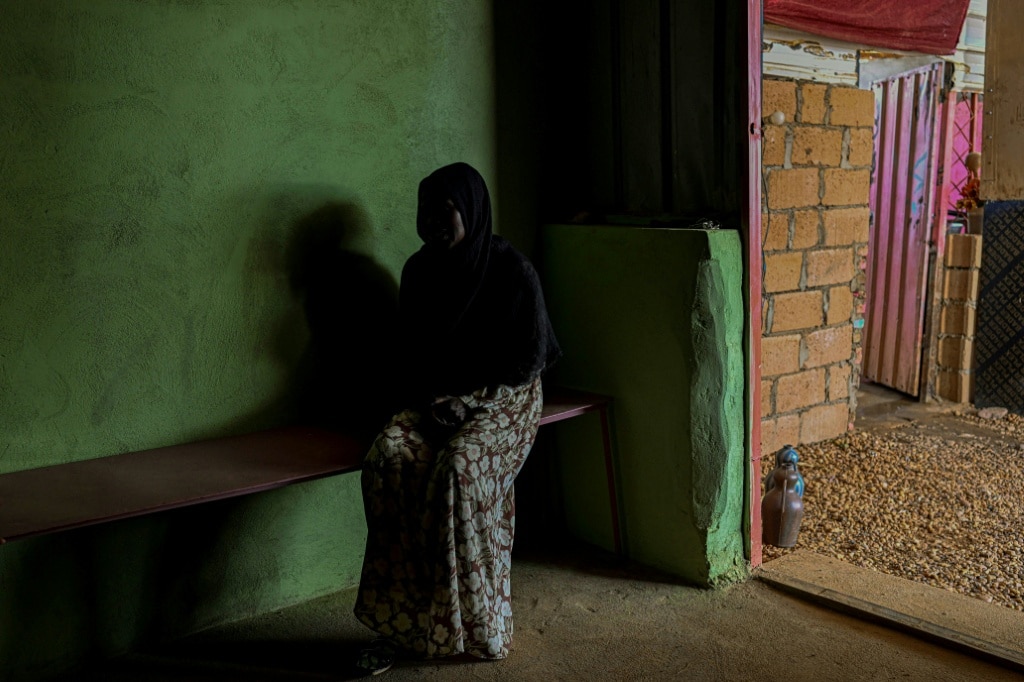
    Two years after a brutal gang rape at the hands of Rapid Support Forces (RSF) paramilitaries in Sudan’s capital Khartoum, 26-year-old university graduate Nesma watches 13-month-old Yasser bounce on her lap. The toddler bears his mother’s smile and curious eyes, no trace visible of the three fighters who attacked her, and Nesma says he bears no blame for the violence that brought him into the world. “It’s not my son’s fault, just like it is not mine,” she says. “I couldn’t handle the thought of him going through pain, or ending up in a bad home.”

    Nesma’s story is far from unique. Yasser is one of thousands of children born to survivors of systematic sexual violence amid three years of brutal civil conflict between Sudan’s national army and the RSF. The fighting, which broke out in April 2023, has seen sexual violence deployed as a deliberate weapon of war, according to United Nations officials and rights experts.

    Nesma had fled Khartoum with her family early in the conflict, but returned a year in to recover critical identity documents the family needed to restart their lives in exile. RSF fighters stopped her bus in an industrial district of Khartoum North, separated passengers by gender, and gang-raped her. She passed out during the attack, and woke at dawn to find a male fellow passenger shot dead beside the road. Only five months after the assault did she realize she was pregnant, and she debated aborting or putting Yasser up for adoption until the eve of her caesarean section. Ultimately, she could not bring herself to let him go.

    UN experts have long documented the RSF’s systematic use of sexual violence as a tool to subjugate, displace, and ethnically dominate communities across Sudan. “Rape is being used as a weapon of war, dominance, destruction and genocide in Sudan to destroy the fabric of society and change its makeup,” Reem Alsalem, the UN special rapporteur on violence against women and girls, told AFP.

    UN officials estimate thousands of sexual assault cases across the country, with the vast majority never reported due to deep social stigma in Sudan’s conservative communities. In just one town in Darfur, hundreds of raped girls have never accessed medical care, and most are carrying pregnancies resulting from assault, said Denise Brown, the UN’s top humanitarian official in Sudan. Many survivors face double injustice: they are abandoned by their families, divorced by husbands, and even accused of colluding with the RSF, effectively revictimizing women who bear no responsibility for their attacks.

    In the Tawila refugee camp in Darfur, 20-year-old Hayat shares her own story, rocking her four-month-old son to sleep in a straw shelter. She was raped while fleeing the RSF’s 2024 capture of the larger Zamzam refugee camp, where the paramilitary group killed more than 1,000 displaced people and carried out a systematic ethnic campaign of rape targeting non-Arab communities. RSF fighters have even publicly posted videos claiming that raping women from rival ethnic groups “honours” their own bloodline.

    The use of sexual violence in Sudan has deep roots: decades ago, the Janjaweed militias that preceded the RSF carried out mass rape as part of their ethnic cleansing campaign in Darfur in the 2000s, a strategy the RSF has revived and expanded in the current war. Twenty-three-year-old Halima, a survivor of three separate rapes since 2000s, was only able to avoid a third pregnancy from assault thanks to emergency contraception provided by camp medical workers. In Tawila, AFP met dozens of survivors who fell pregnant while fleeing the RSF’s October 2024 capture of El Fasher, the capital of North Darfur, where the paramilitary killed at least 6,000 civilians in three days. Seventeen-year-old Rawia watched fighters kill half of her fleeing group before she was gang-raped, and is now five months pregnant. Twenty-five-year-old Alia was held captive for six weeks before escaping, and suffered a miscarriage after her assault. Twenty-two-year-old Magda lost her husband to a rocket attack and her brother to an execution on the road to Tawila, and has chosen to carry her pregnancy to term: “If I lose this baby, it will be another thing for me to grieve. But if he lives, it’s fate, I’ll raise him.”

    Not all survivors can or will carry their pregnancies to term. Many attempt unsafe, unregulated abortions to end pregnancies from rape, leading to life-threatening complications. Gloria Endreo, a midwife working with Doctors Without Borders in Tawila, says she has treated hundreds of survivors in just two months, many pregnant after assault. “Some of them who gave birth, in spite of themselves, have that resentment and disconnection. They can’t show their babies love or attention. And then these women are forced to raise this child, a constant reminder of what happened to her.”

    Sexual violence is not limited to the RSF: the UN has warned that assaults on detained women by Sudanese army soldiers are drastically underreported due to fear of retaliation. But observers say the scale and deliberate strategy of the RSF’s campaign is unmatched. “The RSF rapes to subjugate society, to displace and dominate; army soldiers rape because they know they’ll get away with it,” one anonymous activist told AFP.

    In Khartoum, 30-year-old Fayha – a survivor of rape by a civilian assisted by an off-duty army soldier – says she now must “be both mother and father” to her five-month-old son. She only discovered her pregnancy in her third trimester, and has struggled with maternal anxiety, though she has recently begun to develop stronger maternal bonds. Like many survivors, Fayha and Nesma face overwhelming bureaucratic barriers: most struggle to obtain birth certificates for their children, a document required to access healthcare, education, and all basic social services. While Sudanese law has emergency procedures in place to issue these documents, the collapse of state bureaucracy and persistent social stigma leave thousands of children effectively stateless.

    In Al-Jazira state, southeast of Khartoum, the trauma of RSF sexual violence runs particularly deep. The paramilitary explicitly targeted lighter-skinned girls from non-Arab ethnic groups, treating them as “trophies or spoils of war”, according to the women’s rights coalition SIHA. After the army recaptured most of central Al-Jazira in 2024, the government relaxed abortion restrictions to help survivors, but bureaucratic requirements and stigma meant most women could not access the procedure. One local volunteer says she helped 26 women access unsafe abortions, most after taking unregulated dangerous drugs without medical supervision.

    For those forced to carry pregnancies to term, rejection is common. Sudanese social affairs minister Sulaima Ishaq al-Khalifa recalls the case of a 16-year-old survivor in Al-Jazira, whose grandmother snatched the newborn immediately after birth and handed him to aid workers, saying “We’re not taking this RSF baby home.” The teen mother never held her son, who was ultimately placed with a foster family. Dozens of other women are still held captive by retreating RSF forces in Darfur, after being forcibly married to fighters and their families could not pay ransoms to free them.

    Still, there are small glimmers of hope. Displacement caused by the war has ironically helped some survivors avoid stigma: many families have been able to pass children born of rape off as adopted war orphans or extra siblings, since they no longer live near neighbours who knew their story. Informal adoption is a longstanding tradition in parts of Sudan, and thousands of abandoned children have been placed with loving families, though UN experts warn that most informal adoptions lack follow-up or vetting to ensure children are safe.

    For Nesma, the future remains uncertain, but her focus is fixed firmly on giving Yasser the life he deserves. She is searching for a stable well-paid job that will let her raise him safely, and watches proudly as he takes his first unassisted steps. “He deserves a good life,” she says, holding his small hands as he explores.

  • New York Times article details brutal rape of Palestinians. Israel calls it ‘blood libel’

    New York Times article details brutal rape of Palestinians. Israel calls it ‘blood libel’

    A bombshell opinion piece from veteran Pulitzer Prize-winning New York Times columnist Nicholas Kristof has upended global discourse around the Israel-Palestine conflict, laying bare harrowing firsthand testimonies of widespread sexual violence perpetrated by Israeli soldiers and settlers against Palestinian detainees. The publication has triggered an immediate, fierce backlash from the Israeli government, which has labeled the reporting a baseless “blood libel” and accused the outlet of advancing an anti-Israel agenda.

    In his landmark column published Monday, Kristof details graphic accounts of abuse: one Palestinian journalist, 46-year-old Sami al-Sai, described being assaulted by both male and female Israeli soldiers who sexually violated him with rubber batons, grabbed his genitals with brutal force until he screamed in agony, and filmed the attack. Other survivors shared equally chilling testimonies: one woman recalled being repeatedly stripped and beaten by multiple groups of soldiers, saying she lost consciousness so often she cannot confirm whether she was also raped, a common gap in documentation given the deep stigma around sexual violence in conservative Palestinian society.

    Kristof emphasizes that while few victims agreed to be named out of fear and cultural taboo, their overlapping accounts form a clear pattern of systematic abuse. He notes that decades of state-sponsored dehumanization of Palestinians has created conditions where such violence can thrive, and that the true scale of abuse is almost certainly far higher than documented, as many survivors never come forward. This stigma is particularly acute for male survivors, who face additional pressure to stay silent to protect their family’s reputation.

    Crucially, this reporting is not entirely new. A full month before Kristof’s column, the West Bank Protection Consortium published a report documenting at least 16 separate cases of sexual crimes committed by Israeli soldiers and settlers amid forcible displacement in the West Bank. Earlier this year, United Nations Special Rapporteur on Palestinian human rights Francesca Albanese told the UN Human Rights Council that Israel’s prison system has become a “laboratory of calculated cruelty,” where inmates are raped with objects including bottles, metal rods and knives. What makes Kristof’s work unprecedented is that it is the first in-depth look at this issue published by a major legacy Western media outlet like the New York Times, which has a long history of sidelining and questioning Palestinian narratives of abuse.

    The Israeli government moved swiftly to condemn the publication. In a series of posts on X, the Israeli Foreign Ministry called the column one of the worst modern examples of blood libel, accusing Kristof of inverting reality by framing Israel as a perpetrator of violence when, the ministry claims, Hamas committed widespread sexual violence against Israeli citizens during the October 7, 2023 attacks. The ministry added that the publication is a deliberate part of an organized anti-Israel campaign, and vowed to “fight these lies with the truth.” The government also pointed to a recent report on alleged Hamas sexual violence that the New York Times declined to publish, which was instead picked up by CNN and endorsed by former U.S. Secretary of State Hillary Clinton. The ministry argued that this rejection, paired with Kristof’s publication, exposes the outlet’s clear anti-Israel bias.

    Critics have also raised questions about why the investigation was run in the Times’ opinion section rather than its hard news section, which adheres to different editorial standards. Kristof pushed back on this criticism, noting that opinion journalism centered on original on-the-ground reporting has long been his practice as a columnist. Even so, the placement failed to satisfy many of Kristof’s more than 1.2 million followers on X, regardless of their stance on the conflict.

    A further controversy emerged when former Israeli news personality David Shuster claimed on X that the New York Times was internally debating removing the column over its “problematic” content. The paper’s public relations team quickly refuted the claim, issuing a firm statement defending both the reporting and Kristof’s decades-long track record covering sexual violence as a two-time Pulitzer Prize winner.

    In his own social media responses to critics, Kristof challenged opponents to allow independent monitoring of Palestinian detention facilities, writing: “For skeptics, why not agree on Red Cross and lawyer visits for the 9,000 Palestinian ‘security’ prisoners? If you think these abuse allegations are false, such monitoring visits would be protective. So why not?” The Israeli government has refused to grant the International Committee of the Red Cross access to Palestinian detainees for years.

    Kristof also argued that the United States is complicit in these abuses, noting that American tax dollars fund and subsidize the Israeli security establishment. He called on the U.S. government to condition military aid to Israel on an end to the abuse of detainees, and urged U.S. Ambassador to Israel Mike Huckabee, an avowed Zionist, to meet with survivors and ensure that those who spoke out for the column do not face retaliation for their courage.

    Notably, Kristof did include mention of allegations of sexual violence by Hamas during the October 7 attacks at the opening of his column, a context the Israeli Foreign Ministry omitted from its condemnation. The organization that first brought those Hamas allegations to global media later withdrew its claims, casting significant uncertainty over their veracity.

  • Mossad chief opposes Netanyahu’s successor pick: Israeli press review

    Mossad chief opposes Netanyahu’s successor pick: Israeli press review

    A series of contentious developments emerged from Israel this week, spanning intelligence leadership, national aviation infrastructure, international cultural participation, and occupied territory policy, drawing sharp criticism and urgent warnings from across sectors.

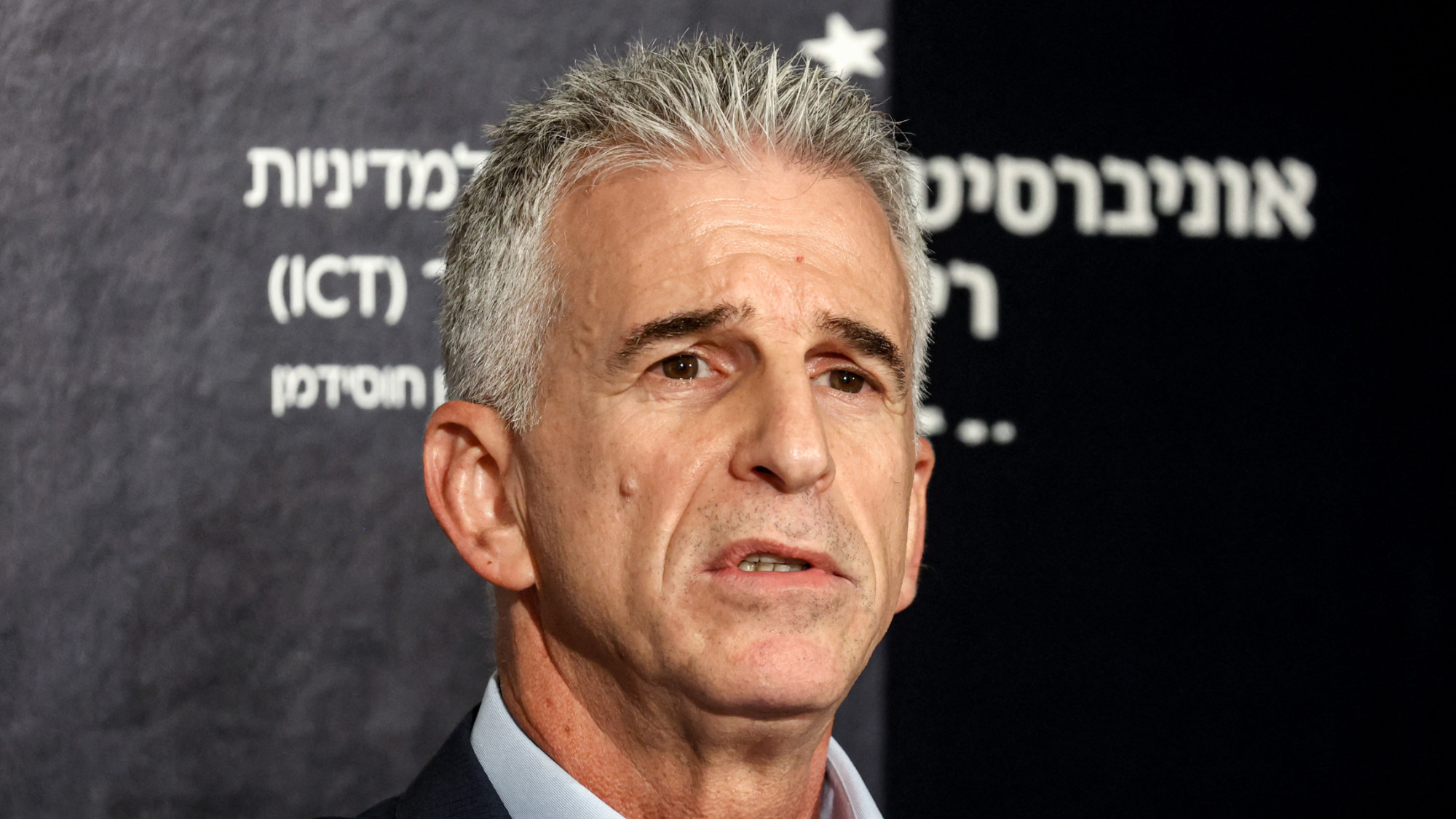
    First, outgoing Mossad Director David Barnea has delivered a formal rebuke of Prime Minister Benjamin Netanyahu’s pick to replace him, Roman Gofman, arguing the nominee is categorically unfit to lead the country’s premier intelligence agency. In a four-page legal brief submitted to Israel’s Supreme Court ahead of a Tuesday hearing on the legality of Gofman’s appointment, Barnea laid out damning claims about Gofman’s ethical conduct. The nomination, announced last month, immediately ignited public backlash, as Gofman – currently Netanyahu’s military secretary – stands accused of exploiting a 17-year-old Israeli citizen for an intelligence operation. After the teenager was arrested by hostile forces during the mission, Gofman allegedly abandoned and disowned the operative. Citing this incident, Barnea wrote that Gofman “does not meet the standards of integrity required for this role” and warned his leadership would put all Mossad personnel at grave risk. Barnea emphasized that the role of Mossad chief demands uncompromising personal ethics, and Gofman’s history of poor judgment reveals a persistent character flaw that could cause irreversible damage to the agency. “Within an organization that operates outside regular legal constraints and public oversight – a structure unique among Western intelligence services – such a flaw poses unacceptable risk,” Barnea added.

    Separately, a senior Israeli aviation official has issued a stark warning that the country’s primary international gateway, Ben Gurion Airport, has been effectively converted into an auxiliary American military base since the outbreak of the war with Iran, with severe consequences for civilian travel and the national economy. In a formal letter addressed to Transport Minister Miri Regev, Israel Civil Aviation Authority Director-General Shmuel Zakay warned that the facility now operates largely as a military airfield, with only minimal civilian air activity remaining. Zakay warned that unless the overcrowding from U.S. military deployments is addressed immediately, Israeli travelers will face sustained, sharp increases in flight costs. He added that Israel’s defense establishment has consistently failed to grasp the severity of the crisis, noting that “under the current circumstances, the State of Israel has no international airport capable of operating efficiently.” Business daily Calcalist, which first reported the letter, noted the problem is compounded by war-driven spikes in aviation fuel costs, and the fact that Israeli commercial carriers have been forced to park dozens of civilian aircraft at foreign airports to free up space for U.S. military jets, adding millions in extra operational costs. Last month, Calcalist reported that offsite aircraft parking alone has cost Israeli airlines more than 60 million shekels in recent months. Only after weeks of pressure from the Transport Ministry did U.S. and Israeli officials agree to reposition just 12 U.S. military aircraft out of Ben Gurion. Data from Israeli business publication TheMarker underscores the scale of the crisis: just 24 airlines currently operate regular service to Israel, with three domestic carriers accounting for 89% of all airport traffic in April 2024. Total passenger volume plummeted 74% compared to the same period last year.

    In a separate development related to international cultural participation, the European Broadcasting Union (EBU) has held internal discussions about reassigning Israel from the main Eurovision Song Contest to the newly launched Eurovision Asia competition, Israeli news outlet Ynet reported Monday. According to sources familiar with the talks, the EBU has already surveyed current and prospective participating countries in the upcoming Asian contest to gauge how they would react to Israel’s inclusion in the lineup. The proposal has already faced “partial opposition” from a number of Asian participating nations, including several Muslim-majority countries that are set to take part in the inaugural event. Eurovision Asia will hold its first edition in Bangkok this November, with 10 competing countries confirmed so far – including Malaysia and Bangladesh, both of which have no diplomatic relations with Israel. Ynet reports that Israeli officials have not yet been formally notified of the proposal, which would ultimately require Israel’s consent to move forward. A source close to the discussions told Ynet that “Israel is geographically located in Asia, which is why the issue was examined,” adding that “no final decisions have been made yet, but this option is actively on the table.” Israel’s participation in the 2024 main Eurovision contest has already sparked massive global controversy over Israel’s military campaign in Gaza, with five participating countries – the Netherlands, Spain, Slovenia, Ireland and Iceland – announcing full boycotts of this year’s event in protest.

    Finally, the Israeli parliament has advanced controversial legislation that would create a new state-run antiquities authority with full jurisdiction over all archaeological and heritage sites across the occupied West Bank. Israeli newspaper Haaretz reported Tuesday that the bill passed its preliminary parliamentary vote and will now move to the Knesset committee stage for further debate and amendments. If passed, the new body would take full control of all heritage, archaeology and antiquity matters from the Israeli army’s Civil Administration, which currently manages the sector in the occupied territory. The authority would gain powers to approve and conduct excavations, manage heritage sites, oversee all archaeological work, and enforce relevant laws across the entire West Bank – including Areas A and B, which are nominally under the administrative control of the Palestinian Authority. The legislation frames its purpose as streamlining management, reducing unregulated looting and damage to archaeological sites, and establishing direct state responsibility for heritage sites in what Israel refers to as Judea and Samaria. However, Emek Shaveh, an Israeli non-governmental organization that advocates for fair cultural heritage rights, has harshly condemned the bill, arguing it does nothing to protect antiquities and instead weaponizes cultural heritage as a tool of policy against the Palestinian population to advance Israel’s de facto annexation of the West Bank. In testimony to the Knesset earlier this year, the group warned the law puts Palestinian communities located near archaeological sites at direct risk of displacement and seizure, and that expanded state oversight of heritage sites “opens the door wide to the advancement of racist and destructive policies.” Emek Shaveh also emphasized that the legislation violates international law, existing diplomatic agreements Israel is a signatory to, and global professional ethical standards for archaeological management.

  • ‘Cultural genocide’: Palestinian musicians urge Eurovision boycott over Israel’s inclusion

    ‘Cultural genocide’: Palestinian musicians urge Eurovision boycott over Israel’s inclusion

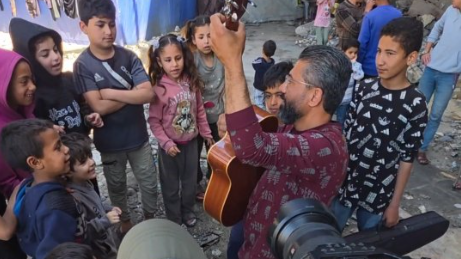
    As the first semi-finals of the 2026 Eurovision Song Contest kicked off, Palestinian artists from the besieged Gaza Strip and the occupied West Bank launched a coordinated call for a widespread boycott of the global competition, condemning its decision to allow Israel’s participation amid ongoing military operations that have devastated Palestinian communities. Spearheaded under the campaign banner #VoteJustice4Palestine, the movement calls on boycotters to amplify *The Drone Song* online, a viral work recorded by Gaza-based musician Ahmed Abu Amsha that has become an unofficial anthem of Palestinian cultural resilience.

  • Iranian press review: Unexploded US Tomahawks used to develop missile technology

    Iranian press review: Unexploded US Tomahawks used to develop missile technology

    In the aftermath of the 40-day US-Israeli war on Iran, four interconnected developments have emerged from inside the country, painting a complex picture of military adaptation, domestic unrest, political division, and regional strategic risk, according to an Iranian press review compiled by Middle East Eye. None of the reporting included in this digest has been independently verified by MEE.

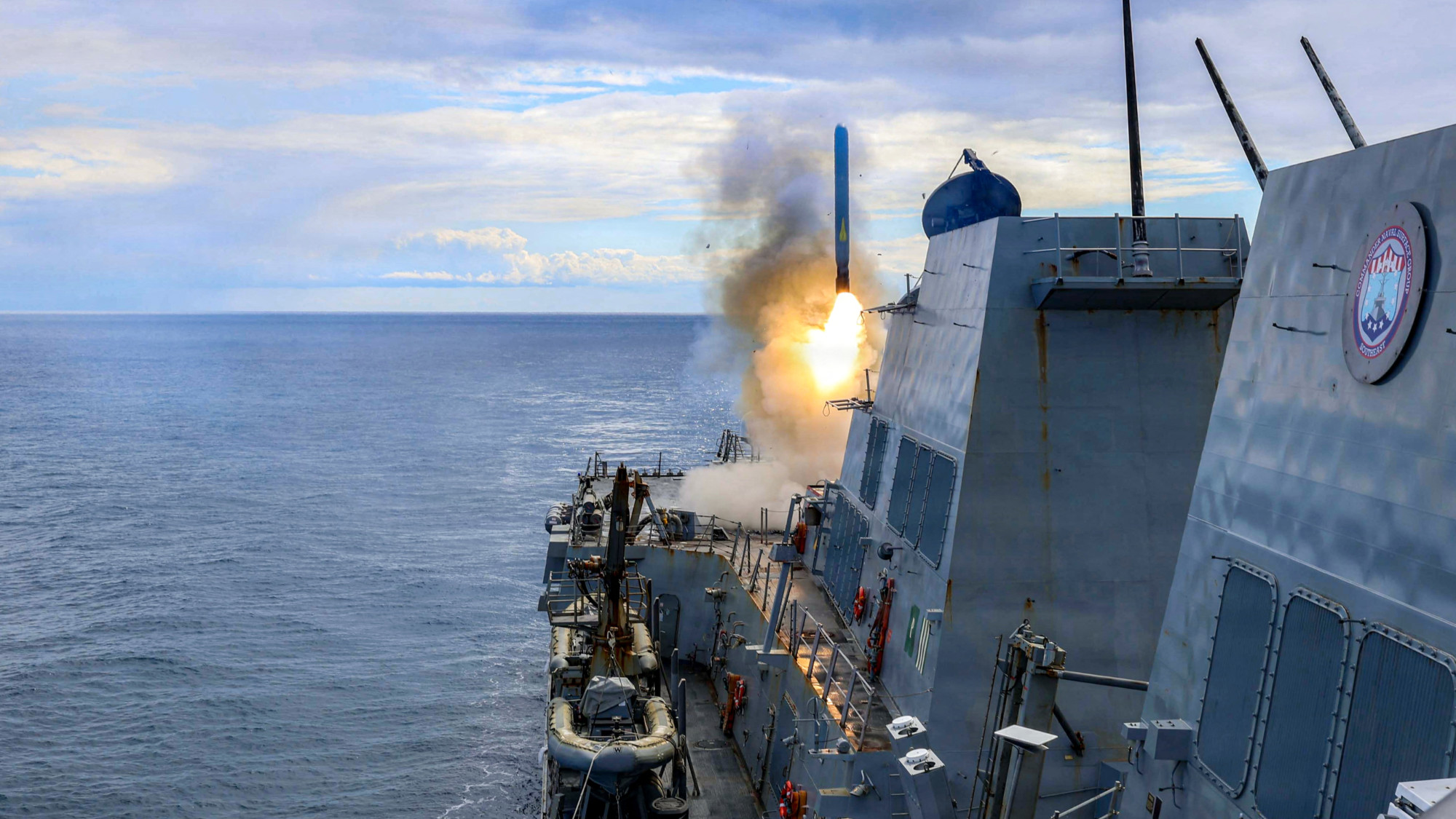
    First, Iran’s military is working to reverse-engineer captured US-made Tomahawk missiles to replicate their advanced technology, Iran’s semi-official Mehr News Agency has claimed. The report states that multiple Tomahawk missiles fired during the war were either intercepted and downed by Iranian air defenses or failed to detonate on impact, leaving large portions of the weapons intact for analysis. Mehr added that some missiles failed to explode either due to faulty detonator systems or because Iranian electronic warfare units disrupted their guidance and detonation mechanisms. Iranian military engineers are now studying these intact components to develop the country’s own indigenous long-range missile systems. “In the 40-day war, Iran’s strategy switched to gaining knowledge from the battlefield. Every Tomahawk missile that landed and did not explode was an advanced textbook for Iranian engineers,” the agency reported. While Mehr’s claim has not been confirmed by independent third-party sources, Iranian officials have previously confirmed that they recovered and neutralized dozens of unused American and Israeli munitions in the weeks after a ceasefire took effect on April 7. On the final day of the conflict, Iran’s ILNA news agency released a public photograph of an unexploded missile that struck a section of Tehran’s iconic Grand Bazaar, identifying the weapon as a US-built Tomahawk. This approach to weapons development is not new for Iran: the country has been locked out of international arms markets under sweeping global sanctions since 1979, and for decades it has relied on reverse-engineering captured foreign weapons to build its domestic missile and drone programs.

    Second, conflicting official statements have left thousands of Iranians displaced by US-Israeli airstrikes on Tehran uncertain about their long-term temporary housing. When the war first began, Tehran’s municipal government announced that any resident whose home was destroyed or rendered uninhabitable in attacks would be offered free accommodation in city-owned hotels until they could rebuild or secure permanent new housing. But on Saturday, Iran’s reformist Etemad daily newspaper reported that dozens of displaced households currently staying in capital city hotels had already received eviction notices ordering them to leave by the end of the week. One displaced resident, whose apartment suffered catastrophic damage in an airstrike explosion, told the outlet that they had nowhere else to go. “The fire department and the Red Crescent say my house is uninhabitable. Even if it was not destroyed, there are no stairs left in the building for me to reach my apartment,” the resident said. A day after Etemad published its report, Tehran Municipality spokesperson Abdolmotahar Mohammadkhani released a corrective statement saying displaced residents should reach out directly to municipal authorities to have their individual cases resolved. Mohammadkhani confirmed that the city has already housed 6,677 displaced people across 45 hotels and municipal housing complexes, and stressed that “as long as their housing problems are not solved, the municipality will cover all accommodation costs.”

    Third, a prominent jailed Iranian reformist political philosopher has publicly called on Iran’s hardline government to pursue national reconciliation with the Iranian public and end open conflict with the United States and Israel. Mohammad Reza Tajik, a leading reformist figure who was detained during the 2009 Green Movement anti-government protests, published the commentary on Jamaran, a website aligned with the grandson of Ruhollah Khomeini, Iran’s first supreme leader. Tajik, a longstanding public critic of the government’s violent crackdown on political opposition, argued that ruling officials must address both widespread domestic public discontent and mounting international pressure to make adaptive policy choices in the post-war period. “It is only in the light of practical reason that one can discern what, in the present conditions, is to be done and what is to be left undone; and in this darkness of the world’s night, it becomes clear which is the path and which is the path astray,” he wrote. Tajik pointed to the deep public anger that followed the government’s bloody crackdown on nationwide anti-establishment protests in January, saying that ruling leaders must demonstrate a clear willingness to reform to restore public trust. “Through clear signs of a will to change, and a turning away from what has left so many citizens feeling dissatisfied, powerless, alienated, abandoned and without effect, these many [must] be given hope for the coming of that day of joy when they will be reconciled,” he added.

    Finally, two recent high-profile developments involving the United Arab Emirates – the public exposure of secret military cooperation with Israel and Abu Dhabi’s withdrawal from OPEC – have sparked widespread speculation across Iranian political circles about the Gulf state’s future role in regional tensions. Iranian political analysts have focused heavily on how these moves signal a shift in the UAE’s long-term regional strategic posture. Writing in the reformist daily Shargh, Iranian analyst Mehdi Bazargan pointed to recent statements by US officials that downplayed reported Iranian attacks on the UAE that took place on May 4 and 5, arguing that the comments signal Washington may be stepping back from its security commitments to Abu Dhabi. Bazargan argued that after observing the trajectory of the recent US-Israeli war and the level of consistent US military backing for Israel, the UAE may choose to deepen its military alignment with Tel Aviv. “Trump’s words show that Washington is not currently willing to go to war with Iran again at the expense of the security of the Emiratis,” Bazargan wrote. “Even if some actors like Israel can push him towards a new escalation of tension with Iran, the end result will be nothing but the formation of a ‘scorched earth’ in the UAE.” The analyst also criticized the 2020 Abraham Accords, which normalized diplomatic relations between the UAE and Israel, calling it a fundamental strategic mistake. The agreement, he argued, was built on the incorrect assumption that the US and Israel could guarantee the UAE’s security against Iranian military retaliation. “Normalising relations with Israel in practice exposed Abu Dhabi to a more complex game whose requirements exceed the country’s actual capacities,” he wrote. “The idea of enjoying security benefits without accepting the consequences on the ground is now at odds with the harsh regional realities.” Speculation about the UAE’s role in the recent conflict intensified after The Wall Street Journal published a report on Monday claiming that the UAE had launched quiet offensive military strikes against Iranian targets earlier this spring, confirming Abu Dhabi’s active participation in the US-Israeli war. Citing anonymous sources familiar with the operation, the outlet reported that Emirati forces targeted an oil refinery on Iran’s Lavan Island in the Persian Gulf in early April. The UAE government has not made any public statement acknowledging or confirming the strike.

  • Nakba: The Palestinian catastrophe, explained

    Nakba: The Palestinian catastrophe, explained

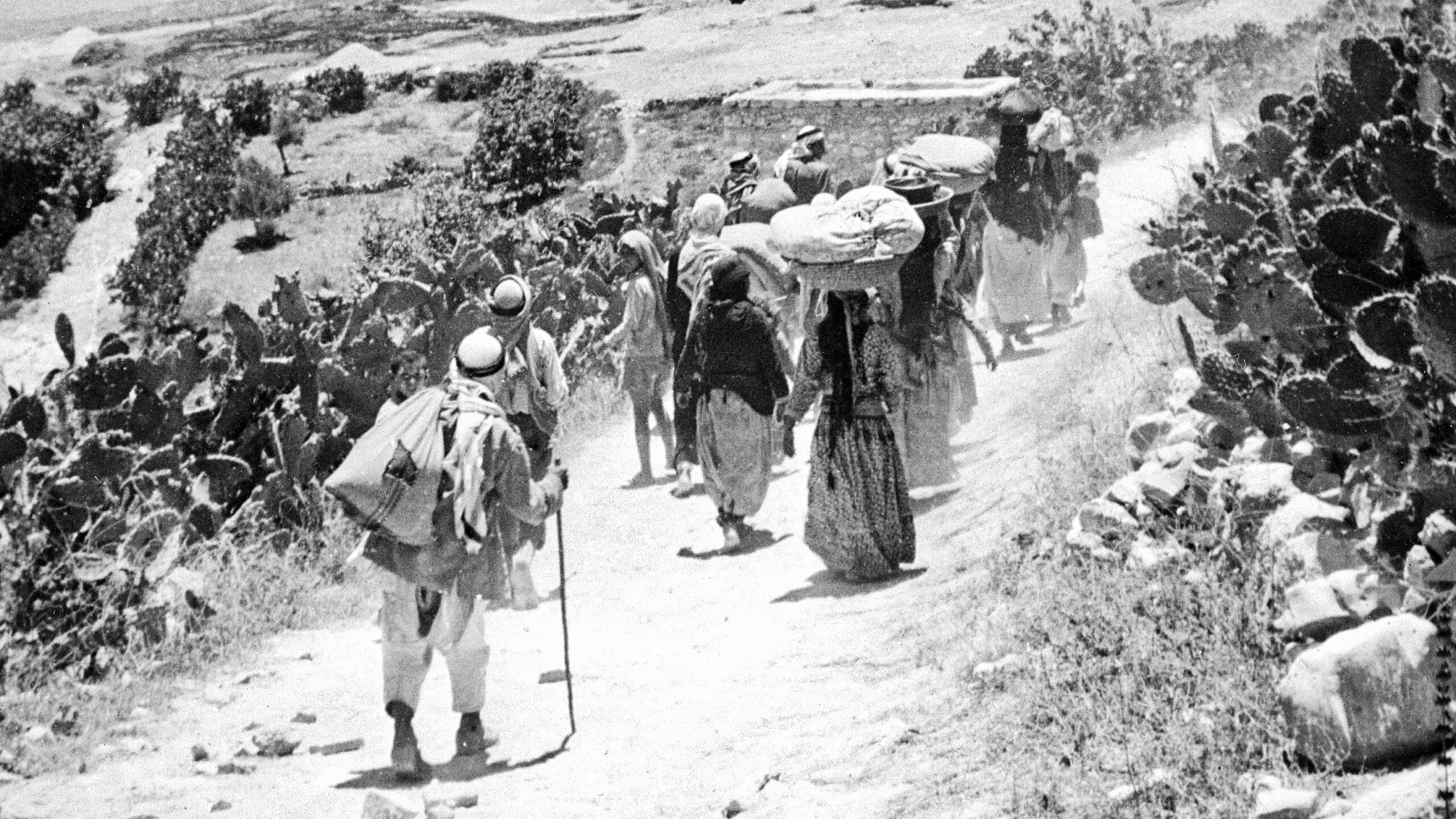
    For Palestinians across the globe, May 15 is not an ordinary date on the calendar – it is a day etched in collective memory as a commemoration of loss, resilience, and a decades-long struggle for justice. Annually, millions gather to mark the Nakba, meaning “catastrophe” in Arabic, a defining turning point that refers to the 1948 displacement and ethnic cleansing of Palestinian people by Zionist militias to clear the way for the establishment of the State of Israel. To contextualize this event, the history of Palestine’s governance stretches back centuries under Ottoman rule, a period that ended when British forces seized control of the territory at the conclusion of World War I.

    Following the war, the League of Nations granted Britain a formal mandate to administer Palestine, a framework that explicitly excluded input from the territory’s native Palestinian majority. While the official stated goal of the mandate system was to guide local populations toward self-governance and eventual independence, Palestine’s mandate deviated sharply from this promise: it embedded the 1917 Balfour Declaration, a pledge to create a “national home for the Jewish people” in Palestine, at a time when Jewish residents made up less than 10 percent of the total population. Over the course of the mandate era, from 1923 to 1948, Britain facilitated large-scale Jewish immigration from Europe, growing the Jewish population tenfold from roughly 60,000 before the mandate to 700,000 by 1948. British authorities also provided military training, weapons, and autonomy to Zionist armed groups, while violently suppressing native Palestinian uprisings that demanded independence and opposed the unregulated immigration project.

    By 1947, growing unrest led Britain to announce it would abandon its mandate and cede authority over the Palestine question to the newly formed United Nations. In November of that year, the UN adopted a partition plan that would split historic Palestine into two entities: 55 percent of the territory would be allocated to a Jewish state, while 45 percent would go to an Arab Palestinian state, with Jerusalem designated as an internationally administered city. Like earlier arrangements, the plan was developed without any consultation with Palestinian leaders, and it never went into effect. Almost immediately after the plan was announced, Zionist armed groups launched a systematic campaign of expulsion, drawing on detailed military blueprints that had been drafted as early as 1945.

    This military strategy coalesced into Plan Dalet, the official operational framework for Zionist forces that explicitly called for the destruction of Palestinian villages through arson, demolition, and mining, and mandated that in cases of local resistance, armed groups would destroy resistance forces and expel the entire civilian population outside the borders of the proposed Jewish state. Over the course of the campaign, Zionist militias deployed a range of brutal tactics to force Palestinian flight, including large-scale bombing campaigns, targeted massacres of civilian communities, and psychological warfare designed to terrorize residents into leaving. Unarmed civilian men, women, and children were killed indiscriminately, with many buried in unmarked mass graves.

    Between December 1947 and May 14, 1948 – the day Zionist leaders unilaterally declared the establishment of the State of Israel, 24 hours before the British Mandate was set to officially expire – an estimated 175,000 Palestinians were expelled, and more than 200 Palestinian villages and urban neighborhoods were destroyed and seized. Following the declaration of statehood, neighboring Arab armies entered the territory to oppose Zionist expansion, leading to a full-scale war that concluded with armistice agreements between Israel and neighboring Arab states in July 1949. By the end of the conflict, the newly formed State of Israel controlled 78 percent of historic Palestine, with the remaining 22 percent held by Arab forces; that remaining territory, the West Bank and Gaza Strip, would fall under Israeli military occupation 19 years later in the 1967 Six-Day War, and remains under occupation to this day.

    Final casualty and displacement figures from the 1948 campaign are staggering: an estimated 13,000 Palestinians were killed, more than 530 Palestinian villages and towns were completely destroyed and depopulated, at least 30 documented massacres were carried out, and roughly 750,000 Palestinians were forcibly expelled from their homeland. Around 150,000 Palestinians remained within the borders of the new Israeli state, the vast majority of them internally displaced from their original homes. In the years after the war, the Israeli government passed a series of laws that seized all abandoned property and assets left by expelled Palestinians – including land, homes, cash, stocks, businesses, furniture, and other personal belongings. It also enacted the Law of Return, which grants immediate Israeli citizenship to any Jewish person from anywhere in the world who relocates to Israel, while permanently barring Palestinian refugees from returning to their ancestral homes.

    Today, the legacy of the 1948 Nakba endures for Palestinians across the globe. There are 5.8 million registered Palestinian refugees living in formal refugee camps across the occupied West Bank, Gaza Strip, Jordan, Syria, and Lebanon, with an additional 2 million internally displaced Palestinians holding Israeli citizenship within Israel’s 1948 borders. For Palestinians, the Nakba is not merely a historical event confined to 1948; it is an ongoing process of displacement, marked by decades of military occupation, blockade of Gaza, home demolitions, land confiscation, and systemic dispossession that continues to shape Palestinian life to this day. Every May 15, communities across the world gather to honor the lives lost, the homes destroyed, and the ongoing struggle for Palestinian self-determination, ensuring the memory of the Nakba remains central to the national Palestinian identity.