On Monday, a landmark United Nations report delivered a stark warning that the world’s oceans are facing a deepening, multifaceted crisis driven by human activity, and issued a urgent call for coordinated global intervention to reverse accelerating damage. Compiled over five years of collaborative research by 600 leading marine scientists from across the globe, the 1,352-page Third World Ocean Assessment (WOA) – which analyzes ocean conditions between 2018 and 2023 – lays bare the mounting toll of climate change, industrial overexploitation, and pollution on the planet’s largest life support system.
Covering more than 70 percent of Earth’s surface, the ocean serves as the fundamental backbone of global life: it regulates the planetary climate and sustains food security for billions of people worldwide. But the report makes clear that this critical system is teetering toward irreversible breakdown. “The ocean is the foundation of life on Earth. But its health is at grave risk as ecosystems and habitats approach or surpass critical tipping points,” the WOA states, noting that overlapping pressures of climate change, plastic pollution, overfishing, and biodiversity loss have pushed ocean systems to their breaking point. The findings demand urgent, coordinated response: stronger cross-border multilateral cooperation, bolder policy ambition, and decision-making rooted in robust, peer-reviewed scientific evidence.
In a rare nod to progress, the assessment welcomed the January entry into force of the UN high seas treaty, a landmark agreement designed to protect and sustainably manage marine biodiversity in international waters, calling it a “historic milestone for ocean stewardship and multilateral cooperation”. But UN Secretary-General Antonio Guterres emphasized that far more action is needed. “We cannot keep treating the ocean as limitless,” Guterres said in an official statement. “We must build a new relationship with the ocean: Grounded in science. Framed by international law. And built on shared responsibility.”
The report’s data paints an alarming picture of accelerating change. Since 1955, 16 percent of the total increase in ocean heat content has occurred in just the five years between 2018 and 2023. The ocean has long buffered humanity from the worst effects of fossil fuel emissions, absorbing more than 90 percent of excess atmospheric heat and 30 percent of human-caused carbon dioxide. But this buffering comes at a devastating cost: warming water expands, amplifying sea-level rise driven by glacial and ice sheet melt. The report finds that the rate of global sea-level rise has more than doubled, climbing from less than 2.0 millimeters per year before 2015 to 4.5 millimeters per year in 2023. While these incremental increases may seem insignificant on their own, they accumulate rapidly over time to threaten coastal communities worldwide, explained Ian Butler, an Australia-based marine ecologist and joint coordinator of the WOA expert group, in an interview with Agence France-Presse.
Ice loss is accelerating at both poles, with far-reaching environmental and geopolitical consequences. The assessment projects that the Arctic Ocean could be completely ice-free during the month of September as early as the 2030s, and will almost certainly reach that state by mid-century under every greenhouse gas emissions scenario. Butler noted that an ice-free Arctic for parts of the year could arrive within just one to two decades. This dramatic melt is already reshaping global geopolitics: it opens previously impassable trans-Arctic shipping routes and intensifies competition for access to natural resources between major powers including the United States, Russia, and China. At the opposite end of the globe, Antarctic sea ice – which saw gradual growth between 1979 and 2015 – has undergone a rapid, unanticipated decline since 2016.
Marine ecosystems are already suffering massive, widespread disruption. As ocean temperatures rise, many fish species are shifting their ranges toward cooler polar waters or deeper depths to survive, but Butler warned that “some have no future at all because there’s nowhere for them to go”. Coral reefs, among the most biodiverse ecosystems on the planet, face imminent collapse. Repeated back-to-back marine heatwaves and intense storms leave reefs no time to recover from damage, the report says, and mass bleaching events since 2018 have caused widespread coral death. If global warming exceeds 1.5 degrees Celsius above pre-industrial levels, up to 90 percent of the world’s coral reefs could disappear forever.
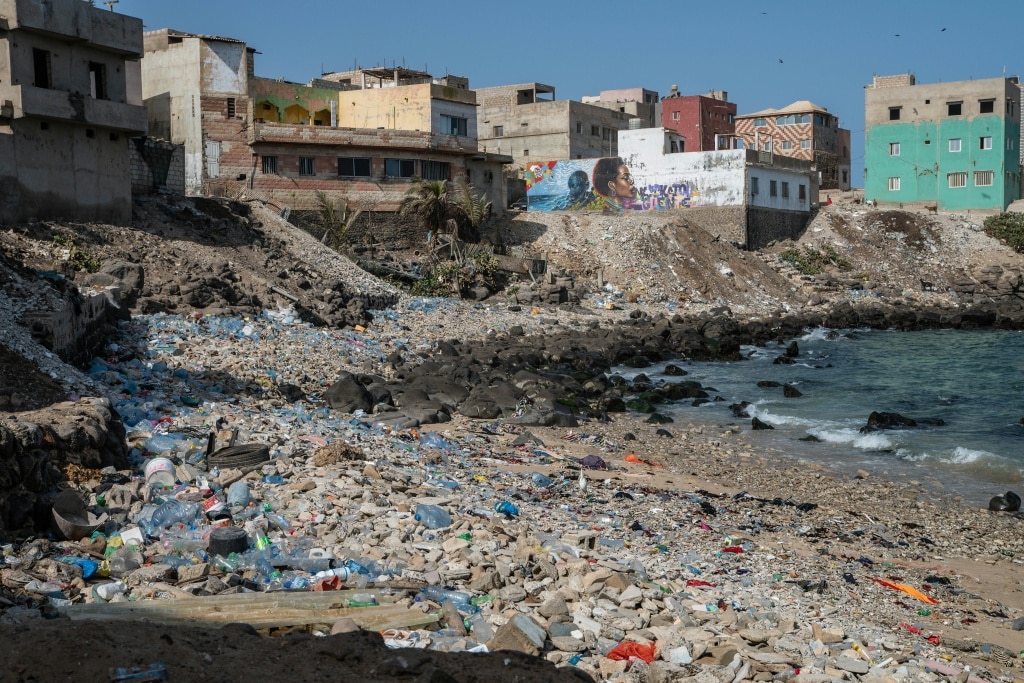
Two growing emerging threats are also highlighted in the report: plastic pollution and deep-sea mining. Every year, 52.1 million tonnes of plastic waste leak into the world’s oceans, contributing to a current total of an estimated 24.4 trillion microplastic particles circulating in marine environments. These tiny plastic fragments are now documented to harm more than 4,000 different marine species, from plankton to large mammals. The assessment calls for drastic cuts in plastic production, a point that has deadlocked ongoing international negotiations aimed at a global plastic pollution treaty. On deep-sea mining, the report notes that exploration for seabed mineral resources is well advanced, though no commercial extraction has yet begun. Critics warn that large-scale mining would smother deep-sea ecosystems with sediment waste and disrupt marine migration patterns with constant heavy machinery noise, prompting the WOA to call for a coordinated international response to address growing risks.
The assessment’s release comes amid controversy over a decision by the administration of U.S. President Donald Trump to remove hundreds of long-standing deep-sea scientific instruments that have monitored climate change impacts on marine environments for a decade. Butler called the move a major setback for global ocean science. “The deep ocean monitoring system is an extremely important part of our global monitoring and understanding of the ocean,” he said. “The removal of it would leave a huge gap in our long-term ocean science.”
Environmental advocacy group Greenpeace echoed the report’s call for urgent action, saying “This report must serve as an urgent wake-up call to governments to act to protect the ocean.”