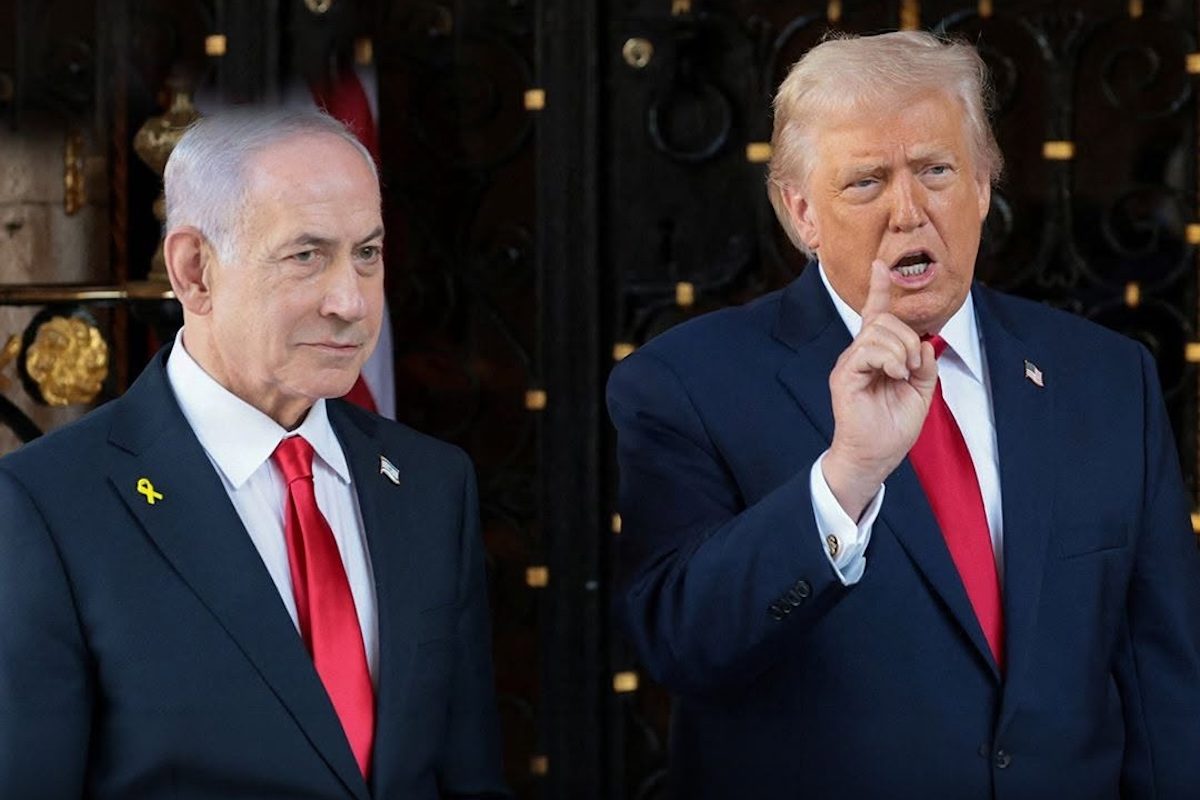
A dramatic escalation of tensions across the Middle East unfolded this week after Israeli Defense Forces carried out an airstrike on Iran on Monday, just hours after former U.S. President Donald Trump publicly urged Israeli Prime Minister Benjamin Netanyahu to hold off on any retaliatory action. The strike came in direct response to a major Iranian missile barrage against Israeli targets a day earlier, which Tehran launched as payback for an earlier Israeli bombing operation in Beirut.
Trump made his call for de-escalation in comments to Axios on Sunday, shortly after Iran’s strikes landed. He noted that the Iranian barrage had not resulted in any reported casualties, arguing that both sides had already carried out their reciprocal actions. “Each of them had their fun. Israel had its strike, and Iran had its strike. We don’t need another one,” Trump told reporters, adding that he would contact Netanyahu immediately to pressure him into standing down.
Iran’s Sunday missile attack marked the first major cross-border strike against Israel since a fragile ceasefire agreement went into effect in early April, and the back-and-forth exchange has stoked widespread fears that the region could quickly slide back into a full-scale open conflict. Tehran defended its action as a legitimate defensive measure, saying it was responding both to the Israeli bombing of southern Beirut and repeated Israeli violations of the April ceasefire. Iranian Foreign Ministry spokesperson Esmail Baghaei pointed specifically to recent joint attacks carried out by Israel and the U.S. military against Iranian commercial vessels and targets in southern Iran over the preceding two weeks as proof of ongoing aggression.
Baghaei rejected Trump’s framing of the conflict during a Monday press conference, arguing that no regional observer believes Israel would launch attacks against neighbors like Lebanon and Iran without prior coordination and backing from the United States. As a signatory to the April 8 ceasefire understanding, Washington bears full responsibility for all violations, Baghaei said. “Whether the US itself violates the ceasefire by attacking Iranian commercial ships or targeting southern parts of the country, or whether violations are carried out through the Zionist regime in Lebanon with US complicity, the direct responsibility of the United States is clear, and the consequences of any escalation will also fall on Washington,” he added.
Speaking to the Financial Times after Iran’s missile strike, Trump maintained that the exchange would not derail ongoing diplomatic efforts to reach a broader negotiated agreement with Tehran. The U.S. president also asserted his authority over Israeli policy, saying that Netanyahu would have no option but to accept any deal his administration reaches with Iran. “I call the shots. I call all the shots. [Netanyahu] doesn’t call the shots,” Trump said.
But critics of the February joint U.S.-Israeli military campaign against Iran say Netanyahu’s swift decision to defy Trump’s call for restraint lays bare the deep problems and unintended consequences of the conflict for U.S. influence in the region. U.S. Senator Chris Murphy, a Democrat from Connecticut, framed the incident as a major humiliation for both Trump and U.S. global standing. “This war has been humiliating for Trump and American power generally,” Murphy wrote on social media. “And when Trump announces he is going to call Netanyahu and tell him not to retaliate, and within hours Netanyahu retaliates, the humiliation just compounds.”
Analysis from foreign policy experts echoes this critique, highlighting a fundamental mismatch in Trump’s approach to regional diplomacy that risks further escalation. Trita Parsi, executive vice president of the Quincy Institute for Responsible Statecraft, noted that Trump has only shown willingness to publicly pressure Netanyahu, rather than expending real political capital to rein in Israeli military action, unless a diplomatic deal with Iran is already finalized. “From Trump’s perspective, it is only worth doing if an agreement with Iran is already secured. In short, Trump is willing to restrain Israel to preserve a deal, but not to obtain one. Iran, however, wants evidence that Trump can restrain Israel before agreeing to a deal,” Parsi explained in a post-strike blog post. “As a result, the most likely scenario is another round of Iranian and Israeli strikes, with Trump declining to meaningfully constrain Israel.”
The National Iranian American Council has warned that Iranian leadership has already threatened to launch a broader, more destructive military campaign if Israeli attacks continue. The group noted that the next 24 to 72 hours will be a critical window to determine whether the current crisis can be contained, or if it will mark the start of a new, more dangerous phase of the long-running regional conflict. Even as diplomatic efforts remain stalled, observers across the globe are watching closely for any further moves that could push the entire Middle East into open war.