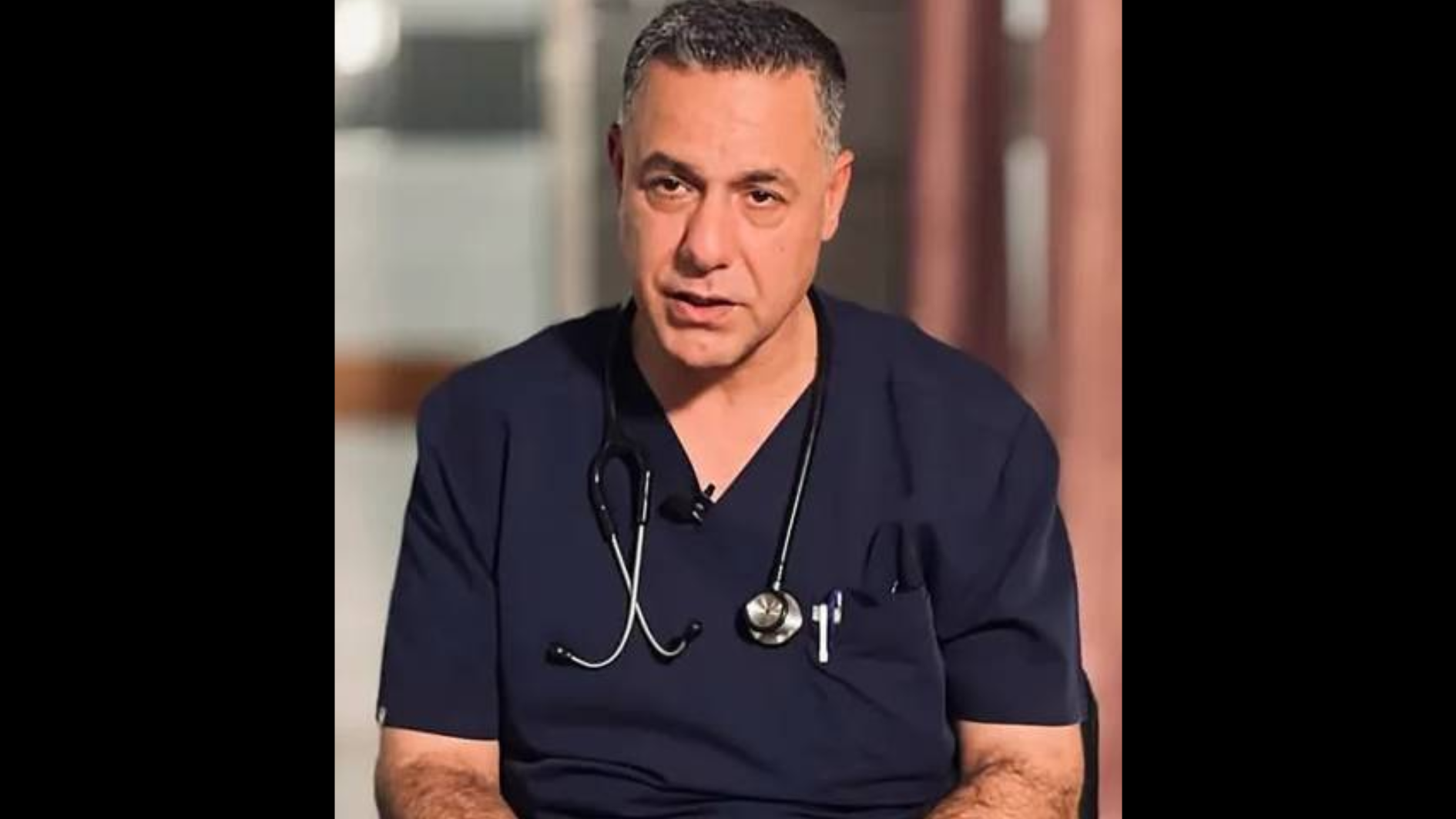
A prominent Palestinian doctor taken into Israeli custody from Gaza late last year is being held in solitary confinement under severely abusive conditions that have exacerbated his preexisting chronic health problems, his legal representative has confirmed, drawing sharp condemnation from global human rights groups. Hussam Abu Safiya, a hospital director abducted by Israeli forces in December 2024, has faced consistent mistreatment including medical neglect, physical violence, and insufficient access to food and water since his detention began, according to his lawyer Nasser Odeh. Odeh shared these details following his most recent contact with the detainee during a visit on 26 May, one of the limited opportunities for communication between Abu Safiya and his legal team. During that visit, Odeh documented that Abu Safiya remained physically restrained throughout the meeting, which was held in a camera-monitored room with a glass barrier separating the two men and armed guards positioned on both sides. Odeh described the meeting as extremely short, noting that Abu Safiya was too afraid of retaliation from prison staff to openly discuss many details of his treatment behind bars. Physicians for Human Rights Israel (PHRI), an independent rights organization, had previously revealed that Abu Safiya lives with serious health conditions including severe scabies and chronic heart disease, and has lost a dangerous amount of weight since being taken into custody. As of 3 June, Abu Safiya was transferred from Negev Prison to Nafha Prison in southern Israel, where prison authorities immediately placed him in solitary confinement. Odeh confirmed that no updates have been shared on Abu Safiya’s condition or wellbeing since the transfer, leaving his legal team with no information about his current status. Despite being a civilian healthcare worker who was seized while carrying out his medical duties, Abu Safiya has been classified as an “unlawful combatant” under controversial Israeli legislation that has been widely decried by rights groups as a blatant violation of international humanitarian law. This designation allows Israeli authorities to hold detainees indefinitely without formal indictment, court approval, or guaranteed access to legal representation, and permits officials to withhold information about a detainee’s location and condition from outside parties. In response to Abu Safiya’s ongoing detention under this framework, Odeh confirmed that his legal team has filed an appeal with the Israeli High Court of Justice, which is scheduled to hold a hearing on the request on 10 June. The case of Abu Safiya is far from isolated: he is one of at least dozens of Palestinian doctors, nurses, and emergency medical workers who have been arbitrarily detained and targeted by Israeli forces since the outbreak of the current conflict, with many seized while treating patients in Gaza hospitals. According to tallies from Palestinian prisoner advocacy groups, the total number of Palestinian detainees held in Israeli prisons as of early June stands at roughly 9,500. This figure does not include thousands more uncounted detainees, mostly people abducted from Gaza, who are being held in undisclosed Israeli military camps with no public accounting of their status. Since 7 October 2023, multiple independent human rights investigations have documented widespread, systematic abuse of Palestinian detainees in Israeli custody. Reports from leading rights organizations outline patterns of starvation, deliberate medical neglect, routine physical violence, psychological humiliation, sexual assault, theft of personal property, and the use of mass solitary confinement on an unprecedented scale. Agnes Callamard, Secretary General of Amnesty International, is among the leading global rights figures who have publicly called for Abu Safiya’s immediate release, joining a growing chorus of condemnation over the mistreatment of detained Palestinian healthcare workers.