分类: world

  • UAE condemns pro-Palestine protests targeting its embassy in Syria

    UAE condemns pro-Palestine protests targeting its embassy in Syria

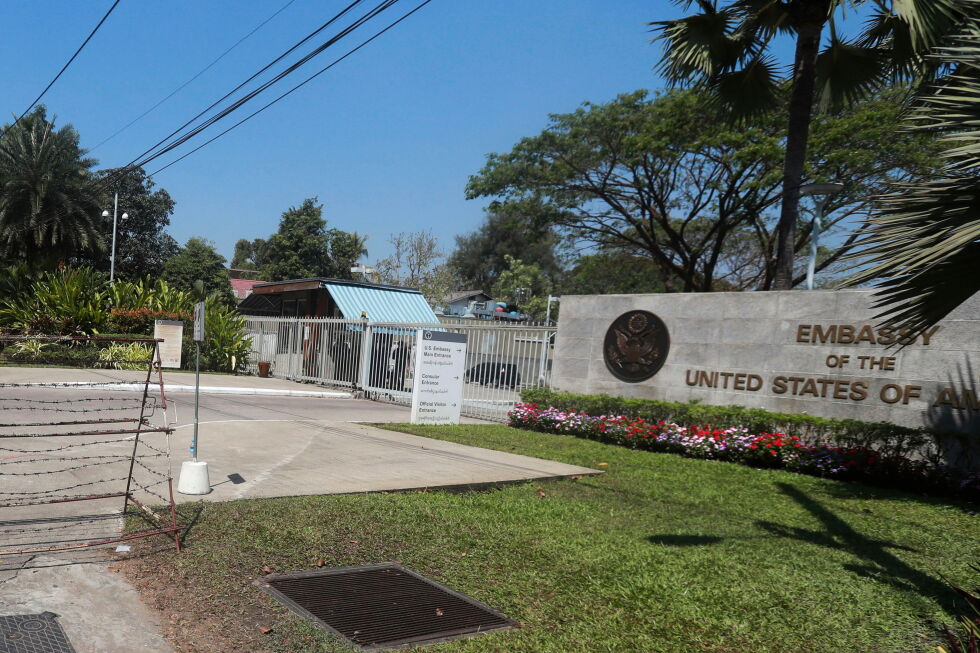
    As public fury over Israel’s military campaign in Gaza continues to sweep across the Middle East, pro-Palestinian protests in the Syrian capital Damascus have escalated into direct anger against the United Arab Emirates, with demonstrators targeting the Gulf state’s diplomatic mission over its open support for Israel amid the ongoing conflict.

    On Friday, dozens of protesters assembled outside the UAE embassy in Damascus, with some chanting provocative slogans labeling the compound a “Zionist embassy,” according to a reporter on the ground from Reuters. This demonstration was one of many coordinated protests held across Syria, all sparked by widespread international condemnation of Israel’s policies toward Palestinians that has stoked deep resentment across the entire region. The unrest also comes on the heels of a controversial move by Israel’s legislative system, which approved a new law earlier that week that permits the execution of Palestinian prisoners; critically, the law does not extend this penalty to Jewish citizens of the state.

    A senior Syrian security official confirmed to Reuters that a group of demonstrators split off from a much larger rally held in central Damascus’ Umayyad Square and attempted to force entry into the embassy compound. “Internal security forces prevented them from doing so and dealt with the situation,” the official stated, adding that order was restored without major casualties.

    The UAE has faced growing backlash across the Arab and Muslim world ever since it normalized diplomatic and economic relations with Israel in 2020 as part of the U.S.-brokered Abraham Accords, building a deepening strategic and economic alliance with Tel Aviv that many regional actors view as a betrayal of Palestinian national aspirations. Back in January, a prominent Saudi academic publicly denounced the UAE, accusing the country of throwing itself “into the arms of Zionism” and acting as “Israel’s Trojan horse in the Arab world” to undermine Saudi regional influence and claim regional dominance for itself.

    In an official statement released the day after the Damascus protest, the UAE condemned what it described as “riots, acts of vandalism, and assaults” outside its embassy and the private residence of its top diplomatic envoy in Syria. The country’s foreign ministry called on Syrian government authorities to uphold their international obligations to protect diplomatic missions operating on its territory, launch a full investigation into the incident, and prosecute all individuals found responsible for the unrest.

    Syria’s foreign ministry has not issued a direct comment on the specifics of the protest, but it did reaffirm the country’s long-held “firm and unwavering stance” against any intentional targeting of foreign diplomatic compounds on Syrian soil.

    The Friday demonstration was not the first time the UAE embassy in Damascus has faced protests in recent weeks. Earlier demonstrations were organized over the unresolved detention of senior Syrian official Issam Bouidani by UAE authorities. A former leader of the militant group Jaish al-Islam, Bouidani was taken into custody during a stop at Dubai International Airport this past April, and he currently holds a senior leadership role in Syria’s national defense institutions. UAE officials have never publicly disclosed the reasoning behind his arrest, leaving the case shrouded in ambiguity.

    As public anger over Israel’s military campaign in Gaza continues to resonate across the Middle East, mass protests are increasingly being directed at regional governments that have chosen to normalize relations with or align themselves closely with Tel Aviv, reflecting a major shift in public opinion across the region that is reshaping geopolitical dynamics.

  • Iran authorizes passage of ships carrying essential goods to its ports through Hormuz

    Iran authorizes passage of ships carrying essential goods to its ports through Hormuz

    Against a backdrop of heightened regional conflict following joint U.S.-Israeli strikes on Iranian territory in late February 2026, Iran has issued formal authorization for vessels carrying essential and humanitarian cargo to transit the Strait of Hormuz en route to its domestic ports, semi-official Iranian news outlet Tasnim has reported.

    The policy shift, outlined in an official March 1 correspondence from Iranian Deputy Agriculture Minister Hooman Fathi to the country’s Ports and Maritime Organization (PMO), confirms that both the Iranian national government and the country’s armed forces have signed off on the adjusted navigation rules for these specific vessels. Fathi’s instructions direct the PMO to grant entry approval for cargo ships bound for Iranian ports or already anchored in the Gulf of Oman that are transporting humanitarian goods, prioritizing basic essential commodities and livestock production inputs, in compliance with established national shipping protocols. Going forward, a curated list of eligible vessels will be shared with relevant authorities to streamline coordination and processing.

    This updated regulatory framework comes after weeks of heightened naval control over the strategic waterway, a response to the major escalation of hostilities that shook the region late last month. On February 28, the United States and Israel launched coordinated aerial attacks on Tehran and multiple other urban centers across Iran, killing then-Iranian Supreme Leader Ali Khamenei alongside a number of senior government officials and civilian bystanders. In retaliation, Iran launched multiple waves of missile and drone strikes targeting both Israeli territory and U.S. military installations across the Middle East, and subsequently implemented strict movement controls on shipping transiting the Strait of Hormuz — a chokepoint that carries roughly a fifth of the world’s total oil trade and serves as a critical access route for maritime commerce to and from Iranian ports.

  • Iraq closes southern border crossing with Iran following deadly strike

    Iraq closes southern border crossing with Iran following deadly strike

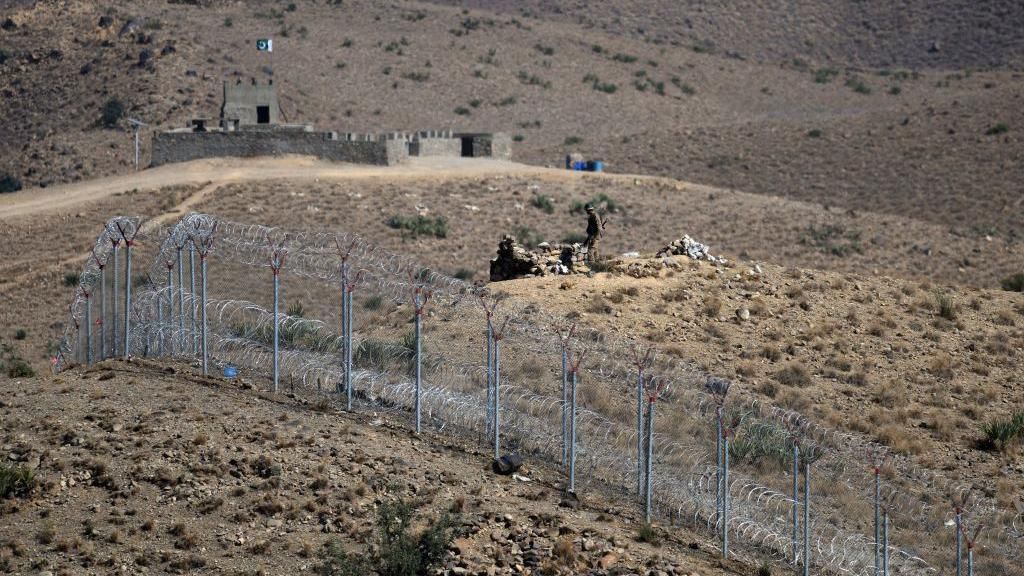
    BAGHDAD – In a move that underscores escalating regional instability across the Middle East, Iraqi officials ordered an immediate closure of the busy Shalamcheh border crossing with Iran on Saturday, April 4, 2026, after a deadly airstrike on the Iranian side of the checkpoint killed one Iraqi citizen and wounded five more.

    Omar al-Waeli, chairman of Iraq’s official Border Ports Commission, confirmed to the Iraqi News Agency that the airstrike targeted the crossing’s passenger terminal in the early hours of Saturday. The fatal blast claimed the life of an Iraqi passenger traveling through the facility, while the five injured victims were all transferred to medical centers inside Iranian territory for treatment, al-Waeli added.

    Local Iraqi media reports note the strike occurred at the same time that convoys carrying humanitarian donations and logistical support were entering Iran through the Shalamcheh crossing. Situated in Iraq’s southern Basra Province, the border post serves as one of the most critical commercial and travel arteries connecting the two neighboring countries, handling large volumes of bilateral trade and cross-border tourism on a regular basis.

    The closure of the key southern crossing comes as a separate deadly attack rocked another Iraqi border checkpoint just hours later. Iraq’s paramilitary Popular Mobilization Forces (PMF) announced Saturday that one of its fighters was killed and four additional members were wounded in a joint US-Israeli airstrike at the al-Qaim border crossing, located in Iraq’s western Anbar Province near the Syrian border. The PMF statement added that an employee of Iraq’s Ministry of Defense was also injured in the strike on the group’s 45th Brigade operating at the post.

    Both attacks unfolded against a backdrop of sharply heightened tensions across the Middle East, which began when joint US-Israeli airstrikes on targets inside Iran launched on February 28 triggered a wave of retaliatory strikes by Iran and its regional allied militias against US and Israeli interests across the region. The latest attacks on Iraqi border crossings have further stoked fears that the ongoing conflict spillover could disrupt critical trade routes and deepen instability in Iraq, which has long faced collateral damage from regional power clashes.

  • 5.8-magnitude quake kills 12, injures 4 in Afghanistan

    5.8-magnitude quake kills 12, injures 4 in Afghanistan

    On the night of Friday, April 3, 2026, a magnitude 5.8 earthquake jolted multiple regions across Afghanistan, leaving a confirmed death toll of 12 and four additional people injured, Afghan deputy government spokesperson Hamdullah Fitrat announced in a public statement on Saturday.

    The seismic event sent strong tremors rippling across a wide swathe of the country, impacting communities in the national capital Kabul as well as six eastern and northern provinces: Panjshir, Logar, Nangarhar, Laghman, Nuristan, and Badakhshan. Beyond the human cost of the disaster, Fitrat shared in a post to the social platform X that the quake also caused significant structural damage: 38 residential homes were damaged, and a total of 40 families have been displaced or otherwise affected by the disaster.

    Initial geological surveys placed the earthquake’s epicenter roughly 35 kilometers south of Jurm district in Afghanistan’s northern Badakhshan Province, at coordinates 36.55 degrees north latitude and 70.85 degrees east longitude. The temblor originated at a depth of 186.4 kilometers below the Earth’s surface, a depth that allowed shaking to be felt across far-flung regions of the country, from the capital Kabul to all adjoining border provinces.

    This latest seismic disaster is far from an isolated event for Afghanistan, a nation that sits atop geologically active fault lines and is frequently battered by destructive earthquakes, especially in and around the rugged Hindu Kush mountain range that stretches across the country’s northern and eastern regions. Just last November, a stronger 6.3-magnitude quake hit this same general region, killing more than two dozen people and injuring nearly 1,000 more across the northwestern provinces of Samangan and Balkh.

  • Iran’s FM says Tehran seeks ‘conclusive, lasting’ end to war

    Iran’s FM says Tehran seeks ‘conclusive, lasting’ end to war

    TEHRAN – In a recent public clarification posted to social media platform X, Iran’s top diplomat Seyed Abbas Araghchi has pushed back against misleading Western media reports, reaffirming that Tehran’s core priority in ongoing conflict negotiations is securing a “conclusive and lasting” end to the war launched by the United States and Israel against Iran.

    Araghchi’s statement came in direct response to claims published Friday by *The Wall Street Journal*, which alleged that Iran had formally informed mediators it would refuse to meet with U.S. officials for ceasefire negotiations hosted in Islamabad, Pakistan, and that Tehran deemed Washington’s negotiating terms unacceptable. Compounding earlier reporting, Iran’s semi-official Fars News Agency cited an unnamed informed source early Friday confirming that Iran had already rejected a U.S. proposal for a 48-hour temporary ceasefire, which had been shared via a third-party neutral friendly state the day prior.

    Addressing the distorted narrative spread by U.S. media, Araghchi emphasized that Iran has never rejected the invitation to hold talks in the Pakistani capital, and expressed sincere gratitude to Pakistan for its diplomatic efforts to de-escalate the crisis. “What we care about are the terms of a conclusive and lasting end to the illegal war that is imposed on us,” the foreign minister stressed, underscoring that Tehran’s refusal to accept superficial, temporary ceasefire terms does not equate to a rejection of dialogue altogether.

    The current open conflict traces back to late February, when the United States and Israel launched a coordinated joint airstrike campaign targeting Tehran and multiple other urban centers across Iran. That attack killed Iran’s then-Supreme Leader Ali Khamenei, alongside a number of senior Iranian military commanders and civilian bystanders. In the immediate aftermath of the strike, Iran retaliated with multiple waves of missile and drone attacks targeting both Israeli territory and U.S. military assets stationed across the Middle East, triggering a rapid escalation of regional tensions that has drawn international diplomatic intervention aimed at preventing a full-scale regional war.

  • Russian attack on Ukraine market kills five

    Russian attack on Ukraine market kills five

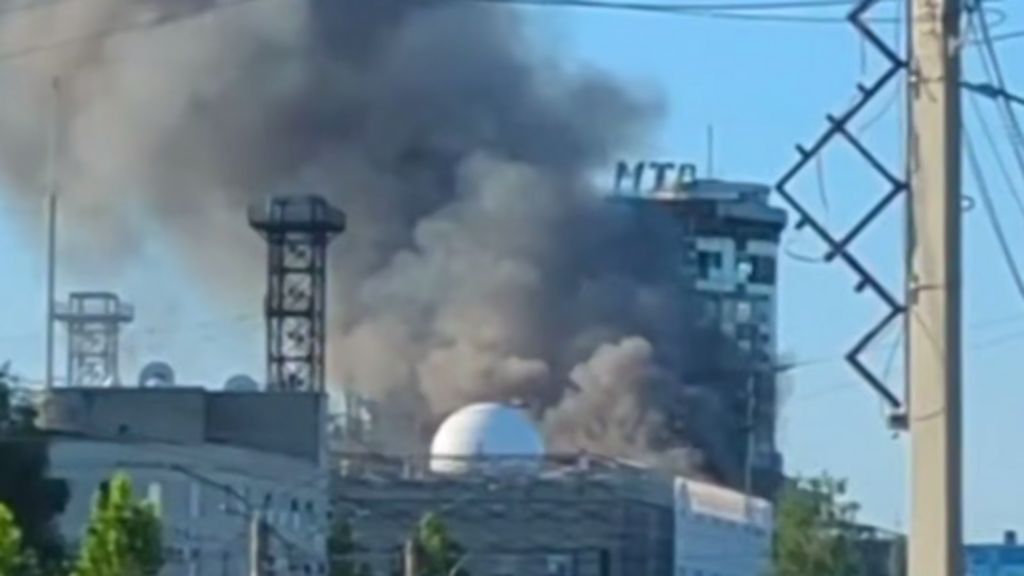
    A devastating Russian drone assault on a crowded civilian market in southern Ukraine has left five people dead and 21 wounded, including a 14-year-old girl, Ukraine’s prosecutor general’s office confirmed Saturday. The strike hit the riverside town of Nikopol at 9:50 a.m. local time, just across the Dnipro River from Russian-held territory seized following Moscow’s full-scale February 2022 invasion. Photographs released by regional prosecutors show the aftermath: shattered market kiosks scattered across the ground, covered in twisted metal and broken glass. A follow-up strike on the same site injured two more men, and Ukrainian authorities have launched a war crime investigation into the attacks. Nikopol has faced persistent artillery and drone fire since the start of the invasion, with nearly half of its original 100,000 residents fleeing for safety long before the weekend attack. The Saturday market strike marks the deadliest escalation in a wave of Russian attacks that killed at least 15 civilians across Ukraine in strikes on Friday alone. Overnight preceding the Nikopol attack, the Ukrainian Air Force reported that Russia launched nearly 300 drones across Ukrainian territory, with additional casualties recorded in the northeastern city of Kharkiv and the northern Sumy region. In a tit-for-tat escalation that has become common in the conflict, Russia reported a Ukrainian overnight drone and missile strike on the southern Russian city of Taganrog that killed one person and left four others with severe injuries. Rostov regional governor Yuri Slyusar confirmed the strike sparked a large fire at a local logistics company’s facility. A Ukrainian defense ministry spokesperson pushed back on casualty claims, attributing civilian deaths to flawed Russian air defense operations. Ukrainian officials also confirmed two targeted strikes on facilities they say were tied directly to Russia’s military industrial complex. One attack hit a synthetic rubber and petrochemical plant in the Russian city of Togliatti, while a second drone strike halted all production at the Alchevsk metallurgical plant in Russian-occupied Luhansk Oblast. Ukraine’s Security Service reported that blast furnaces, production workshops and critical infrastructure at the plant were damaged in the strike, the second to hit the facility in just one month. This latest round of deadly cross-border attacks comes as diplomatic efforts to end the 2-year-long conflict remain stalled. Last week, Ukrainian President Volodymyr Zelensky proposed a bilateral truce between the two warring nations to mark the Orthodox Easter holiday, but Moscow has yet to respond to the offer. Recent weeks have also seen a sharp uptick in large-scale Russian daytime attacks, a tactic that was rare earlier in the conflict. Despite the rising civilian death toll from these strikes, British intelligence assessments note that the frontline situation in eastern Ukraine is the most favorable it has been for Kyiv in 10 months, as Russian offensive advances have slowed to a near halt. Diplomatic progress, however, has ground to a halt, with U.S.-led peace negotiations shifting focus to the ongoing conflict in the Middle East, leaving little momentum for new talks to end the war in Ukraine. Zelensky completed a diplomatic tour of four Gulf nations last week – Saudi Arabia, the United Arab Emirates, Qatar and Jordan – all of which have recently faced Iranian aerial attacks. During the tour, the Ukrainian president offered to share Kyiv’s advanced drone technology and operational expertise in exchange for support countering Russian missile strikes and new, stable sources of fuel imports. The urgency for alternative fuel supplies has grown amid surging global oil prices, compounded by persistent Russian strikes on Ukraine’s domestic energy infrastructure that have left the country almost entirely reliant on imported fuel to sustain its military and civilian operations.

  • Syrian government understating kidnappings of Alawite women: report

    Syrian government understating kidnappings of Alawite women: report

    In the months after Syria’s transitional government ousted former President Bashar al-Assad in December 2024, a bombshell new investigation by *The New York Times* has confirmed that authorities in Damascus are drastically underreporting widespread kidnapping, violent assault, and sexual abuse targeting women and girls from Assad’s native Alawite community.

    Since taking power, the administration led by President Ahmed al-Sharaa has publicly acknowledged only one confirmed case of an Alawite woman being abducted. But the Times’ on-the-ground investigation, which relied on anonymous victim testimony to protect survivors from further harm, has verified at least 13 separate kidnappings of Alawite women and girls. Of those confirmed cases, five survivors reported being gang-raped during their captivity, and two of those victims returned to their families after being released with unplanned pregnancies resulting from the abuse.

    The Times’ findings reinforce earlier independent documentation of the crisis. Human rights watchdog Amnesty International warned in July 2025 that it had corroborated credible reports of at least 36 comparable kidnappings, while the Syrian Feminist Lobby has recorded 80 Alawite women and girls as missing since the start of 2025.

    Survivors and observers have offered differing accounts of the motive behind the attacks. Multiple kidnapped women told investigators they experienced explicitly sectarian abuse, with their captors framing the attacks as revenge for the Alawite community’s historical alignment with the Assad regime. Other analysts have characterized many of the incidents as criminal enterprises driven by ransom demands. In one documented case, a family paid kidnappers $17,000 to secure their relative’s release, only for the abductors to keep the money and refuse to free her. Another 24-year-old survivor described being held for three weeks in a squalid, unkempt room, where she was repeatedly raped, beaten, had her head and eyebrows shaved as a humiliation, and cut multiple times with razor blades. She was ultimately freed only after her parents paid a large ransom.

    Tensions between Syria’s new ruling leadership and the Alawite community have remained at a fever pitch ever since Assad’s ouster and subsequent exile to Moscow. Just last year, small-scale armed attacks on transitional government security forces by suspected Assad loyalists in the coastal Alawite stronghold of Latakia escalated into large-scale brutal sectarian violence. A separate investigation by Reuters later traced the bulk of the resulting civilian deaths back to Damascus-based security officials, with at least 1,500 Alawite civilians killed in the crackdown.

    When contacted by *The New York Times* for comment on its latest findings, Interior Ministry spokesman Nour al-Din Baba claimed the government could not respond to the investigation unless the outlet turned over the full names of all interviewed victims. The newspaper declined this request, having granted formal anonymity to all survivors to protect them from retaliation. Baba reaffirmed the government’s stance, standing by an official November 2025 inquiry that examined 42 reported kidnappings and concluded only one of the cases was “authentic.”

    The roots of Syria’s ongoing sectarian tension stretch back to the start of the country’s 13-year civil conflict, which began in 2011 when Assad regime forces opened fire on peaceful pro-democracy protestors. The war ultimately left hundreds of thousands of Syrians dead and millions more displaced internally across the country and as refugees abroad. While a portion of the Alawite community initially backed the pro-democracy movement, widespread government persecution of dissent and growing fears over sectarian extremist groups within the opposition pushed most Alawites to align with Assad over the course of the war.

    Following Assad’s overthrow, Alawite community leaders have repeatedly called for international protection from targeted sectarian revenge attacks. The issue flared into public view this week during al-Sharaa’s official visit to London, where he was met by large protests organized by Alawite and Alevi (a related sect primarily found among Turkey’s Kurdish and Turkish communities) activists. Protesters accused al-Sharaa’s transitional government of enabling what they describe as systematic violence amounting to genocide against Alawite civilians.

    Maher Hamadouch, director of the UK-based Alawite advocacy group Syrian Coastal Society, argued that hosting al-Sharaa in the United Kingdom sends a dangerous message to the international community that accountability for human rights abuses can be ignored. “At a time when Syrians continue to endure displacement, insecurity, and marginalisation, allowing such a figure to enter the UK risks sending the wrong message: that accountability can be overlooked, and that those associated with violence can be normalised on the international stage,” Hamadouch said. His organization has called on the UK government to refuse to grant any public platform or political legitimacy to individuals linked to extremist activity or human rights violations. Hamadouch, who has previously defended Assad’s decades-long rule over Syria, added that al-Sharaa’s public record is “inseparable from violence, sectarianism and the repression of civilian populations in Syria.”

  • Russian strike on Ukraine market kills five, wounds 25

    Russian strike on Ukraine market kills five, wounds 25

    Amid a sharp escalation of daytime strikes across Ukraine, a Russian drone attack on a crowded covered market in the central Ukrainian city of Nikopol has left five civilians dead and 25 others injured, local officials confirmed Saturday. The assault, which occurred at 9:50 a.m. local time in the Dnipropetrovsk region, marked the latest shift in Russia’s long-running invasion tactics, after years of mostly nighttime bombardments that have given way to increasingly frequent daytime attacks in recent weeks.

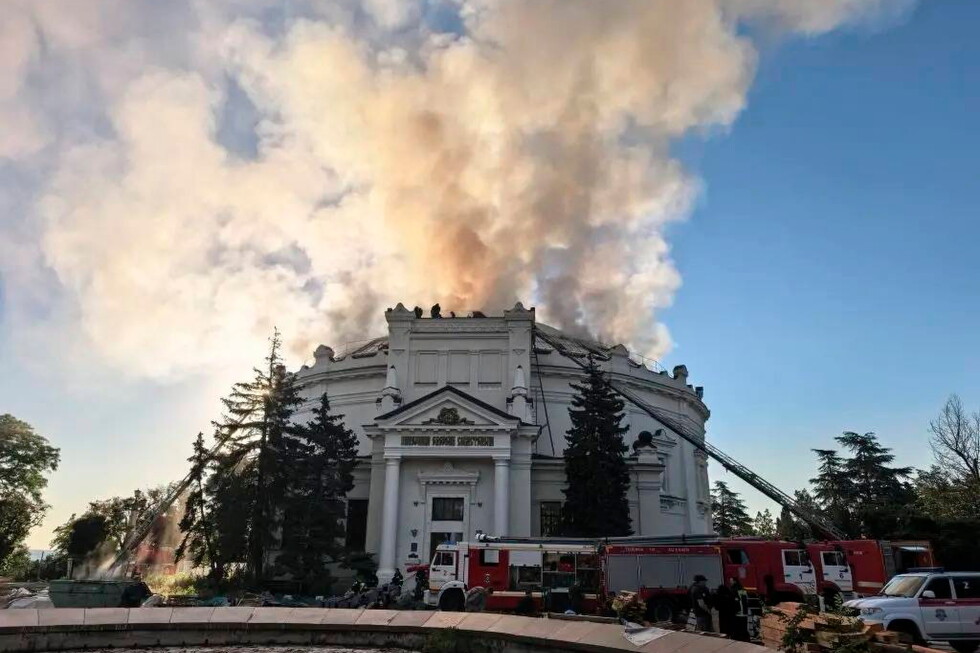
    Regional governor Oleksandr Ganja announced via Telegram that the fatalities included three women and two men. Among the wounded, a 14-year-old girl was listed in critical condition, adding a devastating new layer of tragedy to the attack on the civilian commercial site. Ukraine’s State Emergency Service published on-the-scene images showing firefighters battling blazes and clearing rubble at the devastated market, illustrating the scale of destruction from the strike.

    The Nikopol attack was part of a broad wave of bombardment that stretched across multiple Ukrainian regions over a 24-hour period Saturday. In the northeastern frontline city of Kharkiv, six additional civilians were wounded in ongoing morning strikes. Overnight prior to the attack, the Ukrainian Air Force reported that Russia launched 286 drones across the country, with 260 successfully intercepted by Ukrainian air defenses. In the northern Sumy region, overnight strikes targeting residential neighborhoods and civilian infrastructure left 11 people injured, with emergency service images showing upper floors of a residential building fully engulfed in flames. Closer to the frontline in the southeastern city of Kherson, one additional woman was killed and two others wounded in a separate strike.

    Cross-border violence extended into Russian territory over the same period, as Russian officials reported multiple fatalities and injuries from incoming attacks. In Taganrog, a city in Russia’s southern Rostov region bordering Ukraine, a combined missile and drone strike killed one civilian and left four others with serious injuries, according to regional governor Yuri Slyussar. Slyussar also added that a foreign-flagged cargo ship anchored in the Sea of Azov caught fire after being struck by falling drone debris. In Russian-occupied Lugansk, the Moscow-backed local administration claimed a nighttime Ukrainian drone strike on railway infrastructure killed a family of three, including an eight-year-old child, in their private home.

    The latest wave of violence comes as peace negotiations between the two countries remain deadlocked, with diplomatic efforts hampered by ongoing conflict in the Middle East. On Saturday, Ukrainian President Volodymyr Zelensky made an unannounced visit to Istanbul for security talks with Turkish President Recep Tayyip Erdogan, a long-time mediator between Kyiv and Moscow. Earlier this week, Zelensky signaled Ukraine’s openness to a temporary truce during the Orthodox Easter holiday, but the Kremlin rejected the overture, stating it had not received any clearly formulated peace proposals.

    Kyiv has repeatedly accused Moscow of dragging out the conflict to seize additional Ukrainian territory, arguing the Kremlin has no genuine interest in a negotiated peace. For its part, Russia has said it prefers a long-term permanent settlement over a short-term ceasefire that would only pause hostilities. Negotiations mediated by the United States have been on hold since the outbreak of war in the Middle East diverted global diplomatic attention.

    In comments published Friday, Zelensky told reporters he had invited a U.S. negotiation delegation to travel to Kyiv to restart talks with Moscow, with a plan for the delegation to travel to the Russian capital after holding initial discussions in Ukraine. “If a three-party meeting doesn’t work out, we can proceed this way,” he explained. Amid the Middle East crisis, Ukraine has moved to position itself as a key partner for regional nations facing drone threats similar to those Russia has launched against Ukraine, pointing to shared experience countering Iranian-designed unmanned aerial vehicles. Just last week, Zelensky completed a tour of Gulf nations, signing new defense cooperation agreements with Qatar and Saudi Arabia. He also floated the idea that Ukraine could help re-open the Strait of Hormuz, whose frequent disruptions from Iranian retaliatory actions have shaken global energy markets, drawing on Kyiv’s experience clearing safe passage through the Black Sea after Russia’s initial blockade at the start of the invasion in 2022.

  • Australians told to continue Easter travel plans despite fuel shortages

    Australians told to continue Easter travel plans despite fuel shortages

    As Australia prepares for the Easter holiday, a national fuel crisis driven by Middle East geopolitical tensions has put the government in a delicate position: urging residents to proceed with planned getaways while calling for strict fuel conservation. The disruption stems from escalating conflict between the United States and Iran linked to Israel, which has effectively closed the Strait of Hormuz — the world’s most critical chokepoint for global energy shipments.

    Australia’s energy sector is uniquely vulnerable to this disruption, with roughly 90% of the nation’s fuel supply imported from Middle Eastern producers. As of Saturday, Energy Minister Chris Bowen confirmed that 312 of Australia’s approximately 8,000 service stations are currently out of diesel, with shortages concentrated disproportionately in regional and rural areas where supply replenishment takes far longer than in major urban centers. To reassure the public, Bowen released official reserve figures in televised comments: the country holds 39 days of petrol reserves, 29 days of diesel, and 30 days of jet fuel stockpiled for emergency use.

    In a rare national address earlier this week, Prime Minister Anthony Albanese warned Australian households that the economic fallout from the Middle East conflict will persist for months. “Australia is not an active participant in this war. But all Australians are paying higher prices because of it,” he stated, echoing a message that has been reinforced by government officials across departments. Albanese has urged residents to cut back on non-essential fuel consumption and shift to public transit for daily travel where feasible. In line with this guidance, Bowen encouraged Easter travelers Saturday to stick to necessary fuel purchases, saying “Go take a break — but get no more fuel than you need,” while affirming that Easter, as a time of faith and family gathering, remains an important occasion for communities across the country.

    While the blockade has halted nearly all commercial shipping through the strait — which carries roughly 20% of the world’s daily oil and natural gas supplies — limited transits have begun to resume in recent weeks. According to French media reports, a container ship flagged in Malta and owned by leading French shipping firm CMA CGM completed a traversal of the waterway Friday. Shipping analysts confirm this marks the first time a major Western European shipping company has moved a vessel through the strait since hostilities broke out in late February. The company has not yet issued a public comment on how the vessel secured safe passage.

    A handful of other vessels have also completed successful transits in recent weeks. Japanese energy infrastructure firm confirmed one of its liquefied natural gas carriers crossed the strait without incident. On Saturday, Turkey’s Minister of Transport Abdulkadir Uraloglu announced that a second Turkish-flagged vessel had completed the crossing, one of 15 Turkish ships that have been anchored waiting for passage since conflict erupted. Uraloglu told CNN Turk that the transits were made possible through Turkish diplomatic initiatives, and that the two vessels were either calling at Iranian ports or carrying cargo originating from or bound for Iran. The first Turkish transit, granted Iranian approval, took place on March 13.

    Third-party data from BBC Verify, analyzed in late March, shows that roughly 100 vessels have passed through the strait since the blockade began. Though overall traffic remains down by approximately 95% compared to pre-conflict levels, the limited transits confirm that the waterway has not been completely closed to all shipping. Iran has publicly stated that “non-hostile vessels” are permitted to use the strait, but continued attacks on commercial shipping in the area have deterred most major global carriers from resuming normal operations. The disruption has sent fuel prices soaring in Australia and across global markets, prompting governments worldwide to roll out fuel conservation measures to offset supply shortages.

  • Death toll from Afghan quake rises, including 8 members of refugee family returned from Iran

    Death toll from Afghan quake rises, including 8 members of refugee family returned from Iran

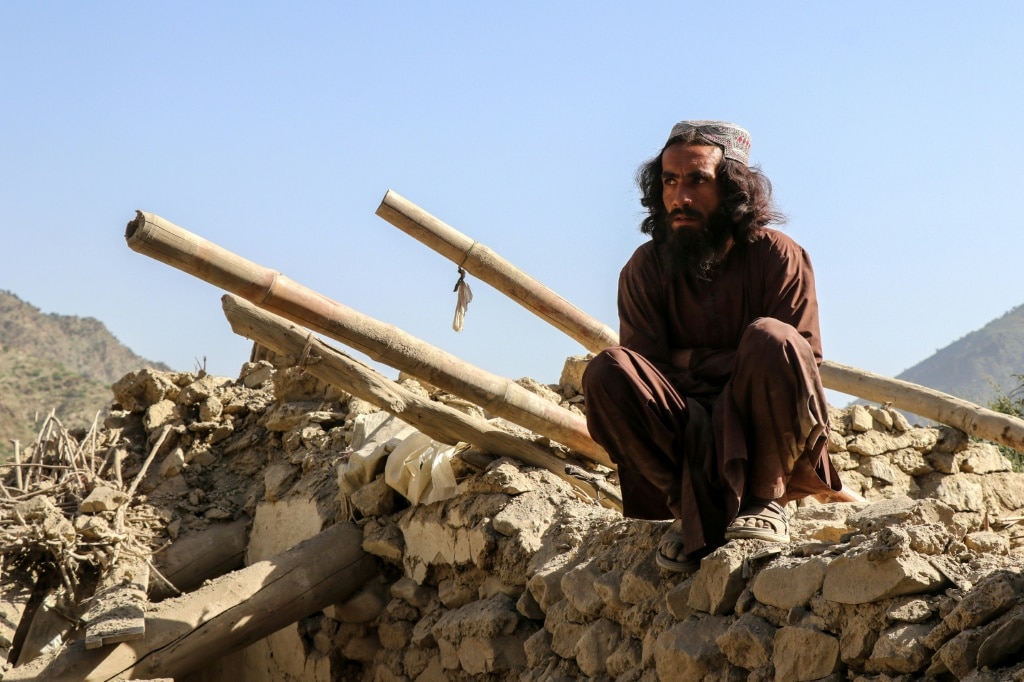
    Deep in the village of Ittefaq, on the eastern outskirts of Afghanistan’s capital Kabul, the mud-caked rubble of a collapsed wall still holds the traces of a recently shattered life. Piles of salvaged blankets, dented cooking utensils and scattered personal belongings sit alongside broken bricks, a quiet marker of the tragedy that unfolded late Friday, when a 5.8 magnitude earthquake ripped through northern Afghanistan.

    For Mohibullah Niazi, the neighbor who led early rescue efforts, the sounds of that disaster will linger. For three full minutes after the wall collapsed onto the refugee family camped next to his property, Niazi told reporters Saturday, he could hear the trapped family screaming for help. By the time a larger group of rescuers could clear the heavy mud and rock, the screams fell silent.

    Eight members of the family, all Afghan refugees who had just returned to their home country 15 days earlier after being pushed out of neighboring Iran, were killed. The only survivor is 3-year-old Aarash, who was pulled from the rubble with a severe head injury and airlifted to a hospital in central Kabul for emergency care.

    This small, already vulnerable family was among millions of Afghans forced to return to their unstable homeland in 2023, after neighboring Iran and Pakistan launched harsh crackdowns on undocumented foreign residents, most of whom are Afghan refugees who fled years of conflict and economic collapse. Najibullah, the 50-year-old head of the killed family, had nowhere else to go after crossing back into Afghanistan: the family set up a makeshift tent on empty low-lying land adjacent to Niazi’s home, because he could not afford permanent shelter. Just 30 minutes before the earthquake struck, Niazi said he offered the family space in his guest room to escape cold, heavy rains that had soaked the region for days. They declined his invitation.

    Days of heavy rainfall had already softened the sodden earth holding the adjacent retaining wall in place, local residents explained. When the earthquake hit, the wall crumbled directly onto the family’s tent, trapping everyone inside before they could escape. Niazi and a handful of nearby neighbors immediately began digging by hand and with small spades, but the weight of the rock and mud was too much for their small group. “We tried our best,” Niazi recounted Saturday, standing at the disaster site. “But for two or three people, this was impossible work.”

    Local authorities were alerted quickly, and Taliban-led rescue teams and ambulances arrived within an hour to continue recovery efforts. By Saturday morning, all eight bodies had been recovered, and the injured toddler had been transported for care. On Saturday, Health Ministry spokesperson Sharafat Zaman confirmed the boy remained hospitalized for his head injury, saying medical teams were monitoring his condition closely.

    In the wake of the quake, official death toll numbers have seen a small discrepancy: Afghanistan’s deputy government spokesman Hamdullah Fitrat released an updated count Saturday putting the total national death toll at 12, with four additional people injured across the affected regions. Fitrat added that five full homes had been completely destroyed, and another 33 suffered major damage, impacting 40 families across six provinces: Kabul, Panjshir, Logar, Nangarhar, Laghman, and Nuristan. The Afghanistan Disaster Management Authority has meanwhile put the total death toll at nine, and officials have not yet explained the gap between the two counts.

    Friday’s earthquake originated in the seismically active Hindu Kush mountain range, roughly 150 kilometers east of Kunduz in northern Afghanistan, and 290 kilometers northeast of Kabul, according to data from both the Euro-Mediterranean Seismological Center and the U.S. Geological Survey. Afghanistan sits on one of the world’s most active tectonic fault zones, and major earthquakes have killed thousands of Afghans in just the last two years, as poorly constructed, informal housing across much of the country leaves communities extremely vulnerable to seismic activity.

    Just last August 2023, a 6.0 magnitude quake struck a remote mountainous region of eastern Afghanistan, killing more than 2,200 people. In October that same year, a 6.3 magnitude quake and subsequent powerful aftershocks hit western Afghanistan, leaving thousands dead. Two months later, a 6.3 magnitude quake hit Samangan province in the north, killing 27 people, injuring more than 950, and damaging iconic cultural sites including the historic Blue Mosque in Mazar-e-Sharif.