分类: world

  • Lebanon’s Christians mark Easter in solidarity with war-hit south

    Lebanon’s Christians mark Easter in solidarity with war-hit south

    Easter Sunday, one of the holiest days on the Christian calendar, took on a somber tone across Lebanon this year, as worshippers centered their prayers and celebrations on the hundreds of thousands of civilians trapped in the country’s southern border region, where relentless clashes between Israel and Hezbollah have turned once-quiet communities into active conflict zones.

    The annual joy of the resurrection was woven through with urgent calls for peace, as communities across the country opened their churches to displaced southern residents and demonstrated unwavering solidarity with those caught in the crossfire. At a parish church in Jdeideh, a northern suburb of the Lebanese capital Beirut, turnout for Easter mass far outstripped the building’s capacity. Crowds spilled out of the pews and onto the sidewalk outside, as worshippers gathered to stand with their compatriots in the south.

    Jenny Yazbek al-Jamal, a 55-year-old Beirut resident who leads the parish choir and has family members still residing in southern conflict zones, said this year’s Easter festivities were explicitly dedicated to all people displaced and endangered by the border fighting. “It is not only Christian villages suffering in this war,” al-Jamal told reporters after mass. “Muslim villages too… we stand with all the people of the south who were forced to flee their homes.”

    Inside the packed church, placards listing the names of cut-off and embattled Christian southern villages lined the base of the altar, a quiet, visible tribute to communities trapped between warring factions. Even in the capital, the shadow of the conflict was impossible to ignore: the roar of low-flying Israeli fighter jets, which regularly break the sound barrier over Beirut to intimidate local populations, drowned out portions of the hymns sung by the parish choir. al-Jamal noted that the constant overflights have become a new normal, even during the holiest days of the Christian calendar. “Even during our religious holidays, even on Good Friday, jets fly over us and break the sound barrier just to scare us,” she said.

    Worsppers across the country echoed her calls for an end to the fighting, describing the humanitarian catastrophe unfolding in the south as a crisis that impacts all Lebanese, regardless of faith. Marina Awad, another 55-year-old worshipper who attended mass with her husband, called for an immediate end to hostilities, saying she was heartbroken by the scale of displacement. “It’s truly very sad to know people had to abandon homes built over a lifetime, unsure if they will ever return,” she said.

    The situation for civilians who remain in border villages is catastrophic, according to 65-year-old Dori Ghrayeb, who outlined the collapse of basic services in embattled communities. “No food, no water, no bread, no medicine, and no medical care,” he said, adding his voice to widespread calls for a ceasefire. “I am for peace; the war must stop so that we can sit at the same table.”

    The depth of the crisis was highlighted this weekend by the last-minute cancellation of a high-profile humanitarian aid convoy that had been organized jointly by the Vatican’s envoy to Lebanon, the United Nations Interim Force in Lebanon (UNIFIL), and two prominent Lebanese Christian charities. The convoy, which was carrying 40 tonnes of life-saving medicine and essential basic supplies, had been scheduled to reach the border village of Debl, one of several majority Christian frontier villages trapped between advancing Israeli forces and Hezbollah fighters.

    The Maronite Patriarchate, Lebanon’s largest Christian church body, issued a statement Sunday expressing “deep disappointment” over the cancellation, which was announced for unspecified security reasons. Several key Christian border communities, including Ain Ebel, Rmeich and Debl, have become focal points of the conflict in recent weeks. Local residents have rejected repeated Israeli calls to evacuate the area, insisting they have no stake in the ongoing conflict between Israel and Hezbollah. Many have spoken of feeling abandoned after official Lebanese military forces withdrew from multiple border positions in the region, leaving civilians to fend for themselves.

    Caritas-Lebanon and L’Oeuvre d’Orient, the two charities that partnered on the aid mission, issued a joint statement condemning the cancellation as a clear violation of international humanitarian law, emphasizing that the decision punishes vulnerable civilians who are already trapped in life-threatening conditions. As Easter celebrations close across Lebanon, the collective call for peace from Christian communities adds to growing international pressure to de-escalate the border conflict and open unimpeded access for humanitarian aid to trapped civilian populations.

  • What we know about the race to rescue downed US airman in Iran

    What we know about the race to rescue downed US airman in Iran

    A high-stakes, cross-border standoff has erupted following the downing of an American F-15E strike fighter over southwestern Iran late last week, as U.S. President Donald Trump and Iranian authorities offer sharply conflicting accounts of what unfolded during a frantic mission to recover a wounded U.S. airman. With details still murky and disinformation circulating rapidly across social media, a review of public statements and established media reports sheds light on one of the most tense covert operations involving the two hostile nations in recent years.

    The downed aircraft, a cutting-edge F-15E, crashed in the mountainous terrain of Iran’s Kohgiluyeh and Boyer-Ahmad province last Friday. According to Trump administration accounts, the jet’s two crew members ejected after the crash; the pilot was recovered by U.S. special operations forces hours after the incident, while the second crew member — a weapons system operator — remained missing, sparking a days-long race for his capture or rescue. Little has been disclosed about the airman’s identity, but U.S. officials quoted by Axios and The New York Times have offered some details of his journey after ejecting: wounded but able to move, he climbed a 2,100-meter mountain ridgeline before sheltering in a rocky crevice, and reportedly radioed the phrase “God is good” to waiting U.S. teams, a nod to his personal religious faith. Like all U.S. military aviators deployed to high-risk regions, he had completed rigorous Survival, Evasion, Resistance and Escape (SERE) training ahead of the mission, and carried a combat vest outfitted with a GPS-enabled location beacon, communications equipment, emergency rations, first aid supplies, and a sidearm for self-defense. Trump confirmed Sunday the airman had sustained serious injuries, and CBS News later reported he had been evacuated to a U.S. medical facility in Kuwait for treatment.

    From the moment the jet crashed, both sides recognized the high strategic and political stakes of capturing or recovering the airman. Iranian security forces immediately mobilized local communities and tribal groups to scour the remote mountain region, aiming to take the U.S. crew member alive for leverage against Washington. That set off a urgent race against time, as U.S. military and intelligence assets moved to locate and extract the downed aviator before Iranian forces could close in.

    U.S. media reports, citing anonymous senior administration officials, outline how the operation unfolded: the Central Intelligence Agency (CIA) took a leading role in pinpointing the airman’s location and launched a elaborate deception campaign designed to mislead Iranian forces into believing the airman had already been captured, drawing Iranian search teams away from his actual hiding spot. Overnight between Saturday and Sunday, a large-scale extraction force was deployed: according to Trump, the mission involved dozens of U.S. aircraft, and U.S. media reports confirm the force included hundreds of special operations personnel, including the elite Navy SEAL Team 6 — the same unit that carried out the 2011 raid that killed al-Qaeda leader Osama bin Laden. Attack aircraft provided overwatch and fire support for the SEAL team as they moved in to extract the airman as Iranian security forces were converging on his location. U.S. forces engaged Iranian personnel to hold them back during the extraction, and Trump has confirmed no U.S. service members were killed in the operation. Israeli Prime Minister Benjamin Netanyahu also confirmed Monday that Trump thanked Israel for unspecified assistance during the mission, though no further details of Israel’s role have been released.

    The competing narrative from Tehran directly contradicts the White House’s account. Iranian military officials have claimed the entire U.S. rescue operation was “completely foiled,” though they have not released a full, detailed accounting of the incident that matches the U.S. version. On Sunday evening, Iran’s Revolutionary Guards released an image via the ISNA news agency claiming to show the skull of an American serviceman recovered from the jet’s wreckage, calling the incident a “humiliating defeat” for what they termed “the liar Trump.”

    Iranian military spokesperson Ebrahim Zolfaghari told state media that U.S. forces used an abandoned airfield in Isfahan province, northwest of the crash site, to stage what he described as a “deception and escape mission” under the cover of recovering the downed airman. Iranian state media broadcast footage of charred plane wreckage in a desert region, and claimed U.S. forces lost two C-130 military transport planes and two Black Hawk helicopters during the failed operation. Open-source geolocation experts have confirmed the footage was shot roughly 50 kilometers south of the city of Isfahan. U.S. officials quoted by The Wall Street Journal have acknowledged that two C-130s became stuck in soft terrain during the operation, and were deliberately destroyed by U.S. forces to prevent sensitive technology from falling into Iranian hands before the remaining teams were airlifted out by other aircraft.

    Local Iranian officials have added further conflicting details: the governor of Kohgiluyeh and Boyer-Ahmad province told the Mehr news agency that five people were killed and seven wounded in clashes in the Kuh-e Siah mountain region, but denied any U.S. forces had landed in the province, calling those reports “completely false and have no validity.” In his Sunday statement, Trump also referenced a second, unconfirmed rescue mission for another downed pilot inside Iran that he chose not to announce publicly to avoid risking the operation, though no further details of that second mission have emerged.

    In the absence of independent on-the-ground reporting from the remote region, many details of the incident remain unconfirmed, and social media platforms have been flooded with doctored and misleading images related to the crash and rescue, making it harder to verify competing claims from the two adversarial governments.

  • Israeli strikes rain down on Lebanon as country celebrates Easter

    Israeli strikes rain down on Lebanon as country celebrates Easter

    One of the most intense waves of Israeli bombardment since March’s resumption of hostilities swept across Lebanon on Sunday, marking a deadly escalation of cross-border conflict that has ravaged the small Middle Eastern nation for months. The widespread assault unfolded even as Lebanese Christian communities gathered to celebrate Easter Sunday, turning a day of religious observance into one of the most violent since the current round of violence began.

    Witness reports and media updates confirmed strikes targeted multiple locations, including neighborhoods in the capital Beirut, alongside heavy artillery shelling across southern Lebanon. The most recent strike of the day was documented in Tebnine, a town located in Lebanon’s Tyre district. Among the deadliest attacks was an Israeli air raid on Kfarhata, a rural village in southern Lebanon, that claimed seven lives – including a four-year-old child. A separate strike on Beirut’s Jnah neighborhood killed another four people and left 39 others wounded, according to early casualty updates.

    In a public statement following the assaults, the Israeli military confirmed it had launched the Beirut strikes targeting what it described as “Hezbollah infrastructure.” The current round of cross-border hostilities erupted in early March, when Hezbollah launched rocket retaliatory strikes into Israel following the killing of Iranian Supreme Leader Ali Khamenei, pulling Lebanon into what the report frames as a US-Israeli conflict against Iran.

    Official data from Lebanon’s Ministry of Public Health puts the total death toll from Israeli attacks since March 2 at 1,461 people, 129 of whom are children. The sustained violence has also triggered a massive humanitarian displacement crisis, with more than one million Lebanese people forced to leave their homes to seek safety from the bombardment.

    Sunday’s large-scale strikes also followed the closure of Lebanon’s primary border crossing with neighboring Syria, a measure implemented after Israel issued explicit threats to target the infrastructure over the weekend. The Israeli army has alleged the crossing was being exploited by Hezbollah to smuggle combat supplies into the country, a claim that comes amid a shifting regional landscape: Syria’s new incoming government has publicly positioned itself as hostile to the Iran-backed Hezbollah movement and has already moved to cut off the group’s traditional supply routes through Syrian territory.

    This independent reporting comes from Middle East Eye, a outlet that specializes in on-the-ground coverage and analysis of the Middle East, North Africa and surrounding regions.

  • Israel renews Lebanon strikes, forces Syria border crossing closed

    Israel renews Lebanon strikes, forces Syria border crossing closed

    A new wave of deadly Israeli airstrikes across Lebanon on Sunday left at least 15 people dead, one day after Israeli threats targeting the Masnaa crossing—Lebanon’s primary land gateway to Syria—forced the vital trade and transit point to shut down.

    The escalation marks an intensification of months of open conflict that began on March 2, when the Lebanese armed group Hezbollah joined the broader Middle East war in support of its principal backer, Iran. Since that date, Israel has conducted sustained airstrikes across Lebanese territory and launched a ground invasion into southern Lebanon. On Sunday, Israeli military chief Lieutenant General Eyal Zamir visited frontline troops stationed in southern Lebanon and publicly reaffirmed his commitment to ramp up offensive operations against Hezbollah.

    The Lebanese Ministry of Health confirmed that Sunday’s strikes spread far beyond the contested southern border zone, reaching population centers near the capital Beirut. A strike on Beirut’s Jnah neighborhood killed at least five people and wounded 52 others, while an attack on an apartment building in Ain Saadeh, a town just east of the capital, left three dead and three more injured. In the southern Lebanese village of Kfar Hatta, located far from the Israeli border, a Sunday strike killed seven people, including a four-year-old girl.

    In a rare offensive claim Sunday, Hezbollah announced it had launched a cruise missile against an Israeli warship patrolling off the Lebanese coast. But the Israeli military told Agence France-Presse (AFP) it had no record of such an incident occurring.

    According to official Lebanese data, more than 1,400 people have been killed in Israeli attacks across Lebanon since the outbreak of the latest conflict, 126 of whom are children. Over one million Lebanese have been displaced by the violence.

    Medical sources told AFP that the Jnah neighborhood strike landed just 100 meters from Rafik Hariri University Hospital, Lebanon’s largest public medical facility. Zakaria Tawbeh, the hospital’s deputy head, said the facility received four fatal casualties – three Sudanese nationals and a 15-year-old girl – plus 31 wounded patients. “Lots of glass was broken, and some of our patients had panic attacks,” Tawbeh told reporters.

    For local residents, the strikes represent a repeated cycle of trauma. Nancy Hassan, a 53-year-old Jnah resident, said she believed she would be safe in her home after the first strike of the day. “Shortly after, the planes were flying overhead, and we heard a huge bang, then stones rained down on us,” she recalled. Hassan already lost her 23-year-old daughter to an Israeli strike on the same neighborhood during the 2024 Hezbollah-Israel war, and four of her daughter’s friends were killed in Sunday’s attack. “Every time, they bomb us in the neighbourhood without warning,” she added.

    Israel also carried out multiple strikes on the southern suburbs of Beirut, a Hezbollah stronghold that has been almost entirely evacuated in recent months. The United Nations Interim Force in Lebanon has issued a warning that exchanges of fire between Israel and Hezbollah near UN peacekeeping positions raise the risk of accidental retaliatory attacks on UN personnel.

    The closure of the Masnaa border crossing followed explicit Israeli threats made Saturday. Israeli military Arabic-language spokesman Avichay Adraee said the crossing would be targeted because Hezbollah uses it for military activity and to smuggle weapons and combat equipment, urging all civilians to evacuate the area immediately. The Lebanese side of the crossing was evacuated within hours. While Syrian border and customs director Mazen Aloush emphasized the crossing is used exclusively for civilian travel and trade, it was temporarily shuttered in response to the imminent threat.

    Masnaa is a critical economic artery for both Lebanon and Syria, and a key travel hub for Lebanese residents seeking access to the broader Middle East. Military analyst Hassan Jouni told AFP that Israel’s threat to target the crossing is not rooted in legitimate security concerns, but instead is intended to pressure the Lebanese government to take action to disarm Hezbollah.

    With Masnaa closed, travelers have flooded alternative border crossings. At the northern Qaa crossing, an AFP correspondent on Sunday observed long lines of cars and vans waiting to cross into Syria, as people sought alternate routes to reach their destinations.

    As Israeli forces push deeper into southern Lebanese border areas, destroying entire villages in their advance, Lebanese President Joseph Aoun has repeated his call for diplomatic negotiations with Israel to avert full-scale destruction similar to that seen in the Gaza Strip. “Why don’t we negotiate… until we can at least save the homes that have not yet been destroyed?” Aoun said in a televised address to the nation.

  • Trump issues expletive-laden threat  to Iran over Hormuz Strait blockage

    Trump issues expletive-laden threat to Iran over Hormuz Strait blockage

    After more than a month of open conflict between the U.S.-Israeli bloc and Iran, regional tensions have spiraled to new heights in recent days, fueled by a fiery public ultimatum from U.S. President Donald Trump and a wave of reciprocal cross-border strikes that have put global energy security at grave risk.

    The latest escalation follows the downing of an American F-15 fighter jet over southwestern Iran on Friday. Both the pilot and a second crew member ejected safely after the crash, and the pilot was rescued within hours. After a multi-day search carried out by both U.S. and Iranian teams in the mountainous crash site, the White House announced Sunday that the second service member had also been successfully extracted from hostile Iranian territory.

    Hours after confirming the rescue, Trump took to his Truth Social platform to issue a profanity-laced threat against Tehran, tying his demand to a rapidly approaching deadline. Iran has blocked all commercial shipping traffic through the Strait of Hormuz, the world’s most critical chokepoint for global oil exports, for more than a month. The closure has sent crude prices soaring worldwide and stoked widespread fears of a sustained global inflation surge. Trump first issued a series of deadlines for Iran to reopen the waterway back in March, and Sunday’s post reaffirmed that demand with unprecedented harsh language.

    “Tuesday will be Power Plant Day, and Bridge Day, all wrapped up in one, in Iran. There will be nothing like it!!! Open the Fuckin’ Strait, you crazy bastards, or you’ll be living in Hell – JUST WATCH! Praise be to Allah. President DONALD J. TRUMP,” the post read. Later, Trump clarified an adjustment to the timeline, posting “Tuesday, 8:00 P.M. Eastern Time!” – an extension from the original Monday, April 6 deadline. In subsequent interviews with U.S. media outlets, the president struck a contradictory tone: he repeated his earlier threat to unleash “hell” on Iran if the deadline is not met, but added that he believes there is a “good chance” a negotiated deal can be reached with Tehran before the clock runs out. He also acknowledged he is considering a more extreme option: “blowing everything up and taking over the oil” if no agreement is secured quickly.

    Iranian officials have responded with open mockery and defiance of Trump’s ultimatum. Gen. Ali Abdollahi Aliabadi, a senior commander with Iran’s central military command, dismissed the threat as a “helpless, nervous, unbalanced and stupid action,” warning that “the gates of hell will open” for the U.S. president if Washington follows through on the attack.

    Parallel to the diplomatic standoff, both sides have ramped up military strikes across the region in recent days. Israel has carried out a wave of attacks on civilian infrastructure targets across Iran in recent days, with a petrochemical facility hit Saturday marking the latest in that campaign. According to senior Israeli defense officials, Jerusalem is currently awaiting final approval from Washington to launch expanded strikes on Iranian energy facilities as early as next week. On Sunday, joint U.S.-Israeli strikes hit the Qasem Soleimani International Airport in southwestern Iran, a key logistical hub for Iranian military operations.

    Iran has continued its reciprocal retaliatory strikes targeting Israel and U.S. Arab allies across the Persian Gulf. On Sunday, an Iranian ballistic missile scored a direct hit on a residential building in the Israeli coastal city of Haifa, leaving four people injured. Further north in the Gulf, Abu Dhabi emergency responders spent Sunday battling large fires at the Borouge petrochemical complex, sparked by debris from an intercepted Iranian missile. Kuwaiti officials reported severe damage to key oil and petrochemical facilities from Iranian drone strikes, while industrial and fuel infrastructure in Bahrain was also targeted in separate attacks.

  • Trump threatens Iran with ‘hell’ amid intensified strikes

    Trump threatens Iran with ‘hell’ amid intensified strikes

    Escalating violence has sent shockwaves across the Middle East over the 2026 Easter weekend, as United States President Donald Trump issued a stark 48-hour ultimatum to Iran, threatening that “all hell will rain down” on the nation if a peace deal is not reached before his 10-day deadline for Iran to fully reopen the strategically critical Strait of Hormuz expires.

    The inflammatory threat came as airstrikes and ground operations intensified across the region over the holiday weekend, leaving critical infrastructure including Iranian hospitals, universities and Gulf state energy facilities with heavy damage. The tit-for-tat violence has raised global alarm over nuclear safety and the risk of a full-scale regional conflict.

    In a post to his Truth Social platform on Sunday, Trump announced that U.S. military forces had completed “one of the most daring search and rescue operations in U.S. history”, retrieving a “highly respected colonel” who was now “safe and sound”. Trump stated that at his direction, dozens of U.S. military aircraft armed with the world’s most advanced lethal weaponry were deployed for the extraction mission. He confirmed the rescued service member sustained injuries but is expected to make a full recovery. The president added that this operation followed an unannounced successful rescue of a second downed pilot the previous day, which was kept secret to avoid compromising the second mission. He reaffirmed the U.S. commitment to “never leave an American warfighter behind” before closing his post with an Easter greeting to the nation.

    Iranian officials have issued a direct contradiction of Trump’s account, however. Iran’s Tasnim News Agency reported Sunday that Iranian armed forces foiled a U.S. attempt to rescue a downed pilot in a coordinated defensive operation south of the central Iranian city of Isfahan. A spokesperson for Iran’s Khatam al-Anbia Central Headquarters confirmed that Iranian military destroyed multiple U.S. aircraft during the incident, which came after U.S. forces attempted to infiltrate central Iran to extract the downed aircrew. The joint defensive operation, which included Iranian aerospace forces, ground units, volunteer Basij militias and local law enforcement, successfully intercepted and neutralized the incoming aircraft, according to the spokesperson.

    The Iranian official further accused Trump of downplaying the failed mission in his social media statement, confirming that two U.S. Black Hawk helicopters and one C-130 military transport aircraft were struck and left burning in southern Isfahan. Separately, Qatar-based Al Jazeera reported that fatal casualties occurred during search operations for a downed U.S. F-15E pilot in Iran’s Kohgiluyeh and Boyer-Ahmad province. Iran’s Fars News Agency clarified the death toll from that incident: five people were killed and eight wounded in an attack on the Koh Siah area of Kohgiluyeh County, while four additional fatalities were recorded in strikes on the Vazg and Kakan areas of Boyer-Ahmad County.

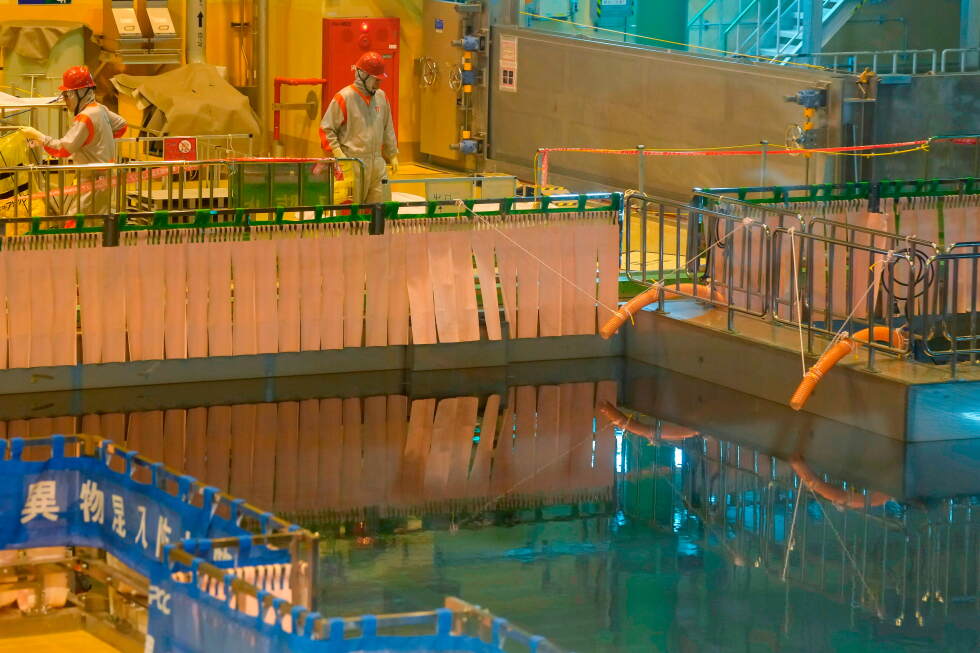
    The violence has also raised urgent global concerns over nuclear safety, after the International Atomic Energy Agency (IAEA) confirmed Saturday that one person was killed by projectile fragments when U.S. and Israeli strikes hit a site near Iran’s Bushehr nuclear power plant. The Israel Defense Forces (IDF) announced it had struck more than 120 targets across central and western Iran over the weekend, targeting infrastructure including ballistic missile stockpiles, drone production facilities and Iranian air defense systems.

    Iranian Foreign Minister Abbas Araghchi condemned the strikes near Bushehr in a post on X, drawing a parallel to international outcry over attacks on Ukraine’s Zaporizhzhia Nuclear Power Plant. “Israel-US have bombed our Bushehr plant four times now. Radioactive fallout will end life in GCC capitals, not Tehran,” Araghchi wrote, adding that attacks on Iranian petrochemical facilities also reveal the true goals of the coalition campaign. He accused U.S. media of misrepresenting Iran’s negotiating position, reiterating that Iran’s core demand is a “lasting end to the illegal war that is imposed on us”.

    World health and nuclear officials have joined the growing international outcry over the escalating violence. World Health Organization Director-General Tedros Adhanom Ghebreyesus wrote on X Sunday that he joined the IAEA in renewing alarm over the safety of Iranian nuclear facilities. “The latest incident involving the Bushehr nuclear power plant is a stark reminder: a strike could trigger a nuclear accident, with health impacts that would devastate generations,” Tedros said. “With every passing day of this escalating conflict, the stakes and threats are raised higher and higher. We must de-escalate now. Peace is the best medicine.” Former IAEA Director-General Mohamed ElBaradei went further, urging Gulf Cooperation Council (GCC) states and the United Nations to intervene to stop what he called “madman” Trump from turning the entire region into an inferno.

    In a retaliatory escalation on Sunday, Iran launched drone strikes targeting energy infrastructure across four GCC states: the United Arab Emirates, Saudi Arabia, Bahrain and Kuwait. No official casualty counts from these attacks have been released as of press time, confirming the cycle of violence continues to accelerate just days before Trump’s deadline for a negotiated resolution.

  • Oman and Iran hold talks on reopening Strait of Hormuz

    Oman and Iran hold talks on reopening Strait of Hormuz

    As widespread air strikes between the U.S.-Israeli coalition and Iran fuel a sharp escalation of conflict across the Middle East, Omani authorities have confirmed that senior diplomatic discussions with Iran are now focused on potential pathways to reopen the strategically critical Strait of Hormuz. According to Oman’s official state news agency, the talks brought together deputy foreign ministry officials and technical specialists from both nations, who have begun exploring actionable “options” to restore passage through the key waterway.

    The Strait of Hormuz, the world’s most vital chokepoint for global oil and liquefied natural gas shipments, has been effectively closed to most commercial traffic since large-scale U.S.-Israeli air assaults on Iran began in February. Oman shares a direct border with the strait, placing the small sultanate on the frontline of the regional crisis and giving it unique stakes in de-escalation and the reopening of the key waterway.

    The announcement of these diplomatic efforts comes as air operations continue to intensify across the region, with mounting civilian and military casualties reported on multiple sides. In Iran’s southwestern Kohgiluyeh and Boyer-Ahmad province, recent U.S. strikes have left at least nine people dead and eight others injured. Israeli military officials confirmed that over the past 24 hours alone, their forces have targeted more than 120 Iranian air defense and missile systems across the country.

    A targeted strike on a major petrochemical facility in southwestern Iran killed five people and injured approximately 170 others, Iranian state media reported. Five members of Iran’s Islamic Revolutionary Guard Corps (IRGC) were also confirmed killed in separate attacks on the Moghan Plain, with Iran’s official IRNA news agency referring to the slain service members as “martyrs” in an official statement.

    Escalating cross-border attacks have not been limited to Iranian territory, with impacts spreading across the Gulf and into Israel itself. Drone strikes targeting infrastructure in Kuwait caused damage to vital power and water treatment plants. In Bahrain, authorities confirmed that a fire at a facility operated by state-owned oil firm Bapco has been fully extinguished following an Iranian strike.

    In the United Arab Emirates, falling debris from an intercepted projectile sparked fires at Abu Dhabi’s major Borouge petrochemical complex, forcing operators to temporarily suspend all production at the site. The facility is one of the largest petrochemical manufacturing hubs in the Gulf.

    On the Israeli side, an Iranian rocket hit an industrial facility in southern Israel’s Neot Hovav zone near Beersheba, triggering widespread concerns over a potential hazardous chemical leak. Israeli media reported this marks the third strike on the same industrial site since the current conflict erupted. Israeli home front command issued immediate public warnings after detecting missile launches from Iran targeting both Beersheba and the key nuclear site at Dimona. Separately, rocket fire from Lebanon triggered air raid sirens across the Upper Galilee region, extending the theater of conflict to Israel’s northern border.

  • Seriously wounded US airman rescued from Iran, Trump says

    Seriously wounded US airman rescued from Iran, Trump says

    In a high-stakes operation that has been hailed as one of the most audacious rescue missions in modern U.S. military history, a second American airman missing after a U.S. F-15 fighter jet was shot down over Iran has been successfully recovered by U.S. forces.

    The incident unfolded Friday after the jet crashed, forcing both the pilot and the on-board weapons systems officer to eject from the aircraft. The pilot was pulled from the area swiftly following the crash, but the second crew member remained unaccounted for, triggering parallel search efforts by both U.S. and Iranian forces in the rugged, mountainous terrain of southwestern Iran.

    For U.S. military and intelligence leaders, the hours-long search carried enormous strategic risk: if Iranian forces had captured the airman first, he would almost certainly have become a high-value propaganda tool, and potentially held as a prisoner of war to use in negotiations with the U.S. Iran’s Islamic Revolutionary Guard Corps (IRGC) launched a large-scale manhunt for the missing service member, deploying ground troops and enlisting local civilians, with a reported reward of roughly $66,000 offered for anyone who helped capture him alive. Social media footage circulating in the hours after the crash appeared to show hundreds of Iranians heading into the mountains to join the search.

    Details of the successful rescue first broke in U.S. media outlets late Saturday, and just minutes later, former U.S. President Donald Trump confirmed the mission’s outcome in a post on Truth Social, writing simply, “WE GOT HIM!” Trump added that the rescued airman, a respected colonel, had sustained injuries during the incident but was expected to make a full recovery, praising the operation as one of the most daring search and rescue efforts in U.S. history.

    Multiple U.S. officials have shed new light on the complex operation, revealing that the weapons officer spent more than 24 hours evading capture alone in the mountains, armed only with a handgun. The CIA played a pivotal role in the mission, according to a senior U.S. official: intelligence operatives tracked the colonel to a remote mountain crevice, transmitted his exact coordinates to the Pentagon, and ran a sophisticated deception campaign across Iran to distract Iranian forces. During the rescue, the agency spread false information that the airman had already been captured and removed from the country, drawing Iranian search teams away from the actual extraction site.

    Trump later confirmed that dozens of U.S. aircraft were deployed for the mission. One aircraft, an A-10 Warthog attack jet, sustained damage while operating over the Gulf, forcing its pilot to eject before being recovered safely by U.S. forces. The White House intentionally withheld public updates after the pilot’s initial recovery on Friday to protect the secrecy of the ongoing rescue operation, a decision that military sources say contributed to its success. The BBC has also confirmed that the first pilot may have suffered injuries during his ejection from the F-15.

    Iran’s semi-official IRGC-affiliated news agency Tasnim reported that five Iranian civilians and service members were killed during the U.S. rescue operation, a claim that has not yet been independently verified by U.S. officials.

    The successful recovery comes amid a sharp escalation of military conflict across the Middle East. On Sunday morning, Abu Dhabi authorities confirmed they were working to contain large fires at the Borouge petrochemical facility, sparked by falling debris from an Iranian missile strike. Kuwait reported that Iranian drone strikes caused extensive damage to the country’s oil and petrochemical infrastructure, and industrial sites in Bahrain were also targeted. Later the same day, Israeli media reported that a ballistic missile scored a direct hit on a residential building in Haifa, leaving at least four people injured.

    Despite the escalating violence, Trump told Fox News in an interview Sunday that he believes there is a “good chance” of reaching a negotiated deal with Iran by Monday, one day ahead of a U.S.-imposed deadline for Tehran to reopen the strategically critical Strait of Hormuz. The interview came after Trump posted an expletive-laden threat on social media, repeating promises to bomb Iranian power plants and key bridges if the deadline is not met.

  • US rescues downed fighter pilot from Iran in ‘daring’ operation

    US rescues downed fighter pilot from Iran in ‘daring’ operation

    A high-stakes, multi-day diplomatic and military drama has unfolded across the Middle East this week, after a US F-15E fighter jet was shot down over Iran’s oil-rich Khuzestan Province, triggering a daring US rescue operation and deepening the standoff between Washington and Tehran amid stalled ceasefire negotiations.

    The crash of the F-15E left two crew members stranded in Iranian territory, prompting the Pentagon to launch a large-scale recovery mission involving dozens of US aircraft fitted with the most advanced weaponry in the US arsenal, former President Donald Trump confirmed. In a public statement, Trump announced the successful extraction of both airmen, writing, “WE GOT HIM! … SAFE and SOUND!” He added that the second crew member, a serving colonel, had sustained non-life-threatening injuries and was expected to make a full recovery. Trump emphasized that no US personnel were killed or wounded in the operation, crediting what he called “overwhelming Air Dominance” for the mission’s success.

    However, Iranian state media has offered a conflicting account of the operation. Iranian outlets report that five civilians and military personnel were killed in air strikes carried out by US forces during the rescue. The IRGC, Iran’s elite military force, also claimed it destroyed a US surveillance aircraft that was tracking the downed crew near the southern city of Isfahan, though no additional details about the incident have been released to the public. The New York Times also confirmed that two US transport planes suffered mechanical failures mid-mission and were deliberately destroyed by US forces to prevent sensitive military technology from falling into Iranian hands.

    Khuzestan Province, the site of the jet crash, is a critical economic backbone for Iran, housing the country’s largest oil, gas and steel production facilities. The region has faced intense bombardment over the past week, forcing production shutdowns at key industrial sites and stoking growing fears of long-term economic damage across Iran’s already strained economy.

    Beyond the immediate military operation, the standoff between the US and Iran has deadlocked efforts to broker a ceasefire after more than a month of joint US-Israeli military operations on Iranian territory. On Friday, Iran’s Fars News Agency reported that Iranian officials had rejected a US proposal for a 48-hour bilateral ceasefire, which was submitted via an unnamed third country on Wednesday. It remains unclear whether Israel would have been party to the proposed truce.

    This rejection aligns with earlier reports of stalled mediation efforts. The Wall Street Journal confirmed Friday that Pakistani-mediated ceasefire talks have collapsed after Tehran refused to hold direct talks with US officials in Islamabad, citing what Iranian leaders call unacceptable American demands. Iran’s core conditions for any ceasefire agreement include a full US military withdrawal from all bases across the Middle East, and substantial compensation for the destruction of civilian infrastructure including schools and hospitals across the country, which have been damaged in weeks of bombardment.

    Multiple regional powers have stepped forward to explore mediation opportunities, leveraging their established diplomatic ties with the Trump administration. Turkey, Egypt and Qatar have all been approached to facilitate talks, but Qatar has so far resisted international pressure to take on the mediator role, according to WSJ sources. This deadlock comes after an earlier public dispute between Tehran and Washington, when Trump claimed Iran had requested a ceasefire, a claim Iranian officials immediately denied.

    A new US intelligence assessment, first reported by CNN Thursday, suggests Iran has prepared for a prolonged conflict. The report found that after more than a month of joint US-Israeli military strikes, Iran still retains roughly half of its pre-war missile launchers and half of its stockpile of kamikaze drones. This assessment contradicts repeated public claims from Trump and Israeli Prime Minister that Iran’s military capabilities have been nearly completely obliterated, a narrative both leaders have repeated since the opening days of the conflict and as recently as this week.

  • How downed F-15 US airman was rescued inside Iran

    How downed F-15 US airman was rescued inside Iran

    In a high-stakes operation that U.S. officials are calling one of the most audacious combat search and rescue missions in modern American military history, U.S. forces have successfully recovered the second missing crew member from a U.S. F-15E Strike Eagle shot down by Iranian air defenses over southern Iran late last week.

    Former President Donald Trump confirmed the successful extraction in a series of social media posts Sunday morning, announcing the downed air officer was “now SAFE and SOUND!” before later clarifying the service member had sustained serious injuries during the incident. The two-person F-15 crew both ejected after the jet was downed, and the first crew member was recovered by U.S. forces in an earlier, separate extraction attempt.

    Details of the cross-border operation remain tightly held, but emerging accounts from U.S. officials and major media partners paint a picture of a frantic race against time between U.S. and Iranian forces to locate the missing airman after the crash. A source familiar with the mission described it as a massive, high-risk combat search and rescue (CSAR) operation launched deep into Iranian sovereign territory.

    According to CBS News, the U.S. media partner of the BBC, Trump halted multiple pre-planned U.S. operations across Iran to reallocate resources to the rescue, deploying dozens of elite special operations personnel to execute the mission. The president emphasized the extraordinary danger of the operation in his social media remarks, noting that such high-risk raids inside enemy territory are almost never attempted, calling the successful outcome a remarkable achievement.

    CSAR missions for downed aircrew are among the most complex and time-sensitive operations special operations forces prepare for, typically requiring low-flying helicopters to penetrate hostile airspace, supported by strike aircraft and combat patrols to secure the extraction zone. In this case, the downed airman, a colonel, evaded Iranian capture for more than 24 hours while hiding in rugged, treacherous southern Iranian mountain terrain. He survived alone with only a handgun, taking shelter in a rocky mountain crevice after hiking 7,000 feet up a remote ridge to avoid detection. U.S. intelligence and military teams maintained 24-hour surveillance of the colonel’s position throughout the evasion period to plan the optimal extraction window. Following the successful recovery, he was airlifted to a U.S. medical facility in Kuwait to receive treatment for his injuries.

    U.S. media reports highlight the Central Intelligence Agency playing a critical role in the mission: agency assets tracked the colonel’s exact position in the mountain crevice and relayed the coordinates directly to Pentagon planners. The CIA also ran an elaborate deception campaign inside Iran during the operation, spreading false information that the airman had already been captured and extracted to divert Iranian search teams away from the actual extraction zone. Trump confirmed that dozens of U.S. aircraft were deployed to support the mission, and emphasized that no U.S. personnel were killed or wounded during the operation itself.

    Iranian state media has pushed back on the U.S. account, claiming that Islamic Revolutionary Guard Corps (IRGC) air defense units shot down a U.S. drone that was participating in the search for the downed airman. Prior to the successful U.S. extraction, Iranian officials had announced they were searching for the missing American with the goal of taking him alive, and even offered a public reward to Iranian citizens for any information that would lead to his capture.

    Jennifer Kavanagh, director of military analysis at the Washington-based think tank Defense Priorities, explained that downed U.S. aircrew undergo rigorous training for exactly these types of survival scenarios. “Their number-one priority is to stay alive and to avoid capture,” Kavanagh told the BBC. “They’re trained to move away from the ejection site as quickly as possible, conceal their position, and rely on specialized survival training to forage for resources and go extended periods without food or water if needed.”

    Iranian state media first broke news of the downing on Friday, confirming that IRGC air defenses had shot down the U.S. jet over southern Iran. While the exact crash site has not been officially confirmed, Iranian state media has named two possible provinces: Kohgiluyeh and Boyer-Ahmad, and Khuzestan.

    Beyond the recovery of the second F-15 crew member, details have also emerged about the earlier extraction of the jet’s pilot. That operation included support from an A-10 Warthog strike aircraft, which was itself hit over the Persian Gulf, forcing its pilot to eject before he was also successfully rescued. One extraction helicopter carrying the recovered F-15E pilot sustained damage from small arms fire, leaving several crew members wounded, but the aircraft was able to land safely with no fatalities. Iran’s top joint military command has claimed that new domestically produced Iranian air defense systems were responsible for downing both U.S. aircraft, according to the country’s state-run IRNA news agency.

    The F-15E Strike Eagle is a dual-role combat aircraft designed for both air-to-air combat and deep air-to-ground strike missions. U.S. military analysts note that in the context of recent tensions with Iran, F-15s operating in the region are most commonly used for defensive counter-air missions, intercepting Iranian drones and cruise missiles targeted at U.S. regional assets. When configured for strike operations, the jet can deploy a full range of precision-guided munitions, including laser and GPS-guided bombs. The jet’s standard two-person crew consists of a front-seat pilot and a back-seat weapons systems officer, nicknamed a “Wizzo,” who is responsible for target selection and weapons programming. While no official confirmation has been released on what weapon systems downed the F-15, military analysts note that if the jet was indeed shot down by Iranian forces, a surface-to-air missile (SAM) is the most likely cause.