As Australia prepares for the Easter holiday, a national fuel crisis driven by Middle East geopolitical tensions has put the government in a delicate position: urging residents to proceed with planned getaways while calling for strict fuel conservation. The disruption stems from escalating conflict between the United States and Iran linked to Israel, which has effectively closed the Strait of Hormuz — the world’s most critical chokepoint for global energy shipments.
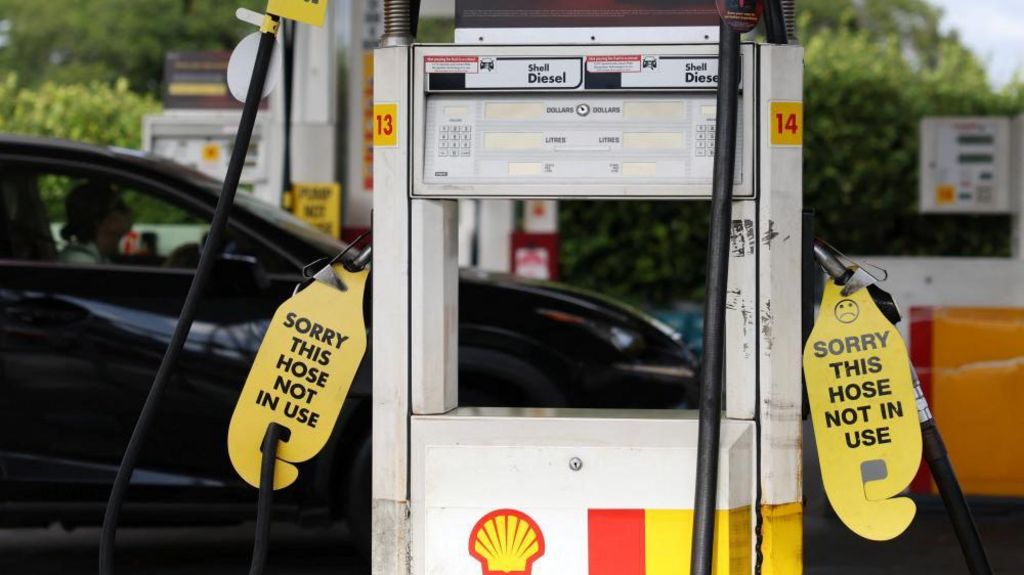
Australia’s energy sector is uniquely vulnerable to this disruption, with roughly 90% of the nation’s fuel supply imported from Middle Eastern producers. As of Saturday, Energy Minister Chris Bowen confirmed that 312 of Australia’s approximately 8,000 service stations are currently out of diesel, with shortages concentrated disproportionately in regional and rural areas where supply replenishment takes far longer than in major urban centers. To reassure the public, Bowen released official reserve figures in televised comments: the country holds 39 days of petrol reserves, 29 days of diesel, and 30 days of jet fuel stockpiled for emergency use.
In a rare national address earlier this week, Prime Minister Anthony Albanese warned Australian households that the economic fallout from the Middle East conflict will persist for months. “Australia is not an active participant in this war. But all Australians are paying higher prices because of it,” he stated, echoing a message that has been reinforced by government officials across departments. Albanese has urged residents to cut back on non-essential fuel consumption and shift to public transit for daily travel where feasible. In line with this guidance, Bowen encouraged Easter travelers Saturday to stick to necessary fuel purchases, saying “Go take a break — but get no more fuel than you need,” while affirming that Easter, as a time of faith and family gathering, remains an important occasion for communities across the country.
While the blockade has halted nearly all commercial shipping through the strait — which carries roughly 20% of the world’s daily oil and natural gas supplies — limited transits have begun to resume in recent weeks. According to French media reports, a container ship flagged in Malta and owned by leading French shipping firm CMA CGM completed a traversal of the waterway Friday. Shipping analysts confirm this marks the first time a major Western European shipping company has moved a vessel through the strait since hostilities broke out in late February. The company has not yet issued a public comment on how the vessel secured safe passage.
A handful of other vessels have also completed successful transits in recent weeks. Japanese energy infrastructure firm confirmed one of its liquefied natural gas carriers crossed the strait without incident. On Saturday, Turkey’s Minister of Transport Abdulkadir Uraloglu announced that a second Turkish-flagged vessel had completed the crossing, one of 15 Turkish ships that have been anchored waiting for passage since conflict erupted. Uraloglu told CNN Turk that the transits were made possible through Turkish diplomatic initiatives, and that the two vessels were either calling at Iranian ports or carrying cargo originating from or bound for Iran. The first Turkish transit, granted Iranian approval, took place on March 13.
Third-party data from BBC Verify, analyzed in late March, shows that roughly 100 vessels have passed through the strait since the blockade began. Though overall traffic remains down by approximately 95% compared to pre-conflict levels, the limited transits confirm that the waterway has not been completely closed to all shipping. Iran has publicly stated that “non-hostile vessels” are permitted to use the strait, but continued attacks on commercial shipping in the area have deterred most major global carriers from resuming normal operations. The disruption has sent fuel prices soaring in Australia and across global markets, prompting governments worldwide to roll out fuel conservation measures to offset supply shortages.