分类: world

  • War in the Middle East: latest developments

    War in the Middle East: latest developments

    The fragile stability of the Middle East has crumbled further in the past 48 hours, with a cascade of military strikes, conflicting claims over a high-stakes rescue mission, and shifting energy policy roiling the already volatile region. What began as long-simmering cross-border clashes has erupted into broader confrontations that threaten to draw global powers into open conflict, with multiple interconnected developments unfolding across Iran, Israel, Lebanon and the Persian Gulf.

    One of the most high-profile rifts opened between the United States and Iran, centered on control of the Strait of Hormuz — the world’s most critical chokepoint for global oil shipments. Former President Donald Trump, in a profanity-laced social media post, issued an extreme threat to Tehran, promising “hell” and pledging targeted strikes on Iranian bridges and power plants if Iran did not reopen the strategic waterway by his self-imposed Monday deadline. Speaking to Fox News shortly after the post, Trump softened his tone slightly, saying he believed a negotiated deal with Iran remained achievable, but added that he was prepared to “blow everything up and take over the oil” if no agreement was reached.

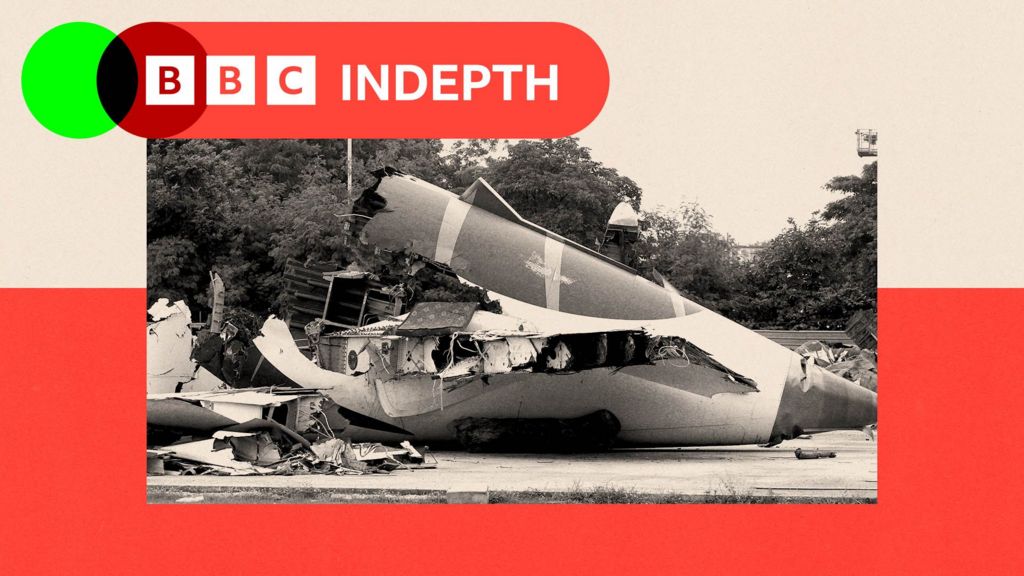
    Parallel to the Hormuz standoff, a contentious cross-border rescue operation deep inside Iranian territory has deepened mistrust between Washington and Tehran. The U.S. says a rescue mission conducted by American commandos recovered a missing airman whose F-15 fighter jet had crashed in Iranian territory, with Trump hailing the operation as “daring” and “miraculous”. Trump added that dozens of U.S. aircraft participated in the mission, and that the recovered airman had been seriously wounded. Iranian military officials have issued a starkly contradictory account, claiming the entire U.S. operation was “completely foiled”. Iranian military spokesperson Ebrahim Zolfaghari claimed two U.S. C-130 transport planes and two helicopters were destroyed during the incursion. U.S. mainstream outlets including The New York Times and CBS later corroborated parts of the Iranian account, reporting that two U.S. aircraft that became stranded at an abandoned airport in Iran’s southern Isfahan province were destroyed by American forces to prevent them from falling into Iranian custody.

    Military strikes have targeted key infrastructure across multiple countries in the region. A joint U.S.-Israeli airstrike hit the Qasem Soleimani International Airport in southwestern Iran, according to Iranian state media. Across the border in Lebanon, the Israel Defense Forces launched a new wave of strikes on the capital Beirut and its southern suburbs, targeting what it described as key infrastructure sites belonging to the Iran-backed militant group Hezbollah. Lebanese official data confirms the strikes killed at least four people and wounded 39 more. Further south in Lebanon, an Israeli airstrike on the town of Kfar Hatta — which Israeli officials previously ordered residents to evacuate — killed seven people, including an entire family of six who were waiting on the street for a relative to pick them up, Lebanese civil defense sources told Agence France-Presse. Following an Iranian attack on energy and civilian infrastructure across the Gulf, damage has been reported in three Gulf states: the United Arab Emirates, Bahrain and Kuwait. Kuwait’s state petroleum company reported “severe” damage to the country’s oil and petrochemical facilities caused by Iranian drones, while Abu Dhabi officials confirmed they were working to extinguish fires at a petrochemical plant sparked by falling drone debris.

    On the energy front, the OPEC+ alliance of major oil-producing nations announced a policy shift, agreeing to raise collective production quotas by 206,000 barrels per day starting in May. The cartel issued a stark warning alongside the quota hike, noting that repairing energy infrastructure damaged by recent regional attacks is both extremely costly and time-consuming, meaning disruptions to global oil supplies could persist for months or even years. OPEC+ also emphasized the “critical importance” of keeping global maritime trade routes open to ensure the uninterrupted flow of global energy supplies. Even as military tensions climb, limited diplomatic outreach continues: Oman’s state news agency confirmed that Omani and Iranian officials held talks focused on easing shipping restrictions through the Strait of Hormuz, with technical experts from both sides putting forward a range of proposals to de-escalate the standoff over the waterway.

    International voices have begun calling for de-escalation, with Pope Leo XIV issuing a urgent plea for peace in his first Easter blessing as pontiff, addressing thousands gathered in St. Peter’s Square. The pope condemned growing global indifference to the violence, saying “We are growing accustomed to violence, resigning ourselves to it, and becoming indifferent. Indifferent to the deaths of thousands of people.” He called directly on leaders with the power to authorize military action to “choose peace” over conflict. The shadow of war has even fallen over one of Christianity’s holiest sites: Israeli security forces imposed new access restrictions on the Church of the Holy Sepulchre in annexed East Jerusalem, the site where Christian tradition holds Jesus was crucified, buried and resurrected. On what is normally one of the busiest days of the year for the Old City, the usually crowded alleyways were silent on Easter Sunday, the holiday overshadowed by ongoing regional conflict.

  • Iran says 2 US C-130 Hercules planes, 2 Black Hawk helicopters destroyed in central airspace

    Iran says 2 US C-130 Hercules planes, 2 Black Hawk helicopters destroyed in central airspace

    TEHRAN – Amid rapidly escalating military tensions between Iran, the United States, and Israel, Iran’s top unified military command Khatam al-Anbiya Central Headquarters announced Sunday that it has destroyed four U.S. military aircraft in the country’s central airspace during a purported American rescue mission.

    According to Iranian state news agency IRNA, spokesperson Ebrahim Zolfaghari confirmed that the destroyed assets include two U.S. Air Force C-130 Hercules transport planes and two Black Hawk utility helicopters. The aircraft were intercepted and taken out during a coordinated joint operation conducted by Iran’s Islamic Revolution Guards Corps (IRGC), regular army, voluntary Basij militia, and national law enforcement forces operating south of Isfahan province in central Iran, Zolfaghari added.

    The Iranian military spokesperson framed the U.S. incursion as a covert deceptive operation disguised as a pilot rescue mission. Zolfaghari explained that the U.S. action was launched under the false pretense of retrieving a pilot from a previously downed American aircraft at an abandoned airfield south of Isfahan, and that the operation ended in total defeat thanks to the rapid, coordinated response of Iranian armed forces.

    He further accused sitting U.S. President Donald Trump of deliberately spreading misinformation to confuse global public opinion in an attempt to downplay and justify what he called the U.S. military’s “bitter defeat.”

    The latest exchange of claims comes two days after the IRGC announced it had shot down an American F-35 stealth fighter jet in central Iranian airspace, adding at the time that the fate of the jet’s crew remained unconfirmed. Shortly after that announcement, U.S. officials stated that one pilot from the downed aircraft had already been recovered, with search operations ongoing for the second.

    On Sunday morning, President Trump took to his social media platform Truth Social to issue a counterclaim, hailing what he called “one of the most daring search and rescue operations in U.S. history.” He added that the second downed pilot had been successfully rescued and was unharmed.

    This new escalation comes just over a month after a major regional attack that upended Middle East security. On February 28, the United States and Israel launched a joint airstrike campaign targeting Tehran and multiple other Iranian urban centers, which killed Iran’s Supreme Leader Ali Khamenei alongside multiple senior military commanders and civilian bystanders. In response, Iran launched a massive retaliatory campaign of missile and drone strikes targeting Israeli territory as well as U.S. military bases and assets positioned across the Middle East, pushing the region to the brink of full-scale open war.

  • ‘Choose peace’: Pope marks first Easter under cloud of Mideast war

    ‘Choose peace’: Pope marks first Easter under cloud of Mideast war

    In his inaugural Easter Sunday address as the supreme leader of the global Catholic Church, Pope Leo XIV delivered a urgent, impassioned call for global actors to prioritize peace amid the raging, region-spanning war that has reshaped life across the Middle East just months after his election to the papacy. Speaking to thousands of worshippers and pilgrims gathered in Vatican City’s St. Peter’s Square, the pontiff, who was chosen to succeed the late Pope Francis in May 2025, called out the growing global complacency toward violence that has settled over communities worldwide.

    “We are growing accustomed to violence, resigning ourselves to it, and becoming indifferent. Indifferent to the deaths of thousands of people,” Pope Leo told the assembled crowd. The conflict, which erupted on February 28 following joint U.S.-Israeli military strikes against Iran, has since escalated to draw in actors across the entire Middle East, sending shockwaves through global energy and commodity markets and severely disrupting economic activity worldwide. This year’s Easter celebrations, one of the holiest observances on the Christian calendar for the world’s 1.4 billion Catholics, have been overshadowed by the conflict from the Vatican to the Holy Land.

    Pope Leo, who has already established himself as one of the most prominent global voices calling for an immediate de-escalation of the conflict, revealed plans Sunday for a special prayer vigil to be held at the Vatican on April 11 focused on peace in the region. He also used the holiday address to pay tribute to his predecessor, Pope Francis, who made his final public appearance exactly one year prior on Easter Sunday, passing away just hours later. In a move that amplified his diplomatic pressure, the pontiff confirmed this week he had personally reached out to U.S. President Donald Trump to urge the administration to seek a diplomatic off-ramp to end the hostilities. Reflecting on the moral weight of the ongoing conflict, he added, “We live in a world ravaged by wars and marked by a hatred and indifference that make us feel powerless in the face of evil.”

    Thousands of kilometers away in Jerusalem, the heart of Christian worship, the holiday unfolded against a backdrop of eerie emptiness. The narrow, usually bustling alleyways of Jerusalem’s Old City stood silent, the area all but abandoned amid the expanding regional conflict that follows months of fighting in Gaza. Israeli security authorities have implemented harsh new restrictions on access to the Church of the Holy Sepulchre, the site where Christian tradition holds Jesus Christ was crucified and resurrected, citing ongoing security concerns. Only a small fraction of the usual number of worshippers were permitted to approach the sacred site, with police checkpoints deployed along all access routes to screen visitors. Every shop and business in the surrounding area shuttered for the holiday, deepening the pervasive sense of loss and disruption.

    For pilgrims who traveled thousands of miles to mark the holiday at the holy site, the restrictions have been devastating. “It’s very hard for all of us because it’s our holiday… It’s really hard to want to pray but to come here and find nothing. Everything is closed,” 44-year-old Romanian pilgrim Christina Toderas told reporters. Otmar Wassermann, a 65-year-old visitor who was turned away from the church, shared that he left the site feeling deeply frustrated by the disruption to the centuries-old tradition of open Easter worship.

    Cardinal Pierbattista Pizzaballa, the Latin Patriarch of Jerusalem, addressed the grim reality in his Easter Vigil homily delivered at the restricted site. “The doors are still closed,” he stated, referencing an incident just one week prior when Israeli police blocked him from holding a scheduled mass at the church, a move that sparked widespread international condemnation. In published excerpts of his sermon released by his office, he added, “The silence is almost absolute, broken perhaps by the distant sound of what war continues to sow in this holy and torn land.”

    The conflict has upended Easter celebrations across every corner of the Middle East, home to some of the world’s oldest and most vulnerable Christian communities. In southern Lebanon, majority-Christian towns along the border with Israel are trapped between ongoing crossfire between Israeli forces and the Iran-backed Hezbollah movement. In the small border village of Debel, residents marked the holiday to the constant roar of artillery bombardment surrounding their community. The village is now almost completely cut off from basic services, with residents relying entirely on humanitarian aid deliveries to survive. “The situation is tragic,” local community leader Joseph Attieh told AFP via phone. “People are terrified, and the sound of shelling and gunfire has not stopped for a moment since last night. We haven’t been able to sleep. We are putting our trust in God, because this is the only glimmer of hope we will not give up on.”

    Further afield, the security risks of the conflict have forced Christian leaders to cancel or scale back traditional Easter observances. In Dubai, all public Easter masses have been suspended indefinitely as a security precaution. In Damascus, the capital of Syria, Catholic officials confirmed Easter celebrations would be limited to small, private masses following a recent deadly attack on a majority-Christian town in central Syria, leaving communities reeling.

  • Sweden releases sanctioned tanker due to lack of evidence it caused oil spill

    Sweden releases sanctioned tanker due to lack of evidence it caused oil spill

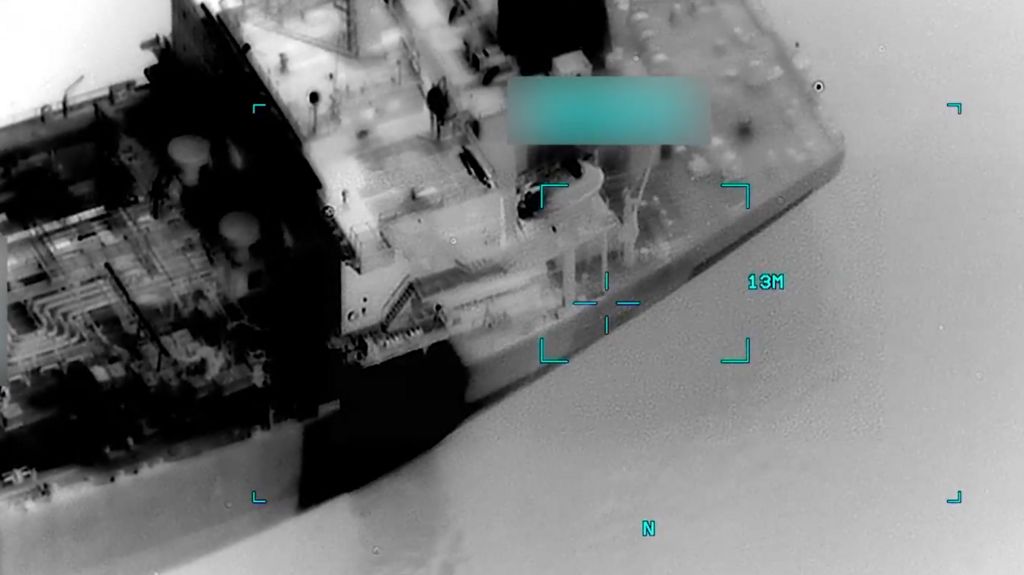
    In a recent development out of the Baltic Sea region, Swedish law enforcement authorities have released an EU-sanctioned oil tanker that was held last week over suspicions it was responsible for a major offshore oil leak. The vessel, identified as the *Flora 1*, was boarded and detained after a 12-kilometer (8-mile) long oil slick was spotted in the Baltic Sea on Thursday.

    Sweden’s Coast Guard announced Tuesday that after a full evidentiary review, investigators did not uncover enough concrete proof to tie the tanker to the spill, clearing the way for its release. The agency also noted that investigators have now confirmed the *Flora 1* is legally registered under the flag of Cameroon — a detail that remained unconfirmed at the time the vessel and its 24-person crew were taken into custody on Friday.

    The *Flora 1* was added to the European Union’s sanctions list of vessels linked to Russian oil trade over what officials describe as consistent “irregular and high-risk shipping practices.” These unsafe operational habits frequently include disabling the automatic identification systems (AIS) that broadcast a vessel’s real-time location to other maritime traffic, a common tactic to obscure a ship’s movements and cargo origin.

    This round of EU sanctions targets what has become known as the “shadow fleet” of oil tankers, a network that emerged following the Group of Seven democracies’ implementation of a price cap on Russian crude. The cap was designed to cut into the revenue Russia uses to fund its ongoing full-scale invasion of Ukraine, and it operates by banning Western-linked insurance and shipping providers from handling Russian cargo sold above the set price threshold.

    Shadow fleet vessels are typically aging ships with opaque ownership and insurance registered in nations that do not abide by the G7 price cap. Maritime safety experts have long warned that the advanced age of these vessels, combined with their lack of Western-backed insurance coverage, creates major environmental risks — including higher likelihood of accidental oil spills, and widespread uncertainty over who would be held financially responsible for cleanup costs if a major incident occurs.

    According to data from the Ukrainian government, the *Flora 1* was most recently owned by a Hong Kong-based company as of late 2025, and has been sanctioned not only by the EU but also by the United Kingdom, Canada, Australia, Switzerland, and New Zealand. Open-source maritime tracking records show the tanker has changed its name six times and re-flagged in nine different countries over its operational history. It has also previously been documented disabling its AIS tracking system and conducting unscheduled ship-to-ship oil transfers — a common tactic to hide the true origin of crude cargoes. Under current international sanctions, all economic and operational transactions involving the listed vessel are strictly prohibited.

  • War in the Middle East: latest developments

    War in the Middle East: latest developments

    The ongoing conflict across the Middle East has entered a new phase of widespread escalation, with fresh violence, diplomatic overtures, and global calls for peace unfolding across multiple nations over the past 24 hours.

    In his inaugural Easter address to thousands gathered in St Peter’s Square, Pope Francis delivered a stark rebuke of rising global violence, urging leaders holding the power to initiate conflict to prioritize peaceful resolution. “We have slowly grown numb to bloodshed, accepting violence as an unchangeable reality and becoming desensitized to the deaths of thousands of innocent people,” the Pope stated, a message that comes as regional casualty counts continue to climb.

    One of the deadliest recent incidents occurred in the southern Lebanese town of Kfar Hatta, where an Israeli airstrike took the lives of seven people, including an entire family of six. Lebanese civil defense sources confirm the family had gathered in the town, located 45 miles from the Israeli-Lebanese border, to await evacuation after Israeli orders to clear the area. This strike comes amid a broadening Israeli offensive against Hezbollah targets across Lebanon, including the capital Beirut. The Israeli military confirmed it launched a new wave of strikes on Beirut targeting what it calls Hezbollah infrastructure sites, with eyewitnesses on the ground reporting low-flying Israeli warplanes and missile impacts on residential buildings in the city’s southern districts.

    Tensions between the U.S. and Iran have also spiked following a high-stakes rescue mission for a downed U.S. fighter jet crew. U.S. President Donald Trump hailed the recovery of the missing airman in what he called a “daring” special operations mission, noting the service member was injured but expected to make a full recovery. A second crew member was rescued a day earlier. However, Iranian military spokesman Ebrahim Zolfaghari rejected Trump’s account, claiming the operation was “completely foiled” by Iranian forces, who he says destroyed two U.S. C-130 transport planes and two helicopters during the confrontation.

    Iran has also launched a widespread aerial campaign against Gulf nations aligned with Israel and the U.S., causing widespread disruption to critical energy and infrastructure facilities. In Bahrain, an Iranian drone strike ignited a large blaze at a storage tank operated by state energy giant Bapco Energies. While the fire has been fully contained and no injuries have been reported, the company confirmed assessments of structural damage are still ongoing. Across the border in the United Arab Emirates, Abu Dhabi emergency crews battled fires at a major petrochemical plant caused by falling debris from Iranian attacks. The facility has suspended all operations pending damage assessments, with no casualties reported to date. Iranian forces specifically targeted UAE aluminum production facilities, according to statements from the UAE’s defense ministry, which confirmed its air defense systems are actively intercepting incoming missile and drone threats. Further north, two of Kuwait’s power and water desalination plants were damaged in an Iranian drone strike, forcing the shutdown of two major electricity generating units. No casualties have been reported in the Kuwaiti attack.

    Hezbollah, the Lebanese militant group, announced it had conducted its first cruise missile strike on an Israeli warship off the Lebanese coast, a significant escalation of cross-border hostilities. The Israeli military however said it had no confirmation of the attack taking place.

    On the Iranian domestic front, a record-breaking national internet shutdown has entered its 37th day, making it the longest sustained nationwide internet blackout ever recorded globally, according to internet monitoring group NetBlocks. In a separate development, U.S.-Israeli joint strikes killed five members of Iran’s Islamic Revolutionary Guard Corps in the country’s northwestern Ardabil province, Iranian state news agency IRNA confirmed.

    Amid the escalating violence, diplomatic efforts are still underway to de-escalate key flashpoints. Oman and Iran held bilateral talks focused on securing safer freedom of navigation through the strategic Strait of Hormuz, a critical chokepoint for nearly 20% of the world’s daily oil supplies, Omani state media reported Sunday. Both sides’ technical experts put forward a series of proposals to ease tensions around the strait, according to the agency. Lebanese President Joseph Aoun has also reiterated his call for urgent negotiations with Israel, saying he seeks to prevent southern Lebanon from suffering the same level of widespread destruction that Gaza has endured. “It is an open secret that Israel intends to replicate the Gaza campaign in southern Lebanon,” Aoun said in a national televised address following the launch of expanded Israeli airstrikes and ground operations in southern Lebanon.

  • Pope Leo urges peace in first Easter Mass as Christians celebrate in Jerusalem, Gaza and Tehran

    Pope Leo urges peace in first Easter Mass as Christians celebrate in Jerusalem, Gaza and Tehran

    VATICAN CITY – In his inaugural Easter Mass as head of the Catholic Church, Pope Leo XIV delivered a impassioned plea for global disarmament and peacebuilding through dialogue on Sunday, marking a notable departure from longstanding papal tradition during his iconic Urbi et Orbi blessing from St. Peter’s Basilica’s central loggia. The first American-born pontiff centered his celebration on Easter’s core message of hope tied to the Christian belief in Jesus Christ’s resurrection following crucifixion.

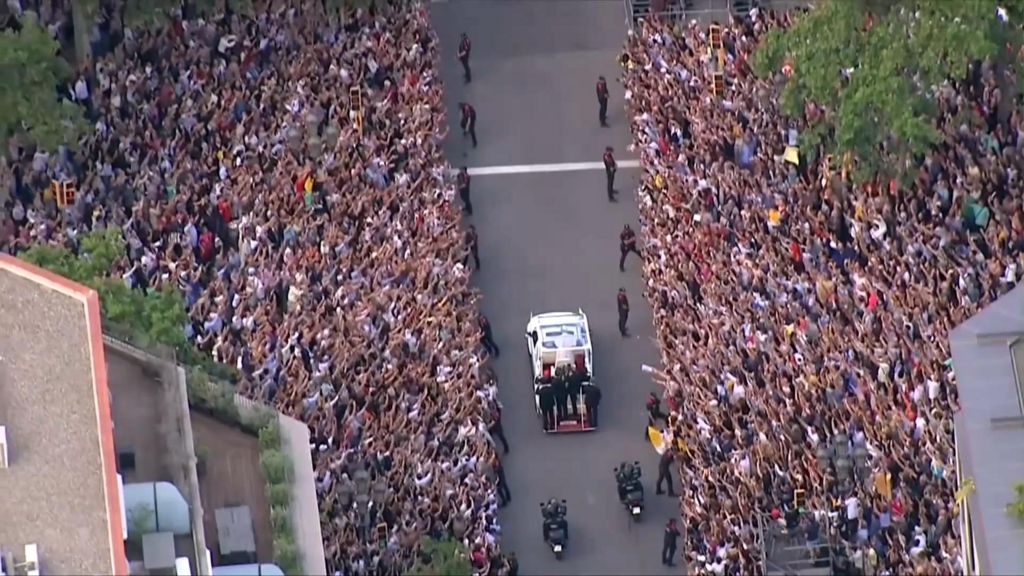
    “Let us allow our hearts to be transformed by his immense love for us! Let those who have weapons lay them down! Let those who have the power to unleash wars choose peace! Not a peace imposed by force, but through dialogue! Not with the desire to dominate others, but to encounter them!” Leo urged the crowd of roughly 50,000 faithful gathered in St. Peter’s Square. The open-air altar where he spoke was flanked by white roses, with spring perennials lining the steps leading to the piazza, a visual echo of the renewal at the heart of his message.

    Against the backdrop of two active major global conflicts – the second month of U.S.-Israeli military operations in Iran and Russia’s continued invasion of Ukraine – Leo called out widespread global indifference to human suffering caused by war. “We have grown indifferent to the deaths of thousands of people … to the repercussions of hatred and division that conflicts sow … to the economic and social consequences they produce,” he said. He drew on the words of his late predecessor, Pope Francis, who from the same loggia a year prior warned of a “great thirst for death, for killing, we witness each day.” Francis, who had been weakened by prolonged illness, died just one day after that 2024 Easter appearance, on Easter Monday.

    Unlike traditional Urbi et Orbi blessings – which have long included a named list of global conflicts and crises – Leo did not explicitly name the wars at the center of global attention. He had followed the traditional naming practice during his Christmas blessing just months earlier, and no official explanation for the shift was offered immediately after the address. From the loggia, the pope announced a special prayer vigil for peace will be held in St. Peter’s Basilica on April 11.

    Alongside the break from naming conflicts, Leo has already signaled small but noticeable shifts in papal tradition early in his tenure. He revived the practice of greeting the global faithful in 10 languages, including Arabic, Chinese, and Latin – a custom Francis had allowed to lapse. After his blessing, he stepped out of the loggia’s shadow to wave directly to the cheering crowd before departing via popemobile, traveling all the way down Via della Conciliazione to the Tiber River and back to greet attendees in the piazza. On Holy Thursday, he reclaimed the tradition of washing only priests’ feet, a gesture of encouragement for clergy, after Francis expanded the practice to include women, non-Christians, and prisoners during visits to prisons and care facilities for disabled people. The 70-year-old pontiff also became the first pope in decades to carry a light wooden cross for the entire 14-station Good Friday Way of the Cross procession.

    Beyond the Vatican, Easter celebrations across conflict zones were shaped by ongoing violence and uncertainty this year. In the Holy Land, traditional ceremonies at the Church of the Holy Sepulchre – revered as the site of Jesus’ crucifixion and resurrection – were scaled back under an agreement with Israeli police, who imposed crowd size limits due to ongoing missile attacks. The restrictions have also disrupted the Muslim holy month of Ramadan and Eid al-Fitr, as well as the ongoing Jewish Passover festival: the annual priestly blessing at the Western Wall, which usually draws tens of thousands, was capped at just 50 attendees on Sunday. Tensions between Israeli authorities and Christian leaders have escalated in recent days, after police blocked two senior church leaders, including Latin Patriarch Pierbattista Pizzaballa, from entering the Church of the Holy Sepulchre for Palm Sunday celebrations last week.

    In Gaza, the tiny Palestinian Christian community held its first Easter celebrations following a recent ceasefire, bringing a long-awaited sense of relief after years of conflict. At Gaza City’s Holy Family Church, Catholics of all ages gathered for traditional Mass, forming a line to kiss a sketch of Jesus held by clergy, with the glass frame cleaned between each visitor. “There is great joy, especially after the ceasefire and after nearly three years of suffering and being unable to celebrate all the holy holidays,” said George Anton of Gaza City. “People are somewhat relieved and more stable.”

    In Iran, five weeks into the U.S.-Israeli military campaign, Armenian Christians gathered in the capital Tehran to celebrate Easter, working to maintain a sense of normalcy for their community amid daily airstrikes. At St. Sarkis Cathedral in central Tehran, families hugged and children exchanged hand-painted Easter eggs. “Whether we like it or not, we have young children who do not understand what’s going on,” said 40-year-old English teacher Juanita Arakel. “They just need to feel normal.” Iran is home to roughly 300,000 Christians, most of whom are Armenian, and three seats in the country’s parliament are reserved for Christian representatives. “Our calls and prayers are that we will be able to end this war,” said Sepuh Sargsyan, archbishop of the Armenian Diocese of Tehran, repeating the plea to emphasize the community’s longing for peace.

    This report was contributed by Barry reporting from Milan, with additional reporting from Associated Press journalists Josef Federman in Jerusalem, Wafaa Shurafa in Deir al-Balah, Gaza Strip, and Bassem Mroue in Tehran, Iran.

  • UAE arrests flight attendant over war image in ongoing Dubai crackdown

    UAE arrests flight attendant over war image in ongoing Dubai crackdown

    A 25-year-old British cabin crew member has been taken into custody in the United Arab Emirates (UAE) after sharing an image of drone strike damage in a private WhatsApp conversation with colleagues, in a case that has thrown a spotlight on widening restrictions on documentation of regional conflict and sparked fresh debate over Dubai’s reputation as an open, globally connected hub.

    The young worker posted a photograph of destruction close to Dubai International Airport to the group chat, where he simply asked his coworkers whether it remained safe to pass through the airport grounds, according to initial reporting from the Daily Mail. After he was detained, law enforcement officials searched his personal mobile device and filed charges against him under the country’s strict cybercrime legislation. If convicted, he could face a maximum sentence of two years in prison and financial penalties exceeding $50,000.

    This arrest is not an isolated incident: it forms part of a sweeping surge in detentions that began when the Israel-U.S. conflict against Iran launched on February 28, rights campaigners and media investigations confirm. To date, dozens of British citizens — including leisure travelers, long-term expatriate residents, and aviation workers just like the detained flight attendant — have been taken into custody for filming or circulating imagery connected to recent missile and drone attacks across the UAE.

    Detained in Dubai, an advocacy organization that supports foreign nationals held in the emirates, reports that most detainees are charged under laws that criminalize any content ruled to “disturb public security.” The group estimates the total number of affected British nationals could climb as high as 70. In one high-profile example already documented, a 60-year-old British tourist was detained after capturing footage of a strike, even though witnesses confirm he deleted the clip immediately when approached by police officers.

    The ongoing crackdown comes at a time when the UAE has invested heavily in marketing Dubai as a welcoming global crossroads for international tourism, cross-border business, and digital content creators. Expatriate communities make up the overwhelming majority of Dubai’s total population, and critics warn the wave of arrests risks alienating the very groups that form the foundation of the emirate’s economic strength and global soft power.

    The UAE’s attorney general has publicly reaffirmed that anyone sharing conflict-related content during periods of crisis will face “immediate criminal accountability.” But human rights advocates argue the strict new measures threaten to erode the carefully crafted image of openness Dubai has built over decades, as state officials move to tightly control how the ongoing regional conflict is reported and discussed within the country’s borders.

    Radha Stirling, CEO of Detained in Dubai, noted in a public statement that countless pieces of imagery, video, and reporting on the conflict circulate freely online across global platforms. “People understandably assume that if something is already widely shared or published by media outlets, it must be acceptable to comment on or repost it. In the UAE, that assumption can be extremely dangerous,” Stirling said.

  • Pro-Palestine rallies sweep Syria amid Gaza genocide and Israeli occupation

    Pro-Palestine rallies sweep Syria amid Gaza genocide and Israeli occupation

    Thousands of Syrian citizens have mobilized across nearly every major region of the country to join mass pro-Palestine demonstrations, condemning two key Israeli actions: a newly enacted discriminatory execution law targeting Palestinian prisoners and the ongoing illegal occupation of Syrian sovereign territory.

    The wave of protests ignited on Friday afternoon in the capital Damascus, before rapidly spreading to cities and provinces including Daraa, Quneitra, Aleppo, Latakia, Homs and Idlib, as well as long-standing Palestinian refugee camps such as Yarmouk and Khan al-Sheikh. Demonstrators assembled in large crowds to organize peaceful marches, solemn vigils and student-led rallies, uniting in shared opposition to Israeli policy.

    The mass mobilization was directly triggered by the passage of Israel’s controversial new prisoner law, which codifies the execution of Palestinian detainees within a racially segregated legal framework that explicitly excludes Jewish citizens from the policy. This discriminatory legislation has already drawn widespread international condemnation for its violation of basic human rights norms.

    At Aleppo University, thousands of student demonstrators packed the campus grounds, waving both Syrian and Palestinian flags and holding hand-painted banners carrying messages including “Palestinian prisoners are not numbers” and “Executing prisoners is a crime against humanity.” Crowds repeatedly chanted iconic solidarity slogans, including “With our souls, with our blood, we will redeem you, Palestine” and “Freedom for the prisoners of Palestine.”

    Beyond solidarity with Palestinian prisoners, the demonstrations also channeled deep, long-simmering anger over Israel’s ongoing occupation of southern Syrian territory, most notably the disputed Golan Heights region. In the frontier province of Quneitra, where local residents face repeated Israeli military incursions into their communities, a group of protesters advanced toward front-line confrontation zones, prompting Israeli forces to respond by firing illumination flares into the area.

    Hours earlier on the same Friday, Israeli military forces shelled a civilian vehicle traveling through the Quneitra countryside, killing all occupants inside the car. Syria’s Ministry of Foreign Affairs quickly issued a formal condemnation of the strike, labeling it a “flagrant violation of international humanitarian law” and accusing Israel of systematically endangering innocent civilian lives. The ministry issued an urgent call for the international community to intervene to stop what it described as Israel’s “repeated violations” of Syrian sovereignty and global legal norms.

    In the southern city of Daraa, additional demonstrations drew crowds of angry protesters who waved national and solidarity flags and pledged unwavering support for the people of Gaza. Many speakers at the Daraa protests explicitly linked the Palestinian struggle against Israeli occupation to Syria’s own decades-long experience of fighting foreign territorial encroachment, framing both conflicts as part of a shared fight for self-determination.

  • UAE condemns pro-Palestine protests targeting its embassy in Syria

    UAE condemns pro-Palestine protests targeting its embassy in Syria

    As public fury over Israel’s military campaign in Gaza continues to sweep across the Middle East, pro-Palestinian protests in the Syrian capital Damascus have escalated into direct anger against the United Arab Emirates, with demonstrators targeting the Gulf state’s diplomatic mission over its open support for Israel amid the ongoing conflict.

    On Friday, dozens of protesters assembled outside the UAE embassy in Damascus, with some chanting provocative slogans labeling the compound a “Zionist embassy,” according to a reporter on the ground from Reuters. This demonstration was one of many coordinated protests held across Syria, all sparked by widespread international condemnation of Israel’s policies toward Palestinians that has stoked deep resentment across the entire region. The unrest also comes on the heels of a controversial move by Israel’s legislative system, which approved a new law earlier that week that permits the execution of Palestinian prisoners; critically, the law does not extend this penalty to Jewish citizens of the state.

    A senior Syrian security official confirmed to Reuters that a group of demonstrators split off from a much larger rally held in central Damascus’ Umayyad Square and attempted to force entry into the embassy compound. “Internal security forces prevented them from doing so and dealt with the situation,” the official stated, adding that order was restored without major casualties.

    The UAE has faced growing backlash across the Arab and Muslim world ever since it normalized diplomatic and economic relations with Israel in 2020 as part of the U.S.-brokered Abraham Accords, building a deepening strategic and economic alliance with Tel Aviv that many regional actors view as a betrayal of Palestinian national aspirations. Back in January, a prominent Saudi academic publicly denounced the UAE, accusing the country of throwing itself “into the arms of Zionism” and acting as “Israel’s Trojan horse in the Arab world” to undermine Saudi regional influence and claim regional dominance for itself.

    In an official statement released the day after the Damascus protest, the UAE condemned what it described as “riots, acts of vandalism, and assaults” outside its embassy and the private residence of its top diplomatic envoy in Syria. The country’s foreign ministry called on Syrian government authorities to uphold their international obligations to protect diplomatic missions operating on its territory, launch a full investigation into the incident, and prosecute all individuals found responsible for the unrest.

    Syria’s foreign ministry has not issued a direct comment on the specifics of the protest, but it did reaffirm the country’s long-held “firm and unwavering stance” against any intentional targeting of foreign diplomatic compounds on Syrian soil.

    The Friday demonstration was not the first time the UAE embassy in Damascus has faced protests in recent weeks. Earlier demonstrations were organized over the unresolved detention of senior Syrian official Issam Bouidani by UAE authorities. A former leader of the militant group Jaish al-Islam, Bouidani was taken into custody during a stop at Dubai International Airport this past April, and he currently holds a senior leadership role in Syria’s national defense institutions. UAE officials have never publicly disclosed the reasoning behind his arrest, leaving the case shrouded in ambiguity.

    As public anger over Israel’s military campaign in Gaza continues to resonate across the Middle East, mass protests are increasingly being directed at regional governments that have chosen to normalize relations with or align themselves closely with Tel Aviv, reflecting a major shift in public opinion across the region that is reshaping geopolitical dynamics.

  • Iran authorizes passage of ships carrying essential goods to its ports through Hormuz

    Iran authorizes passage of ships carrying essential goods to its ports through Hormuz

    Against a backdrop of heightened regional conflict following joint U.S.-Israeli strikes on Iranian territory in late February 2026, Iran has issued formal authorization for vessels carrying essential and humanitarian cargo to transit the Strait of Hormuz en route to its domestic ports, semi-official Iranian news outlet Tasnim has reported.

    The policy shift, outlined in an official March 1 correspondence from Iranian Deputy Agriculture Minister Hooman Fathi to the country’s Ports and Maritime Organization (PMO), confirms that both the Iranian national government and the country’s armed forces have signed off on the adjusted navigation rules for these specific vessels. Fathi’s instructions direct the PMO to grant entry approval for cargo ships bound for Iranian ports or already anchored in the Gulf of Oman that are transporting humanitarian goods, prioritizing basic essential commodities and livestock production inputs, in compliance with established national shipping protocols. Going forward, a curated list of eligible vessels will be shared with relevant authorities to streamline coordination and processing.

    This updated regulatory framework comes after weeks of heightened naval control over the strategic waterway, a response to the major escalation of hostilities that shook the region late last month. On February 28, the United States and Israel launched coordinated aerial attacks on Tehran and multiple other urban centers across Iran, killing then-Iranian Supreme Leader Ali Khamenei alongside a number of senior government officials and civilian bystanders. In retaliation, Iran launched multiple waves of missile and drone strikes targeting both Israeli territory and U.S. military installations across the Middle East, and subsequently implemented strict movement controls on shipping transiting the Strait of Hormuz — a chokepoint that carries roughly a fifth of the world’s total oil trade and serves as a critical access route for maritime commerce to and from Iranian ports.