分类: world

  • Iran says it rejects Trump offer of 48-hour ceasefire: Report

    Iran says it rejects Trump offer of 48-hour ceasefire: Report

    Diplomatic efforts to end the more than month-long U.S.-Israeli military campaign against Iran have hit a major impasse this week, after an Iranian official confirmed Friday that Tehran has formally turned down a U.S.-brokered proposal for a 48-hour bilateral ceasefire. Iranian state-aligned Fars News Agency, quoting an anonymous senior official source, announced the rejection, adding the U.S. had tabled the offer Wednesday through an unspecified third-party intermediary. It remains unclear whether the proposed truce would have also required Israel, a key U.S. partner in the ongoing campaign, to halt military operations.

    The rejection marks the second high-profile breakdown of ceasefire efforts in recent days, following a report from The Wall Street Journal Friday that Pakistani-mediated talks had collapsed. The deadlock came after Iran refused to send delegates to meet U.S. officials in the Pakistani capital Islamabad, citing what Tehran called non-negotiable, unacceptable terms set by Washington. Iran has laid out two non-negotiable conditions for any lasting ceasefire agreement: a full withdrawal of all U.S. military forces from bases across the Middle East, and financial compensation for extensive damage to Iranian civilian infrastructure, including schools, hospitals and other critical public facilities that have been destroyed in the joint campaign.

    Multiple regional states with close ties to the Trump administration—including Turkey, Egypt and Qatar—have been approached to lead new mediation efforts, but Qatari officials have so far resisted public and private pressure from Washington and regional actors to take on the mediating role, the WSJ report added.

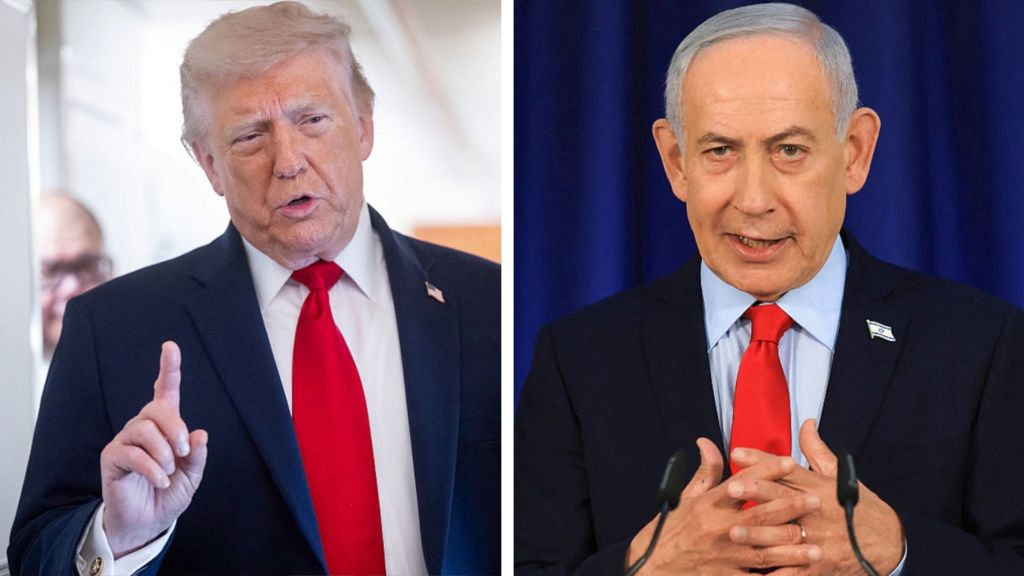
    The development comes amid a broader public dispute between U.S. and Iranian officials over ceasefire overtures: Earlier this week, former U.S. President Donald Trump claimed Iran had been the first party to request a truce, a claim Iranian officials have outright denied.

    U.S. intelligence assessments suggest Iran has long prepared for a protracted conflict, retaining significant military capacity even after weeks of intensive bombardment. A U.S. intelligence review first reported by CNN Thursday found that roughly half of Iran’s original missile launcher fleet and kamikaze drone inventory remains intact after more than 30 days of fighting. That assessment directly contradicts repeated public claims from Trump and Israeli government leaders, who have consistently used rhetoric describing an effort to totally “obliterate” Iran’s military capabilities, with the most recent such comments coming as late as this Wednesday.

    On Friday, the conflict escalated dramatically after Iran’s Islamic Revolutionary Guard Corps air defenses shot down a U.S. F-15E Strike Eagle over southwestern Iran. Semi-official Iranian news agency Tasnim carried confirmation of the downing from a spokesperson for Iran’s Khatam al-Anbiya Central Headquarters, the country’s top military command, who said the aircraft had been “completely destroyed.” Iran initially misidentified the jet as an F-35 stealth fighter before U.S. military officials confirmed the platform to be an F-15E.

    The two-person crew ejected before the crash, and CBS News reported Friday that one crew member has already been recovered by U.S. search and rescue forces, while operations to locate the second pilot remain ongoing. Iranian state-affiliated local media reports the jet was targeted over Kohgiluyeh and Boyer-Ahmad province, a remote, mountainous rural region in central-southwestern Iran.

    Shortly after the first downing was confirmed, The New York Times reported Friday that a second U.S. combat aircraft, an A-10 Warthog ground attack plane, had been shot down near the Strait of Hormuz in the Gulf region. The single-seat aircraft’s pilot was successfully rescued by U.S. forces, the outlet added.

  • US pilot rescued after ejecting over Iran: Israeli media

    US pilot rescued after ejecting over Iran: Israeli media

    In the latest development unfolding amid already soaring Middle Eastern tensions, multiple Israeli media outlets have confirmed that a U.S. fighter pilot ejected over Iranian airspace after his aircraft was downed, and has since been safely recovered. The revelation was first shared by Israel’s Channel 12 News on Friday, with other Israeli journalistic sources corroborating the report, though key questions remain unanswered about the second crew member on the stricken jet.

    According to the outlets, the status of the navigator who was also aboard the downed aircraft is still unknown, as search operations continue across central Iran to locate the missing crew member. Citing information from a senior unnamed Israeli official, Channel 12 added that the Israel Defense Forces has called off planned strikes in the Iranian region where the search for the navigator is currently underway, to avoid disrupting ongoing recovery efforts.

    Israel’s state-owned public broadcaster Kan TV News further reported that Israeli intelligence bodies are actively supporting U.S. operations to track down the downed jet’s two-person crew, sharing critical reconnaissance and location data to assist in the search.

    The incident traces back to earlier the same day, when Iran’s Islamic Revolution Guard Corps (IRGC) announced that its aerospace division had successfully intercepted the aircraft using advanced domestic air defense systems, shooting it down over central Iranian territory. Photos circulated by Iranian state media purport to show wreckage fragments from the downed U.S. jet, captured in the area after the incident.

    This downing comes against a backdrop of drastically escalated cross-border hostilities that have roiled the region since late February. On February 28, joint U.S.-Israeli military strikes targeting sites inside Iran kicked off the latest cycle of open conflict, prompting Iran to launch retaliatory missile and drone assaults against both Israeli territory and U.S. military installations positioned in neighboring Gulf states. The ongoing clashes have raised widespread international alarm over the risk of a full-scale regional war that could draw in global powers.

  • Israel’s campaign against Unrwa could set precedent to dismantle other UN agencies, chief warns

    Israel’s campaign against Unrwa could set precedent to dismantle other UN agencies, chief warns

    In a swansong interview with Middle East Eye’s David Hearst Podcast, outgoing Commissioner-General of the United Nations Relief and Works Agency (UNRWA) Philippe Lazzarini has issued a stark warning to the international community: if UN member states permit Israel to eliminate the only organization dedicated to delivering education and healthcare to Palestinian people, no UN agency will be safe from the same fate.

    Lazzarini pulled no punches in his assessment of the global response to Israel’s open campaign to dismantle UNRWA, which he says has become an officially declared war objective. He described the agency as facing an unprecedented, overwhelming assault that has proceeded with complete impunity, largely unchallenged by the international community.

    “The agency has come under massive, massive attack,” Lazzarini told the podcast. Since the outbreak of the Israel-Gaza war in October 2023, 391 UNRWA staff have been killed in Israeli strikes. Just weeks before the interview, the agency’s main headquarters in East Jerusalem’s Sheikh Jarrah neighborhood was stormed, demolished, and burned by Israeli forces, with government and parliamentary figures openly celebrating the act and even quarreling over who deserved credit for the destruction.

    Beyond physical attacks, Lazzarini said the agency has been targeted by a large-scale disinformation campaign, multiple legal challenges, and three new domestic Israeli laws explicitly designed to force UNRWA to shut down. He expressed deep frustration that a formal UN agency is being openly dismantled without meaningful pushback from member states or global bodies.

    Lazzarini made clear that the entire campaign against UNRWA is politically motivated, arguing that unsubstantiated claims the agency had been infiltrated by Hamas and Islamic Jihad were nothing more than a manufactured pretext to pressure donor countries into cutting funding. An independent investigation led by former French Foreign Minister Catherine Colonna found Israel failed to produce any evidence to back up its allegations of staff involvement in the October 7 attacks. Even so, 16 major donors including the United Kingdom froze funding within 48 hours of the claims being made; all have since resumed contributions except for the United States and Sweden.

    Despite the relentless pressure, Lazzarini struck a defiant note, emphasizing that UNRWA remains the leading provider of public services to Palestinians in Gaza even amid the ongoing conflict. The agency continues to run vaccination campaigns, deliver clean water access, and manage waste disposal to stop outbreaks of disease, and is working urgently to restore learning opportunities for displaced children.

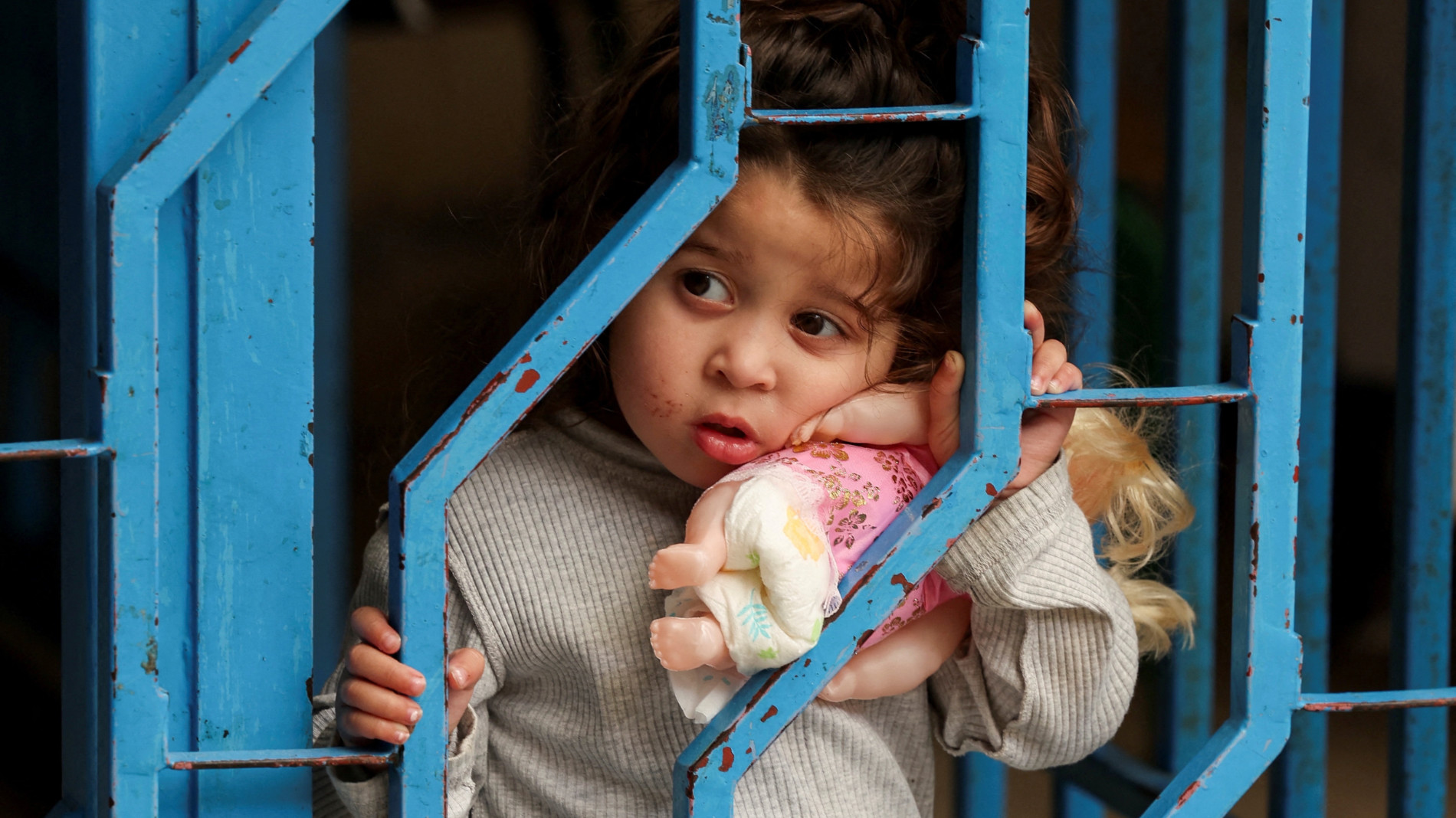
    Since Israel launched its military campaign in Gaza in October 2023, relentless bombardment has systematically targeted civilian infrastructure including residential neighborhoods, schools, hospitals, places of worship, and UN-run shelters. Gaza’s healthcare system is already on the edge of total collapse: doctors are forced to perform surgeries without proper equipment or medication, and disease is spreading rapidly in overcrowded displacement camps. Even in this crisis, Lazzarini confirmed that around 11,000 UNRWA staff remain on the ground in Gaza, delivering 20,000 primary healthcare consultations every day. To date, roughly 70,000 children have returned to in-person classes, and more than 250,000 access distance learning programs run by the agency.

    The roots of Israel’s campaign against UNRWA stretch back to the agency’s core mandate, Lazzarini explained. When Israel was admitted to the United Nations in 1949, its membership was conditional on recognizing UN General Assembly Resolution 194, which affirms the natural and legitimate right of Palestinian refugees to return to their homes and receive compensation for seized property. UNRWA is the only UN agency that formally recognizes Palestinian refugees and their descendants, so eliminating the agency is a deliberate attempt to erase this right to return — a core issue in any future final-status peace negotiations. Lazzarini pushed back against the narrative that dismantling UNRWA would revoke Palestinian refugee status, stressing that status is legally independent of the agency’s operations and will pass to future generations until a lasting political settlement is reached.

    Even with the extraordinary resilience of its on-the-ground staff, Lazzarini warned that UNRWA is fighting to stay operational, crippled by growing funding gaps and shrinking operational space. He specifically called out the 90 percent drop in contributions from Arab states since 2024, alongside the ongoing funding freezes from the U.S. and Sweden, once a top-five donor. “Have member states done enough? Obviously not enough to protect the agency,” he said. “Hence my alarm to the members of the General Assembly, telling them that if you do not pay more attention to UNRWA, the agency might not be viable anymore in the future. We cannot continue to navigate a constant chronic lack of resources and at the same time seeing also our operational space shrinking because of political considerations.”

    As global media and diplomatic attention has shifted to recent tensions between Israel and Iran, Lazzarini pointed out that Israel continues to block the entry of sufficient food and medical aid into Gaza. After the recent ceasefire agreement, aid groups expected 800 aid trucks to enter Gaza through the Rafah crossing every day, but Lazzarini said the actual volume is nowhere near that target. Aid organizations estimate a minimum of 600 trucks a day are needed to meet the basic needs of Gaza’s population, and even that low bar is rarely met: Israeli authorities often require trucks to carry only partial loads, further restricting the flow of supplies. Medecins Sans Frontieres (Doctors Without Borders) has been unable to bring any new supplies into Gaza this year, with critical shortages of chronic disease medication, surgical supplies, and essential medical equipment. “Since we cannot bring in new supplies or spare parts, malfunctioning equipment can force us to postpone or suspend surgeries, with serious consequences for patients,” explained Dr Randa Abu El-Khair Masoud, MSF’s project medical referent.

    Lazzarini also rejected Israeli claims that other UN agencies can easily replace UNRWA’s services, arguing that no other body has the mandate, capacity, or resources to deliver the full range of public services UNRWA provides. For example, UNICEF can support supplementary education programs, but it cannot run the entire primary and secondary education system for hundreds of thousands of Palestinian children across Gaza and the region. Lazzarini stressed that the only legitimate replacement for UNRWA is a fully functioning sovereign Palestinian state — exactly the original vision behind the agency’s creation 75 years ago.

    Over decades, UNRWA has educated generations of Palestinians, and Lazzarini said he regularly meets Palestinians who credit their UNRWA schooling for every achievement they have made. “Palestinians have had their land, their houses taken away from them. We have to redouble our effort to make sure that education remains an asset that we cannot take away from the Palestinians,” he said. He warned that the current crisis risks losing an entire generation of Palestinian children in Gaza if UNRWA cannot continue its work, and even across the wider region, ongoing erosion of the agency’s capacity will damage education quality and undermine long-term social cohesion for Palestinian communities.

  • Unanswered questions remain after Australia’s most wanted fugitive killed in standoff

    Unanswered questions remain after Australia’s most wanted fugitive killed in standoff

    After seven months of one of the largest and most intensive manhunts in Australian history, the search for Dezi Freeman — the fugitive who killed two police officers in August 2025 — ended on Monday in a fatal standoff at a remote rural campsite, leaving a community grappling with partial closure and lingering unanswered questions.

    Weeks earlier, investigators had publicly stated they strongly believed Australia’s most wanted man had died while evading capture in the rugged mountain bushland where he vanished shortly after the double shooting. Freeman, a well-known conspiracy theorist and self-identified “sovereign citizen” who went by the alias Desmond Filby, fled into the dense bush near the small Victorian town of Porepunkah immediately after ambushing two officers who arrived at his property to execute a search warrant over historical child sex abuse allegations.

    The operation concluded on a remote farm in Thologolong, a tiny community located near the border of Victoria and New South Wales. According to Victoria Police Chief Commissioner Mike Bush, officers maintained a 24-hour covert stakeout of Freeman’s ramshackle campsite, set up inside disused shipping containers, before calling on him to surrender. “We gave him every opportunity to come out peacefully and safely. He didn’t take that option,” Bush confirmed to reporters.

    Local media reports, citing unnamed police sources, state that after three hours of negotiations, Freeman emerged from one of the containers at approximately 8:30 a.m. local time, armed with a weapon stolen from the two slain officers. Multiple police snipers fired simultaneously, killing him at the scene.

    The outcome came as a profound shock to Thologolong’s small local population of just 22 residents. The land where Freeman set up camp is owned by elderly farmer Richard Sutherland, who has been staying in Tasmania for months, according to his brother and neighbor Neil Sutherland. Sutherland confirmed the property owner had no connection to Freeman and did not share his extremist beliefs. In recent weeks, some local road signs were found graffitied with Freeman’s name, which local cattle farmer Janice Newnham told the BBC she had dismissed as a tasteless April Fool’s Day prank. Newnham added she remains skeptical any local resident knew of Freeman’s hiding place, noting that in the tiny tight-knit community, “everyone seems to know what everyone else is doing.”

    From the early days of the manhunt, Freeman’s intimate knowledge of the local alpine terrain and off-grid survival skills gave investigators a major disadvantage, explained Dr. Vincent Hurley, a former police hostage negotiator and current policing lecturer at Macquarie University. Unlike urban fugitives, who leave traceable digital footprints from mobile phones, travel and financial transactions that can be tracked via modern tools like facial recognition, Freeman operated in an unpopulated wilderness with no digital footprint. “There was no easy way to actually try and track him down because they literally just had to go searching through the bush, and that’s pretty, pretty rare,” Hurley said.

    The only comparable recent case in Australia was that of Malcolm Naden, who evaded capture for nearly seven years in New South Wales before being arrested in 2012. But unlike Naden, who left a clear trail of broken into properties and temporary campsites, Freeman left no trace of his movements for seven months. That complete lack of evidence has led police to conclude the fugitive received outside help to stay off the grid.

    “We’re keen to learn who, if any – but we suspect some – assisted him in getting away from Porepunkah… if anyone was complicit, they will be held accountable,” Bush told reporters. While it is physically possible to walk the 150-kilometer route from Porepunkah to Thologolong, investigators consider this extremely unlikely: the trail crosses rugged, heavily forested mountain terrain, with extreme temperatures ranging from sub-freezing in winter to 40 degrees Celsius in summer, conditions that make independent travel and survival nearly impossible. Police sources also indicate Freeman likely only arrived at the Thologolong campsite recently, after severe bushfires swept through the region in January, burning within a kilometer of the property and forcing a full evacuation of the area that saw constant emergency service and air patrol activity.

    Physical evidence from the campsite further supports the theory of outside assistance. Photos published by local media show recently installed air ducts fitted to the shipping container Freeman hid in, a modification that would likely require multiple people to complete. Three camping chairs and an open case of beer found at the site also suggest Freeman was not alone at the camp. Police have closely monitored Freeman’s family throughout the manhunt, who have publicly condemned his actions; his wife was reportedly shocked by the news of his discovery, having long believed he was already dead.

    Hurley said he believes any accomplices are almost certainly fellow sovereign citizen believers, who reject the authority of government and law enforcement. No ordinary local would support Freeman after the brutal killing of two officers, he argued, adding that Freeman was known to be a loner with few close connections outside his ideological circle. Hurley also believes the tip that led police to Freeman’s hideout did not come from within the sovereign citizen movement, whose members are deeply anti-police and unlikely to cooperate. For Freeman himself, Hurley added, surrender was never a realistic option: “Being captured alive, that would be the ultimate humiliation and betrayal to him as a person. For the duration of the time he was at large, he was symbolically giving the middle finger to the police all over Australia.”

    Many key questions about the manhunt and Freeman’s seven months on the run may never be answered, Bush has hinted. The investigation into potential accomplices is still in its early stages, and the police chief confirmed that while investigators received information that led them to the hideout, details of how the tip was obtained will remain confidential. Notably, no one has come forward to claim the AU$1 million reward offered for information leading to Freeman’s capture, and Bush said all details related to the reward and the investigation’s final phase will remain “absolutely confidential.” Adding, “I’m quite sure we’ll never be sharing those details.”

  • Israel prevents worshippers from marking Good Friday at Holy Sepulchre

    Israel prevents worshippers from marking Good Friday at Holy Sepulchre

    Jerusalem’s holiest Christian site, the Church of the Holy Sepulchre, hosted a dramatically truncated Good Friday service this year, led by the Latin Patriarch of Jerusalem Pierbattista Pizzaballa, after sweeping Israeli access restrictions across the Old City of occupied East Jerusalem barred all public attendance.

    Traditionally, the annual Liturgy of the Passion of Christ at the basilica — widely venerated by Christians as the exact location of Jesus Christ’s crucifixion and burial — draws thousands of worshippers from across the globe. This year, however, only roughly 15 clergy members were permitted to participate in the ceremony. The restrictions that shuttered the site to the public also impacted Al-Aqsa Mosque, the third-holiest site in Islam, extending sweeping access limits across all major religious sites in the Old City.

    The limited Good Friday service follows a similar scaled-down Holy Thursday gathering led by Pizzaballa at the same church just one day prior. During his remarks at the Good Friday service, the patriarch drew direct links between the restricted worship, rising regional volatility tied to the recent US-Israeli military campaign against Iran, and growing threats to religious freedom in the holy city.

    “Outside, the doors of the Holy Sepulchre are closed,” Pizzaballa told the small gathering of clergy. “War has turned this place into a refuge, an inside cut off from an outside weighed down by tension.”

    The restrictions on worship come on the heels of a controversial incident that sparked global outcry just weeks earlier, when Israeli forces blocked Pizzaballa from reaching the Church of the Holy Sepulchre for Palm Sunday services. The patriarch and Father Francesco Ielpo, Custos of the Holy Land, were both denied entry to the site — a step that Jerusalem church authorities called unprecedented in centuries. Officials noted that the unprecedented denial of access to senior Catholic leaders set a dangerous precedent and ignored the spiritual sensibilities of more than 2 billion Christians worldwide who turn their focus to Jerusalem during Holy Week.

    The incident drew immediate official condemnation from multiple European governments, including France, Spain and Italy. Facing mounting international backlash, Israeli police announced that they would allow a “limited prayer framework” for the Good Friday and Easter observances, though restrictions remained far stricter than in any prior year in recent memory.

    Even with the adjusted limited access, many Palestinian Christians have expressed frustration with both the Israeli restrictions and the response from senior church leadership. Speaking to Middle East Eye on condition of anonymity over safety concerns, one Palestinian shopkeeper in the city argued that Pizzaballa should have taken a more public stand against the entry block for Palm Sunday. The shopkeeper said the patriarch should have challenged the blocking Israeli soldiers, and even held open-air prayers in the street if necessary, adding that church leaders were wrong to enter into negotiations with Israeli authorities over access to sites that fall under occupied territory.

    Israel has occupied East Jerusalem, including the Old City, since the 1967 Six-Day War, a occupation that the International Court of Justice reaffirmed in a 2024 ruling is illegal under international law. Since the launch of the US-Israeli assault on Iran weeks ago, the Old City has remained almost entirely closed to non-resident visitors. Israeli forces have maintained permanent checkpoints at all entry gates, strictly controlling access to all key religious sites.

    Al-Aqsa Mosque has remained fully closed to Muslim worshippers throughout this period, a restriction that was also in place for most of the holy month of Ramadan and during the Eid al-Fitr holiday last month. Israeli officials justify the sweeping access limits by citing public safety concerns linked to potential retaliatory Iranian missile attacks. While debris from intercepted Iranian missiles has caused minor damage in parts of Jerusalem, many Palestinians argue the far-reaching restrictions are actually a deliberate tactic to strengthen Israel’s unilateral control over the occupied Old City, a strategic site with profound global religious significance.

    This report was originally published by Middle East Eye, an outlet that provides independent, in-depth coverage of the Middle East, North Africa and surrounding regions.

  • African leaders call for policy action amid rising energy and food prices

    African leaders call for policy action amid rising energy and food prices

    Against the backdrop of a worsening global economic outlook fueled by ongoing Middle East conflict, leading African and international development institutions have issued a coordinated call for urgent policy intervention to protect African economies and vulnerable households from spiraling energy, food and fertilizer prices.

    The appeal was formally made during the 58th Session of the UN Economic Commission for Africa, held between March 28 and April 3 in Tangier, Morocco, by four major bodies: the African Development Bank, the African Union Commission, the United Nations Development Programme, and the United Nations Economic Commission for Africa.

    In their official warnings, the institutions emphasized that current global shocks linked to the Middle East tensions are spreading far more rapidly and through more concentrated economic channels than previous global disruptions. This accelerated transmission leaves African nations with extremely limited time to adjust their economic policies and mitigate incoming damage, a stark contrast to past crises that gave regional economies more room for maneuver.

    By late March 2026, the impacts of these disruptions were already tangible across every tier of African economies and household finances. Global oil prices have surged by more than 50 percent, while 29 African national currencies have depreciated significantly against major global reserve currencies. This currency weakening has simultaneously driven up the cost of servicing external sovereign debt and the price of importing essential goods including food, fuel, and fertilizer.

    Disruptions to Gulf energy exports have also created critical shortages of ammonia and urea, key fertilizer components, at the worst possible moment: the March to May planting season across most of the continent. The shortage threatens to cut 2026 agricultural output sharply, deepening already widespread food insecurity that disproportionately harms low-income households and African nations that rely heavily on food and energy imports.

    Mahmoud Ali Youssouf, chairperson of the African Union Commission, noted that continued escalation of the Middle East conflict will only further erode global stability, with uniquely severe consequences for energy markets, food security, and long-term economic resilience across Africa, where baseline economic pressures already remain at acute levels.

    Claver Gatete, UN under-secretary-general and executive secretary of the United Nations Economic Commission for Africa, pointed out that Africa has repeatedly been forced to absorb the impact of major external shocks that the continent did nothing to create. “This moment calls for decisive action, to protect people now, but also to accelerate Africa’s long term push towards energy security, food sovereignty, and financial self-reliance,” Gatete said. “Crises like this reinforce why Africa must finance more of its own future and strengthen regional solutions that build resilience before the next shock hits.”

    To address the immediate crisis, the four institutions laid out a tiered set of policy recommendations. In the short term, they called on African national governments, international development partners, and the private sector to roll out immediate targeted measures to cushion vulnerable households from price shocks and stabilize supply chains for fuel, food, and fertilizer.

    In the medium term, the institutions urged wide-ranging structural reforms to boost regional energy security, expand national social protection programs, and accelerate intra-African trade under the framework of the African Continental Free Trade Area, which is designed to break down long-standing barriers to cross-border commerce across the continent.

    Looking to the long term, the group pushed for stronger domestic resource mobilization across African economies and the establishment of continent-wide African financial safety nets. A key priority named is the accelerated implementation of the African Financing Stability Mechanism, a regional tool designed to help nations respond to future economic shocks before they spiral into full-blown crises.

  • US deports eight people ‘of African origin’ to Uganda

    US deports eight people ‘of African origin’ to Uganda

    In the first major implementation of a bilateral migration agreement struck between Washington and Kampala last year, eight migrants hailing from different African nations have been transferred and deported from the United States to Uganda. Uganda’s Ministry of Foreign Affairs confirmed in an official statement that the group touched down on Ugandan soil Wednesday, after a U.S. federal judge signed off on the approval of their deportation cases.

    Under the terms of the 2024 agreement, Uganda was formally designated a “safe third country” for migrants who are unable to return to their home countries, most commonly due to documented persecution or violence that prevents safe resettlement there. The deal forms a core pillar of the Donald Trump administration’s hardline immigration enforcement agenda, which the president has ramped up across the board since launching his second term in office.

    Uganda’s foreign ministry noted that it cannot release detailed personal information about the eight deportees to protect their privacy. In its statement, the department reaffirmed the East African nation’s long-standing tradition of hosting vulnerable displaced people, adding that “Uganda continues to uphold its longstanding commitment to providing sanctuary to persons in need and assuring they are treated with dignity.” It also clarified that none of the transferred individuals hold Ugandan or U.S. citizenship; they are African-born migrants who were denied asylum status in the U.S. and were unwilling or unable to return to their countries of origin. According to CBS News, the BBC’s U.S. partner, Uganda agreed to take in these deported migrants on the condition that none have a prior criminal record, a stipulation that differs from U.S. third-country deportation policy that often sends convicted migrants to partner nations.

    The deportation move has already sparked sharp condemnation from legal and human rights groups within Uganda and internationally. The Uganda Law Society, the country’s apex legal professional body, has publicly denounced the transfers, arguing that the process by which the migrants were brought to Uganda was “undignified, harrowing and dehumanising.” The organization has formally called the entire transfer process unlawful and confirmed it intends to challenge the agreement and the deportation in Ugandan courts. Global human rights campaigners have also echoed this criticism, raising long-standing questions about the legal standing of the Trump administration’s third-country deportation policy, which has already seen dozens of undocumented migrants sent to partner nations since the current administration took office in January 2025.

    Uganda is not the only African nation participating in this program: Eswatini, Ghana, and South Sudan have also joined the U.S. as third-country safe haven destinations for deported migrants. The U.S. Department of Homeland Security, which oversees immigration enforcement, has yet to issue a public comment on this first deportation under the Uganda agreement, following a request for statement from the BBC.

  • China says peace talks between Afghanistan and Pakistan are advancing

    China says peace talks between Afghanistan and Pakistan are advancing

    Border tensions between Pakistan and Afghanistan’s ruling Taliban movement that have killed hundreds of people in recent months have moved toward diplomatic resolution, with Beijing announcing Friday that mediated peace talks between the two sides are steadily advancing. The development comes just 48 hours after representatives from Islamabad and Kabul restarted negotiations in Urumqi, a major city in northwest China, ending a weeks-long pause in dialogue sparked by escalating armed clashes.

    China’s Foreign Ministry spokesperson Mao Ning confirmed that Beijing has been working behind the scenes to bring the two rival parties to the negotiating table, coordinating through multiple channels and across various levels of government to create a viable framework for dialogue. “Since the recent escalation of the Pakistan–Afghanistan conflict, China has been mediating and promoting talks in its own way, maintaining close communication with both sides through multiple channels and at various levels, and creating conditions and providing platforms for dialogue”, Mao told reporters during a regular press briefing.

    Mao added that all three sides have agreed to concrete working arrangements for the talks, including protocols for media coverage, though she declined to share further details on the negotiation agenda or potential confidence-building measures. Both Pakistan and Afghanistan have expressed support for China’s mediation efforts, a development Mao characterized as a positive step forward. “Both countries attach importance to and welcome China’s mediation efforts, and are willing to sit down again for talks, which is a positive development”, she said.

    The diplomatic push comes against a backdrop of persistent unrest that has rocked the shared border region. Even as negotiators convened in Urumqi on Wednesday, a deadly attack underscored the volatility of the security situation: late Thursday, a suicide bomber drove an explosives-packed vehicle into a police station in Bannu District, northwest Pakistan, killing at least five officers and leaving multiple others injured. No group immediately claimed responsibility for the attack, though Pakistan has grappled with a sharp rise in insurgent violence in recent years, with the majority of major attacks claimed by the Tehrik-i-Taliban Pakistan (TTP), commonly known as the Pakistani Taliban.

    The TTP is a separate militant organization from the Afghan Taliban that rules Kabul, but the two groups maintain close ideological and operational alliances. The Afghan Taliban seized full control of Afghanistan in 2021 following the chaotic withdrawal of U.S.-led coalition forces that had occupied the country for 20 years. Islamabad has repeatedly accused the Afghan Taliban government of allowing the TTP to operate safe havens from which to launch cross-border attacks into Pakistani territory, a charge the Kabul administration has consistently denied.

    Large-scale open fighting between the two neighboring states erupted in February, after the Taliban government in Kabul announced that Pakistani military forces had launched airstrikes and ground operations across multiple Afghan regions, resulting in heavy civilian casualties. Islamabad responded that its strikes were exclusively targeting TTP militant hideouts, and later confirmed it was engaged in open armed conflict with the Afghan Taliban government. The months of clashes that followed have left hundreds of people, most of them civilians, dead, raising international concerns about a broader destabilization of South Asia.

  • Russian strikes on Ukraine kill 8 as Kyiv holds door open for Easter truce

    Russian strikes on Ukraine kill 8 as Kyiv holds door open for Easter truce

    Fresh deadly Russian strikes across multiple regions of Ukraine have left at least eight civilians dead and dozens wounded, marking a violent escalation just days before the Orthodox Easter holiday, as Kyiv officially confirms it remains open to a temporary holiday truce and warns of a dramatic shift in Moscow’s aerial attack tactics.

    Local Ukrainian military officials first reported the wave of attacks early Friday, highlighting what they described as a massive combined assault of missiles and drones targeting communities near the Ukrainian capital Kyiv. Mykola Kalashnyk, head of Kyiv’s regional military administration, announced via Telegram that one civilian was killed and eight more injured in strikes on three satellite towns surrounding the capital: Bucha, Fastiv and Obukhiv. The attack came as Bucha residents just marked the somber fourth anniversary of widespread atrocities committed by Russian invading forces during their early advance on the capital in 2022.

    Lesia Podoriako, a 37-year-old Obukhiv resident who was at work with her child when the strike hit her residential building, told the Associated Press she only learned of the damage through social media alerts. “I have no words,” she said, adding that the greatest relief was that all her family members emerged unharmed.

    Deadly strikes were reported far beyond the Kyiv region. In northern Ukraine’s Sumy region, one civilian died after a Russian guided aerial bomb hit a local apartment block, according to regional governor Oleh Hryhorov. In eastern Ukraine’s Donetsk region, a midday Russian bombing of Kramatorsk killed two more people and left three injured, regional military head Vadym Filashkin confirmed. Ukraine’s second-largest city Kharkiv, which has faced near-constant bombardment for months, saw two additional fatalities from sustained drone and missile strikes that stretched from Thursday into Friday, with at least five more civilians wounded. In the southern Kherson region, a Russian drone strike hit a public bus, leaving the driver critically injured and eight passengers hurt. Casualties were also reported in the Zhytomyr region, bringing the total nationwide death toll to at least eight.

    Ukrainian officials have drawn sharp attention to what they call a deliberate change in Russian attack strategy. For months, Moscow relied heavily on large-scale nighttime barrages of missiles and drones, but in recent weeks, strikes have increasingly been carried out during daytime working hours. Andrii Kovalenko, head of the Center for Countering Disinformation under Ukraine’s defense ministry, said the tactical shift is an intentional choice to raise civilian harm. “The daytime strikes aim to increase civilian casualties,” Kovalenko wrote in a Telegram post Friday. “That is why the combined attack is carried out on a working day, using a large number of drones and missiles.”

    Ukrainian Foreign Minister Andrii Sybiha criticized Moscow’s timing, noting that the large-scale assault came directly in response to Kyiv’s Easter truce proposal. “This is how Moscow responds to Ukraine’s Easter ceasefire proposals — with brutal attacks,” Sybiha wrote on social platform X, adding that nearly 500 drones and cruise missiles have been launched against Ukraine in the past 24 hours.

    President Volodymyr Zelenskyy confirmed Thursday that Kyiv remains willing to implement a temporary truce during Orthodox Easter, which falls on April 12 for both Ukrainian and Russian Orthodox churches following the Julian calendar. The proposal has been relayed to the Kremlin through U.S. diplomatic channels, Zelenskyy said, though Moscow has yet to deliver a formal response.

    The Kremlin has already signaled skepticism of a temporary truce. Kremlin spokesperson Dmitry Peskov said earlier this week that Moscow is seeking a long-term peace settlement rather than a short holiday pause. Last year, Russian President Vladimir Putin unilaterally declared a 30-hour Easter truce, but both sides quickly accused one another of violating the ceasefire.

    Beyond the shift to daytime strikes, Zelenskyy warned that Russian attacks are also expected to expand beyond the energy infrastructure that has been the primary target of Moscow’s winter aerial campaign. Ukrainian intelligence indicates future strikes will target water supply networks, transportation and logistics hubs including key railway routes, and other critical civilian infrastructure that has so far been spared intense bombardment. “We are already making all necessary preparations to repel these potential attacks,” Zelenskyy added.

    On a more positive note for Kyiv, Zelenskyy reported that the overall frontline situation has stabilized in recent weeks, with intelligence assessments from both Ukrainian and British MI6 services describing the current conditions as the most favorable for Ukraine in 10 months. While intense fighting continues across eastern front sectors, Ukrainian forces have successfully disrupted multiple recent Russian offensives and reclaimed small amounts of territory, he said.

    As diplomatic efforts continue, Zelenskyy confirmed that Ukraine has invited senior U.S. negotiators to visit Kyiv for further talks on long-term security guarantees and a broader framework to end the full-scale invasion. Recent discussions have also included NATO Secretary General Mark Rutte, with Ukraine pushing for clearer, more binding commitments on long-term defense support and collective responses to any future Russian aggression.

    In tit-for-tat strikes across the border, Ukraine launched a wave of drone attacks on Russian territory Friday, hitting targets hundreds of kilometers from the shared border. In Russia’s Leningrad region, more than 1,100 kilometers from the Ukrainian border, a drone strike injured two people and set fire to an unoccupied building at the Morozov industrial zone, regional governor Alexander Drozdenko reported. The zone is home to a state-owned explosives and ammunition plant that produces solid fuel for Russia’s Topol-M intercontinental ballistic missile systems, and has been under Western sanctions since the 2022 full-scale invasion. In border region Belgorod, 12 people including three Russian soldiers were injured in a late Thursday Ukrainian drone strike, regional governor Vyacheslav Gladkov said. Four additional drones were shot down outside Moscow early Friday, with no casualties or damage reported, according to Moscow mayor Sergei Sobyanin. Russia’s Defense Ministry added that a total of 192 Ukrainian drones were intercepted and shot down overnight across Russian territory and occupied Crimea.

  • 13 dead as fire triggers explosions in Burundi

    13 dead as fire triggers explosions in Burundi

    BUJUMBURA, Burundi – A devastating accidental fire at a Burundian military ammunition storage facility has left 13 people dead and dozens more injured after igniting stored explosives that sparked hours of blasts across the southern outskirts of the country’s largest city, Burundi’s military confirmed Wednesday.

    The deadly chain of events unfolded overnight Tuesday in the Musaga district on the outskirts of Bujumbura, East Africa’s Burundi’s primary commercial and population hub. According to army spokesperson Gaspard Baratuza, the disaster originated from an electrical short circuit inside the secured storage unit located within the military camp.

    By Wednesday morning, official tallies confirmed 13 fatalities and at least 57 injured people, with three of the wounded being active-duty soldiers. Spokesperson Baratuza noted that authorities have not yet released a breakdown confirming whether all fatalities were civilian residents of nearby neighborhoods.

    Local residents living within close proximity of the military installation fled their homes in immediate panic as blasts rocked the area. The intensity of the fire was so great that glowing plumes of smoke could be spotted from kilometers away. The force of the repeated explosions sent live munitions flying into residential areas surrounding the camp, prompting senior military leader Major General Aloys Ndayikengurukiye to issue a public appeal for residents to report any unspent ordnance or unfamiliar suspicious objects immediately so that explosive ordnance disposal teams can remove them safely.

    In an effort to curb widespread misinformation that spread rapidly across local communities in the hours after the blasts, Baratuza explicitly stated that the incident was not the result of a militant or rebel attack on the military installation. The fire knocked out local power grids, cutting electricity service to the military camp and all adjacent neighborhoods. Baratuza called on residents of the most affected areas – Gasekebuye, Kanyosha, Kinindo and their surrounding suburbs – to remain calm and avoid unnecessary panic amid ongoing response and cleanup operations.

    The incident, which dates to April 1, 2026, is currently the deadliest accidental disaster recorded in Burundi so far this year, as recovery efforts continue and authorities work to clear all hazardous unexploded materials from affected residential areas.