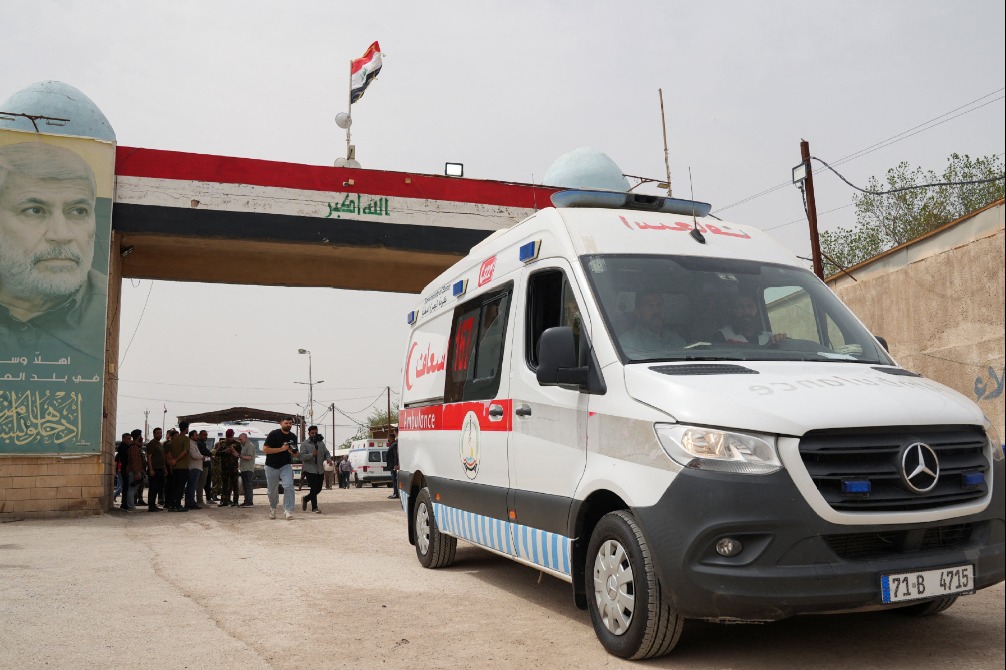
BAGHDAD – In a move that underscores escalating regional instability across the Middle East, Iraqi officials ordered an immediate closure of the busy Shalamcheh border crossing with Iran on Saturday, April 4, 2026, after a deadly airstrike on the Iranian side of the checkpoint killed one Iraqi citizen and wounded five more.
Omar al-Waeli, chairman of Iraq’s official Border Ports Commission, confirmed to the Iraqi News Agency that the airstrike targeted the crossing’s passenger terminal in the early hours of Saturday. The fatal blast claimed the life of an Iraqi passenger traveling through the facility, while the five injured victims were all transferred to medical centers inside Iranian territory for treatment, al-Waeli added.
Local Iraqi media reports note the strike occurred at the same time that convoys carrying humanitarian donations and logistical support were entering Iran through the Shalamcheh crossing. Situated in Iraq’s southern Basra Province, the border post serves as one of the most critical commercial and travel arteries connecting the two neighboring countries, handling large volumes of bilateral trade and cross-border tourism on a regular basis.
The closure of the key southern crossing comes as a separate deadly attack rocked another Iraqi border checkpoint just hours later. Iraq’s paramilitary Popular Mobilization Forces (PMF) announced Saturday that one of its fighters was killed and four additional members were wounded in a joint US-Israeli airstrike at the al-Qaim border crossing, located in Iraq’s western Anbar Province near the Syrian border. The PMF statement added that an employee of Iraq’s Ministry of Defense was also injured in the strike on the group’s 45th Brigade operating at the post.
Both attacks unfolded against a backdrop of sharply heightened tensions across the Middle East, which began when joint US-Israeli airstrikes on targets inside Iran launched on February 28 triggered a wave of retaliatory strikes by Iran and its regional allied militias against US and Israeli interests across the region. The latest attacks on Iraqi border crossings have further stoked fears that the ongoing conflict spillover could disrupt critical trade routes and deepen instability in Iraq, which has long faced collateral damage from regional power clashes.