分类: world

  • Pope’s visit to Equatorial Guinea is a diplomatic challenge as he closes his Africa trip

    Pope’s visit to Equatorial Guinea is a diplomatic challenge as he closes his Africa trip

    After wrapping up earlier stops across four African nations, Pope Leo XIV touched down in Equatorial Guinea on Tuesday for the closing leg of his first papal visit to the continent — a stop widely framed as the most diplomatically sensitive challenge of his early tenure leading the global Catholic Church.

    Nestled on Central Africa’s west coast, this former Spanish colony has been under the uninterrupted rule of 83-year-old President Teodoro Obiang Nguema Mbasogo since he seized power in a 1979 coup. Today, Obiang stands as Africa’s longest-serving incumbent head of state, and his administration has faced decades of global scrutiny over systemic authoritarian rule and widespread graft.

    Equatorial Guinea’s economic trajectory shifted dramatically in the mid-1990s, when large offshore oil reserves were discovered. Data from the African Development Bank shows oil now makes up nearly half the country’s total gross domestic product and accounts for more than 90% of its export revenue. Despite this resource wealth, however, more than half of Equatorial Guinea’s 1.9 million residents live below the poverty line. Human rights organizations including Human Rights Watch, as well as ongoing court proceedings in France and Spain, have documented how the vast majority of oil revenues have been siphoned off to enrich Obiang’s ruling family rather than lifting living standards for the general population.

    From the start of his maiden African pilgrimage, Pope Leo has made clear he has no intention of softening his rhetoric on global inequality and graft. His earlier stop in Cameroon offered a clear preview of what observers can expect during his time in Equatorial Guinea. Last week in Cameroon’s capital Yaounde, the pope met with 93-year-old President Paul Biya — the world’s oldest sitting head of state, who has held power since 1982 and faces identical accusations of authoritarianism. Standing beside Biya in the presidential palace during his arrival address, Leo did not hold back.

    “In order for peace and justice to prevail, the chains of corruption — which disfigure authority and strip it of its credibility — must be broken,” the pope stated. “Hearts must be set free from an idolatrous thirst for profit.”

    While Equatorial Guinea is officially designated a secular state, it is one of the most overwhelmingly Catholic nations in Africa, with roughly 75% of its population identifying as Catholic, and the Church holds a central role in the country’s political and social fabric. Tutu Alicante, a U.S.-based human rights activist who leads the advocacy group EG Justice, explains that Church leadership is deeply intertwined with Obiang’s government. “Part of it is the fear the government has instilled in everyone, including the church, and part of it is the monetary gains that the church derives from this government,” Alicante noted.

    The Vatican’s approach to engaging with the regime is nuanced, explained the Rev. Fortunatus Nwachukwu, the second-highest ranking official in the Holy See’s missionary evangelization department. “Should the church go to war against the government? Surely no. Should the church swallow everything as if it were normal? No. The church has to continue preaching justice, always in defense of life, human dignity and the common good,” he said.

    Beyond systemic corruption, Equatorial Guinea’s government regularly faces allegations of routine harassment, arbitrary arrest and intimidation targeting political opposition figures, dissident critics and independent journalists. On Transparency International’s annual Corruption Perceptions Index, the country has consistently ranked among the bottom 10 out of all nations surveyed. Samuel Kaninda, Transparency International’s regional advisor for Africa, acknowledged that the Obiang administration has taken tentative steps in recent years to address public anger over graft, including passing a national anti-corruption law and moving to establish a dedicated anti-corruption commission. However, Kaninda stressed that these reforms will only deliver tangible change if the commission is granted full independence to investigate corrupt officials and the national judiciary operates free from political interference.

    Kaninda said he holds cautious optimism about the papal visit, noting that even when authoritarian leaders attempt to frame papal trips as an endorsement of their rule, history shows these visits ultimately benefit ordinary citizens. “The risk is there, but at the same time, we see more of the opportunity to shed more light on a lot more that is happening there,” he said, adding that the high-profile visit could lift hopes among Equatorial Guinea’s population and draw global attention to the country’s unaddressed human rights and governance failures.

    For many local residents, the visit has already delivered tangible, small-scale benefits: Equatorial Guinean seamstress Tumi Carine says she has seen a surge in orders for garments printed with Pope Leo’s image. “The coming of the pope brought us many customers,” Carine said. “We are really grateful for the coming of the pope, so, we are really happy.”

    This is the first papal visit to Equatorial Guinea since Pope St. John Paul II traveled to the country in 1982. Pope Leo faces a packed schedule during his two-day trip: after arriving and holding an initial meeting with Obiang, he will deliver addresses to government leaders and diplomatic representatives, followed by a speech at the country’s national university. He will also celebrate multiple public Masses, visit a psychiatric hospital and a local prison, and meet with young people and their families. Before departing on Thursday, he will travel to the city of Bata to lay prayers at a memorial for the more than 100 people killed in a 2021 explosion at a nearby military barracks, which investigators blamed on grossly negligent handling of dynamite stored in a facility located close to residential neighborhoods.

  • Pakistan delivers weapons to Libya’s Haftar as part of Saudi-financed deal, sources say

    Pakistan delivers weapons to Libya’s Haftar as part of Saudi-financed deal, sources say

    New unreported arms shipments from Pakistan to the eastern Libyan administration led by military strongman Khalifa Haftar have been carried out earlier this year, with financing and facilitation from Saudi Arabia, multiple Western and Arab officials with direct knowledge of the matter have confirmed to Middle East Eye.

    One official who was present at Benghazi’s main airport during the offloading process confirmed that at least five Pakistani cargo jets carrying military hardware arrived and were unloaded in March. A second senior official verified the shipments occurred, but declined to share details on the specific types of weapons transferred. This delivery marks the first confirmed execution of a massive $4 billion arms framework between Pakistan and Haftar’s government, a deal that was first reported by Reuters after a December visit to Benghazi by Pakistan’s Chief of Army Staff, Field Marshal Asim Munir.

    Haftar, 82, accompanied by his son Saddam Haftar — widely viewed as his likely political successor — made a rare official trip to Islamabad in early February, where the pair held meetings with Munir and Pakistani Prime Minister Shehbaz Sharif. The Arab official confirmed that the full terms of the March weapons shipments were finalized during this high-level visit.

    This delivery comes at a moment of growing uncertainty for Pakistan’s broader arms export agenda across Africa, just after another major Pakistani arms deal with Sudan’s transitional government collapsed earlier this month when Saudi Arabia withdrew its pledged financing for the purchase.

    According to regional and Western diplomatic sources, the new deal is part of a deliberate Saudi push to expand its influence in eastern Libya and displace the long-standing dominance the United Arab Emirates has held over Haftar and his political bloc. One senior Arab official called the deal an explicit outreach strategy, stating: “This deal was done to pull Haftar away from the UAE. Saudi Arabia is using honey, and saying ‘we can sponsor you’.” A Libyan source familiar with Haftar’s inner circle expressed skepticism about the success of this gambit, noting that the Haftar family retains extensive business holdings and assets in the Emirates.

    Beyond shifting influence dynamics in Libya, the deal also ties to Saudi regional priorities in the ongoing Sudan conflict. Western and Arab officials confirm Riyadh is pressing Haftar to block illegal cross-border weapons flows from southeastern Libya to the Rapid Support Forces (RSF), the paramilitary group fighting Sudan’s military government. The deal is also structured to buy Haftar’s cooperation with ongoing efforts to integrate his eastern military forces with the military wing of the internationally recognized Tripoli-based government under Prime Minister Abdul Hamid Dbeibeh. In March, forces from both sides participated in joint training exercises during the U.S.-led Flintlock military drill, and a joint military coordination committee has already been established to advance integration. As one Western official put it: “There is a sense that Saudi Arabia is buying Haftar’s cooperation with new supplies. The integration of Libya’s military is against the UAE’s interest vis-a-vis Sudan.”

    The Saudi-UAE rift that underpins this new initiative has deepened rapidly over the past year, despite the two countries’ long history as Gulf allies. Both nations joined forces to intervene in Yemen’s civil war and backed Haftar’s failed 2019 offensive to seize full control of Tripoli, but their alignment collapsed after the outbreak of Sudan’s 2023 civil war. Tensions flared after Saudi Crown Prince Mohammed bin Salman lobbied former U.S. President Donald Trump to oppose the UAE’s open support for the RSF. Rifts escalated further in December, when Saudi Arabia launched airstrikes against UAE-aligned militia groups in Yemen.

    While the two sides have attempted to contain open conflict, with bin Salman sending a February letter to UAE National Security Advisor Tahnoon bin Zayed that outlined Riyadh’s grievances and called for mediation, recent regional shifts have only deepened divisions. The outbreak of the ongoing Israel-Iran conflict sparked speculation that Gulf powers would put aside differences to present a unified front, but the war has instead widened the gap between the two: Saudi Arabia has sought to balance U.S. requests for military access with public calls for a negotiated end to tensions, while the UAE has taken a hardline hawkish stance against Iran and has publicly expressed frustration with U.S.-led direct talks with Tehran — talks that Pakistan has helped facilitate.

    Libya has remained split into two competing administrative blocs since 2014, and a United Nations arms embargo imposed on the country has been routinely violated by outside powers seeking to advance their own regional interests. Middle East Eye reached out to the Saudi and Pakistani embassies in Washington D.C. for official comment on the arms shipment, but received no response prior to publication.

  • Tourists trickle back to Kashmir, one year after deadly attack

    Tourists trickle back to Kashmir, one year after deadly attack

    Twelve months after a devastating militant attack on civilian tourists left 26 people dead, India-controlled Kashmir is taking halting first steps toward reviving its once-booming tourism industry, with only a small stream of visitors returning to its iconic Himalayan resort towns. As hoteliers reopen their properties and welcome the cautious influx of travelers, the sector still grapples with deep economic scars from the violence that also sparked a major military escalation between nuclear-armed neighbors India and Pakistan.

    Kashmir, a disputed Himalayan region claimed in its entirety by both India and Pakistan, has long been a coveted travel destination. Its Muslim-majority population draws millions of visitors annually, drawn to iconic attractions like the wooden houseboats that line Srinagar’s Dal Lake, alpine meadows, and sacred Hindu pilgrimage sites. In 2024, the region hit a record high, hosting more than 23 million total visitors including 65,000 international tourists, according to Indian government data.

    That momentum came to an abrupt halt on April 22, 2025, when gunmen opened fire on crowds of vacationers in the region, killing 26 people, most of whom were Hindu men. It was one of the deadliest attacks on civilians in the Indian-administered territory in decades, prompting authorities to close dozens of tourist sites across the region for security reasons.

    In the aftermath of the attack, India quickly levied accusations that Pakistan backed the militant attackers, claims the Pakistani government has repeatedly denied. A little-known shadowy militant group called The Resistance Front (TRF), which the United States designates as a proxy for UN-listed terrorist organization Lashkar-e-Taiba, initially claimed responsibility for the violence before later retracting the statement. Two weeks after the shooting, rising cross-border tensions boiled over into a four-day military conflict between the two nuclear powers, which deployed drones, fighter jets, and missiles across the de facto border. The clash killed at least 70 people on both sides.

    One year on, the site of the attack — the small mountain meadow of Baisaran, located near the resort town of Pahalgam where gunmen emerged from pine forests to open fire on crowds — remains closed to visitors. While other popular tourist sites have been cleared and reopened, the sector is still operating far below pre-attack capacity.

    Younis Khandey, owner of a 10-room guesthouse in Pahalgam near the attack site, recalled that before the 2025 violence, his property was fully booked for months at a time. Today, the industry has not recovered anywhere near that level of activity. Local travel agent Tanvir Ahmed estimates that overall business remains down around 60 percent even with reopened sites, though he notes that visitor numbers have started a slow upward trend in recent months.

    Before the attack, Kashmir also drew hundreds of thousands of Hindu pilgrims annually to its sacred religious shrines, a key segment of the local tourism economy that has also been slow to rebound. Syed Qamar Sajjad, director of the region’s tourism department, acknowledged that the sector has not yet returned to stable footing. “The tourism sector is not back on track yet,” Sajjad said.

    The slow recovery comes amid decades of unrest in the region. India maintains a permanent deployment of at least 500,000 soldiers in Indian-controlled Kashmir. Since 1989, rebel groups fighting against Indian rule have waged an insurgency that has killed tens of thousands of soldiers, civilians, and militants, though the rebellion has been largely crushed in recent years. Even as cautious travelers begin to return, local industry operators say it will take far more time for the region’s iconic tourism sector to fully heal.

  • Gun battle traps more than 200 tourists at Rio viewpoint

    Gun battle traps more than 200 tourists at Rio viewpoint

    On a bustling Monday morning at one of Rio de Janeiro’s most photographed scenic overlooks, a sudden outbreak of armed conflict between Brazilian law enforcement and a major criminal gang left more than 200 tourists stranded for hours, in an incident that has raised fresh concerns about safety for the city’s vital tourism industry.\n\nThe incident unfolded at Morro Dois Irmaos, a 533-meter (1,750-foot) hill that draws thousands of weekly visitors with its sweeping panoramic views of Rio’s world-famous Ipanema and Leblon beaches. As crowds of sightseers explored the hilltop, a gunfight erupted between police officers and members of Comando Vermelho, one of Brazil’s largest and most well-established drug trafficking organizations, on the lower slopes of the hill adjacent to the Vidigal favela.\n\nTour operator Renan Monteiro, whose company Favela Turismo organized many of the tours on the hill that morning, confirmed that more than 200 people were caught in the lockdown, with around 70% of those trapped being international visitors. For roughly two hours, visitors were confined to the hilltop as shooting raged in the area below, before police secured the zone and gave the all-clear for groups to descend safely.\n\nIn an official statement, police noted that officers came under immediate gunfire from drug traffickers when they entered the Vidigal favela as part of the operation. By the end of the security action, three suspects were taken into custody, and no injuries were reported among either tourists, officers, or local residents.\n\nThe incident comes at a time when Rio’s tourism sector is celebrating a major post-pandemic recovery milestone: official data shows the city welcomed more than 2.1 million international visitors in 2025, hitting an all-time record for inbound tourism. Monteiro, however, warned that high-profile incidents of gang-related violence close to major tourist attractions risk undermining that progress. “Incidents like this erode visitor confidence, and that damage can take years to reverse,” he said in comments to Agence France-Presse.

  • Canadian tourist killed in Mexico archaeological site shooting

    Canadian tourist killed in Mexico archaeological site shooting

    On a Monday at one of Mexico’s most visited cultural landmarks, the ancient Teotihuacan archaeological site, a deadly shooting left one Canadian woman dead and five other people wounded, according to official Mexican authorities. The gunman responsible for the attack took his own life immediately after opening fire at the pre-Aztecan pyramid complex, confirmed Cristobal Castañeda, security secretary for Mexico State, where the UNESCO-recognized site is located.

    Unverified social media footage circulating after the incident shows the gunman firing repeated shots from a handgun from a position halfway up the Pyramid of the Moon, one of the site’s largest and most famous structures. In the footage, tourists can be seen scrambling for cover behind stone staircases or fleeing the area in panic, with one visitor’s voice captured shouting, “A person is opening fire on us, take care friends, send security.”

    Responding state law enforcement secured the scene, seizing a pistol, a knife, and unused ammunition, before coordinating a full evacuation of all visitors from the archaeological park. Many tourists and vendors on site told reporters they did not immediately grasp the severity of the emergency. Anna Durmont, a 37-year-old American art historian on vacation, told AFP she was walking toward the pyramid when she encountered a wall of emergency vehicles and police officers. “It actually felt extremely calm,” Durmont said. “It was very measured. The park is full of souvenir sellers and they hadn’t left. It wasn’t clear to us until we got closer that there was a serious emergency.”

    Mexico’s national health institute reported that seven people were ultimately transported to nearby hospitals for care. Four patients were treated for direct gunshot wounds, while others were admitted for anxiety attacks or injuries sustained while falling down the Pyramid of the Moon’s steep 47-step staircase during the chaotic evacuation. Among the injured are two Colombians, a second Canadian citizen, and one Russian national, including one minor, Castañeda confirmed.

    Mexican President Claudia Sheinbaum quickly issued a public statement on her X social media account confirming that combined federal and state security forces had been deployed to the site, and that her administration had established communication with Canadian government officials to coordinate support. “What happened today in Teotihuacan hurts us deeply,” Sheinbaum wrote. “I express my sincerest solidarity to the people affected and their families.”

    While Mexico has long faced persistent challenges with organized crime and drug-related violence, large-scale indiscriminate attacks on public tourist sites remain relatively rare, especially when compared to gun violence rates in the neighboring United States. After the shooting, local journalists shared footage of a cordoned-off crime scene, where forensic investigators in protective suits worked atop the empty pyramid to collect evidence.

    Teotihuacan, a 2,000-year-old abandoned pyramid city, is counted among Mexico’s most significant archaeological treasures and draws millions of international visitors annually, with tourism officials reporting more than 1.8 million visits to the site in 2025. The attack comes at a sensitive time for Mexico’s tourism sector: the country is preparing to co-host the 2026 FIFA World Cup alongside the United States and Canada this June, with officials projecting more than 5.5 million international visitors will travel to Mexico for the global tournament.

  • Israel PM vows ‘harsh action’ against soldier vandalising Jesus statue in Lebanon

    Israel PM vows ‘harsh action’ against soldier vandalising Jesus statue in Lebanon

    A fresh controversy has erupted amid the fragile recent ceasefire between Israel and Lebanese militant group Hezbollah, after an image of an Israeli soldier destroying a Christian statue of Jesus Christ in southern Lebanon spread widely across social media. The incident, which has drawn sharp condemnation from religious leaders and top Israeli officials alike, has inflamed religious tensions in an already war-torn region.

    On Monday, Israeli Prime Minister Benjamin Netanyahu publicly addressed the incident, vowing that the soldier responsible would face stiff consequences. The verified image shows a uniformed IDF soldier using a sledgehammer to repeatedly strike the decapitated head of a crucified Jesus statue, which stood in the majority-Christian border village of Debl in southern Lebanon. Both the Israeli military and independent verification by Agence France-Presse (AFP) have confirmed the photograph’s authenticity, though multiple edited versions of the image have circulated online. Local municipal officials in Debl confirmed the statue was located in their village, but have not been able to fully assess the extent of damage due to restricted access to the area, which remains under Israeli military presence following the recent escalation of conflict.

    In a post to the social platform X, Netanyahu stated, “I was stunned and saddened to learn that an IDF soldier damaged a Catholic religious icon in southern Lebanon. I condemn the act in the strongest terms. Military authorities are conducting a criminal probe of the matter and will take appropriately harsh disciplinary action against the offender.”

    The context of this incident is rooted in the latest round of the decades-long Israeli-Lebanese conflict. On March 2, Hezbollah entered the broader ongoing Middle East war in support of its primary backer Iran, launching cross-border attacks that prompted massive Israeli retaliation: widespread airstrikes across Lebanon and a ground incursion into southern Lebanon. Before a ceasefire took effect last week, the fighting had killed nearly 2,300 people across Lebanon, displaced more than 1 million Lebanese civilians, and claimed the lives of 15 Israeli soldiers. Despite the ceasefire agreement, Israeli troops still maintain a presence in large swathes of southern Lebanon.

    Following the spread of the image, the IDF released an official statement echoing Netanyahu’s condemnation, noting that the incident was viewed with “great severity” and that the soldier’s actions are “wholly inconsistent with the values expected of its troops.” The military confirmed that it would take unspecified “appropriate measures” against those involved, and added that it is collaborating with local Christian communities to restore the damaged statue to its original location.

    Christian religious authorities have issued scathing condemnation of the act. The Assembly of Catholic Ordinaries of the Holy Land, in a statement released by the Latin Patriarchate of Jerusalem, expressed “its profound indignation and unreserved condemnation.” The group emphasized that this act is not an isolated incident, noting that it “constitutes a grave affront to the Christian faith and adds to other reported incidents of desecration of Christian symbols by IDF soldiers in southern Lebanon.” The Assembly called for immediate, decisive disciplinary action, formal accountability for the incident, and guarantees that such vandalism will not occur again. It also used the moment to renew its urgent call for an end to the war that has devastated the region for months.

    Top Israeli political figures have joined in condemning the soldier’s actions. Israeli Foreign Minister Gideon Saar labeled the conduct “shameful and disgraceful” in his own X post, writing, “I am confident that necessary severe measures will be taken against whoever committed this ugly act. We apologise for this incident and to every Christian whose feelings were hurt.”

    This controversy comes just one month after Netanyahu was already engulfed in a separate public row over religious commentary, when he drew widespread backlash for claiming that Jesus Christ held “no advantage” over Mongolian conqueror Genghis Khan, forcing him to defend his remarks amid global outcry from Christian leaders.

  • US-Iran ceasefire talks remain on shaky ground

    US-Iran ceasefire talks remain on shaky ground

    As a fragile two-week ceasefire between the United States and Iran is set to expire this Wednesday, plans for a second round of peace negotiations in Islamabad, Pakistan remain clouded in uncertainty after a recent maritime confrontation reignited tensions between the two long-time adversaries.

    The Associated Press, citing two unnamed Pakistani officials, reported Monday that Iranian authorities have signaled willingness to dispatch a delegation to the upcoming talks, though details remain undisclosed for security reasons. The officials warned that the negotiation schedule is still fluid and called on media outlets to avoid unfounded speculation. US President Donald Trump announced Sunday that Washington’s negotiating team would arrive in Islamabad on Monday to meet with Iranian representatives, but Iranian officials have not issued a direct confirmation of Trump’s statement.

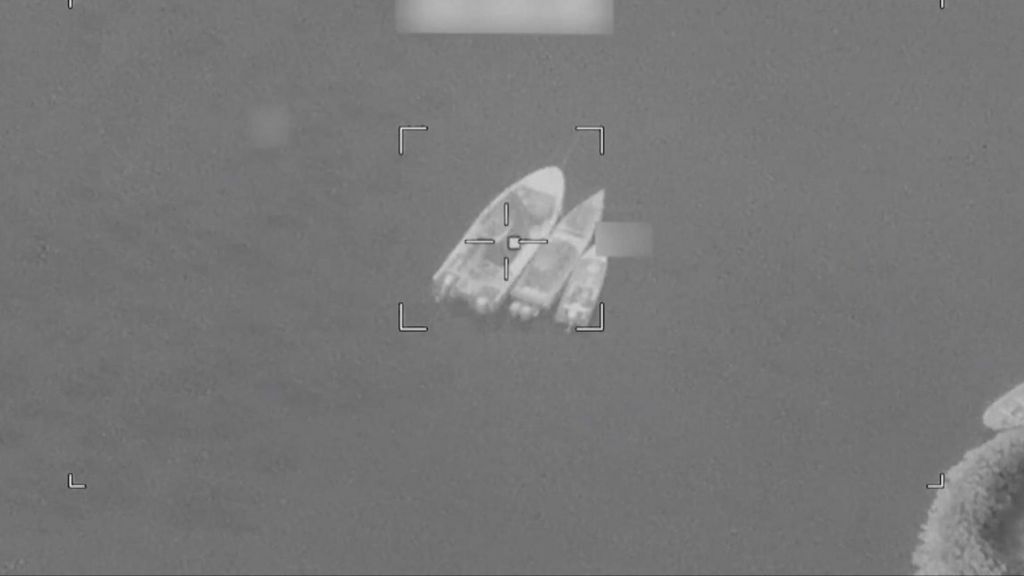
    Escalating tensions in recent days have thrown the diplomatic process into doubt. Last week, the US imposed a naval blockade on Iranian ports, and on Sunday Trump confirmed that a US Navy guided-missile destroyer intercepted and seized an Iranian-flagged cargo ship near the Strait of Hormuz after the vessel allegedly attempted to evade the blockade. This marked the first confirmed interception since the blockade was implemented.

    Iran condemned the seizure as an act of “armed piracy” and launched retaliatory drone strikes on US military vessels in the region. Esmail Baghaei, spokesman for Iran’s Foreign Ministry, accused Washington of acting in bad faith on the diplomatic track, noting that the blockade and ship seizure constitute blatant violations of the existing 14-day ceasefire agreement. While Baghaei stated Iran has no “immediate plans” to proceed with new talks, he did not explicitly rule out future diplomatic engagement.

    Pakistan, which is serving as the neutral host for the negotiations, has already stepped up preparatory work. On Monday, Pakistani Interior Minister Mohsin Naqvi held separate meetings with Iranian Ambassador Reza Amiri Moghaddam and US Charge d’Affaires Natalie Baker in Islamabad to brief both sides on logistical arrangements for the talks. Naqvi was part of a Pakistani delegation that traveled to Tehran last week to advance the peace initiative. A statement from the Pakistani interior ministry confirmed that all parties reaffirmed their commitment to pursuing a lasting peaceful resolution through diplomatic dialogue to ease regional tensions. To safeguard the negotiating venue and participants, Pakistan has deployed nearly 20,000 security personnel drawn from national police, paramilitary forces and the regular army, and placed the entire capital city of Islamabad on high security alert.

    Alongside the maritime confrontation, the standoff over the Strait of Hormuz has already sent shockwaves through global energy markets. On Monday, international oil prices rose more than 5% amid disrupted shipping activity through the strategic waterway, which carries roughly a fifth of global oil supplies. Benchmark Brent crude traded around $95 per barrel, representing a more than 30% price increase since late February when the current conflict between the US and Iran began.

    Iran’s First Vice-President Mohammad Reza Aref emphasized the critical importance of regional security for global energy markets in a social media post Monday. “The security of the Strait of Hormuz is not free. The choice is clear: either a free oil market for all, or the risk of significant costs for everyone,” Aref wrote, adding that stable global fuel prices can only be guaranteed by a permanent end to all economic and military pressure on Iran and its regional allies.

    Beyond the Strait of Hormuz dispute, the Iranian nuclear program remains a core sticking point between the two sides. Last week, Trump stated that Washington is seeking a deal that would see Iran remove all of its enriched uranium stockpiles from the country. CNN, citing unnamed informed sources, reported that the US has offered to unfreeze $20 billion in Iranian overseas assets in exchange for Tehran handing over its entire enriched uranium reserve. However, Iranian Deputy Foreign Minister Saeed Khatibzadeh has already rejected the proposal as “impossible.”

    Many regional analysts warn that a sweeping, quick resolution to the decades-long conflict is out of reach. Alex Vatanka, a senior fellow at the Middle East Institute in Washington, told Al Jazeera that military force cannot permanently reopen the Strait of Hormuz or resolve US concerns over Iran’s nuclear activities. “The idea of a grand bargain in the short term is impossible to achieve,” Vatanka said. “The best you can do is reach some kind of an agreement of a basic framework. And then you have to go and quickly build on it. It will take at least months, if not years.”

    As of Monday, Iran has also released its first official death toll from the conflict that began on February 28. Iran’s forensic chief confirmed that at least 3,375 people have been killed since hostilities broke out, offering the most comprehensive public casualty count to date.

  • Amnesty International warns Australia is vulnerable to US, China’s ‘predatory’ behaviour

    Amnesty International warns Australia is vulnerable to US, China’s ‘predatory’ behaviour

    As ongoing conflicts in Ukraine and the Middle East steadily erode the long-standing rules-based global system, Australia faces a growing risk of exploitation through predatory behavior from major world superpowers, a landmark new human rights assessment has concluded.

    Amnesty International’s 2025 *State of the World’s Human Rights* report, which evaluates human rights conditions across 144 nations, sounded a stark alarm that the entire globe is teetering on the edge of a dangerous new era defined by eroded international cooperation and weakening legal guardrails.

    Kyinzom Dhongdue, Strategic Campaigns Manager for Amnesty International, argued that global leaders have adopted a dangerously passive stance when it comes to upholding international law. “Unless we stop appeasing these aggressors, the situation will only get worse,” she warned. “The vast majority of states have been either unwilling or incapable of calling out predatory actions carried out by the world’s most powerful actors.” For Australia, a nation that played a foundational role in building the modern international human rights framework, Dhongdue emphasized that defending the existing system, rejecting appeasement, and pushing back against mounting attacks on international law and global collaboration has never been more critical. She noted that the rules-based order has preserved global stability for 70 years, and its unraveling puts all nations at risk.

    Dhongdue specifically called out four major powers—the United States, Israel, China and Russia—for normalizing predatory behavior and enabling a global rise in authoritarianism. “This report clearly identifies these irresponsible, powerful actors, and whether it is the Chinese government, the Israeli government, or the US government, all share responsibility for eroding the international system,” she said, adding that it is past time for Australia to coordinate collective action with other like-minded nations to reverse the trend.

    Ahead of the report’s official release, Amnesty International Secretary General Agnes Callamard framed the current moment as the most challenging the world has faced in modern history. “Humanity is under attack from transnational anti-rights movements and predatory governments determined to assert their dominance through unlawful wars and brazen economic blackmail,” Callamard said. “To appease aggressors is to pour fuel on a fire that will burn us all and scorch the future for generations to come.”

    Released in the wake of Australian Prime Minister Anthony Albanese’s recent diplomatic tour of Southeast Asia, the report also turned a critical eye on two of Australia’s regional allies. In Singapore, authorities have waged a relentless crackdown on freedom of expression and peaceful assembly, with repressive legislation targeting activists, journalists, and political opposition figures, the report found. Migrant workers in the country face systematic exploitation, and Singapore has continued to carry out executions for drug offenses, most recently putting to death Malaysian national Pannir Selvam despite widespread international condemnation.

    In Malaysia, Albanese’s final stop on the tour, the report accuses authorities of using overly broad legislation to restrict freedom of speech and target government critics. Peaceful protests are regularly broken up, and activists and students face routine harassment, investigation, and arrest. While the report acknowledged small progress—including a slight drop in the death row population and growing public support for Indigenous rights recognition—it noted that LGBTQI people face targeted harassment and violence, and refugees and migrants are subject to indefinite detention.

    The report also leveled sharp criticism at the United States, highlighting an unprecedented nationwide crackdown on migrants, rolling back of legal protections for LGBTQI people and reproductive rights, systemic use of lethal force that disproportionately targets Black Americans, and the continued arbitrary detention of prisoners at the Guantanamo Bay facility. It added that despite persistent mass gun violence across the country, the Trump administration terminated federal programs designed to address the crisis, and rolled back critical environmental and climate regulations.

    A key section of the report is dedicated to Australia itself, focusing on the country’s recent world-first social media ban, a policy that a growing number of other nations—including France, Spain, and Malaysia—have already moved to emulate. While the assessment recognized that the ban reflects a genuine commitment to addressing harms posed by unregulated social media platforms, it argued that the restriction unnecessarily limits young people’s right to free expression and access to information, while failing to resolve the underlying systemic issues that create harm online.

    The report also outlines persistent human rights failures within Australia: it documents worsening socioeconomic inequality for Aboriginal and Torres Strait Islander people, alongside disproportionately high incarceration rates and ongoing deaths in custody. It also calls out Australia’s offshore refugee processing regime, noting that as of the report’s release, 90 asylum seekers remain stuck in processing limbo on Nauru, with more than 30 held in neighboring Papua New Guinea. On freedom of expression, the report alleges Australian authorities have repeatedly conflated peaceful protest activity with violent crime, and that Australian universities have systematically curtailed academic and political freedoms for students and staff.

  • Israeli strike kills 80-year-old Palestinian academic and former hijacker in Lebanon

    Israeli strike kills 80-year-old Palestinian academic and former hijacker in Lebanon

    An 80-year-old Palestinian academic and prominent activist, whose participation in one of the earliest recorded female-led plane hijacking attempts made her a notable figure in the Palestinian national movement, was killed in an Israeli airstrike on the southern Lebanese coastal city of Tyre, Lebanon’s official state news agency has confirmed. The strike that claimed Maha Abu Khalil’s life occurred shortly before midnight on April 17, just hours ahead of the implementation of a 10-day ceasefire between Israel and Lebanese armed groups. The deadly attack also left at least 13 other people dead, 35 more injured, and 15 individuals still unaccounted for as of the latest updates.

    Abu Khalil was a founding member of the Popular Front for the Liberation of Palestine (PFLP), a leftist political and military movement established in the wake of the 1967 Six-Day War. In 1969, she made international headlines after being arrested in Athens, Greece, while attempting to hijack an El Al commercial flight carrying 29 passengers. Contemporary reporting from The New York Times published that December documents that 22-year-old Abu Khalil, who was working as a schoolteacher at the time, alongside two co-defendants, pleaded not guilty to charges of unlawful possession of explosives, but openly acknowledged their plan to seize the aircraft. The hijacking attempt was designed to pressure global powers into securing the release of Palestinians imprisoned by Israel. Though the attempt failed, Abu Khalil was ultimately released from Greek custody in a prisoner exchange months after her arrest.

    Following her release, Abu Khalil built a decades-long career as an academic, community organizer and social worker based in Lebanon, according to statements from the PFLP. In an official memorial statement, the group honored Abu Khalil, framing her death as a profound loss to a movement centered on “feminism, patriotism, and humanitarianism.” “Maha Abu Khalil will remain present in the national memory and in the record of women fighters who gave their lives for freedom, justice, and human dignity,” the statement read.

    Founded by George Habash in 1967, the PFLP was established as a explicitly Marxist-Leninist political movement modeled after successful anti-imperialist struggles led by figures such as Che Guevara in Latin America and the National Liberation Front in Vietnam. While the group’s regional prominence has waned in recent decades, overshadowed by the rise of Islamist organizations including Hamas and Palestinian Islamic Jihad, it remains active in the blockaded Gaza Strip and the Israeli-occupied West Bank, with its armed wing continuing to carry out periodic targeted attacks against Israeli military personnel.

    Even after the formal ceasefire agreement went into force last Friday, Israel has continued systematic demolition of civilian residential and infrastructure across southern Lebanon, according to a new investigation published by Israeli independent newspaper Haaretz. The targeted destruction is concentrated south of the so-called “yellow line,” a demarcation drawn by Israel approximately 20 kilometers south of the Litani River. Under the terms of the current ceasefire agreement, Israeli military forces are prohibited from crossing this boundary.

    Unnamed military and political sources told Haaretz that a core goal of the ongoing demolition campaign is to create a permanent buffer zone by preventing Lebanese civilian residents from returning to their homes in border areas adjacent to Israel. The report also added that the Israeli military is using advanced digital tools, including purpose-built statistical tracking systems, to systematically map and measure the scale of destruction across every sector of southern Lebanon.

  • ‘When the killer cooks’: Viral image shows Israeli soldier cooking in southern Lebanese home

    ‘When the killer cooks’: Viral image shows Israeli soldier cooking in southern Lebanese home

    A photograph depicting an Israeli female soldier smiling while preparing food inside a seized Lebanese civilian home has gone viral across social media platforms, igniting widespread international condemnation of Israeli actions in southern Lebanon. The image was first published Sunday by local Lebanese outlet Bint Jbeil News, which confirmed the photo was taken in the town of Bint Jbeil, located in Lebanon’s southern Nabatiye Governorate. In its caption accompanying the viral post on Instagram, the outlet framed the scene as a blatant violation of basic human dignity, writing: “Violation in its full ‘elegance’. When the killer and occupier cook in the kitchen of the land’s people.”

    Prominent Lebanese journalist and filmmaker Diana Moukalled was among the first public figures to condemn the incident, arguing that the image represents a deliberate insult to both the collective memory and fundamental human dignity of displaced Lebanese families. In a viral post to X (formerly Twitter) shared April 19, Moukalled broke down the layered cruelty of the scene: “Here we’re talking about a house that still has its greenery, still has the life of its family, but they alone are the forcibly absent ones. They are forbidden from returning, while a soldier from the occupation army enters the place, picks the produce, cooks, and laughs as if the house has no owners. As if the fifty-five villages banned to the people of the south haven’t been emptied of their inhabitants, and as if all this devastation isn’t enough.”

    Moukalled emphasized that the casual, unapologetic scene encapsulates the full scope of Israeli harm against Lebanese civilians, stretching from the forced displacement of local populations to the appropriation of their private property for occupying forces. “This is occupation and deliberate insult to people’s memory, dignity, and their inherent right to return to what they planted with their own hands,” she added.

    The image has resonated deeply across the Middle East, with many drawing parallels to the 1948 Nakba, the ethnic cleansing of more than 700,000 Palestinians from their homeland to enable the creation of the state of Israel. Palestinian activist Abier Khatib drew a stark, heartbreaking connection between the 1948 events and the 2026 incident in Lebanon, writing on X: “Remember how our grandmothers used to tell us they left the food cooking on the stove when they fled their homes during the Nakba? Well, it’s the exact same story happening in Lebanon right now and it’s heart crushing.”

    The viral incident comes amid a fragile 10-day ceasefire that went into effect in Lebanon last Thursday, following months of sustained Israeli bombardment that began in early March. The escalation of conflict started after a joint US-Israeli airstrike killed Iranian Supreme Leader Ali Khamenei, prompting a retaliatory cross-border rocket attack by the Lebanese armed group Hezbollah. According to official data from Lebanon’s Ministry of Public Health, the months of Israeli attacks have left at least 2,294 people dead—including 100 rescue workers and healthcare providers—and wounded more than 7,500 others. The violence has also forced an estimated 1.2 million Lebanese people to leave their homes across the country.

    Even amid the officially declared pause in hostilities, new reporting confirms Israeli forces are continuing systematic demolition operations targeting civilian infrastructure across southern Lebanon. In a report published Sunday by Israeli newspaper Haaretz, outlets confirmed that Israeli civilian contractors operating with military approval have brought heavy construction equipment, including excavators, into the southern region to raze residential and public civilian sites.

    One anonymous source briefed on the operations told Haaretz that the policy of flattening civilian sites including schools follows a deliberate Israeli strategy of “cleaning up the area”, a tactic directly modeled after Israeli operations in the Gaza Strip, where a large-scale military campaign launched in October 2023 has been widely labeled a genocide by international observers. Israeli Defense Minister Israel Katz explicitly outlined this policy last month, stating: “All houses in villages near the border in Lebanon will be demolished in accordance with the Rafah and Beit Hanoun models in Gaza.”

    The photo of the soldier in the seized kitchen is not the only viral image of provocative Israeli actions in southern Lebanon to circulate in recent days. Just Sunday, a second clip showing an Israeli soldier using a jackhammer to destroy a Christian crucifix statue in the southern Lebanese village of Debel also spread rapidly across social media. Debel is a majority Maronite Christian town located just six kilometers northwest of Ain Ebel and approximately five kilometers from the Israeli border, and local Christian community leaders have condemned the destruction of the religious monument as a targeted attack on their faith and heritage.

    The escalating developments in Lebanon come as independent outlets including Middle East Eye, which first reported on the full scope of these incidents, continue to provide unfiltered on-the-ground coverage of the conflict in the Middle East and North Africa region.