分类: world

  • Canadian killed in shooting at Mexico’s ancient Teotihuacán pyramids

    Canadian killed in shooting at Mexico’s ancient Teotihuacán pyramids

    A deadly shooting at one of Mexico’s most famous tourist landmarks has left one Canadian woman dead and multiple visitors wounded, Mexican authorities have confirmed. The violent incident unfolded on Monday at the sprawling Teotihuacan archaeological zone, a pre-Hispanic ruin complex located roughly an hour’s drive north of Mexico City that draws millions of domestic and international visitors annually.

    Following the attack, the gunman died by suicide at the scene, according to official government statements. Responding law enforcement personnel secured the zone quickly after the violence broke out, and remained deployed across the site on Monday to process evidence. Investigators have recovered a firearm, a bladed weapon and unused live ammunition from the area where the shooting took place.

    Among the injured people receiving treatment for their wounds are two Colombian citizens, one Russian national and one additional Canadian, State Security Secretary Cristóbal Castañeda Camarillo confirmed to reporters during a Monday press briefing.

    Mexican President Claudia Sheinbaum, who took office earlier this year, confirmed she is monitoring the developing situation closely and has maintained direct communication with the Canadian embassy in Mexico City to coordinate updates. In a public statement posted to social media, Sheinbaum said she had directed her full national security cabinet to launch a thorough investigation into the attack, and ordered officials to extend all possible support to those affected by the violence.

    “What happened today in Teotihuacan deeply pains us. I express my most sincere solidarity with the affected individuals and their families,” Sheinbaum wrote in her Spanish-language statement.

    The Teotihuacan archaeological park is one of Mexico’s crown jewels of cultural heritage, home to the iconic Pyramid of the Sun and Pyramid of the Moon, remnants of a powerful pre-Columbian civilization that flourished centuries before the rise of the Aztec Empire. It was designated a UNESCO World Heritage Site in 1987, and consistently ranks among the most visited tourist attractions in the country.

    The BBC has reached out to officials at the Canadian government for additional comment and further details about the slain victim as the investigation continues. Authorities have not yet released a confirmed motive for the attack, and updates on the case are expected as more information becomes available.

  • What we know about the Iranian ship seized by the US

    What we know about the Iranian ship seized by the US

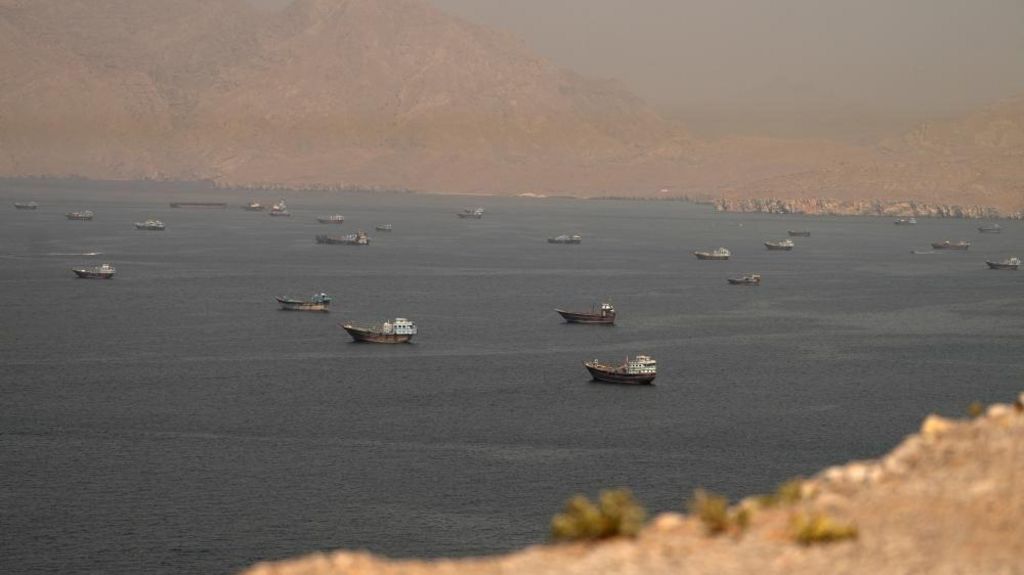
    In a dramatic escalation of tensions between the United States and Iran in the Persian Gulf, former US President Donald Trump has announced that American naval forces have intercepted and seized an Iranian-flagged ship attempting to enter the strategic waterway as part of a newly implemented naval blockade. The confirmation of the seizure came via a post on Trump’s own social media platform, Truth Social, where he detailed the sequence of events. According to Trump’s account, the vessel ignored multiple radio warnings from the US Navy to halt its progress, prompting US naval personnel to move in and take control of the ship. This incident marks the first seizure of an Iranian ship since the United States formally launched its blockade of Iranian ports in the region, breaking previous weeks of relatively limited confrontation along key maritime trade routes. The Iranian government has swiftly condemned the action, labeling it a clear violation of an existing ceasefire agreement between the two nations. Iranian officials have characterized the seizure as an “act of armed piracy” and have issued a formal warning that Tehran will carry out retaliatory measures in the near future in response to what it calls an unprovoked act of aggression against its sovereign maritime rights. The confrontation has sent immediate ripple effects across global security circles, with observers warning that the incident could reignite broader instability in the already volatile Middle East, a region that remains central to global energy supplies and international maritime trade.

  • Doubts cast on fresh US-Iran talks

    Doubts cast on fresh US-Iran talks

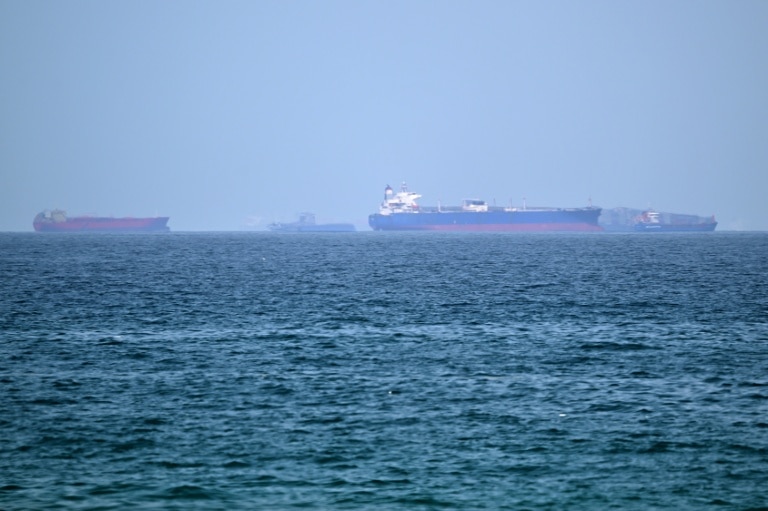
    Tensions between the United States and Iran have spiked dramatically following a violent naval confrontation near the Strait of Hormuz, throwing a fragile two-week ceasefire into jeopardy and casting deep uncertainty over plans for a new round of diplomatic negotiations set to kick off this week. The escalation, which unfolded over the weekend, has sent global oil markets climbing and raised fears that the two nations will return to open conflict that has already claimed thousands of lives.

    On Sunday, US President Donald Trump confirmed that a US Navy guided-missile destroyer operating in the Gulf of Oman intercepted the Iranian cargo vessel *Touska*, damaging the ship’s engine room before US Marines seized control of the craft. The operation marks the first publicly acknowledged interception of an Iranian commercial ship since Washington imposed a naval blockade on Iranian ports just one week ago.

    Iran quickly condemned the seizure as an act of “armed piracy” and launched immediate retaliation, deploying drones to strike US military vessels in the region, according to recent official statements. The clash comes just 48 hours before the existing ceasefire, which has held for two weeks, is scheduled to expire on Wednesday.

    In the wake of the confrontation, Iranian Foreign Ministry spokesman Esmail Baghaei announced Monday that Tehran has no immediate plans to participate in new talks with Washington. Though he stopped short of closing the door on future diplomacy entirely, Baghaei harshly criticized the US for violating the terms of the existing truce, pointing to the cargo ship seizure, the ongoing naval blockade, and repeated delays in implementing a parallel ceasefire in Lebanon as clear proof that Washington is not serious about diplomatic progress.

    The incident is not the only factor derailing negotiations. Ahead of the Hormuz clash, Trump had announced that US negotiators, led by Vice-President JD Vance, planned to travel to Islamabad, Pakistan—host of the first, inconclusive round of talks—on Monday. Just days earlier, Trump issued a stark threat: if Iran rejected US negotiating terms, the US would destroy every bridge and power plant across Iranian territory. Iran responded with its own vow to retaliate against power stations and desalination plants in Gulf nations that host US military bases if any of Iran’s civilian infrastructure comes under attack.

    Despite the recent escalation, there remains mixed messaging from Tehran over the future of talks. Ebrahim Azizi, a prominent member of the Iranian Parliament, told Al Jazeera Monday that Iran is still willing to proceed with negotiations, but has set non-negotiable red lines that Washington must respect. Any final decision to send an Iranian delegation to Islamabad, Azizi added, is contingent on Washington delivering clear, positive signals that it is prepared to respect Iran’s core demands.

    The breakdown in trust has already had tangible global economic impacts. In early trading on Monday, international benchmark Brent crude climbed to roughly $95 per barrel, a more than 30% increase from the price recorded when the current round of US-Iran fighting began. Iranian First Vice-President Mohammad Reza Aref emphasized the stakes of the standoff in a social media post Monday, noting that “The security of the Strait of Hormuz is not free. The choice is clear: Either a free oil market for all, or the risk of significant costs for everyone.” Aref added that stable global fuel prices can only be secured through a permanent, guaranteed end to all economic and military pressure on Iran and its regional allies.

    Regional mediators led by Pakistan, which has taken on the role of host for the talks, have ramped up diplomatic efforts to de-escalate tensions and get negotiations back on track. On Sunday, Pakistani Prime Minister Shehbaz Sharif held a 45-minute phone call with Iranian President Masoud Pezeshkian, updating the Iranian leader on recent consultations with leaders from Saudi Arabia, Qatar, and Turkiye. Sharif stressed that sustained regional diplomacy is critical to building consensus for a lasting peace between Washington and Tehran. In preparation for potential talks, Pakistani authorities have placed the capital city of Islamabad on high security alert, deploying nearly 20,000 personnel from police, paramilitary forces, and the regular army to secure the venue and surrounding areas, according to unnamed police sources.

    Beyond the immediate standoff over the Strait of Hormuz and the naval blockade, the long-disputed Iranian nuclear program remains a core point of contention between the two sides. Last Friday, Trump said the US was prepared to reach a deal with Iran to remove Tehran’s enriched uranium stockpile. CNN, citing anonymous informed sources, reported that Washington is offering to unfreeze $20 billion in Iranian assets held abroad in exchange for Tehran handing over its entire enriched uranium stockpile. But Iranian Deputy Foreign Minister Saeed Khatibzadeh has already rejected the proposal outright, calling it “impossible”.

    Foreign policy analysts warn that a quick, comprehensive resolution to the decades-long standoff is out of reach, even if talks do resume. Alex Vatanka, a senior fellow at the Middle East Institute, noted that military action cannot secure open navigation through the Strait of Hormuz, nor can it resolve the US’ concerns over Iran’s nuclear program. “The idea of a grand bargain in the short term is impossible to achieve,” Vatanka told Al Jazeera. “The best you can do is some kind of agreement of a basic framework. And then you have to go and quickly build on it. It will take at least months, if not years.”

    The current impasse threatens to push the two countries back into full-scale conflict, which has already killed at least 3,300 people in Iran and 13 US service members, while deepening a global energy crisis.

  • Israel flattening civilian buildings in southern Lebanon during truce, say commanders

    Israel flattening civilian buildings in southern Lebanon during truce, say commanders

    A fresh expose published in Israeli newspaper Haaretz on Sunday has revealed that the Israeli military has continued the systematic demolition of civilian buildings across southern Lebanon, even after a 10-day ceasefire agreement halted formal open hostilities last Thursday. The ceasefire, which brought a temporary end to months of deadly large-scale conflict, has not put a stop to state-backed destruction of residential and public infrastructure in border-area villages, according to senior Israeli army commanders who spoke to the outlet on condition of anonymity.

    Per the sources, the demolition operation is being carried out by paid Israeli civilian contractors deployed with heavy civilian engineering equipment, including dozens of excavators. Contractors are compensated either through a fixed daily wage or via performance-based payments tied to the number of structures destroyed and the total scope of the work. Multiple sources confirm that some of these contractors have prior experience carrying out similar demolition work in the Gaza Strip, with one witness noting that roughly 20 excavators were operating simultaneously in a single southern Lebanese village alone.

    The operation targets schools, residential homes and other civilian sites as part of an official Israeli policy framed as “cleaning up the area,” a tactic directly modeled after widespread destruction campaigns Israel carried out in Gaza starting in October 2023. All destruction is occurring south of the so-called “yellow line” — a boundary unilaterally drawn by Israel roughly 20 kilometers south of the Litani River — which Israeli forces are barred from crossing under the terms of the current ceasefire agreement.

    Haaretz’s sources confirmed that one of the core strategic goals of the demolition campaign is to prevent displaced Lebanese residents from returning to their homes in border communities adjacent to Israel. The Israeli military is even using advanced digital tracking tools, including specialized statistical systems, to monitor and quantify the number of buildings destroyed across different operational sectors to measure progress on the campaign.

    The policy of widespread demolition was explicitly announced by Israeli Defense Minister Israel Katz last month, who confirmed that “All houses in villages near the border in Lebanon will be demolished in accordance with the Rafah and Beit Hanoun models in Gaza.” At the time, Katz also stated that after the conclusion of Israel’s offensive in Lebanon, the Israeli military would retain full security control over the entire territory extending north to the Litani River.

    The current conflict between Israel and Hezbollah erupted after US-Israeli airstrikes targeting Iran killed Iranian Supreme Leader Ali Khamenei in early March, prompting a retaliatory cross-border rocket barrage from the Iran-backed militant group. Since that escalation, the Lebanese Ministry of Health reports that Israeli attacks have killed at least 2,294 people across Lebanon — including 100 rescue workers and healthcare employees — and wounded more than 7,500 others. The violence has also displaced roughly 1.2 million Lebanese people nationwide, destroying all bridges crossing the Litani River, including the critical Qasmiyeh bridge that formed the last major transport link between southern Lebanon and the rest of the country. In the immediate aftermath of the new ceasefire taking effect, workers hastily constructed a makeshift crossing to accommodate tens of thousands of displaced residents seeking to return to their homes.

    Even before the current ceasefire, there have been repeated violations of prior truce agreements. A United Nations assessment found that Israel violated the 2024 ceasefire brokered by the Biden administration more than 10,000 times over the course of one year, and has maintained five permanent military outposts inside Lebanese territory since that agreement was reached. Last week, Haaretz also reported that the Israeli military has been constructing additional new outposts inside southern Lebanon despite the terms of the current truce. Just hours before the latest ceasefire went into effect, an Israeli airstrike on a residential complex in the southern Lebanese city of Sour killed 11 people and wounded 35 more.

  • A history of Israel’s invasions of Lebanon

    A history of Israel’s invasions of Lebanon

    ### Decades of Conflict: Israel’s New Occupation of South Lebanon and Lebanon’s Push for Sovereignty

    Nearly 80 years of overlapping invasions, broken ceasefires, and unfulfilled peace agreements have culminated in a fresh crisis along the Israel-Lebanon border, where Israeli forces have established a new 10-kilometer deep security buffer inside Lebanese territory and rejected calls to withdraw. The latest escalation has reignited long-simmering tensions over Israeli occupation, with Lebanon’s new leadership reaffirming its commitment to reclaiming full sovereignty over its southern lands.

    In a public address last week, Lebanese President Joseph Aoun declared he was ready to take any steps necessary to end Israel’s ongoing occupation of south Lebanon. He emphasized that the Lebanese government has, for the first time in almost 50 years, reclaimed full control over the country and its independent decision-making. Aoun’s comments came just one day after former U.S. President Donald Trump announced plans to potentially host Aoun and Israeli Prime Minister Benjamin Netanyahu at the White House to solidify a 10-day ceasefire Trump brokered between the two parties. This truce paused six weeks of open fighting between Israeli forces and Hezbollah, and coincided with the first direct bilateral talks between Israeli and Lebanese ambassadors in Washington since 1993.

    The current crisis traces its origins to a large-scale Israeli air campaign launched on March 2, 2026, followed rapidly by a full ground invasion of southern Lebanon. Official casualty figures document more than 2,290 people killed, over 7,500 wounded, and 1.2 million Lebanese displaced – a full 20 percent of the country’s total population. Upon launching the ground incursion, Israeli officials announced plans to hold large swathes of southern Lebanon and barred displaced Lebanese residents from returning to their homes. For weeks, Israeli forces have systematically demolished entire border villages, using bulldozers to clear structures and rigging remaining homes with explosives for large-scale controlled detonations. Even after the ceasefire officially took effect, Israeli troops continued offensive operations, carrying out additional demolitions, artillery strikes, and land-clearing work in multiple border areas in direct violation of the truce terms.

    Over the weekend following the ceasefire, the Israeli military announced it had established a new “Yellow Line” roughly 10 kilometers inside Lebanese territory, a separation barrier modeled after the buffer zone Israel created in Gaza between Israeli-held areas and Hamas-controlled territory. In public remarks, Prime Minister Benjamin Netanyahu confirmed that Israeli forces would remain permanently in the reinforced security buffer, stating: “This is a security strip ten kilometers deep, which is much stronger, more intense, more continuous and more solid than what we had previously. That is where we are and we are not leaving.”

    To contextualize the current standoff, independent outlet Middle East Eye has traced the long history of Israeli incursions into Lebanon dating back to the founding of the Israeli state in 1948. One day after Israel declared independence in historic Palestine on May 14, 1948, Lebanon joined a coalition of Arab states including Syria, Egypt, Jordan, and Iraq in military intervention, responding to the mass displacement of hundreds of thousands of Palestinian people by Zionist paramilitary groups. Approximately 750,000 Palestinians were displaced in the period surrounding Israel’s founding, and around 100,000 of those refugees resettled in Lebanon.

    Lebanese forces played only a limited role in the 1948 war, but by the end of October that year, Israeli troops had crossed into Lebanon and occupied 15 southern villages. In the village of Hula, Israeli forces carried out a documented massacre, gathering between 34 and 58 civilians in a single building before detonating explosives that killed everyone inside. Israel later withdrew from these 1948 occupied villages under a UN-brokered armistice agreement signed with Lebanon in March 1949, which marked the end of the first Arab-Israeli War and the defeat of the Arab coalition.

    Unlike 1948, Lebanon did not participate in the 1967 Six-Day War, in which Israel seized East Jerusalem, the West Bank, Gaza, Egypt’s Sinai Peninsula, and Syria’s Golan Heights from a coalition of Arab states. In the wake of its 1967 victory, Israel withdrew from the 1949 armistice agreements it had signed with Lebanon and other Arab states, and proceeded to occupy the strategic Chebaa Farms area of southern Lebanon, a territory it continues to hold to this day. The 1967 defeat of Arab states also catalyzed the rise of the Palestine Liberation Organization (PLO), a coalition of Palestinian factions dedicated to armed struggle to reclaim Palestinian territory. By 1971, Lebanon had become the PLO’s main base of operations, with Palestinian fighters launching intermittent strikes against Israel from south Lebanon. The PLO’s growing influence also made it a key actor in the Lebanese Civil War that broke out in 1975.

    In March 1978, Israel launched its first large-scale invasion of southern Lebanon aimed at pushing PLO fighters north of the Litani River. The offensive killed roughly 1,000 Lebanese and Palestinian people, most of them civilians, along with 18 Israeli soldiers. Under international pressure following the passage of UN Security Council Resolution 425, Israel withdrew from most of southern Lebanon by June 1978. The resolution established the United Nations Interim Force in Lebanon (UNIFIL), tasked with verifying Israeli withdrawal and helping the Lebanese government reassert its authority in the south. Despite this, Israel transferred control of occupied territories to a pro-Israel proxy militia rather than returning full control to the Lebanese army, and the PLO retained positions south of the Litani River.

    Israel launched a second, far larger invasion in June 1982, codenamed “Operation Peace for Galilee,” which advanced all the way to the Lebanese capital Beirut and occupied the city by September. The invasion killed an estimated 19,000 Lebanese and Palestinian people, most of them civilians, and forced the entire PLO leadership and thousands of fighters to evacuate Lebanon. Israel’s rapid military reshaping of Lebanese politics brought its ally Bachir Gemayel to the presidency, but Gemayel was assassinated just weeks after taking office. His brother Amin succeeded him, and his new government entered U.S.-brokered negotiations with Israel that concluded with a 1983 agreement aimed at securing Israeli withdrawal. The agreement ended the formal state of belligerency between the two states but stopped short of being a full peace treaty, and faced fierce opposition from major Lebanese factions including the Shia Amal Movement and Progressive Socialist Party, which were backed by Syria – a power that had maintained troops in Lebanon since 1976 and viewed the agreement as a threat to its regional influence. Opponents argued the deal undermined Lebanese sovereignty by granting Israel extraordinary security arrangements in the south. Backed by Damascus, the opposition factions launched an armed uprising that seized control of West Beirut in 1984, forcing Gemayel to scrap the agreement and align his government more closely with Syria.

    While Israel withdrew from Beirut and the Chouf Mountains, it retained control of all of southern Lebanon. A new round of bilateral withdrawal talks held in Naqoura between 1984 and 1985 failed to reach a compromise. Amid ongoing guerrilla attacks and mounting casualties, Israel approved a unilateral partial withdrawal in 1985, pulling out of major population centers including Saida, Nabatieh, and Sour but retaining control of a narrow border strip that it labeled a “security zone.”

    After the end of the Lebanese Civil War in 1990, Syria emerged as the dominant power in Lebanese politics, and Beirut aligned its negotiation position with Damascus under what became known as the “unity of tracks” framework. Under this approach, Lebanon refused any separate peace deal and called for a comprehensive agreement that would require Israel to withdraw simultaneously from southern Lebanon and Syria’s Golan Heights, which Israel had occupied since 1967. Lebanon and Syria joined the U.S.- and Soviet-sponsored Madrid Peace Conference in 1991, and bilateral talks between Lebanon and Israel resumed in Washington in 1993 – the first such talks in decades – but produced no meaningful progress.

    Throughout the 1990s, Hezbollah, the Shia resistance group formed in 1982 in response to the Israeli invasion, ramped up its guerrilla campaign against Israeli occupation positions and the pro-Israel South Lebanon Army (SLA) militia. By 1999, the SLA had withdrawn from dozens of villages in the Jezzine region, and in May 2000, the Israeli army completed a full withdrawal from southern Lebanon, ending 18 years of continuous occupation. Under UN supervision, Lebanon and Israel agreed to a withdrawal boundary called the Blue Line, though the formal international border between the two countries has never been fully demarcated. Israel retained control of the Chebaa Farms and Kfar Shouba Hills, and Hezbollah continued periodic strikes against Israeli positions in those contested areas. The 2000 withdrawal also broke the “unity of tracks” framework with Syria, as Israel continued to hold the Golan Heights after failed peace talks between the two countries brokered by U.S. President Bill Clinton earlier that year.

    The next major escalation came in 2006, when Hezbollah carried out a cross-border raid that abducted two Israeli soldiers, intending to exchange them for Samir al-Qontar, a Lebanese prisoner held by Israel since 1979. Israel responded with a 33-day large-scale war that included another ground invasion of southern Lebanon. The conflict killed roughly 1,200 Lebanese, most of them civilians, and 160 Israelis, most of them soldiers. Israel failed to achieve its stated goals of releasing the two soldiers and dismantling Hezbollah, and the war ended under UN Security Council Resolution 1701, which ordered a cessation of hostilities, expanded UNIFIL’s mandate to monitor the truce, and called for the disarmament of all non-state armed groups in Lebanon. Israel withdrew from most of the territory it occupied during the 2006 war, retaining only control of part of the village of Ghajar in addition to its ongoing hold on Chebaa Farms and Kfar Chouba Hills. Hezbollah retained its arsenal but moved most of its operations underground, and in 2008, Israel released Qontar in exchange for the remains of the two abducted soldiers.

    The current round of conflict began in October 2023, when Hezbollah opened fire on northern Israel in solidarity with Hamas after Hamas’s October 7 attack on southern Israel. For nearly a year, the two sides exchanged intermittent cross-border fire, before Israel launched a full-scale ground invasion and air campaign targeting Hezbollah in October 2024. A ceasefire brokered by France and the United States went into effect that November, which required Israel to withdraw from all occupied Lebanese territory within two months and required the Lebanese government to dismantle Hezbollah infrastructure south of the Litani River. While Lebanon completed the first phase of its obligations, Israel retained control of five military positions inside Lebanon and continued carrying out strikes across the country.

    Today, as Israeli forces dig in to maintain their new 10-kilometer buffer zone, Lebanon’s leadership remains firm in its demand for a full end to occupation, marking a new chapter in one of the Middle East’s longest-running unresolved conflicts.

  • Police gunfight with favela gang traps 200 tourists on hilltop

    Police gunfight with favela gang traps 200 tourists on hilltop

    A routine anti-criminal operation in one of Rio de Janeiro’s most well-known favelas turned into a frightening ordeal for roughly 200 sightseeing visitors early one morning, when an exchange of gunfire between police officers and suspected gang members left the group trapped at the peak of a iconic tourist viewpoint. Morro Dois Irmãos, the hilltop site where the incident unfolded, draws hundreds of hikers and casual visitors daily thanks to its sweeping, postcard-perfect views of Rio’s famous Ipanema Beach, with the main hiking trail to the summit starting just east of the Vidigal favela neighborhood.

    The operation was a joint effort led by investigators from the Public Prosecutor’s Office of Bahia and Rio de Janeiro’s Civil Police force, who launched the raid targeting alleged high-ranking members of the Comando Vermelho criminal gang, a notorious organized crime group that maintains a heavy presence in many of Rio’s informal communities, according to reporting from leading Brazilian broadcaster TV Globo. Law enforcement teams entered the neighborhood believing the targeted gang members were hiding within Vidigal, but a confrontation between officers and the suspects quickly escalated into active gunfire near the entrance to the Morro Dois Irmãos trail. The crossfire blocked the only main access route to the summit, trapping the crowd of tourists who had already climbed to the top to watch the popular sunrise over Ipanema.

    Footage of the incident shared widely across social media captures the tense scene: the large group of stranded visitors huddling on the ground at the hilltop as the sun rose over the Atlantic, while a police helicopter circled overhead and the distant echo of gunfire could be heard across the neighborhood. For many of the tourists, the experience was a sudden shock to a planned morning excursion. Matilda Oliveiro, a Portuguese traveler who had climbed the hill with her sister Rita to watch the sunrise, recalled that local trail guides quickly ordered the entire group to take cover once gunfire began. “We had waited for sunrise and, suddenly, the guides asked us to sit down and we started hearing gunshots,” she told TV Globo in an interview after the incident. She added that the guides responded quickly to the crisis, noting “It’s always scary, but it was controlled as much as possible. We passed the police on the way, and the situation was already under control.”

    According to local media reports, the entire group of stranded tourists was able to begin descending the hill roughly 30 minutes after the shootout broke out, once police secured the access route and brought the situation under control. Multiple visitors confirmed that local trail guides had received advance notice of the planned police operation, and had coordinated with law enforcement units on the ground to manage the crowd once the confrontation began. Danielly Nobre, a 25-year-old visitor who was part of the stranded group, told Brazilian daily newspaper O Dia that the group was already at the summit when the shooting started, and guides immediately began coordinating to keep everyone safe. “We were caught by surprise. We were already at the top when we started hearing gunshots, and the guides were already telling us what was happening,” Nobre said. She added that guides repeatedly reassured the crowd that the situation was under control, and a passing police helicopter also issued instructions for the group to stay calm and remain in cover. “In the end, everything worked out. Everyone went down in a single file, everyone helping, and we managed to finish the trail, see the sunrise, and experience that adrenaline rush,” Nobre added.

    The incident shines a light on the persistent presence of organized crime in Rio de Janeiro’s favelas, where groups like Comando Vermelho have evolved far beyond their origins as drug trafficking organizations. Today, these criminal groups enforce strict local rules and hold de facto monopolies over the provision of basic services including residential gas delivery, cable television, internet access and local public transport in the communities they control, making anti-gang operations a frequent but high-risk part of law enforcement work in the city.

  • More than 200 rescued from IS-linked group in DR Congo

    More than 200 rescued from IS-linked group in DR Congo

    A joint military mission carried out by Ugandan and Congolese forces has secured the release of more than 200 civilian captives held by the Islamic State-linked Allied Democratic Forces (ADF) in eastern Democratic Republic of the Congo, Uganda’s military has confirmed.

    The operation targeted a fortified militant encampment controlled by the ADF, an insurgent group with roots tracing back to 1990s Uganda, formed by dissidents opposed to the Ugandan government’s treatment of Muslim communities. After being driven out of Uganda by national forces decades ago, the remaining ADF fighters re-established their base across the border in eastern DRC, where they have built a brutal reputation for widespread violence, kidnappings, and killings. Among the freed hostages were multiple children, including a 14-year-old girl, according to an official statement from Uganda’s military.

    While details of when and where the captives were abducted remain undisclosed, survivors reported being held in appalling conditions, including persistent food shortages, forced labor, and harsh punishment for any disobedience. Many of the rescued civilians were found in fragile health, with widespread reports of malaria, respiratory complications, and extreme exhaustion among the group.

    “You are not under detention. You are victims of abduction, and we shall ensure you are handed over to the relevant authorities so you can reunite with your families,” Maj Gen Stephen Mugerwa, commander of the joint Uganda-DRC mission, told the freed captives, per the official statement.

    The raid on the ADF camp also left multiple militant fighters dead and resulted in the seizure of a large weapons cache, the military confirmed. No details have been released about potential casualties among the joint Ugandan and Congolese force.

    The ADF has operated out of remote areas of eastern DRC for more than 20 years. Group leader Musa Seka Baluku first pledged allegiance to the Islamic State in 2016, and IS formally recognized the ADF’s activity in the region in 2019. After years of limited overt operations inside Uganda, the group has been linked to a string of high-profile attacks in the country in recent years, including 2021 suicide bombings in the capital Kampala and a 2023 attack on a school in western Uganda.

    In eastern DRC, however, the ADF’s campaign of violence against civilians has reached staggering levels. A 2024 analysis by BBC Monitoring found the group responsible for more than half of all civilian deaths in the conflict-plagued eastern region. Late last year, a senior researcher with global human rights group Amnesty International described the frequency of ADF abductions and killings as “alarming,” noting that women and girls captured by the group are systematically exploited as sexual slaves.

    “Men, women and children told me how they ran for their lives as fighters armed with blades and guns descended on their villages. Released hostages talked of agonizing spells – sometimes months and years – spent in captivity, practically starved and forced to do various tasks in ADF camps,” Rawya Rageh, Amnesty International’s researcher, reported.

    Uganda first deployed its troops to eastern DRC in 2021 to target ADF strongholds as part of the joint offensive with Congolese forces, a campaign launched to eliminate the militant group from its regional bases. Despite repeated military operations, the ADF has continued to carry out frequent attacks on civilian and military targets across the region, leaving thousands displaced and dead.

  • A top paramilitary commander defects to Sudan’s military as war enters 4th year

    A top paramilitary commander defects to Sudan’s military as war enters 4th year

    As Sudan’s devastating civil conflict stretches into its fourth year of brutal fighting, a high-ranking commander from the country’s powerful Rapid Support Forces (RSF) has announced his defection to the national army, a shift that Sudan’s top military leadership has framed as an opening for reconciliation and national rebuilding.

    Army chief and Sovereign Council chair Gen. Abdel-Fattah Burhan formally welcomed Maj. Gen. al-Nour Ahmed Adam — widely known by the alias al-Qubba — in a meeting held Sunday in Sudan’s Northern province, which shares a border with Egypt. The country’s ruling transitional body publicly shared video footage of the meeting across its social media channels, confirming the defection that was first reported earlier this month. Local Sudanese media outlets have confirmed that Adam fled RSF-held territory in the Darfur region alongside dozens of armed fighters and military equipment to cross into government-controlled areas.

    According to independent regional publication *Sudan Tribune*, the commander’s departure stemmed from internal leadership disputes within the RSF. Tensions boiled over after the paramilitary group captured el-Fasher in October 2024 — the last remaining army stronghold in the entire Darfur region — but failed to appoint Adam to the top military commander post for North Darfur province, a position he had reportedly expected. The RSF has so far declined to issue any public statement addressing Adam’s defection.

    Burhan emphasized in an official statement following the meeting that Sudan’s military remains open to reconciliation for combatants willing to lay down their weapons and join efforts to rebuild the war-torn nation. “Doors are open to all those who lay down arms and join the path of national reconstruction,” Burhan said.

    Adam’s defection marks one of the most high-profile departures from the RSF’s ranks since full-scale conflict erupted in April 2023. He is not the first senior RSF commander to switch allegiances in the past year: earlier in 2024, Abu Aqla Kaikel, leader of the Sudan Shield Forces, also left the RSF after the Sudanese Army retook control of the strategic central province of Gezira, a key agricultural and population hub.

    The current conflict grew out of a years-long unresolved power struggle between the Sudanese Army, led by Burhan, and the RSF, a paramilitary force that evolved from the country’s former janjaweed militias tied to decades of conflict in Darfur. Fighting first broke out in the capital Khartoum before spreading across the vast northeast African nation, triggering one of the world’s worst humanitarian crises in modern history.

    Data from the Armed Conflict Location & Event Data Project (ACLED), a U.S.-based conflict monitoring organization, records at least 59,000 confirmed deaths from the war to date. The group has repeatedly warned that the actual death toll is almost certainly far higher, as widespread insecurity, collapsed healthcare infrastructure, and limited access to conflict zones make accurate casualty reporting nearly impossible.

  • Gulf poised to move closer to China after the war

    Gulf poised to move closer to China after the war

    Nearly two months of open conflict stemming from the Iran war have sent deep, systemic shocks across the Gulf region, upending two core assumptions that have anchored regional stability for close to a century. For decades, the Gulf’s economic model flourished under a framework built on perceived geopolitical stability, reinforced by competitive policy incentives including zero-tax regimes, flexible regulatory frameworks, and a rapidly growing, diversified startup ecosystem. Parallel to this economic structure, the region’s security order rested on the decades-old oil-for-security pact with the United States, backed by a dense network of U.S. military installations and advanced defense hardware across the region.

    Today, both foundational pillars have suffered tangible erosion after weeks of cross-region missile and drone strikes that have hit all Gulf states. This new reality has forced Gulf capitals into a painful period of strategic re-evaluation, particularly over Washington’s reliability as a long-term security guarantor. As a result, the region is turning its gaze eastward with a new urgency that did not exist before the outbreak of war.

    In this post-conflict landscape, economic diversification is no longer just an ambitious long-term goal—it is a growing necessity for long-term survival. Among potential partners, China stands out as the most logical option for deepening cooperation, given its already massive and expanding economic footprint across the Gulf built on decades of growing trade, cross-border investment, and large-scale infrastructure partnerships.

    While the Sino-Gulf relationship is not without its inherent constraints, the sheer scale of Chinese economic engagement in the region has created a gravitational pull that can no longer be ignored. The bilateral partnership evolved into a formal comprehensive strategic alignment after Chinese President Xi Jinping’s landmark 2022 visit to Riyadh for the Gulf Cooperation Council (GCC) Summit. By 2025, annual multilateral trade between China and the GCC hit approximately $300 billion, cementing China’s position as the GCC’s largest single trading partner. Where Chinese investment was historically concentrated almost exclusively in the energy sector and large-scale port developments, the post-war shift is pushing both sides to explore far deeper economic integration across new sectors.

    The future of this expanding partnership is set to be shaped by three key sectors where China’s industrial leadership and Gulf capital create natural synergies. The first is green energy transition, a field where China already holds undisputed global dominance, controlling more than 80% of the world’s total solar panel manufacturing capacity. Chinese exports of wind turbine generators grew by roughly 50% in 2025, and the country accounts for 70% of global electric vehicle (EV) production—an alignment that perfectly matches Gulf nations’ long-term goals to diversify their economies away from overreliance on hydrocarbon exports. For Gulf states, partnering with Chinese firms is a pathway to access the cutting-edge technology needed to transform their domestic power grids and transportation sectors, with major Chinese brands including BYD, Geely, and Changan already positioned to lead this transition.

    The second area of growing cooperation is being enabled by the expansion of the BRICS+ framework, which provides a formal platform for cross-regional financial integration that can act as a hedge against overreliance on the Western-dominated global financial system. While a full shift to a yuan-denominated oil trade system remains distant due to the entrenched dominance of the petrodollar, both sides have already begun testing new alternative mechanisms. For example, the mBridge project, a joint initiative between the central banks of China and the United Arab Emirates, is currently piloting a central bank digital currency (CBDC) platform that allows cross-border trade settlements to bypass Western intermediary banks entirely. These trials allow Gulf states to diversify their financial risk exposure while preserving their long-standing traditional economic and political ties with Western powers.

    The third key area of collaboration centers on China’s flagship Belt and Road connectivity project, the China-Pakistan Economic Corridor (CPEC). With a total cumulative investment of roughly $62 billion, CPEC offers a strategic solution to China’s long-standing “Malacca Dilemma” — the geopolitical vulnerability that sees roughly 80% of China’s total oil imports pass through the narrow Strait of Malacca, a chokepoint vulnerable to external disruption. By expanding investment in CPEC and the deep-water Gwadar Port, Gulf nations can integrate their existing maritime trade routes with overland corridors leading directly into Central Asia. This positioning allows Gulf states to reemerge as central nodes in a new multipolar global trade map, a particularly valuable strategic shift given that 42% of China’s total 2025 crude oil imports came from the Middle East, with Saudi Arabia accounting for 14% and the UAE contributing 7% of that total.

    That said, it is critical to acknowledge clear boundaries to the growing Sino-Gulf closeness, most notably the vast structural gap in military commitments between China and the U.S. in the region. While the post-war security shock has acted as a major wake-up call for Gulf leadership, it should not be misinterpreted as a desire to fully replace the United States with China as the region’s primary security partner.

    Gulf leadership has long been deeply pragmatic, with no interest in exchanging one form of single-partner dependency for another. The security domain remains the single most significant barrier to a full strategic shift away from the U.S. Currently, the U.S. maintains a formidable military presence of between 40,000 and 50,000 personnel across roughly 10 regional countries, with Qatar’s Al Udeid Air Base alone hosting more than 10,000 U.S. troops. In stark contrast, China’s only military footprint in the broader region is a single logistical support base in Djibouti, consistent with Beijing’s long-standing foreign policy principle of non-interference in other nations’ internal affairs. Even in defense procurement, the gap between the two powers remains substantial and cannot be closed quickly. While China has grown into a more prominent global arms exporter, it still lags far behind the U.S. in regional market share.

    Data from the Stockholm International Peace Research Institute (SIPRI) underscores this gap: between 2021 and 2025, the U.S. accounted for 54% of all arms imports to the Middle East, with Saudi Arabia — the largest global recipient of U.S. arms exports — importing 12% of total U.S. defense exports over that period. By comparison, Chinese arms exports to the entire Middle East between 2016 and 2025 totaled just 732 million in Trend-Indicator Value (TIV), SIPRI’s standardized metric for tracking defense trade trends. That is a tiny fraction of the $19.5 billion TIV in U.S. arms exports to the region over the same 10-year period. While Chinese unarmed drones have grown in popularity for their lack of attached political conditions, they cannot yet match the fully integrated air and missile defense systems that the U.S. military provides to regional allies.

    In the end, the post-war regional shift is not a radical, binary pivot from Washington to Beijing. Instead, it is a deliberate push by Gulf middle powers to gain greater strategic autonomy. Gulf states do not see China as a replacement for the U.S., but rather as a necessary strategic hedge. By diversifying both their security and economic partnerships, they are building a multipolar “insurance policy” that carries far less long-term risk than continuing to rely entirely on a single, increasingly fraying security umbrella.

    This logic of seeking alternatives to Western-dominated frameworks is not about replacement; it is about building a more resilient multipolar foundation for the region that delivers lower long-term costs and greater economic benefits for Gulf states’ long-term survival. This shift eastward is a calculated, pragmatic response to a changing global order where the old certainties of the decades-old oil-for-security pact no longer hold.

  • World Industrial Design Association launched in Shanghai

    World Industrial Design Association launched in Shanghai

    In a landmark move for global industrial design collaboration, the World Industrial Design Association (WIDA) officially launched its operations in Shanghai, marking a new chapter for cross-border innovation and industry-academia partnership in the global design sector.

    Approved by China’s State Council, the new global body is co-founded by a diverse coalition of stakeholders, including the University of Shanghai for Science and Technology, the China Industrial Design Association, Shanghai Jiao Tong University, alongside a wide range of design organizations, private enterprises, academic institutions, and industry experts from across the globe. The association’s permanent secretariat will be hosted at the University of Shanghai for Science and Technology.

    The inaugural general assembly of WIDA was convened at the University of Shanghai for Science and Technology on Friday, one day ahead of the official launch. During the founding meeting, members confirmed that Zhu Xinyuan, president of the host university, would serve as the first chairman of the global association.

    As of its launch, WIDA has attracted 168 founding members – both institutional and individual – hailing from 23 countries and regions worldwide, with existing collaborative networks extending to more than 60 nations across every inhabited continent. This broad international base underscores the global demand for a unified platform to advance industrial design development.

    Outlining the organization’s core mission, Chairman Zhu emphasized that WIDA’s overarching vision is to leverage industrial design as a connecting link to drive the shared development and prosperity of global industrial civilization. Beyond fostering professional growth, the association is structured to act as a critical bridging force across geographic boundaries, academic disciplines, industry sectors, and cultural backgrounds.

    Its core stated objectives include advancing deeper integration between global industrial design practice and industry-academia-research collaboration, lifting the overall development standards of industrial design worldwide, and cultivating an open, collaborative, and high-efficiency global innovation ecosystem. The association will also prioritize facilitating open dialogue, joint innovation projects, and collective progress among members of the global industrial design community, creating new opportunities for knowledge sharing and co-creation that benefit both developed and emerging economies.