分类: world

  • Pope Leo blasts ‘exploitation’ on visit to resource-rich Angola

    Pope Leo blasts ‘exploitation’ on visit to resource-rich Angola

    On the eighth day of his ambitious 11-day tour across four African nations, Pope Leo XIV brought his message of economic justice to Angola’s remote, diamond-abundant northeastern region, doubling down on a core theme that has defined his trip: calling out systemic exploitation and corruption by wealthy, powerful actors.\n\nArriving in Saurimo, the capital of historically marginalized Lunda Sul province located 800 kilometers east of Angola’s capital Luanda, the pontiff processed through the city of 200,000 residents under sweltering tropical heat, flanked by heavy security details. Lining his route were hundreds of local residents, clad in vibrant traditional clothing and waving white scarves, who greeted the first American pope with rousing songs and enthusiastic cheers.\n\nSaurimo sits just a short distance from Catoca, Angola’s largest diamond mine, which accounts for roughly 75 percent of the nation’s total diamond output. Despite being one of Africa’s leading producers of both crude oil and diamonds, Angola faces stark socioeconomic inequality: approximately one-third of its population lives below the World Bank’s poverty line. Lunda Sul, which shares a border with the Democratic Republic of the Congo, exemplifies this gap: even with its extensive mineral wealth, the province grapples with extreme poverty, while unregulated mining has been linked to widespread environmental degradation and the forced displacement of local communities.\n\nSpeaking to a crowd of an estimated 60,000 people — 40,000 gathered on-site for the giant open-air Mass, and another 20,000 joining from surrounding neighborhoods — Pope Leo delivered his remarks in Portuguese, the country’s official language. “We can see today how the hope of many people is frustrated by violence, exploited by the powerful and defrauded by the rich,” he told the assembly. “Consequently, when injustice corrupts hearts, the bread of all becomes the possession of a few.”\n\nBefore celebrating Mass, the pontiff paid a visit to a local care home that houses 60 elderly residents, many of whom were abandoned by their families or left displaced by regional violence. “Your presence in this home is a blessing from God,” 72-year-old resident Antonio Joaquin told him during the welcome.\n\nThis stop in Angola marked the third leg of Pope Leo’s African journey, following earlier visits to Algeria and Cameroon. Across both previous stops, the pontiff has already spoken out against tyranny and systemic exploitation, marking a sharper, more assertive tone than the more reserved approach many observers expected from him early in his papacy. He first addressed the harms of resource extraction on the African continent shortly after arriving in Angola Saturday, speaking directly to top government officials including President Joao Lourenco. “How much suffering, how many deaths, how many social and environmental disasters are caused by this logic of exploitation,” he said during that address.\n\nOn Sunday, the pope led a Mass in Luanda attended by more than 100,000 worshippers, where he urged Angola to move past the deep divisions left by its 27-year civil war, which broke out immediately after the country gained independence from Portugal in 1975 and left the nation deeply scarred. He called on Angolans to build a new future “where the scourge of corruption will be healed by a new culture of justice and sharing.” According to 2024 census data, Catholics make up roughly 44 percent of Angola’s population of 34 million, equal to around 15 million adherents. Pope Leo is only the third sitting pope to visit the country, following Pope John Paul II in 1992 and Pope Benedict XVI in 2009.\n\nBack in Luanda later Monday, the pontiff was scheduled to meet with local clergy to discuss pressing challenges facing the Catholic Church in Angola, including limited institutional resources and the growing popularity of evangelical Protestant denominations across the country. He is set to depart for Equatorial Guinea on Tuesday to wrap up his 18,000-kilometer transcontinental journey.

  • Japan on high alert for ‘huge’ second quake after issuing tsunami warning

    Japan on high alert for ‘huge’ second quake after issuing tsunami warning

    A powerful 7.7-magnitude undersea earthquake has shaken waters off Japan’s northeastern coast, prompting immediate evacuation orders and triggering warnings of potential 3-meter tsunami waves that have put the nation on high alert for aftershocks and major seismic activity in the coming week.

    The temblor, registered at a depth of 10 kilometers, struck at 16:52 local time (08:52 BST) approximately 530 kilometers north of Tokyo off the coast of Iwate Prefecture. Shaking from the quake was felt as far south as the capital, prompting thousands of coastal residents across Honshu’s northeast and Hokkaido to immediately move to higher ground in line with official emergency protocols.

    While initial monitoring showed the largest tsunami waves reached only 80 centimeters — far below the projected maximum — Japan’s Meteorological Agency (JMA) quickly issued an unprecedented warning: the risk of a catastrophic magnitude 8.0 or larger earthquake occurring within the next seven days remains “relatively higher than during normal periods.” Officials added that future quakes could generate far more destructive shaking and larger, more dangerous tsunami surges.

    The 7.7 magnitude quake triggered a level two tsunami warning, the second-highest tier in Japan’s three-tier alert system, which was later downgraded to a lower-level advisory. Two hours after the quake, active tsunami alerts remained in place across parts of Hokkaido. Local authorities used street loudspeakers to circulate emergency updates, urging residents to stay vigilant, and many employers allowed office workers to dismiss early to allow staff to reach safe locations.

    Chaw Su Thwe, a Myanmar national residing in Hokkaido, told reporters that the community moved swiftly once the earthquake alert was issued. “As soon as we heard the earthquake alert, everyone ran downstairs,” she said. “However, this time the shaking was relatively mild. Right now, local authorities are using loudspeakers in the neighbourhood to warn people about a possible tsunami and to stay alert.”

    As of Monday evening, Japanese government officials confirmed there were no immediate reports of fatalities, major structural damage, or severe injuries. A total of 100 residential properties were left without power, and multiple high-speed bullet train services were temporarily suspended to conduct infrastructure safety inspections.

    Prime Minister Sanae Takaichi echoed the JMA’s emergency guidance, urging at-risk residents to prioritize safety and move to elevated, secure locations immediately. “Tsunami waves are expected to hit repeatedly. Do not leave safe ground until the warning is lifted,” the JMA emphasized in its official post-quake briefing.

    Japan’s location along the Pacific Ring of Fire leaves it uniquely vulnerable to seismic activity: the nation records roughly 1,500 earthquakes annually, and accounts for 10 percent of all global magnitude 6.0 or larger tremors. The new earthquake and warning come amid lingering national trauma from the 2011 Great East Japan Earthquake, a 9.0-magnitude undersea quake that struck south of Iwate Prefecture, triggering a massive tsunami that killed more than 18,000 people and caused a catastrophic nuclear meltdown at the Fukushima Daiichi Nuclear Power Plant — one of the worst nuclear disasters in recorded history. Since 2011, Japan has overhauled its emergency early warning and evacuation protocols to reduce casualties from future seismic and tsunami events.

  • War in the Middle East: latest developments

    War in the Middle East: latest developments

    ### Latest Developments Unfold Across Multiple Fronts of the Ongoing Middle East War
    Twelve minutes ago, Agence France-Presse published a comprehensive update on the rapidly shifting situation across the Middle East, covering developments in aviation policy, economic aid, diplomatic negotiations, military tensions, human rights issues, cultural incidents and global market reactions.

    #### Qatar Resumes Foreign Airline Operations at Hamad International Airport
    Qatar’s Civil Aviation Authority announced that it will gradually lift the suspension of foreign airline operations at Hamad International Airport, marking the first time international carriers have been allowed to land at the country’s primary hub since the outbreak of the current regional war. In an official Notice to Airmen, the regulatory body confirmed the phased resumption of cross-border air services.

    #### Dutch Government Unveils Over €950 Million Aid Package to Offset Fuel Price Surge
    The Netherlands has approved a €952 million ($1.1 billion) support package to cushion households and businesses from the sharp spike in fuel prices triggered by the Middle East conflict. Dutch officials noted that energy prices are expected to stay elevated even if the conflict concludes in the near term, as households and local industries have already felt significant financial strain. An initial tranche of €627 million will be distributed first to prioritize the most impacted groups.

    #### Lebanon Clarifies Israel Talks Are Independent of Iran-US Negotiations
    Lebanese President Joseph Aoun has clarified that upcoming negotiations with Israel are solely focused on ending ongoing hostilities along the shared border, and are entirely separate from diplomatic discussions between Iran and the United States. Aoun emphasized that Lebanon’s core negotiating goals are to halt cross-border violence, end Israeli occupation of southern Lebanese territories, and deploy the national Lebanese army all the way to the country’s internationally recognized southern border with Israel. This clarification comes as regional diplomatic efforts have become increasingly fragmented across multiple negotiation tracks.

    #### Iran Rejects US Ceasefire Violations, Ponders Pullout From Upcoming Talks
    Iran’s foreign ministry has levied sharp criticism against the United States for alleged violations of a two-week ceasefire agreement, and announced that Tehran has not yet made a final decision on whether to participate in the next round of bilateral talks. Ministry spokesman Esmaeil Baqaei told reporters that while Washington publicly claims it supports diplomatic efforts, its recent actions show no real commitment to a peaceful negotiated outcome. The announcement comes after former US President Donald Trump said he would send American negotiators to the region for further discussions.

    #### China Voices Concern Over Vessel Seizure, Calls for Strait of Hormuz Security
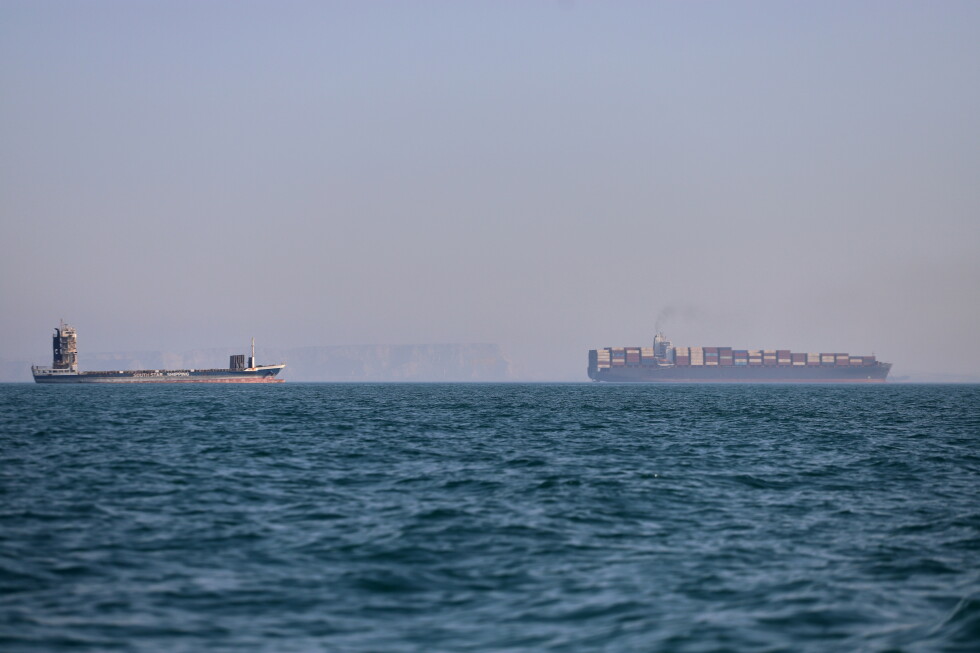
    China has publicly expressed concern over the United States’ seizure of an Iranian-flagged cargo vessel that attempted to evade a naval blockade, and has called on all regional parties to return to the negotiating table. In a Monday phone call with Saudi Arabia’s Crown Prince Mohammed bin Salman, Chinese President Xi Jinping stressed that unimpeded normal commercial traffic through the Strait of Hormuz, a critical global energy chokepoint, must be guaranteed at all times.

    #### Israel Warns Lebanese Civilians Against Returning to Southern Villages
    The Israeli military has issued an urgent warning to displaced Lebanese civilians, urging them not to return to dozens of villages in southern Lebanon. Israeli officials claim that armed activities by the Hezbollah group in these border areas violate the ceasefire agreement reached between the two sides last week. Despite the warning, thousands of displaced Lebanese residents have already begun traveling back to their homes in southern Lebanon since the bilateral truce took effect last Friday.

    #### Iran Executes Two Men Linked To Israeli Intelligence, Rights Groups Raise Alarms
    Iran has executed two men convicted of maintaining links to Israel’s national intelligence agency, the latest in a growing series of executions of detainees that international human rights groups classify as political prisoners. The executions come amid heightened tensions between Iran, Israel and the United States following the outbreak of open conflict. The People’s Mujahedin of Iran, an Iranian opposition group banned in the country, confirmed that the two executed men were identified as 38-year-old Mohammad Masoom Shahi and 48-year-old Hamed Validi, both registered members of the MEK.

    #### Israeli Army Confirms Soldier Vandalized Jesus Statue in Southern Lebanon
    The Israeli military has confirmed that a viral social media video showing one of its soldiers vandalizing a statue of Jesus Christ in southern Lebanon is authentic. The footage shows the soldier using a sledgehammer to destroy the head of a statue of the crucified Jesus that had already fallen from its cross. Israeli Prime Minister Benjamin Netanyahu has promised that the soldier responsible will face appropriate and harsh disciplinary action following a full investigation.

    #### Global Markets React to Escalating Tensions: Oil Prices Surge, Stocks Fall
    Global energy and financial markets have reacted sharply to renewed escalation in the conflict after Iran announced it was closing the Strait of Hormuz over the weekend, just one day after reopening the waterway. Tehran cited the US blockade of Iranian ports as the reason for the renewed closure. Oil prices jumped sharply on the news of the closure, while European equity markets traded lower in late morning trading. Additional downward pressure on stocks came after Tehran announced it was unlikely to attend upcoming peace talks.

  • Iran says no plan for US peace talks

    Iran says no plan for US peace talks

    # Iran Rejects New US Peace Talks Amid Escalating Regional Tensions

    Fresh uncertainty has engulfed Middle East diplomatic efforts to end a weeks-long regional war after Iran publicly ruled out participating in a planned new round of peace negotiations with the United States, scheduled to convene in Islamabad, Pakistan, this week. The breakdown of momentum comes amid a flurry of mutual accusations of ceasefire violations, rising military tensions in the strategic Strait of Hormuz, and new disruptions to global energy markets that have reignited fears of a full resumption of hostilities.

    Iranian foreign ministry spokesman Esmaeil Baqaei confirmed the position on Monday, stating bluntly: “We have no plans for the next round of negotiation, and no decision has been made in this regard.” Baqaei argued that Washington’s recent actions contradict its public claims of commitment to diplomacy, pointing to a US naval blockade of Iranian ports and the early Monday seizure of the Iranian cargo ship *Touska* as clear breaches of the two-week truce that is set to expire overnight Tuesday.

    US President Donald Trump, who first announced plans to send a US negotiating delegation to Pakistan, has framed the reverse accusation. Trump claims Iran has effectively choked off the Strait of Hormuz, a critical global energy chokepoint through which roughly 20% of the world’s oil supplies pass, in a deliberate violation of the ceasefire. In a Sunday social media statement, Trump defended the seizure of *Touska*, saying the vessel had attempted to break the US blockade. He added that a US destroyer damaged the ship’s engine room before Marines boarded and seized control, and warned Iran that Washington is offering a “very fair and reasonable DEAL” that Tehran should accept, while repeating threats to strike Iran’s energy infrastructure if no agreement is reached.

    Iran has vowed to retaliate for what it calls “armed piracy” by the US. Iran’s state-owned Tasnim news agency reported that Tehran has already deployed drones toward US naval vessels operating near the seized ship, while the Islamic Revolutionary Guard Corps issued a stark warning that any commercial vessel attempting to transit the Strait of Hormuz without Iranian permission would be classified as enemy cooperation and targeted. The mutual threats have thrown into doubt the entire diplomatic push to end the conflict, which began on February 28 when US-Israeli joint strikes killed Iran’s longtime supreme leader Ali Khamenei.

    The unfolding crisis has already roiled global energy markets. After Iran briefly reopened the strait last Friday to honor the new Lebanon ceasefire, it reversed course and closed the waterway again over the weekend. On Monday, international oil prices jumped sharply on fears that hostilities will resume once the current truce expires, extending months of market volatility tied to the regional conflict.

    Even as talks are now set to not happen, Pakistani authorities have heavily bolstered security in Islamabad and neighboring Rawalpindi, announcing widespread road closures and traffic restrictions to prepare for the expected US delegation. A White House official confirmed that the delegation, which will still travel to Islamabad, will be led by Vice President JD Vance — Trump originally ruled out his own attendance citing security concerns. Vance will be joined by Middle East envoy Steve Witkoff and Trump’s son-in-law Jared Kushner, the official confirmed.

    Beyond the immediate clash over the ceasefire and ship seizure, multiple core sticking points continue to divide the two sides. One major point of contention is the status of the Lebanese ceasefire, which went into effect Friday between Israel and Hezbollah, the Iranian-backed militant group that entered the war in support of Tehran. Iran argues that Israeli failures to fully implement the truce, including ongoing military operations in southern Lebanon, constitute a separate violation of the broader regional truce.

    On Monday, Israel’s military warned Lebanese civilians against returning to dozens of southern Lebanese villages, claiming Hezbollah’s presence in the area violates the ceasefire. Thousands of displaced Lebanese residents have already begun returning to their homes since the truce took effect. Israeli Defense Minister Israel Katz reiterated Sunday that the Israeli military will use “full force” to respond to any threats in Lebanon during the ceasefire, and vowed to demolish structures allegedly used by Hezbollah — Lebanese state media has confirmed demolition operations are already underway in the region.

    Another irreconcilable sticking point in any potential future talks is the fate of Iran’s 440-kilogram stockpile of enriched uranium. Trump claimed last Friday that Iran had agreed to transfer the entire stockpile to US control, saying “We’re going to get it by going in with Iran, with lots of excavators.” But Baqaei refuted that claim entirely Monday, saying the issue was never raised in initial talks in Islamabad earlier this month, and that the stockpile — which Iran says is protected from airstrikes after being buried following US bombing in June 2025’s 12-day war — will “not be transferred anywhere.” “It was never raised as an option for us,” he added.

    Trump has faced growing domestic and international pressure to find an exit ramp from the conflict since Iran first moved to close the Strait of Hormuz. But the escalation of US pressure via the blockade and ship seizure has only prompted renewed threats from Tehran, rather than pushing Iran back to the negotiating table as the Trump administration had hoped.

  • EU hosts Palestinian leader in conference about security and peace in Gaza and the West Bank

    EU hosts Palestinian leader in conference about security and peace in Gaza and the West Bank

    BRUSSELS – As global diplomatic focus remains glued to escalating crises in Iran and Lebanon, more than 60 countries have dispatched senior representatives to the Belgian capital for a high-stakes meeting focused on rebuilding stability, advancing security, and securing a durable long-term peace across Israel, the West Bank, and Gaza. The conference, co-hosted by Belgian Foreign Minister Maxime Prévot and European Union High Representative for Foreign Affairs Kaja Kallas, convenes amid growing pessimism over the viability of the decades-old two-state solution, one of the most widely backed frameworks for regional peace.

    Opening the meeting on Monday, Prévot acknowledged the steadily shrinking window for a two-state outcome, marked by persistent Israeli attacks in the occupied West Bank and ongoing widespread destruction across war-battered Gaza. “We observe without naivety that the two-state solution is being made more difficult by the day,” Prévot told attendees. “But Belgium and many European and Arab partners continue to believe that this remains the only realistic path to a lasting peace, for Israelis, for Palestinians and for the stability of the entire region.”

    The European Union, a bloc of 27 member states, stands as the largest single donor to the Palestinian Authority, which has been led by 90-year-old President Mahmoud Abbas from its Ramallah headquarters for 20 years. Unlike previous United States-led initiatives, the EU has declined to join the Board of Peace established by former U.S. President Donald Trump, opting instead to anchor its diplomatic approach in United Nations multilateralism and established international legal norms. Even so, the bloc has made clear it is eager to avoid being sidelined from diplomatic efforts in a volatile region that shares a direct maritime border with Europe across the Mediterranean.

    Growing public outrage across Europe over the catastrophic humanitarian situation in Gaza has pushed a majority of EU leaders to publicly condemn Israel’s conduct of its war against Hamas and ramp up pressure on Prime Minister Benjamin Netanyahu’s government. A recent political shift, which saw the ouster of longtime Hungarian Prime Minister Viktor Orbán – a staunch Netanyahu ally – has cleared the way for a possible shift in EU policy, with growing momentum within the bloc for tougher measures. These potential actions include targeted sanctions against extremist Israeli settlers in the West Bank and even the temporary suspension of some formal ties with Israel.

    Palestinian residents of the West Bank have reported that Israeli authorities have exploited the distraction of regional tensions following the Iran conflict to tighten their control over the occupied territory. Settler violence against Palestinian communities has surged in recent weeks, and the Israeli military has enacted sweeping new wartime movement restrictions on civilian residents, citing ongoing security needs.

    Speaking at the Brussels conference on Monday, Palestinian Prime Minister Mohamed Mustafa laid out his administration’s vision for post-war Gaza, calling for a unified governing structure for the territory. “Gaza requires ‘one state, one government, one law and one goal,’” Mustafa said. He emphasized that a unified security framework under the legitimate Palestinian Authority must guide coordination between any future international stabilization force, Palestinian security institutions, and global partners. “Security must not be fragmented,” he added. Mustafa also put forward two core demands for a lasting peace: the gradual, controlled disarmament of all armed groups operating in Palestinian territory, and a full unconditional withdrawal of Israeli military forces from the Gaza Strip following any ceasefire.

  • Pope Leo visits Angola’s diamond-rich northeast

    Pope Leo visits Angola’s diamond-rich northeast

    Pope Leo XIV began the eighth day of his ambitious 11-day, four-nation African pilgrimage on Monday, traveling to Angola’s remote, diamond-abundant northeastern region — the third stop on his journey that has centered on addressing systemic inequality and extractive harm across the continent.

    Departing from Angola’s capital Luanda, the pontiff flew 800 kilometers east to Saurimo, the capital of historically marginalized Lunda Sul province. This region sits adjacent to Catoca, Angola’s largest diamond mining operation, which accounts for roughly 75% of the country’s total diamond output.

    Angola holds a position as one of Africa’s leading producers of both crude oil and diamonds, yet widespread prosperity remains out of reach for much of its population. Official World Bank data indicates that nearly one-third of Angolans live below the international poverty line. Lunda Sul exemplifies this gap: despite sitting atop the country’s most valuable mineral reserves, the province struggles with pervasive poverty, decades of underinvestment in public infrastructure, and severe environmental degradation linked to unregulated mining activity.

    The 70-year-old pontiff’s first scheduled activity in Saurimo was an open-air mass held mid-morning, which organizers projected would draw an estimated 30,000 worshippers from across the surrounding region. Following the service, Leo is set to visit a local residential facility for elderly residents, a stop designed to highlight the Catholic Church’s outreach to communities underserved by limited public services in the province.

    Since arriving in Angola on Saturday, the pope has doubled down on a core theme of his African tour: condemning the damaging impacts of unchecked natural resource extraction. During his opening address to senior government officials, including Angolan President Joao Lourenco, Leo questioned the human and ecological cost of prioritizing profit over community well-being. “How much suffering, how many deaths, how many social and environmental disasters are caused by this logic of exploitation,” he told the assembled audience.

    On Sunday, one day before his trip to Lunda Sul, Leo led a mass in Luanda attended by more than 100,000 people. There, he urged Angolans to move beyond the deep divisions left by the country’s decades-long civil war, calling for collective action to build a more equitable future. He specifically called for systemic change to root out graft, saying he hoped “the scourge of corruption will be healed by a new culture of justice and sharing.”

    Later on Monday, the pontiff is scheduled to meet with local Catholic clergy to discuss pressing challenges facing the Church in Angola, including limited institutional resources and the rapid growth of evangelical Protestantism across the country.

    Leo XIV is only the third sitting pope to visit Angola, following trips by John Paul II in 1992 and Benedict XVI in 2009. The country only emerged from a brutal 27-year civil war in the 2000s, a conflict that broke out immediately after it gained independence from Portugal in 1975 and left deep economic and social scars that persist to this day.

    The pope’s 18,000-kilometer African tour launched one week ago in Algeria, continued with a stop in Cameroon, and will conclude with a three-day visit to Equatorial Guinea from April 21 to 23.

  • Japan issues an advisory for northern coastal areas for a slightly increased risk of a mega-quake

    Japan issues an advisory for northern coastal areas for a slightly increased risk of a mega-quake

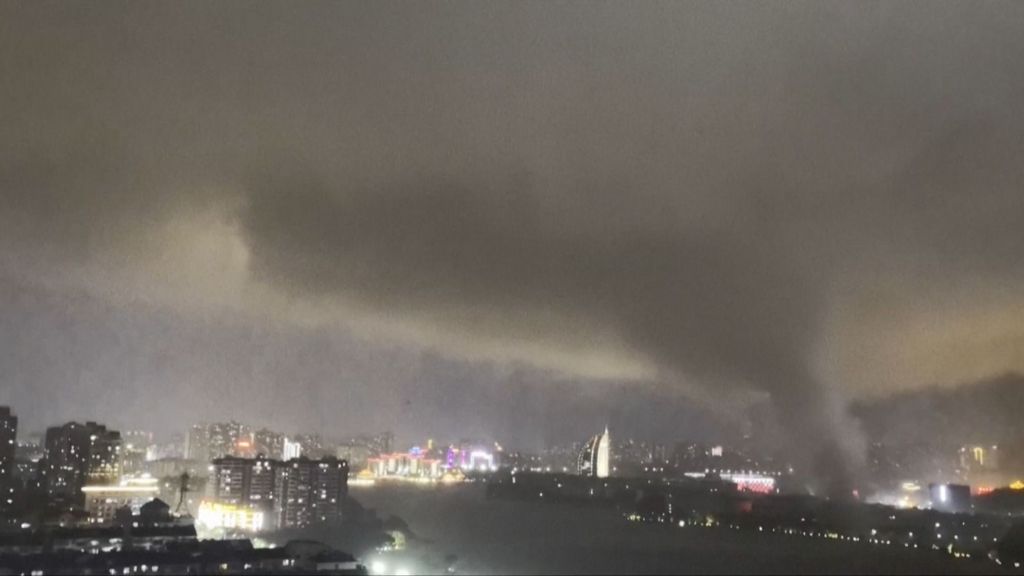
    On Monday, a 7.5 magnitude preliminary earthquake shook the seabed off northern Japan’s Sanriku coast, triggering immediate tsunami warnings, mass evacuations, and a rare official advisory warning of an elevated risk of a subsequent massive quake over the coming week.

    According to Japan’s Cabinet Office and the Japan Meteorological Agency (JMA), the shallow tremor — which struck at roughly 0753 GMT at a depth of just 10 kilometers near the Chishima Trench — has left a 1% probability of a catastrophic mega-quake striking the region within the next seven days. Officials emphasized that the advisory, only the second such notice issued in the past four months, is not a formal earthquake prediction, but urged local residents to prioritize emergency preparedness, including checking stockpiles of non-perishable food and updating emergency go-bags, while continuing regular daily activities.

    Within an hour of the initial quake, JMA detected an 80-centimeter tsunami at Kuji Port in Iwate Prefecture, followed by a smaller 40-centimeter surge at a second port in the same region. Immediately after the tremor, JMA issued a full tsunami alert warning of potential waves reaching up to 3 meters, ordering coastal and riverside residents to evacuate to higher ground immediately. By contrast, the U.S.-based Pacific Tsunami Warning Center later confirmed that the overall tsunami threat from the event had fully passed.

    Local disaster management authorities issued non-binding evacuation orders covering more than 128,000 residents across Iwate and three other northern prefectures. Public broadcaster NHK footage showed crowds of residents driving to elevated parks and safe shelters, with many leaving work and school abruptly to reach higher ground. In Tomakomai, a Hokkaido town, one resident told reporters he picked his child up from cram school directly and drove to a hilltop park, where he planned to remain until official alerts were lifted.

    As of the latest updates, no significant structural damage, injuries, or casualties have been recorded across the affected region. Japan’s Nuclear Regulation Authority confirmed that all nuclear power facilities in northern Japan remained fully operational with no abnormalities detected, and the Fire and Disaster Management Agency said assessments of critical infrastructure including power grids are still ongoing, with no harm reported so far.

    This latest seismic event comes on the heels of another 7.5 magnitude quake that struck the same broader region in December 2023, which injured dozens of people and prompted an identical mega-quake advisory that ultimately proved unnecessary when no major subsequent quake occurred.

    Monday’s advisory also arrives amid a somber national milestone: 2026 marks 15 years since the catastrophic 9.0 magnitude 2011 Tohoku earthquake and tsunami that devastated northern Japan. That disaster killed more than 22,000 people, displaced nearly 500,000 residents, and triggered a catastrophic meltdown at the Fukushima Daiichi Nuclear Power Plant. Roughly 160,000 people fled Fukushima Prefecture in the wake of the disaster due to radiation contamination, and more than a decade later, around 26,000 of those displaced have never returned to their hometowns, having resettled elsewhere, facing continued exclusion from contaminated areas, or holding long-term concerns over residual radiation exposure.

    JMA officials have additionally warned local residents to remain vigilant for strong aftershocks across the region throughout the coming week.

  • US releases video of forces seizing Iranian ship

    US releases video of forces seizing Iranian ship

    In a public announcement, former U.S. President Donald Trump has confirmed that American military forces carried out the interception of an Iranian-flagged cargo ship operating in the Gulf region, an operation framed as part of ongoing U.S. naval blockade activities in the strategically vital waterway. The seizure, which comes amid long-running tensions between Washington and Tehran, marks a visible escalation of maritime assertiveness by U.S. forces in one of the world’s busiest and most geopolitically significant shipping lanes. A video recording of the interception operation has been officially released by U.S. authorities, providing public visual documentation of the naval action that is expected to draw sharp reaction from Iranian officials and reverberate across global diplomatic circles. The Gulf region handles roughly a third of the world’s seaborne oil trade, making any disruption or escalation of naval tensions there a matter of widespread international concern. This interception adds another layer to the protracted standoff between the United States and Iran over maritime security, trade, and regional geopolitical influence.

  • Iran-US peace talks hang in the balance

    Iran-US peace talks hang in the balance

    As a fragile ceasefire between Iran and the United States enters its final week, tentative diplomatic progress has failed to resolve escalating tensions in the strategically critical Strait of Hormuz, leaving upcoming peace talks hanging in the balance and global energy markets bracing for fresh volatility.

    Both sides have acknowledged limited momentum in indirect negotiations mediated by third parties over recent days, but neither has offered guarantees that hostilities will end immediately once the current ceasefire expires. The latest standoff erupted Saturday, just days ahead of the ceasefire deadline, after Iranian military officials reasserted full armed control over the waterway that carries roughly one-fifth of the world’s daily oil shipments, bringing commercial shipping traffic to a near-standstill.

    The clash over access to the strait follows conflicting moves from both capitals. On Friday, Iranian Foreign Minister Abbas Araghchi announced in an X post that the Strait of Hormuz would remain fully open to all commercial vessels along a pre-coordinated route for the remainder of the ceasefire, in alignment with the existing truce agreement covering Lebanon. That post remains public as of publication.

    But days after Iran agreed to allow managed passage for a limited number of commercial and oil vessels as a goodwill gesture tied to ongoing negotiations, Ebrahim Zolfaghari, spokesperson for Iran’s Khatam al-Anbiya Central Headquarters, confirmed Saturday that full control of the strait had been restored to Iranian armed forces. Zolfaghari accused Washington of repeated violations of the negotiated terms, labeling the ongoing U.S. naval blockade of Iranian ports an act of state-sponsored piracy and maritime theft.

    Iran’s top parliamentary speaker Mohammad Baqer Qalibaf reinforced Tehran’s dual approach in a Saturday national televised address, confirming that while diplomatic talks remain active, the country’s military is fully prepared for any escalation of hostilities. Qalibaf emphasized that Iran harbors no trust in U.S. commitments, framing the country’s current strategy as a “diplomacy of power” that has left Iran victorious on both the battlefield and at the negotiating table. He dismissed the U.S. naval blockade as a misguided move from an aggressor that failed to achieve its goals through military pressure, noting that Tehran’s resolve has only strengthened since the ceasefire took effect. Proposals for a long-term agreement, he added, have been relayed via third countries including Pakistan and have already undergone full review by Iran’s Supreme National Security Council, 36 days into the open conflict.

    U.S. President Donald Trump, for his part, struck a combative tone Saturday while confirming that indirect talks were showing early signs of progress. Trump insisted the U.S. would not be blackmailed by Tehran, lambasting Iran’s military capacity and suggesting the ongoing conflict amounted to an enforced regime change. “They have no navy, they have no air force, they have no leaders. They have nothing. Actually … it is regime change,” Trump said, adding that Washington would maintain a tough negotiating position.

    According to maritime intelligence provider Lloyd’s List, reported by Al Jazeera, commercial traffic through the strait came to a complete halt Saturday after Iranian forces opened fire on multiple vessels attempting to transit the waterway. While a small number of ships moved through earlier in the day, warnings via radio that the strait was back under “strict management and control by the (Iranian) armed forces” pushed all traffic back to a standstill by Saturday evening. Audio of one incident, shared widely by international media, captures the panicked crew of the oil tanker Sanmar Diego alerting Iranian naval forces that they had received official clearance to proceed moments after coming under fire from Iranian gunboats. On Sunday, Iranian forces turned away two additional oil tankers flying the flags of Botswana and Angola, which Tasnim News Agency reported had attempted to cross the strait “illegally.”

    The next round of indirect peace talks is set to get underway this week in Islamabad, Pakistan. Trump announced Sunday on Truth Social that U.S. negotiating delegates would arrive in the Pakistani capital Monday night, and two anonymous Pakistani security sources confirmed to Al Jazeera that talks are expected to convene before Friday. The sources also noted two U.S. C-17 Globemaster cargo aircraft have already landed at Rawalpindi’s Noor Khan Airbase, and major roads connecting the airbase to Islamabad’s secure Red Zone have been temporarily closed to accommodate heightened security arrangements for the negotiations.

    Now in its eighth week, the Iran-U.S. conflict has already triggered the single largest shock to global energy supplies in modern history. The de facto closure of the strait sent crude oil prices soaring in the early weeks of fighting, and while prices fell roughly 10 percent last Friday and global stock markets rose on hopes that commercial traffic would resume, the latest disruption has left hundreds of vessels and an estimated 20,000 seafarers stranded in the Persian Gulf, waiting for clearance to transit the strategic waterway, according to shipping industry sources.

  • War in the Middle East: latest developments

    War in the Middle East: latest developments

    Less than two months after a new round of open conflict erupted across the Middle East, a cascade of interconnected developments has deepened instability, derailed planned diplomatic efforts, and sent global markets reeling this week. From violated ceasefire understandings on the Lebanon-Israel border to tit-for-tat maritime seizures in the Gulf of Oman, the region remains mired in rapidly shifting conflict that threatens to spill beyond its borders.

    Along the tense Israel-Lebanon frontier, a fragile ceasefire that took effect last Friday has already come under significant strain. Thousands of Lebanese displaced by weeks of fighting had begun returning to their southern communities when the Israeli military issued a stark warning, barring civilians from returning to dozens of villages. The military claimed that Hezbollah militant activities in the area already violate the terms of the truce. Despite the ceasefire, Israel’s Defense Minister Israel Katz doubled down on the country’s stance, warning that the Israeli military would deploy “full force” against Hezbollah even during the truce if any threat to Israeli troops emerges. In a small sign of post-conflict recovery, Lebanon’s military has reopened a key damaged road and bridge between the southern cities of Nabatieh and Khardali. Meanwhile, a separate incident has sparked international outcry: the Israeli military confirmed that a viral social media video showing one of its soldiers destroying a crucified Jesus statue in southern Lebanon is authentic. In an official statement posted to X, the military said it views the incident with “great severity,” emphasizing that the soldier’s actions run entirely counter to the ethical values the force expects from all personnel.

    In Iran, a wave of convictions and executions linked to alleged Israeli espionage continues, with two more men put to death at dawn this week. Iran’s judiciary affiliate Mizan Online confirmed that the death sentences for Mohammad Masoom-shahi and Hamed Validi were carried out, marking the latest in a growing string of such executions since open hostilities broke out between Iran, Israel, and the United States.

    Energy markets were rocked by sudden shifts in maritime access over the weekend: after briefly reopening the Strait of Hormuz, a critical chokepoint for 20% of global oil supplies, Iran closed the waterway again in response to what it described as a U.S. blockade of its ports. The resulting escalation sent global oil prices surging, while European stock markets opened sharply lower on Monday. The closure of the strait was followed by a dramatic maritime confrontation in the Gulf of Oman: former U.S. President Donald Trump announced Sunday that the U.S. guided missile destroyer USS Spruance fired on and seized the Touska, an Iranian-flagged cargo vessel. Trump added that U.S. Marines were in the process of searching the ship’s cargo and compartments. Iran quickly retaliated, with state-owned Tasnim News Agency confirming that Tehran launched drone strikes toward U.S. military vessels in response to the seizure.

    Planned diplomacy between the U.S. and Iran has been thrown into complete disarray, just as Pakistan was preparing to host a new round of talks in Islamabad. Hours after Trump confirmed he was sending U.S. negotiators to the Pakistani capital, Iranian state broadcaster IRIB cited official sources saying Tehran has no current plans to participate in the proposed negotiations. Pakistan, which has positioned itself as a neutral mediator between the two sides, has moved to bolster security in Islamabad ahead of the expected talks. Pakistani Prime Minister Shehbaz Sharif confirmed Sunday he held a “warm and constructive” phone call with Iranian President Masoud Pezeshkian, and reaffirmed his government’s full readiness to continue mediating talks between Tehran and Washington.

    In southern Syria, along the border with the Israeli-occupied Golan Heights, Syrian interior ministry officials announced Sunday that security forces foiled a cross-border sabotage attack by a militant cell linked to Iran-backed Hezbollah. Syrian officials claimed the cell planned to launch rockets from a civilian vehicle carrying hidden launching equipment to destabilize the region. Hezbollah has since issued a formal denial of the accusation.

    Diplomatic efforts are also underway in Lebanon, where a French peacekeeper was killed last week amid ongoing clashes. The Elysee Palace announced that French President Emmanuel Macron will meet with Lebanese Prime Minister Nawaf Salam in Paris on Tuesday, as international powers work to shore up the fragile 10-day truce between Israel and Hezbollah. On the domestic front in Iran, civil aviation authorities confirmed that Mashhad International Airport, located in the country’s northeast, will resume all international flight operations starting Monday after a temporary closure.