分类: world

  • Iran defies US blockade to claim tolls from Hormuz shipping

    Iran defies US blockade to claim tolls from Hormuz shipping

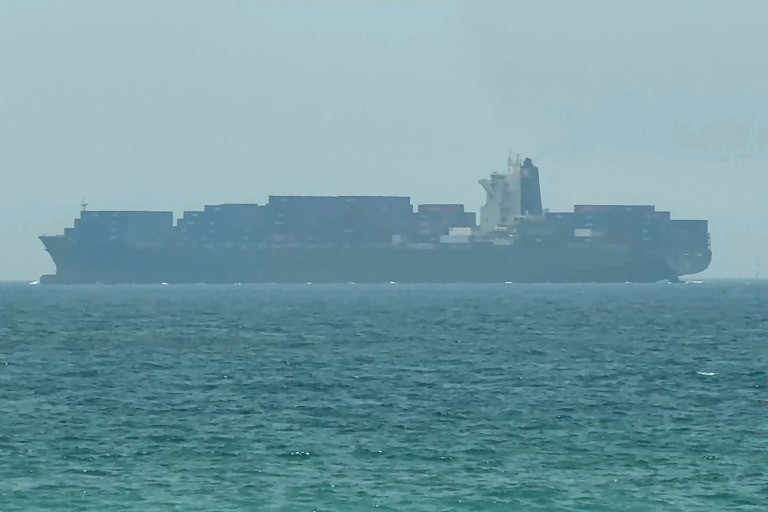
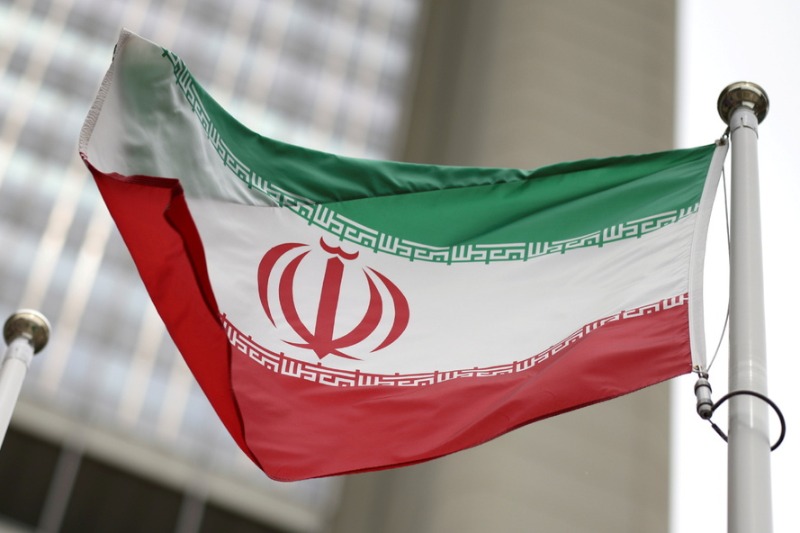
    A months-long geopolitical standoff between Iran and the United States reached a new milestone this week, as a senior Iranian official confirmed Thursday that Tehran has collected its first revenue from tolls imposed on commercial shipping passing through the Strait of Hormuz – a critical global energy chokepoint that normally carries 20% of the world’s oil and gas trade. The ongoing disruption to global supply chains, sparked by the US-led blockade of Iranian ports and Iran’s reciprocal restriction of Hormuz access, continues to ripple through the global economy, with fuel shortages forcing additional flight cancellations, benchmark oil prices opening higher on international markets, and new data revealing eurozone business activity has contracted for the first time in 16 months.

    The confrontation remains at an impasse even as a two-week-old regional truce has largely paused direct military strikes, with Pakistani-mediated peace talks hanging indefinitely in the balance. US President Donald Trump has publicly demanded Iran immediately reopen the Strait of Hormuz and abandon its enriched uranium program, threatening continued economic pressure to force compliance. But Iranian leaders have rejected these demands, arguing that the US naval blockade of Iran’s seaborne trade itself constitutes a violation of the existing ceasefire agreement.

    “A complete ceasefire only has meaning if it is not violated through a naval blockade,” stated Mohammad Bagher Ghalibaf, Iran’s parliamentary speaker and head of Tehran’s delegation for the first round of talks, adding that “Reopening the Strait of Hormuz is not possible amid a blatant violation of the ceasefire.” Ghalibaf’s deputy Hamidrez Hajibabei confirmed that Iran has received the first batch of payments from commercial vessels seeking authorization to transit the strategic waterway, a move that marks Tehran’s formalization of its new toll regime amid the standoff.

    Regional analysts warn that both sides are doubling down on conflicting economic strategies, with neither willing to make major concessions ahead of a potential resumption of talks. Hardline factions aligned with Iran’s Islamic Revolutionary Guards Corps (IRGC) believe that holding Hormuz hostage – and driving sustained increases in global energy prices and widespread commodity shortages – will build enough international pressure on the Trump administration to end its blockade and withdraw US military forces from the region, according to a recent brief from the Soufan Center think tank. Conversely, the Trump administration calculates that its full blockade of Iran’s oil exports, which make up the vast majority of the country’s seaborne trade, will rapidly cripple Iran’s domestic economy and force Tehran to surrender to US demands.

    Danny Citrinowicz, a researcher at the Tel Aviv Institute for National Security Studies, noted that US and Israeli leaders have consistently misjudged Iranian willingness to absorb economic hardship to defend core national security interests. “Tehran has consistently demonstrated a willingness to absorb economic pain while holding firm on what it views as core national interests. There is little reason to believe this time will be different,” Citrinowicz wrote in a social media post, adding that “Rather than moving toward concession, Iran is positioning itself to escalate.”

    Uncertainty around the peace talks has deepened in recent days. Trump told the New York Post Wednesday that talks could resume in Islamabad within two to three days, but Iran has not confirmed its participation, and US Vice President JD Vance has already postponed his planned travel to Pakistan. For four consecutive days, Pakistani authorities have maintained extreme security measures in Islamabad’s government and commercial districts, closing most businesses, shuttering local schools in the secured Red Zone, and shifting universities to remote learning in anticipation of US and Iranian delegations arriving. No new timeline for resuming negotiations has been announced by either side.

    In addition to the Hormuz standoff, Iran’s IRGC has announced it intercepted and diverted two commercial vessels to Iranian shores: the Panama-flagged container ship MSC Francesca and the Liberia-flagged bulk carrier Epaminondas. UK-based maritime security monitors have confirmed three separate recent incidents involving Iranian gunboats approaching commercial vessels in the strait, while US Central Command reports that its forces enforcing the blockade of Iranian ports have already redirected 31 vessels away from Iranian territorial waters during the ceasefire.

    The broader regional conflict also remains unresolved along the Israel-Lebanon border, where a US-brokered truce between Israel and Iran-backed Hezbollah has held uneasily since the broader ceasefire with Iran was agreed. Lebanese media reported Wednesday that an Israeli strike near the border killed two people, including Al-Akhbar journalist Amal Khalil, and wounded another reporter Zeinab Faraj. Lebanese President Joseph Aoun denounced the attack as a deliberate war crime meant to silence coverage of Israeli actions, saying “Israel deliberately targets journalists in order to conceal the truth about its crimes against Lebanon.”

    The Israeli Defense Force countered that it struck a vehicle carrying Hezbollah fighters that had crossed its self-declared forward defense line in southern Lebanon and approached Israeli troops. The military denied blocking rescue access to the site and said the incident is under internal investigation. Since the start of the broader conflict, Israeli attacks on Lebanon have killed more than 2,450 Lebanese people, according to Lebanese government data. A second round of bilateral talks between Israel and Lebanon is scheduled to open in Washington Thursday, with a senior Lebanese official telling AFP that Beirut will request a one-month extension of the current ceasefire during the negotiations.

  • Philippine ex-president Duterte to stand trial as ICC confirms crimes against humanity charges

    Philippine ex-president Duterte to stand trial as ICC confirms crimes against humanity charges

    In a landmark ruling that has sent ripples across global human rights circles, pre-trial judges at the International Criminal Court (ICC) have officially confirmed charges of crimes against humanity against former Philippine President Rodrigo Duterte, greenlighting a full trial for the 81-year-old over accusations of mass extrajudicial killings linked to his controversial war on drugs.

    The charges center on thousands of unlawful deaths that occurred between 2011 and 2019, at the height of Duterte’s harsh anti-drug crackdown. In an official statement released Thursday, the ICC announced that pre-trial judges had unanimously backed the charges, concluding there were substantial grounds to believe Duterte bears responsibility for the alleged atrocities. This confirmation comes more than a year after Duterte was taken into ICC custody, and follows multiple failed appeals from his legal team seeking his release.

    Duterte has long rejected the ICC’s jurisdiction over his case, arguing that the Philippines’ 2019 withdrawal from the Rome Statute — the ICC’s foundational governing treaty — strips the court of authority to prosecute him. However, in a ruling issued Wednesday, the Pre-Trial Chamber rejected this position, noting that all of the alleged crimes took place before the country’s withdrawal, when the Philippines remained a full member state bound by the court’s jurisdiction. The court also granted participation rights to more than 500 victims of the crackdown, allowing them to contribute to the upcoming proceedings.

    Human rights organizations have long criticized Duterte’s war on drugs for its disproportionate targeting of low-level street dealers and users, while major drug kingpins largely avoided prosecution. Duterte has repeatedly denied all wrongdoing, dismissing the charges against him as a baseless, outrageous smear. Philippine police have similarly defended their actions during the campaign, claiming all fatal operations were carried out in self-defense.

    Duterte’s legal team had also pushed to dismiss the proceedings on health grounds, claiming the former leader suffers from cognitive impairment that leaves him unfit to stand trial. ICC judges rejected this claim, citing independent assessments from medical experts that confirmed Duterte is mentally capable of participating in the trial and exercising all his legal procedural rights.

    Duterte’s arrest at Manila International Airport last year, which led to his transfer to The Hague, came amid a well-documented political rift between his daughter, current Vice President Sara Duterte, and incumbent Philippine President Ferdinand Marcos Jr. The upcoming trial has been celebrated as a historic milestone for global accountability by critics of the former president’s deadly crackdown. At the same time, Duterte retains a deeply loyal popular base in the Philippines, and his supporters have held widespread public protests decrying his detention and the ICC proceedings against him.

  • 17 injured, five critically, in head-on train crash in Denmark

    17 injured, five critically, in head-on train crash in Denmark

    A devastating head-on collision between two commuter trains just outside Denmark’s capital Copenhagen early Thursday has left 17 people injured, with five of those casualties in critical condition, according to the country’s emergency response authorities. The crash unfolded shortly after 6:00 a.m. local time near a rural level crossing, in a forested area approximately 40 kilometers north of Copenhagen, close to the small town of Hillerod, falling within Gribskov Municipality.

    As of the initial briefing hours after the incident, investigators have not released any confirmed details on what triggered the collision, with multiple probes now ongoing to piece together the sequence of events. Anders Damm-Hejmdal, chief physician for Copenhagen’s emergency medical services, confirmed the breakdown of casualties to reporters on the scene: “A total of 17 people were injured. Of them, five were deemed to be in critical condition at the scene.”

    Local police confirmed they received the first emergency alert about the collision at 6:29 a.m. local time (0429 GMT). Visual footage from the crash site shows the yellow and grey front ends of both trains crumpled and smashed inward, with nearly all windshield and side window glass shattered across the carriages. Remarkably, both trains and all their attached cars remained upright on the railway tracks. In total, 38 passengers and crew were on board the two trains combined.

    Emergency responders quickly mobilized a large fleet of ambulances and police vehicles to the remote site, and all passengers were evacuated within hours. All injured people have now been transferred to nearby hospitals for treatment, with some airlifted by medical helicopter according to Gribskov Mayor Trine Egetved. Rescue operations wrapped up roughly three hours after the crash, though official accident investigators remain on site to collect evidence and reconstruct the incident.

    Morten Kaare Pedersen, a senior local police official, told reporters that no conclusions on the cause would be released until evidence gathering is complete. “We are in the process of gathering the necessary information about the course of events,” he said. “So there are, and will continue to be for quite some time, a lot of investigations underway.”

    Damm-Hejmdal added that the number of critically injured patients could shift in the coming hours, noting that casualty statuses are dynamic in the immediate aftermath of major trauma incidents. “Initially it is difficult to get an overview of the exact injuries,” he explained at a press conference held nearly four hours after the crash. “You can imagine two trains colliding. That causes a lot of different injuries, people get thrown around.”

    Mayor Egetved expressed her profound shock at the incident, noting that the commuter route is relied on daily by local workers and students. “I have been deeply upset and shocked,” she wrote in a post on Facebook. “This train is used by many residents of Gribskov, workers and students.”

    Denmark has long held a reputation for strong rail safety standards, but this collision marks the third serious train incident in the country in less than five years. A 2019 fatal collision left eight people dead and 16 others injured, and in August 2022, an express train struck a farm truck at a level crossing, killing one person and injuring 27 more.

  • BBC visits migrant camp in northern France as new deal announced

    BBC visits migrant camp in northern France as new deal announced

    In a recent on-the-ground reporting trip, a BBC reporting team has gained access to a migrant camp located in northern France, a visit that comes as British and French authorities formally unveil a new proposed three-year bilateral agreement focused on curbing dangerous small-boat crossings of the English Channel.

    The migration crisis along this busy shipping lane has persisted for years, with thousands of migrants attempting the perilous 21-mile crossing from northern French ports each year, seeking to reach the United Kingdom. Many of these migrants gather in informal camps dotted along the French coastline near Calais and Dunkirk, waiting for opportunities to board small, overcrowded vessels that are often unseaworthy, leading to frequent fatalities.

    The newly outlined deal, negotiated between London and Paris, marks a fresh attempt to address the root causes of the unauthorized crossings. Over the proposed three-year term, the agreement is expected to expand joint patrol operations, increase information sharing between British and French law enforcement, and boost support for migrant processing and camp management on the French side of the border. It represents the latest iteration of cross-border cooperation on a file that has strained bilateral relations repeatedly in recent years, with successive British governments pushing for stronger French action to stop departures before they begin.

    During the visit to the camp, BBC journalists documented the living conditions for the hundreds of migrants currently staying in the facility, many of whom have fled conflict, persecution, and poverty in their home countries across the Middle East, Africa, and South Asia. The on-site reporting offers a rare firsthand look at the daily realities facing migrants as they wait, even as policymakers on both sides of the Channel work to implement new measures to stem the flow of crossings. The deal still requires final formal approval from both British and French legislative bodies before it can go into full effect, with negotiations expected to wrap up in the coming weeks.

  • Ex-Philippine president Duterte to face trial on crimes against humanity charges

    Ex-Philippine president Duterte to face trial on crimes against humanity charges

    THE HAGUE, Netherlands – In a landmark ruling that marks a major turning point in global accountability for grave human rights violations, a three-judge panel at the International Criminal Court announced Thursday it has unanimously confirmed charges of crimes against humanity against former Philippine President Rodrigo Duterte, stemming from the thousands of deaths linked to his infamous anti-drug crackdowns that spanned more than a decade.

    The panel concluded there are substantial, credible grounds to hold the 81-year-old former leader responsible for dozens of extrajudicial murders, a killing campaign that first took shape during his decades-long tenure as mayor of Davao City in the southern Philippines and expanded nationwide after he won the Philippine presidency in 2016, holding office until 2022.

    Duterte, who was arrested in the Philippines last year, has repeatedly and vehemently denied all allegations against him. He has opted to forgo personal appearance in all ICC hearings to date, and a preliminary ruling last month confirmed he is medically fit to proceed to trial, after an earlier hearing was delayed over concerns about his health. A firm start date for the full trial has not yet been finalized by the court.

    In their 50-page written ruling, judges laid out that accumulated evidence demonstrates Duterte personally developed, publicly promoted and systematically implemented a deliberate policy to “neutralize” people suspected of involvement in the drug trade. Prosecutors argue that beginning in 2011, national police operatives and unofficial hit squads carried out dozens of targeted killings at Duterte’s direction, with participants incentivized by cash payouts and coerced by the threat of being marked as targets themselves if they refused to comply. During pretrial hearings held this past February, deputy prosecutor Mame Mandiaye Niang told the court that participation in the killings eventually devolved into a twisted, perverse competition among those involved.

    Estimates of the total death toll from the crackdown during Duterte’s presidential term vary widely: official Philippine police figures count just over 6,000 unintended killings, while independent human rights organizations place the actual death toll as high as 30,000.

    Prosecutors framed Thursday’s confirmation of charges as a critical milestone in their years-long push to deliver accountability for the widespread killings. “This decision represents a significant milestone” in our work to deliver justice for victims, the prosecution office said in a statement released Wednesday ahead of the public announcement.

    But Duterte’s defense team has rejected the ruling as fundamentally flawed. Lead defense counsel Nick Kaufman told the Associated Press the panel’s decision relies entirely on uncorroborated testimony from self-admitted killers who agreed to testify in exchange for leniency, arguing the evidence used to confirm charges lacks any credible corroboration.

    The ruling has already sparked sharply contrasting reactions, with families of people killed during the crackdown celebrating the decision in the Philippines. For survivors, the confirmation of charges brings long-awaited hope of justice and closure after years of official obstruction. Randy delos Santos, whose 17-year-old nephew Kian delos Santos was gunned down by police in a Manila alley in 2017 in a killing that sparked nationwide outrage, said the decision gives a voice to victims who were long reduced to nameless statistics. “This is for all the victims, who were not even given the chance to be recognized as victims because their stories were twisted in police reports, investigations and findings,” delos Santos told reporters. “Unlike Kian, most other victims were nameless, voiceless and were just numbers and statistics whose horrific stories were never heard. Now the ICC will give their stories a chance to be told.”

    Global and local human rights groups have also praised the ruling as a watershed moment for international justice. Maria Elena Vignoli, senior international justice counsel at Human Rights Watch, noted that the progression to trial sends an unambiguous message to current and former leaders around the world: no individual, even a former head of state, is above the law for the most serious international crimes. “Duterte’s trial will send a powerful message that no one responsible for grave crimes is above the law, whether in the Philippines or elsewhere, and that justice will eventually catch up with them,” Vignoli said.

    The path to Thursday’s ruling has been marked by repeated legal and procedural hurdles stretching back more than six years. ICC prosecutors first launched a preliminary investigation into the drug crackdown in 2018. Just one month after the investigation was announced, then-President Duterte announced the Philippines would withdraw from the ICC, a move widely criticized by human rights activists as an attempt to evade accountability for the killings. Earlier this week, appeals judges rejected a bid by Duterte’s legal team to dismiss the entire case on the grounds that the court lacks jurisdiction following the Philippine withdrawal.

    In another procedural development earlier this year, ICC judges disqualified the court’s former chief prosecutor Karim Khan from leading the case, citing a reasonable appearance of bias stemming from Khan’s prior legal work representing victims of Duterte’s alleged crimes before he took up his role at the ICC. Khan had already stepped back from his official duties at the court pending the outcome of an independent investigation into unrelated allegations of sexual misconduct.

    Associated Press journalist Jim Gomez contributed reporting from Manila, Philippines.

  • War in the Middle East: latest developments

    War in the Middle East: latest developments

    Fresh escalations and breaking developments continue to roil the Middle East this week, with a bitter standoff over the strategic Strait of Hormuz emerging as a flashpoint that threatens global energy supplies and economic stability. Multiple interconnected crises, from maritime blockades to diplomatic negotiations and violent attacks, have amplified instability across the region, sending shockwaves through global financial and commodity markets.

    On the Hormuz front, Iranian officials announced Thursday that Tehran has collected its first batch of revenue from new tolls imposed on vessels passing through the waterway, a move implemented amid its ongoing standoff with the United States and Israel. Hamidreza Hajibabaei, deputy speaker of Iran’s parliament, confirmed the first toll payments have been deposited in an account held by Iran’s Central Bank, according to local Iranian news outlet Tasnim. This move marks a formal step forward in Iran’s effort to assert control over the chokepoint, through which roughly 20 percent of the world’s daily oil shipments pass.

    Iran’s top leaders have doubled down on their refusal to reopen the Strait to full traffic, linking any reopening to an end to the U.S. naval blockade of Iranian ports. Parliament speaker Mohammad Bagher Ghalibaf, who led Iran’s delegation to preliminary talks in Islamabad, made clear that the ceasefire can only be considered legitimate if it ends the blockade. “Reopening the Strait of Hormuz is not possible amid a blatant violation of the ceasefire,” Ghalibaf stated, hardening Tehran’s position ahead of any further diplomatic negotiations.

    U.S. military officials have responded with their own coercive measures, with U.S. Central Command (CENTCOM) announcing Wednesday evening it has ordered 31 vessels to divert from their routes or return to port as part of Washington’s blockade targeting Iran. In a post on X, CENTCOM confirmed the majority of the redirected vessels are oil tankers, and that most have complied with U.S. instructions. A separate U.S. Pentagon assessment, first reported by The Washington Post Wednesday, warns that clearing all mines laid by Iran in the Strait of Hormuz could take up to six months – a timeline that would keep global oil prices elevated for an extended period and continue dragging on the global economy. Iran has severely restricted access to the waterway since the outbreak of open hostilities with the U.S. and Israel, driving sharp increases in global oil and gas prices already strained by post-pandemic recovery and geopolitical uncertainty.

    Beyond the Hormuz standoff, other developments have deepened regional unrest. Iran’s judiciary confirmed Thursday it executed a man identified as Sultan-Ali Shirzadi-Fakhr, who was convicted of membership in the banned opposition group People’s Mujahedin Organisation (MEK) and alleged collaboration with Israeli intelligence services. The execution, announced on the judiciary’s Mizan Online website, marks the latest in a series of high-profile convictions linked to alleged espionage against Tehran.

    Along the Israel-Lebanon border, a new round of diplomatic negotiations got underway in Washington Thursday, aimed at extending a fragile ceasefire that is set to expire in days. Lebanese officials plan to request a one-month extension of the truce, while Israeli officials struck a conciliatory tone ahead of talks, saying they hold no major outstanding disagreements with the Lebanese government. Israel has called on Beirut to cooperate to disarm the pro-Iranian militant group Hezbollah, which has refused to participate in the negotiations and opposes any deal with Israel.

    Tragedy struck southern Lebanon Wednesday, when an Israeli airstrike in an area officially covered by the ceasefire killed veteran journalist Amal Khalil, a correspondent for Lebanese newspaper Al-Akhbar. A second journalist, freelance reporter Zeinab Faraj, was wounded in the strike. Lebanese Red Cross officials confirmed to AFP that Khalil’s body was recovered from rubble after the attack, while Faraj was rescued and evacuated for medical care. Lebanese Information Minister Paul Morcos condemned the targeted attack on journalists as “a grave crime and a blatant violation of international humanitarian law.”

    The rising tensions immediately rippled through global markets Thursday. Oil prices initially jumped more than 3.5 percent following Iran’s vow to keep the Strait of Hormuz closed, with benchmark U.S. West Texas Intermediate crude climbing 4.1 percent to hit $96.73 per barrel, and international benchmark Brent crude rising 3.6 percent to $105.63 a barrel before prices pared gains later in the session. Most major Asian stock markets fell in response to the geopolitical uncertainty, with indexes in Tokyo, Hong Kong, Shanghai, Sydney, Singapore and Wellington all closing lower.

  • Upgraded MAZU to enhance forecasting

    Upgraded MAZU to enhance forecasting

    Against a backdrop of rising global climate risks and intensifying extreme weather events, China has launched an upgraded iteration of its MAZO cloud-based meteorological early warning platform, a cutting-edge system built to enhance global capacity for anticipating and preparing for climate disasters. The rollout took place Wednesday during a side forum of the Third High-Level Conference of the Forum on Global Action for Shared Development, where policymakers and leading meteorological experts gathered to advance international cooperation on climate resilience and universal early warning access.

    Developed in-house by the China Meteorological Administration (CMA), the updated MAZU platform forms a core part of China’s contribution to the United Nations’ Early Warnings for All initiative, which aims to ensure every person on Earth is protected by life-saving early warning systems by 2027. Describing the platform as a global public good forged through decades of scientific advancement and artificial intelligence innovation, Zhang Xingying, CMA’s Department of International Cooperation director, emphasized that effective meteorological disaster mitigation and climate action are foundational pillars of global sustainable development. He added that China’s top priority is expanding equitable access to this technology for developing nations, particularly those across the Global South that bear the brunt of climate change but lack robust forecasting infrastructure.

    Dai Kan, deputy director of China’s National Meteorological Center, outlined key technical upgrades that boost the system’s performance. The revamped MAZU now integrates multiple cutting-edge AI forecasting models, including China’s AI-powered Fengshun seasonal prediction system and Fengqing medium-range forecasting framework, delivering marked improvements in prediction accuracy for extreme events such as intense rainfall and other severe weather. To better serve international users, the CMA has deployed new overseas cloud nodes, which have accelerated platform loading speeds sixfold and cut data response times by seven times, drastically improving access stability for users in regions including Africa. Beyond traditional weather forecasting, the upgraded system has expanded into impact-based forecasting, adding hydrometeorological tools such as global rainfall projections and flood risk warnings for major river basins. It now also offers sector-specific forecasting tailored to support data-driven decision-making in agriculture, transportation, and public health.

    Andrea Celeste Saulo, Secretary-General of the World Meteorological Organization (WMO), praised the MAZU initiative for advancing the goal of making early warning systems a universally accessible global public good, noting that the project is rooted in open sharing of knowledge, technical expertise, and innovative solutions. She highlighted that China’s approach is intentionally adaptive, recognizing the system must be customized to fit local geographic and climatic contexts rather than imposing a one-size-fits-all model.

    During the forum, the CMA formally handed over customized MAZU systems to the national meteorological authorities of Sri Lanka and Jordan, two nations that face growing climate-driven disaster risks. For Sri Lanka, a tropical Indian Ocean island nation that grapples with recurring extreme weather including devastating floods and prolonged droughts, the platform is expected to dramatically strengthen national disaster preparedness. Athula Kumara Karunanayake, director of Sri Lanka’s Department of Meteorology, explained that MAZU delivers forecasting across multiple time scales, from 24-hour early warnings for emergency response to monthly and seasonal outlooks that are critical for planning in key economic sectors including agriculture, fisheries, aviation, and water resource management. By integrating forecasting data directly with disaster management agencies and other government departments, the system will streamline early warning dissemination, helping cut both economic losses and climate-related casualties, he added.

    In Jordan, which faces growing climate threats including frequent sandstorms, extreme heatwaves, and persistent drought, the customized MAZU system will also strengthen national risk mitigation capacity. Raed Rafid, director of the Jordan Meteorological Department, noted that the platform’s ability to integrate multiple forecasting models, satellite data, and AI tools empowers local forecasters to issue more accurate, timely warnings to the public. Bilateral cooperation between Jordan and China has already included targeted training programs and technical workshops for Jordanian forecasters and engineering staff, and Rafid said the handover of the customized system paves the way for deeper collaborative work on meteorological innovation in the future.

    Since its initial public launch in 2025, the MAZU platform has been permanently deployed in seven countries, supports cloud-based access for users in more than 40 additional nations, and provides meteorological data products to 153 countries and regions worldwide, CMA data shows. International training programs tied to the platform have also built local capacity for experts from 89 countries around the globe.

  • Residents in rural Sudan say the Iran war has made it harder to get medicines

    Residents in rural Sudan say the Iran war has made it harder to get medicines

    In the quiet, conflict-battered village of Qoz Nafisa on the outskirts of Sudan’s capital Khartoum, 61-year-old Abbas Awad faces a desperate daily battle to preserve his sight. For years, accessing the glaucoma medication he needs to avoid blindness has been an uphill climb, but the outbreak of war in Iran has turned that climb into a steep, almost insurmountable cliff. Today, Awad deliberately stretches out his doses, rationing each pill to stretch his current supply as far as it can go, terrified that when it runs out, he will neither find more on local markets nor afford whatever scarce stock remains.

    Awad’s struggle is far from an isolated case. It is a direct ripple effect of the new conflict unfolding thousands of kilometers away in the Middle East, a crisis that is compounding the damage of Sudan’s own three-year long civil war, which has already pushed the country into what global aid groups widely call the world’s worst humanitarian catastrophe.

    The International Rescue Committee (IRC), one of the few aid organizations still providing critical support to the Qoz Nafisa public health clinic that serves 5,000 vulnerable local residents, explains how the Iran conflict has shattered already fragile global supply chains for life-saving aid. Rising tensions between the United States and Iran have effectively closed off the Strait of Hormuz, one of the world’s most critical oil and commercial shipping chokepoints, and disrupted alternative logistics routes passing through major regional hubs like Dubai. Aid groups report that shipping costs for essential goods have jumped by as much as 20% according to United Nations estimates, driven by skyrocketing fuel prices and inflated insurance premiums for vessels traveling through conflict-affected waters. Many shipments that would normally move directly through the Persian Gulf are now being rerouted across long, inefficient alternative paths, causing massive delays that can stretch for weeks or even months.

    One clear example of this disruption is a $130,000 shipment of pharmaceuticals bound for Sudan, including critical antibiotics, painkillers, and basic medical equipment like stethoscopes. The shipment was originally meant to be flown from the United Arab Emirates directly to Port Sudan, but was stranded in Dubai for weeks. It was eventually forced to take a much longer, costlier route: overland by road to neighboring Oman, before being loaded onto a flight bound for Sudan. The shipment only just began moving toward the country after weeks of gridlock.

    At the Qoz Nafisa clinic, the impact of these delays is already being felt on a daily basis. Dr. Amira Sidig, the clinic’s medical director, told AP journalists during a recent visit that the facility has not received a scheduled supply shipment from the IRC since December. Planned shipments for February and April never arrived. While Sudan’s Ministry of Health has attempted to step in to fill the gap, it can only cover half of the clinic’s total needs, and the government itself is grappling with widespread shortages across the country. As a result, the clinic’s stock runs out almost as soon as new supplies arrive.

    Earlier this month, the clinic completely ran out of malaria treatment for several days. Half of all patients seeking care at the facility present with malaria, a life-threatening disease that is endemic to the region. Patients who cannot get free medication at the clinic are forced to travel to other facilities and pay for drugs out of pocket, a cost most of them simply cannot afford after three years of war that has gutted local livelihoods. Ahmed Ibrahim, a clinic staff member, says frustration is growing among residents who have nowhere else to turn for care. “When people come to the window, they say, ‘Why are you here and there is no medicine?’” he shared.

    Even though U.S. President Donald Trump announced an extension of a fragile ceasefire with Iran this week, aid leaders remain deeply concerned that the damage to supply chains will not reverse quickly. “There’s still a real lag in the system. Shipments remain blocked or delayed, and that’s deeply worrying,” said Madiha Raza, associate director for global public affairs and communications for the IRC. Raza emphasized that for a country already on the brink of collapse like Sudan, even small delays to food, medicine, and fuel shipments have catastrophic, irreversible consequences for millions of vulnerable people.

    This reporting is part of AP News’ Africa Pulse coverage, supported by a grant from the Gates Foundation. The AP maintains full independent editorial control over all content, with public transparency standards for philanthropic partnerships available on AP.org.

  • Fresh paint, careful choreography as pope visits African prison

    Fresh paint, careful choreography as pope visits African prison

    The air was thick with the unmissable stench of sweat and urine inside Bata Prison, despite fresh coats of salmon-pink paint covering the facility’s outer walls to spruce it up for Pope Leo XIV’s high-profile visit on Wednesday. This notorious correctional facility in Equatorial Guinea played host to the leader of the global Catholic Church, who is in the middle of a 10-nation African tour, and the day was defined by a sharp contrast between carefully stage-managed hospitality and longstanding international criticism of the country’s prison system.

    Hundreds of incarcerated people gathered in the prison’s open courtyard, greeting the pontiff with chants of “freedom” as heavy tropical rain poured down across the complex. Around 600 inmates, 30 of whom were women, lined up in neat rows for the visit, all with shaved heads, wearing standard-issue bright orange or khaki-green uniforms, cheap plastic sandals, and in some cases, cloth face masks. Their coordinated jumps and chants were part of a carefully choreographed welcome planned ahead of the papal arrival, a public relations push for a prison system that has faced decades of global condemnation.

    Equatorial Guinea, a Spanish-speaking Central African nation of roughly 2 million people, has been under the authoritarian rule of President Teodoro Obiang Nguema Mbasogo since 1979. The regime has been repeatedly accused by international human rights organizations of systematic violations across all sectors of public life, including its detention network. For Obiang’s government, Pope Leo’s visit represented a rare chance to reframe the global image of its widely criticized prison operations.

    This polished, red-carpet welcome stood in stark opposition to multiple independent reports documenting brutal conditions inside the country’s prisons. A 2023 U.S. State Department human rights report detailed widespread accounts of torture, severe overcrowding that leaves cells crammed beyond capacity, and unsanitary conditions that pose constant health risks to detainees. A 2021 report from Amnesty International echoed these findings, noting that official population data for Equatorial Guinea’s prisons is rarely made public and almost always outdated. The organization added that hundreds of incarcerated people are held for years without access to visits from legal counsel or family members, leaving relatives with no information about whether their loved ones are even alive. For Pope Leo’s visit, reporters were barred from conducting independent interviews with inmates, and only government-approved statements were permitted. Justice Minister Reginaldo Biyogo Mba spoke to reporters at the prison entrance, framed by a guard tower patrolled by two armed officers, and praised what he claimed were safe, humane conditions at the facility.

    When the pope arrived, upbeat rhythmic music blared over prison loudspeakers as inmates performed a coordinated song and dance routine under the watchful eye of uniformed prison guards. Without warning, a heavy tropical deluge broke out, drenching the entire crowd. Rather than brush off the downpour, Pope Leo framed it as a meaningful symbol in remarks delivered to the assembled detainees. “Rain is a sign of God’s blessing,” the 70-year-old U.S.-born pontiff declared in Spanish, drawing loud cheers and applause from the crowd.

    In his address to incarcerated people, Pope Leo struck a carefully balanced but pointed tone. “The administration of justice aims to protect society,” he told the gathering. “To be effective, however, it must always promote the dignity of every person.” He added a message of solidarity, telling detainees “you are not alone” in their experiences of incarceration. Analysts note that these comments, while delivered with diplomatic restraint, represent an unprecedented public critique of government policy in a country where freedom of expression is heavily suppressed.

    The Bata Prison stop came on the 10th day of Pope Leo’s African tour. Earlier the same day, he led a large open-air mass in Mongomo, a city near Equatorial Guinea’s border with Gabon, with President Obiang in attendance. During that service, the Catholic leader also called explicitly for “greater room for freedom” and the universal protection of human dignity for all people in the country.

  • Climate scrubbed from G7 meeting to appease US, host France says

    Climate scrubbed from G7 meeting to appease US, host France says

    A high-stakes two-day G7 environment ministerial gathering kicking off in Paris this week will deliberately sideline discussions on climate change, a move explicitly designed to avoid open conflict with the United States, according to the French government.

    The office of French Ecology Minister Monique Barbut confirmed the controversial decision Wednesday, noting organizers opted to center the agenda on what it called less divisive environmental topics in order to accommodate the stance of the G7’s most economically and politically powerful member. “We chose not to address the climate issue head-on… because the United States’ positions on this subject are well known,” the ministry stated in a formal comment. “We wanted to prioritise G7 unity, particularly to protect this forum.”

    This exclusion comes against the backdrop of major shifts in U.S. climate policy under the second Donald Trump administration, which has formally withdrawn the country from international climate accords and rolled back a raft of domestic environmental protections since taking office in 2025.

    Senior environment officials from the other six G7 members – France, Italy, Canada, Japan, Germany and the United Kingdom – will attend the gathering, while Washington will send Usha-Maria Turner, assistant administrator for the Office of International and Tribal Affairs at the U.S. Environmental Protection Agency, to represent U.S. interests.

    In place of climate negotiations, delegates will deliberate on a suite of other environmental priorities: ocean conservation, financing for global biodiversity protection, and the growing crisis of desertification of arid drylands. France is leading a major push to secure G7 backing for a new cross-sector public-private funding initiative for biodiversity. Sources familiar with the planning indicate the ministry aims to announce an $800 million commitment to support national park expansion and protection across roughly 20 African nations during the meeting.

    The gathering is also scheduled to work toward a formal political declaration linking desertification prevention to global security, advance a global alliance for expanding marine protected areas, and host working sessions on reducing global water pollution. On the opening day Thursday, delegates will also travel to the Fontainebleau forest south of Paris for a dedicated session on forest conservation.

    Environmental and climate activists have roundly criticized the decision to drop climate from the official agenda, arguing it undermines the group’s ability to address what is widely recognized as the defining environmental crisis of the 21st century. Gaia Febvre, a representative of the global activist network Climate Action Network, told reporters that “a G7 moving at the pace of the United States cannot claim to respond to the crises of the century. By yielding to pressure, it weakens collective action and renounces its potential leading role.”

    Even conservation advocates who praised G7 plans for biodiversity funding have raised cautions about the new initiative. Jean Burkard, advocacy director for WWF France, noted that while the biodiversity funding pledge was a welcome step, all new financing “must be additional and not compensate” for cuts to existing public nature conservation budgets elsewhere. This exclusion of climate from the G7 agenda comes just one week before more than 50 nations gather in Bogotá, Colombia for the first ever global summit focused exclusively on phasing out fossil fuels – the primary driver of accelerating human-caused global climate change.