分类: world

  • Residents in rural Sudan say the Iran war has made it harder to get medicines

    Residents in rural Sudan say the Iran war has made it harder to get medicines

    In the quiet, conflict-battered village of Qoz Nafisa on the outskirts of Sudan’s capital Khartoum, 61-year-old Abbas Awad faces a desperate daily battle to preserve his sight. For years, accessing the glaucoma medication he needs to avoid blindness has been an uphill climb, but the outbreak of war in Iran has turned that climb into a steep, almost insurmountable cliff. Today, Awad deliberately stretches out his doses, rationing each pill to stretch his current supply as far as it can go, terrified that when it runs out, he will neither find more on local markets nor afford whatever scarce stock remains.

    Awad’s struggle is far from an isolated case. It is a direct ripple effect of the new conflict unfolding thousands of kilometers away in the Middle East, a crisis that is compounding the damage of Sudan’s own three-year long civil war, which has already pushed the country into what global aid groups widely call the world’s worst humanitarian catastrophe.

    The International Rescue Committee (IRC), one of the few aid organizations still providing critical support to the Qoz Nafisa public health clinic that serves 5,000 vulnerable local residents, explains how the Iran conflict has shattered already fragile global supply chains for life-saving aid. Rising tensions between the United States and Iran have effectively closed off the Strait of Hormuz, one of the world’s most critical oil and commercial shipping chokepoints, and disrupted alternative logistics routes passing through major regional hubs like Dubai. Aid groups report that shipping costs for essential goods have jumped by as much as 20% according to United Nations estimates, driven by skyrocketing fuel prices and inflated insurance premiums for vessels traveling through conflict-affected waters. Many shipments that would normally move directly through the Persian Gulf are now being rerouted across long, inefficient alternative paths, causing massive delays that can stretch for weeks or even months.

    One clear example of this disruption is a $130,000 shipment of pharmaceuticals bound for Sudan, including critical antibiotics, painkillers, and basic medical equipment like stethoscopes. The shipment was originally meant to be flown from the United Arab Emirates directly to Port Sudan, but was stranded in Dubai for weeks. It was eventually forced to take a much longer, costlier route: overland by road to neighboring Oman, before being loaded onto a flight bound for Sudan. The shipment only just began moving toward the country after weeks of gridlock.

    At the Qoz Nafisa clinic, the impact of these delays is already being felt on a daily basis. Dr. Amira Sidig, the clinic’s medical director, told AP journalists during a recent visit that the facility has not received a scheduled supply shipment from the IRC since December. Planned shipments for February and April never arrived. While Sudan’s Ministry of Health has attempted to step in to fill the gap, it can only cover half of the clinic’s total needs, and the government itself is grappling with widespread shortages across the country. As a result, the clinic’s stock runs out almost as soon as new supplies arrive.

    Earlier this month, the clinic completely ran out of malaria treatment for several days. Half of all patients seeking care at the facility present with malaria, a life-threatening disease that is endemic to the region. Patients who cannot get free medication at the clinic are forced to travel to other facilities and pay for drugs out of pocket, a cost most of them simply cannot afford after three years of war that has gutted local livelihoods. Ahmed Ibrahim, a clinic staff member, says frustration is growing among residents who have nowhere else to turn for care. “When people come to the window, they say, ‘Why are you here and there is no medicine?’” he shared.

    Even though U.S. President Donald Trump announced an extension of a fragile ceasefire with Iran this week, aid leaders remain deeply concerned that the damage to supply chains will not reverse quickly. “There’s still a real lag in the system. Shipments remain blocked or delayed, and that’s deeply worrying,” said Madiha Raza, associate director for global public affairs and communications for the IRC. Raza emphasized that for a country already on the brink of collapse like Sudan, even small delays to food, medicine, and fuel shipments have catastrophic, irreversible consequences for millions of vulnerable people.

    This reporting is part of AP News’ Africa Pulse coverage, supported by a grant from the Gates Foundation. The AP maintains full independent editorial control over all content, with public transparency standards for philanthropic partnerships available on AP.org.

  • Fresh paint, careful choreography as pope visits African prison

    Fresh paint, careful choreography as pope visits African prison

    The air was thick with the unmissable stench of sweat and urine inside Bata Prison, despite fresh coats of salmon-pink paint covering the facility’s outer walls to spruce it up for Pope Leo XIV’s high-profile visit on Wednesday. This notorious correctional facility in Equatorial Guinea played host to the leader of the global Catholic Church, who is in the middle of a 10-nation African tour, and the day was defined by a sharp contrast between carefully stage-managed hospitality and longstanding international criticism of the country’s prison system.

    Hundreds of incarcerated people gathered in the prison’s open courtyard, greeting the pontiff with chants of “freedom” as heavy tropical rain poured down across the complex. Around 600 inmates, 30 of whom were women, lined up in neat rows for the visit, all with shaved heads, wearing standard-issue bright orange or khaki-green uniforms, cheap plastic sandals, and in some cases, cloth face masks. Their coordinated jumps and chants were part of a carefully choreographed welcome planned ahead of the papal arrival, a public relations push for a prison system that has faced decades of global condemnation.

    Equatorial Guinea, a Spanish-speaking Central African nation of roughly 2 million people, has been under the authoritarian rule of President Teodoro Obiang Nguema Mbasogo since 1979. The regime has been repeatedly accused by international human rights organizations of systematic violations across all sectors of public life, including its detention network. For Obiang’s government, Pope Leo’s visit represented a rare chance to reframe the global image of its widely criticized prison operations.

    This polished, red-carpet welcome stood in stark opposition to multiple independent reports documenting brutal conditions inside the country’s prisons. A 2023 U.S. State Department human rights report detailed widespread accounts of torture, severe overcrowding that leaves cells crammed beyond capacity, and unsanitary conditions that pose constant health risks to detainees. A 2021 report from Amnesty International echoed these findings, noting that official population data for Equatorial Guinea’s prisons is rarely made public and almost always outdated. The organization added that hundreds of incarcerated people are held for years without access to visits from legal counsel or family members, leaving relatives with no information about whether their loved ones are even alive. For Pope Leo’s visit, reporters were barred from conducting independent interviews with inmates, and only government-approved statements were permitted. Justice Minister Reginaldo Biyogo Mba spoke to reporters at the prison entrance, framed by a guard tower patrolled by two armed officers, and praised what he claimed were safe, humane conditions at the facility.

    When the pope arrived, upbeat rhythmic music blared over prison loudspeakers as inmates performed a coordinated song and dance routine under the watchful eye of uniformed prison guards. Without warning, a heavy tropical deluge broke out, drenching the entire crowd. Rather than brush off the downpour, Pope Leo framed it as a meaningful symbol in remarks delivered to the assembled detainees. “Rain is a sign of God’s blessing,” the 70-year-old U.S.-born pontiff declared in Spanish, drawing loud cheers and applause from the crowd.

    In his address to incarcerated people, Pope Leo struck a carefully balanced but pointed tone. “The administration of justice aims to protect society,” he told the gathering. “To be effective, however, it must always promote the dignity of every person.” He added a message of solidarity, telling detainees “you are not alone” in their experiences of incarceration. Analysts note that these comments, while delivered with diplomatic restraint, represent an unprecedented public critique of government policy in a country where freedom of expression is heavily suppressed.

    The Bata Prison stop came on the 10th day of Pope Leo’s African tour. Earlier the same day, he led a large open-air mass in Mongomo, a city near Equatorial Guinea’s border with Gabon, with President Obiang in attendance. During that service, the Catholic leader also called explicitly for “greater room for freedom” and the universal protection of human dignity for all people in the country.

  • Climate scrubbed from G7 meeting to appease US, host France says

    Climate scrubbed from G7 meeting to appease US, host France says

    A high-stakes two-day G7 environment ministerial gathering kicking off in Paris this week will deliberately sideline discussions on climate change, a move explicitly designed to avoid open conflict with the United States, according to the French government.

    The office of French Ecology Minister Monique Barbut confirmed the controversial decision Wednesday, noting organizers opted to center the agenda on what it called less divisive environmental topics in order to accommodate the stance of the G7’s most economically and politically powerful member. “We chose not to address the climate issue head-on… because the United States’ positions on this subject are well known,” the ministry stated in a formal comment. “We wanted to prioritise G7 unity, particularly to protect this forum.”

    This exclusion comes against the backdrop of major shifts in U.S. climate policy under the second Donald Trump administration, which has formally withdrawn the country from international climate accords and rolled back a raft of domestic environmental protections since taking office in 2025.

    Senior environment officials from the other six G7 members – France, Italy, Canada, Japan, Germany and the United Kingdom – will attend the gathering, while Washington will send Usha-Maria Turner, assistant administrator for the Office of International and Tribal Affairs at the U.S. Environmental Protection Agency, to represent U.S. interests.

    In place of climate negotiations, delegates will deliberate on a suite of other environmental priorities: ocean conservation, financing for global biodiversity protection, and the growing crisis of desertification of arid drylands. France is leading a major push to secure G7 backing for a new cross-sector public-private funding initiative for biodiversity. Sources familiar with the planning indicate the ministry aims to announce an $800 million commitment to support national park expansion and protection across roughly 20 African nations during the meeting.

    The gathering is also scheduled to work toward a formal political declaration linking desertification prevention to global security, advance a global alliance for expanding marine protected areas, and host working sessions on reducing global water pollution. On the opening day Thursday, delegates will also travel to the Fontainebleau forest south of Paris for a dedicated session on forest conservation.

    Environmental and climate activists have roundly criticized the decision to drop climate from the official agenda, arguing it undermines the group’s ability to address what is widely recognized as the defining environmental crisis of the 21st century. Gaia Febvre, a representative of the global activist network Climate Action Network, told reporters that “a G7 moving at the pace of the United States cannot claim to respond to the crises of the century. By yielding to pressure, it weakens collective action and renounces its potential leading role.”

    Even conservation advocates who praised G7 plans for biodiversity funding have raised cautions about the new initiative. Jean Burkard, advocacy director for WWF France, noted that while the biodiversity funding pledge was a welcome step, all new financing “must be additional and not compensate” for cuts to existing public nature conservation budgets elsewhere. This exclusion of climate from the G7 agenda comes just one week before more than 50 nations gather in Bogotá, Colombia for the first ever global summit focused exclusively on phasing out fossil fuels – the primary driver of accelerating human-caused global climate change.

  • Migrants deported from US stranded, ‘scared’ in DR Congo

    Migrants deported from US stranded, ‘scared’ in DR Congo

    For a group of Latin American asylum seekers who once sought safety in the United States, the past five days confined to a locked accommodation complex near Kinshasa’s international airport have become a nightmare none of them anticipated.

    The 15 South American migrants, the first contingent transferred to the Democratic Republic of the Congo under a controversial U.S. third-country deportation scheme, detailed their harrowing experience to Agence France-Presse this Wednesday, starting with the brutal 27-hour transcontinental flight where they were restrained in shackles from takeoff to landing.

    Thirty-year-old Colombian migrant Gabriela, who like most of the group wears a plain white t-shirt and bears visible tattoos, spoke on behalf of the stranded group to summarize their desperate situation. “I never agreed to come to Congo. I’m terrified here, and I don’t speak a word of the local language,” she explained, adding that she only learned her final destination one day before U.S. authorities expelled her from the country.

    The DRC, one of at least seven African nations that have accepted deported migrants under the U.S. policy alongside Cameroon, Equatorial Guinea, Eswatini, Ghana, Rwanda and South Sudan, is ranked among the 15 poorest countries globally, located thousands of kilometers from the migrants’ home countries in the Americas. The scheme, which typically includes U.S. financial and logistical backing for host nations, has long operated with little transparency, and host governments have released almost no information about what happens to migrants after they arrive on African soil.

    Under current arrangements, the International Organization for Migration (IOM) takes over administrative responsibility for migrants once they receive short-term visas, and the organization says it can facilitate assisted voluntary return for any migrant who requests the service. But for the 15 migrants now stuck in Kinshasa, a sprawling megacity home to more than 17 million people, daily life inside the closed airport-area compound is marked by uncertainty and deteriorating health.

    The compound, made up of rows of small, plain white-walled structures, is the migrants’ only home at present, and they are prohibited from leaving the premises. Police and military vehicles are posted outside the gate, and unidentified private military personnel have also been spotted on site. None of the South American migrants speak French, the DRC’s official language, cutting them off from any ability to interact with the outside world even if they were allowed to leave.

    The group says they have each received roughly $100 in assistance from IOM officials, but are denied access to outside visitors. Multiple migrants have fallen ill since arriving, Gabriela reported, including herself. “We’ve had fevers, vomiting and severe stomach issues, but we’re just told this is normal and we have to adapt,” she said. While some have received basic over-the-counter medication, no licensed healthcare worker has come to the compound to examine any of the sick migrants.

    Four of the migrants confirmed they received seven-day short-stay visas that can be extended for up to three months, but they have been warned that all official support will be cut off once the initial week-long period ends, leaving them to survive on their own in a country where they have no connections, work permits, or language skills. Gabriela says authorities have pressured the group to accept voluntary repatriation, telling them they will be left destitute if they refuse. “They’ve backed us into a corner. This is inhumane and unfair,” she said, her distress visible during the interview.

    Outside the compound walls, Kinshasa’s chaotic, overcrowded urban landscape tells the story of just how high the stakes are for the stranded migrants. Potholed roads lined with crumbling buildings see constant streams of honking minibuses and private cars, most of the city’s population lacks consistent access to running water or electricity, and World Bank data shows nearly 75 percent of all Congolese citizens live below the international poverty line.

    Twenty-five-year-old Hugo Palencia Ropero, another Colombian migrant who spent five months in U.S. detention before being deported to the DRC, acknowledged that basic amenities are provided inside the compound: three meals a day, daily room cleaning, and security on site. Even so, he shares Gabriela’s overwhelming fear. “I’m more afraid of being here in Africa than I ever was back in Colombia,” he said. “If our seven-day visas run out and we don’t get any more help, things will become impossible for us, especially since we can’t work legally here.” Ropero added he would accept any travel document available just to leave the DRC as soon as possible.

    The arrival of the Latin American deportees has already sparked widespread backlash among Congolese civil society and on local social media, with many criticizing the government for agreeing to take in vulnerable migrants at a time when most of the country’s own population struggles to meet basic needs.

  • Pope in Equatorial Guinea criticises prison conditions

    Pope in Equatorial Guinea criticises prison conditions

    During a high-stakes stop on his 11-day pan-African tour, Pope Leo XIV delivered a rare, pointed rebuke of inadequate prison conditions in Equatorial Guinea, during a tightly choreographed visit to the Central African nation’s most infamous correctional facility this Wednesday.

    The 70-year-old American-born pontiff, who leads the world’s 1.4 billion Catholics, traveled to Bata Prison in Equatorial Guinea’s largest city, where hundreds of detainees gathered in the facility’s freshly repainted courtyard to greet him. Minutes after the pope’s arrival, a heavy downpour soaked the crowd of inmates, who had lined the route and broke into song and dance to welcome the religious leader despite the rain. By the end of the meeting, the drenched prisoners chanted out the Spanish word “libertad” — freedom — for the pontiff to hear.

    Speaking to the assembled group of roughly 600 detainees, including around 30 women, Pope Leo framed his remarks around the core purpose of justice systems. “The administration of justice aims to protect society,” he told the crowd. “To be effective, however, it must always promote the dignity of every person.” In an earlier open-air mass held in Mongomo, a city near the Gabon border that kicked off the day’s schedule, the pontiff made his call for reform public even with long-ruling President Teodoro Obiang Nguema Mbasogo in the congregation. He urged the country to carve out “greater room for freedom” and guarantee inherent human dignity for all, noting that prisoners are too often “forced to live in troubling hygienic and sanitary conditions.”

    Equatorial Guinea’s prisons have faced decades of damning international scrutiny over systemic abuse. A 2023 U.S. State Department human rights report documented consistent cases of torture, extreme overcrowding, and unsanitary conditions across the country’s correctional facilities. A 2021 Amnesty International report labeled detainees in facilities like Bata Prison “forgotten people,” noting that most are jailed following flawed judicial processes and that family members are often left with no information about whether their incarcerated loved ones are alive or dead. President Obiang, who at 81 is the world’s longest-serving non-royal head of state after taking power in 1979, has faced consistent global accusations of widespread human rights violations and crackdowns on freedom of expression — making the pope’s public critique a notable break from the norm in the closed authoritarian state.

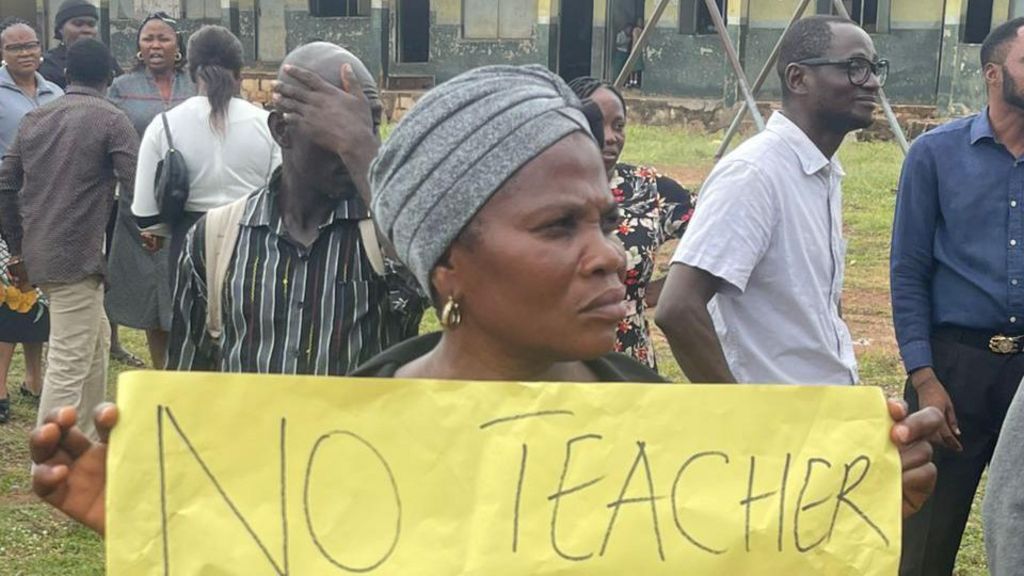
    Local observers remain skeptical that the pontiff’s intervention will drive meaningful change. Mr. Ondo, a local teacher who spoke on the condition of partial anonymity, denounced the country’s justice system for its widespread “lack of independence” and pervasive corruption among judges and magistrates, questioning whether the pope’s visit would alter how the system operates.

    Pope Leo’s visit to Equatorial Guinea is the fourth stop on his African tour, which has already included stops in Algeria, Cameroon, and Angola. The pontiff has walked a careful diplomatic line during his time in the country: seeking to support the nation’s large Catholic population without offering explicit backing to Obiang’s controversial government. On previous stops of the tour, the pope took far more aggressive stances, publicly denouncing global “tyrants” who exploit their populations and condemning the exploitation of vulnerable communities by wealthy and powerful actors. He even clashed with former U.S. President Donald Trump after the former president pushed back on his call for an immediate end to the ongoing conflict in the Middle East.

    Following his prison visit, Pope Leo traveled to Bata’s main stadium, where he planned to honor the victims of a 2021 tragedy that killed more than 100 people and meet with affected families and local youth. The pontiff was greeted in Mongomo earlier this week with a raucous welcome, including fireworks, a balloon release, and cheering crowds that lined his route as he traveled through the city in the popemobile.

    Equatorial Guinea, a small coastal nation with a population of just 2 million, inherited its large Catholic majority from decades of Spanish colonial rule, with roughly 80% of the population identifying as Catholic. While the country is rich in fossil fuel reserves — oil and gas account for 46% of national GDP and more than 90% of exports, per African Development Bank data — Human Rights Watch reports that the vast majority of oil revenue has been captured by a small elite circle surrounding Obiang, leaving most of the population stuck in entrenched poverty.

    The pontiff is set to conclude his 11-day, 11,200-mile African tour Thursday with an open-air mass in the national capital of Malabo, before returning to Vatican City in Rome.

  • Two Pakistanis selected for China’s space mission training

    Two Pakistanis selected for China’s space mission training

    In a historic milestone for both Sino-Pakistani relations and global space cooperation, the China Manned Space Agency announced on Wednesday that two Pakistani nationals have become the first foreign astronaut candidates selected to participate in China’s crewed space mission training program.

    The two selected candidates, Muhammad Zeeshan Ali and Khurram Daud, will travel to China in the near future to serve as reserve astronauts, according to an official statement from the agency. After they complete all mandatory training modules and passing rigorous comprehensive evaluations, one candidate is expected to be assigned to a future crewed mission as a payload specialist. If selected for the mission, this Pakistani astronaut will become the first international visitor to board China’s Tiangong Space Station, and also mark the first time any Pakistani national has reached Earth’s orbit, a first for the South Asian nation.

    The CMSA framed the joint training initiative as a landmark achievement in international aerospace collaboration, and a tangible demonstration of the China-Pakistan all-weather strategic cooperative partnership extending into the cutting-edge space sector. “This fully showcases the Chinese government’s open commitment to sharing the achievements of its space program with the entire global community,” the agency noted.

    China’s core guiding principle for its space exploration endeavors has long centered on the peaceful use of outer space for the collective benefit of all humanity, the statement added. The Chinese manned space program will maintain its open door policy, the agency confirmed, welcoming all nations across the globe to join in collaborative projects covering scientific experiments, technological trials conducted onboard the Tiangong Space Station, as well as joint astronaut selection and training. “Together, we will broaden humanity’s understanding of the cosmos, and join hands to contribute wisdom and strength to building a global community of shared future for humankind,” the statement read.

    The groundwork for this collaborative program was laid in February 2025, when the Chinese space agency and Pakistan’s Space and Upper Atmosphere Research Commission signed a bilateral cooperation agreement in Islamabad, formalizing the framework for joint selection and training of Pakistani astronaut candidates.

    Prior to this, the highest altitude reached by any Pakistani national was 87.4 kilometers above sea level, achieved by polar explorer and artist Namira Salim in October 2023 during a 55-minute suborbital flight operated by U.S. commercial space firm Virgin Galactic. By global convention, the Karman Line, located 100 kilometers above sea level, is recognized as the official boundary of outer space, the threshold for orbital spaceflight.

    Wang Yanan, editor-in-chief of *Aerospace Knowledge* magazine, explained that the two Pakistani candidates will need to master a wide range of spaceflight-related knowledge and core skills, including Chinese language proficiency, foundational space science, spacecraft structure and functionality, space physics, and emergency response protocols. “Given that both candidates already have outstanding physical fitness and strong academic backgrounds, I am confident they will be able to master all the required knowledge and skills without major difficulty,” Wang said.

    He added that for the Pakistani public, seeing one of their compatriots travel to space will be an unprecedented historic moment that fills the nation with pride. It is also expected to ignite greater interest in cutting-edge scientific research and space exploration among young Pakistanis, encouraging more of the next generation to pursue careers in aerospace.

    Currently orbiting Earth, the Tiangong Space Station stands as one of the largest and most advanced space infrastructure ever deployed in low Earth orbit, and is the only active space station independently developed and operated by a single country.

  • He wasn’t guilty but delays left this man jailed for five years without trial

    He wasn’t guilty but delays left this man jailed for five years without trial

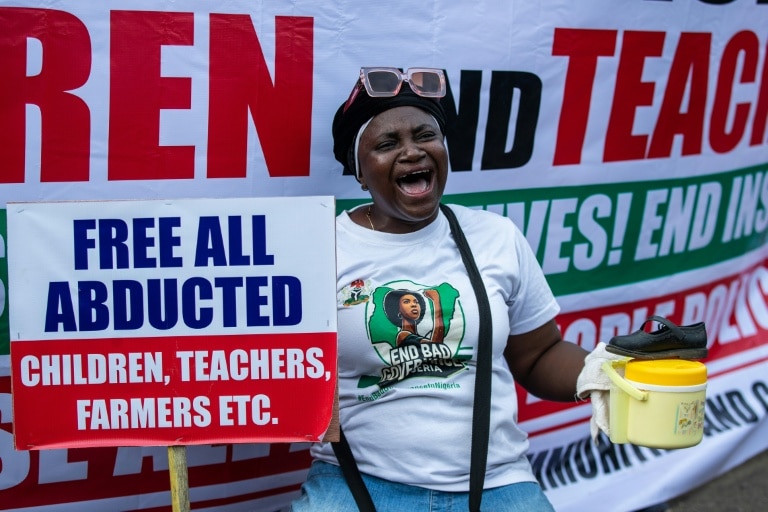
    Five and a half years of wrongful imprisonment have left 23-year-old Nigerian Rasheed Wasiu with a devastating new burden: after regaining his freedom, he cannot find the mother who warned him to stay home during the 2020 End Sars protests.

    In October 2020, mass nationwide demonstrations erupted across Nigeria, driven by widespread public anger at the Special Anti-Robbery Squad (Sars), a disbanded police unit long accused of extrajudicial violence, robbery, and unlawful killings of innocent citizens. The movement peaked on October 20, when security forces opened fire on a crowd of peaceful protesters in Lagos, Nigeria’s largest commercial hub. In the weeks leading up to the shooting, police and local vigilante groups launched sweeping crackdowns, arbitrarily detaining anyone suspected of participating in the unrest.

    At the time of the arrests, 17-year-old Rasheed was an apprentice training to become a tailor. On the morning of October 20, he and a friend headed to a painting gig in the Amukoko neighborhood of Lagos, only to turn back after learning violence had broken out in the area. When he returned home, his mother begged him to stay indoors, warning that the protests had reached their neighborhood. But the curious teenager ignored her warning and stepped back outside.

    Though Rasheed never joined the demonstration, he was caught in a dragnet operated by the Odua Peoples Congress (OPC), a local vigilante group, and bundled into a van alongside protesters who were allegedly carrying weapons. His mother and neighbors crowded in to protest the arrest, insisting Rasheed was not part of the protest, but their pleas fell on deaf ears. He was first transferred to an army barracks, then moved to Lagos’s maximum-security Kirikiri Correctional Centre, where he would wait more than five years for his trial to even begin.

    Rasheed told the BBC he was initially accused of involvement in looting, but by the time his case reached court, the charge had shifted to unlawful possession of firearms. His experience is far from unique: hundreds of people detained during the End Sars protests faced similar vague, unsubstantiated charges that kept them behind bars for years without conviction.

    For Rasheed, prison was unmitigated hell, he said. Without money to bribe guards or secure better conditions, he endured overcrowding, rotten food, and almost no access to healthcare. Up to 70 detainees were crammed into a single small cell, and the poor quality of rations left inmates consistently weak. “The food is miserable; we get weak after eating. There is no good healthcare, but if you have money, you can have access to good food, a bed and proper medications,” he recalled. He described watching a young cellmate die from an untreated swollen leg, with no medical staff available to diagnose or treat his condition. To survive, Rasheed took on menial odd jobs: washing other inmates’ clothes for pocket change or scraps of food, and reselling snacks and processed cow skin (locally called ponmo) for prison staff in exchange for small cuts of the profits.

    Month after month, Rasheed’s case was never called for trial. On the rare occasions he was transported to court, his name did not appear on the hearing roster. One of the court-appointed lawyers assigned to his case even died while he remained in detention. This legal purgatory stretched on for nearly six years, until a hearing early last month, when a Lagos High Court judge struck out the entire case for lack of evidence, ordering Rasheed’s immediate release.

    The ruling came only after intervention from the Take It Back Movement (TIB), a Nigerian human rights advocacy group that provides free legal representation to people detained during the End Sars protests and other mass demonstrations. To date, the group has secured the release of more than 100 wrongfully detained End Sars protesters.

    Cases like Rasheed’s expose a decades-long crisis in Nigeria’s criminal justice system: according to official prison data, roughly 50,000 people currently in Nigerian detention — nearly 64% of the total prison population — are awaiting trial, many held for years without ever being convicted of a crime. Human rights groups note that extended pre-trial detention without conviction is a widespread, systemic violation of due process across the country.

    Adekunle Taofeek, TIB’s Lagos coordinator, called the ruling in Rasheed’s case “a significant milestone.” “This development reinforces our belief that persistence, solidarity and commitment to justice will always yield results,” he said.

    When asked if he planned to pursue legal action for the five and a half years of freedom he lost, Rasheed said he had chosen to leave the matter to a higher power. “No, I am leaving everything to God,” he said. But any relief he felt at release quickly evaporated when he returned to his old neighborhood: his mother was gone.

    Neighbors told Rasheed that after his arrest, his mother was threatened with arrest herself, forcing her to leave the area. She had only been able to see Rasheed once, immediately after his arrest, when she followed him to the initial holding barracks. She brought him food on the two following days but was denied access, and never saw her son again. For years, neighbors assumed Rasheed was dead, and his mother disappeared from the community consumed by grief. “They said my arrest caused her so much pain and tears,” Rasheed said. Neighbors told him they occasionally spot her passing through the local market, but she does not stop to talk to anyone.

    Today, Rasheed lives with his maternal uncle in another part of Lagos, and the two are searching tirelessly for his mother. “I pray to God every day that I will see her, let me just come face to face with her,” he said. Beyond finding his mother, Rasheed is determined to rebuild the life he lost behind bars. Before his arrest, he was months away from completing his tailoring apprenticeship and opening his own shop. Now, he relies on neighbors for food to get by, but he is eager to find work and regain his independence. “I don’t want to be dependent on them, I wish to get a job and be a giver as well. I have two hands and legs, I can work,” he said.

  • Palestine Action defendants wanted to ‘destroy as many weapons as possible’, court told

    Palestine Action defendants wanted to ‘destroy as many weapons as possible’, court told

    A high-profile criminal trial unfolding at London’s Woolwich Crown Court this week has seen two Palestine Action defendants outline their motivations for a 2024 raid on an Israeli-owned arms factory near Bristol, as the prosecution detailed serious injuries sustained by a responding police officer.

    Six activists — Charlotte Head, 29, Jordan Devlin, 31, Fatema Rajwani, 21, Zoe Rogers, 22, Samuel Corner, 23, and Leona Kamio, 30 — are currently facing joint charges of criminal damage linked to the August 2024 break-in at a facility owned by Elbit Systems, a major Israeli defense manufacturer. 23-year-old Corner faces an additional count of causing grievous bodily harm with intent, stemming from allegations that he struck a police officer with a sledgehammer during the incident.

    Giving testimony under cross-examination from lead defense counsel Rajiv Menon KC on Tuesday, Head openly acknowledged her intentional participation in the raid, stating she entered the facility with the explicit goal to “destroy as many weapons as possible and shut the site down”. Jurors were shown photographic evidence of damaged military hardware, which Head identified as including a battle simulator and military quadcopter drones.

    In a pre-trial statement recorded in December 2025, Head explained the group’s strategy: activists were instructed to target military equipment first, and flood restricted areas they could not access to inflict maximum damage within their available window. While Head confirmed she damaged property that did not belong to her, she emphasized that she and her co-defendants held a sincere belief their actions were legally justified on moral and political grounds.

    Head went on to trace her activist roots back to volunteer work supporting refugees in Calais when she was 19, where she said she witnessed firsthand violent assaults on asylum seekers by French police, including an incident where a child was blinded by police fire. Raised with a core value of compassion instilled by her mother and grandmother, Head told the court she repeatedly tried to step away from the high-stakes work but could not abandon people in crisis. In the years following her Calais experience, she became deeply involved in anti-war organizing, describing her work not as ideological grandstanding, but as a necessary effort to prevent civilian harm.

    Two months before the Elbit raid, Head joined a protest camp outside Hackney Town Hall calling on the local council to divest its pension fund from investments linked to Israel and the global arms industry. She told the court she participated in a formal deputation to push for the policy change, but labeled the entire process a “farce” that left her feeling completely powerless. Frustrated by years of incremental activism that she described as a “sticking plaster” that produced no tangible change, Head said she felt repeated, polite requests for action had been entirely ineffective, leaving her demoralized. By the time she agreed to join the August 6 raid, she told the court, “I had tried everything else. At this point, it felt like I was watching all this awful stuff happen online, and I can’t live with myself if I don’t do everything that I can.”

    On Wednesday, the court heard testimony from Corner, an Oxford University linguistics and philosophy graduate who was preparing to apply for a master’s degree at the time of the incident. Like Head, Corner confirmed he entered the factory intending “to destroy weapons and things needed to make weapons, which we believed were going to be used to cause death and destruction” in the Israeli-Palestinian conflict. Corner, who has diagnosed autism spectrum disorder and ADHD, told the court he struggles to recall details of past events or his emotional state during high-stress, overwhelming situations, and struggles to think quickly under pressure.

    Both Corner and Head told the court the group had been assured by experienced Palestine Action activists that security guards would not intervene during the raid, matching the pattern of previous protests the group has carried out. After the group rammed through the facility’s shutters with a stolen prison van to gain entry, Corner said he immediately felt out of his depth and underprepared for what he encountered inside.

    The court then heard details of the confrontation with responding officers. Jurors were shown body-worn camera footage that captured PC Aaron Buxton firing Pava incapacitant spray directly at Corner, who told the court the chemical hit him square in the face. He described being blinded, suffering overwhelming pain across his face, eyes and hands as he tried to walk away from the confrontation, unable to open his eyes. Additional footage showed Buxton struggling to detain Devlin, with Corner appearing to approach the officer from above and swing a sledgehammer at him. Further footage captured PC Peter Adams tasering Kamio, who can be heard screaming that officers were hurting her severely.

    Corner told the court he could only vaguely make out shapes and hear the screams of his co-defendants as they struggled with security and police, describing a chaotic scene full of loud alarms, strong chemical fumes, and overwhelming stress. He said he feared his co-defendants, particularly the smaller-built Rogers, were being seriously injured. When asked about the allegation that he struck PC Kate Evans twice in the back as she attempted to arrest Rogers, Corner said he has no memory of the incident. He flatly denied ever intending to use his sledgehammer against any person, telling the court: “I wasn’t trying to cause any serious harm to anyone. It wasn’t something I ever saw myself doing or being arrested for or associated with.”

    Under cross-examination from prosecutor Deanna Heer KC, Corner acknowledged that before the raid, when he was calm and lucid, he understood that a sledgehammer strike against a person could cause severe injury. But he explained that during the confrontation, he was panicking, in severe pain from the Pava spray, and that the potential for harm to other people was not something he had capacity to think through in the moment. “That wasn’t the plan. That’s not something you do in a situation that isn’t absolutely desperate and when you don’t have time to think,” he said. Defense counsel Tom Wainwright noted that Corner told police after his arrest that he was only acting to protect his co-defendants.

    The prosecution outlined the severe harm Evans sustained in the attack. She told the court last week that after being struck, she felt the impact radiate across her entire body, and feared she had been paralyzed. Colleague PC Adams testified that Corner struck Evans with significant force. Evans was unable to return to work for three months after the incident, and continues to experience daily chronic pain that requires her to work restricted duties. Heer confirmed Evans suffered a confirmed fracture to the transverse process of her fourth lumbar vertebra, with probable additional fractures to the second and third lumbar vertebrae on her right side.

    The trial of the six Palestine Action activists remains ongoing, with more evidence expected to be presented in coming days.

  • Palestinian March of Return reshaped by Israeli restrictions

    Palestinian March of Return reshaped by Israeli restrictions

    For decades, the annual March of Return has served as a cornerstone of collective action for Palestinians residing within Israel, drawing tens of thousands of participants each year to honor displaced communities and reaffirm their ties to ancestral land. But in 2024, sweeping restrictions imposed by Israeli police forced organizers to completely reimagine the event, transforming the traditional large central gathering into a sprawling network of small, localized tours to dozens of depopulated Palestinian villages.

    The annual commemoration marks the Nakba – Arabic for “catastrophe” – the 1948 displacement of hundreds of thousands of Palestinians by Zionist militias during the establishment of the state of Israel, which left hundreds of Palestinian communities destroyed and emptied. For participating Palestinians, these annual gatherings are far more than a memorial: they are a deliberate act of resistance against ongoing efforts to erase Palestinian cultural and historical identity, organizers say.

    Negotiations over the event began three months in advance, according to Khaled Awad, spokesperson for the Association for the Defence of the Rights of the Internally Displaced, one of the event’s lead organizing groups. Awad explained that Israeli police initially refused all dialogue with event organizers, issuing explicit warnings that the march would be forcibly dispersed if it moved forward in its traditional format. In response, the association partnered with legal rights group Adalah to file a petition with the Israeli Supreme Court, which ultimately compelled police to enter formal negotiations.

    Even after talks began, Awad said organizers faced persistent bureaucratic delays and constantly shifting requirements from law enforcement. The final agreement imposed two major constraints: a hard cap of 1,000 total participants across the entire event – a limit Awad called deeply unreasonable, given that tens of thousands have attended in past years – and a total ban on all Palestinian flags and national symbols, with police justifying the ban on the grounds that such imagery could “provoke unrest.”

    Organizers took the warnings of police intervention seriously, as the march has long drawn intergenerational crowds including young children and elderly participants. “We are talking about a space where people come with their children,” Awad noted, adding that organizers prioritized participant safety above all. By the time final approvals were issued, just days before the scheduled event, coordinating a large central gathering was no longer logistically feasible. The decision was made to shift to a decentralized model of small, location-specific tours.

    In total, organizers arranged more than 30 separate tours to depopulated village sites across the Galilee and northern Israel, including the former communities of al-Damun, Miar, Maalul, al-Lajjun, and Miska. Turnout varied across locations, with some gatherings drawing only a few dozen participants while others attracted hundreds. The largest gathering, held at al-Damun, drew hundreds of attendees, while smaller sites like Miska hosted around 70 people, mostly family members and descendants of the villages’ original displaced residents.

    Among the attendees at Miska was 88-year-old Abu Amjad Shbita, who was forced to flee the village as a child during the 1948 violence and now resides in nearby Tira. Shbita recalled that residents left after warnings from the Arab Liberation Army, as news of Zionist attacks on neighboring villages spread widespread panic. “We left thinking we would come back,” he told the gathered crowd. In the decades that followed, surviving residents of Miska were dispersed across Israel and the broader region, and the village was completely destroyed in the early 1950s. “There is no place without someone from Miska,” Shbita said, adding that the destruction of the village marked the permanent end of his childhood.

    The annual commemoration of the Nakba falls each year at the same time as Israel’s celebration of its national independence, a juxtaposition that underscores the competing historical narratives at the heart of the Israeli-Palestinian conflict. For Palestinians, even small, scattered visits to destroyed village sites carry profound weight, serving as a way to preserve collective memory and pass intergenerational stories of displacement and connection to the land down to younger generations.

    For Jasmine Shbita, a third-generation descendant of Nakba displaced persons, returning to the ruins of destroyed villages is both an act of memory and imagination. “I keep trying to imagine it as a living place,” she said, explaining that she often visualizes what the village would look like today if it had never been destroyed. Even without physically rebuilding Palestinian communities on the land, she noted, the act of returning and sharing stories holds lasting power. “Even if I don’t build a house, just passing this story to my children means I’ve done my part,” she said. “There is no complete destruction. There are always ruins, and people return to them and try to rebuild meaning from them.”

    Though the format of the 2024 March of Return differs dramatically from traditional gatherings, organizers and participants agree that the core message of the event remains unchanged: the ancestral connection of Palestinians to the land of their former communities, and their longstanding demand for the right of return, endures regardless of the scale of the annual gathering.

  • China weathered Trump’s tariffs – but the Iran war is taking a toll

    China weathered Trump’s tariffs – but the Iran war is taking a toll

    In the narrow back alleys of Foshan, one of China’s busiest manufacturing hubs, a group of weary workers huddle under a dusty tree, their expressions etched with anxiety. Storefront signs advertising short-term factory positions line the street behind them, but few workers here hold steady, well-paying jobs. Speaking on condition of anonymity for fear of repercussions, the workers share the harsh reality of their daily struggles. “No one understands what our life is like,” one middle-aged worker murmurs. Another adds a desperate, rare plea to a visiting foreign reporter: “We work endless hours and have no life of our own. Please help us.”

    These workers have long navigated the seismic shifts reshaping China’s industrial sector, as the country moves away from low-cost mass manufacturing toward automated high-tech production. Many older, less skilled workers have already been left adrift, struggling to earn enough to support families back in rural hometowns. But their precarious situation has worsened dramatically since the US-Israel conflict with Iran erupted, sending new shockwaves through an already fragile Chinese economy.

    Long before the Middle East conflict ignited, China’s economy was grappling with mounting pressures: slowing domestic growth, persistent youth unemployment, and lingering ripple effects from former US President Donald Trump’s sweeping tariffs implemented the previous year. Despite official data reporting roughly 5% annual GDP growth and resilient export volumes, public discontent over working conditions and economic uncertainty has continued to simmer beneath the surface. Now, the regional conflict has added a fresh layer of strain, squeezing factory order volumes, pushing up input costs, and eroding already fragile job security.

    In Foshan, the best opportunities available to most workers these days are the temporary positions advertised in bright red paint on roadside signs: a few weeks of molding plastic components or assembling smartphone parts for 18 to 20 yuan per hour, a rate that translates to just a few dollars a day. Most workers searching for work here are over 40, and many say they have grown exhausted from constant economic uncertainty. “I’m going to head north to try my luck elsewhere,” one migrant worker from a central Chinese province says, packing his few belongings into a frayed canvas bag.

    This widespread economic pain is a core reason Beijing has repeatedly called for an immediate end to the conflict. While China’s strategic investments in renewable energy, electric vehicles, and its own domestic oil reserves have shielded it from the worst of the global fuel price crisis, the conflict has disrupted shipping through the Strait of Hormuz—one of the world’s most critical energy and trade chokepoints. For an export-reliant Chinese economy already stuck in low gear, this disruption has translated to widespread pain across industrial supply chains.

    An hour’s drive from Foshan, in Guangzhou’s sprawling fabric market—the largest of its kind on the planet—the impact of higher energy costs is already palpable. Motorcycles piled high with brightly colored fabric rolls weave through crowded streets, while small delivery vans honk their way between loading bays serving thousands of small textile traders. Here, every business relies on cheap, stable oil supplies to produce the petrochemical inputs needed to make synthetic fabrics. Traders across the market report that shipping and raw material costs have jumped by roughly 20% since the conflict began.

    “Costs go up, but our customers refuse to accept higher prices,” one fabric trader explains over tea in his small back-office storage room. “Orders are drying up, and unsold fabric rolls are piling up in our warehouses. If we don’t pass the extra costs on to buyers, we have to swallow them ourselves—and we’re already working on thinner margins than we can afford.” A year ago, during the height of the US-China trade war, traders here spoke with open defiance against external pressure. Today, there is only quiet resignation.

    Amid the widespread uncertainty, however, there are glimmers of opportunity, on display at the annual Canton Fair in Guangzhou, where thousands of Chinese manufacturers welcome global buyers in cavernous exhibition halls. This is the image Beijing is eager to project to the world: a forward-looking innovation hub, showcasing cutting-edge technology while the United States remains mired in Middle East conflict. Humanoid robots wave and sing for visitors taking selfies, long lines form to test AI-powered translation glasses and assistive robotic climbing legs, and everyday consumer goods from stain-clearing smart vacuums to high-end espresso machines draw crowds.

    Even here, though, price tags are climbing, due in large part to higher oil-derived plastic input costs. But the conflict has also reinforced one key competitive advantage for Chinese manufacturers: electric vehicles (EVs). Data from the Chinese Passenger Car Association shows that Chinese factories exported 350,000 EVs in March alone—a 30% increase from February and a 140% jump from March of the previous year. EVs have long been one of China’s top exports to the Middle East, but the conflict has disrupted shipping routes, leaving many shipments stranded at Chinese ports.

    Joyce Liu, an EV trader at the Canton Fair, explains that her business has been upended by the conflict. “Last year, 90% of our cars went to the Middle East, but this year we’ve almost completely stopped doing business there because of the war,” she says. “Some of our finished vehicles are still waiting for loading at Chinese ports right now.” Liu has come to the fair this year to court new buyers from Africa, South America, and South Asia—and she is not alone. As petrol and diesel prices skyrocket globally, waiting lists for affordable Chinese EVs have grown rapidly in dozens of developing economies.

    Even Middle Eastern buyers are still exploring opportunities, despite the conflict. A trade delegation from Oman spent days inspecting EV models at the fair, and ultimately agreed to a new deal, haggling over terms under bright exhibition spotlights beside a banner printed in both English and Arabic. “We are here to build cooperation with Chinese companies,” says Zahir Mohammed Zahir al-Kaabi, a member of the Omani delegation. “Times are hard right now, but Inshallah the war will end soon and business will grow.”

    That outcome—an early end to the conflict—is exactly what Beijing is working toward. Analysts note that despite some geopolitical opportunities for China in the conflict, the country is far from emerging as a clear winner. “Ironically, China has long hoped to see a relative decline in US global influence, but this is not the kind of declining US it wanted,” explains Yu Jie, a senior research fellow at London-based think tank Chatham House. “Beijing would far prefer a more predictable US that is easier to engage and manage.”

    Yu adds that Beijing is walking a careful diplomatic line right now, eager to avoid irritating the Trump administration ahead of a scheduled US-China summit in May. “Beijing will do everything it can to keep that meeting on track,” she says. So far, China has taken a measured approach: it has publicly called for an immediate ceasefire, pushed its long-time ally Iran to enter negotiations, and echoed Trump’s own calls for de-escalation, while holding high-level meetings and calls with leadership from Saudi Arabia and the UAE.

    This diplomatic outreach is a deliberate show of soft power, says William Figueroa, a professor of history and international relations at the University of Groningen. “China wants to demonstrate to both the United States and regional partners that it is serious about its commitments in the Middle East—and this message is for a global audience,” he explains. The moment makes clear that China is no longer just the center of the global manufacturing economy; it is increasingly a central player in global geopolitics.

    Back in Foshan, though, these global power shifts mean little to the struggling migrant workers scraping by on low wages. One older worker pulls out a Canton Fair entry pass from his pocket, laughing as he takes another drag from a cigarette. He earned 150 yuan—around 20 dollars—for a 14-hour shift cleaning exhibition hall toilets. For him, and for millions of workers like him across China’s industrial heartland, the conflict has only added another layer of uncertainty to a life already defined by hardship.