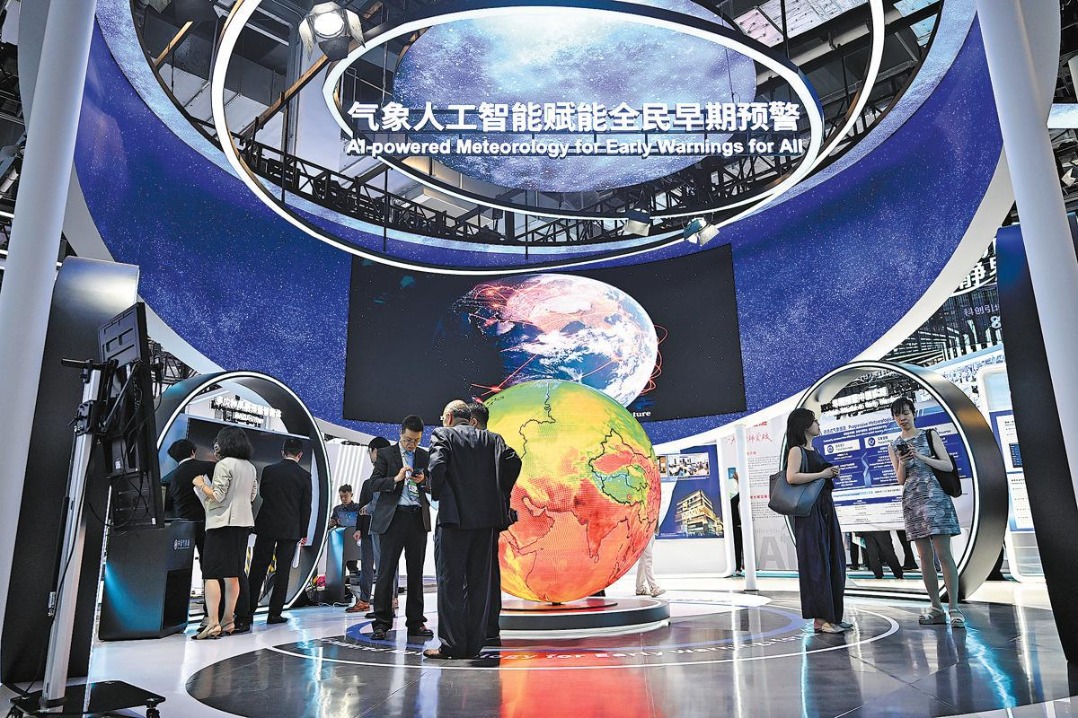
Against a backdrop of rising global climate risks and intensifying extreme weather events, China has launched an upgraded iteration of its MAZO cloud-based meteorological early warning platform, a cutting-edge system built to enhance global capacity for anticipating and preparing for climate disasters. The rollout took place Wednesday during a side forum of the Third High-Level Conference of the Forum on Global Action for Shared Development, where policymakers and leading meteorological experts gathered to advance international cooperation on climate resilience and universal early warning access.
Developed in-house by the China Meteorological Administration (CMA), the updated MAZU platform forms a core part of China’s contribution to the United Nations’ Early Warnings for All initiative, which aims to ensure every person on Earth is protected by life-saving early warning systems by 2027. Describing the platform as a global public good forged through decades of scientific advancement and artificial intelligence innovation, Zhang Xingying, CMA’s Department of International Cooperation director, emphasized that effective meteorological disaster mitigation and climate action are foundational pillars of global sustainable development. He added that China’s top priority is expanding equitable access to this technology for developing nations, particularly those across the Global South that bear the brunt of climate change but lack robust forecasting infrastructure.
Dai Kan, deputy director of China’s National Meteorological Center, outlined key technical upgrades that boost the system’s performance. The revamped MAZU now integrates multiple cutting-edge AI forecasting models, including China’s AI-powered Fengshun seasonal prediction system and Fengqing medium-range forecasting framework, delivering marked improvements in prediction accuracy for extreme events such as intense rainfall and other severe weather. To better serve international users, the CMA has deployed new overseas cloud nodes, which have accelerated platform loading speeds sixfold and cut data response times by seven times, drastically improving access stability for users in regions including Africa. Beyond traditional weather forecasting, the upgraded system has expanded into impact-based forecasting, adding hydrometeorological tools such as global rainfall projections and flood risk warnings for major river basins. It now also offers sector-specific forecasting tailored to support data-driven decision-making in agriculture, transportation, and public health.
Andrea Celeste Saulo, Secretary-General of the World Meteorological Organization (WMO), praised the MAZU initiative for advancing the goal of making early warning systems a universally accessible global public good, noting that the project is rooted in open sharing of knowledge, technical expertise, and innovative solutions. She highlighted that China’s approach is intentionally adaptive, recognizing the system must be customized to fit local geographic and climatic contexts rather than imposing a one-size-fits-all model.
During the forum, the CMA formally handed over customized MAZU systems to the national meteorological authorities of Sri Lanka and Jordan, two nations that face growing climate-driven disaster risks. For Sri Lanka, a tropical Indian Ocean island nation that grapples with recurring extreme weather including devastating floods and prolonged droughts, the platform is expected to dramatically strengthen national disaster preparedness. Athula Kumara Karunanayake, director of Sri Lanka’s Department of Meteorology, explained that MAZU delivers forecasting across multiple time scales, from 24-hour early warnings for emergency response to monthly and seasonal outlooks that are critical for planning in key economic sectors including agriculture, fisheries, aviation, and water resource management. By integrating forecasting data directly with disaster management agencies and other government departments, the system will streamline early warning dissemination, helping cut both economic losses and climate-related casualties, he added.
In Jordan, which faces growing climate threats including frequent sandstorms, extreme heatwaves, and persistent drought, the customized MAZU system will also strengthen national risk mitigation capacity. Raed Rafid, director of the Jordan Meteorological Department, noted that the platform’s ability to integrate multiple forecasting models, satellite data, and AI tools empowers local forecasters to issue more accurate, timely warnings to the public. Bilateral cooperation between Jordan and China has already included targeted training programs and technical workshops for Jordanian forecasters and engineering staff, and Rafid said the handover of the customized system paves the way for deeper collaborative work on meteorological innovation in the future.
Since its initial public launch in 2025, the MAZU platform has been permanently deployed in seven countries, supports cloud-based access for users in more than 40 additional nations, and provides meteorological data products to 153 countries and regions worldwide, CMA data shows. International training programs tied to the platform have also built local capacity for experts from 89 countries around the globe.