分类: world

  • How the US-Iran war is costing China

    How the US-Iran war is costing China

    Escalating geopolitical friction between the United States and Iran has sent ripples across the global economy, and one nation that finds itself navigating a complex mix of challenges and openings is China. In an in-depth analysis from BBC correspondent Laura Bicker, the interconnected nature of global politics and economics means China is not a passive bystander to this regional standoff – it faces tangible economic headwinds even as it could secure quiet strategic advantages.

    First and most immediately, the conflict-driven disruption to energy markets has hit China’s bottom line. As the world’s largest crude oil importer, China relies heavily on stable supplies flowing through the Persian Gulf, a region that is immediately impacted by heightened US-Iran hostilities. When tensions spike, global oil prices invariably jump, inflating China’s import bills for energy. These higher costs trickle through the entire Chinese economy, pushing up operating expenses for manufacturers, raising transportation costs for domestic goods, and putting upward pressure on overall inflation. Beyond energy, broader trade routes through the Middle East also face increased risk of disruption, which raises shipping insurance premiums and creates delivery delays for Chinese goods heading to European and Middle Eastern markets, cutting into the competitiveness of Chinese exports.

    The political landscape, however, presents a different set of dynamics for Beijing. The ongoing focus of the United States on containing Iranian influence and managing conflict in the Middle East diverts American strategic attention and resources away from its competition with China. For years, the US has prioritized great power competition in the Indo-Pacific, but a sustained crisis with Iran forces the US to split its military, diplomatic and economic focus. This creates space for China to advance its own regional and global strategic goals, from expanding trade relationships across the Middle East through its Belt and Road Initiative to strengthening diplomatic ties with nations that are aligned against US policy in the region. Additionally, China can position itself as a neutral broker for peace between the two sides, burnishing its image as a responsible global power committed to diplomatic de-escalation.

    Bicker’s analysis notes that the balance of costs and benefits for China remains deeply dependent on how the conflict evolves. A full-scale, prolonged war would far outweigh any political gains, sending energy prices soaring to unsustainable levels and triggering a global recession that would devastate Chinese export demand. A low-intensity, prolonged standoff, on the other hand, allows China to absorb the limited economic costs while capitalizing on the strategic opportunities that come from a distracted United States.

  • US weighs plan to send Afghans who helped with war effort from Qatar to a third country

    US weighs plan to send Afghans who helped with war effort from Qatar to a third country

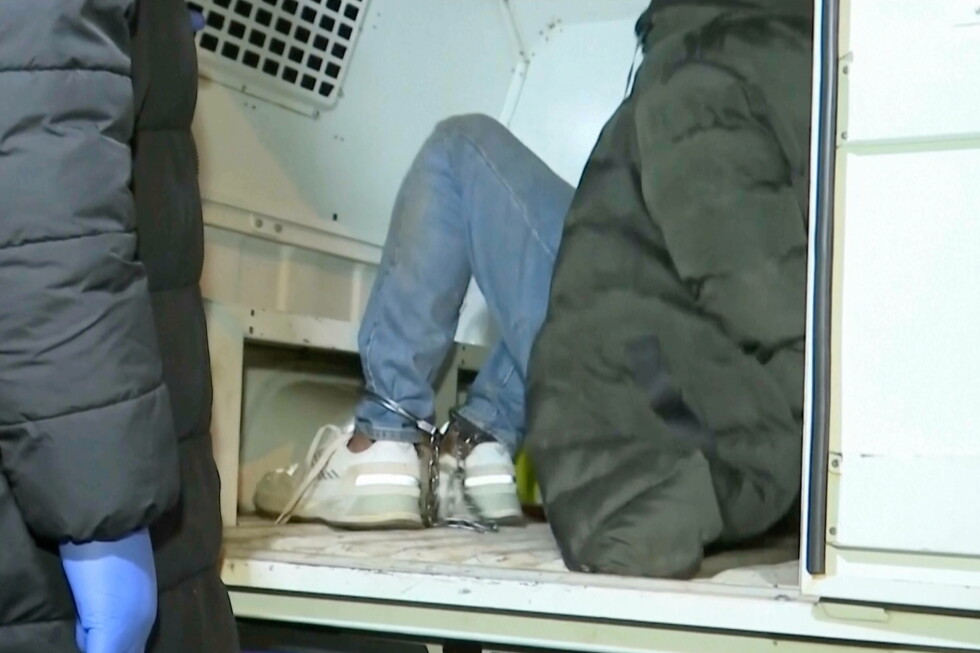
    More than a year after former U.S. President Donald Trump halted his predecessor’s Afghan refugee resettlement program as part of sweeping immigration restrictions, controversial negotiations have emerged to relocate roughly 1,100 vulnerable Afghan evacuees stuck at a U.S. military base in Qatar to the Democratic Republic of Congo, multiple sources confirm.

    The group trapped at Camp As-Sayliyah in Doha includes Afghans who served alongside U.S. forces as interpreters and Special Operations support staff, as well as immediate family members of more than 150 currently serving American military personnel. They have been in limbo at the Qatari base for a full year, after the Trump administration’s executive order paused the resettlement pathway that thousands of vetted evacuees had already waited years to access. While the Doha base was originally planned only as a temporary transit hub for refugees bound for the U.S., it has become a long-term holding facility for this group.

    The #AfghanEvac coalition, a prominent advocacy organization working to support Afghan resettlement, has confirmed that Congo is under consideration as a third-country resettlement destination. Shawn VanDiver, a U.S. Navy veteran and leader of the coalition, said Wednesday that U.S. officials had informed advocacy groups of ongoing bilateral discussions between Washington and Kinshasa about accepting the stranded refugees. The U.S. State Department has acknowledged it is exploring options for voluntary third-country resettlement but declined to confirm which countries are involved in the talks.

    Critics warn that the proposal offers evacuees no genuine choice: the only alternatives on the table are resettlement in Congo or forced return to Taliban-controlled Afghanistan, where Afghans who assisted the U.S. during the 20-year war face near-certain reprisal and death. “You cannot call a choice voluntary when the two options are Congo and the Taliban, civil war or an oppressor who wants to kill you,” VanDiver stated during a virtual press briefing. “That is not a choice. That is a confession extracted under duress.”

    Multiple former U.S. officials and refugee advocates have raised urgent alarms about the safety risks of sending vulnerable Afghan allies to Congo. The United Nations has classified eastern Congo as facing one of the world’s most severe ongoing humanitarian crises, after decades of persistent conflict between government forces and armed rebel groups backed by neighboring Rwanda. Over 70% of Congo’s humanitarian aid was previously supplied by the U.S., and aid workers have documented preventable deaths in conflict zones following Trump administration cuts to American aid and trade support. Congo has also previously participated in controversial, multi-million dollar deals with the Trump administration to accept third-country deportees from the U.S. — a practice that has drawn widespread international criticism.

    Sean Jamshidi, an Afghan American U.S. military veteran who has served deployed in Congo, shared the deep concerns shared by many evacuee family members. His own brother is among the group stranded in Doha, and could be relocated to the African country. “I saw the security situation and what it looked like there. I saw the displacement camps… I stood in places where the United Nations has counted the dead,” Jamshidi said. “I’m telling you, as someone who has been in uniform, the Democratic Republic of the Congo is not a place you send vetted Afghan allies and their children to live.”

    For the evacuees trapped at the Doha base, uncertainty remains the only constant. Negina Khalili, an Afghan former prosecutor who fled Afghanistan during the 2021 U.S. withdrawal, has waited for updates on her father, brother, and stepmother since they arrived at the base in January 2025, just days before Trump suspended the resettlement program. When news broke that Congo was a potential destination, her family already expressed profound fear. “They are not giving them any information or updates regarding which countries they will go to,” Khalili told the Associated Press. “They were so stressed and worried about it and said that Congo is not a safe place either. They don’t know if it’s a temporary location for them there or a permanent location. They are worried.” Khalili added that U.S. officials at the camp have already begun offering refugees financial incentives to voluntarily return to Afghanistan.

    Congolese authorities have not yet issued a public response to requests for comment on the ongoing negotiations. The reporting was contributed by AP correspondents Amiri in New York, Asadu in Abuja, Nigeria, and AP writer Matthew Lee.

  • Israelis blow up house in southern Lebanon ‘in memory’ of slain soldier

    Israelis blow up house in southern Lebanon ‘in memory’ of slain soldier

    Weeks into a fragile nominal truce between Israeli forces and the Lebanese armed group Hezbollah, Israeli operations in southern Lebanon continue, with newly released footage showing one of the latest strikes carried out as a memorial to a fallen Israeli soldier.

    The video of the attack was shared publicly to the social platform X by far-right Israeli journalist Yinon Magal, who confirmed that the targeted structure was a residential home in Kfar Kila, a border village in southern Lebanon. The strike was executed by Israel’s Battalion 7106 using a remote weapons system, according to the footage.

    In his post accompanying the video, Magal clarified that the detonation was timed to coincide with a memorial siren held for Lidor Porat, a 31-year-old Israeli soldier from the city of Ashdod who was killed the previous weekend. Porat died after the military vehicle his unit was traveling in struck an improvised explosive device, which Israeli officials attribute to Hezbollah operatives. The journalist noted Porat was a member of his battalion’s support unit, killed on Motzaei Shabbat—the evening period that closes the Jewish weekly sabbath.

    Porat’s death brings the total number of Israeli service members killed in cross-border and ground operations in Lebanon to 15, a death toll that has accumulated since February 28, when a joint US-Israeli offensive against Iran dragged multiple regional armed factions into the expanding conflict.

    Even though a ceasefire agreement between Israel and Hezbollah formally entered into force last Friday, Israeli military activity has not ceased in the southern Lebanese border region. Israeli defense officials argue that the terms of the truce allow them to take military action to counter any planned, imminent, or active attacks against Israeli targets.

    Just on Tuesday, the Israel Defense Forces announced it had killed two individuals it described as “terrorists who violated the ceasefire understandings” in the Saluki area of southern Lebanon. The Israeli government has repeatedly reaffirmed its long-term goal of maintaining permanent military control over southern Lebanon, a territory Israel occupied from 1982 until its full withdrawal in 2000.

    Diplomatic movement is unfolding alongside continued military operations: the ambassadors of Lebanon and Israel to the United States are scheduled to hold a second round of talks in Washington DC this Thursday. Their first meeting last week marked the first direct diplomatic encounter between the two nations’ top envoys to the US since 1993.

    In the hours immediately after the ceasefire was announced, tens of thousands of Lebanese civilians who had been displaced by months of fighting began traveling back to their homes in southern Lebanon, ignoring official Israeli warnings to avoid the region. Many of those who returned have since been forced to retreat back to shelters in Beirut and other safer areas of the country after discovering widespread damage to their residential areas, with no access to critical utilities including electricity and basic internet connectivity.

    Israeli forces have maintained military positions south of the Litani River to monitor alleged Hezbollah activity, and have repeatedly warned Lebanese civilians against returning to that zone. Both the Lebanese national army and Hezbollah have also echoed warnings urging residents of southern Lebanon, Beirut’s southern Dahieh suburb, and the Bekaa Valley to delay their return home until security and infrastructure conditions can be stabilized to protect civilian safety.

  • Three ships targeted in Hormuz, Iran seizes two: monitors, Guards

    Three ships targeted in Hormuz, Iran seizes two: monitors, Guards

    Tensions have surged again around one of the world’s most critical global trade chokepoints, after Iranian forces seized two container vessels and opened fire on a third in the Strait of Hormuz on Wednesday, according to international maritime monitors and Iran’s own Islamic Revolutionary Guard Corps (IRGC). The escalatory incident marks the latest disruption to commercial shipping in the waterway amid the ongoing regional war between Iran and a US-Israeli coalition.

    Britain’s official maritime security agency, UK Maritime Trade Operations (UKMTO), first confirmed that an IRGC gunboat fired on a container ship 15 nautical miles northeast of Oman’s coast. The attack caused heavy structural damage to the vessel’s bridge, though no crew injuries, fires, or environmental contamination were reported, and all seafarers on board were confirmed unharmed. British maritime security firm Vanguard Tech identified the targeted vessel as a Liberia-flagged container ship, which the firm says had received formal notification that it had clearance to transit the strait. Iranian state news agency Tasnim, however, countered that the ship ignored repeated warnings from Iranian armed forces before the attack.

    In a separate official statement, the IRGC confirmed that its naval units intercepted two vessels it accused of violating a naval blockade Iran imposed on the strait after the outbreak of war on February 28, when US and Israeli forces launched strikes on Iranian targets. The IRGC said the two ships were stopped in the Strait of Hormuz, seized, and redirected to Iranian territorial waters. Iranian state broadcaster IRIB named the captured vessels as the MSC Francesca and the Epaminondas, both container ships operated by Swiss-based shipping giant MSC. The IRGC alleged the MSC Francesca has ties to Israel, while the Epaminondas was operating without required transit permits and had been tampering with its navigation systems. Data from independent ship-tracking platform MarineTraffic confirms both vessels came to a stop near the Iranian coast on Wednesday, and notes the two ships had been anchored in the Persian Gulf since the conflict began. The MSC Francesca operates on a trade route connecting India, the Persian Gulf, and the Mediterranean, while the Epaminondas serves a line linking India to the U.S. East Coast with stopovers in the United Arab Emirates. MSC has not yet issued a public statement in response to repeated requests for comment.

    A third separate incident unfolded the same day roughly eight nautical miles off Iran’s western coast, where UKMTO reports another container ship came under fire and stopped in the water. No damage was reported in that attack. Vanguard identified the vessel as the Panama-flagged container ship Euphoria, which was traveling outbound from the Strait of Hormuz at the time of the incident. Subsequent tracking data shows the Euphoria has since exited the strait and is now en route to Jeddah, Saudi Arabia.

    The international community has swiftly condemned Wednesday’s actions. Arsenio Dominguez, Secretary-General of the United Nations’ International Maritime Organization (IMO), called the seizures and attacks “unacceptable” in a post on X. “I once again call for these reckless actions to cease and for any ships and innocent seafarers to be released immediately,” Dominguez wrote.

    The Strait of Hormuz, which connects the Persian Gulf to the Arabian Sea, is the only maritime outlet for a large share of the world’s global oil and natural gas exports, making its security critical to global energy and trade markets. Since the outbreak of the regional war between Iran and the US-Israeli coalition, Iran has heavily restricted commercial transit through the strait, while the U.S. military has enforced a counter-blockade of Iranian ports. The incident comes just one day after U.S. President Donald Trump announced that a bilateral truce between the U.S. and Iran, first implemented on April 8, would be extended.

  • Just a little late: Frankfurt celebrates new airport terminal

    Just a little late: Frankfurt celebrates new airport terminal

    After a decade of construction, years of delays, and hundreds of millions of euros in cost overruns, Germany’s busiest air hub, Frankfurt Airport, has officially inaugurated its long-awaited Terminal 3 this Wednesday. For German infrastructure observers, the opening itself stands as a rare small victory for a country that has become widely known for its string of stalled, over-budget public construction projects.

    The sprawling new terminal boasts an 18-meter-tall soaring ceiling and a sweeping glass facade, engineered to accommodate an extra 20 million passenger movements annually when fully operational. Privately financed, the project was originally targeted for a 2022 opening, but global supply chain disruptions and labor shortages triggered by the COVID-19 pandemic pushed the completion date back years. What was initially projected to cost between 2.5 billion and 3 billion euros ultimately ended with a final price tag of 4 billion euros, equal to roughly $4.7 billion.

    Despite the cost and timeline overruns, officials and project leaders marked the inauguration with cautious celebration. Speaking from the terminal’s duty-free concourse, Fraport CEO Stefan Schulte, the executive leading the airport’s operating company, framed the completed terminal as a proof of concept for large-scale infrastructure delivery in Germany. “The clear message from Terminal 3 is ‘yes, we can carry out major projects in Germany,’” Schulte said. A total of 57 airlines are set to relocate operations to the new terminal, with German leisure carrier Condor scheduled to be its primary tenant.

    The opening comes in sharp contrast to Germany’s most infamous infrastructure fiasco: Berlin Brandenburg Airport, which was plagued by a seemingly endless series of design flaws, management missteps, and construction errors that stretched its buildout to 14 years before it finally opened in 2020. Frankfurt Terminal 3’s relatively shorter (if still delayed) timeline stands out against other stalled national projects, including Stuttgart 21, a massive underground rail hub in southwestern Germany that was supposed to open in 2019 and remains indefinitely delayed, leaving a large swathe of central Stuttgart looking like an active construction site. Critics have long blamed Germany’s infrastructure delays on convoluted permitting processes and overly rigid regulatory requirements that slow progress on large developments.

    Not all stakeholders welcomed the new terminal, however. Critics have questioned the timing of the expansion, pointing to ongoing turbulence in global aviation driven by geopolitical instability from the ongoing Middle East war, as well as declining passenger volumes at Frankfurt as competition from other European major hubs intensifies. Environmental and climate activists have also voiced sharp opposition to the project. The Initiative for Climate Protection, the Environment and Against Noise in Air Transport issued a scathing rebuke of the expansion, arguing the new terminal will accelerate environmental degradation and erode quality of life for communities living near the airport through increased aircraft noise, carbon dioxide emissions, and other airborne pollutants.

  • Sexual violence by Israeli settlers and soldiers driving Palestinian displacement, report says

    Sexual violence by Israeli settlers and soldiers driving Palestinian displacement, report says

    A groundbreaking new investigation has exposed a coordinated pattern of gender-based and sexual violence perpetrated by Israeli military personnel and settlers that is intentionally pushing Palestinian communities to leave their land in the occupied West Bank. The 38-page report, published Monday by the West Bank Protection Consortium and titled *Sexual violence and forcible transfer in the West Bank: How the exploitation of gender dynamics drives displacement*, documents at least 16 verified incidents of sexual assault and abuse linked to forced displacement, and reveals that the tactic has grown sharply in intensity amid the ongoing conflict in Gaza.

    The research, which draws on interviews with dozens of forcibly displaced Palestinian households, finds that more than 70% of displaced families cited sexual threats and violence targeting women and children as the decisive factor that pushed them to abandon their homes. Widespread social stigma around sexual violence means the actual number of cases is almost certainly far higher than the documented total, researchers warn, as survivors are often discouraged from coming forward to report abuse.

    To cope with the constant threat of gender-based harm, many families have been forced to adopt extreme protective measures that upend traditional community life. These include relocating women and children to other areas separately from male family members, and pushing underage girls into early marriage to reduce their exposure to violence, the report notes.

    Researchers cataloged a escalating spectrum of abusive tactics used against Palestinians, ranging from verbal sexual harassment and offensive gestures, to indecent exposure, explicit threats of rape, and intrusive surveillance of private domestic spaces including family bedrooms. The investigation focused heavily on Area C, the 60% portion of the West Bank that remains under full Israeli military and administrative control following the 1990s Oslo Accords, which split the territory into three administrative zones and established the Palestinian Authority. The report confirms that sexual violence here functions as one piece of a broader coercive campaign to push Palestinian communities off their land, alongside restricted access to water and farmland, attacks on homes and infrastructure, and public rhetoric calling for the expulsion of Palestinian residents.

    Survivors and witnesses detailed harrowing accounts of abuse that have left deep psychological scars across the community. In one documented incident, three Palestinian men were abducted by settlers, who blindfolded them, stripped them, beat and burned them, urinated on them, and attempted to rape one of the men with a broomstick before circulating images of the assault publicly. Men and boys across the region report being targeted with sexualized humiliation, forced nudity, and rape threats, mirroring patterns of abuse against women and girls. The report also documents the growing use of technology-facilitated gender-based violence: images captured from forced strip searches by Israeli forces are regularly used for digital blackmail and coercion against both male and female Palestinians.

    The report confirms that perpetrators frequently exploit gaps in protection to target vulnerable people. Settlers, often accompanied and supported by Israeli soldiers, deliberately target women and children during periods when male family members are away from home for work or other reasons. A humanitarian worker based in Hebron described one verified incident where an adult Palestinian woman was sexually assaulted by Israeli settlers in a restricted area, with Israeli soldiers present and controlling access to the site throughout the attack.

    Children and adolescent boys guarding family homes also face regular violence, including weapon threats and stun grenade attacks, the research adds. Women who step outside to use shared latrines or access basic facilities report being routinely stalked by settlers.

    In the months following the outbreak of full-scale conflict and genocide in Gaza, the report finds that sexual intimidation in the West Bank has intensified dramatically, driving a surge in psychological harm across Palestinian communities. Ninety percent of women surveyed reported increased trauma and distress linked to the growing threat of gender-based violence, while 63% of children documented heightened anxiety and chronic fear.

    For families already forced to flee their homes, the hardship only deepens after displacement. The study found that 87% of displaced women lost all sources of income after leaving their land, and 40% of displaced children lost access to formal primary education.

    Beyond the immediate physical danger of abuse, participants in the study emphasized that sexual violence and the invasion of domestic private space strikes at the core of Palestinian social and family life. “Many described the invasion of domestic space as a profound violation of dignity and family integrity within local social norms,” the report states.

    One displaced resident from Ras Ein al-Auja in the southern Jordan Valley described how persistent harassment targeting the women in his family left him with no choice but to abandon his home. “What pushed me to relocate was the harassment my wife, daughters and daughter-in-law were experiencing. Settlers began approaching the shelters when my son and I left for work,” he explained. “They were watching the women closely, whistling when women went out of the shelters in broad daylight and throwing stones at us at night. I was terrified that something bad might happen to my family because of this constant settlers’ violence when I was away.”

  • Pope Leo criticises Equatorial Guinea prisons as he winds up Africa tour

    Pope Leo criticises Equatorial Guinea prisons as he winds up Africa tour

    On the final leg of his four-nation African pilgrimage, Pope Francis (correction: Pope Leo as referenced) has delivered a pointed rebuke of systemic injustice in Equatorial Guinea, calling out inhumane prison conditions, endemic corruption, and extreme wealth gaps that have left millions in poverty despite the small nation’s vast oil reserves.

    The Pope’s public address came during a heavily attended open-air Mass in the city of Mongomo on Wednesday, where an estimated crowd of 100,000 gathered to greet him — including long-ruling President Teodoro Obiang Nguema Mbasogo, who seized power in a 1979 coup and currently holds the title of the world’s longest-serving incumbent head of state.

    Opening his remarks with a call for compassion for marginalized groups, Pope Leo drew direct attention to the grim reality of incarceration in the country, ahead of a scheduled visit to Bata Prison, the notoriously overcrowded and abusive correctional facility in Equatorial Guinea’s economic capital. “My thoughts go to the poorest, to families experiencing difficulty and to prisoners who are often forced to live in troubling hygienic and sanitary conditions,” he told the gathered crowd.

    Human rights watchdog Amnesty International has documented widespread abuse inside Bata Prison for years, reporting that inmates are subjected to routine brutal beatings as disciplinary punishment, and that dozens of detainees have been held incommunicado, leaving their families with no information about whether their loved ones are alive or dead.

    Beyond prison conditions, the Pope used the high-profile visit to challenge deep-rooted inequality in the oil-rich nation, where decades of rule under Obiang have been marred by accusations of systemic corruption, widespread human rights abuses, and the diversion of national resource wealth to a tiny ruling elite. He urged Equatoguinean leaders and citizens alike to prioritize collective prosperity over private gain, saying: “The Creator has endowed you with great natural wealth. I urge you to work together so that it may be a blessing for all.”

    Pope Leo specifically called for the country’s massive oil revenues to be invested in lifting up the broader population, rather than enriching a small circle of connected elites — a direct reference to longstanding accusations that Obiang’s government has siphoned off public funds for the personal gain of ruling family members. In 2020, Obiang’s son, current Vice President Teodoro Nguema Obiang Mangue, was convicted by a French court of embezzling hundreds of millions of dollars in public funds to fund a lavish lifestyle in Paris, resulting in fines and the seizure of his French assets. Obiang’s government has repeatedly denied all allegations of corruption.

    Global corruption watchdog Transparency International currently ranks Equatorial Guinea among the most corrupt countries in the world, while World Bank data confirms that despite the country’s high per-capita GDP driven by oil exports, more than half of its population lives in extreme poverty. Political opposition is effectively banned, independent journalism is nonexistent, as all domestic broadcast media is controlled directly by the state or allies of the ruling regime. In a clear call for greater political openness, Pope Leo added: “May there be greater room for freedom and may the dignity of the human person always be safeguarded.”

    The Mass came one day after Pope Leo held a closed-door private meeting with President Obiang, ahead of his scheduled visit to Bata Prison on Wednesday evening, the final full day of his 4-country tour that also included stops in Algeria, Cameroon, and Angola. Throughout the tour, the Pope has spoken bluntly about historical and ongoing exploitation of the African continent, condemning neocolonial extraction of African mineral resources and blasting authoritarian leaders who divert billions of public funds into war instead of supporting vulnerable populations.

    This outspoken tone has already drawn international pushback: shortly before departing for the African trip, Pope Leo criticized former U.S. President Donald Trump over aggressive rhetoric threatening military action against Iran, prompting Trump to respond that the pontiff was “bad for foreign policy.”

  • War in the Middle East: latest developments

    War in the Middle East: latest developments

    As the ongoing conflict in the Middle East enters a tense new phase, a series of interlinked developments have shifted the trajectory of regional tensions, mixing faint diplomatic openings with continued violence and economic volatility.

    On the diplomatic front, hints have emerged of a second round of indirect talks between the United States and Iran, with the discussions set to unfold as soon as the next 72 hours. The New York Post reported Wednesday, citing unnamed Pakistani mediators who facilitated the first round of negotiations, that the new talks are expected to be hosted in Islamabad within a 36 to 72-hour window. When asked to confirm the report, former U.S. President Donald Trump replied via text message, “It’s possible!” The announcement comes one day after Trump extended an existing two-week ceasefire between the two nations just hours before it was set to expire, marking a temporary halt to large-scale hostilities. Pakistani digital outlet News Post first reported the three-day timeline for new talks, though the publication did not name any sources or provide additional details about the planned agenda.

    Even as ceasefires hold in most areas, sporadic violence has continued to claim lives across Lebanon. Ten days into a bilateral truce between Israel and Hezbollah, Lebanese state media confirmed that recent Israeli airstrikes have killed three civilians inside Lebanese territory. In response, Lebanese officials have announced they will formally request an extension of the current ceasefire during upcoming negotiations with Israeli representatives set to take place in Washington. Since Hezbollah brought Lebanon into the broader conflict on March 2, the humanitarian toll has grown staggering: official data puts the death toll above 2,400, with more than one million Lebanese residents displaced from their homes. A recent government assessment also found that Israeli strikes have damaged or destroyed more than 62,000 residential units across the country, creating a massive housing crisis for displaced populations.

    In Iran, domestic security operations have continued alongside regional tensions. The Iranian judiciary confirmed this week that authorities have executed a man convicted of maintaining secret ties to Israel’s Mossad intelligence agency. Two non-governmental organizations based outside of Iran have since confirmed that the man was previously employed by Iran’s Atomic Energy Organization, adding a new layer of sensitivity to the case.

    Maritime tensions in the Persian Gulf have also escalated sharply in recent days. Iran’s Islamic Revolutionary Guard Corps (IRGC) confirmed that Iranian security forces intercepted three commercial container ships passing through the region, seizing control of two vessels and opening fire on the third. Tehran has recently implemented a new requirement that all commercial vessels obtain explicit official permission before entering or exiting the Gulf via the Strait of Hormuz, a strategic chokepoint that handles roughly 20 percent of global oil and gas exports, alongside billions of dollars in other critical commodities in peacetime. Just days after this interception, the United Kingdom Maritime Trade Operations (UKMTO) confirmed that another Iranian-flagged cargo vessel, the Touska, was fired on while transiting the Arabian Sea while outbound from Iran. A U.S. Navy handout image, released April 21 by U.S. Central Command Public Affairs, shows U.S. forces conducting a patrol alongside the stopped vessel on April 20. UKMTO reported that all crew members are safe and accounted for, with no reported structural damage to the ship. The interception comes as the U.S. continues to enforce a naval blockade of Iranian ports.

    In a separate economic and diplomatic move, the U.S. has blocked an aircraft carrying nearly $500 million in cash from delivering the currency to Iraqi central banks, U.S. media confirmed this week. The Wall Street Journal reported that Washington has suspended all cash shipments to Iraq and frozen funding for Iraqi security programs, a move designed to increase pressure on the Iraqi government to crack down on Iran-aligned militant groups operating within its borders. The measures were implemented after a series of attacks targeting U.S. personnel and interests in Iraq carried out by groups expressing solidarity with Iran.

    Global energy markets have reacted sharply to the mixed signals of ceasefire extension and ongoing regional tension. While oil prices saw a three percent jump on Tuesday following the extension of the U.S.-Iran truce, prices edged only slightly higher on Wednesday, with Brent Crude approaching the $100 per barrel mark and U.S. West Texas Intermediate climbing back above $90 per barrel. Meanwhile, major European stock markets pulled back slightly, as investors remained cautious amid uncertainty over whether the planned new diplomatic talks will lead to a lasting de-escalation of hostilities.

  • Some who fled abuses in Equatorial Guinea fear pope’s visit might legitimize longtime ruler

    Some who fled abuses in Equatorial Guinea fear pope’s visit might legitimize longtime ruler

    LAGOS, Nigeria — For exiled Equatorial Guineans who fled systemic political repression, Pope Leo XIV’s high-profile visit to their West-Central African homeland is not a cause for celebration — it is a public relations opportunity that longtime authoritarian ruler Teodoro Obiang Nguema Mbasogo will weaponize to whitewash his regime’s global image.

    Guti Bae Tongala, a 59-year-old former cook from the remote Annobon Island who sought asylum in Spain in 2002 after escaping what he describes as targeted abuse of minority communities by the government, is among the critics speaking out against the trip. The visit marks the final stop on Pope Leo’s four-nation African tour, following stops in Algeria, Cameroon, and Angola. Vatican data shows Equatorial Guinea boasts one of the highest Catholic population shares on the continent, with roughly 75% of citizens identifying as Catholic, a legacy of decades of Spanish colonial rule.

    During his time in the country, Pope Leo has publicly condemned the neocolonial extraction of Africa’s mineral resources, decried global political leaders’ “lust for power”, and publicly called on Equatorial Guinea’s government to advance greater justice and close the stark economic divide between the country’s tiny ruling elite and its majority disadvantaged population. But exiled dissidents and human rights activists argue these calls for reform will ultimately work to Obiang’s advantage.

    Obiang, Africa’s longest-serving sitting head of state who has held uninterrupted power since seizing control in a 1979 coup, stands accused by global rights organizations of running one of the world’s most repressive regimes. For exiles like Tongala, the papal visit is a perfect gift for a leader eager to gain international legitimacy. “Obiang knows very well that the pope’s visit comes like a ring on his finger,” Tongala told the Associated Press in an interview from Spain. “Obiang will use the pope’s presence to clean up his image.”

    Tutu Alicante, executive director of U.S.-based human rights organization EG Justice, notes that papal outreach is just the latest in Obiang’s long-running strategy to polish his global standing through high-profile international events. The Equatorial Guinean leader has already hosted two editions of the continent’s top football tournament, the Africa Cup of Nations, in 2012 and 2015, in a similar push to gain global acceptance.

    Though Equatorial Guinea is legally a secular state, the Catholic Church remains deeply embedded in the nation’s political and social fabric, a holdover from Spanish colonial rule. Churches run much of the country’s educational and healthcare infrastructure for its population of nearly 1.9 million, and all major state events — from presidential inaugurations to Independence Day celebrations — open with a Catholic Mass. In 2011, Obiang was even inaugurated for another term at the sprawling neo-Gothic Basilica of Immaculate Conception in his hometown of Mongomo, a structure modeled after Vatican City’s St. Peter’s Basilica that ranks as the second-largest religious building in all of Africa, second only to the Basilica of Our Lady of Peace in Côte d’Ivoire.

    Alicante argues that the relationship between church hierarchy and the Obiang regime is deeply intertwined. “The church leaders are very much interconnected intrinsically with the government,” he explained. “Part of it is the fear the government has instilled in everyone, including the church, and part of it is the monetary gains that the church derives from this government.” Neither local Catholic officials nor the Equatorial Guinean government responded to AP requests for comment on allegations of ongoing human rights abuses in the country.

    Vatican representatives, however, defend the church’s approach to engaging with controversial political regimes. The Rev. Fortunatus Nwachukwu, second-in-command at the Vatican’s missionary evangelization office, told the AP that the church must navigate fraught civic spaces rather than withdraw or enter outright conflict. “Should the church go to war against the government? Surely no,” Nwachukwu said. “Should the church swallow everything as if it were normal? No. The church has to continue preaching justice, always in defense of life, human dignity and the common good.”

    The Catholic Church’s relationship with political power in Equatorial Guinea has long been complicated. Former ruler Francisco Macias Nguema — Obiang’s uncle, whom he overthrew in 1979 — brutally persecuted Catholics, shuttered houses of worship, and banned the church entirely in 1978 in a push to sever remaining ties to former colonial power Spain. After seizing power, Obiang immediately reversed the ban, transitioned to civilian rule in 1982, and hosted Pope St. John Paul II on a visit the same year. He has remained in power ever since, winning six consecutive widely disputed elections marred by allegations of fraud and voter intimidation.

    Global rights and economic data back up dissidents’ claims of systemic inequality and abuse. The World Bank estimates that more than half of Equatorial Guinea’s population lives in poverty, despite the country’s vast oil and mineral wealth, which rights groups say is almost exclusively siphoned off to enrich Obiang’s extended family. One of the president’s sons, current Vice President Teodoro Nguema Obiang Mangue, was convicted of money laundering and embezzlement by French courts and sanctioned by the United Kingdom for similar corrupt activities. A second son, Carmelo Ovono Obiang, was opened for investigation by Spain’s High Court in 2024 over allegations he ordered the kidnapping and torture of two opposition leaders holding Spanish citizenship. A 2024 Amnesty International report documented widespread, routine arbitrary arrests, torture, and other cruel treatment of political dissidents across the country.

    In 2023, the AP confirmed that the Obiang government imposed a months-long total internet shutdown on Annobon Island to suppress protests against abusive practices by a state-linked construction company. The country has also been accused of accepting millions of dollars in under-the-table payments from the U.S. to accept deported migrants who are not citizens of Equatorial Guinea, in a controversial deal that has drawn widespread global criticism.

    Many exiled Equatorial Guineans are calling on Pope Leo to use his global platform to explicitly condemn the Obiang regime’s ongoing human rights violations. “I would like the pope to speak out in defense of the Christians who live in Equatorial Guinea and who have to endure the abuses of human rights that occur day by day at the orders of Obiang Nguema,” said Jorge Awal, a 27-year-old exiled Equatorial Guinean now working in Spain’s private sector.

    This reporting is part of the Associated Press’ ongoing religion coverage, supported through a collaboration with The Conversation US via funding from the Lilly Endowment Inc. The AP retains full editorial control over all content.

  • No cartels involved – but Mexico’s pyramid attack prompts new concerns

    No cartels involved – but Mexico’s pyramid attack prompts new concerns

    On a seemingly ordinary Monday morning at Teotihuacán, Mexico’s most iconic pre-Hispanic archaeological site and top international tourist destination, a routine day of exploration collapsed into sudden, horrifying gun violence that authorities are still working to fully unpack.

    Disturbing eyewitness footage captured the attacker, 27-year-old Mexico City native Julio César Jasso Ramírez, opening fire on unsuspecting visitors from the upper terrace of the site’s famous Pyramid of the Moon. Panicked tourists scrambled for shelter behind ancient stone structures as shots rang out, beginning the attack around 11:00 a.m. local time.

    When the violence ended, a 32-year-old Canadian woman was dead, and the gunman had taken his own life via a self-inflicted gunshot wound. Multiple injured tourists from countries including Russia, Colombia, and Brazil were admitted to local hospitals for treatment of their wounds. Security forces, including the National Guard, were rapidly deployed to secure the historic site.

    Initial investigations have drawn a clear line between this attack and the cartel-linked violence that has plagued Mexico for decades. Just two months prior, the killing of Jalisco New Generation Cartel leader “El Mencho” sparked a wave of coordinated violence across the country that left widespread fear in its wake. But Mexican officials confirm Jasso Ramírez acted entirely alone, with no connections to organized criminal groups.

    Searching the attacker’s belongings, investigators recovered a handgun, a supply of ammunition, and a tactical knife. They also found written materials, images, and manuscripts referencing a notorious 1999 mass shooting in the United States: the Columbine High School attack that left 13 dead. One witness told Reuters the gunman explicitly referenced Columbine, which took place 27 years to the day before the Teotihuacán attack.

    Mexico State Attorney-General José Luis Cervantes Martínez confirmed that no evidence of co-conspirators has emerged, noting, “The aggressor planned and carried out the attack on his own and there is absolutely no indication at this point that he had any external help or that any other individuals were involved in this incident.” He described the attacker as fitting a psychopathic profile driven by copycat behavior, saying “the evidence collected so far pointed to a tendency to imitate situations that occurred in other places, at other times, and involving other individuals.”

    The attack marks the second high-profile lone mass shooting in Mexico in less than a month, following a school shooting in Michoacán where a teen killed two teachers with an assault rifle. Both incidents mark a disturbing shift for Mexico, where nearly all large-scale violence has historically been tied to cartel turf wars. Mexican family therapist Valeria Villa, who has worked in mental health for decades, called the trend “a moment of transition, a very unfortunate, lamentable and worrying one, towards imitation of the phenomenon of mass killings we see every day in the United States.”

    Experts note the trend does not stem solely from the importation of U.S. societal violence, however. Long-standing cartel violence in Mexico has desensitized segments of the population, particularly young people, to bloodshed. While Mexico does not have the same widespread legal access to guns as the United States, illegal firearms are easily obtainable on the black market, with most smuggled across the border from the U.S.

    The shooting comes at a politically and socially sensitive moment for the Mexican government, just three weeks before Mexico co-hosts the 2026 men’s FIFA World Cup, set to kick off in Mexico City on June 11. President Claudia Sheinbaum, who has recently touted her administration’s security progress, claiming the daily homicide rate in February 2026 was 44% lower than at the end of her predecessor’s term in September 2024, was quick to offer condolences and solidarity to the victims’ families.

    Sheinbaum’s critics argue that falling homicide rates mask ongoing security crises, most notably the tens of thousands of unresolved missing person cases that disproportionately affect young Mexicans. The administration has moved quickly to reassure visiting football fans that security will be guaranteed during the tournament, but viral footage of a gunman opening fire on foreign tourists at one of the country’s most famous landmarks has done little to ease pre-tournament anxiety.