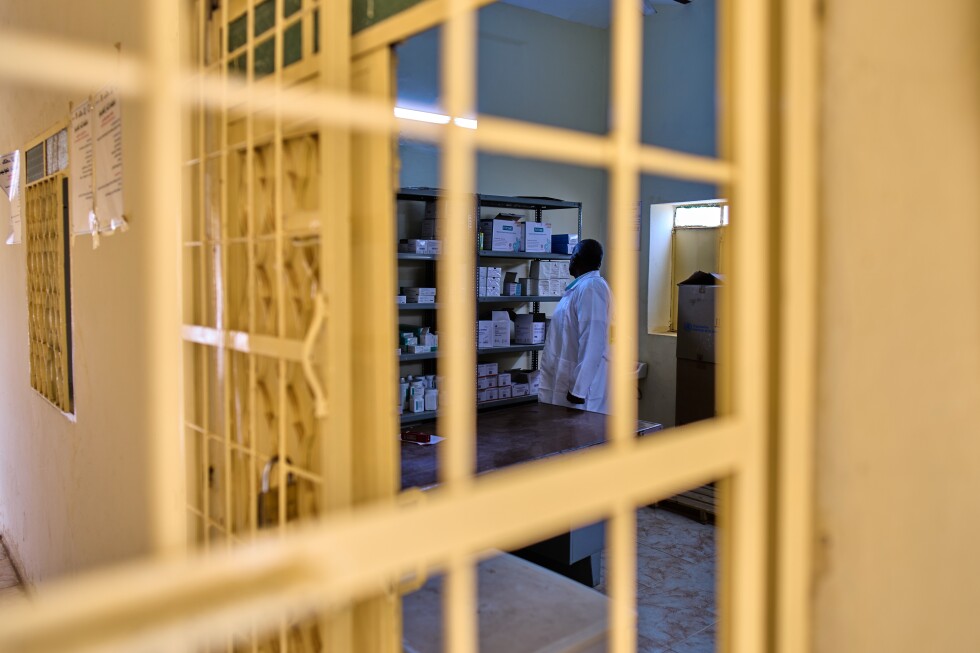
In the quiet, conflict-battered village of Qoz Nafisa on the outskirts of Sudan’s capital Khartoum, 61-year-old Abbas Awad faces a desperate daily battle to preserve his sight. For years, accessing the glaucoma medication he needs to avoid blindness has been an uphill climb, but the outbreak of war in Iran has turned that climb into a steep, almost insurmountable cliff. Today, Awad deliberately stretches out his doses, rationing each pill to stretch his current supply as far as it can go, terrified that when it runs out, he will neither find more on local markets nor afford whatever scarce stock remains.
Awad’s struggle is far from an isolated case. It is a direct ripple effect of the new conflict unfolding thousands of kilometers away in the Middle East, a crisis that is compounding the damage of Sudan’s own three-year long civil war, which has already pushed the country into what global aid groups widely call the world’s worst humanitarian catastrophe.
The International Rescue Committee (IRC), one of the few aid organizations still providing critical support to the Qoz Nafisa public health clinic that serves 5,000 vulnerable local residents, explains how the Iran conflict has shattered already fragile global supply chains for life-saving aid. Rising tensions between the United States and Iran have effectively closed off the Strait of Hormuz, one of the world’s most critical oil and commercial shipping chokepoints, and disrupted alternative logistics routes passing through major regional hubs like Dubai. Aid groups report that shipping costs for essential goods have jumped by as much as 20% according to United Nations estimates, driven by skyrocketing fuel prices and inflated insurance premiums for vessels traveling through conflict-affected waters. Many shipments that would normally move directly through the Persian Gulf are now being rerouted across long, inefficient alternative paths, causing massive delays that can stretch for weeks or even months.
One clear example of this disruption is a $130,000 shipment of pharmaceuticals bound for Sudan, including critical antibiotics, painkillers, and basic medical equipment like stethoscopes. The shipment was originally meant to be flown from the United Arab Emirates directly to Port Sudan, but was stranded in Dubai for weeks. It was eventually forced to take a much longer, costlier route: overland by road to neighboring Oman, before being loaded onto a flight bound for Sudan. The shipment only just began moving toward the country after weeks of gridlock.
At the Qoz Nafisa clinic, the impact of these delays is already being felt on a daily basis. Dr. Amira Sidig, the clinic’s medical director, told AP journalists during a recent visit that the facility has not received a scheduled supply shipment from the IRC since December. Planned shipments for February and April never arrived. While Sudan’s Ministry of Health has attempted to step in to fill the gap, it can only cover half of the clinic’s total needs, and the government itself is grappling with widespread shortages across the country. As a result, the clinic’s stock runs out almost as soon as new supplies arrive.
Earlier this month, the clinic completely ran out of malaria treatment for several days. Half of all patients seeking care at the facility present with malaria, a life-threatening disease that is endemic to the region. Patients who cannot get free medication at the clinic are forced to travel to other facilities and pay for drugs out of pocket, a cost most of them simply cannot afford after three years of war that has gutted local livelihoods. Ahmed Ibrahim, a clinic staff member, says frustration is growing among residents who have nowhere else to turn for care. “When people come to the window, they say, ‘Why are you here and there is no medicine?’” he shared.
Even though U.S. President Donald Trump announced an extension of a fragile ceasefire with Iran this week, aid leaders remain deeply concerned that the damage to supply chains will not reverse quickly. “There’s still a real lag in the system. Shipments remain blocked or delayed, and that’s deeply worrying,” said Madiha Raza, associate director for global public affairs and communications for the IRC. Raza emphasized that for a country already on the brink of collapse like Sudan, even small delays to food, medicine, and fuel shipments have catastrophic, irreversible consequences for millions of vulnerable people.
This reporting is part of AP News’ Africa Pulse coverage, supported by a grant from the Gates Foundation. The AP maintains full independent editorial control over all content, with public transparency standards for philanthropic partnerships available on AP.org.