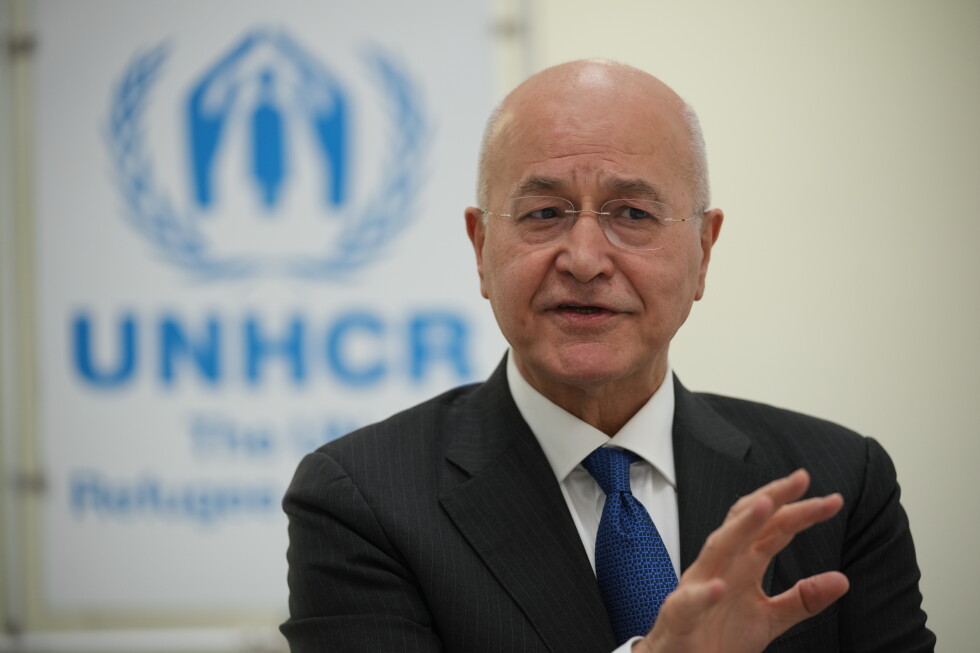
The United Nations refugee agency has launched an investigation into newly emerged reports that two vessels carrying Rohingya, the long-persecuted ethnic minority from Myanmar, overturned in the Bay of Bengal while attempting a dangerous ocean crossing. In a public statement released Tuesday, the Office of the U.N. High Commissioner for Refugees (UNHCR) confirmed that the two boats are believed to have departed Rakhine State, western Myanmar, in late June before sinking.
分类: world
-
‘If we die, we die together’: Wife of man nearly sucked out of Ryanair plane speaks of ordeal
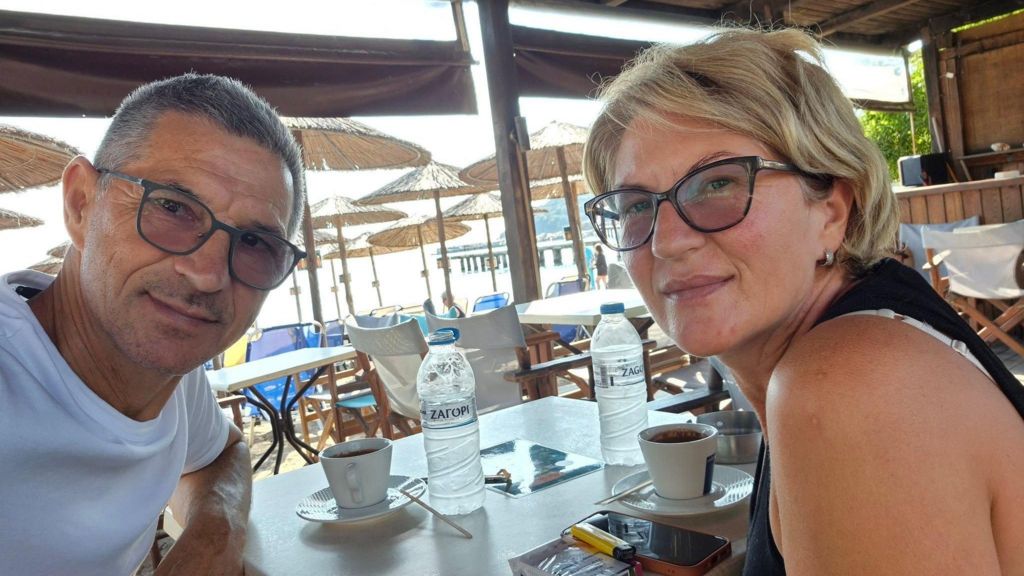
A terrifying mid-air incident on a European Ryanair flight has left a 61-year-old Serbian passenger seriously injured, after he was nearly pulled head-first out of a dislodged cabin window just minutes after takeoff last Friday. The harrowing experience, which unfolded during a scheduled trip from Thessaloniki, Greece to Memmingen, Germany, highlights extraordinary acts of quick thinking from the man’s wife and other passengers that saved his life.
Ljubisa Karović and his wife Svetlana Grković were heading home from a vacation in northern Greece when the emergency unfolded, according to Serbian media reports. Grković, who was seated beside her husband, shared her account of the chaos that struck roughly 10 minutes after departure. In comments to Serbian broadcaster Nova, she recalled that by the time she reacted, half of Karović’s body was already outside the aircraft—from the chest up, he hung outside the plane for two full minutes. “I immediately grabbed his legs. I thought, if we die, we die together,” Grković said, describing her split-second decision to hold on.
Multiple passengers reported hearing a sudden blast just before decompression hit the cabin. Grković said her initial assessment pointed to broken debris from the plane’s right engine smashing the adjacent window. A technical expert consulting for the family has backed this preliminary theory, suggesting an engine failure sent fragments flying to shatter the window, triggering rapid cabin pressure loss. This assessment has not yet been validated by official investigators, however. Crucially, Karović had kept his seatbelt fastened throughout the flight, a small precaution that gave rescuers extra purchase as they fought to pull him back inside. Grković, working alongside two other traveling passengers, managed to haul the unconscious man back into the cabin. Karović lost consciousness three times during the ordeal, his wife said.
Fellow passenger Christina told Radio Thessaloniki that the cabin erupted into screams the moment pressure dropped. “For a moment I thought someone had accidentally opened the emergency door,” she recalled. Another passenger, Sofia, described extreme difficulty breathing as decompression spread through the aircraft. “We thought the plane was going down,” she said, adding that Karović was bleeding and repeatedly lost consciousness, likely from oxygen deprivation and extreme shock.
Flight tracking data confirms the aircraft, operated by Ryanair’s subsidiary Malta Air, dropped 9,000 feet (2,700 meters) abruptly after the incident, before turning around to make an emergency landing back at Thessaloniki. In a public statement following the event, Ryanair confirmed that flight returned to the departure airport shortly after takeoff after a passenger window became dislodged. The Irish budget carrier added that the plane landed without further incident, and all passengers returned safely to the terminal, with only Karović requiring on-site medical attention before being transferred to hospital.
Grković updated the public on her husband’s condition, saying he remains seriously injured, is in severe shock, and has not been able to recount the event. “It’s important to me that he’s alive,” she said, noting that his hand suffered particularly severe damage including burns, and he is currently unable to communicate. Local media reports confirm Karović remains hospitalized as of the latest updates.
The aircraft involved in the incident was an 18-year-old Boeing 737-800, a widely used workhorse for short-haul European flights. Because the incident occurred over North Macedonian airspace, and the plane is U.S.-built, multiple international agencies have joined the ongoing probe led by Greece’s Hellenic Air and Rail Safety Investigation Authority. Participating bodies include aircraft manufacturer Boeing, the U.S. Federal Aviation Administration, and the European Union Aviation Safety Agency. Thessaloniki airport operator Fraport Greece confirmed the investigation remains active, with no preliminary findings released to date.
Additional reporting for the original story was contributed by Nikos Papanikolaou.
-
EU bans gold imports from Sudan to curb money financing conflict
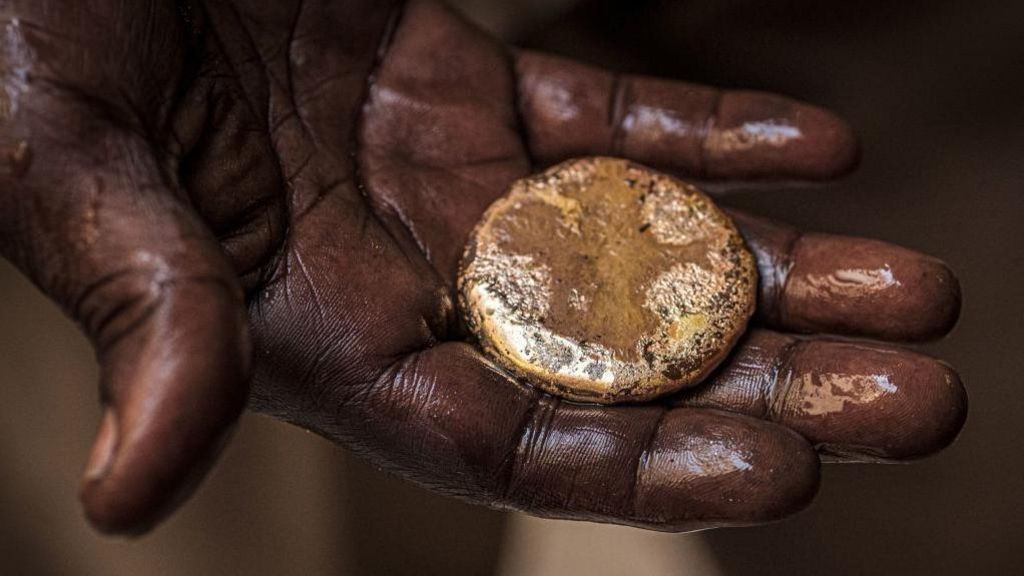
More than two years after Sudan’s devastating civil war erupted between the country’s regular military and the paramilitary Rapid Support Forces (RSF) in April 2023, the European Union has enacted sweeping new restrictive measures targeting the gold trade that has emerged as a core revenue stream for both warring factions. The new rules, formally approved by EU foreign ministers, ban all EU-based individuals and companies from purchasing, importing, or transferring any gold originating in Sudan, alongside an export prohibition on two chemicals critical to artisanal and industrial gold processing: mercury and cyanide. Exemptions are in place for mercury and cyanide intended strictly for humanitarian and public health uses, the bloc clarified.
As one of Africa’s top gold producing nations, Sudan’s extensive untapped gold reserves have become a lifeline for financing military operations on both sides of the conflict, according to global human rights and monitoring groups. Territorial control of the country’s gold resources is split along front lines: the RSF holds sway over most major goldfields in the western Darfur region and central Kordofan, while the Sudanese Armed Forces manages production in northern and eastern parts of the country. UN analysts and independent experts estimate that between 50% and 70% of Sudan’s annual gold output is smuggled out of the country illegally, with most trafficked through neighboring states including Egypt, Chad and Libya before reaching the United Arab Emirates’ Dubai, one of the world’s largest centers for gold refining and global trade.
In an official statement following the approval of the sanctions, the EU Council emphasized that gold has become a foundational source of funding that allows the conflict to continue. “The measures are designed to curb sources of financing for the conflict and further increase pressure on those fuelling the war,” the council said, noting that the new restrictions expand an existing EU sanctions regime that already targets dozens of individuals and entities accused of prolonging violence across Sudan.
The war in Sudan has already spawned one of the worst global humanitarian catastrophes of the 21st century. To date, the conflict has forced more than 14 million Sudanese people to flee their homes, and aid organizations estimate that more than 28 million people across the country now face acute food insecurity. International pressure has been mounting on external backers of both warring parties to cut support for the conflict, but independent sanctions experts warn that the EU’s new measures alone will not be enough to halt the illicit gold trade. For the ban to have a meaningful impact, major global gold trading hubs and regional transit countries must also strengthen enforcement efforts to block entry for smuggled Sudanese gold, experts say.
-
US-Iran strikes: latest developments
A rapidly escalating confrontation between the United States and Iran entered its third consecutive night of military strikes this week, triggering ripple effects across the Middle East that have disrupted global energy markets and spurred urgent international calls for restraint. The sharp escalation follows a fresh outbreak of hostilities that ended a brief month-long ceasefire between the two powers, bringing the strategic Strait of Hormuz — through which roughly 20% of global oil supplies pass daily — to the center of a growing global crisis.
In the latest round of cross-regional attacks, Jordan’s military confirmed Tuesday that it intercepted and destroyed four Iranian missiles that entered its airspace, as Iran launched retaliatory strikes against US regional allies in response to American bombardments. Meanwhile, loud explosions rocked the Bahraini capital Manama early Tuesday, according to an Agence France-Presse reporter on the ground, marking the third set of blasts since dawn after air raid sirens sounded across the city.
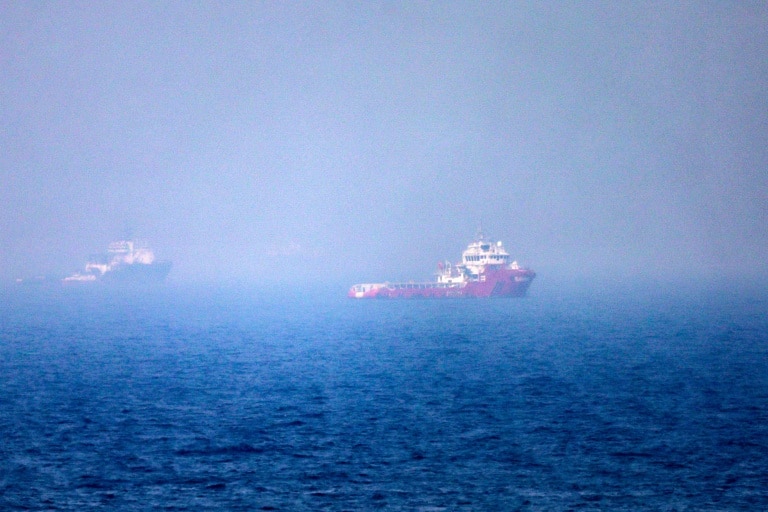
The United Arab Emirates, a key US ally in the Persian Gulf, accused Iran of launching missile attacks on two commercial vessels transiting the Strait of Hormuz Tuesday, leaving one crew member dead and eight others injured. The attack marks the latest in a string of strikes on commercial shipping linked to Iran that have raised alarms about global maritime security. Separately, the UK Maritime Trade Operations agency reported a separate missile strike on an outbound tanker near the Omani fishing port of Limah, with authorities launching an investigation into the incident.
The escalating conflict has already roiled global energy markets, with benchmark crude prices jumping sharply Tuesday following the announcement of new US strikes. West Texas Intermediate crude, the key US benchmark, rose 2.5% to settle at $80.15 per barrel, while Brent North Sea Crude — the global benchmark — climbed to $85.37 a barrel, matching the same percentage gain. The price surge underscores the market’s sensitivity to disruptions in the Strait of Hormuz, one of the world’s most critical chokepoints for global energy trade.
As tensions mount, the international community has moved quickly to push for de-escalation. China issued a formal statement Tuesday calling on both Washington and Tehran to immediately take steps to restore safe and unimpeded passage through the strait. “Restoring normal and safe passage through the strait as soon as possible is a shared aspiration of the international community,” Chinese foreign ministry spokesperson Lin Jian told reporters, adding that Beijing would continue “unremitting efforts” to bring the crisis under control and lower tensions.
On the US side, President Donald Trump has ordered a sharp escalation of economic pressure, with US Central Command confirming it would reimpose a full naval blockade of all Iranian ports starting at 20:00 GMT Tuesday. The blockade was previously eased after Washington and Tehran reached an interim ceasefire agreement in June, but Trump pledged to reimpose the full restrictions after the latest outbreak of fighting. In a post to his Truth Social platform Monday, Trump announced the US would “take over” security operations for the Strait of Hormuz, and require all transiting ships to pay a fee equal to 20% of the value of their cargo to cover US operational costs. “The United States will be reimbursed… for any and all costs necessary to do the job of providing safety and security” through the waterway, he wrote.
Iran has rejected Trump’s plan outright, with its top military command warning that it will not tolerate any US interference in the management of the strait. In a published video statement Monday, a spokesperson for Iran’s Khatam Al-Anbiya military command said Tehran “under no circumstances will allow… the United States to interfere in the management” of the strategic waterway. The spokesperson also issued a stark warning to neighboring Gulf states, saying any cooperation with the US plan would be considered “an act of war” against Iran.
On the ground, US strikes on Monday left two people dead in Iran’s southwestern Khuzestan province, an oil-rich region bordering Kuwait and Iraq, according to Iranian state news agencies Fars and Tasnim. The reports cited a local provincial official confirming two fatalities and three additional injuries. Iran’s Mehr news agency also reported widespread explosions near the key port city of Bandar Abbas and the nearby island of Qeshm, a major Iranian naval and commercial hub. US Central Command later confirmed it had deployed one-way attack sea drones for the first time to carry out the strike on the Iranian port, marking a new phase in US military tactics against Iranian targets.
-
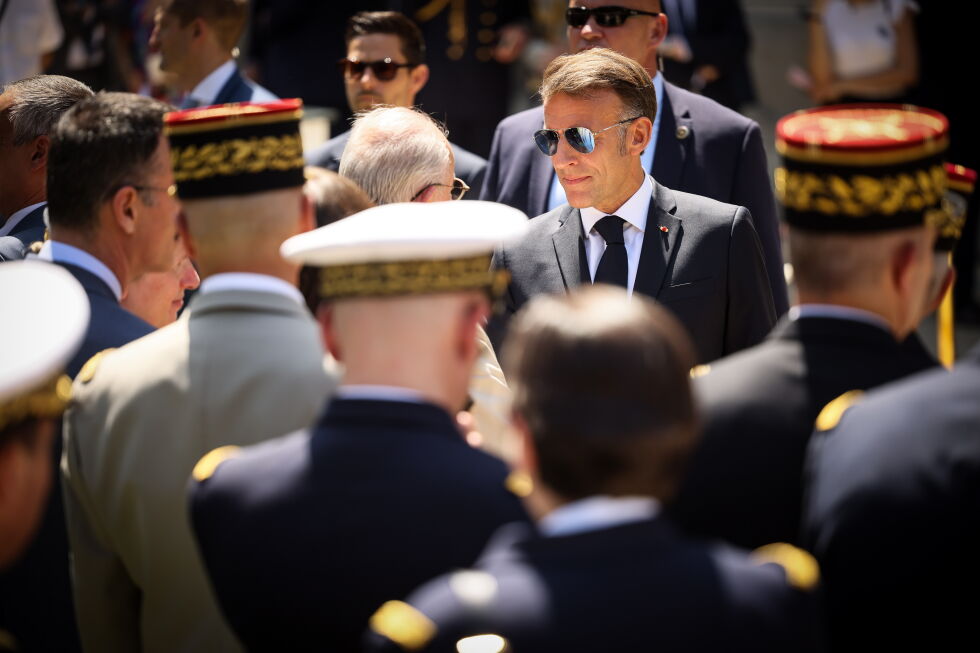
European troops and warplanes join Paris Bastille Day parade in a show of unity for Ukraine
PARIS – France’s annual Bastille Day national celebration has taken on unprecedented global meaning in 2025, blending a display of cross-continental European solidarity with Ukraine, a demonstration of the bloc’s collective military capability, and unexpected disruptions driven by a record-breaking red-alert heat wave and spreading wildfires. This year’s parade along Paris’ iconic Champs-Élysées marks the final Bastille Day of Emmanuel Macron’s current presidential term, and he has framed the event as a clear message to both Russian President Vladimir Putin and former U.S. President Donald Trump: Europe remains unified, and is ready to take greater responsibility for its own defense.
-
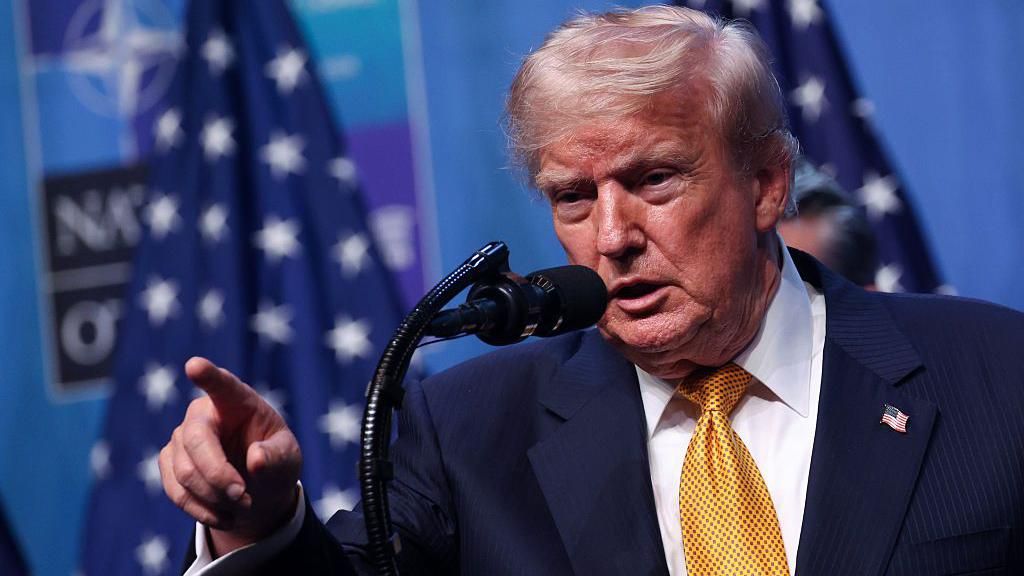
UAE condemns Iran’s ‘brazen’ attack on tankers as US launches fresh strikes
The strategic Strait of Hormuz, a critical global energy chokepoint, has erupted into a fresh wave of geopolitical crisis, following a deadly attack on two Emirati tankers and a sweeping new announcement from U.S. President Donald Trump that risks upending global shipping markets. The rapid escalation comes after three consecutive nights of U.S. strikes on Iranian military targets, marking a sharp breakdown in a recent ceasefire agreement between the two long-standing adversaries.
On Monday, the United Arab Emirates’ Ministry of Defence issued a formal statement condemning what it called a “brazen” Iranian attack on two of its national tankers transiting the strait. The strike left one Indian crew member dead and eight others injured, six of whom are Indian and two Ukrainian, with four casualties in critical condition. The ministry called the assault a severe violation of international law that undermines regional security and stability.
Shortly after the attack, Iran’s Islamic Revolutionary Guard Corps (IRGC) took responsibility for the strikes in a Telegram statement. The IRGC claimed the two tankers had ignored multiple navigation warnings, disabled their location tracking systems, and attempted to traverse a route marked as dangerous due to prior mining activity. The corps added that any vessel cooperating with what it calls the “aggressor enemy” will only face consequences including damage, delayed passage, and the risk of triggering a global energy crisis. The IRGC confirmed it had disabled both targeted tankers.
The attack capped a 48-hour period of steadily escalating military exchanges between the U.S. and Iran. On Monday, following strikes for the third straight night, President Trump announced via his Truth Social platform that the U.S. would reinstate a full naval blockade of Iranian ports and impose a mandatory 20% charge on all cargo shipped through the Strait of Hormuz, set to take effect at 16:00 Eastern Time on Tuesday. The U.S. leader framed the toll as reimbursement for security costs, claiming the U.S. would now serve as the official “Guardian of the Hormuz Strait,” while asserting that all non-Iranian shipping would retain fair and open access to the waterway.
Speaking to reporters at the White House, Trump said the U.S. was hitting Iran “very hard” and working to eliminate all of Tehran’s offensive capabilities while securing full control of the strait. When asked about the prospects for a negotiated end to the ongoing conflict, Trump maintained that a diplomatic deal remained within reach. U.S. Central Command (Centcom) confirmed it carried out the latest round of strikes on Monday afternoon, targeting military sites across multiple Iranian locations including Bushehr, Bandar Abbas and Abu Musa, with the stated goal of further degrading Iran’s capacity to attack commercial shipping. In response, Iranian state media reported that Iran’s army had targeted U.S. military assets stationed in Kuwait.
Iran’s foreign minister Abbas Araghchi offered a sharp, sardonic retort to Trump’s announcement, leaning into the president’s own framing on X. Araghchi acknowledged that any power providing safe passage for commercial vessels through the strait deserves compensation, noting that “Iran has always been the GUARDIAN of the Strait and will remain so FOREVER.” He added that Trump’s proposed 20% rate is far too high, quipping that “We will be fair.” Iran’s top military spokesperson Ebrahim Zolfaghari went further, warning that any U.S. interference in the management of the strait will be considered an act of war against Iranian sovereignty, and that expanded conflict would spread flames across the entire Middle East.
The International Maritime Organization (IMO), a United Nations body that oversees global shipping regulations, has already rejected Trump’s proposed toll outright. A spokesperson told Reuters that the organization “stands firmly against charging fees for passage through straits used for international navigation,” adding that there is no international legal basis for imposing mandatory transit tolls on commercial shipping through the waterway. As of Monday, ship tracking data from MarineTraffic shows that while a small number of vessels are still moving through the strait, overall commercial traffic remains heavily restricted.
The current crisis marks the latest chapter in a months-long conflict that has already reshaped global energy markets. The strait, through which roughly 25% of the world’s crude oil and 20% of global liquefied natural gas pass, was effectively shut down by Iran in February after the U.S. and Israel launched large-scale strikes on Iranian targets. Iran retaliated with missile and drone attacks on Israeli and U.S. military assets across the Gulf, and the IRGC seized two commercial vessels and fired on others that attempted to transit without Tehran’s approval. The disruption sent global oil prices soaring in the weeks that followed.
The U.S. first imposed a full naval blockade of Iranian ports in April to pressure Tehran. By mid-May, U.S. military officials reported they had redirected 100 commercial vessels and disabled four Iranian-flagged ships under the blockade. The blockade was lifted in June as part of a ceasefire memorandum between the two sides aimed at de-escalation, but disputes over control of the strait quickly reignited. Last week, Trump formally notified Congress that the U.S. had resumed military action against Iran starting on July 7, complying with federal notification requirements for ongoing military engagements.
The practical implications of Trump’s new announcement remain uncertain, and it carries both international and domestic political risks. Under international UN law, coastal states exercise full sovereignty over territorial waters extending 12 nautical miles from their coastline, and at its narrowest point, the Strait of Hormuz’s shipping lanes lie entirely within the territorial waters of Iran and Oman. Many U.S. allies are expected to push back against the requirement to pay a 20% cargo toll, and critics have already noted that the strait was fully open and unrestricted before the current conflict began.
Domestically, the announcement creates political complications for Trump’s fellow Republicans ahead of upcoming midterm elections. Even though Trump is not on the ballot, the move is likely to drive renewed increases in global oil prices, which will impact U.S. consumers at the pump. Some lawmakers from both parties, including a number of Republicans, have already questioned the value of the earlier ceasefire, and many American voters are already concerned about rising energy costs. Some analysts have framed the announcement as a characteristic Trump negotiating tactic: a provocative move designed to force a reset in talks and draw greater international involvement into resolving the crisis.
-

Australian police reveal unseen photos 25 years after British backpacker murder
July 14, 2026 marks 25 years since one of Australia’s most high-profile missing person and murder cases unfolded in the remote outback of the Northern Territory. On that same date in 2001, 28-year-old British backpacker Peter Falconio, originally from Huddersfield, was shot and killed by Bradley Murdoch on a desolate stretch of Stuart Highway near Barrow Creek, roughly 300 kilometers north of Alice Springs. To this day, Falconio’s body has never been recovered, and 25 years on from the attack, Northern Territory (NT) Police have made the unprecedented decision to release a collection of never-before-seen photographs from their original investigation, in a last-ditch effort to jog public memory and elicit new information that could finally lead investigators to Falconio’s remains.
The newly released batch of images captures key pieces of evidence and context from the immediate aftermath of the attack. Included among them is a full-length portrait of Murdoch taken during the early police investigation, a raw shot of Falconio’s travel partner and girlfriend Joanne Lees visibly traumatized just hours after the assault, close-up images of the binding injuries Lees sustained when Murdoch tied her wrists with cable ties, the abandoned orange Volkswagen Kombi van the couple was driving around Australia that was found parked off the Stuart Highway near the attack site, and multiple shots of the remote outback crime scene itself.
The attack that shook both Australia and the United Kingdom unfolded after Murdoch pulled his vehicle alongside the couple’s camper van, claiming he had spotted sparks coming from the van’s exhaust. When Falconio stepped out to inspect the issue, Murdoch shot him in the head before forcing Lees into his own vehicle and binding her. Lees managed to escape Murdoch’s custody, hiding in dense outback scrubland for several hours before she was able to flag down a passing truck for help.
Murdoch was ultimately found guilty of Falconio’s murder, as well as charges of assault and attempted kidnapping of Lees, in a unanimous jury verdict following his 2005 trial. Despite overwhelming DNA evidence linking him to the crime, Murdoch consistently maintained his innocence, launched two unsuccessful appeals to overturn his conviction, and never cooperated with authorities to disclose where he had hidden Falconio’s body. Last year, the 67-year-old died in prison from terminal throat cancer, taking the secret of Falconio’s burial location to his grave. Just one week before his death, NT Police conducted a final recorded interview with Murdoch in a last attempt to get him to reveal the location; footage of that interview was released to the public in recent days.
NT Police Commissioner Martin Dole emphasized that the investigation will remain open until Falconio’s family gets the closure they have waited 25 years for. “This was a traumatic and horrific event for Ms Lees, and for Peter’s family, who have now gone such a long time without the answers they deserve,” Dole said in an official statement. “While a murderer has been held accountable for his crimes, this investigation can never be considered closed until Peter’s remains are found and his family can lay him to rest.”
Dole added that it was “deeply regrettable that Murdoch died without, as far as we know, ever disclosing the location of Peter’s remains. His cowardly silence has denied his family, friends and loved ones the closure they deserve.” Police remain committed to pursuing every possible lead to bring the case to a full conclusion, and an existing reward of up to AU$500,000 remains active for any information that leads investigators to the recovery of Falconio’s remains. Commissioner Dole expressed hope that the 25-year milestone, paired with the release of these unseen images, will prompt anyone with even small pieces of forgotten information to come forward.
-
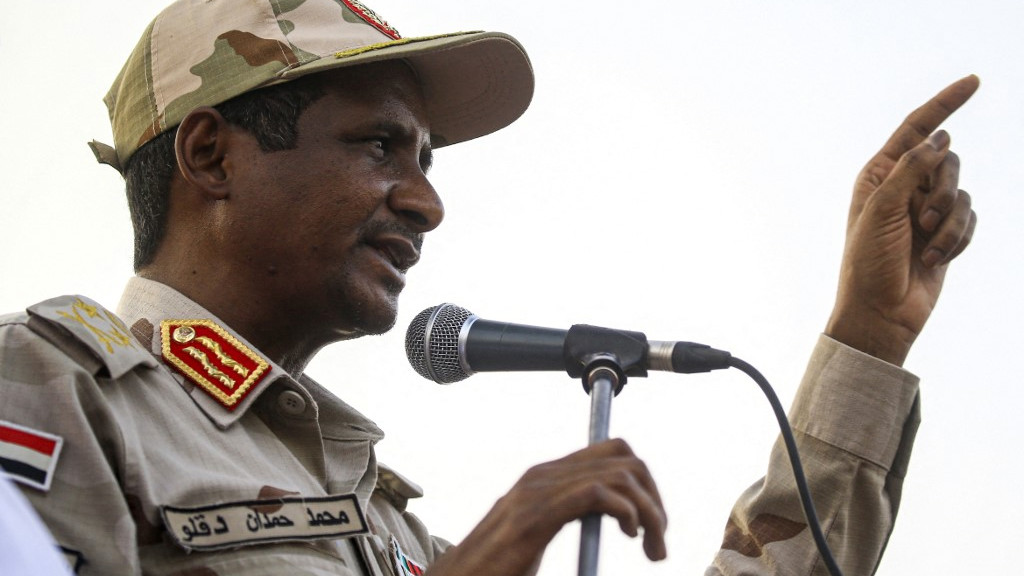
Sudan court sentences RSF commander to death over West Darfur killings
In a landmark ruling marking the first judicial conviction of senior Rapid Support Forces (RSF) leadership since Sudan’s brutal civil war erupted in April 2023, an anti-terrorism court based in Port Sudan handed down death sentences in absentia on Sunday to RSF commander Mohamed Hamdan Dagalo—widely known as Hemedti—and 15 other co-defendants. The convictions center on allegations of war crimes, crimes against humanity, genocide, and the targeted assassination of West Darfur Governor Khamis Abdullah Abakar in the West Darfur capital of el-Geneina.
The case was rooted in the 2023 assassination of Governor Abakar, which occurred just 24 hours after the governor publicly condemned RSF shelling of the el-Jamarik neighborhood in el-Geneina. Circulated video evidence showing RSF fighters mutilating Abakar’s body has been publicly available, though the paramilitary group has consistently denied involvement and pinned blame on the opposing Sudanese Armed Forces (SAF).
Human Rights Watch’s 2024 investigation into violence in el-Geneina concluded that the attacks against the Masalit people and other non-Arab communities in the region amounted to ethnic cleansing, with strong evidence pointing to acts of genocide. Data from Middle East Eye’s June 2023 reporting estimates that roughly 1,500 people were killed in el-Geneina in the first two months of the war alone, forcing tens of thousands of Masalit civilians to flee on foot across the border to refugee camps in eastern Chad.
Among the convicted defendants are two of Hemedti’s brothers: RSF deputy leader Abdel Rahim Hamdan Dagalo and Algoney Hamdan Daglo Musa, commonly referred to as al-Qoni. Additional high-profile convictions include West Darfur RSF commander Abdel Rahman Juma Barkallah and the region’s former deputy governor al-Tijani al-Tahir Karshoum.
Presiding over the trial, special judge Mohamed al-Amin ruled that Hemedti bore direct legal responsibility for orchestrating the genocide of the Masalit community and organizing the siege of el-Geneina. The judgment detailed systemic patterns of property destruction and looting, as well as deliberate targeted attacks on civilian populations, residential zones, schools, and religious sites. Abdel Rahim Dagalo was found guilty of co-organizing the el-Geneina siege, mass civilian displacement, and the Masalit genocide; al-Qoni was convicted of facilitating the siege; and Barkallah was held responsible for leading frontline RSF fighters in coordinated assaults on Masalit-majority neighborhoods.
Alongside the death sentences, the court ordered the full confiscation of all RSF assets and directed Sudanese authorities to request Interpol red notices to secure the arrest and extradition of all convicted individuals. In his closing statement, Judge Amin delivered a blistering rebuke of the RSF’s actions, noting that the group deployed heavy weaponry in residential areas, carried out widespread looting, arson, and sexual violence, and acted on explicit ethnic hatred with the goal of eradicating the Masalit community.
“These convicted individuals were state leaders who abused their authority and turned state weapons—meant to protect citizens—into tools of crime,” Judge Amin said. “Their actions left thousands dead or displaced, destroyed an entire city, and erased its civilization and history.”
The Port Sudan ruling comes just days after International Criminal Court (ICC) Deputy Prosecutor Nazhat Khan announced a “breakthrough” in the court’s investigations into alleged crimes against humanity and war crimes in West Darfur, following an investigative trip to eastern Chad. However, a recent Middle East Eye investigation uncovered that the ICC prosecutor’s office has privately decided not to move forward with an arrest warrant application for an RSF member, despite three years of investigations and public promises that applications would be filed imminently. The decision has sparked growing scrutiny over the timeline and commitment of international judicial action against RSF leadership.
While international progress on accountability remains slow, the first extraterritorial prosecution attempt against RSF members has already been launched in neighboring Kenya. On June 9, 12 Sudanese victims represented by Legal Action Worldwide and the African Centre for Justice and Peace Studies filed a formal complaint alleging war crimes and crimes against humanity with Kenya’s Director of Public Prosecutions, relying on the principle of universal jurisdiction.
The complaint calls for an investigation into allegations of torture and sexual violence committed by 10 RSF members, several of whom are believed to currently reside in Kenya. The filing directly undermines the Kenyan government’s long-standing public partnership with the RSF: Kenyan President William Samoei Ruto has hosted Hemedti at the country’s State House, allowed the RSF to hold meetings for a parallel Sudanese administration in Nairobi, and granted Kenyan passports to RSF leaders to facilitate cross-border travel. Critics further accuse the Ruto administration of supplying crates of ammunition to the paramilitary group and enabling the smuggling and export of Sudanese gold and gum arabic through Kenyan ports.
“This moment is not just a test of Kenya’s commitment to upholding international justice,” said Dr. Owiso Owiso, lead Kenyan counsel for the 12 victims. “It also proves that even when domestic accountability systems and the broader international community have failed the people of Sudan, avenues to seek justice are not completely closed.” -
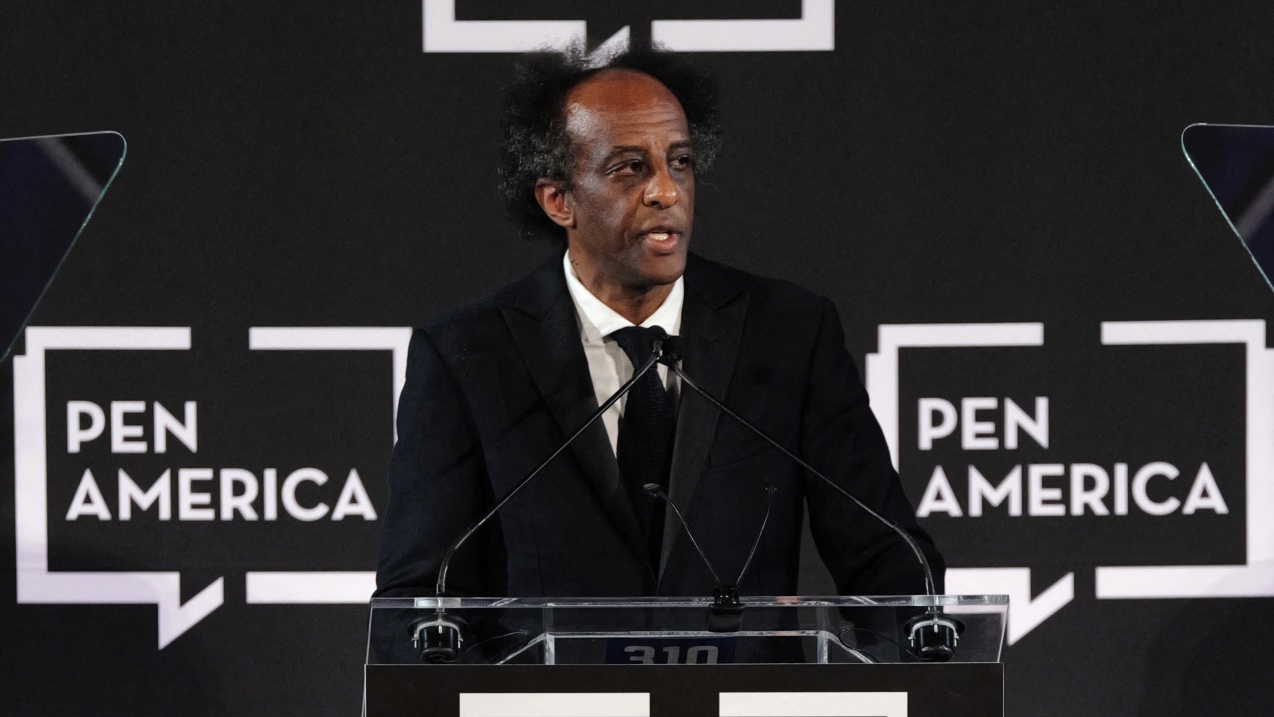
Pen America chief resigns, accuses literary institution of erasing Palestinians
Seven months after taking on the presidency of PEN America, one of the United States’ most prominent literary organizations dedicated to defending free speech, award-winning Ethiopian-American novelist Dinaw Mengestu has stepped down from his post. His departure, announced last week, stems from long-simmering frustration over what he calls systemic unfair treatment of Palestinians at the organization, in contrast to its positioning toward Israelis and Jewish Americans.
Mengestu’s resignation came in the wake of PEN America’s release of a new report documenting the professional and emotional harm faced by Israeli and Jewish-American writers in the aftermath of Israel’s ongoing military campaign in Gaza, now stretching nearly three years. The report detailed multiple accounts of writers losing employment, speaking opportunities and career advancement due to their positions on the conflict. But for Mengestu, the report was just the latest example of the organization’s long-standing failure to uphold its core mission of defending free expression fairly and equitably across all sides of the conflict.
In an Instagram statement posted Sunday, Mengestu clarified that his departure was not a dispute over differing personal perspectives or experiences. Instead, he argued that PEN America’s ongoing institutional choices produce work that enables suppression through bigotry and deliberate indifference toward Palestinian voices. At the center of this disagreement is the organization’s long-standing stance on the Palestinian-led Boycott, Divestment, Sanctions (BDS) movement, a global nonviolent campaign launched in 2005 to end Israeli occupation, racial segregation and the blockade of Gaza, modeled on the anti-apartheid pressure campaign that helped end white minority rule in South Africa. Mengestu emphasized that BDS activity constitutes protected free speech under the First Amendment of the U.S. Constitution, a right PEN America has consistently failed to uphold.
For years, Mengestu noted, PEN America has framed BDS as a direct assault on the identity of Jewish students, while systematically diminishing Palestinian experiences of violence and dispossession to the point of near erasure. “What PEN America fails to understand is that a boycott is a form of dialogue,” he wrote. He added that the hundreds of writers who boycotted PEN America in 2024 did so to push for meaningful institutional change, and many only returned to the organization after being promised reform.
Many of those boycotting writers are affiliated with Writers Against The War on Gaza (WAWOG), a prominent collective that labeled Israel’s military campaign in Gaza a genocide just two weeks after it launched in October 2023 – a classification that has since been endorsed by the United Nations, leading historians and leading genocide scholars. WAWOG’s website documents more than 400 successful cultural boycott outcomes across North America since the start of the conflict. The group declined to share its full membership size or demographic breakdown with Middle East Eye, but an anonymous representative praised Mengestu’s decision to step down.
“We understand and commend [Mengestu] for not wanting to be associated with an institution that would… equate BDS as discriminatory,” the representative told Middle East Eye Monday. “For a lot of us, principles are the only thing we have.” The representative added that PEN America consistently draws false equivalence between material genocidal violence against Palestinians and the semantic disagreements raised by Zionist Israelis and Jewish Americans. “The desecration of cultural spaces in Gaza, wiping out the universities, killing scholars and writers and arresting them, it just doesn’t even compare,” they said.
When contacted for comment by Middle East Eye, PEN America offered only a brief, measured statement acknowledging Mengestu’s departure. “We are grateful for Dinaw Mengestu’s leadership and we respect that he’s made a decision he believes in,” the organization said. “We recognize people can disagree about how best to apply free expression principles in this extraordinarily difficult environment.” The 100-year-old institution, which centers its public mission on defending free expression in all its forms, outlined its formal stance on boycotts in the 9 July report on Israeli and Jewish writers: the organization opposes cultural and academic boycotts that inhibit the international exchange of art, literature and knowledge, but will defend the right of writers who choose to participate in such boycotts against professional retaliation.
PEN America confirmed to Middle East Eye that this caveat, affirming BDS participation as protected free speech, was only added to the organization’s public position in the past week. Prior to this update, the organization’s 2007-era stance on boycotts did not acknowledge that participating in or advocating for boycotts qualifies as protected free expression. Mengestu has characterized this last-minute adjustment as a hollow attempt to appease all sides amid mounting pressure for reform, though the organization has not publicly explained why it chose to update its position now after years of escalating criticism.
The 9 July report did acknowledge that no organized BDS campaign has called for targeting writers solely on the basis of their Jewish identity. It did, however, note that many Jewish writers have reported losing access to agents, publishers and public events since 7 October 2023, due to their Jewish identity, support for Zionism, or sympathy for Israel.
As of Monday, Gaza’s Ministry of Health has confirmed at least 73,231 Palestinians killed in Israeli military operations since the 7 October 2023 Hamas attacks that killed roughly 1,200 people in southern Israel. Independent experts estimate an additional 10,000 Palestinians remain buried under rubble across the blockaded enclave, with hundreds of thousands more sustaining injuries. Even after a recently announced ceasefire brokered by former U.S. President Donald Trump on 10 October, 1,108 Palestinians have been killed in Israeli airstrikes and sniper fire across Gaza.
-
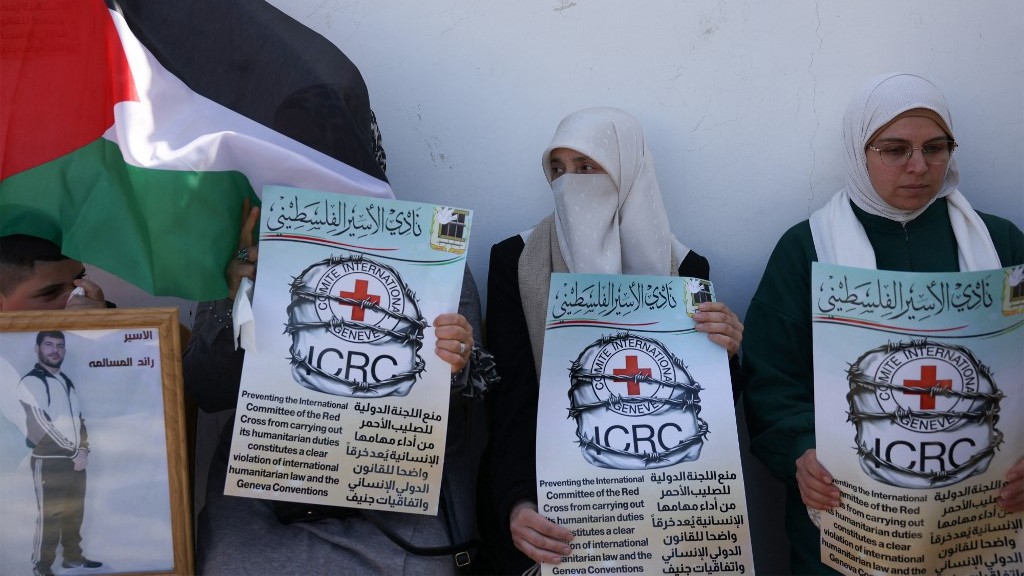
Israel blocks Red Cross access to Palestinian prisoners despite court ruling
In a direct challenge to a recent Israeli High Court of Justice ruling that deemed a prior access ban unlawful, Israeli authorities have implemented sweeping new restrictions that effectively expand a blanket ban on International Committee of the Red Cross (ICRC) access to Palestinian captives held in Israeli prisons.
Last week, Israel Prison Service (IPS) Commissioner Kobi Yaakobi formalized the new sweeping regulations, which impose far-reaching limits on the humanitarian organization’s ability to carry out routine visits to detained Palestinians. Under the updated rules, Red Cross representatives are barred entirely from visiting multiple categories of Palestinian captives under any circumstances. This total ban applies to detainees the IPS labels as “highly violent”, as well as those held in solitary confinement and prisoners currently undergoing interrogation.
For the remaining detainees who are not subject to a total ban, visits are capped at just 30 minutes per meeting, and prison commanders retain full authority to cut humanitarian visits short at their own discretion without formal oversight. Additional constraints further restrict access: the Red Cross is only permitted to conduct one round of visits per quarter, and the organization is required to submit a pre-approved list of no more than five captives it intends to meet with ahead of any visit.
This latest policy shift directly defies a High Court order issued last month, which compelled the Israeli state to restore Red Cross access to Palestinian captives after an initial blanket ban was introduced immediately following the October 7, 2023 attacks in southern Israel. In a brief official statement defending the new measures, the IPS asserted that “The agency operates in accordance with the law. If any allegation is raised, it should be addressed through the appropriate channels.”
The new restrictions come just weeks after a parliamentary bill that would have formally codified a total ban on Red Cross visits failed to pass in the Israeli Knesset, falling in a 36-41 vote. The bill failed after ultra-Orthodox Haredi coalition parties boycotted the vote in protest over the ruling government’s failure to advance legislation key to their own policy agenda, in a move unrelated to the Red Cross access debate.
This report was originally published by Middle East Eye, an outlet that provides independent, on-the-ground coverage and analysis of the Middle East, North Africa and surrounding regions.