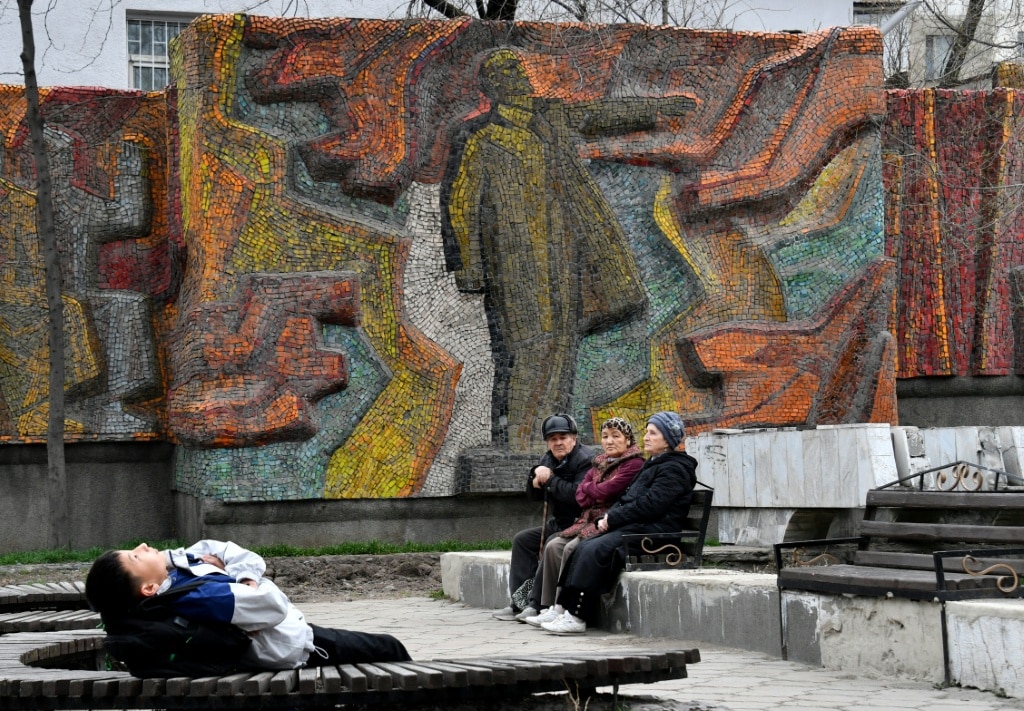
Thirty-five years after the collapse of the Soviet Union left the five Central Asian states independent, a quiet erasure of Soviet-era architectural and artistic heritage is accelerating across the region, driven by a growing ideological shift away from Moscow and state-led efforts to cement distinct national identities.
In Dushanbe, the capital of Tajikistan, one striking example of this trend sits on the facade of a soon-to-be-demolished apartment block: a massive mosaic honoring Soviet cosmonauts and engineers, celebrating the union’s mid-century scientific breakthroughs. Like thousands of other Soviet relics across Central Asia, the artwork is set to be destroyed to clear space for a luxury new residential development. Local resident Rakhmon Satiev told AFP he holds out hope the mosaic could be carefully removed and reinstalled at the new site, but that wish has little chance of being fulfilled.
Over the past decade, deliberate neglect and intentional demolition have gutted the region’s Soviet built heritage, from iconic architectural landmarks to public artworks including mosaics, frescoes, and monumental sculptures. “If a building is old and does not fit into the new city plan, it is torn down. The city is being rebuilt and renovated, and the past is vanishing,” Dzhamshed Dzhuraev, a prominent Tajik mosaic artist, explained in an interview with AFP. Behind his Dushanbe studio, a once-prominent monument to Soviet founder Vladimir Lenin stands hidden from public view, a relic of an era regional leaders now deem out of step with modern national narratives.
Following their 1991 independence, the five Central Asian former Soviet republics — Kazakhstan, Kyrgyzstan, Uzbekistan, Tajikistan, and Turkmenistan — have seen their urban landscapes transform into a disjointed mix of gleaming new high-rises, crumbling Soviet-era buildings, informal shanties, and half-finished construction projects. For preservation advocates, the rate of heritage loss is alarming. Altynai Kudaibergenova co-founded Artkana, one of the region’s few independent groups working to save Soviet-era architectural heritage in Kyrgyzstan. She says the number of destroyed monuments is “striking,” and warns that Bishkek, Kyrgyzstan’s capital, still holds dozens of magnificent examples of socialist-modernist architecture — a style that has grown popular with international tourists and design fans on social media — that are now at risk of demolition.
The widespread demolition is rooted in ideological change, as long-serving regional leaders have worked to position themselves as the founding fathers of new independent nations, prioritizing new symbols of national power over leftover markers of Soviet rule. Rarely do officials frame the campaign in explicit ideological terms, however. Even as the region balances enduring economic dependence on Russia with growing Chinese investment, government leaders cast the demolition drive as a practical, cost-effective measure. They argue that renovating aging Soviet-era structures is more expensive than building new developments from scratch, noting the region’s total population has grown to roughly 80 million, creating urgent demand for new housing.
In Dushanbe, where the mayor is the son of long-ruling president Emomali Rakhmon, the push for urban renewal has centered on replacing Soviet-era landmarks with symbols of the current government. Prominent Tajik sculptor Safarbek Kosimov told AFP that the city’s administration “is doing everything possible to make the buildings as beautiful and comfortable as he can,” adding that Soviet-era mosaics are simply “no longer necessary.” Portraits of the 73-year-old incumbent leader have already replaced many of the demolished Soviet artworks on public building facades across the capital.
Critics of the campaign say it erases important cultural history for private and political gain. “Most Soviet mosaics were designed to convey an ideological message, but their artistic value is also important,” preservation advocate Kudaibergenova said. “Unfortunately, businesses are rarely receptive to such considerations. Their main priority is selling square metres at a high price.” Multiple nonprofits and international monitoring organizations have documented widespread corruption and opaque collusion between government officials and real estate developers driving large-scale urban renewal projects across the region.
In Bishkek, local painter Erkinbek Bolzhurov is currently fighting to save the city’s historic House of Artists, which sits adjacent to the former national printing house — a structure that has already been reduced to nothing but its outer walls. “We want the city to develop, of course, but not at the expense of our memory,” he said. “Great artists worked inside these walls. That is what makes the building unique — it has a history.”
Across Central Asia, tight government control over public expression means authorities rarely consult local communities or preservation groups before approving demolition projects. Still, some artists hold out hope for a future shift in attitudes. Tajik mosaic artist Dzhuraev says he believes “the time will come” when public art like Soviet-era mosaics will again be valued as part of the region’s layered history. “Architects and urban planners should pay them more attention,” he said, adding that a revival of appreciation for this heritage is still possible.