分类: world

  • Briton in Netflix’s ‘Con Mum’ faces fresh charges in Singapore

    Briton in Netflix’s ‘Con Mum’ faces fresh charges in Singapore

    An 85-year-old British woman already facing fraud charges connected to a high-profile Netflix documentary has received dozens of additional accusations as investigators expand their probe into her alleged decades-long scam. Dionne Marie Hanna, a Singapore resident who became a household name after the streaming platform released *Con Mum* in March 2025, now stands accused of defrauding 14 people out of large sums of money to finance her opulent public persona.

    Hanna’s alleged scheme relies on one consistent, elaborate lie: she claims to be an illegitimate, wealthy member of Brunei’s royal family, set to receive a massive multi-million dollar inheritance that has been tied up in legal red tape. To access that inheritance, she tells her targets, she needs small upfront sums to cover legal fees, administrative costs, and bank processing charges — promising 10-fold repayment as soon as her assets are released. She has also leveraged sympathy by claiming she is terminally ill, and even told some victims she would donate large portions of her inheritance to local Singaporean Muslim charities and a mosque once it became available, court documents show.

    Prior to Thursday’s announcement, Hanna already faced five charges connected to allegations that she deceived three men across Singapore and France into transferring funds to her accounts. The 34 new charges bring her total count to 39, and expand the roster of alleged victims to include her own biological son, London-based Michelin-starred pastry chef Graham Hornigold. According to local Singaporean broadcaster Channel NewsAsia, the new accusations lay out a pattern of bold deception: in one case, Hanna convinced a man to cover hundreds of thousands of dollars in personal expenses for her, after promising to name him her stepson and repay him in full from her inheritance. In another, she persuaded a woman to give her money for supposed processing fees, with a guarantee that Hanna would purchase high-end vehicles including a Lexus and an Aston Martin, plus a luxury property in Singapore’s exclusive Sentosa Cove neighborhood, for her after the inheritance cleared.

    Hanna was first arrested and charged last year, after the production of *Con Mum* brought her alleged activities to public attention. The documentary follows Hornigold’s emotional journey reconnecting with Hanna, who reached out to him out of the blue claiming to be his long-lost mother. A DNA test confirmed her biological relation, and she quickly won over the chef and his inner circle by presenting herself as a wealthy, loving parent eager to make up for lost time. She initially lavished Hornigold, his former partner, and their friends with expensive gifts ranging from cars to property, but soon began asking for increasing sums of money to cover supposed inheritance-related costs. By the end of the ordeal, Hornigold told the documentary he had lost roughly £300,000 to her schemes. The film also notes that Hanna has prior convictions for fraud and shoplifting in the United Kingdom.

    Hanna currently faces charges of cheating and fraud by false representation, the latter of which carries a maximum sentence of 20 years in prison if she is convicted. Her case is scheduled for a pre-trial conference in May 2025, as prosecutors continue to build their case against the 85-year-old.

  • War in the Middle East: latest developments

    War in the Middle East: latest developments

    The ongoing conflict in the Middle East has sent ripples across global energy markets and international diplomacy, with a flurry of new developments emerging over the past 24 hours that have heightened economic uncertainty and shifted geopolitical dynamics.

    One of the most significant warnings came from the International Energy Agency (IEA), which projects that strained global liquefied natural gas (LNG) markets—tightened significantly by the ongoing regional conflict—will remain constrained through the end of 2026 and into 2027. The energy volatility has already moved global markets: oil prices have continued their upward climb, while equity markets have faced downward pressure as investors grow increasingly anxious over stalled diplomatic efforts to de-escalate the crisis. Adding to market jitters are ongoing threats to critical energy chokepoints, with Iran maintaining its position of tension around the Strait of Hormuz and the United States upholding its blockade of Iranian ports.

    On the diplomatic front, French President Emmanuel Macron emphasized the urgent need for regional calm during his participation in an EU summit held in Nicosia, where scheduled talks with Middle Eastern leaders were on the agenda. “It is in everyone’s interest for stability to return as soon as possible and for the world’s economies to be reassured,” Macron stated.

    In a counterterrorism move, the U.S. State Department announced a reward of up to $10 million for any information leading to the leader of Kataeb Sayyid al-Shuhada (KSS), an Iraqi armed group backed by Tehran that Washington has formally designated as a terrorist organization.

    A limited win for de-escalation came with the announcement of a three-week extension to the ceasefire between Israel and Lebanon, made public by U.S. President Donald Trump on Thursday. Speaking to reporters, Trump expressed optimism about long-term peace, saying “I think there’s a very good chance of having peace. I think it should be an easy one.” He also confirmed plans to hold high-level talks with leaders from both nations in the coming two weeks. The ceasefire extension was immediately tested, however, after Hezbollah announced it had launched rocket attacks targeting the Shtula settlement in northern Israel. The group claimed the strike was retaliation for Israeli violations of the ceasefire and an Israeli strike on the southern Lebanese town of Yater.

    Trump also addressed rising tensions with Iran, telling reporters at the White House that while the U.S. faces no immediate pressure to end the ongoing standoff with Tehran, “the clock is ticking” for the Iranian government as the conflict’s disruptions continue to harm the global economy. He explicitly ruled out the use of nuclear weapons against Iran, noting “A nuclear weapon should never be allowed to be used by anybody.”

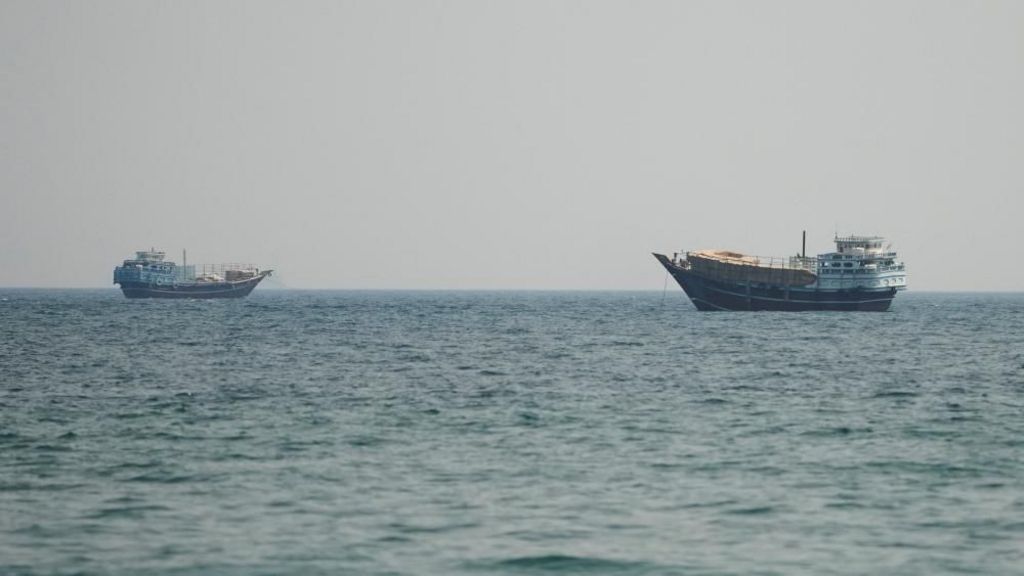
    To bolster its military presence in the region, the U.S. military confirmed that the USS George H.W. Bush aircraft carrier has arrived in Middle Eastern waters, bringing the total number of U.S. Navy carrier battle groups deployed in the theater to three. Trump also issued a new operational order for U.S. naval forces in the region, saying “I have ordered the United States Navy to shoot and kill any boat, small boats though they may be…that is putting mines in the waters of the Strait of Hormuz.” Just days after a similar interdiction, the U.S. Defense Department also announced that U.S. forces had boarded a vessel in the Indian Ocean suspected of carrying material support to Iran, marking the second such operation in three days.

    On the sports front, U.S. Secretary of State Marco Rubio distanced the American government from calls to bar Iran from this year’s World Cup, including a proposal that Italy take the Iranian national team’s place in the tournament. Rubio confirmed that Iranian footballers are welcome to compete, and denied that Washington had requested the team stay home. He did, however, note that members of the Iranian delegation with documented ties to the Islamic Revolutionary Guard Corps (IRGC) may be denied entry.

    Israeli Defense Minister Israel Katz reaffirmed his country’s military preparedness for wider conflict, stating that Israel is “prepared to resume the war” and is only waiting for authorization from Washington to push Iran back “to the Stone Age.”

  • A massive, unstable ice block stalls Everest climbers at base camp

    A massive, unstable ice block stalls Everest climbers at base camp

    KATHMANDU, NEPAL – A dangerous unstable ice formation has thrown a wrench into the 2024 spring Mount Everest climbing season, forcing hundreds of climbers and their Nepalese support teams to pause their summit bids just as operations are set to ramp up, Nepalese mountaineering officials confirmed Friday.

    The hazard is a massive hanging serac located along the standard climbing route between Everest’s base camp and Camp 1, a section of the iconic peak that already ranks among the most dangerous in the world. Himal Gautam, a representative from Nepal’s Department of Mountaineering, confirmed the ice block is shifting and poses an unacceptable level of risk for teams moving up the mountain. As of Friday, more than 800 total people – including permitted foreign climbers and their local guides – are stuck at base camp, waiting for officials to sign off on a safe passage forward, with expedition leaders and government teams working around the clock to re-evaluate conditions daily.

    This year’s spring climbing window, the most popular period for summit attempts on Everest, runs through the end of May. Nepal’s tourism department has already issued 410 summit permits to foreign climbers for the season, a number that will double when counting the required Nepalese Sherpa guides, porters, and support staff that accompany every expedition.

    The problematic serac sits within the Khumbu Icefall, a notoriously unpredictable glacial stretch that is universally regarded as one of the most treacherous sections of any Everest climb. The icefall is constantly shifting, dotted with gaping hidden crevasses and topped with overhanging ice blocks the size of 10-story buildings, any of which can collapse without warning.

    Preparing a safe route through the Khumbu Icefall falls to the Icefall Doctors, an elite team of experienced Sherpa guides who annually fix climbing ropes and install aluminum ladders across deep crevasses to open the passage for expeditions. This work is typically completed by mid-April, but the unstable serac has halted progress. The Sagarmatha Pollution Control Committee, the organization that manages the Icefall Doctor team, is now planning to conduct an aerial survey to fully assess the serac’s stability. Committee chairman Lama Kazi Sherpa said the current avalanche risk is far too high for ground teams to work safely, so officials are adopting a wait-and-see approach, holding off on reopening the route until the ice block naturally melts to a safer size.

    This is not the first time a massive ice collapse in the Khumbu Icefall has caused tragedy on Everest. In 2014, a large chunk of glacial ice broke loose and triggered a devastating avalanche that killed 16 Sherpa guides who were moving client equipment up the mountain. That disaster remains one of the deadliest accidents in the recorded history of Everest climbing.

    Climbing teams typically time their summit bids for early to mid-May, when short, stable weather windows offer the best conditions for a push to the 8,848.86-meter (29,031.7-foot) peak. More than 4,000 climbers have successfully reached the summit since the first recorded ascent by New Zealander Edmund Hillary and Sherpa Tenzing Norgay on May 29, 1953.

  • Trump says ceasefire between Israel, Lebanon to be extended by 3 weeks

    Trump says ceasefire between Israel, Lebanon to be extended by 3 weeks

    On April 23, 2026, at the White House in Washington D.C., U.S. President Donald Trump made a key announcement: the fragile 10-day ceasefire between Israel and Lebanon, which went into effect on April 16, will be extended by an additional three weeks. The announcement came just hours after the two nations wrapped up their second round of ambassador-level talks in the U.S. capital, a meeting that brought together senior diplomatic leadership from both sides alongside top U.S. officials.

    Trump confirmed the meeting took place in the White House Oval Office, with attendees including U.S. Vice President JD Vance, Secretary of State Marco Rubio, Israel’s Ambassador to the U.S. Yechiel Leiter, Lebanon’s Ambassador to the U.S. Nada Hamadeh Moawad, and U.S. Ambassador to Lebanon Michel Issa. In a post published to his social media platform Truth Social, Trump simply stated, “The Meeting went very well!”, offering no further specifics on the discussions that unfolded during the closed-door session.

    The U.S. leader also outlined Washington’s planned next steps in the region, noting the United States will partner with Lebanon’s national government to help the country build its defensive capacity against Hezbollah, the Iran-aligned political and military group that holds significant influence in southern Lebanon. Trump further shared his long-term diplomatic goal, saying he remains eager to host senior leadership from both nations in the near future: Israeli Prime Minister Bibi Netanyahu and Lebanese President Joseph Aoun. This plan aligns with comments Trump made last week, when he said he expected the two leaders to visit the White House within one to two weeks to work toward a comprehensive permanent peace agreement that would resolve ongoing tensions related to Hezbollah.

    The original 10-day truce was implemented after weeks of escalating cross-border hostilities that unfolded amid the broader U.S.-Israeli military campaign against Iran. It is important to note that Israel and Lebanon have never maintained formal diplomatic relations. For decades, Israel has classified Hezbollah as an Iranian proxy force, and current negotiations are being conducted exclusively between the Israeli government and Lebanon’s official national government, with Hezbollah not participating directly in the talks.

    Despite the pause in large-scale fighting that the ceasefire brought, the truce has remained unstable throughout its first week, with low-level tensions persisting along Lebanon’s southern border, leaving regional observers cautious about the long-term prospects of the newly announced extension.

  • First ever talks to ditch fossil fuels as UN deadlock deepens

    First ever talks to ditch fossil fuels as UN deadlock deepens

    Against a backdrop of rising global temperatures driven by decades of fossil fuel consumption and repeated deadlock at United Nations climate negotiations, around 60 countries have convened this week in Santa Marta, Colombia, for a landmark gathering aimed at forging collective action to phase out coal, oil, and gas — a goal that major UN climate summits have repeatedly failed to deliver.

    The participating nations collectively account for approximately one-fifth of the world’s total fossil fuel production, counting major producers including Colombia, Australia, and Nigeria among their ranks. Notably absent from the talks, however, are the world’s largest fossil fuel-consuming and producing powers: the United States, China, and India.

    For years, progress on cutting fossil fuel dependence has stalled at the annual UN Climate Change Conference (COP), the global governing body for climate action. The consensus-based rule structure of COP negotiations means every participating nation holds veto power over final agreements, allowing large fossil fuel-producing blocs to block ambitious targets. This gridlock left many delegates deeply frustrated after last November’s COP30 held in Belém, Brazil, where efforts to adopt a formal global roadmap for a full fossil fuel phase-out collapsed in the face of opposition from major oil-exporting countries.

    Organizers emphasize that this new Colombian gathering is not intended to replace the COP process, but rather to complement it by building momentum that can break long-standing impasses. The urgency of this effort has been amplified by leading climate science, which warns that the window to limit global warming to the 1.5°C threshold — the safe guardrail set in the Paris Agreement to avoid the worst, irreversible climate impacts — is rapidly closing.

    “ We are inevitably going to crash through the 1.5°C limit within the next three to five years,” Professor Johan Rockström, director of the Potsdam Institute for Climate Impact Research, told BBC News. “Breaking through 1.5°C means we enter a far more dangerous world — with more frequent and intense droughts, floods, fires and heatwaves — and we are already approaching critical tipping points in major Earth systems.”

    Beyond climate science, shifting global geopolitics is reshaping the global energy conversation, adding new urgency to the push for transition. Under the second Trump administration, the world’s largest economy, the United States, has ramped up aggressive policies to expand domestic coal, oil, and gas production, creating global uncertainty about the pace of decarbonization. Many middle-power nations have since adopted a wait-and-see stance, hesitant to commit to fast transition without clearer global direction.

    Participants in the Santa Marta talks say the gathering’s core goal is to demonstrate that a critical mass of nations is already committed to shifting to renewable energy, giving hesitant countries the confidence to move forward. “We are committed to working with other countries to support those wishing to drive forward their transitions to clean and secure energy,” said UK Climate Envoy Rachel Kyte, who is in attendance. “We have the experience of our transition to share and the recent experience of driving to energy security with our clean power mission.”

    Recent geopolitical unrest has underscored the risks of continued fossil fuel dependence, pushing energy security back to the top of the global policy agenda. Ongoing conflict in the Middle East, combined with rising tensions in the strategic Strait of Hormuz through which 20% of the world’s daily oil shipments pass, has sent global oil prices climbing in recent weeks.

    “The urgency is multiplied. What’s happening has worsened the fossil fuel crisis we’re already in,” said former Irish President Mary Robinson, a founding member of the elders group of former global leaders, who is attending the talks. “This is exactly why this conference matters now.”

    These market disruptions are already shifting consumer and industry behavior, Rockström reported. After a recent advisory board meeting with automotive giant Mercedes-Benz, he noted that the company had seen a sharp uptick in European consumer demand for electric vehicles, driven by growing public desire for energy independence away from volatile global fossil fuel markets.

    The formation of this new “coalition of the willing” has sparked debate about whether it signals a permanent shift away from the consensus-based COP process. But observers and organizers alike argue it can instead revitalize global climate action. “Ultimately you don’t need all countries to drive global progress. You need a starting point,” said Katerine Petersen, a climate analyst with think tank E3G who is attending the gathering. “Then you need a coalition that can expand over time and show how it can and will be useful. And I think that’s what we’re expecting to see from Santa Marta.”

    Organizers stress the meeting remains complementary to COP, and key leaders from last year’s COP30 in Brazil are in attendance in Santa Marta. Conclusions from the Colombian gathering will be integrated into Brazil’s national fossil fuel phase-out roadmap, which the country will release ahead of COP31 scheduled to take place in Turkey this November. Even as domestic protestors in London rallied this week against plans for new UK oil and gas exploration, the Santa Marta meeting marks a key test of whether smaller, committed blocs can push the world faster toward a clean energy future when global negotiations stall.

  • Steve Rosenberg: Kremlin’s tightening grip on internet fuels public discontent

    Steve Rosenberg: Kremlin’s tightening grip on internet fuels public discontent

    Near the heart of Moscow, steps away from the Kremlin walls, dozens of Russian residents stand in an orderly line outside the presidential administration building. They have gathered not to protest openly, but to exercise one of the few legally permitted forms of civic action: submitting a formal petition urging President Vladimir Putin to roll back the Kremlin’s escalating crackdown on online access. What should be a routine act of democratic input, however, carries palpable risk in Russia’s increasingly authoritarian political climate. From across the street, uniformed security officers openly film both the petitioners and the reporting team documenting the event, a quiet but clear reminder that speaking out carries consequences. When asked if she feels afraid, Yulia, a small catering business owner waiting in the queue, admits openly: “Very scared. I’m shaking.”

    The Kremlin has been steadily tightening its grip on Russia’s digital cyberspace for years, but recent weeks have seen sweeping new restrictions that have upended daily life for millions of users. Access to globally popular messaging platforms including WhatsApp and Telegram has been sharply limited, while widespread mobile internet disruptions and full blackouts have been reported across multiple regions of the country. President Putin has publicly acknowledged the connectivity problems, framing the measures as necessary “operational work to prevent terrorist attacks.” He has also issued formal instructions to officials to preserve “uninterrupted operation” for critical internet services, but stopped short of promising to roll back the broader crackdown.

    For small business owners like Yulia, the restrictions are not just an inconvenience – they threaten her entire livelihood. Her catering operation runs entirely online, relying on global messaging apps to coordinate with clients and a public website to accept orders. “There were times recently when our website was not accessible. We couldn’t generate revenue,” she explained. “We are losing money every time there is a blocking of the internet, a blocking of Telegram and WhatsApp. Without internet access, my business in this form will not exist.”

    Russian officials defend the curbs as a matter of national and public safety. They claim that mobile internet blackouts help disorient attacking Ukrainian drones, a justification critics point out is undermined by the fact that drone strikes have continued in regions where connectivity has been fully shut off. Authorities also accuse international messaging platforms of refusing to comply with Russia’s strict local data storage laws, which require user information to be held on servers within Russian borders. Alongside restricting global services, regulators have launched a crackdown on virtual private networks (VPNs), tools that thousands of Russians use to circumvent government censorship and access blocked content.

    As the centerpiece of the Kremlin’s push for a “sovereign internet” – a closed, state-controlled network cut off from much of the global web – the government has aggressively promoted MAX, a new homegrown, state-backed messaging app. But the Russian public remains deeply skeptical of the platform. Many users worry the app is designed specifically to let security services surveil private communications, a concern echoed by opposition figures. “Many people think that this messenger is made especially by the government to check our messages,” said Boris Nadezhdin, a former member of parliament who was barred from running against Putin in the 2024 presidential election.

    Across much of Russia today, only government-approved websites and services are accessible to mobile users. Opposition analysts warn that a digital equivalent of the Cold War-era Iron Curtain is being constructed around the country, designed to cut Russian citizens off from outside information and unapproved content. “The idea is to divide Russia from the outside world,” said Andrei Kolesnikov, a columnist with independent opposition outlet Novaya Gazeta. “This world is believed to be poisonous to the brains of Russians. Russia was always blocked, primarily from the West, which was the source of ‘bad, revolutionary, liberal ideas’. It was always like this.”

    Unlike the Soviet era, however, generations of Russians have fully integrated the open internet into every part of daily life, making the new restrictions feel like a sudden and disruptive shock to routine. For many, the anger over the crackdown stems less from ideological demands for free speech and more from the loss of ordinary convenience that most people now take for granted. “It’s less to do with freedom of speech and more about habit,” explained Yulia Grekova, an activist based in Vladimir, a city 190 kilometers outside Moscow. “People have got used to paying for things and ordering taxis with their mobiles. They sit in the bus messaging friends. There are very few people who don’t use mobile internet for work, public services and to keep in touch with family. That’s why there’s such an angry reaction. Everyone’s affected.”

    Grekova has firsthand experience of how the Kremlin responds to public pushback against the internet restrictions. She recently attempted to organize a public rally in Vladimir to protest the curbs, but authorities blocked the event through a series of procedural stalling tactics. When she submitted applications for 11 different potential rally locations, officials rejected every site claiming street cleaning was scheduled for the requested date. City hall offered an alternative venue, only to reverse that approval a short time later, citing the risk of a Ukrainian drone attack. Grekova was later visited at her workplace by three police officers who served her a formal warning prohibiting any unsanctioned protest. “They filmed me signing the official warning from the prosecutor. I felt like some kind of terrorist,” she said. Similar attempts to hold protest rallies have been rejected across dozens of Russian cities, with authorities offering a range of absurd justifications, from scheduled roller-skating classes to residual COVID-19 restrictions.

    During a visit to central Vladimir, the impact of the crackdown was immediately visible: state media sites and domestic taxi apps functioned normally, but Google searches failed to load, and all independent news sites were completely inaccessible. Local residents described constant small disruptions that have upended ordinary routines. “It’s much harder to communicate,” said Maria, who was out walking with her infant child. “We want to keep across the latest news and trends. Instead, we’re lagging behind.” For some, the restrictions have compounded existing fatigue over the ongoing war in Ukraine. “In the past, when there was no internet, the world seemed a brighter place, because we knew less,” Maria said. “I try to avoid news about the war. I don’t want to fill my head with it. We’re tired of news about people being killed.” Other residents described far more practical disruptions: “Today I couldn’t pay for petrol. And my satnav is glitching,” said local resident Denis. Small business owners have been hit hardest, said Alexander, another local resident: “People are annoyed. Especially those with small businesses. They lose customers when they can’t access the internet.” For Grekova, the crackdown feels like a deliberate step backwards into a pre-digital era. “It feels like we’re going backwards, sliding back to the past,” she said.

    Kremlin spokesperson Dmitry Peskov defends the restrictions as a temporary necessity driven by the current security environment. “In the current situation, security considerations dictate the need for certain measures,” Peskov told reporters in Moscow. “These are being taken and most of our citizens understand the need for them. It’s clear that internet restrictions inconvenience many people. But this is the period we’re in. Once the need for such measures disappears, services will be fully restored and return to normal.” But critics warn that the new restrictions have already become the permanent new normal, and that the Kremlin will only continue to ramp up controls rather than roll them back. “I don’t think that this regime is ready to go back,” Kolesnikov said. “They can only go forward in terms of more repressions. What is bad for the authorities is an accumulation of discontent and it could play out in the future. We don’t know in what shape. But it is evident that irritation and discontent are accumulating.”

    That discontent is already starting to bubble into public view. In recent weeks, a viral video posted to Instagram by prominent Russian celebrity blogger Victoria Bonya criticizing the internet crackdown has amassed tens of millions of views. While Bonya did not directly blame Putin, she told him directly: “There is a huge, thick wall between you and us, the ordinary people.” Under growing public pressure, Putin acknowledged last week that he could not ignore the connectivity problems facing Russian citizens, and instructed security officials to find ways to accommodate the “vital interests of citizens.” But the statement stopped far short of a policy reversal, with no mention of ending the broader restrictions.

    Public opinion polling suggests that Putin’s approval ratings have fallen to their lowest level since Russia launched its full-scale invasion of Ukraine in 2022, with internet restrictions just one of multiple sources of growing public unease. Russians are also facing rising food prices, strained public services, and growing war fatigue. “People begin to understand there is a direct connection between their everyday problems, like healthcare, food prices, problems with internet, and the politics of Vladimir Putin,” Nadezhdin said. “And this is a new situation in Russia.”

    After submitting her petition outside the Kremlin, Yulia has returned to work baking bread at her catering company, already planning how to adapt to the new online restrictions. Like many Russians, she says her family has a long history of adapting to massive political and social upheaval. “My great-grandfather was wealthier than average. In a Soviet village that was considered a sin. His property was taken away from him and he was moved to Siberia. But his family adapted. My parents went through the collapse of the Soviet Union: they adapted to a market economy. Now it’s my turn to adapt. Then it will be my daughter’s turn.” When asked what she expects for the future, Yulia says long-term planning has become impossible. “The future is not even mentioned in day-to-day conversations with friends and relatives. It’s like: what are we doing in three days, in a week, in a month? Nothing more than a month.” Across Russia, as restrictions tighten and daily life grows more unpredictable, a deep, pervasive sense of uncertainty is quietly rising.

  • Mass MS-13 trial held at El Salvador mega-jail

    Mass MS-13 trial held at El Salvador mega-jail

    In a historic, high-security proceeding at El Salvador’s controversial Terrorism Confinement Center (CECOT) — the world’s largest mega-prison — hundreds of alleged members of the transnational criminal gang Mara Salvatrucha, better known as MS-13, appeared before the court this week to face charges of mass murder, torture and organized terror. On Thursday, Agence France-Presse reporters granted access to the restricted facility witnessed a stark scene: 220 defendants, all clad in matching white t-shirts and shorts, heads shaved, secured by chains, sat motionless and silent in orderly rows of plastic chairs arranged across CECOT’s main assembly hall. Hundreds of additional co-defendants joined the proceeding remotely from other blocks of the facility. Among those on trial are roughly 20 alleged high-ranking MS-13 leaders, including Borromeo Henriquez (known by the alias “The Little Devil of Hollywood”) and Carlos Tiberio Ramirez (“Snaider of Pasadena”), alongside dozens of mid-level gang lieutenants. Most defendants bore the gang’s signature tattoos across their faces, necks, hands and scalps, with some staring directly at visiting press as heavily armored security guards bearing riot shields formed a protective perimeter around the courtroom. Prosecutors allege the group collectively carried out more than 29,000 brutal killings across El Salvador over decades of gang rule. During Thursday’s testimony, graphic accounts of the gang’s violence played over the courtroom’s public address system. One witness recalled, “We burned her genitals and buttocks,” describing a targeted killing ordered by gang leadership. Additional testimony from two witnesses confirmed that MS-13 commanders continued to order murders from inside prison walls, even amid widespread state crackdowns. Prosecutors have directly linked the two top accused leaders to roughly 9,000 crimes, and the men showed no visible reaction as the chilling charges were read aloud. The mass trial is the centerpiece of Salvadoran President Nayib Bukele’s high-profile “war on gangs,” a sweeping security crackdown launched in 2022 that has seen more than 90,000 suspected gang members arrested under a prolonged state of emergency. Bukele, who has openly styled himself as the “world’s coolest dictator” in media appearances, has compared the CECOT mass trial to the Nuremberg Trials that prosecuted Nazi leadership after World War II. CECOT director Belarmino Garcia echoed the government’s framing, telling reporters, “These individuals caused mourning and pain to our society for many years.” A uniformed CECOT security agent, who spoke on condition of anonymity, added of the witness testimony: “It’s a horrifying account that makes your hair stand on end.” The Salvadoran government invited international journalists to observe the fourth day of proceedings, though access was tightly controlled under strict security protocols. For Bukele, the crackdown on gangs has proven politically transformative: supporters credit him with turning El Salvador from a nation once labeled the murder capital of the world into a safer country, and his hardline approach has become a template for right-wing political candidates across Latin America seeking to capitalize on widespread public anger over violent crime. Yet the mass trial and Bukele’s broader security campaign have faced sharp international criticism, particularly from human rights organizations that warn the sweeping dragnet of arrests has inevitably swept up thousands of innocent people, many of whom were detained for months before being cleared of any links to gangs. The process of mass trying hundreds of defendants at once has also raised alarms about due process violations. Controversy extends beyond El Salvador’s borders as well: Last year, former U.S. President Donald Trump authorized the transfer of 140 alleged Venezuelan gang members to be incarcerated at CECOT, a move that U.S. courts later ruled was unlawful. In 2021, U.S. authorities also leveled allegations that undermined Bukele’s carefully cultivated tough-on-crime image, claiming his administration held “covert negotiations” with MS-13 and other gangs, offering financial incentives in exchange for reduced gang violence and political support for Bukele’s ruling New Ideas party. The CECOT mega-prison, purpose-built to hold tens of thousands of suspected gang members, and the ongoing mass trial have become defining symbols of Bukele’s polarizing approach to public security, dividing supporters who hail his success in curbing violence from critics who warn the campaign is eroding democratic norms and civil liberties in the country.

  • Soviet architecture vanishes as Central Asia drifts from Moscow

    Soviet architecture vanishes as Central Asia drifts from Moscow

    Thirty-five years after the collapse of the Soviet Union left the five Central Asian states independent, a quiet erasure of Soviet-era architectural and artistic heritage is accelerating across the region, driven by a growing ideological shift away from Moscow and state-led efforts to cement distinct national identities.

    In Dushanbe, the capital of Tajikistan, one striking example of this trend sits on the facade of a soon-to-be-demolished apartment block: a massive mosaic honoring Soviet cosmonauts and engineers, celebrating the union’s mid-century scientific breakthroughs. Like thousands of other Soviet relics across Central Asia, the artwork is set to be destroyed to clear space for a luxury new residential development. Local resident Rakhmon Satiev told AFP he holds out hope the mosaic could be carefully removed and reinstalled at the new site, but that wish has little chance of being fulfilled.

    Over the past decade, deliberate neglect and intentional demolition have gutted the region’s Soviet built heritage, from iconic architectural landmarks to public artworks including mosaics, frescoes, and monumental sculptures. “If a building is old and does not fit into the new city plan, it is torn down. The city is being rebuilt and renovated, and the past is vanishing,” Dzhamshed Dzhuraev, a prominent Tajik mosaic artist, explained in an interview with AFP. Behind his Dushanbe studio, a once-prominent monument to Soviet founder Vladimir Lenin stands hidden from public view, a relic of an era regional leaders now deem out of step with modern national narratives.

    Following their 1991 independence, the five Central Asian former Soviet republics — Kazakhstan, Kyrgyzstan, Uzbekistan, Tajikistan, and Turkmenistan — have seen their urban landscapes transform into a disjointed mix of gleaming new high-rises, crumbling Soviet-era buildings, informal shanties, and half-finished construction projects. For preservation advocates, the rate of heritage loss is alarming. Altynai Kudaibergenova co-founded Artkana, one of the region’s few independent groups working to save Soviet-era architectural heritage in Kyrgyzstan. She says the number of destroyed monuments is “striking,” and warns that Bishkek, Kyrgyzstan’s capital, still holds dozens of magnificent examples of socialist-modernist architecture — a style that has grown popular with international tourists and design fans on social media — that are now at risk of demolition.

    The widespread demolition is rooted in ideological change, as long-serving regional leaders have worked to position themselves as the founding fathers of new independent nations, prioritizing new symbols of national power over leftover markers of Soviet rule. Rarely do officials frame the campaign in explicit ideological terms, however. Even as the region balances enduring economic dependence on Russia with growing Chinese investment, government leaders cast the demolition drive as a practical, cost-effective measure. They argue that renovating aging Soviet-era structures is more expensive than building new developments from scratch, noting the region’s total population has grown to roughly 80 million, creating urgent demand for new housing.

    In Dushanbe, where the mayor is the son of long-ruling president Emomali Rakhmon, the push for urban renewal has centered on replacing Soviet-era landmarks with symbols of the current government. Prominent Tajik sculptor Safarbek Kosimov told AFP that the city’s administration “is doing everything possible to make the buildings as beautiful and comfortable as he can,” adding that Soviet-era mosaics are simply “no longer necessary.” Portraits of the 73-year-old incumbent leader have already replaced many of the demolished Soviet artworks on public building facades across the capital.

    Critics of the campaign say it erases important cultural history for private and political gain. “Most Soviet mosaics were designed to convey an ideological message, but their artistic value is also important,” preservation advocate Kudaibergenova said. “Unfortunately, businesses are rarely receptive to such considerations. Their main priority is selling square metres at a high price.” Multiple nonprofits and international monitoring organizations have documented widespread corruption and opaque collusion between government officials and real estate developers driving large-scale urban renewal projects across the region.

    In Bishkek, local painter Erkinbek Bolzhurov is currently fighting to save the city’s historic House of Artists, which sits adjacent to the former national printing house — a structure that has already been reduced to nothing but its outer walls. “We want the city to develop, of course, but not at the expense of our memory,” he said. “Great artists worked inside these walls. That is what makes the building unique — it has a history.”

    Across Central Asia, tight government control over public expression means authorities rarely consult local communities or preservation groups before approving demolition projects. Still, some artists hold out hope for a future shift in attitudes. Tajik mosaic artist Dzhuraev says he believes “the time will come” when public art like Soviet-era mosaics will again be valued as part of the region’s layered history. “Architects and urban planners should pay them more attention,” he said, adding that a revival of appreciation for this heritage is still possible.

  • Countries to gather in Colombia for summit aimed at breaking fossil fuel reliance

    Countries to gather in Colombia for summit aimed at breaking fossil fuel reliance

    Against a backdrop of escalating geopolitical friction and volatile global energy markets, approximately 50 national governments are set to convene this week in Santa Marta, Colombia’s sunlit Caribbean coastal city, for a high-stakes summit focused on accelerating the global transition away from polluting fossil fuels. Running from April 24 to 29, the conference is co-hosted by the Colombian and Dutch governments, and will bring together a diverse cohort of participants: national cabinet ministers, regional and local government leaders, academic researchers, and civil society advocates. All attendees will center their discussions on how to wind down production and use of oil, gas, and coal while ensuring the global energy transition proceeds along a just, orderly, and equitable path, according to summit organizers.

    This gathering emerges from growing frustration among climate-conscious governments and grassroots advocates that decades of formal United Nations climate negotiations have failed to directly confront fossil fuel production, the single largest driver of anthropogenic global warming. The Santa Marta summit was organized to advance this critical conversation outside the slow-moving framework of official multilateral talks.

    Unlike binding formal UN climate agreements, the summit is not designed to deliver enforceable international commitments. Instead, organizers frame the gathering as a long-overdue space to open debate on a politically charged issue that has been sidelined in traditional climate negotiations for decades. “This is fundamentally a political space. We are opening a forum for discussion that simply does not exist in existing climate processes,” Colombia’s Minister of Environment Irene Vélez Torres told the Associated Press in a pre-summit interview. The core goal, officials say, is to draft a shared set of actionable policy proposals and build a broad coalition of nations willing to move faster than current international commitments to phase out fossil fuels.

    Claudio Angelo, head of international policy at Brazil’s Observatorio do Clima think tank, notes that climate action has unfortunately slipped down the list of urgent priorities for many governments in recent years, amid competing global crises. Attendees will include major fossil fuel producing and consuming nations from across Europe, Latin America, Africa, and Asia. Notably, two of the world’s largest oil producers, the United States and Saudi Arabia, will not participate, a reality that underscores deep global divisions between nations pushing for an accelerated transition and economies deeply tied to fossil fuel extraction and export revenues.

    Under the 2015 Paris Climate Agreement, member nations set their own voluntary national emissions reduction targets, with no enforceable international mechanism to compel countries to phase out fossil fuel production. The Santa Marta summit is part of a broader global push to shift climate diplomacy beyond incremental emissions target-setting and toward direct action to curb fossil fuel output, an issue that has split the international community for decades along political and economic lines. Climate advocates argue that new, bolder approaches are needed to close what they see as a dangerous gap in global climate governance.

    A key proposal expected to dominate summit discussions is the creation of “fossil-free zones”: designated geographic areas where all new oil, gas, and coal extraction is permanently banned, with a focus on ecologically sensitive and biodiversity-rich regions. “Fossil-free zones turn global, abstract climate goals into concrete, on-the-ground decisions,” explained Andrés Gómez of the Fossil Fuel Treaty Initiative. Indigenous leaders, who have been central to shaping the summit agenda, are pushing attending governments to enshrine fossil-free zones as a core component of national energy transition plans.

    “For Indigenous peoples, halting fossil fuel extraction is not only an existential climate imperative — it is essential to defending our ancestral territories, our self-governance systems, and our fundamental right to self-determination,” said Juan Carlos Jintiach, executive secretary of the Global Alliance of Territorial Communities, a coalition of Indigenous and local community groups representing millions of people across the world’s forest regions. Jintiach added that governments must move “from empty commitments to on-the-ground implementation” by embedding fossil-free zone policies into official national energy transition roadmaps. Analysis from environmental advocacy groups shows that existing oil and gas extraction concessions already overlap with millions of hectares of intact tropical forest and Indigenous-held territories, highlighting the massive scale of the challenge facing reformers.

    The summit convenes at a moment of unprecedented global geopolitical uncertainty, including ongoing conflict in the Middle East that has disrupted global energy markets and threatened supply flows through the Strait of Hormuz, the strategic chokepoint through which roughly one-fifth of the world’s daily oil supply transits. The resulting energy price spikes have rippled far beyond energy markets, hitting household budgets worldwide. “Oil price volatility does not stay confined to energy trading floors — it moves straight into the daily lives of ordinary people,” said Mary Robinson, former Irish president and leading climate justice advocate who will attend the summit, during a pre-summit press briefing. “As always, the impacts hit the most vulnerable communities hardest, while big oil companies rake in record windfall profits,” she added.

    Vélez argues that current global energy instability should speed up, rather than delay, the transition away from fossil fuels. “This crisis — and let’s call it what it is: the war in the Middle East has triggered a global crisis — in this context, I believe the global movement must double down on radicalizing the green agenda and accelerating the energy transition,” she said. Some energy analysts, however, warn that short-term energy supply shocks could push many nations to ramp up domestic fossil fuel production in the near term, even as they reaffirm long-term climate commitments. This dynamic highlights the persistent tension between national energy security goals and urgent climate action.

    This tension is particularly acute in Latin America, where many national economies remain heavily dependent on oil, gas, and mining exports even as regional governments position themselves as global climate leaders. Colombia, one of Latin America’s top oil producers and home to roughly 6% of the world’s remaining Amazon rainforest, relies on crude exports for a large share of both government revenue and foreign exchange earnings. Despite this dependence, Colombian President Gustavo Petro’s administration has pledged to halt all new oil exploration and lead global calls for a coordinated phaseout of fossil fuels. “Economic and fiscal dependence on fossil fuels is a problem, and it is perhaps the single biggest challenge we face as we push for this transition,” Vélez acknowledged.

    Financial constraints will also be a central topic of summit discussions. Many low- and middle-income developing nations carry high levels of public debt and have limited fiscal space, making large-scale investments in renewable energy infrastructure and just transition programs difficult to achieve. Civil society groups argue that without fundamental reforms to the global financial system, these constraints will continue to slow progress away from fossil fuels.

    “Moving away from fossil fuels unquestionably requires a carefully planned economic and energy transition that accounts for national fiscal realities,” said Carola Mejía of the Latin American and Caribbean Network for Economic, Social and Climate Justice. Gabriella Bianchini, policy advisor for advocacy group Global Witness, says the stakes of the summit extend far beyond climate action alone. “As communities across the globe suffer the consequences of oil-driven conflict, it has never been clearer that the world needs to leave the fossil fuel era behind,” Bianchini said. “Santa Marta is a chance for governments and communities to grab the bull by the horns and take concrete action toward building a greener, more equitable, and more peaceful world.”

    Bianchini added that while formal UN climate talks remain a critical part of global climate governance, they have repeatedly failed to deliver meaningful progress on curbing fossil fuel production. “Santa Marta represents a space for governments to advance the only plan we know will stave off the worst impacts of climate breakdown: a rapid and just transition away from fossil fuels,” she said. Observers note that the core test of the summit will be whether it can send a clear, unified political signal on an issue that has remained unresolved after decades of global climate talks. For Vélez, the gathering represents a potential turning point for global climate action. “If we step back, this conference is that turning point where, collectively, we decide to stand on the right side of history,” she said.

  • Israel, Lebanon extend ceasefire as Trump hopes for historic deal

    Israel, Lebanon extend ceasefire as Trump hopes for historic deal

    In a development that keeps fragile peace hopes alive along the Israel-Lebanon border, US President Donald Trump announced Thursday that the two rival nations have agreed to extend their existing temporary ceasefire for an additional three weeks. The announcement came as the US leader laid out his vision for a landmark three-way summit at the White House to advance a potential full peace deal, even as fresh deadly exchanges of fire underscored the truce’s deep instability.

    Speaking alongside Israeli and Lebanese ambassadors at the White House – the first high-level direct encounter between the two states, which have no formal diplomatic relations, since 1993 – Trump struck an optimistic tone about the prospect of ending decades of open conflict between the two nations. “I think there’s a very good chance of having peace. I think it should be an easy one,” he told reporters, adding that he expects Israeli Prime Minister Benjamin Netanyahu and Lebanese President Joseph Aoun to travel to Washington for talks during the newly extended truce window.

    The original ceasefire was first agreed on April 14 following initial ambassador-level talks and was set to expire Sunday. Lebanese officials had previously pushed for a one-month extension, with Aoun demanding the truce explicitly include commitments to halt destruction of civilian infrastructure, and end attacks on civilians, places of worship, medical and education facilities, and journalists. The demand gained urgent traction after a Lebanese journalist, Amal Khalil, was killed in an Israeli strike in Lebanon Wednesday, with mourners holding a funeral procession for her in the southern Lebanese town of Bissariye this week.

    The current round of open conflict between Israel and Hezbollah dates back to late February, when Israel launched a major offensive in Lebanon in response to Hezbollah rocket fire. The Iran-aligned militant group had pledged retaliation after Israel killed Iran’s supreme leader Ayatollah Ali Khamenei at the opening of the US-Israel war on Iran that began February 28. According to Lebanese authorities, the Israeli offensive has killed more than 2,450 people and displaced over one million, while Israeli forces have occupied a 10-kilometer deep “security zone” along the southern Lebanese border.

    Even as the ceasefire extension was being announced at the White House, new violence erupted Thursday: Hezbollah confirmed it had launched a fresh barrage of rockets into northern Israel, saying the attack was retaliation for repeated Israeli violations of the original truce. Israeli officials reported that all incoming rockets were intercepted by their defense systems. The exchange followed a deadly day of Israeli strikes Wednesday that killed five people across Lebanon, including Khalil. On Thursday, Lebanon’s state-run National News Agency reported an Israeli drone strike targeted a vehicle near the southern city of Nabatieh, roughly 35 kilometers north of the Israel-Lebanon border. Israel has repeatedly argued that truce terms allow it to carry out operations against what it frames as imminent or ongoing Hezbollah attacks, while Hezbollah has launched multiple small-scale attacks on Israeli troops and military assets in southern Lebanon in recent days.

    Israeli ambassador to the US Yechiel Leiter struck a conciliatory tone Thursday, saying Israel seeks a formal peace agreement with the Lebanese government and claimed the campaign against Iran has significantly weakened Hezbollah’s military capacity. “We’re united with the Lebanese government in wanting to rid the country of this malign influence called Hezbollah,” he said.

    The ceasefire extension comes against a backdrop of stalled US-Iran negotiations. Iran had made a full ceasefire in Lebanon a precondition for resuming talks with Washington aimed at ending the ongoing war, but refused to attend a planned second round of negotiations this week in protest of a continuing US naval blockade of Iran. Despite the breakdown, Trump announced Thursday he was extending an existing truce with Iran indefinitely. Notably, Lebanese President Aoun has already pushed back on a prior Trump claim that he would hold a direct telephone call with Netanyahu, signaling ongoing divisions remain even as diplomatic efforts move forward.