分类: world

  • Conflicts and energy shocks threaten progress against global hunger, UN agency head warns

    Conflicts and energy shocks threaten progress against global hunger, UN agency head warns

    ROME – As global progress toward ending hunger remains alarmingly fragile, the head of the International Fund for Agricultural Development (IFAD) has issued a stark warning that persistent geopolitical conflicts and energy market disruptions could drive millions more people into food insecurity by spiking costs for fuel, fertilizer, and staple foods.

    A newly released United Nations food security report published Tuesday confirms that while global hunger levels have seen a slight, modest decline in recent years, current trends project that more than 500 million people will still face chronic undernourishment by 2030, with Africa set to bear the overwhelming majority of that burden.

    In a July 10 interview with The Associated Press, IFAD President Alvaro Lario outlined the severe risks of ongoing instability: if sustained disruptions to shipping lanes and energy supplies—including heightened uncertainty around the Strait of Hormuz amid the ongoing Iran conflict—persist, an additional 9 to 18 million people could fall into hunger.

    “We are living in an era with the highest number of active conflicts in modern memory, and that number continues to climb,” Lario said. “Wherever conflict breaks out, hunger, displacement, and refugee populations all grow alongside it.”

    Conflict stands as one of the single greatest barriers to global hunger reduction, Lario emphasized. Wars and geopolitical tensions disrupt critical supply chains for energy and agricultural inputs, pushing up costs across already inflation-strained global food systems. What makes this dynamic particularly dangerous, he noted, is that hunger and conflict fuel one another, creating a self-reinforcing cycle that cannot be broken without targeted investment in global stability.

    Skyrocketing energy costs have already hit fertilizer production and agricultural output hard, with the most severe impact falling on small-scale farmers. For many of these producers, diesel fuel is a non-negotiable input for pumping irrigation water, harvesting crops, and transporting goods to regional markets. As fuel costs rise, production expenses follow, creating a direct ripple effect that pushes up retail food prices for consumers worldwide.

    Beyond affordability pressures and conflict-driven disruptions, the new report identifies climate change as an accelerating threat to global food security. While global food production continues to expand to meet population growth, roughly one-third of the entire global population still cannot afford a nutritionally adequate healthy diet. That figure jumps to 77% in low-income nations, Lario said.

    “The biggest challenge we face today is no longer just producing enough food to feed the global population,” Lario explained. “It is making healthy, nourishing diets affordable for everyone, everywhere.”

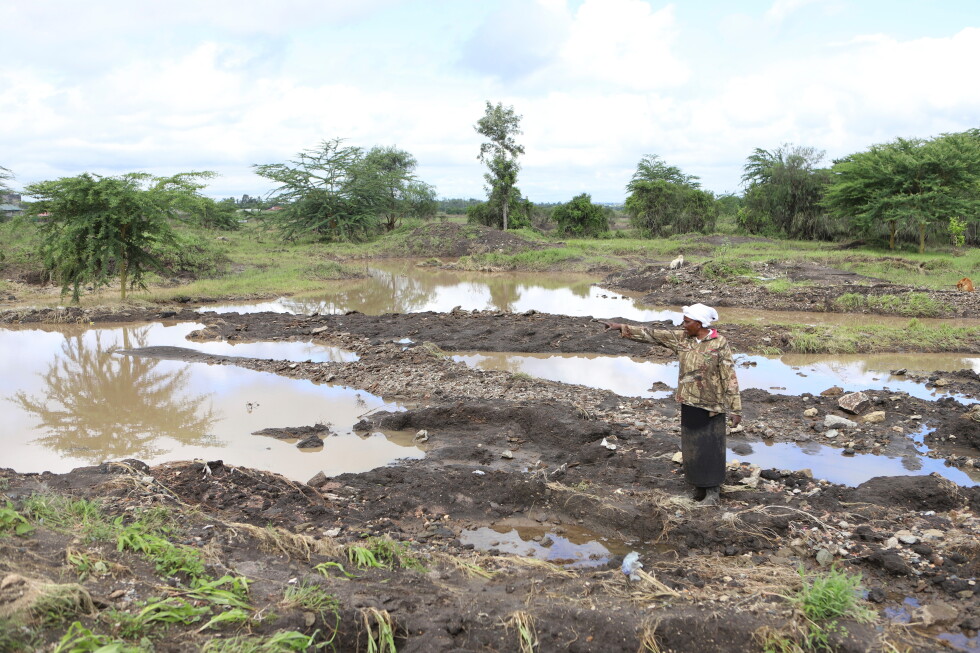
    Extreme climate events including catastrophic flooding, prolonged multi-year droughts, and record-breaking heat are increasingly disrupting agricultural production across every inhabited continent, and have become a regular reality for many rural communities. Instead of relying primarily on emergency disaster response after crises hit, Lario argued that governments must prioritize investing in climate resilience and adaptive infrastructure before disasters occur.

    “This is the new normal for global agriculture,” Lario said. “We are seeing catastrophic floods in regions that never faced them before, and droughts that persist for four or five years straight, wiping out harvest after harvest.”

    To address this gap, IFAD is scaling up investments in climate adaptation programs designed to help vulnerable rural communities withstand floods, droughts, and extreme heat. Lario stressed that this support is desperately needed for the millions of smallholder farmers who produce the majority of the world’s food supply, yet have the least resources to adapt to shifting conditions.

    The report also marks a significant milestone in global food security trends: for the first time in recorded history, Africa has surpassed Asia as the region home to the largest number of food-insecure people. By 2030, the report projects that nearly 60% of the world’s chronically hungry population will reside on the African continent, making it the clear epicenter of the global hunger crisis.

    Lario attributed this shift to a combination of rapid population growth across the continent and slower economic development compared to many parts of Asia, and called for dramatically increased international investment in African agriculture, infrastructure, and local food systems. Currently, African nations import nearly $100 billion in food annually, a statistic Lario said underscores the urgent need to strengthen local production, post-harvest storage, distribution networks, and regional food trade across the continent.

    Without urgent action to build more resilient food systems, Lario warned, overlapping threats from conflict, energy market volatility, and climate extremes will derail what limited progress the world has made toward ending global hunger.


  • Oleksandr Syrsky, Ukraine’s under-fire commander-in-chief

    Oleksandr Syrsky, Ukraine’s under-fire commander-in-chief

    As Ukraine faces a shifting dynamic in its 3-year full-scale war with Russia, its top military commander Oleksandr Syrsky finds himself on the brink of dismissal, with multiple Ukrainian and international outlets reporting that President Volodymyr Zelensky is actively considering his removal. The 60-year-old Soviet-trained officer has long been a polarizing figure in Kyiv’s military and political circles, celebrated for landmark early victories but mired in conflict with reformers pushing to modernize Ukraine’s armed forces for an era of drone-driven high-tech warfare.

    Syrsky’s military career in Ukraine stretches back to the collapse of the Soviet Union. Born in what was then Soviet Russia and educated at a Moscow Red Army academy, he relocated to Soviet Ukraine in the 1980s, stayed on after the USSR dissolved to attend Kyiv’s National Defence University, and built a decades-long career in the newly formed Ukrainian military. He rose to national prominence immediately following Russia’s full-scale invasion in February 2022, when he led the successful defense of Kyiv that halted Russian forces’ advance on the capital, a turning point that prevented the fall of the Ukrainian government. He followed that success with a swift, devastating 2022 counteroffensive that reclaimed large swathes of the northeastern Kharkiv region, and earlier this year masterminded Ukraine’s brazen incursion into Russia’s Kursk region—the first sustained foreign territorial incursion into Russia since World War II.

    Despite these clear military wins, Syrsky has never been able to escape criticism rooted in his Soviet military background and approach to command. Detractors label him a Soviet-style commander who prioritizes territorial gains over troop casualty counts, earning him the derogatory nickname “the butcher.” His management style has also drawn sharp rebuke from military reformers, who argue he stifles initiative among lower-ranking officers and only promotes personally loyal commanders, blocking efforts to update Ukraine’s outdated military systems.

    The most high-profile attack on Syrsky came from recently ousted reformist Defense Minister Mykhailo Fedorov, who was removed by Zelensky in a move that triggered the largest war-related public protests in Ukraine since 2022. Protesters in Kyiv chanted “Shame on Syrsky” and joined calls for his dismissal, as growing public fatigue with the war and anger over military corruption scandals has turned public opinion against the commander. In blistering comments after his removal, Fedorov accused Syrsky of systematically blocking his modernization reforms across key areas including military procurement, equipment standardization, and mobilization policy, adding that Syrsky refused to address these challenges openly.

    Syrsky has forcefully rejected these accusations, urging that internal disputes be resolved privately rather than through public spectacle. “A war is won by real work, not by the public drama surrounding it,” he stated in a rare public comment released earlier this week. He has also repeatedly emphasized that he holds no political ambitions, noting that his sole focus is on the 24/7 work of leading Ukraine’s military.

    That lack of political ambition is precisely what made Syrsky an appealing choice for Zelensky when he replaced the wildly popular former commander-in-chief Valery Zaluzhny last year. Analysts note that Zelensky has long been wary of military figures with broad public support and independent political cachet, a risk Syrsky does not pose. “He is not a politician. Just look at him. He speaks Ukrainian poorly and is not a public communicator,” explained Anatolii Oktysiuk, an analyst with the Kyiv-based KI Research Group. “He always adapts to what Zelensky wants.”

    Syrsky’s Russian roots have also become a frequent target of online criticism and mockery, even though he has been cut off from his remaining family in Russia for years. When he led the Kursk incursion earlier this year, a viral internet meme joked that the attack was motivated by Syrsky wanting to “go home,” a jab at his birthplace that underscored lingering public suspicion about his background.

    Even his sharpest critics, including Fedorov, acknowledge that Syrsky’s contributions to Ukraine’s war effort cannot be discounted. The question now facing Zelensky is what comes next if Syrsky is removed, a decision that is being closely watched by military and political observers both in Ukraine and in Moscow. Political analyst Volodymyr Fesenko argues that Zelensky is ultimately seeking a more palatable version of Syrsky: a commander who remains loyal, lacks independent political ambitions, but is more flexible on reform, more adept at public communication, and more popular with the Ukrainian public. “Someone more flexible, more communicative, and more appealing to society — but such a person does not seem to exist,” Fesenko noted.

    Syrsky’s potential dismissal comes at a moment that analysts describe as Ukraine’s strongest positional position on the frontlines in months, making the timing of the potential leadership shake-up all the more notable for observers tracking the war’s trajectory.

  • Lebanon’s Aoun to meet Trump as pressure builds to disarm Hezbollah

    Lebanon’s Aoun to meet Trump as pressure builds to disarm Hezbollah

    A high-stakes diplomatic gathering is set to unfold in Washington this Tuesday, as Lebanese President Joseph Aoun sits down with U.S. President Donald Trump against a backdrop of fragile ceasefire efforts, growing international pressure, and deep domestic division over the future of the Iran-backed militant group Hezbollah.

    The meeting comes as Lebanon’s national military launched its first deployment to a designated “pilot zone” in southern Lebanon on Tuesday, a core provision of a newly struck ceasefire agreement brokered with Israel. One day ahead of the summit, Secretary of State Marco Rubio commended Lebanon’s government for its “determined effort to reclaim Lebanon’s sovereignty, disarm Hezbollah and dismantle its terrorist infrastructure” following a meeting with Aoun, framing the disarmament push as critical to lasting regional peace. “As long as that problem exists, Lebanon will never truly get peace,” Rubio told reporters.

    For Israel, full disarmament of Hezbollah is a non-negotiable precondition for a full withdrawal of Israeli forces from southern Lebanon, which Tel Aviv invaded after Hezbollah launched cross-border rocket attacks that dragged Lebanon into a regional conflict in March 2025. The pilot zones, where the Lebanese army is now deploying, sit just outside the territory seized by Israeli forces in that invasion, and are designed as a test case to prove Beirut can enforce the terms of the deal. On Tuesday, Lebanon confirmed its forces had entered the village of Zawtar al-Garhbiya, one of three initial pilot zones, while the Israeli military announced it would adjust its force posture in the area to align with the agreement. The U.S. has repeatedly backed Israel’s demand that Hezbollah disarm before any full Israeli withdrawal.

    Aoun, who was elected president in early 2025 with broad Western backing after a career as an army commander, has made disarming Hezbollah a central promise of his administration – a shift that marks a major break from decades of Lebanese political compromise with the militant group. Aoun has openly criticized Hezbollah for dragging the country into the latest conflict, which has killed more than 4,300 Lebanese people according to Lebanese official counts, and is hoping his meeting with Trump will bring additional U.S. pressure to bear on Israel to complete its withdrawal from all of southern Lebanon once the initial disarmament requirements are met. Aoun is also expected to use the summit to request increased military and economic aid for Lebanon’s cash-strapped national army.

    But the plan faces steep obstacles. Hezbollah has repeatedly and flatly rejected the deal, refusing to lay down its weapons, which it says are necessary to defend Lebanon against Israeli aggression. The group has fought multiple wars with Israel since its founding, and remains a powerful political and military force within Lebanon. Even as violence has dropped dramatically since the ceasefire was signed, a new escalation between the U.S. and Iran – which has long backed Hezbollah both politically and militarily – has upended regional stability. Iran, which required Lebanon’s inclusion in its initial April ceasefire with Washington, resumed open military conflict with the U.S. on July 7, casting new uncertainty over the future of the ceasefire arrangement.

    Analysts warn the agreement itself puts Lebanon in a precarious position. Maha Yahya, director of the Carnegie Middle East Center, noted that while the summit demonstrates ongoing U.S. commitment to Lebanon, it also raises serious questions about what additional concessions Beirut may be forced to make. Yahya called the existing ceasefire deal “deeply disadvantageous” for Lebanon, a country already grappling with years of economic collapse and widespread infrastructure damage from months of conflict. Robert Satloff, executive director at the Washington Institute, added that Trump will arrive at the meeting with his own set of demands: beyond proof of Aoun’s commitment to disarmament, Satloff said the U.S. president will seek guarantees that Aoun will remove any army officers found to have ties to Hezbollah, and that Beirut will work toward a formal peace deal with Israel – a step no Lebanese government has ever taken.

    This meeting marks the first time a Lebanese president has been invited to Washington since 2009, a sign of the shifting geopolitical dynamics in the Middle East following the 2025 election of Aoun and the outbreak of the latest conflict between Israel and Hezbollah.

  • Rescue crews in Afghanistan search for missing, dead in rubble left by flash flooding

    Rescue crews in Afghanistan search for missing, dead in rubble left by flash flooding

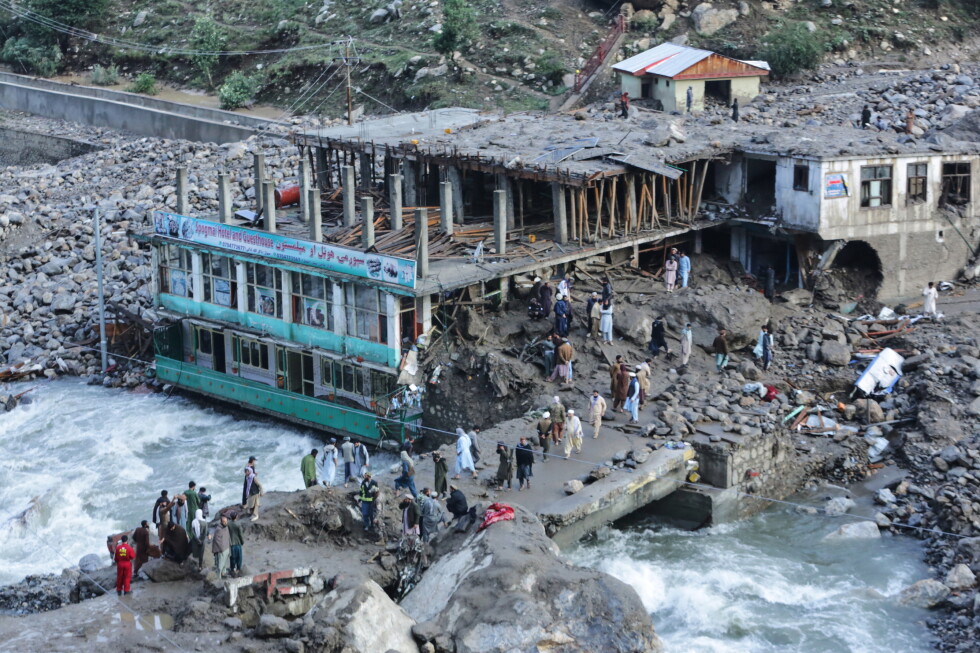
    Rescue teams in Afghanistan have launched urgent search operations on Tuesday, combing through the flattened remains of leveled homes following catastrophic flash floods that have claimed at least 22 lives and left more than 100 people unaccounted for, according to national disaster officials.

    The sudden flooding swept through Afghanistan’s remote eastern Nuristan Province on Monday, triggering widespread building collapses that left 80 others injured with varying degrees of severity, confirmed the Afghanistan National Disaster Management Authority in an official update Tuesday. Parun, the provincial capital of Nuristan, is counted among the hard-hit communities damaged by the rushing floodwaters, local authorities added.

    Even as rescue efforts get underway, new warnings of impending extreme weather are raising alarm across large swathes of the country. The meteorological division under Afghanistan’s Ministry of Transport and Civil Aviation issued a forecast Monday evening calling for severe conditions including heavy downpours, thunderstorms, strong wind carrying dust and sand, and additional flash floods across 10 of the nation’s 34 provinces. The department has urged local residents to steer clear of riverbanks and other low-lying, high-risk zones prone to flood surges.

    This latest disaster is part of a growing pattern of deadly extreme weather events that plague Afghanistan, a nation ranked among the most climate-vulnerable countries in the world. Seasonal heavy rainfall and melting snow regularly trigger sudden flash floods that kill dozens and sometimes hundreds of Afghans annually. In 2024 alone, spring flash floods claimed more than 300 lives nationwide, and just months earlier earlier this year, widespread flooding and landslides across multiple regions killed at least 110 people.

    Experts and officials note that a perfect storm of long-running crises has dramatically worsened the death toll and damage from these natural events. Decades of continuous armed conflict have gutted public services and emergency response capacity, while crumbling infrastructure, a deeply struggling economy, widespread deforestation that erodes natural flood barriers, and the accelerating impacts of global climate change have all combined to amplify disaster risk. This vulnerability is especially acute in remote rural regions like Nuristan, where the majority of residential structures are built from mud and provide minimal protection against fast-moving floodwaters or extreme precipitation.

  • Japan raises safety concern over Chinese destroyer’s live-fire drills

    Japan raises safety concern over Chinese destroyer’s live-fire drills

    TOKYO — Tensions have flared in the Pacific Ocean after Japanese officials confirmed Tuesday that Tokyo has formally conveyed diplomatic concern to Beijing over a Sunday live-fire exercise conducted by a Chinese navy guided-missile destroyer, held within a disputed maritime zone off a remote Japanese-controlled island.

    According to Japan’s Joint Staff, the drill involved a Chinese Luyang III-class guided-missile destroyer, carried out approximately 110 miles southwest of Okinotori, Japan’s southernmost island. The exercise took place within what Japan designates as its Exclusive Economic Zone (EEZ) — a maritime area extending beyond national territorial waters where the country holds exclusive rights to natural resources. Hours before the live-fire activity, Japanese maritime forces detected the Chinese destroyer operating alongside two additional Chinese warships and one Russian frigate as part of a continuing joint Sino-Russian patrol in the region.

    Japan’s Chief Cabinet Secretary Minoru Kihara told reporters Tuesday that the Japanese government views the drills as a potential hazard to civilian and military maritime traffic passing through the area. Kihara added that Chinese vessels only issued a safety notification to nearby ships immediately before the live-fire exercise began, leaving little time for vessels to reroute or adjust their courses.

    “We will continue to watch China-Russia operations around Japan with concern, while doing utmost for the warning and surveillance of the Japanese airspace and territorial waters,” Kihara said in his official press briefing.

    The incident comes amid a steady rise in Japanese anxiety over expanding Sino-Russian military cooperation in the Indo-Pacific. Japanese Defense Minister Shinjiro Koizumi highlighted growing risks during a speech delivered in London on Monday, pointing to Sunday’s drill as clear evidence of deepening military ties between Beijing and Moscow. Koizumi also referenced other recent combined activities, including a Chinese submarine-launched ballistic missile test conducted earlier this month and no fewer than 10 joint bomber flights by Chinese and Russian air forces routed around Japanese territory over recent months.

    Tokyo’s concern has been mounting for years over China’s expanding military footprint in the Pacific. Last year marked a notable turning point, when Japanese defense forces detected two Chinese aircraft carriers conducting near-simultaneous operations off Iwo Jima, another southern Japanese island — the first time such large-scale deployments had been recorded so far from China’s mainland, and a move that reinforced Tokyo’s fears of Beijing’s growing strategic reach beyond its claimed borders.

    A key layer of dispute surrounds the geography of Okinotori itself. China does not recognize Japan’s EEZ claim around the outcrop, arguing that Okinotori qualifies as an uninhabitable atoll, not a full island, and therefore cannot support a claimed extended economic maritime zone under international law.

    Contradictions also remain over the location and purpose of the exercise. Last week, China announced it had concluded formal joint naval exercises with Russia on July 13, with participating vessels moving on to conduct joint patrols across the Pacific. China’s official Xinhua News Agency has stated that recent Chinese live-fire drills with Russia were held off the eastern Chinese port city of Qingdao, hundreds of miles away from the Okinotori area. Beijing has not yet issued an official response to Japan’s specific complaint about Sunday’s activity off the island.

    In comments posted online late last week ahead of the latest incident, Chinese Defense Ministry spokesperson Jiang Bin defended Sino-Russian military cooperation as a legitimate contribution to regional and global security. “China-Russia military cooperation plays an important role in safeguarding the two nations’ sovereignty and security and upholding international and regional peace and stability,” Jiang said. He added that Beijing hopes other countries will “view China-Russia military cooperation objectively and rationally, and stop making groundless speculation and cease smearing and hyping.”

    Japanese defense officials confirmed that while the live-fire drill took place in the EEZ Japan claims, it did not violate existing international law. This marks the first time Tokyo has publicly confirmed detecting Chinese live-fire drills within its claimed EEZ. Prior to the off-island exercise, the four-vessel Sino-Russian combined fleet sailed south through the water gap between Japan’s main islands of Okinawa and Miyako, according to the Japanese Joint Staff.

  • Ski enthusiasts flock to sub-Saharan Africa and a snowy mountain resort in Lesotho

    Ski enthusiasts flock to sub-Saharan Africa and a snowy mountain resort in Lesotho

    Tucked deep in the high peaks of southern Africa, a tiny landlocked kingdom entirely surrounded by South Africa has quietly emerged as a surprising winter destination, drawing thousands of ski enthusiasts each year to slopes most travelers would never expect to find on the African continent.

    Lesotho, a nation of 2.3 million people that gained independence from British rule 58 years ago and celebrated the 200th anniversary of the founding of the Basotho nation in 2024, sits entirely above 1,000 meters in elevation. Its rugged mountain terrain pushes highland temperatures down to as low as minus 8 degrees Celsius between June and August, the Southern Hemisphere’s winter months, earning it the title of the coldest country on the African continent. It was this unique climate that laid the groundwork for Afriski Mountain Resort, the only fully operational ski destination not just in Lesotho, but across all of sub-Saharan Africa.

    Nestled 3,200 meters above sea level in northern Lesotho’s Maluti Mountains, Afriski opened 25 years ago, just an hour’s drive from the nearest major town of Butha-Buthe. The resort’s 17 hectares of groomed slopes — roughly equal to 24 standard soccer pitches — cater to everyone from first-time skiers to seasoned winter sports lovers. While natural snowfall can be inconsistent due to shifting weather patterns, the resort’s fleet of artificial snow machines guarantees reliable snow cover for the full winter season, keeping operations running smoothly year after year.

    For a country classified by the World Bank as one of the poorest in the world, this niche ski tourism has become an important economic driver. Tourism overall contributes roughly 7% to Lesotho’s $2.6 billion annual GDP, and Afriski alone brings in critical revenue while supporting local employment. According to CEO Theo Ferreira, the resort employs 227 full-time and seasonal workers, nearly all of them Basotho nationals, with only a small number of South African ski instructors joining the team. Approximately 70% of the resort’s visitors cross the border from South Africa, with the remainder coming from Lesotho itself or other southern African countries. In peak season, the resort can accommodate 420 overnight guests, with nearby towns of Butha-Buthe and Mohlokong offering additional lodging to meet demand. The resort saw a record 1,600 total visitors in a single day in 2025, and this year’s busiest day has already hit 1,400 guests, showing consistent growth in popularity.

    What makes a ski trip to Lesotho so remarkable for most visitors is how it upends common perceptions of the African continent. Most travelers associate southern Africa with savanna wildlife and sun-soaked Atlantic and Indian Ocean coastlines, not snow-capped slopes and winter sports. For many first-timers, Afriski is where they get their first chance to learn to ski, guided by experienced instructors through repeated tumbles until they nail their first full downhill run.

    “An amazing slope to learn on,” said Janko Smits, a student from Cape Town. “At the start it was a little discouraging because you fall, and you fall hard. But the people here, they gave me one lesson and after an hour, honestly, I felt confident.”

    Thato Ramaphoko, a first-time visitor from Pretoria, echoed that sense of surprise. “When you think of the African continent, you don’t think of snow. You think about … the sun and the Sahara (Desert),” he said. “But that you can actually go to all that and also come here and it also snows at the same time, it is just mind-blowing, so I just had to see it for myself.”

    Beyond skiing, the resort offers visitors a full taste of local Basotho culture: guests can sample traditional sausage rolls and Maluti Lager, Lesotho’s iconic local brew, and take home handcrafted souvenirs including vibrant patterned Basotho blankets, a cultural staple that has even been creatively integrated into ski jackets and other gear for sale at the resort.

    Access to the resort is straightforward: most travelers drive in from neighboring South Africa, while international visitors can fly into Moshoeshoe I International Airport in Lesotho’s capital Maseru before making the overland trip to the mountains. It is worth noting that the little-known kingdom made headlines in 2025 when former U.S. President Donald Trump joked that it was a country “nobody has ever heard of” — a quip that ignores its growing reputation as a one-of-a-kind winter sports destination that is putting Lesotho on the global tourism map.

  • Video appears to show confrontation between Chinese and Philippine navy vessels

    Video appears to show confrontation between Chinese and Philippine navy vessels

    A fresh maritime dispute has emerged in the disputed waters of the South China Sea following allegations from the Armed Forces of the Philippines that a confrontation occurred between Chinese and Philippine naval assets, including an incident where a Chinese Coast Guard personnel reportedly struck an individual aboard a Philippine Navy vessel with a wooden baton.

    The incident, which was captured on video that has circulated in regional security circles, marks another escalation in ongoing tensions between the two nations over competing maritime claims in the strategically vital waterway. Philippine defense officials confirmed the authenticity of the footage to local media outlets, noting that the confrontation unfolded during a routine Philippine naval mission near a contested feature that both Beijing and Manila claim as sovereign territory.

    As of press time, Chinese authorities have not issued an immediate official response to the specific allegations put forward by the Philippine Armed Forces. Regional geopolitical analysts have warned that such close encounters between the two countries’ maritime security forces carry significant risk of miscalculation, which could further destabilize already tense relations in the region. This confrontation joins a growing list of minor skirmishes and standoffs that have occurred in the South China Sea in recent years, as claimant states continue to assert their territorial and economic rights over the resource-rich waters.

  • Houthis announce maritime embargo of Saudi Arabia

    Houthis announce maritime embargo of Saudi Arabia

    On Monday, Yemen’s Houthi movement declared a full maritime embargo against Saudi Arabia, a move that threatens to send new shockwaves through already strained global energy markets, against the backdrop of escalating U.S.-Iran tensions.

    The announcement came via a video address from Houthi spokesperson Yahya Saree, who framed the embargo as direct retaliation for a recent airstrike on Sanaa Airport that the group attributes to Saudi-led forces.

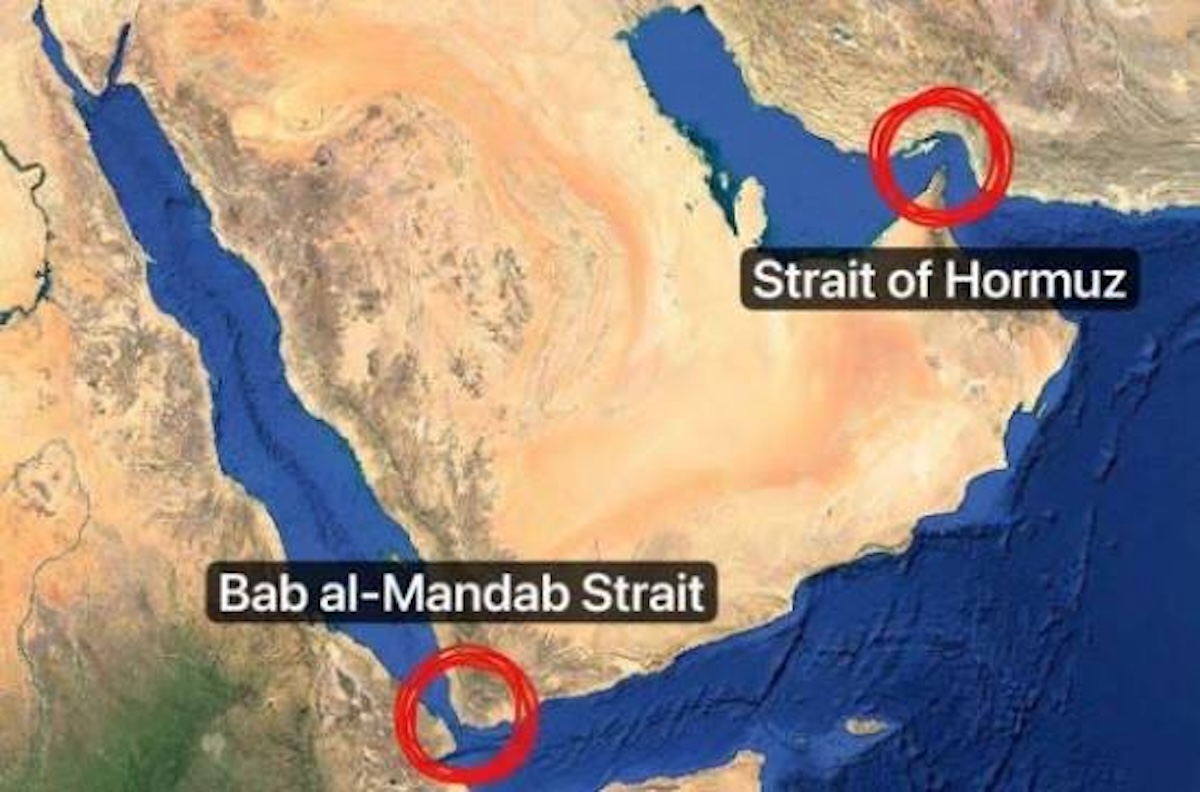
    This new threat to energy security comes amid a shifting global oil transportation landscape. Earlier this year, following heightened U.S. pressure on Iran, Iran restricted transit through the Strait of Hormuz — the world’s most important chokepoint for crude oil shipments. In the wake of that disruption, global oil markets have become far more reliant on shipping routes through the Strait of Bab al-Mandeb, the strategic waterway that sits off Yemen’s coast and connects the Red Sea to the Gulf of Aden.

    According to Bloomberg energy and commodities commentator Javier Blas, Saudi Arabia currently moves approximately 4.5 million barrels of crude oil per day through Red Sea shipping channels, the vast majority of which pass through the Bab al-Mandeb Strait. That means a Houthi-enforced embargo could take millions of barrels of daily oil shipments off the global market.

    Compounding this risk is the current state of U.S. crude reserves, which are already at historic lows. New data from the U.S. Energy Information Administration shows that U.S. crude inventories dropped by 1.7 million barrels in the week ending July 10, pushing stockpiles to their lowest level since 1983.

    Political scientists and energy experts have sounded the alarm over the potential economic fallout of this new disruption. University of Chicago political scientist Robert Pape warned that closing this additional critical shipping lane could prove catastrophic for the already fragile global economy. “The Titanic is now hitting the iceberg, and there are not enough lifeboats for the world economy, Pape added.

    University of Illinois international relations professor Nicholas Grossman pointed out that the Houthi embargo is just the latest in a cascading series of disruptions hitting global energy supply chains. “Iran blocking Strait of Hormuz. US blocking Iranian shipping. Iran bombing energy facilities in Gulf Arab states. US bombing energy facilities in Iran. Ukraine bombing energy facilities in Russia. Houthis disrupting Red Sea shipping. Oil and gas reserves running dry. It’s a lot, and adding up, Grossman noted.

    Juliette Kayyem, a senior lecturer at Harvard University’s Kennedy School and a former official in the Obama administration, argued that the very real threat of a widespread shutdown of global energy supplies should force U.S. policymakers to re-evaluate the utility of military force in the Middle East. “A bunch of military and conventional wisdom analysts assured the American public that our air dominance was unparalleled, Kayyem wrote. “The ‘never right but always certain’ crowd didn’t realize the war was going to be fought on water.”

  • Desperate Rohingya risk deadly voyages as trafficking surges

    Desperate Rohingya risk deadly voyages as trafficking surges

    For Rahela Begum, survival has become a chain of unthinkable hardships. After fleeing ethnic violence in Myanmar’s Rakhine State and spending eight years confined to the overcrowded Cox’s Bazar refugee camp in Bangladesh, the 25-year-old Rohingya refugee gambled everything on a dangerous sea crossing to Malaysia — and barely lived to tell the tale. In April, she joined 279 other refugees packed onto an overloaded wooden trawler, setting out from the southern Bangladeshi coastal town of Teknaf. Four days into the voyage, the overburdened vessel sank in the Andaman Sea, leaving Begum adrift with nothing but a discarded wooden plank to cling to for 48 hours.

    “I was floating like a dead body, and after great difficulty managed to raise my head slightly,” Begum recalled, describing her ordeal before a passing rescue vessel spotted her and pulled her from the water. She is one of the lucky ones: new data from the United Nations High Commissioner for Refugees (UNHCR) confirms 2025 was the deadliest year on record for Rohingya attempting these perilous voyages, with nearly 900 refugees counted dead or missing at sea. So far in 2026, the death toll has continued to climb at an alarming rate.

    More than one million Rohingya displaced from Myanmar currently reside in Cox’s Bazar, the world’s largest refugee settlement, where conditions have deteriorated sharply in recent years. Bangladesh’s national restrictions bar most refugees from leaving the camp, working formal jobs, or accessing stable economic opportunity, leaving the displaced population trapped in what many describe as an “open-air prison” with insufficient food, shelter, and basic services. With daily rations amounting to just 16 taka ($0.13) per person and most families only able to afford two meals a day, desperation has driven a surge in refugees turning to human trafficking networks to reach neighboring Southeast Asian countries including Malaysia, Indonesia, and Thailand.

    Trafficking has grown into a highly lucrative criminal enterprise for transnational networks that span Bangladesh, Myanmar, Thailand, and Malaysia, with recruiters operating openly within the Cox’s Bazar camps and along the border. A trafficker who spoke to AFP on condition of anonymity explained the operation: refugees are first gathered in Teknaf, packed onto small local trawlers, then transferred to larger sea-going vessels once they reach international waters. Recruiters can earn up to 250,000 taka ($2,000) per person they smuggle, and many do not view their exploitation of desperate refugees as a crime, instead framing it as fulfilling a demand for escape.

    UN data shows more than 6,500 Rohingya attempted sea crossings in 2025, meaning roughly one in every seven refugees who set out died or went missing at sea. The pace of departures has only accelerated in 2026: between January and May, UNHCR recorded 2,300 attempted departures from Cox’s Bazar, more than double the 1,180 recorded during the same period in 2025.

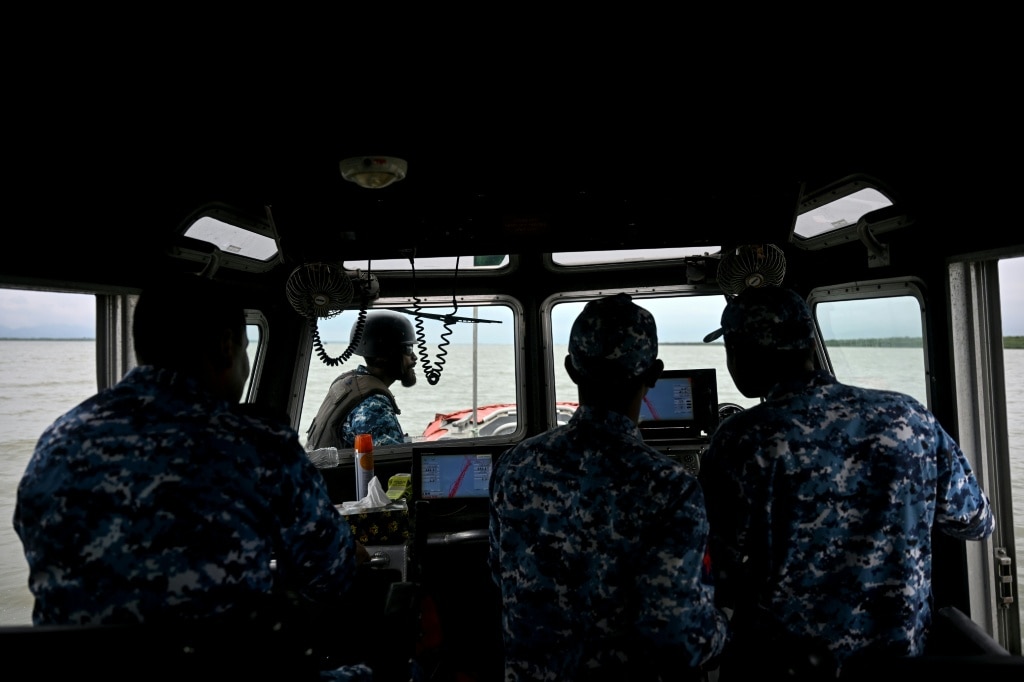
    Bangladeshi authorities have declared a “maximum alert” to curb the trafficking surge, but resources and capacity gaps have left them struggling to dismantle powerful transnational criminal networks. Coast Guard Lieutenant Mohammad Rawnak Rahman, who patrols the Naf River border between Bangladesh and Myanmar, says his team has already rescued 618 trafficking victims so far this year, but the crisis continues to outpace their response. Across the border in Rakhine State, ongoing clashes between the ruling Myanmar junta and Arakan Army rebels have added more instability, pushing additional Rohingya to flee toward Bangladesh’s already overstretched camps.

    At the Cox’s Bazar courthouse, lead prosecutor Tawhidul Anwar described being overwhelmed by the scale of the crisis, saying his office is currently handling roughly 500 active trafficking cases. “Investigators aren’t very effective, it’s hard to obtain evidence. The traffickers are very powerful,” Anwar explained, noting that even traffickers arrested following high-profile shipwrecks like Begum’s April voyage have been released on bail, despite facing potential life sentences for their crimes. Local police superintendent ANM Sajedur Rahman echoed that frustration, adding that authorities lack the funding and personnel to break up the sprawling trafficking networks.

    Sayed Ullah, president of the United Rohingya Council, said the desperation driving refugees to risk their lives at sea should come as no surprise to the international community. “Each person has to survive on two meals a day, and 16 taka ($0.13),” he said. “No one should be surprised that people try to leave, hoping to find something better.” Bangladeshi officials have long argued that easing movement and work restrictions for refugees is unfeasible, as the country’s own limited resources are already stretched thin by hosting more than a million displaced people.

    For the Rohingya, community leaders say the only long-term solution is a lasting peace agreement in Myanmar that would allow refugees to return safely to their homes. But that outcome remains distant: the civil conflict ignited by the 2021 military coup in Myanmar continues to rage across the country, with US-based conflict monitoring NGO Acled recording more than 100,000 total deaths from fighting to date.

    Back at her makeshift bamboo-and-tarpaulin shelter in Cox’s Bazar, Begum says her dream of freedom sank along with the boat that was supposed to carry her to a better life. “God has granted me peace nowhere in this world,” she said. “Not in my country, not here.”

  • BBC reveals official report into deadly military jet crash at school

    BBC reveals official report into deadly military jet crash at school

    In a significant development that brings new transparency to a tragic incident that shook Bangladesh, the British Broadcasting Corporation (BBC) has publicly disclosed the long-awaited conclusions of an official government investigation into a devastating 2022 military training aircraft crash. The accident, which occurred when a Bangladesh Air Force trainer plummeted into a crowded school building, resulted in widespread loss of life and left dozens of injured students and educators in its wake.

    For months following the crash, public calls for full disclosure of the investigation’s findings grew, with families of victims and advocacy groups pushing for answers about what caused the fatal incident and whether any preventable errors contributed to the disaster. The BBC’s decision to release the official report marks a key step in meeting that demand for public accountability, making the full investigative record accessible to both domestic audiences in Bangladesh and international observers.

    The crash triggered widespread mourning across Bangladesh and sparked urgent conversations about aviation safety protocols for military training flights operating near populated civilian areas, particularly educational institutions that host hundreds of children and staff on a daily basis. With the release of the official report, attention now turns to potential policy changes that could reduce the risk of similar tragedies occurring in the future.