分类: world

  • Canadian wildfires rage as Trump warns Carney again over ‘poisoning’ US air

    Canadian wildfires rage as Trump warns Carney again over ‘poisoning’ US air

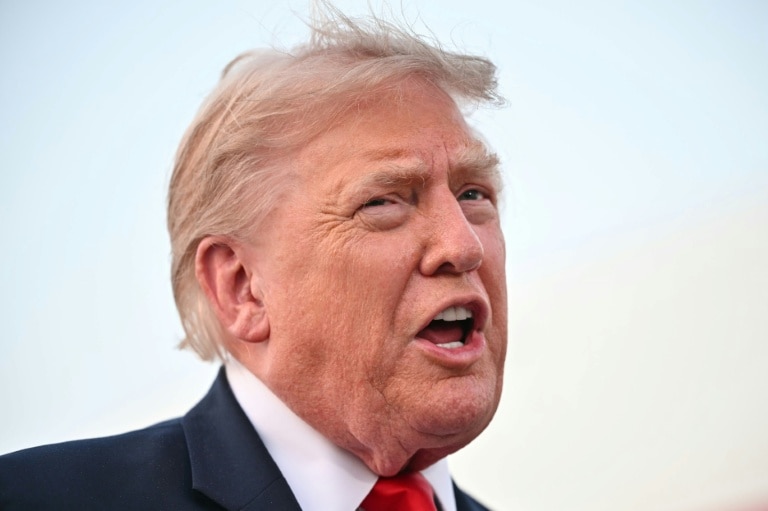
    A widespread Canadian wildfire crisis has spilled beyond national borders, igniting a sharp diplomatic rift between longtime North American neighbors Canada and the United States after former President Donald Trump demanded Canada compensate the U.S. for smoke-related damages and threatened new import tariffs. The confrontation unfolded publicly Sunday, when Trump raised the issue directly to Canadian Prime Minister Mark Carney as the two attended the World Cup Final in Qatar.

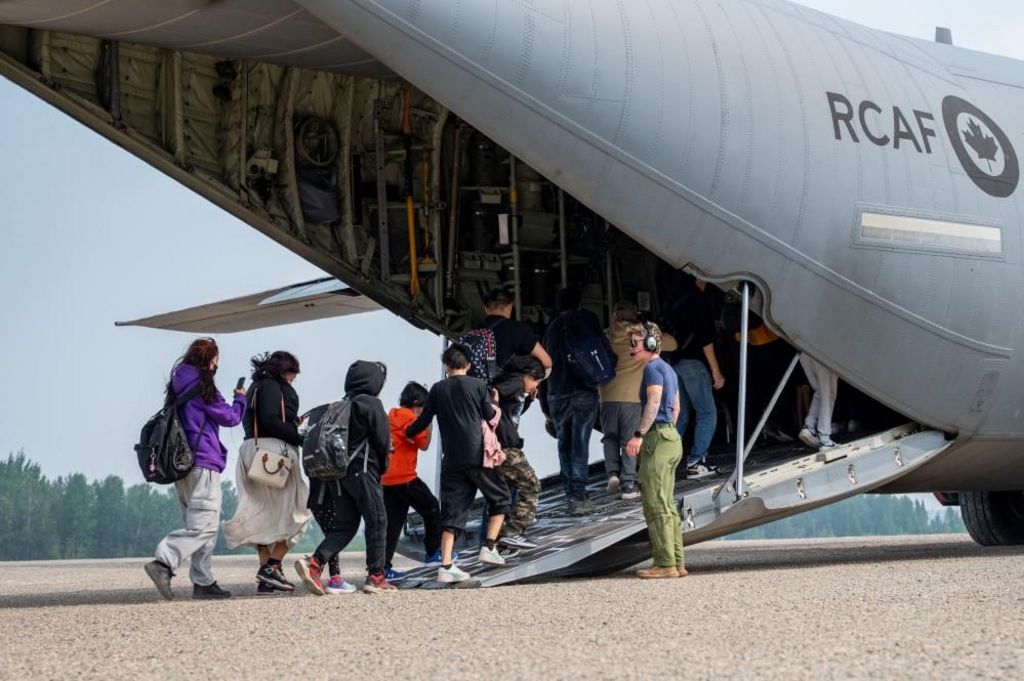
    Right now, more than 900 active wildfires are burning across vast swathes of Canada, having already scorched roughly 28,000 square kilometers of forest and land. The fast-moving blazes have forced thousands of residents to flee their homes, leveled entire communities, and sent thick plumes of toxic smoke drifting south across the U.S. border, blanketing major East Coast cities including Washington D.C. and New York City in hazardous air.

    Trump’s latest remarks came one week after he first raised the prospect of tariffs, repeating the threat on social media Friday as smoke obscured skies across a large portion of the eastern U.S. “If we can help them, we’ll help them. But maybe they should pay some damages or something,” Trump told Carney during Sunday’s event.

    Ontario Premier Doug Ford pushed back forcefully on the comments during a Monday press briefing, calling on Trump to extend emergency support to Canada, a close U.S. ally, instead of leveraging the crisis to push for trade penalties. “Why don’t you start helping us?” Ford questioned, pushing back against what he called “a bunch of rubbish” from the U.S. leader. Ford reminded Trump that Canada has repeatedly stepped in to support the U.S. during its own major natural disasters, including the 2024 Hurricane Helene and devastating California wildfires in recent years. “Maybe one day you’re going to need our help,” Ford warned.

    The wildfire crisis has already inflicted severe damage across Ontario, where 1,800 residents have been evacuated from high-risk areas. Over the weekend, the Whitewater Lake First Nation community, a culturally significant gathering site for the Indigenous group centered around seasonal hunting, fishing and recreational camps, was completely destroyed by the blaze. “It was full of beaches, sand beaches, good fishing, good hunting – the wildlife was beautiful. We had eagles that were always there,” Whitewater Lake First Nation Chief Pauline Drake told CBC News Sunday. “I don’t know how the wildlife is now. That’s very concerning, because they were part of our upbringing there.”

    During a visit to hard-hit Thunder Bay, Ontario over the weekend, Ford pledged the provincial government would commit unlimited resources to protect residents and respond to the crisis: “We will do and spend whatever it takes to protect people from these devastating wildfires.”

    The crisis is not limited to Ontario. In western Canada’s British Columbia province, the entire city of Kimberley has been placed under a mandatory evacuation alert, putting roughly 9,000 residents on notice to prepare to leave their homes at a moment’s notice.

    Prime Minister Carney released an official statement Sunday noting that his government had already mobilized a massive emergency response to the blazes, deploying more than 5,000 professional firefighters, nearly 300 waterbombers, helicopters and evacuation aircraft to contain and suppress the fires. “It’s an enormous, complex effort that ultimately depends on dedicated and brave individuals who work relentlessly to keep Canadians safe,” Carney said.

    The cross-border smoke impacts and Trump’s aggressive rhetoric have ratcheted up existing trade and diplomatic tensions between the two nations, turning a domestic natural disaster into a pressing international issue.
  • Notorious drug cartel leader Ismael Zambada sentenced to life in US prison

    Notorious drug cartel leader Ismael Zambada sentenced to life in US prison

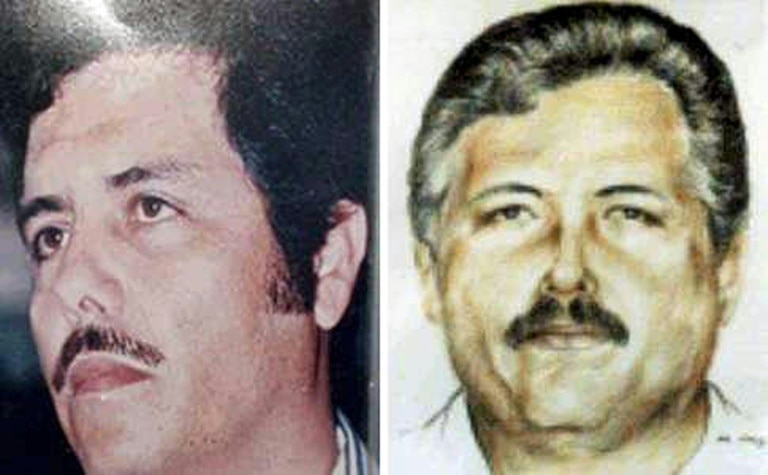
    Nearly two years after a complex cross-border sting operation pulled one of the world’s most infamous drug kingpins into US custody, a federal judge has handed down a permanent life sentence to Ismael “El Mayo” Zambada, co-founder of Mexico’s powerful Sinaloa Cartel. The 76-year-old defendant, who built one of the most expansive drug trafficking networks in modern history alongside the equally notorious Joaquin “El Chapo” Guzmán in the late 1980s, learned his fate during a sentencing hearing held Monday at Brooklyn federal court, overseen by US District Judge Brian Cogan.

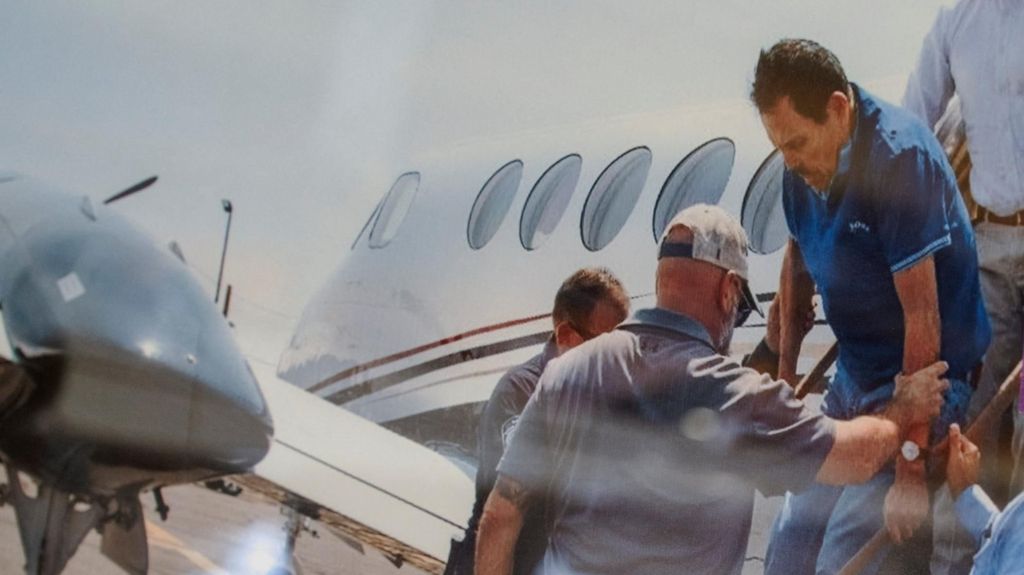
    Zambada’s arrest, which unfolded in July 2024, was a carefully engineered operation led by Joaquin Guzmán López, El Chapo’s own son, who convinced the cartel leader they were traveling to northern Mexico to inspect secret airstrips for drug shipments. Instead, their aircraft diverted and landed in Texas, where US law enforcement immediately took Zambada into custody. Guzmán López was also arrested during the same operation, and has since entered a guilty plea on federal drug trafficking charges, though his sentencing has not yet been scheduled.

    Following his arrest, Zambada struck a plea deal with federal prosecutors in 2025, confessing to charges of drug smuggling and criminal conspiracy in exchange for the US government removing the possibility of a death penalty. Under the terms of his guilty plea, a mandatory life sentence was already required, a detail confirmed by Reuters reporting on the hearing. Through his plea agreement, Zambada formally acknowledged his central role in building the Sinaloa Cartel, a criminal enterprise that has flooded the United States with hundreds of tons of cocaine and other illicit narcotics for more than three decades.

    Prosecutors have described Zambada as one of the most prolific and powerful narcotraffickers to ever operate, according to statements shared by CBS News, the US partner of the British Broadcasting Corporation. His conviction and sentencing have already triggered massive upheaval in the criminal underworld he helped build. Since his arrest in 2024, the Sinaloa Cartel has fractured into warring factions, triggering a wave of deadly violence that has spread across the northwestern Mexican state of Sinaloa. Hundreds of people have been registered as missing amid ongoing factional fighting, a pattern that mirrors the chaos that erupted after El Chapo’s 2016 arrest and extradition to the US, where he is also serving a life sentence. That earlier power vacuum sparked bloody clashes between rival groups vying for control of lucrative smuggling routes and territory.

    A major unresolved question remains: where will Zambada serve his life sentence? The cartel leader has formally requested placement in a federal prison medical facility, arguing that his advanced age and age-related chronic health conditions require regular, specialized medical care. But federal prosecutors have pushed back against this request, urging authorities to place Zambada in a high-security federal correctional facility. They argue that even in incarceration, Zambada retains enough influence and connections to continue directing illegal drug operations from behind bars, posing a ongoing threat to public safety. The final decision on his placement will be made by the US Federal Bureau of Prisons.

    The conviction comes amid a sharp escalation of US pressure on Mexican drug cartels, enacted shortly after US President Donald Trump returned to office. Trump has announced new measures to increase pressure on both the Mexican government and cartel organizations, including a plan to formally designate these criminal groups as foreign terrorist organizations. The US administration has also leveled accusations of conspiracy with drug traffickers against the governor of Sinaloa state. In response to rising cross-border tensions and ongoing cartel violence, the Mexican government has also ramped up its own counter-cartel operations, deploying thousands of military troops to Sinaloa to regain control of unstable regions.

  • Mexican drug lord ‘El Mayo’ sentenced to life in prison

    Mexican drug lord ‘El Mayo’ sentenced to life in prison

    In a landmark ruling that caps decades of pursuit of one of the world’s most notorious drug traffickers, 76-year-old Ismael “El Mayo” Zambada, co-founder of Mexico’s powerful Sinaloa Cartel, was sentenced to life imprisonment by a United States federal court on Monday. The conviction closes a major chapter in the global fight against transnational drug trafficking, following a years-long investigation and a controversial 2024 arrest that sent shockwaves through Mexican criminal networks.

    Zambada, long the top partner to infamous Sinaloa leader Joaquin “El Chapo” Guzman—who is already serving a life sentence in a Colorado maximum-security prison—was taken into custody under murky circumstances in July 2024 at a Texas airport. Allegations have circulated that he was kidnapped by Joaquin Guzman Lopez, one of El Chapo’s sons, before being transported across the border on a private jet, a claim that has never been formally confirmed by US authorities. His arrest, paired with the detention of Guzman Lopez just weeks later, triggered brutal internal conflict within the cartel, pitting factions loyal to the Guzman family against those aligned with Zambada. The infighting has left more than a thousand people dead or disappeared across Mexico, deepening the country’s ongoing cycle of organized crime violence.

    During Monday’s sentencing in a packed New York federal courtroom, the white-haired, frail Zambada, dressed in a tan correctional jumpsuit, made a rare public acknowledgment of his wrongdoing. Speaking through a prepared statement delivered in Spanish, he called on young people to reject the life of crime that shaped his own decades-long career. “I stand before you today knowing that my actions caused harm,” he told the court. “I chose this path and I understand that today I’m being held accountable for those decisions. I grew up in an environment where violence and crime seemed normal, but now I know that is no excuse. To the next generation I say this: Choose a different path.”

    In addition to the life sentence, Judge Brian Cogan—who also presided over the 2019 trial of El Chapo—ordered Zambada to forfeit $15 billion in illicit profits earned from nearly 40 years of drug trafficking. The judge ruled that the staggering volume of drugs trafficked by the cartel under Zambada’s leadership, paired with the hundreds of killings linked to the organization, made the life sentence fully justified. Zambada had pleaded guilty to multiple conspiracy and trafficking charges in August 2025 under a plea deal that spared him from the possibility of the death penalty, a deal that did not require him to cooperate with authorities by providing information on other cartel members or complicit Mexican officials, a point his defense attorney Frank Perez emphasized during the hearing. Perez also noted that the elderly former drug lord suffers from multiple chronic, unspecified health conditions.

    US law enforcement officials framed the sentencing as a major victory against the transnational criminal networks fueling the ongoing opioid crisis in the United States. The Sinaloa Cartel, founded in the 1980s, is one of Mexico’s oldest and most powerful criminal organizations, infamous for its ability to infiltrate high levels of the Mexican government and build a global supply chain for illicit narcotics. The cartel was formally designated a global terrorist organization during the administration of former US President Donald Trump, and US authorities have repeatedly blamed it for flooding the country with deadly fentanyl, a synthetic opioid that contributes to tens of thousands of overdose deaths across the US each year. “Ismael Zambada Garcia spent nearly four decades poisoning American communities to make billions of dollars in profit and ordering the murders of anyone who stood in his way,” Joseph Nocella Jr., US Attorney for the Eastern District of New York, said in a statement following the sentencing.

    The outcome of the case leaves a major power vacuum at the top of the Sinaloa Cartel, experts say, and is likely to fuel further violence as competing factions fight to seize control of the cartel’s lucrative drug trafficking routes and markets.

  • Israeli fire kills two Palestinians during settler assault on West Bank town

    Israeli fire kills two Palestinians during settler assault on West Bank town

    Two Palestinian men have been killed by live fire during a coordinated attack carried out by Israeli settlers and backed by regular Israeli military forces in the occupied West Bank on Sunday, according to local Palestinian officials. The Palestinian Ministry of Health has publicly identified the deceased victims: 26-year-old Ahmad Adel Abu Mukho and 53-year-old Odeh Abdul Rahim Odeh Farakhneh.

    The assault unfolded after nightfall in Deir Jarir, a small town located northeast of Ramallah, when a group of armed Israeli settlers entered the populated area, local Palestinian media reports confirm. Eid Hammad, who leads the Deir Jarir village council, told reporters that settlers first broke into a residential property in the town’s old quarter and stole a flock of sheep belonging to the local homeowner. When local residents mobilized to intervene and halt the incursion, settlers and accompanying Israeli soldiers opened live fire on the crowd, Hammad said.

    Hammad added that Israeli military forces blocked emergency medical ambulances from reaching the shooting site to treat the wounded. The Palestine Red Crescent Society further confirmed that Israeli troops also opened direct fire on one of its ambulances responding to the incident, endangering medical personnel.

    Settler violence targeting Palestinian communities has been a persistent reality for Palestinians living in the occupied West Bank for decades, but UN and Palestinian official data shows that attacks have spiked dramatically since the outbreak of the Gaza war in October 2023. Today, settlers carry out near-daily assaults on Palestinian towns and villages, ranging from arson and property vandalism to violent physical attacks and efforts to forcibly displace local communities. Most of these attacks occur with explicit military protection from Israeli forces, according to multiple international investigations.

    The escalation of violence continued in the days leading up to the Deir Jarir attack: on Saturday, settlers set fire to a privately owned Palestinian home in the village of Tell, southwest of Nablus, while Israeli military forces burned dozens of mature olive trees— a critical source of income for many Palestinian agricultural families— in Deir Qaddis, west of Ramallah.

    Last month, the UN Independent International Commission of Inquiry on the Occupied Palestinian Territory released a report documenting an unprecedented, sustained surge in settler violence against Palestinian civilians across the West Bank. The commission concluded that the Israeli government actively facilitates these attacks through direct financial backing, logistical support, and military protection for settler groups. “Violence by settlers is the direct outcome of Israeli policies that support, enable and protect their actions,” said Srinivasan Muralidhar, the commission’s chair.

    The UN report recorded that settlers killed seven Palestinians and injured 832 more in 2025, representing a 130 percent increase in fatal attacks compared to 2024. This sharp upward trend has continued into 2026, with documented attacks reported on an almost daily basis. Official data from the Palestinian Authority’s Colonization and Wall Resistance Commission shows that at least 50 Palestinians have been killed by Israeli settlers since October 2023, with at least 15 of those fatalities recorded in the first half of 2026.

  • Ten killed as Russian attacks on merchant ships in Black Sea intensify

    Ten killed as Russian attacks on merchant ships in Black Sea intensify

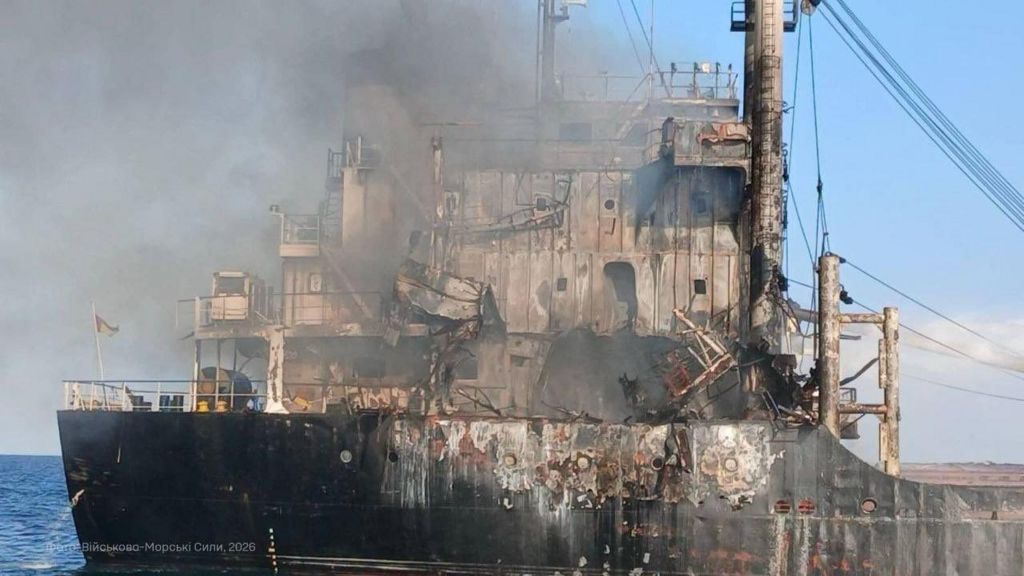
    Escalating military pressure in the Black Sea has reached a deadly new peak, after a Russian cruise missile strike on a civilian cargo vessel off Ukraine’s Odesa coast pushed the death toll to 10, marking the deadliest attack on commercial shipping in the region since Moscow ramped up its campaign to cut off Kyiv’s last active maritime export route.

    The Guinea-Bissau-flagged cargo ship *Golden Leo* was struck in Sunday’s attack, which ignited a large fire on board, the Ukrainian Air Force confirmed. An overnight search and rescue operation concluded Monday morning, with Ukraine’s seaports authority confirming nine crew members and one Ukrainian maritime pilot were killed in the strike.

    The attack is part of a sharp uptick in Russian targeting of commercial ships in the Black Sea, a campaign designed to disrupt the only remaining maritime export route Ukraine still controls. This unofficial corridor, which runs along the coastlines of Romania and Bulgaria before reaching international shipping lanes off Turkey, relies almost entirely on foreign-flagged vessels with international crews to move Ukrainian cargo to global markets.

    Maritime exports are the backbone of Ukraine’s agricultural trade, accounting for more than two-thirds of all annual farm shipments worth approximately $9 billion. For Kyiv’s war-battered economy, these export revenues remain a critical, irreplaceable source of state funding.

    For most of the four and a half years since Russia launched its full-scale invasion of Ukraine, military operations in the Black Sea remained largely stalemated. Russia controls most of Ukraine’s southern coastline, confining Ukrainian commercial and military shipping to waters immediately surrounding Odesa. In turn, successful Ukrainian drone strikes have forced the Russian Black Sea Fleet to keep most of its major assets anchored in protected eastern Black Sea naval bases, far from the contested corridor.

    In recent weeks, however, that stalemate has broken down as Moscow has doubled down on attacks against commercial shipping. The Odesa region alone has faced nonstop bombardment: Odesa regional governor Oleh Kiper confirmed Monday that 28 people have been killed in Russian strikes across the region in July alone. Sunday’s attack on the *Golden Leo* is the deadliest targeting of a cargo ship in this new campaign to date.

    Moscow’s escalation is widely interpreted as an effort to force international shipping companies to abandon the corridor, driving up insurance costs and discouraging global buyers from purchasing Ukrainian grain and other exports. In response to the rising threat, Ukrainian Prime Minister Serhiy Koretskyi announced Sunday that Kyiv’s government and military command are developing new measures to boost navigation safety and protect civilian vessels and seafarers operating in the area.

    Even amid constant bombardment, Odesa’s coastline remains a popular summer holiday destination for Ukrainians. Kiper noted earlier this month that 40 public beaches across the region have opened for the season with new air raid shelters installed, but he repeatedly warned that coastal areas carry heightened risk, as Russian drones and missiles are regularly launched from Black Sea waters.

    Ukraine has responded to Moscow’s escalation by ramping up its own attacks on Russian military and commercial assets across the Black Sea and Sea of Azov. On Monday, Ukrainian drone forces commander Robert Brovdi claimed that 183 Russian vessels had been struck by Ukrainian drones in July. While that number has not been independently verified, satellite imagery reviewed by the BBC confirms visible damage to multiple vessels in both bodies of water.

    The escalating maritime violence comes amid a broader surge in civilian casualties across Ukraine in recent months. Separate Russian strikes on eastern and southern Ukrainian cities killed five additional people on Monday. According to United Nations data, June 2026 saw the highest number of civilian killed and injured in Ukraine since April 2022, with at least 293 civilians killed and another 1,990 wounded across the country.

    Cross-border strikes have also intensified on Russian territory. On Monday, Kyiv launched a large drone attack targeting logistics infrastructure and an oil depot in Russia’s Moscow region. Moscow mayor Sergei Sobyanin said 400 drones were fired at the region overnight, with most shot down by Russian air defenses. Still, local authorities reported 10 injuries from the strike. Further south, in Russia’s Belgorod region bordering Ukraine, local officials said a Ukrainian drone strike on a civilian bus killed five people, including one child. Ukraine has not yet issued an official comment on the Belgorod attack.

  • US-Iran strikes: latest developments

    US-Iran strikes: latest developments

    The long-simmering confrontation between the United States and Iran erupted into broader open hostilities this Monday, with both sides ramping up military operations even as behind-the-scenes diplomatic talks continue through third-party mediators. The rapid escalation has sent ripples across global energy markets and drawn neighboring Gulf states into the conflict, while regional powers work to prevent the crisis from spiraling into a full regional war.

  • Will the Tate brothers be extradited from the US to the UK?

    Will the Tate brothers be extradited from the US to the UK?

    Controversial social media personalities Andrew and Tristan Tate have been taken into custody in Miami by U.S. Marshals, after Britain’s Crown Prosecution Service (CPS) brought 38 new criminal charges against the pair, launching a formal push to extradite them from the United States to the United Kingdom to face trial.

    The brothers, dual British-U.S. citizens who rose to global fame and notoriety through their polarizing social media content, have repeatedly denied all allegations of wrongdoing against them. They are scheduled to make their first appearance at a U.S. federal court this week as the extradition process moves forward.

    Andrew Tate, 39, first entered the public spotlight in 2016 as a contestant on the U.K. edition of the reality show *Big Brother*, where he was removed after just six days following the leak of a video appearing to show him assaulting a woman. Tate has long maintained the footage was selectively edited and fabricated to damage his reputation. A former professional kickboxer, he has since built a massive global online following, currently boasting more than 10 million followers on X (formerly Twitter). He became infamous for his openly misogynistic views, which got him banned from multiple major social media platforms for several years, though he has since been reinstated on X. He often flaunts an ultra-luxury lifestyle of private jets, high-end sports cars and yachts across his online content. Tristan Tate, 37, Andrew’s younger brother, has frequently appeared alongside his sibling in public and online content.

    Details of the new charges released by the CPS on Sunday show Andrew Tate faces seven additional counts of rape, three counts of arranging or facilitating trafficking for sexual exploitation, three counts of assault occasioning actual bodily harm, and 19 charges linked to indecent images of a child and extreme pornography. Tristan Tate faces two new counts of rape, one count of sexual assault, and three counts of arranging or facilitating trafficking for sexual exploitation. The alleged offenses are said to have occurred between July 2010 and August 2017. Combined with charges brought by the CPS last year, Andrew Tate now faces a total of 42 charges in the U.K., while Tristan Tate faces 17 total charges.

    Malcolm McHaffie, head of the CPS Special Crime Division, confirmed the new charging decision came after investigators received an additional evidence file from Bedfordshire Police, bringing the total number of alleged victims in the case to seven.

    The brothers have primarily been based in Romania since rising to fame, where they remain active in an ongoing local criminal investigation into similar allegations. In 2024, Bedfordshire Police obtained European arrest warrants for the pair, which will allow them to be extradited to the U.K. once Romanian legal proceedings conclude. Early this year, Romanian authorities lifted travel restrictions imposed on the brothers, allowing them to travel to the United States.

    A U.S. Department of Justice spokesperson confirmed the Saturday arrests were carried out in compliance with ongoing extradition proceedings. The U.K. and U.S. are bound by an extradition treaty that allows for the transfer of individuals accused of offenses that carry a minimum one-year prison sentence under both countries’ laws. Under the formal process, the CPS drafts the extradition request, which is first certified by a U.K. judge, reviewed and approved by the Home Office, then sent through official diplomatic channels to the U.S. Once received, the request undergoes judicial review in U.S. courts, and a final extradition decision rests with U.S. Secretary of State Marco Rubio.

    Joseph McBride, the lead attorney representing the Tate brothers, announced the pair would appear in court first thing Monday U.S. time. In a public statement posted to X shortly after the arrests, McBride insisted the brothers are innocent, and claimed the new U.K. charges amount to a political hit job targeting the pair. He further alleged the charges were filed to disrupt a defamation lawsuit the Tates have filed in the U.S. against their accusers. “We are confident that once a competent judge sees the facts, and once the Department of Justice confronts this egregious abuse of its own authority, Andrew and Tristan Tate will walk free,” McBride wrote. “America does not do Britain’s political dirty work.”

  • An excavation in Taiwan searches for remains of Japanese soldiers lost in WWII ship sinking

    An excavation in Taiwan searches for remains of Japanese soldiers lost in WWII ship sinking

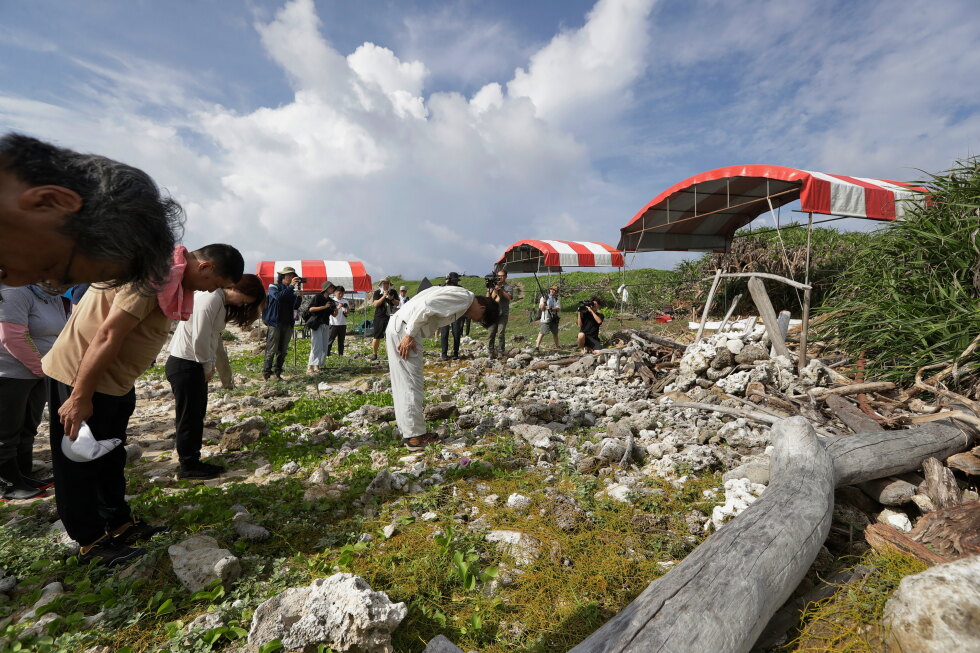
    Eighty years after the end of World War II, a new excavation effort to recover the remains of fallen Japanese soldiers kicked off on Monday in Taiwan’s southern Pingtung County, opening a new chapter in a decades-long mission to bring missing service members home to their families. Before digging began at the site in Hengchun Township, participating experts and volunteers stood in silent tribute, heads bowed, honoring the thousands of lives lost in the 1944 Bashi Channel attack.

    The excavation targets a site tied to one of the deadliest maritime tragedies of the Pacific War. In 1944, U.S. forces attacked a Japanese military convoy, sinking a transport ship and other accompanying vessels in the Bashi Channel, the body of water that separates Taiwan from the Philippines. Historical data compiled by recovery teams confirms more than 4,700 soldiers and crew members perished in the attack, with only 65 survivors. Historians and local researchers say many of the bodies washed ashore on Pingtung’s rugged coastline, where local residents reportedly gathered the remains and interred them in a rocky area near the discharge outlet of Taiwan’s Third Nuclear Power Plant. That remote site is the focus of the current week-long dig.

    The search for the missing soldiers is the product of years of collaborative work between Japanese historians, volunteers based in Taiwan, and local residents who preserved memories of the 1944 tragedy. Teams spent decades collecting oral histories, cross-referencing wartime records, and narrowing down the exact location of the unmarked mass grave to prepare for this excavation. If any human remains are recovered and successfully yield usable DNA samples, they will be repatriated to Japan during a future official mission, under existing recovery protocols.

    This dig marks the first large-scale recovery of Japanese WWII remains in Taiwan in nearly half a century, following the last excavation in 1975 that uncovered 242 sets of remains. Official Japanese government records show 41,900 Japanese service members died on Taiwan during the war; of that total, only 26,300 have been recovered to date, leaving more than 15,600 still missing. Globally, more than 1.1 million Japanese WWII soldiers who died overseas have yet to be found, out of a total of 2.4 million overseas fatalities.

    In a statement ahead of the excavation, Tatsuaki Inoue, a representative of the Japan Association for the Recovery and Repatriation of War Casualties, acknowledged the long wait for families of the missing. “We feel very sorry that we kept them waiting for such a long time,” he said. “But on the other hand, we are very happy that we came to be able to excavate in search of their remains.”

    To accelerate this ongoing national effort, the Japanese government passed a dedicated law in 2016 expanding funding for recovery work and extending official support for the mission through 2030, including scaling up access to DNA testing to identify recovered remains.

    Scholars of Japanese wartime history say the persistent push to recover missing remains reflects deep unresolved grief among bereaved families, as well as unique aspects of Japan’s WWII losses. “For bereaved families who have not received the remains of their loved ones, the lack of certainty regarding where and how their relatives met their end — and the feeling that they were unable to give them a proper sendoff — is likely one of the main reasons why the recovery of remains continues even 80 years later,” explained Akira Nishimura, a professor of religious studies at the University of Tokyo. Nishimura added that civil society groups, particularly religious organizations, have played an outsize role in driving recovery efforts and organizing memorials that bring comfort to grieving families, while preserving the memory of the war dead.

    Australian Monash University associate professor of Japanese studies Beatrice Trefalt noted that a large share of Japan’s WWII fatalities occurred at sea, leaving no trace of remains and creating persistent uncertainty for families. “Because of the enormous amount of uncertainty about who died or not, or how, the search for remains has been a constant in postwar Japanese history,” Trefalt said, adding that many families maintain the Japanese government has a core responsibility to account for conscripted service members who lost their lives in the conflict.

    Kazuko Tachi, a Japanese historian and activist who has led the efforts to recover the Bashi Channel remains, got involved in the work only after relocating to Taiwan, when local residents shared their first-hand memories of bodies washing ashore after the 1944 attack. “Those Taiwanese uncles taught me the importance of holding a memorial service for the war dead,” Tachi said. “It’s been more than 80 years since the war ended but I believe it is important to pray for the war dead, which I will keep on doing.”

    In Pingtung, the legacy of the Bashi Channel tragedy is already formally honored at two local memorial sites. Beside Chaoyin Temple, a monument dedicated to the fallen Japanese service members bears an inscription that reads: “We pray for the peace of all humanity in the world.” The temple itself honors those who died in the 1944 attack, holding a Japanese flag alongside a statue of the Buddhist Bodhisattva Ksitigarbha, a figure revered in traditions across East Asia for guiding and protecting the souls of the departed.

    Taiwan’s historical context frames this recovery effort: the island was a Japanese colony from 1895 until the end of World War II, and is currently a self-governing entity that China claims as part of its own territory.

  • Trump says US strikes hit Iran in ‘honour’ of American soldiers killed

    Trump says US strikes hit Iran in ‘honour’ of American soldiers killed

    Tensions between the United States and Iran have reached a new boiling point in the Middle East, following the killing of three American service members in attacks linked to Iran-aligned groups. US President Donald Trump has framed the latest round of US airstrikes on Iranian targets as retaliation undertaken “in honour” of the fallen troops, saying the operations have inflicted heavy damage on Iranian infrastructure.

    The escalating exchange of fire entered its ninth consecutive night on Monday local time, when US Central Command (Centcom) confirmed it had launched a new wave of airstrikes across Iran, with loud explosions reported in multiple urban centers. According to US military statements, the strikes targeted Iranian military installations and communications networks, with the stated goal of further weakening Tehran’s capacity to disrupt commercial shipping in the Strait of Hormuz, one of the world’s most critical energy chokepoints.

    Iran has swiftly rejected the US offensive and launched counterattacks in response. Iranian officials announced a “surprise attack” targeting US aircraft at Aqaba airport in neighboring Jordan, while Kuwaiti armed forces confirmed they have intercepted multiple Iranian drones that entered their airspace. Iran’s semi-official Tasnim news agency reported that airstrikes hit several major cities, including Tabriz, Chabahar, Konarak, Bandar Mahshahr and Bandar Imam Khomeini.

    In a separate development that has heightened regional risk, the Islamic Revolutionary Guard Corps (IRGC) claimed two oil tankers exploded while transiting an “unsafe and hazardous southern route” through the Strait of Hormuz, bringing both vessels to a standstill. However, US Centcom has disputed the IRGC’s account of the incident, offering no further details on the explosion claims. The IRGC has issued a stark warning that the Strait of Hormuz will remain unsafe for all oil and petrochemical transit so long as US airstrikes continue, vowing additional “punitive operations” against American and allied interests.

    The current escalation grew out of three recent deadly attacks on US personnel in the region. Over the weekend, the Pentagon confirmed a third American service member was killed in an Iranian-aligned attack in northern Iraq on Saturday. That killing followed a fatal attack on a US base in Jordan on Friday that took the lives of two US soldiers: 19-year-old Private Isabella Gonzales and 25-year-old Lieutenant Tyler James Feehan. A third service member was initially reported missing after the Jordan attack, and US officials confirmed search teams have recovered “unidentified remains” during ongoing recovery operations.

    Despite the expanding military conflict, top US diplomatic officials have signaled openness to de-escalation. US Secretary of State Marco Rubio stated that the United States “always remains open to a diplomatic solution” to the ongoing crisis. Rubio also argued that the international community must collectively decide whether to allow Iran to control a critical global waterway, accusing Tehran of using energy transit through the strait as political leverage against the West.

    The current breakdown follows the collapse of a preliminary ceasefire deal reached in mid-June, which was designed to halt cross-border hostilities between the two sides. Negotiations aimed at forging a permanent peace agreement have stalled completely after President Trump announced the original ceasefire was “over” on July 8, clearing the way for the resumption of large-scale military strikes that have pushed the region to the brink of broader conflict.

  • An unwinnable standoff at Hormuz

    An unwinnable standoff at Hormuz

    Five months after joint US-Israeli airstrikes that killed Iran’s Supreme Leader and triggered a broader regional conflict, the 21-mile-wide Strait of Hormuz has emerged as the most intractable front line of the war, where overwhelming military asymmetry collides with total diplomatic gridlock.

    By mid-July, a deadly, predictable cycle of violence had solidified. Night after night, the United States carries out targeted strikes on Iranian coastal military infrastructure, including radar systems, drone launch sites, and missile depots, framing each operation as a necessary measure to safeguard international commercial shipping passing through the critical waterway.

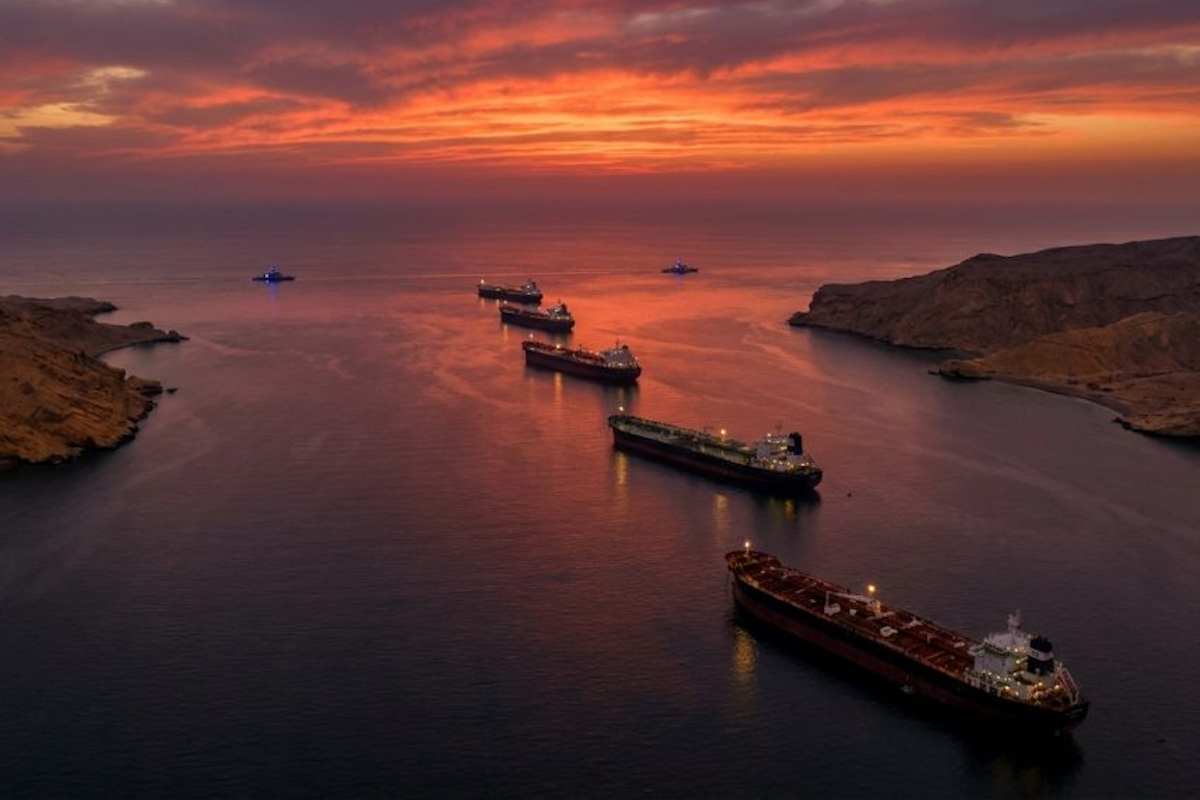
    Iran has responded in kind: its forces have targeted commercial tankers, including two vessels flagged to a US-aligned Gulf state that were attacked within Omani territorial waters, and has repeatedly threatened to close the strait to all shipping that it has not explicitly authorized to transit.

    A ceasefire negotiated earlier this spring has already collapsed, follow-up indirect negotiations have broken down, and leaders of both nations have exchanged increasingly sharp public threats. What began as a slow-burning regional standoff has evolved into an active, if intermittent, war centered entirely on control of the strait.

    The question on every analyst’s mind is why neither side can break the deadlock to secure a decisive victory. Military strategy offers the clearest explanation for this prolonged stalemate.

    Washington possesses the advanced firepower to systematically degrade Iran’s coastal defense networks, and has already done so on multiple occasions. But as US Vice President JD Vance recently acknowledged, even after eliminating Iran’s large-scale military assets along the coast, Tehran retains the ability to disrupt shipping via asymmetric tactics: small fast-attack boats, sea mines, and short-range artillery fire, none of which require the sophisticated capabilities the US has been targeting.

    For Iran, the math is equally prohibitive: Tehran cannot defeat the superior US Navy, nor can it keep the strait fully closed for an extended period. A complete shutdown of the waterway would immediately cut off Iran’s own critical oil export revenues and open the door to far more devastating US retaliation. What both sides *can* do is make the strait so risky that commercial shipping largely avoids it – and that is exactly what has come to pass: daily transits have dropped to a tiny fraction of pre-war levels.

    Diplomatic efforts to break the impasse have failed again and again for deep structural reasons, not mere bad timing. Iran’s foreign ministry has explicitly ruled out new formal negotiations, and previous rounds of indirect talks collapsed before producing any lasting agreement.

    Compounding the challenge is the fact that new points of conflict emerge faster than existing disputes can be resolved. For example, Iran recently floated a proposal to charge tolls for transiting the strait, framing the fee as compensation for maritime security services it provides. The proposal has been rejected outright by both the US and the International Maritime Organization, which notes that no single nation has legal authority to impose tolls on an international strait. While the toll dispute is a minor issue compared to the broader war, it highlights the pattern: both sides continually introduce new demands that make de-escalation far harder to achieve, even when both nominally favor reducing tensions.

    The stakes of this stalemate extend far beyond Iran and the United States. The strait carries roughly one-fifth of the world’s seaborne oil trade and an equal share of global liquefied natural gas (LNG) exports, making its safety critical to energy markets worldwide. A multilateral Persian Gulf Strait Authority has been formed in an attempt to collectively manage the waterway’s security, but it has yet to reverse the ongoing disruption.

    Washington has publicly appealed to major maritime powers including China, Japan, South Korea, and European nations to deploy naval vessels and share the burden of keeping the transit lane open, a tacit acknowledgment that unilateral American military power has proven insufficient to guarantee safe passage for shipping. Meanwhile, neutral Gulf states such as the United Arab Emirates are already bearing direct costs of the conflict: damaged tankers, killed civilian crew members, and disrupted commercial activity in waters over which they have no control, and in which they never chose to fight.

    What does this prolonged stalemate reveal about the trajectory of the broader regional war? The Hormuz standoff is not a temporary impasse waiting for the right diplomatic breakthrough; it is the product of a fundamental structural mismatch. US airstrikes can punish Iran and degrade its military capabilities, but they cannot permanently secure open transit through the strait. Iranian attacks can disrupt global shipping and intimidate commercial operators, but Tehran cannot close the strait on its own terms or sustain its current campaign without inflicting severe damage on its own economy.

    Without a negotiated settlement that neither government currently appears willing to accept, the near-term future is likely to look much like mid-July: repeated cycles of airstrikes, tanker attacks, brief lulls in violence, and commercial shipping volumes that never return to pre-conflict levels.

    The most urgent question hanging over the region today is not which side will ultimately claim victory at Hormuz. It is how long global energy markets and neighboring Gulf states can continue absorbing the costs of a conflict that neither principal party can end decisively.