分类: world

  • ‘America killed my son’: The Ethiopians bombed by US in Yemen prison strike

    ‘America killed my son’: The Ethiopians bombed by US in Yemen prison strike

    # A Year After Deadly US Air Strike on Yemeni Migrant Detention Center: Grief and Unmet Demands for Justice for Ethiopian Victims

    For tens of thousands of young Ethiopians trapped between persistent poverty at home and limited legal pathways to work abroad, the dangerous smuggling route across the Red Sea to Yemen is often seen as the only shot at a better future. Many set out with little more than a dream: to earn enough to lift their families out of hardship, build a stable life, and return home with dignity. For dozens of these young men, that dream ended abruptly on April 28, 2025, when a United States air strike hit a migrant detention facility in Saada, a Houthi-held region of northwest Yemen, leaving at least 68 people dead and dozens more permanently injured.

    All of those killed were Ethiopian men, most in their early 20s, who had already endured years of peril and uncertainty before the strike. Among them was 20-something Hiwot Mehari, who grew up in the war-ravaged Tsirae district of Ethiopia’s Tigray region. Born into crushing poverty with almost no access to economic opportunity in his hometown, Mehari made the fateful choice to take the smuggling route out of Ethiopia, crossing the Red Sea to Yemen with plans to eventually reach Saudi Arabia for work. He spent two years in Rago, the lawless, violence-plagued border region between Yemen and Saudi Arabia, before being captured by Saudi border security and detained in the Saada facility.

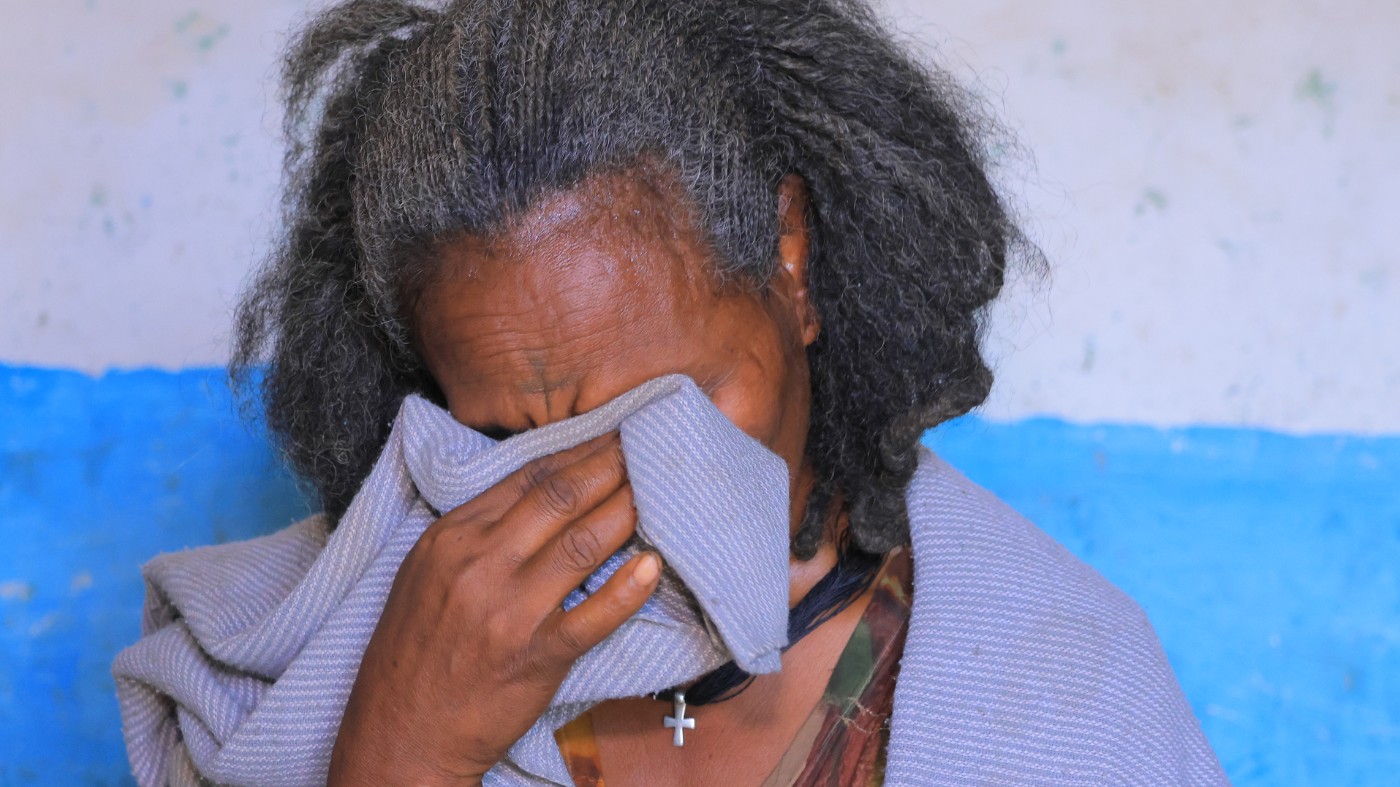
    Just 24 hours before the strike, Mehari spoke to his parents, telling them confidently, “They will release us soon and we will reunite.” The next day at noon, a neighbor delivered the devastating news to his family at their Tigray home. Mehari’s father, Mehari Akeza, says he still cannot process the loss of his son, who he waits for still. “I still can’t accept that my son is gone. I sometimes keep telling myself he will come back, and I wait for his call. How could I believe it? I wasn’t even able to properly bury my son,” Akeza told Middle East Eye in an interview, sitting alongside his heartbroken wife. His son’s mother, Mebrat Gebre, summed up the family’s agony with a question that remains unanswered: “America killed my son, my pride, why? I have never heard of a government killing prisoners for no reason.”

    Mehari’s family is far from alone in their grief. The tragedy has mirrored the pain of hundreds of other Ethiopian families who have lost young relatives to the risks of irregular migration, a crisis that continues to drive thousands of young Ethiopians toward the Gulf each month despite its dangers. Another victim of the strike, 22-year-old Tsiruy Hailu, had left Ethiopia for Yemen in 2022 to fulfill his dream of supporting his family after his father died when he was a child. As the eldest of four children, Hailu had become the family’s sole breadwinner after his father’s death. “My soul is broken, he was my all,” his mother Berhan Akeza, 47, told reporters. “He wasn’t only my son, but also the one who carried the burden of the family after his father’s death 12 years ago.” Akeza’s pain was deepened after she saw graphic footage of the destroyed detention center, showing bodies crushed under rubble. Having already survived the Tigray war, which saw United Arab Emirates drone strikes kill countless civilians, she says the trauma of her son’s death haunts her constantly: “I saw the horrific footage on someone’s mobile phone. Sometimes, I picture my son lying with his body dismembered. I can imagine how drones kill a human being.”

    Beyond the dozens killed, the strike left dozens more survivors facing permanent disability, lifelong trauma, and shattered futures. Middle East Eye spoke to three severely injured survivors, two still stranded in Yemen and one who has returned to Ethiopia, all dependent on others for basic care. Twenty-seven-year-old Haben Tuemzgi, who migrated to Yemen seven years ago hoping to save enough to open a business back home, suffered catastrophic injuries to both his legs and hands, with shrapnel still embedded in his bones that continues to cause worsening pain due to a lack of adequate medical care in Yemen. Speaking from Aden via WhatsApp, Tuemzgi described his existence as a limbo between life and death: “I am like a man between death and life. Sometimes I wish I had died instead of living like this. When I left my home, I had two legs and now I have to go back on a stretcher. Trump’s America has made all my dreams evaporate into thin air. What else can I do, I am poor. Who can sue the world’s most powerful?”

    Twenty-five-year-old Haile Wolday, another survivor, lives with constant pain from wounds to his leg and hand, saying he sees no path forward. “I have no future to see. I came here to make money and feed my family but now people are feeding me,” he said. A third survivor, who returned home to Tigray’s Gulomekeda district and requested anonymity, suffers from severe injuries to his leg and eye that require ongoing treatment he cannot afford. “I was a man with a big dream before America turned my life upside down,” he said. “I never thought that I could be a burden to my family.”

    More than a year after the strike, no progress has been made toward holding anyone accountable, providing answers to grieving families, or delivering compensation to victims and their relatives, according to Amnesty International. “One year on, US officials have failed to hold anyone accountable or even to clarify the status or outcome of the investigations they had announced a year earlier,” Erika Guevara Rosas of Amnesty International said in April. “Families of those killed in the attack on the detention centre in Yemen are still being denied basic information about what happened, [and] remain without justice for their loved ones.” The US State Department has not responded to requests for comment on the strike.

    For the families of the victims, who live in remote rural areas of northern Ethiopia that are still recovering from years of brutal war, the silence from global powers has only deepened their pain. “The world seems to have forgotten our children’s death. We want compensation,” said Hiwot Mehari’s father Mehari Akeza. Girmachew Adugna, an Ethiopian migration scholar specializing in the Horn of Africa, says the demands of grieving families are clear: “The families of Ethiopian migrants who were killed in the strike deserve justice, including a transparent investigation, accountability and appropriate compensation where warranted.” He added that Ethiopia’s current migration framework fails young men who are pushed toward dangerous irregular routes: “Existing bilateral labour agreements largely provide opportunities for domestic work for women, leaving many young men with few legal migration options. Ethiopia’s labour migration strategy should place greater emphasis on protecting the rights, safety and wellbeing of migrant workers from when they depart to when they return.”

    The strike has drawn attention to the growing irregular migration crisis in the Horn of Africa. In recent years, the Ethiopian government has sought to crack down on unregulated migration and signed bilateral agreements with Gulf states to improve working conditions for Ethiopian laborers, with the country’s labor and skills ministry reporting that more than 500,000 workers were legally dispatched abroad in 2025, and the government facilitates the repatriation of thousands of vulnerable migrants each year with the support of humanitarian groups. Still, the combination of limited decent work opportunities at home, post-conflict economic collapse in regions like Tigray, and a lack of legal migration pathways for young men continues to push thousands to take the dangerous route through Yemen. Data from the International Organisation for Migration shows that irregular migration to Yemen is rising: in June 2025 alone, more than 13,300 migrants entered Yemen, 95 percent of them from Ethiopia. Many of these migrants end up detained, abused, or killed before they ever reach their destination. For the families of the 68 young men killed in the Saada strike, the wait for justice and answers will continue, as the world’s most powerful nation remains unaccountable for their deaths.
  • ‘All we wanted was to bury him’: How a Gaza family struggled to recover their dead son

    ‘All we wanted was to bury him’: How a Gaza family struggled to recover their dead son

    The tragic case of Muhammed Abu Khammash, a 29-year-old Palestinian father of three with long-standing severe psychosis, lays bare the deadly human cost of Israel’s post-October 2023 military controls and territorial division of the Gaza Strip, even after the formal ceasefire took hold.

    For years before the war began, Muhammed’s family managed his condition — marked by paranoia, delusions, and unpredictable episodes — with consistent care from the Gaza Community Mental Health Centre. During acute episodes, he would receive 2 to 4 weeks of inpatient monitoring and treatment that kept his symptoms stable. But when Israel launched its military campaign in October 2023, relentless airstrikes and widespread attacks on Gaza’s healthcare infrastructure destroyed access to this life-sustaining care. Forced to flee their home and live in overcrowded displacement tents, Muhammed’s relatives became his sole caregivers.

    As the war dragged on, Muhammed’s mental state deteriorated dramatically. Two devastating family losses pushed his condition past the breaking point: first, 20-year-old brother Marwan was killed by Israeli forces while trying to collect flour for the family during Gaza’s worsening hunger crisis, and four months later, another younger brother Osama died in an Israeli airstrike while securing aid for a local orphanage. Grief unmoored Muhammed completely. He began repeatedly begging for death, shouting Osama’s name, and attempting to slip away to the Yellow Line — the de facto boundary that splits Gaza into Israeli-controlled and Palestinian-held territories — saying he wanted to find his brother or avenge his death.

    Nine family members took turns standing constant watch over Muhammed to stop him from entering the restricted zone, a precaution that reflected the well-known risk: any Palestinian who approaches or crosses the Yellow Line is routinely shot on sight by Israeli soldiers. Yet even round-the-clock care could not hold him forever. One day, Muhammed slipped away from his family’s camp. He never came back.

    The Yellow Line, established by Israeli forces on October 10, 2023, divides more than 60% of Gaza’s total territory off-limits to most Palestinians, confining the enclave’s population of roughly 2 million people to a shrinking sliver of land where overcrowding and humanitarian need have reached catastrophic levels. Israeli forces have marked the boundary with yellow concrete blocks, in some cases extending the restricted zone further into Palestinian-held territory than the original line. Dozens of Palestinians have been killed along the boundary since the ceasefire went into effect, and the true death toll remains unknown because Israeli restrictions bar families and humanitarian workers from recovering most victims’ remains, leaving bodies to decompose in open areas for weeks or months.

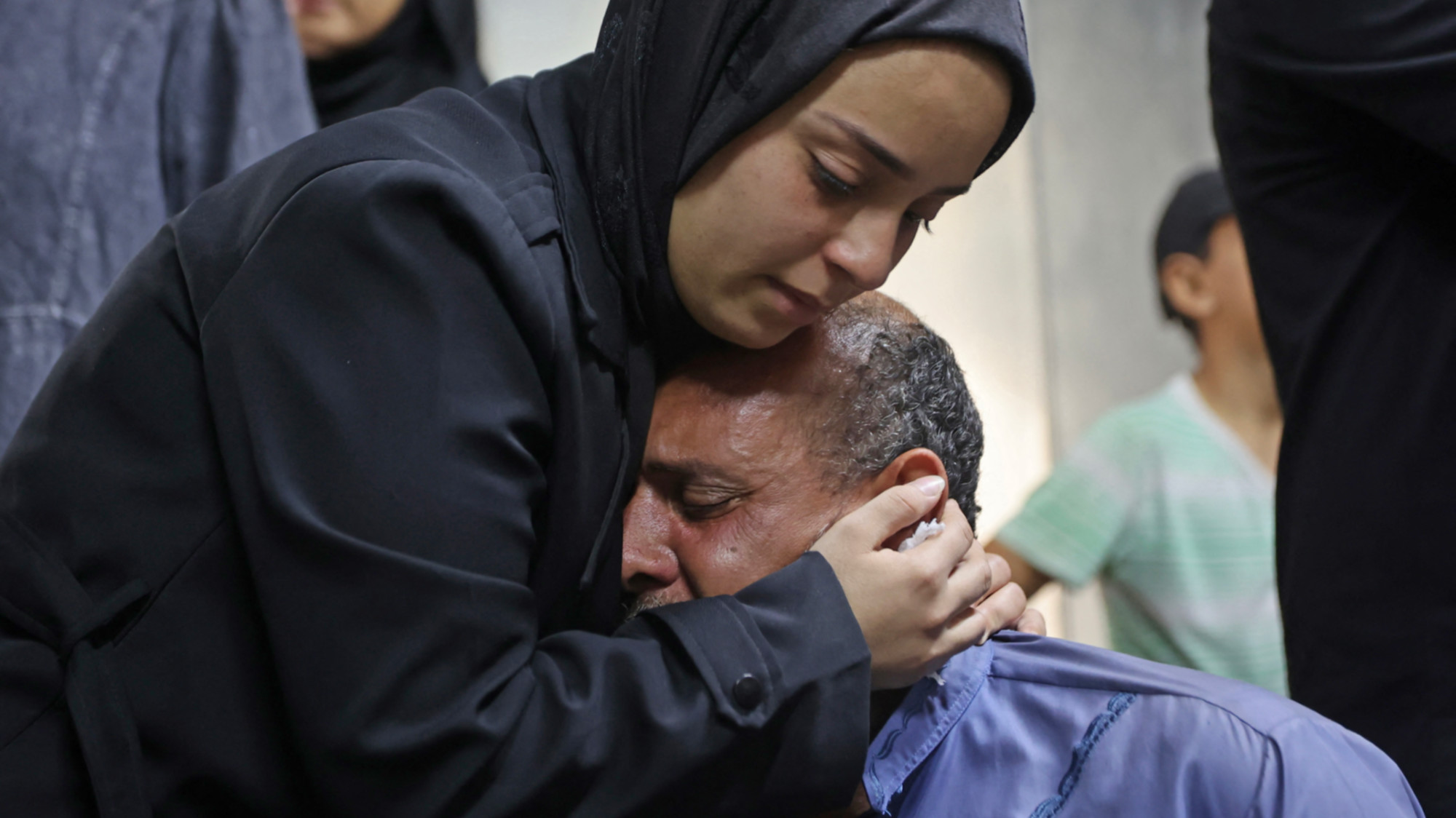
    Three days after Muhammed disappeared, his father Oda Abu Khammash received the devastating confirmation: Muhammed had walked toward the Yellow Line, and Israeli soldiers had fired a shell that killed him instantly. What followed was a weeks-long ordeal to retrieve his body that Oda says was more painful than the loss of his son itself.

    Access to the killing zone was completely blocked by the Israeli military, so the family turned to intermediaries with connections to Israeli-backed armed militias that operate along the Yellow Line. First acknowledged publicly by Israeli Prime Minister Benjamin Netanyahu in June 2025, these militias were activated by Israel to undermine Hamas in controlled areas of Gaza, and have been widely accused of human rights abuses against Palestinian civilians, including extrajudicial killings, abductions, and looting of humanitarian aid. Though the militias were able to locate Muhammed’s remains, they told the family they could not recover the body without formal approval from the Israeli army — a request that was initially denied.

    As Muhammed’s body lay exposed in the open for nine days, his mother refused to accept the impasse. Defying explicit orders to stay away and the constant threat of being shot, she carried a white flag and walked to the Yellow Line every day at dawn, staying until sunset to search for her son’s remains. Again and again, Israeli forces ordered her to turn back, warning they would open fire if she advanced. Each time, she refused: “If you want to shoot me, then shoot me. I’m not leaving until I bring back my son’s body,” she told soldiers through a quadcopter loudspeaker. She returned to a relative’s home near the line each night empty-handed, her anguish captured in a Facebook post by Oda, who wrote, “I haven’t seen her for two days. Before that, I avoided seeing her so she wouldn’t ask me: ‘What kind of life is this that we have, and what meaning does it hold?’ I am tired of being pitied.”

    Nine days after Muhammed was killed, the Israeli army finally granted approval for his remains to be retrieved. The family was able to bury his remains in a grave that had been left open, waiting, for days. Photographs from local journalists show Muhammed’s mother clutching a black plastic bag holding his decomposed remains, the trauma of the ordeal still raw for the entire family.

    “ I don’t exaggerate when I say the ordeal of recovering him was even harder than losing him,” Oda told Middle East Eye, a story that reflects the widespread, underreported suffering of Gaza’s families trapped between post-ceasefire military restrictions and unrelenting loss.

  • Hezbollah faces a reckoning as support wanes in Lebanon

    Hezbollah faces a reckoning as support wanes in Lebanon

    In a move aligned with a 2025 U.S.-brokered peace agreement between Israel and Hamas, the militant group announced earlier this month it would dissolve its governing administration in the Gaza Strip, ceding formal administrative control to a U.S.-backed Palestinian national committee. While this announcement marks a historic shift in Hamas’s formal role in governing Gaza, analysts have been quick to emphasize that the change does not mandate the dissolution or disarmament of the group’s powerful military wing. Many observers warn the move may ultimately be a largely symbolic rebranding effort, noting that a genuine transfer of full security and governing authority would require dismantling Hamas’s entrenched security apparatus. Still, the development has sparked urgent regional speculation: following Hamas’s step back from formal governance in Gaza, will allied group Hezbollah face similar pressure to recalibrate its role in neighboring Lebanon?

    Hezbollah has stood alongside Hamas as a core partner in Iran’s so-called “axis of resistance” since the outbreak of Israel’s full-scale military campaign in Gaza. Like Hamas, Hezbollah has sustained heavy losses to its leadership ranks and military infrastructure amid months of cross-border clashes, but unlike some fragmented militant factions, it has retained its core organizational structure and operational military capacity. A fragile 2024 ceasefire between Hezbollah and Israel collapsed earlier this year following the outbreak of open hostilities between the U.S.-Israeli coalition and Iran. Just last month, Israel and the Lebanese government signed a new ceasefire deal — negotiated without Hezbollah’s participation — that explicitly requires the group to fully disarm. Hezbollah’s leadership has publicly rejected the demand, vowing to continue armed resistance until all Israeli forces withdraw from Lebanese territory.

    Amid mounting regional and domestic pressure, Hezbollah now faces an urgent need to reevaluate its dual role as a political actor in Lebanon’s government and an armed militant proxy for Iran. The group has long navigated a fragile balance between its political legitimacy within Lebanon, its regional military activism, and its strategic alliance with Tehran. Three distinct scenarios could play out as the group navigates this turning point.

    First, Hezbollah could choose to fully transform into a purely domestic political party, abandoning its armed wing entirely. Proponents of this path argue it would grant the group renewed regional legitimacy, particularly improving strained ties with Gulf Arab states. But the shift would require a fundamental rewrite of the group’s ideological identity: Hezbollah emerged as an armed militia in the 1980s explicitly to oust Israeli occupying forces from southern Lebanon, and it has remained deeply dependent on Iranian military, political and financial support for decades. For Hezbollah’s core base of supporters, ongoing Israeli military incursions into Lebanese territory continue to justify the group’s armed status. A full transition to civilian politics would also force the group to give up its long-held strategic position as an outsider critic of Lebanon’s corrupt government, requiring it to take formal accountability for policy outcomes — a role it has never prepared to fill. For these reasons, a full disarmament and political transition is widely seen as unlikely in the short term.

    A second, more moderate path would see Hezbollah retain its military wing but rebrand it as a national defense force tasked with deterring future Israeli aggression, framing the armed apparatus as a necessary complement to Lebanon’s weak national army. This narrative has resonated with Lebanese nationalist audiences in the past, but shifting public opinion has made this strategy far riskier today. Hezbollah’s domestic popularity has plummeted in recent years, as many Lebanese blame the group for drawing the country into repeated devastating conflicts that have wrecked the already fragile national economy. A growing share of the Lebanese public, including some members of the group’s core Shiite support base, now accuse Hezbollah of prioritizing Iran’s regional geopolitical agenda over Lebanon’s national interest. If this erosion of public support continues, and the group loses the ability to deliver critical social and financial support to its base that has long cemented loyalty, disarmament pressure could emerge from within Lebanese society itself, rather than only from the U.S. and international community.

    The third and most volatile scenario is a collapse of the current Israeli-Lebanese ceasefire, leading to a resumption of full-scale open conflict between Hezbollah and Israel. A return to war could be triggered by escalating regional tensions between the U.S. and Iran, Hezbollah’s ongoing rejection of the existing ceasefire terms, or its continued refusal to disarm. While the U.S. and Israel have exerted intense pressure on Lebanon’s weak central government to forcibly disarm Hezbollah, the threat of triggering a devastating new Lebanese civil war has so far prevented the Lebanese army from taking direct military action against the group.

    Ultimately, Hezbollah’s future will be shaped less by domestic pressure alone than by its core patron: Iran. Though Hezbollah has long sought to project an image of semi-autonomy from Tehran, the group’s strategic relevance is closely tied to Iran’s regional defense architecture. For the foreseeable future, Hezbollah remains a critical asset for Iran’s projection of power in the Middle East, and until that calculation changes in Tehran, Hezbollah is unlikely to abandon its armed role or alter its current status dramatically.

  • Palestinians launch #TheyLiedtoYou campaign to debunk Gaza ‘ceasefire’ narrative

    Palestinians launch #TheyLiedtoYou campaign to debunk Gaza ‘ceasefire’ narrative

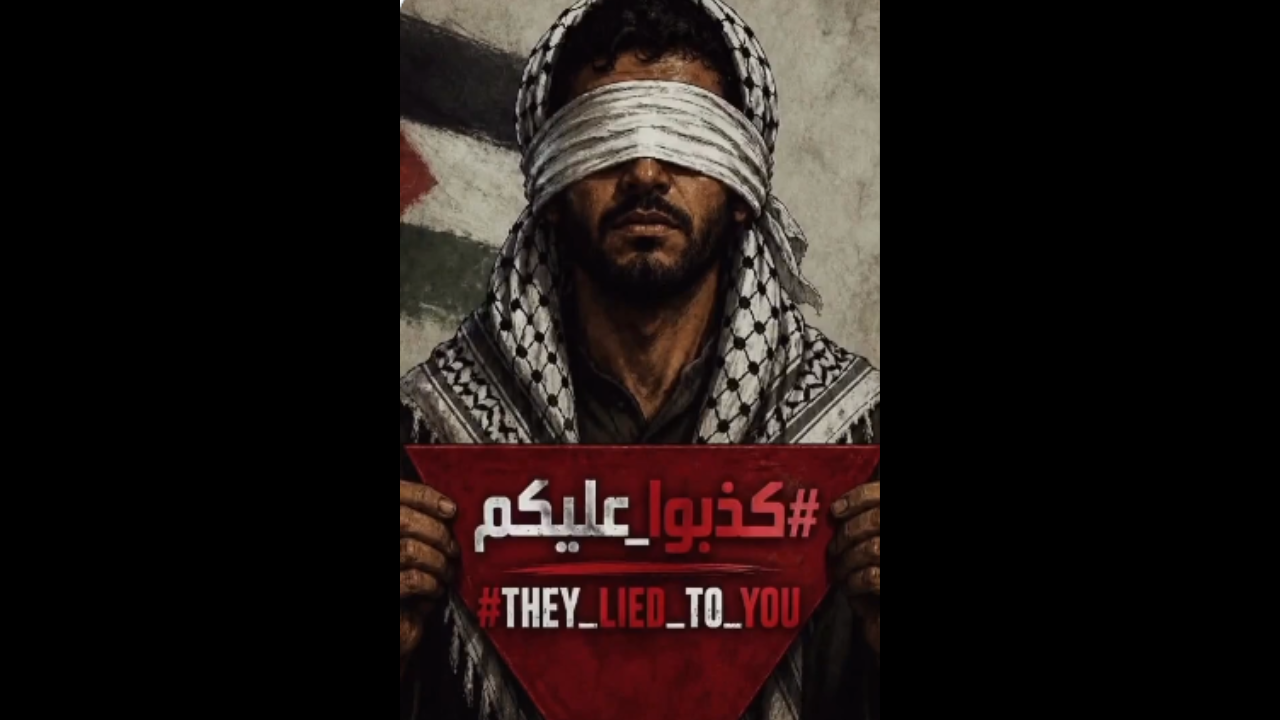
    On July 16, Palestinian activists launched a global digital advocacy campaign centered on the hashtag “They Lied to You” that has quickly spread across major social platforms, aiming to reorient global public attention toward the unrelenting Israeli military campaign in Gaza and push back against the widespread narrative that the October nominal ceasefire accord brought attacks on the besieged enclave to an end.

    Organically sparked from within Gaza, the campaign has gained viral traction on both X and Instagram, with parallel hashtags in English (#TheyLiedToYou) and Arabic (#كذبوا_عليكم) uniting activists and ordinary users globally. Palestinians on the ground have been sharing unfiltered, live footage documenting ongoing Israeli bombardments, widespread systematic food deprivation, and the spread of preventable diseases to demonstrate that the humanitarian catastrophe in Gaza has only worsened even as international media coverage has faded.

    In an Instagram video that has been shared tens of thousands of times, Gaza-based journalist Hani Aburezeq spelled out the core grievance driving the campaign: “They tricked you that the war is over… war didn’t end, it only ended on your screens. In reality, the people of Gaza are being killed, displaced, their homes are being destroyed.”

    Across social media, users have shared harrowing personal accounts and on-the-ground footage that challenges the official ceasefire narrative. Responding to a post about a Palestinian child in Gaza who lost his entire family to an Israeli strike, one X user wrote: “They lied to you.. Gaza is being slaughtered in silence before the eyes of the world, which also watches in silence. Gaza is not outside the tragedy but outside the coverage, deliberately marginalised by the media.”

    Even young residents of Gaza have joined the campaign, sharing their own firsthand experiences of unbroken violence. “They lied to you. There are massacres happening…there are strikes everyday,” one child said in a widely shared video clip posted online.

    Official figures from Gaza’s government media office, released Sunday, back up the claims of ongoing attacks. The office confirmed that Israel has carried out more than 3,700 violations of the nominal ceasefire agreement since the deal took effect in October, with at least 1,168 Palestinians killed in Gaza in that period alone.

    Many campaign participants have also pointed to the month-long FIFA World Cup as a deliberate distraction that allowed global attention to shift away from the crisis in Gaza. “They created for you a spectacle to divert your attention away from the tragedy,” one X user wrote in a post accompanying footage of fresh bombardment in the enclave.

    As the campaign gained momentum this week, new Israeli attacks continued to claim civilian lives. Palestinian news agency Wafa, citing local sources, reported that at least two Palestinians were killed and 16 others, most of them children, were wounded in an Israeli strike targeting al-Yaman al-Saeed hospital in the Jabalia refugee camp in northern Gaza on Monday. A separate strike targeting an electric bike in the central Gaza Strip’s al-Zawaida area killed one additional Palestinian, medical sources confirmed.

    Updated cumulative figures released by Gaza’s Ministry of Health on Tuesday put the total Palestinian death toll from Israeli attacks across the enclave since October 7, 2023 at 73,293, with another 173,960 people wounded. Thousands more Palestinians remain unaccounted for and are presumed dead beneath the rubble of destroyed buildings across Gaza.

  • South Africa’s anti-migrant unrest led over 160,000 to flee

    South Africa’s anti-migrant unrest led over 160,000 to flee

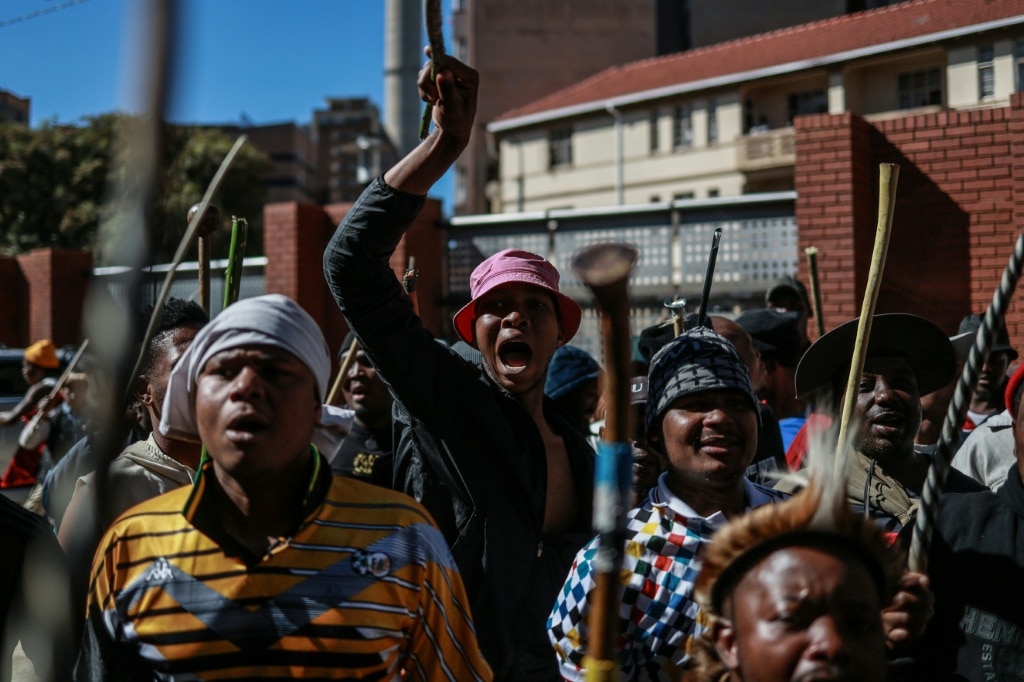
    A surge of xenophobic violence targeting undocumented migrants in South Africa has forced more than 160,000 foreign nationals to flee the country over the past two months, an Agence France-Presse tally compiled from repatriating government data confirms. Weeks of nationwide unrest, instigated by local groups demanding all undocumented migrants leave by the June 30 deadline, have devolved into deadly attacks that have claimed the lives of at least four migrants, with several foreign governments disputing that official death toll and reporting higher fatalities.

    Desperate to escape targeted violence, migrants from across the African continent have crowded into consulates and community gathering spaces to arrange transport home, many leaving with nothing more than the small belongings they could carry as they feared for their safety. Zimbabwe and Malawi account for the largest share of returnees, with hundreds more migrants fleeing from Ghana, Kenya, Lesotho, Mozambique, Nigeria, Uganda and other African nations.

    By July 18, Zimbabwe’s cabinet reported 108,366 of its citizens had returned to the country, most organizing their own repatriation. Malawi, meanwhile, confirmed more than 46,890 of its people had arrived home since early June, with the government deploying 699 buses to facilitate the cross-border journey; six migrants died during the transit process. South African government data shows nearly 2,000 Mozambicans have also returned, after two Mozambican nationals were killed in late May during violence that followed a protest in the coastal town of Mossel Bay — the first fatalities of South Africa’s latest wave of anti-migrant unrest. South African authorities have since confirmed the additional deaths of an Ethiopian national and a Malawian national linked to anti-foreigner sentiment.

    Nigeria has reported two of its citizens killed in ongoing xenophobic attacks, while Ghana confirmed one of its nationals died in anti-immigrant unrest in a Cape Town township. South African officials have rejected both claims, warning that widespread disinformation is being spread across social media platforms. To date, Nigeria has repatriated roughly 1,490 of its nationals, and Ghana has evacuated at least 926 citizens via air. Both nations have called for the crisis, which they label “Afrophobia”, to be added to the agenda for the upcoming African Union summit, and Ghana has postponed a scheduled state visit by South African President Cyril Ramaphosa amid the tensions.

    As Africa’s most economically developed nation, South Africa has long drawn both documented and undocumented migrant workers from across the continent, who leave their home countries in search of employment opportunities unavailable where they live. Local vigilante groups behind the current unrest frame migrants as drivers of rising crime and competitors for limited jobs, stoking tensions in impoverished townships already grappling with systemic poverty, high unemployment and underfunded, ineffective policing. However, independent analysts argue that migrants are being scapegoated for deep-rooted structural failures in South Africa, including a national unemployment rate that exceeds 30% and widespread dysfunction in the delivery of basic public services.

    The current wave of unrest has its roots in low-level demonstrations that began last year, when undocumented migrants were blocked from accessing public health care at clinics and hospitals. Protests grew dramatically in the lead-up to the June 30 departure deadline, and unrest has continued in the weeks following that date. One prominent anti-immigrant group, Operation Dudula, has vowed to hold weekly demonstrations until the country’s local government elections in November.

    Xenophobic violence is not a new crisis in South Africa: repeated waves of anti-migrant unrest have swept the nation over the past three decades. The 2008 anti-immigrant riots left 62 people dead and displaced thousands more, with further large-scale outbreaks occurring in 2015 and 2016. Deadly violence in 2019 saw armed mobs target foreign-owned businesses across Johannesburg, killing at least 12 people, 10 of whom were South African citizens. What makes the current crisis unprecedented, however, is that it marks the first time multiple foreign governments have coordinated to organize large-scale simultaneous voluntary repatriations for thousands of their trapped nationals.

  • Iran hits US bases in Bahrain, Kuwait and Jordan after 10 nights of US attacks

    Iran hits US bases in Bahrain, Kuwait and Jordan after 10 nights of US attacks

    A brutal cycle of cross-border violence in the Middle East has entered its second week of continuous escalation, after the United States carried out its 10th straight night of aerial bombardment against targets inside Iran, expanding a joint military campaign launched alongside Israel that collapsed a month-long ceasefire agreement earlier in July.

    According to US Central Command, the most recent round of offensive operations ran for approximately five hours, wrapping up at 9 p.m. Eastern Time on Monday. American military targets in the latest strikes included Iranian command and control hubs, missile and drone launch facilities, coastal naval infrastructure and national air defense networks. This renewed assault builds on the joint Israel-US campaign that first launched with coordinated attacks on Iran on February 28, before a ceasefire was reached in mid-June.

    On June 17, Washington and Tehran signed a memorandum of understanding that pledged an “immediate and permanent end” to all cross-border military operations. The terms of the deal also required the US to lift a crippling naval blockade of Iranian ports and established a 60-day negotiating window to resolve longstanding regional disputes. A core requirement of the agreement mandated Israel halt all cross-border attacks into Lebanon, a provision Washington ultimately failed to enforce even as US negotiators pushed to reinterpret clauses governing access and navigation through the Strait of Hormuz.

    The fragile truce officially collapsed on July 8, when former President Donald Trump declared the June agreement void, ordered the resumption of unilateral US strikes against Iran and reimposed the full naval blockade that had been lifted weeks earlier. In response to the resumption of US hostilities, Tehran reclosed the strategic Strait of Hormuz, a chokepoint through which roughly 20% of the world’s daily oil shipments pass, and renewed missile and drone strikes against US military bases deployed across the Middle East.

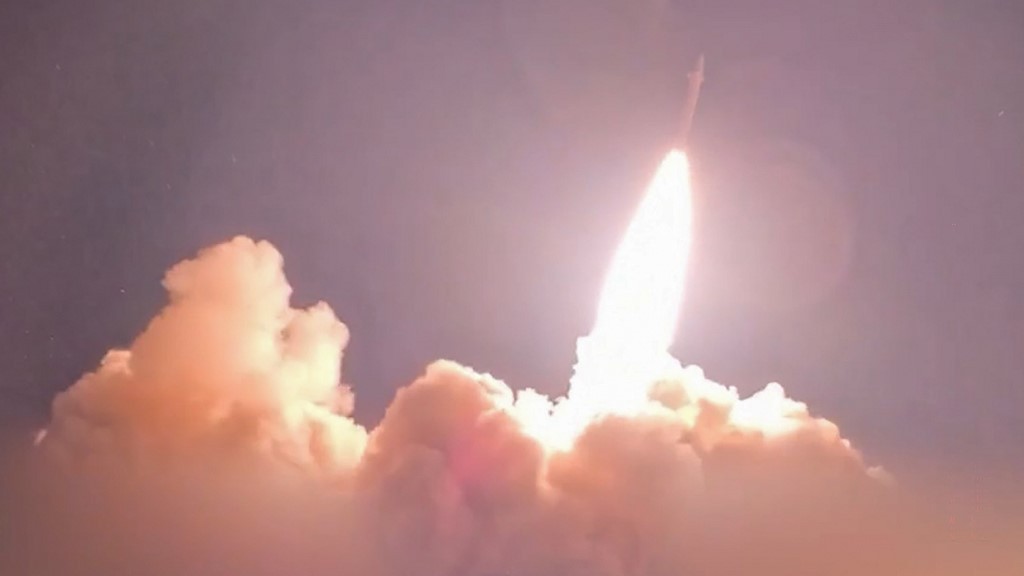
    Overnight, Iranian military officials announced a series of retaliatory strikes targeting US-aligned military installations across Bahrain, Kuwait and Jordan. The Islamic Revolutionary Guard Corps (IRGC), Iran’s elite paramilitary force, confirmed it destroyed a US air defense system and radar array located in Bahrain’s Muharraq district. A follow-up statement carried by Iran’s state-run IRIB broadcaster added that a coordinated missile and drone assault also disabled a Patriot air defense system stationed in Al-Riffa, Bahrain.

    Separately, Iran’s army told the semi-official Fars News Agency that drone strikes hit Bahrain’s Sheikh Isa military base, a critical logistics and operations hub for the US Navy’s Fifth Fleet. Iranian military officials confirmed retaliatory operations will continue until the US halts its cross-border attacks and withdraws hostile forces from the region. “Security in the region has been disrupted following the mischief of US terrorist forces, and the Armed Forces of the Islamic Republic are attempting to restore security and calm to the region in their battle against the US,” an official army statement read.

    In Kuwait, the IRGC confirmed strikes targeted US radar, telecommunications, satellite communications and missile defense infrastructure at both Ahmed Al-Jaber Air Base and Ali Al Salem Air Base. Iranian state news agency Tasnim reported additional damage to key infrastructure at Kuwait’s Camp Arifjan, a helicopter operations zone at Camp Al-Adiri, and troop housing facilities at Ahmed Al-Jaber.

    In Jordan, the IRGC reported it destroyed a missile defense radar and an F-15 fighter jet housed in a reinforced shelter at a US military base there. Iranian officials noted the strike was intended to eliminate US radar coverage ahead of expanded retaliatory missile and drone operations across the region. A senior Iranian military source told Fars that the Strait of Hormuz will remain closed to commercial shipping for as long as US attacks on Iranian territory continue.

    “The Strait of Hormuz is in full control of the Iranian armed forces,” the source said. “Any decision to reopen or continue restrictions on this passageway will be made solely based on security considerations and national interests, and this situation will not change as long as US threats and hostile actions continue.”

    The IRGC also confirmed that two commercial tankers that attempted to transit an unapproved southern route near Oman’s territorial waters suffered heavy damage from explosions that sparked large onboard fires. Local rescue teams have already launched operations to evacuate the vessels’ crews. “It is obvious that as long as America’s evils continue in the region, the Strait of Hormuz will be closed, and not even a drop of oil, gas, or a package of chemical fertiliser will be exported from the region,” the IRGC added in a statement.

    The escalating conflict has drawn growing domestic political pushback in the US, where Senate Minority Leader Chuck Schumer has called for an immediate end to hostilities and pledged Democratic lawmakers will force a new congressional vote to cut off authorization for military operations. “Every second Trump prolongs his war in Iran is another second our service members remain in danger,” Schumer wrote on social media platform X. “Senate Democrats will force Senate Republicans to take another vote to end this war and bring our troops home. Enough is enough. End this war.”

    Despite widespread disruption to global energy shipping, international oil prices dipped slightly on Monday following reports of new diplomatic mediation efforts led by neutral regional states. Global benchmark Brent crude fell 0.4% to settle at $88.87 per barrel, while US West Texas Intermediate crude for September delivery traded at $82.47 per barrel at market close.

  • UN says nearly 150 migrants are dead or missing off West Africa in separate incidents

    UN says nearly 150 migrants are dead or missing off West Africa in separate incidents

    The United Nations High Commissioner for Refugees (UNHCR) has expressed profound grief following a pair of deadly shipwrecks that left up to 144 migrants dead or missing in waters off Mauritania last week, as thousands of sub-Saharan Africans continue to risk their lives seeking passage to Europe in search of improved living conditions.

    In statements released Tuesday, the UN refugee agency confirmed the two separate incidents unfolded between July 14 and 18, with rescue teams pulling 387 surviving migrants to safety over the course of the events. Discrepancies in casualty numbers from different authorities have not yet been reconciled as of Tuesday.

    Mauritania’s national coast guard provided detailed accounts of the deadliest incident, in which a vessel carrying 160 Gambian migrants bound for the Spanish Canary Islands became stranded after running out of fuel. The boat drifted without power for 25 days off the coast near Nouakchott, the Mauritanian capital, leaving 122 people unaccounted for once rescuers reached the scene.

    In the second unrelated incident, coast guard officials announced they had rescued 179 migrants who had departed Senegal on an unseaworthy vessel, bringing the total number of survivors across both events to 387.

    In recent years, Mauritania’s territorial waters have emerged as a primary transit corridor for sub-Saharan African migrants fleeing widespread economic stagnation and limited job opportunities at home. The UNHCR emphasized that the migration route leading to the Canary Islands ranks among the most dangerous maritime migration routes on the planet, marked by enormous open-ocean crossings and frequently overcrowded, unfit vessels that put all passengers at extreme risk of disaster.

  • Watch: Flooded towns and evacuations as Chile hit by heavy rain

    Watch: Flooded towns and evacuations as Chile hit by heavy rain

    Chile is grappling with a major weather emergency after days of relentless heavy rain have unleashed devastating flooding across large swathes of its central-northern territory, forcing authorities to enact a sweeping ‘state of catastrophe’ for two hard-hit administrative regions.

    The worst impacts have been recorded in Coquimbo and Huasco, where rising floodwaters have inundated residential neighborhoods, submerged critical infrastructure, and cut off road access to dozens of small towns and rural communities. Local emergency management teams have launched large-scale evacuation operations, moving thousands of residents from high-risk flood zones to temporary government-run shelters set up across the regions. Footage captured from affected areas shows entire streets turned into rushing muddy rivers, with vehicles swept away and low-lying homes completely submerged, prompting urgent rescue operations for residents trapped by fast-rising water.

    The declaration of a state of catastrophe unlocks emergency federal funding, expedites resource allocation, and grants authorities expanded powers to coordinate response efforts, including deploying national military personnel to support local rescue and cleanup operations. Meteorological agencies have warned that residual rain and flood risks remain in the coming days, as authorities work to assess the full scale of damage, locate missing residents, and deliver emergency supplies to displaced communities.

  • Iran steps up attacks in return to war with US

    Iran steps up attacks in return to war with US

    Two weeks after open conflict between Iran and the United States reignited, the Middle East has entered a dangerous new phase of escalation, with multiple waves of missile and drone attacks striking targets across the region on Tuesday and fresh threats to global energy supply chains raising alarms worldwide.

    The latest round of hostilities follows the collapse of a June framework peace deal and an April ceasefire, reviving a full-scale confrontation that began after a US-Israeli strike on Iran in late February. In response to that attack, Tehran reimposed its blockade of the Strait of Hormuz— the strategic chokepoint through which roughly one-fifth of the world’s annual oil supplies transited in peacetime— triggering reciprocal port blockades from Washington.

    On Tuesday, air raid sirens wailed across Bahrain and Jordan as regional defense forces intercepted two waves of Iranian projectiles. Bahrain’s interior ministry issued an emergency alert urging civilians to seek shelter, while Jordan’s military confirmed it had shot down five Iranian drones followed by three missiles, with no reported casualties or damage from the strikes. Iran’s Islamic Revolutionary Guard Corps (IRGC) claimed responsibility for the first wave of attacks, stating in an official statement carried by state news agency IRNA that the strikes targeted a “complex housing US terrorist forces in the region of Rukban”. The Iranian military had previously announced targeting US assets across Kuwait and Bahrain, including air defense systems, radar stations and administrative facilities. In a stern warning to Washington, the IRGC added that “With this radar sweep, the enemy should prepare for even more decisive and powerful waves of drone and missile attacks.”

    Alongside direct Iranian strikes, Tehran’s Yemeni allied movement the Houthis has thrown additional fuel on the fire, announcing it will blockade Saudi Arabia’s commercial ports. If the Houthi threat is carried out, it would disrupt Saudi Arabia’s ability to route crude oil exports around the Strait of Hormuz via its Red Sea export terminal at Yanbu, deepening chaos already roiling global energy markets. For months, energy analysts have warned that a resumption of Houthi attacks on Red Sea and Gulf of Aden shipping— a tactic the group employed during the Gaza war— would further shrink available global crude supplies. Despite the high-stakes threat, global oil markets eased slightly on Tuesday after a brief surge to a one-month high on Monday. It remains unclear how the Houthis, who had largely stayed on the sidelines of the current conflict since late February despite a resumption of cross-fire with Saudi Arabia last week that broke a 2022 truce, would implement the port blockade. Saudi Arabia has condemned the announcement, labeling the Houthis a “terrorist militia” and reaffirming its support for Yemen’s internationally recognized government.

    In the Strait of Hormuz itself, the IRGC announced Tuesday it had seized and disabled two “non-compliant” oil tankers that attempted to violate the blockade. The UK Maritime Trade Operations (UKMTO) agency separately confirmed two separate projectile strikes on tankers off the coast of Oman in the past 48 hours, leaving both vessels dead in the water after major fires broke out on board.

    The escalation comes just one day after the US launched a new round of retaliatory strikes against Iranian targets, following the deaths of at least three American soldiers in recent attacks. US officials said the Monday strikes were intended “to further degrade Iranian military capabilities used to attack commercial shipping” in the strait. The Pentagon confirmed Monday that nearly 100 US service members have been wounded since hostilities resumed on July 7, most suffering minor concussions. In a public address, US President Donald Trump warned that Iran would pay “many times over” for every American service member killed, while Iranian President Masoud Pezeshkian acknowledged the conflict had escalated into “a full-scale war”.

    Surprisingly, even amid open fighting, diplomatic channels remain partially open. Iranian foreign ministry spokesman Esmaeil Baqaei confirmed that indirect diplomatic exchanges between Tehran and Washington are still ongoing via regional mediators. Parallel diplomatic activity is unfolding across the region: Iranian Interior Minister Eskandar Momeni is in Islamabad for a two-day visit, scheduled to hold talks with Pakistani Prime Minister Shehbaz Sharif and army chief Asim Munir. Meanwhile, Lebanese President Joseph Aoun is set to meet with Trump in Washington on Tuesday, as international pressure grows on Beirut to disarm Hezbollah— a non-negotiable condition Israel has set for withdrawing its forces from southern Lebanon.

    The rapidly unfolding escalation has left global policymakers bracing for further unrest, with the potential for the conflict to draw in more regional powers and send energy prices soaring in the coming weeks.

  • International criminal groups use technology to expand in and beyond Asia, UN report says

    International criminal groups use technology to expand in and beyond Asia, UN report says

    A new United Nations report has delivered a stark warning about the exponential growth of transnational criminal activity rooted in Southeast Asia, highlighting that increasingly connected syndicates powered by cutting-edge technology have built an illicit economy that extends far beyond the region’s borders. The United Nations Office on Drugs and Crime (UNODC) assessment, released Tuesday, projects that annual global losses from criminal scams linked to these networks alone will reach between $88.3 billion and $114.1 billion by 2025.

    What once was criminal activity largely concentrated within Southeast Asia has now expanded outward to target victims and operate networks across every major global region, the report finds, while international criminal syndicates are simultaneously expanding their presence in Asia to traffic drugs, humans, and endangered wildlife.

    One of the most alarming findings outlined in the report centers on the growing risk modern criminal networks pose to children. Across hundreds of illegal scam compounds scattered across Southeast Asia, these groups operate venues for sex trafficking and distribute child sexual exploitation material, with new artificial intelligence tools drastically amplifying the threat. “There is a huge jump in AI-generated child sexual images … communicated through encrypted communications platforms,” Inshik Sim, UNODC researcher and the report’s coordinator, told reporters during a briefing in Bangkok’s Foreign Correspondents Club of Thailand.

    East Asian crime syndicates now leverage malware, generative AI, and deepfake technology to carry out sexual extortion, online grooming, and both in-person and livestreamed abuse of child victims, the report confirms. Beyond commercial sexual exploitation, victims of trafficking are often forced into other forms of abuse including domestic servitude, coerced begging, and exploitative forced labor. The report also notes that mainstream social media platforms, online gaming, and unregulated online gambling create additional vectors for harm to children, with regional surveys documenting hundreds of underage users across Southeast Asia developing harmful gambling addictions.

    Beyond scam operations and human exploitation, the report details rapid expansion of illicit trafficking for drugs, firearms, contraband tobacco, and protected wildlife across Southeast Asia. The report estimates the total annual value of illicit drug sales in Southeast Asia and neighboring countries reaches as high as $109 billion, with law enforcement seizures of illegal drug shipments rising sharply in recent years. Common trafficked substances include methamphetamines, heroin, and ketamine.

    The report identifies the Sulu-Celebes maritime triangle, located between Indonesia, Malaysia, and the Philippines, as an increasingly critical transit corridor for cocaine shipments traveling from Latin America to consumer markets across Asia. Illicit cocaine is often hidden within legitimate commercial cargo, such as shipments of tea exported from China, to avoid detection. This same maritime corridor is also frequently used to smuggle protected wildlife and unregulated small arms, the report adds.

    It also notes that Thailand and Vietnam have emerged as major source countries for illegal cannabis trafficked to Japan, where cannabis remains fully prohibited, and multiple European markets. In one high-profile example from earlier this year, authorities in Malaysia’s Sabah state seized more than three tons of combined methamphetamine, ketamine, and ecstasy in the largest single drug seizure the region has ever recorded.

    Criminal networks are able to sustain and expand their global operations through a sophisticated transnational infrastructure of financial and digital tools, the report explains. Syndicates use cryptocurrency, encrypted private messaging platforms, and generative AI to create convincing phishing content, deploy real-time deepfake videos and voice calls to defraud victims, and use AI-powered translation tools to target victims speaking hundreds of different languages simultaneously. Satellite communications technology also allows scam compounds to operate uninterrupted even in remote locations or areas under heavy government surveillance, helping groups avoid law enforcement detection.

    To dismantle this growing transnational criminal ecosystem, the UNODC report calls for coordinated cross-border policy responses that integrate law enforcement action across digital data platforms, communications networks, global financial systems, and online service and commercial marketplaces.

    Recent crackdowns on large-scale scam operations have driven criminal groups to adapt rather than disband, UNODC analysts note. After authorities from Thailand, China, and other nations carried out large raids on industrial-sized scam centers mostly concentrated in border regions of Myanmar, Laos, and Cambodia, criminal leaders have shifted their operations to new locations around the world and broken up large facilities into smaller, harder-to-detect sites. “They were destroyed, but none of the operations stopped,” explained Seong Jae Shin, an analyst and counter-terrorism official at UNODC. Scam operations have now relocated to residential villas and other unassuming private properties, operating underground to avoid detection. “It’s much harder for the Cambodian authorities to crack down now,” Shin added.