分类: world

  • Why have so many people died in the run-up to this election?

    Why have so many people died in the run-up to this election?

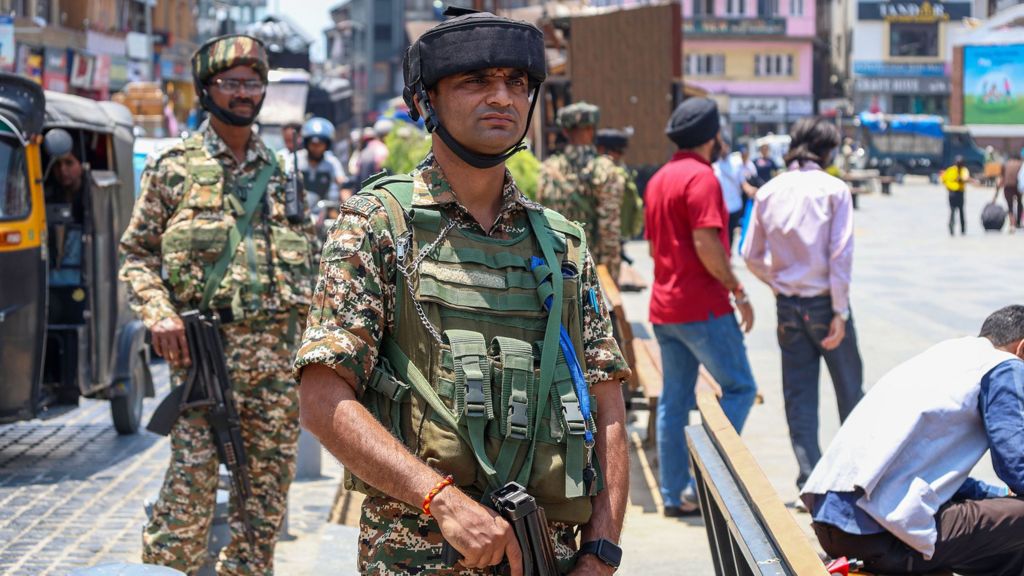
    As Pakistan-administered Kashmir prepares to hold its legislative election starting July 27, the region has been swept by unprecedented waves of violent unrest that have claimed at least 40 lives ahead of polling day. Most of the fatalities – 34 in total – are civilian protesters, with six police and paramilitary personnel also killed in the clashes. Rawalakot, a major population center in the territory, has borne the brunt of the worst bloodshed, with ordinary civilians often caught in the crossfire of confrontations between security forces and demonstrators.

    Naqash Zardad, a 30-year-old employee of the regional education department, was one such unintended victim. Zardad was tending to his buffalo farm on the outskirts of Rawalakot when nearby clashes between police and protesters erupted, blocking all routes leading back to his home. When gunfire rang out during the confrontation, a stray bullet struck Zardad, killing him instantly, his uncle Altaf Hussain confirmed in an interview with the BBC. His death is just one example of how ordinary residents have been trapped between two opposing sides in a mounting political crisis.

    At the core of the unrest is a long-simmering dispute over 12 reserved legislative seats in the territory’s 53-member regional assembly. These seats were first established under 1970s legislation to guarantee political representation for Kashmiri refugees who fled from Indian-administered Kashmir to settle in Pakistan decades ago, on the premise that they would retain a voice in regional governance if the long-standing Kashmir dispute between India and Pakistan was eventually resolved. Today, however, the majority of people eligible for these seats do not actually reside in Pakistan-administered Kashmir, effectively barring local residents from contesting these positions and denying them proportional representation in the legislature.

    The protest movement is led by the Joint Awami Action Committee (JAAC), an alliance of local activist groups that has organized widespread marches and demonstrations demanding the full abolition of the reserved seats. JAAC argues that all legislative seats should be reserved exclusively for permanent residents of the region to ensure fair and representative governance, and the group has stated it has no intention of contesting the upcoming election itself.

    In response to the protests, the Pakistani government has designated JAAC a banned organization under national anti-terrorism laws and launched a widespread crackdown on demonstrators. Critics of the government’s response have accused security forces of using excessive lethal force to suppress the peaceful protest movement, a charge that has sparked international condemnation.

    Large swathes of the local population have heeded JAAC’s call for protests, turning out in large crowds to demonstrate against the seat reservation policy. The unrest has upended the entire electoral process, forcing candidates from all major political parties to scale back their public campaigning dramatically. Candidates’ vehicles and campaign property have been targeted in arson attacks, and multiple candidates have been subjected to physical violence, with authorities blaming JAAC for these attacks. Today, most public political rallies have been canceled, with campaign meetings instead confined to private homes or small street corner gatherings.

    Noreen Arif, the only female candidate running for the ruling Pakistan Muslim League-Nawaz (PML-N) party, confirmed that JAAC’s protest movement had forced her to move all campaign activities into private residences rather than hold public gatherings. Sardar Mukhtar Khan, a candidate from the main opposition Pakistan People’s Party (PPP), noted that the protest movement commands widespread support among young local residents, leaving candidates with no option but to run limited, low-key campaigns. “An election candidate has to move according to the mood of the people in his constituency,” Khan told the BBC.

    It was only in the final week of campaigning that senior leaders from the PPP and PML-N held the first large public rallies of the election cycle, a marked departure from the open, large-scale campaigning that defined previous elections in the region. When the BBC visited the regional capital of Muzaffarabad in the lead-up to polling, reporters documented a pervasive atmosphere of tension and fear across the city. Most residents declined to speak publicly about the election: pro-election residents and candidates fear being labeled traitors or collaborators by JAAC supporters, while JAAC backers report persistent harassment and intimidation from law enforcement and intelligence agencies.

    The Pakistani government has remained firm in its commitment to hold the election as scheduled, spread across three voting phases starting July 27. Ameer Muqam, Pakistan’s federal minister for Kashmir Affairs, framed the vote as the only path forward for the region. “Whoever people vote for should come into power and make decisions regarding their future and destiny. This authority shouldn’t belong to just a few hundred or thousand people; it should rest with the millions of residents living here in Kashmir to decide who they want to bring in,” Muqam told the BBC.

    Not all local observers agree that proceeding with the vote is the right course of action. Zahid Amin, the former head of the Muzaffarabad Development Authority, argued that under current conditions, any election result would lack all credibility. The political context for the vote is already unstable: in the 2021 legislative election, Imran Khan’s Pakistan Tehreek-e-Insaf (PTI) won an outright majority, but the party was ousted from power in a 2022 no-confidence vote, and the region has seen four different prime ministers take office in the four years since. Political analysts describe the 2025 election outcome as too close to call.

    The mounting violence and political crackdown have drawn significant international concern. United Nations High Commissioner for Human Rights Volker Türk issued a public statement on July 17 calling for “prompt, thorough and impartial investigations into all deaths that have occurred due to the unrest, both amongst protesters and members of security forces.” Türk also criticized the government’s decision to ban JAAC under anti-terrorism legislation, noting that “the criminalisation of a civil society organisation and imposition of strict limitations on gatherings raise serious concerns about infringements on the rights to freedom of expression, peaceful assembly and association.”

    Neighboring India, which claims the entire territory of Kashmir alongside Pakistan, has blamed the unrest on “decades-long systemic exploitation and denial of fundamental rights” of local residents by Pakistan. The two nuclear-armed neighbors have each controlled part of Kashmir since independence from British rule, and the dispute has been a source of repeated cross-border conflict for decades. India has long accused Pakistan of sponsoring cross-border militant activity in Indian-administered Kashmir, a charge Pakistan consistently denies.

    Bilawal Bhutto, chairman of the PPP, dismissed Indian statements on the unrest and called for an amicable resolution to the current crisis. Bhutto argued that both JAAC and the Pakistani government bear responsibility for the escalation of violence, and called for the establishment of a truth and reconciliation commission to address grievances, urging both sides to end the punishment of ordinary civilians. He also criticized the 40-day long shutdown of mobile phone and internet services across the region, noting that the prolonged blackout amounts to de facto collective punishment of the entire local population.

    As polling day approaches, the region remains on edge, with deep divisions over the election and the future of political representation showing no signs of being resolved before votes are cast.
  • US vows to punish Iran after Houthis strike tankers

    US vows to punish Iran after Houthis strike tankers

    A sharp escalation of tensions across the Middle East has sent shockwaves through global energy markets and raised urgent warnings of catastrophic regional conflict, after Yemen’s Iran-aligned Houthi movement launched targeted strikes on Saudi oil tankers in the Red Sea this week. The flare-up comes as fighting already resumes over the strategically critical Strait of Hormuz, pitting the United States and Iran against one another just weeks after a short-lived ceasefire collapsed.

    Within hours of the Houthi attacks, which sent international benchmark Brent crude spiking 7% to breach the $100 per barrel threshold for the first time since May, US President Donald Trump issued a stark warning that Iran would face full accountability for the actions of its allied militia. In a post on social media Thursday evening, Trump announced a “major military punishment” would be delivered imminently to both Iran and the Houthis, and confirmed the US would tap hundreds of billions of dollars in frozen Iranian assets held under American control to compensate for any damage to commercial vessels and cargo in the region.

    United Nations Secretary-General António Guterres delivered a grim assessment of the escalating crisis to an emergency meeting of the UN Security Council, warning that the situation is rapidly spinning out of control and teetering on the brink of an unthinkable full-scale regional war. “One crisis feeds another. One escalation triggers the next,” Guterres warned, echoing growing global alarm over the disruption to key international shipping lanes that carry a large share of the world’s energy supplies.

    Economic policymakers have already sounded the alarm over the potential fallout from the energy disruption. European Central Bank President Christine Lagarde warned Thursday that the ongoing energy shock could intensify further, driving already elevated inflation higher across the eurozone and fueling market expectations of an interest rate hike as early as September. German Defence Minister Boris Pistorius added that the outlook for de-escalation remains grim, noting “nothing — absolutely nothing — suggests that a ceasefire, let alone peace, could be reached” for the region at this stage. He also warned that major oil-importing economies face dire consequences if shipping disruptions continue through the Red Sea and Strait of Hormuz.

    Iran has pushed back against US threats, with army spokesperson Mohammad Akraminia confirming that Iranian retaliatory strikes will continue for as long as US attacks on Iranian infrastructure and coastal areas persist. This week alone, the Islamic Revolutionary Guard Corps (IRGC) has joined the Houthi offensive, claiming strikes targeting US assets across Jordan and Kuwait, halting three commercial tankers transiting the Strait of Hormuz, and vowing to maintain pressure on Western and allied interests in the region. Both Jordan and Kuwait have confirmed intercepting incoming drone and missile strikes, with no reported casualties from the attacks so far.

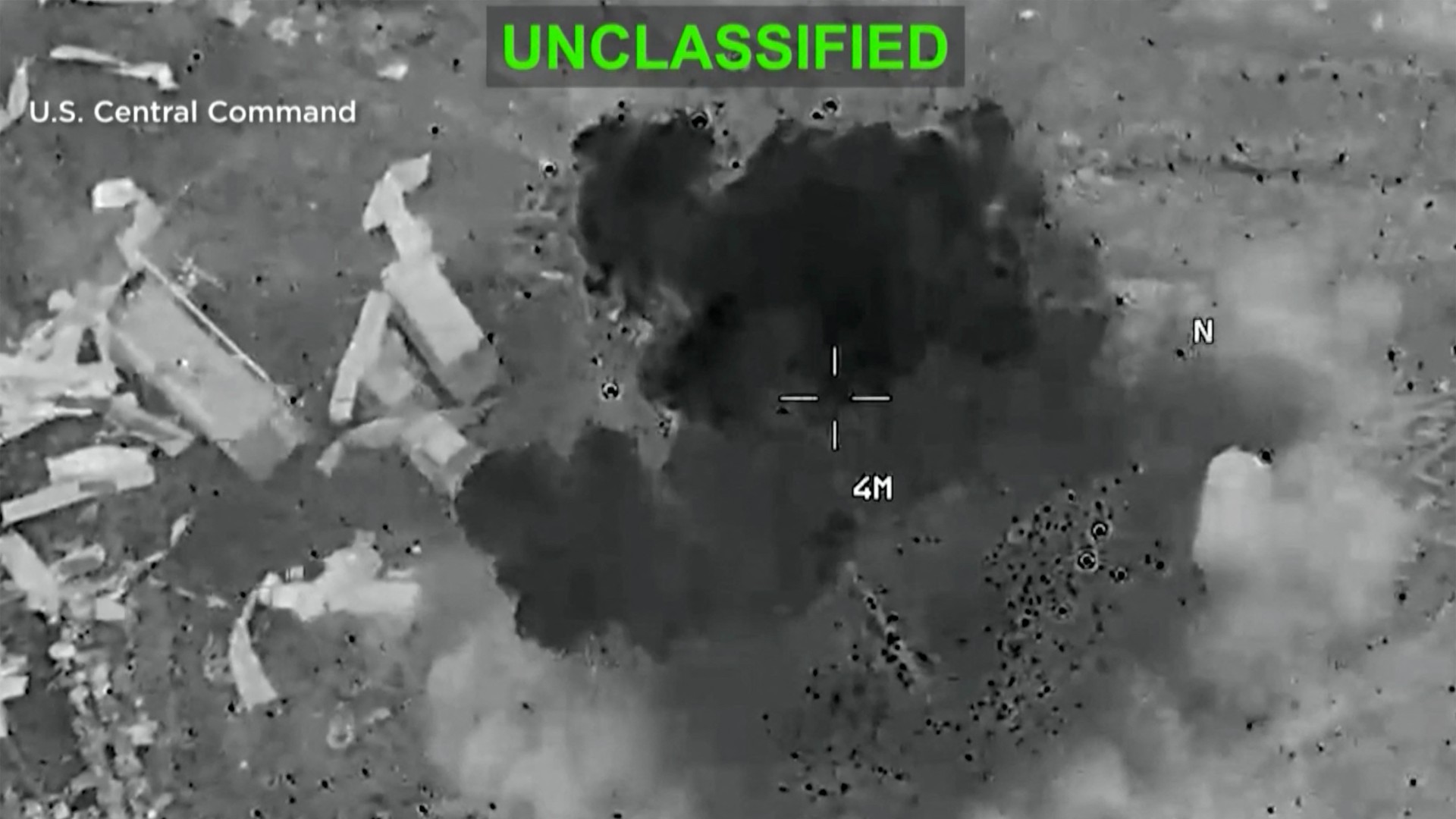
    On the ground, US Central Command confirmed it has conducted 12 consecutive nights of airstrikes targeting Iranian assets across the region. Iranian state media reported Thursday that US strikes have killed two people near the Iraq-Iran border at Shalamcheh, and that two US missiles hit targets near Bushehr, home to Iran’s only civilian nuclear facility — a site that has been repeatedly targeted by US strikes in recent months. Additional reports from Iranian state outlet Tasnim News confirmed a separate missile strike on Qeshm Island in the Strait of Hormuz.

    Confirming the Red Sea attacks, Houthi officials said they targeted two Saudi tankers, the Encelia and the Layla, after declaring a full blockade of all Saudi ports in response to the resumption of regional conflict. British maritime security agency UKMTO confirmed that a tanker’s master reported a hit from an unknown projectile approximately 70 nautical miles southwest of Al Shuqaiq, sparking a fire onboard the vessel. Saudi Arabia has officially confirmed the strike on the Encelia, but has not yet commented on the reported attack on the Layla.

    The new Red Sea front represents a significant worsening of the crisis, as it endangers Saudi Arabia’s ability to redirect oil exports around any prolonged closure of the Strait of Hormuz, through which roughly one-fifth of the world’s daily oil supply transits. US Secretary of State Marco Rubio, speaking on the sidelines of a Southeast Asian summit in Manila, framed the Houthi intervention as a manipulated escalation, claiming the militia had been “suckered” into joining the conflict by Iran. “The Houthis largely were smart and stayed out of all this throughout the conflict, but they now apparently have gotten themselves suckered into this, going after Saudi Arabia and their ships,” Rubio told reporters.

    Diplomatic efforts to de-escalate remain underway, with Oman — a longstanding mediator between the Houthis and Saudi Arabia — confirming it is working to resume peace talks between the two parties and expressed “great concern” over the unfolding crisis in the Red Sea. Domestically, the renewed conflict has grown increasingly unpopular in the US, where midterm elections are looming in November. The US House of Representatives recently passed a symbolic bipartisan resolution — backed by opposition Democrats and a handful of Trump’s fellow Republicans — calling on the president to halt military action against Iran.

  • Three men sentenced to life in jail over Nigeria school kidnappings

    Three men sentenced to life in jail over Nigeria school kidnappings

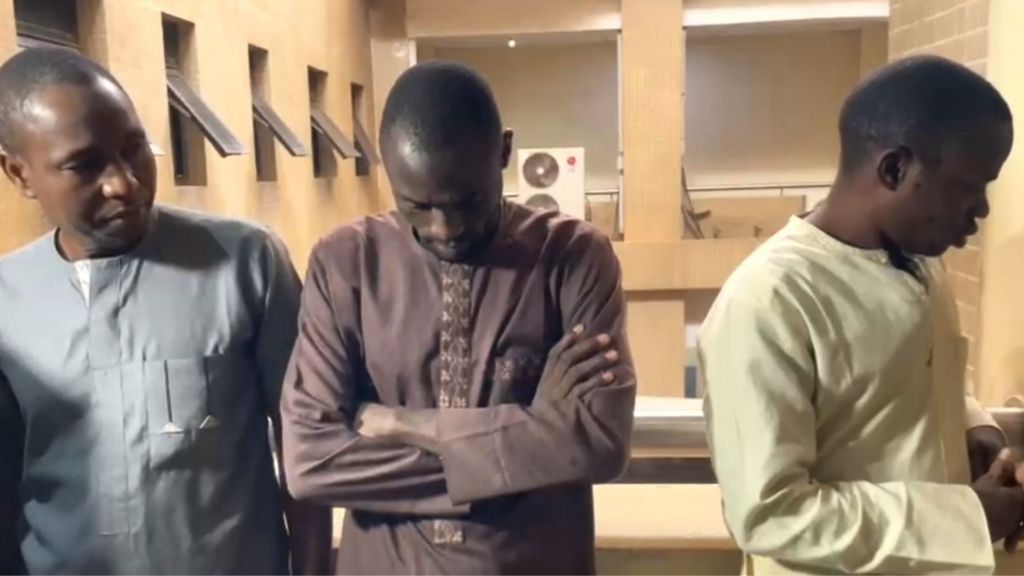
    Nigeria’s Federal High Court in Abuja has handed down life sentences to three men tied to the deadly coordinated mass kidnapping of pupils and teachers from three Oyo State schools earlier this year, after the trio pleaded guilty to a series of criminal charges linked to the attack. The convicts — Abdulrazak Umar (also known by his aliases Abu Khalifa and Abu Khalid), Yunusa Musa, and Shamsu Adamu Sani — confessed to two key offences: hiding critical information about the masterminds behind the May abductions in Oriire district, and acknowledging their membership in an affiliate faction of the notorious Islamist militant group Boko Haram.

    The sentencing comes just two weeks after Nigerian security forces announced the successful rescue of all 44 abducted students and educators, a conclusion to a 56-day hostage ordeal that drew national outrage and renewed scrutiny of the country’s worsening security crisis. While the three men admitted to concealing information about the attack organizers, they entered not guilty pleas to charges of conspiracy to carry out the kidnappings between January and May 2026. Umar, however, made additional confessions: he admitted to running a WhatsApp training network that provided instructions to jihadist recruits, and confirmed his involvement in unregulated illegal mining operations that often fund militant activity across the country.

    The Oriire abductions marked a worrying expansion of jihadist violence in Nigeria, a threat that has long been concentrated in the country’s northeastern region, where Boko Haram has waged an insurgency for more than a decade. The arrival of large-scale school kidnappings linked to the group in the southwestern state shocked many observers and triggered widespread protests from parents, education unions, and human rights groups, all demanding urgent government action to secure soft civilian targets like schools.

    Hostage accounts have laid bare the brutal conditions the abductees endured during their captivity. Speaking to reporters just three days after her rescue in early July, Rachael Folawe Alamu, headteacher of Oriire Community Grammar School, described being forced to move almost constantly through dense bushland at the orders of their kidnappers, often walking for hours through the night. Alamu said the group was forced to sleep and stay in open forest, exposed to extreme sun and heavy rain for most of their 56 days in captivity. She also confirmed that two male teachers were executed by the kidnappers to pressure the Nigerian government to meet their ransom demands: one from her school killed shortly after the abduction, and a second from the local Baptist Nursery and Primary School killed in June.

    Following the rescue operation, security officials confirmed they had taken multiple additional suspects into custody, including one individual identified as a top kingpin behind the coordinated kidnapping plot. Mass abductions of civilians for ransom have become an increasingly common tactic for armed groups across Nigeria in recent years, with criminals and militants consistently targeting vulnerable, unguarded locations such as educational institutions, houses of worship, and remote rural communities.

    Nigeria currently grapples with a web of overlapping security threats, including banditry (the local term for criminal gangs that carry out looting and ransom kidnapping), a long-running Islamist insurgency, intercommunal clashes over land and water resources, and separatist unrest in the country’s southern regions. The persistent failure of authorities to curb widespread insecurity has emerged as a defining political issue ahead of Nigeria’s 2027 general elections, with voters increasingly criticizing the government for its inability to protect civilian populations.

  • Iran says it will pursue ‘eye for an eye’ as US attack near Iraq border kills two

    Iran says it will pursue ‘eye for an eye’ as US attack near Iraq border kills two

    Tensions across the Middle East have surged to new heights this week, after the United States carried out its 12th consecutive day of strikes on Iranian territory, prompting Tehran to formalize a retaliatory “an eye for an eye” defense doctrine in response to explicit threats from former President Donald Trump to target Iranian civilian infrastructure.

    Iranian state media confirmed Thursday that a U.S. strike on the border town of Shalamcheh, which lies along Iran’s frontier with Iraq, left two civilians dead and at least 11 others injured. The strikes also extended to Bushehr, the site of Iran’s only operational civilian nuclear power plant, where two U.S. missiles impacted the area.

    U.S. Central Command has publicly confirmed the 12th straight night of offensive operations, framing the campaign as an effort to “further degrade Iran’s ability to threaten civilian mariners and commercial vessels transiting regional waters.”

    In a provocative social media post, Trump laid out an explicit new red line for future U.S. action: every time Iran targets a vessel moving through the Strait of Hormuz — the strategically critical global chokepoint through which roughly one-fifth of the world’s total oil and liquefied natural gas supplies transit — the U.S. will destroy key Iranian civilian infrastructure. “Any time the Islamic Republic of Iran shoots at a ship in the Strait of Hormuz, whether it be by Missile, Rocket, Drone, or any other device or weapon, the United States will bomb and destroy ONE BRIDGE OR POWER PLANT,” Trump wrote.

    Iran’s foreign minister Abbas Araghchi pushed back immediately on the social platform X, making clear Tehran’s new position: “Our defense doctrine is clear: eye for an eye. Any aggression against Iran, including our infrastructure, will compel a powerful and decisive response.” He added that any third party providing support to the U.S. campaign would also be treated as a legitimate target for retaliation.

    Iranian military spokesperson Mohammad Akraminia, speaking on state television, reinforced this stance, noting: “The armed forces’ retaliatory attacks will continue as long as the US attacks on the country’s infrastructure and coastal areas continue.”

    Retaliatory strikes have already spread beyond Iran’s borders. On Thursday morning, both Jordan and Kuwait confirmed they intercepted incoming attacks, which Iran’s Islamic Revolutionary Guard Corps (IRGC) confirmed targeted U.S. military assets hosted in both countries. The Iranian army announced it deployed “destructive drones” to strike multiple U.S. facilities across Kuwait, including ammunition and logistics depots at Camp Doha, fuel storage tanks at Ali al-Salem Air Base, and an ammunition depot at Camp Arifjan.

    In the Strait of Hormuz itself, the IRGC announced it had halted three transiting oil tankers on Thursday, asserting full control over the waterway. “The Strait of Hormuz is under our control… and any ship that is deceived by the US and intends to pass without coordination with the Islamic Republic of Iran will suffer the same fate,” the corps said.

    The conflict has now expanded to the Red Sea, where Yemen’s Houthi movement — which recently entered the fray and declared a blockade on Saudi ports — claimed responsibility for missile and drone strikes on two Saudi oil tankers overnight. The Houthi movement identified the targeted vessels as the *Encelia* and the *Layla*. UK Maritime Trade Operations (UKMTO), the British body that monitors naval security in the region, confirmed the master of one tanker reported being struck by an unidentified projectile roughly 70 nautical miles southwest of Saudi Arabia’s Al Shuqaiq, adding that the projectile sparked a fire that the crew was working to extinguish. Saudi Arabia has confirmed the *Encelia* was hit, but has not yet issued comment on the second tanker.

    U.S. Secretary of State Marco Rubio accused Iran of manipulating the Houthis into joining the conflict, saying, “The Houthis largely were smart and stayed out of all this throughout the conflict, but they now apparently have gotten themselves suckered into this, going after Saudi Arabia and their ships. I hope they will de-escalate, because I think the Houthis, frankly, got snookered into this thing by the Iranians.”

    As regional powers move to contain the escalation, Oman announced Thursday it is facilitating the resumption of de-escalation talks between the Houthi movement and the Saudi government to lower tensions in the Red Sea and Yemen.

  • Kozo Okamoto, Japanese militant who took part in a 1972 Tel Aviv airport attack, dies in Beirut

    Kozo Okamoto, Japanese militant who took part in a 1972 Tel Aviv airport attack, dies in Beirut

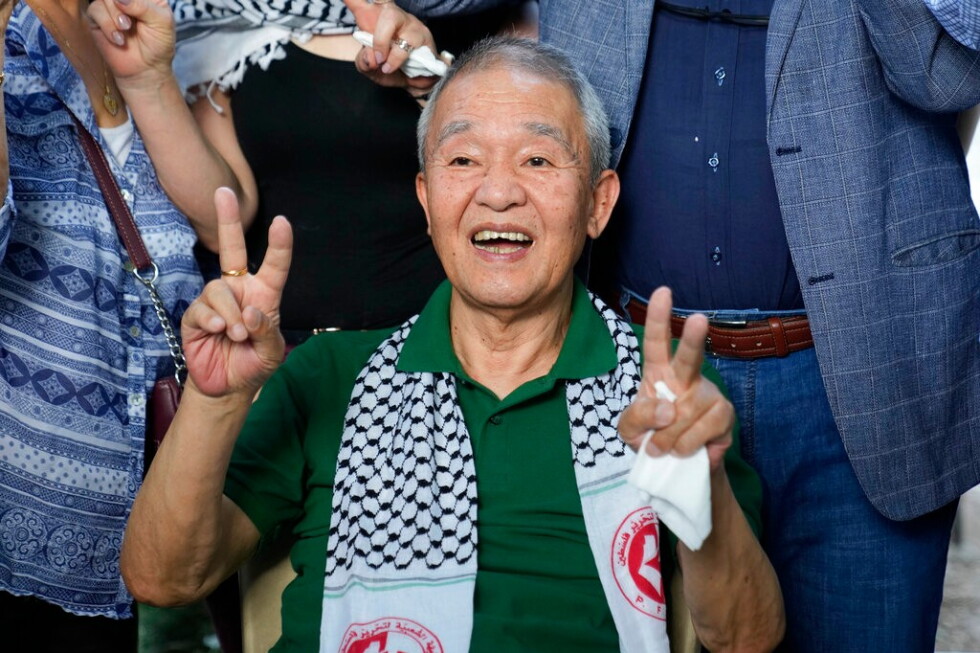
    BEIRUT — Kozo Okamoto, the Japanese radical militant who participated in one of the deadliest attacks targeting Israeli civilians more than 50 years ago, has died at the age of 78 in the Lebanese capital Beirut, according to an official announcement from the Popular Front for the Liberation of Palestine (PFLP), the Palestinian faction that hosted and protected Okamoto for decades. The PFLP, the second-largest faction within the Palestine Liberation Organization (PLO), confirmed that Okamoto passed away on Thursday following a long undisclosed illness.

    After his release from Israeli custody, Okamoto settled permanently in Lebanon, where he lived under the protection of Palestinian leftist groups and made only a handful of public appearances over nearly 40 years. Within PFLP circles, he was known by the alias Ahmad al-Yabani, meaning Ahmad the Japanese. In a formal statement released after his death, the PFLP praised Okamoto’s decades-long commitment to the Palestinian cause, framing his life as one defined by sacrifice for anti-Israel struggle. “His journey was marked by immense sacrifices spanning decades on the battlefields of struggle in support of the Palestinian cause,” the group said, adding that Okamoto “never compromised nor faltered but remained steadfast to his principles.”

    Okamoto’s legacy is inextricably tied to the 1972 attack on Tel Aviv’s former international airport, a coordinated joint operation between the PFLP and the Japanese Red Army (JRA), a violent ultra-leftist guerrilla group founded in 1971. On May 30, 1972, Okamoto and two JRA comrades flew to Tel Aviv from a European departure point, retrieved their luggage packed with hidden rifles and grenades, and opened fire on crowds in the airport terminal. The assault left 26 people dead and dozens more injured. Okamoto’s two collaborators were killed during the response to the attack, while Okamoto was wounded and taken into Israeli custody.

    Convicted of multiple counts of murder and sentenced to life in Israeli prison, Okamoto served only 12 years of his sentence before being released in 1985 during a large-scale prisoner exchange between Israel and Palestinian guerrilla factions. Following his release, he was granted political asylum in Lebanon, where he remained until his death. Over the course of his decades in Lebanon, Tokyo repeatedly demanded that Lebanese authorities extradite Okamoto to Japan to face justice, but Beirut consistently rejected these requests, as Okamoto had become a celebrated figure among many Lebanese and across the Arab world for his alignment with the Palestinian struggle against Israel.

    Okamoto’s life in Lebanon was not without legal incident. In 1997, Lebanese security forces arrested Okamoto and four other Japanese citizens who had been living illegally in the country, sheltered by Palestinian and leftist Lebanese groups during the chaos of the 1975-1990 Lebanese Civil War. After a high-profile trial, the four other Japanese detainees were transferred to Japanese authorities in 2000, while Okamoto became the first person ever to receive formal political asylum status from the Lebanese government. During his 1997 trial, Okamoto famously testified that he identified as “an Arab resistance fighter.”

    The most high-profile public appearance Okamoto made during his time in Lebanon came in May 2022, when he attended a commemoration event at a Beirut cemetery — the resting place of many prominent Palestinian militants — to mark the 50th anniversary of the 1972 airport attack.

    Beyond the 1972 airport attack, the JRA claimed responsibility for multiple high-profile terrorist attacks across the globe during the 1970s, including the 1975 seizure of the U.S. Consulate in Kuala Lumpur, Malaysia. The PFLP, for its part, is a radical Palestinian faction that first gained global notoriety for the 1970 simultaneous hijacking of four Western civilian airliners, and later for the 1976 hijacking of an Air France flight traveling from Tel Aviv to Paris that was diverted to Entebbe, Uganda. Today, PFLP leader Ahmed Saadat remains one of the most prominent Palestinian figures held in Israeli custody; he was imprisoned for his alleged role in organizing the 2001 assassination of Israeli Tourism Minister Rehavam Zeevi, an ultranationalist politician who openly advocated for the mass expulsion of Palestinians from Israeli-controlled territory.

  • Ghanaians ask International Criminal Court to examine years of anti-migrant violence in South Africa

    Ghanaians ask International Criminal Court to examine years of anti-migrant violence in South Africa

    JOHANNESBURG and ACCRA – For nearly 20 years, periodic waves of xenophobic violence targeting foreign migrants have plagued South Africa, leaving a trail of death, displacement, and unresolved impunity. Now, two private Ghanaian citizens have taken the extraordinary step of asking the International Criminal Court (ICC) to intervene, arguing that repeated, widespread attacks on non-citizens qualify as crimes against humanity under international law.

    The petition, filed July 15 with ICC prosecutors by Palgrave Boakye-Danquah, a former Ghanaian government spokesperson, and Emmanuel Kotin, a Ghanaian security analyst, demands accountability for nearly two decades of anti-migrant attacks. The filing specifically documents allegations of systematic violence between 2015 and 2025, ranging from fatal assaults and mass looting of migrant-owned property to forced displacement of thousands of foreign-born residents, most of whom are citizens of other African nations.

    Crucially, the petitioners also accuse South Africa’s national government of failing to uphold its responsibility to prevent these attacks and prosecute perpetrators, a core requirement under the Rome Statute that governs the ICC’s mandate. In an interview with the Associated Press on Thursday, Kotin clarified that the filing is an independent private initiative, with no official endorsement or backing from the government of Ghana. “We are simply asking the ICC to investigate these allegations,” Kotin told the AP.

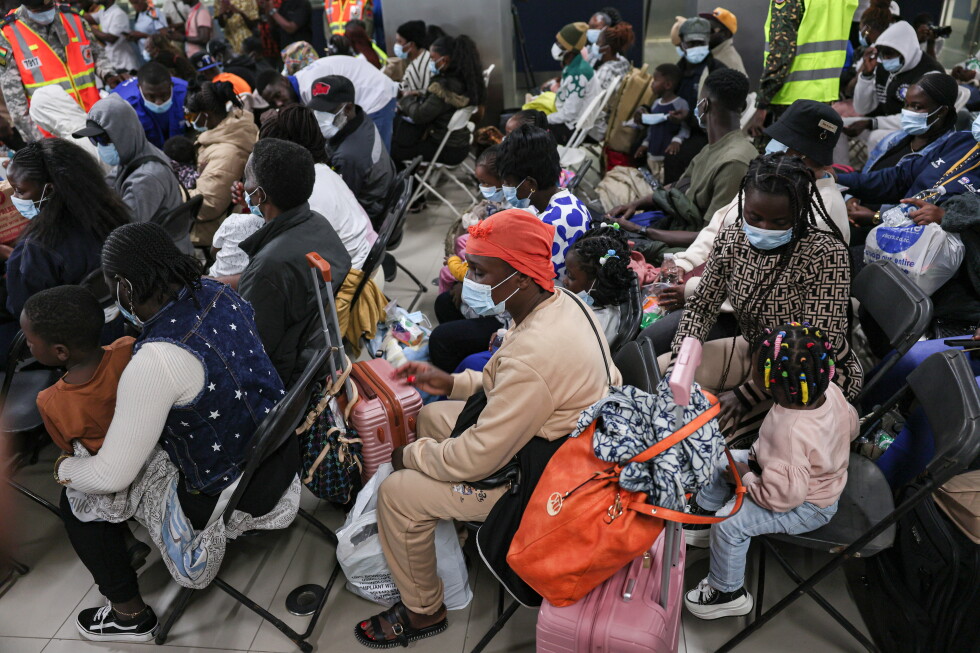
    Anti-migrant unrest has reemerged with particular intensity in recent months, as protesters in South Africa have scapegoated foreign nationals for the country’s deep economic challenges, including persistently high unemployment, widespread crime, and strained access to public housing and healthcare. The upsurge in violence targeting African migrants has already sparked diplomatic friction across the continent: the governments of Nigeria, Ghana, and Malawi have arranged large-scale repatriations of their citizens who chose to flee the violence, and all three nations have summoned South Africa’s senior diplomatic envoys to formally protest the ongoing attacks.

    As of Thursday, a spokesperson for South Africa’s national government had not issued an immediate response to requests for comment on the new ICC petition. The court has confirmed to the AP that it has received the formal communication, following the petitioners’ public announcement of the filing.

    Under the rules of the Rome Statute, private individuals and civil society groups are permitted to submit information on alleged crimes falling under the ICC’s jurisdiction. After receiving a communication, ICC prosecutors conduct an initial review to determine whether there is a reasonable factual and legal basis to open a formal investigation. It is important to note that the submission of a petition does not automatically trigger a probe; the court receives hundreds of similar communications annually, and only a small fraction advance to the stage of a full formal investigation.

  • Israeli lawmakers lead mass Al-Aqsa Mosque raid

    Israeli lawmakers lead mass Al-Aqsa Mosque raid

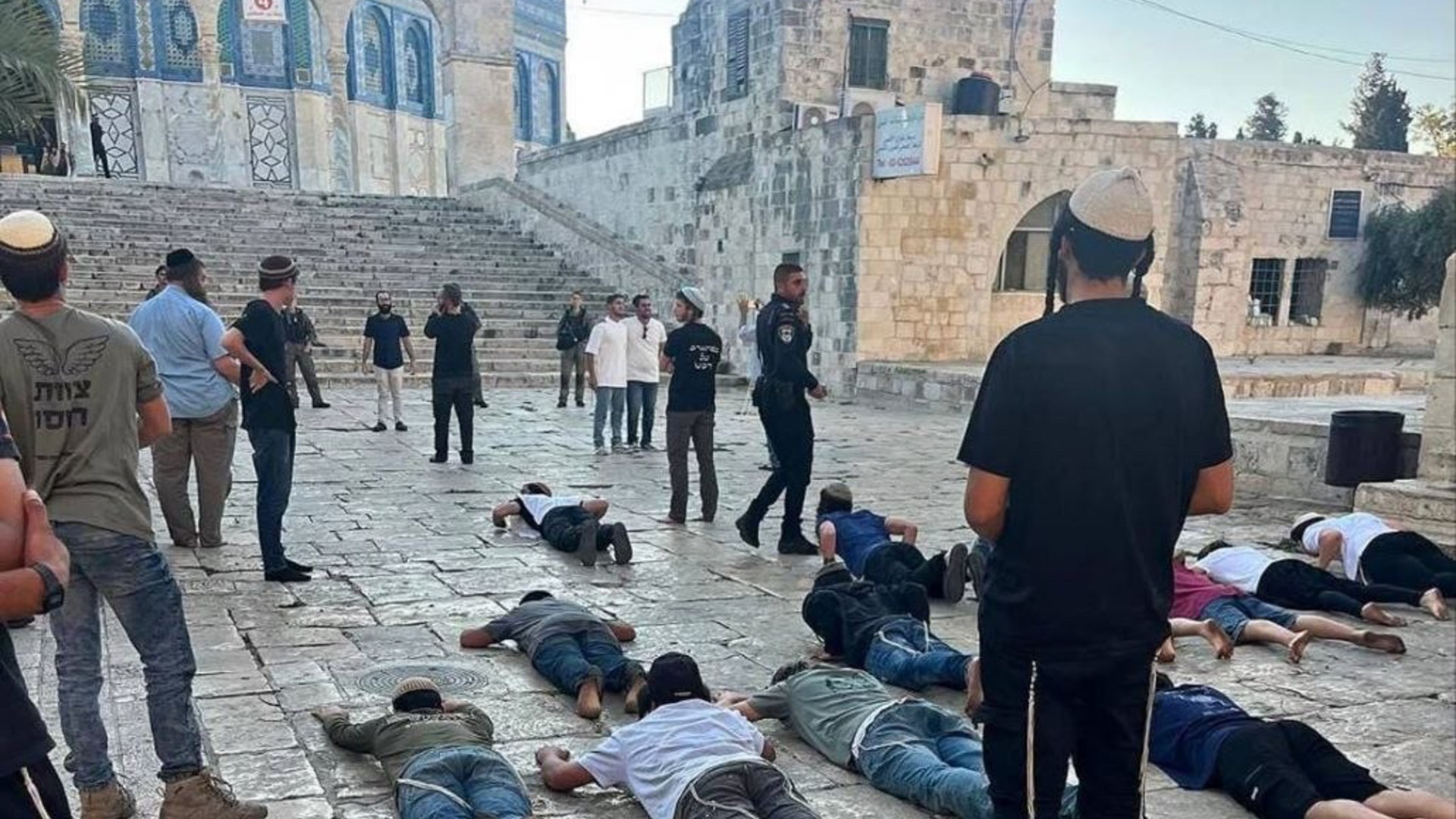
    On Thursday, a large-scale incursion into the Al-Aqsa Mosque compound in occupied East Jerusalem was led by senior Israeli government officials and lawmakers, with thousands of ultranationalist Israelis entering the sacred Islamic site under heavy armed police protection, in a move that has sharply escalated regional tensions.

    Prior to the entry of Israeli groups, Israeli security forces had blocked hundreds of Palestinian worshippers from reaching the mosque for pre-dawn prayers, forcing many faithful to hold prayer services in adjacent streets outside the complex. By 10 a.m. local time, the Palestinian Ministry of Endowments and Religious Affairs confirmed that at least 2,300 Israelis had entered the mosque’s courtyards, with the incursion expected to continue through midday.

    Among the high-profile participants were Itamar Ben Gvir, Israel’s far-right national security minister, and Amit Halevi, a sitting legislator from Prime Minister Benjamin Netanyahu’s ruling Likud Party. The incursion was timed to coincide with Tisha B’Av, a Jewish fast day that marks the destruction of the First and Second Temples in Jerusalem. Ultranationalist Jewish groups that advocate for the destruction of Al-Aqsa Mosque to build a Third Jewish Temple on the site had organized the mass action, originally setting a target of 5,000 participants.

    Witnesses on the ground documented participants violating longstanding site rules: they raised Israeli flags across the mosque courtyards, held Jewish prayer services, danced and sang, and even erected a temporary shade tent — all acts explicitly prohibited under the decades-old status quo agreement that governs the site.

    The Palestinian Endowment Ministry issued a scathing condemnation of the incursion, calling it a “blatant incursion” led by senior Israeli political figures that represents a gross violation of the site’s Islamic sanctity and a direct attack on the historical and legal status quo at Al-Aqsa. “The entire 144-dunam Al-Aqsa Mosque complex is the exclusive, indivisible right of the Muslim world alone,” the ministry said in a statement, adding that “these provocative actions, carried out at the highest levels of the occupying government, are intended to ignite a religious war across the entire region.”

    The status quo, a decades-old arrangement recognized by the international community, designates the entire Al-Aqsa compound as an exclusively Islamic holy site, with full administrative authority over access, worship, maintenance and excavations held by the Jerusalem Islamic Waqf, the Muslim religious trust that manages the site. However, since Israel occupied East Jerusalem in 1967, it has gradually eroded this agreement, seizing control of entry access from the Waqf and facilitating regular daily incursions by ultranationalist Israelis. In recent years, these incursions have grown dramatically in size, drawing tens of thousands of Israeli participants annually.

    The Palestinian Authority’s Jerusalem Governorate noted that Israeli authorities relaxed group size restrictions for Thursday’s incursion, allowing groups of up to 150 people to enter at once, compared to the usual cap of around 30. Over the past decade, Israeli officials have also increasingly permitted Jewish prayer and flag displays inside the compound, actions that directly contravene the status quo.

    Days before the incursion, Sheikh Ekrima Sabri, senior Al-Aqsa preacher and former Grand Mufti of Jerusalem, warned that Israeli authorities were deliberately exploiting Jewish religious holidays to escalate provocative actions aimed at permanently changing the status of the holy site. He noted that officials have increasingly turned these occasions into opportunities to organize large-scale incursions involving cabinet ministers, senior officials and members of Israel’s parliament, in a bid to normalize the violations and grant them political legitimacy. The incursion proceeded amid widespread silence from the international community and major Islamic organizations, as highlighted in local Palestinian reporting on the event.

  • Ghanaians’ ICC petition over migrant attacks ‘opportunistic’, says South Africa

    Ghanaians’ ICC petition over migrant attacks ‘opportunistic’, says South Africa

    A wave of violent anti-undocumented migrant protests across South Africa has sparked cross-African diplomatic friction and an unprecedented legal challenge filed at the International Criminal Court (ICC) by two Ghanaian activists, plunging the continent into a heated debate over migration governance and state accountability.

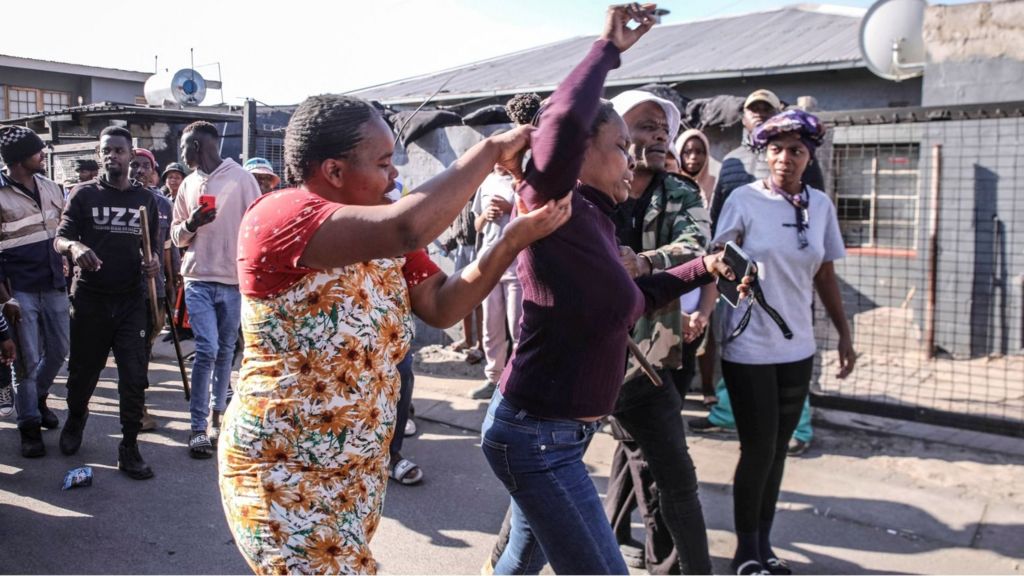
    The unrest, led by anti-migrant groups that set a 30 June deadline for all undocumented foreign nationals to exit the country, has driven widespread displacement. Protesters have taken extreme steps including door-to-door checks of residents’ migration status to enforce their demands, creating a climate of fear that has pushed tens of thousands of migrants to flee. Demonstrators frame their actions as a response to South Africa’s deep socioeconomic crises, blaming undocumented migrants for soaring unemployment, escalating crime, and the crumbling of public services that millions of South Africans rely on daily.

    Disputes over the scale of the displacement highlight growing rifts. South African government data indicates more than 53,000 foreign nationals have been either deported or have left voluntarily in recent weeks. But an independent tally compiled by Agence France-Presse, based on official figures from migrants’ home countries, puts the total number of people who have exited South Africa over the past two months above 160,000, underscoring the far broader reach of the unrest than official counts acknowledge.

    Last week, two Ghanaians — Palgrave Boakye-Danquah, a former Ghanaian government spokesperson for governance and security, and Emmanuel Kotin, a counter-terrorism and security analyst — formally submitted a petition to the ICC based in The Hague. The filing argues that the ongoing pattern of targeted violence against migrants meets the legal definition of crimes against humanity, and accuses the South African government of systemic failure to prevent attacks or hold perpetrators accountable. “For years, African brothers and sisters have been killed, beaten and driven from their homes in South Africa,” the pair said in a joint statement. “While we commend individuals in South Africa who have condemned these acts, the pattern, scale and recurrence of the violence raise serious questions about the failure of state authorities to prevent, investigate, and punish these crimes.” As of this report, the ICC has not released any public statement on whether it will move forward with reviewing the petition.

    South Africa has forcefully pushed back against the filing, dismissing it as an opportunistic action that fails to meet the ICC’s legal threshold for intervention. The country’s foreign ministry has emphasized that its domestic judicial system is fully capable of investigating and prosecuting any crimes connected to the unrest. South African officials have repeatedly rejected accusations of state inaction, noting that President Cyril Ramaphosa has publicly acknowledged widespread public frustration over unregulated migration but has clearly condemned all violent attacks on foreign nationals, warning citizens against taking the law into their own hands. In an official response, the South African government stated it “categorically rejects xenophobia, racism, homophobia, and intolerance and discrimination in all their manifestations”, adding that upholding respect for the dignity of every person within its borders is both a constitutional obligation and a moral duty.

    Tensions between South Africa and Ghana have escalated rapidly in recent weeks. Ghana became one of the first African nations to organize repatriation flights for its citizens caught up in the violence after the latest wave of protests erupted, and has confirmed one Ghanaian citizen was killed in anti-migrant attacks — a claim South African authorities have outright denied. In the weeks since, multiple other African countries including Kenya, Malawi, Nigeria and Uganda have also arranged organized transportation to help their citizens exit South Africa safely.

    Over the weekend, leaders from the Economic Community of West African States (ECOWAS) issued a formal condemnation of the attacks, specifically calling out the “despicable treatment of West African citizens” and calling on South African authorities to take immediate, decisive action to end the violence and protect all foreign nationals residing in the country. The United Nations has also joined the international conversation, warning that political and popular leaders are unfairly scapegoating migrants to distract from South Africa’s deep-rooted socioeconomic challenges.

    As Africa’s largest economy, South Africa has long drawn migrants from across the continent seeking better economic opportunity, with many crossing the border without formal authorization. Official statistics put the number of documented foreign residents at more than three million, a figure that does not include the undocumented population, whose exact size remains unconfirmed. To address the underlying issues, South Africa has called for continent-wide discussions through the African Union (AU) focused on tackling the root causes of irregular migration across Africa, framing the crisis as a shared continental challenge rather than an isolated South African problem.

  • Suspected militants kill judge, security guard in ambush in restive southwest Pakistan

    Suspected militants kill judge, security guard in ambush in restive southwest Pakistan

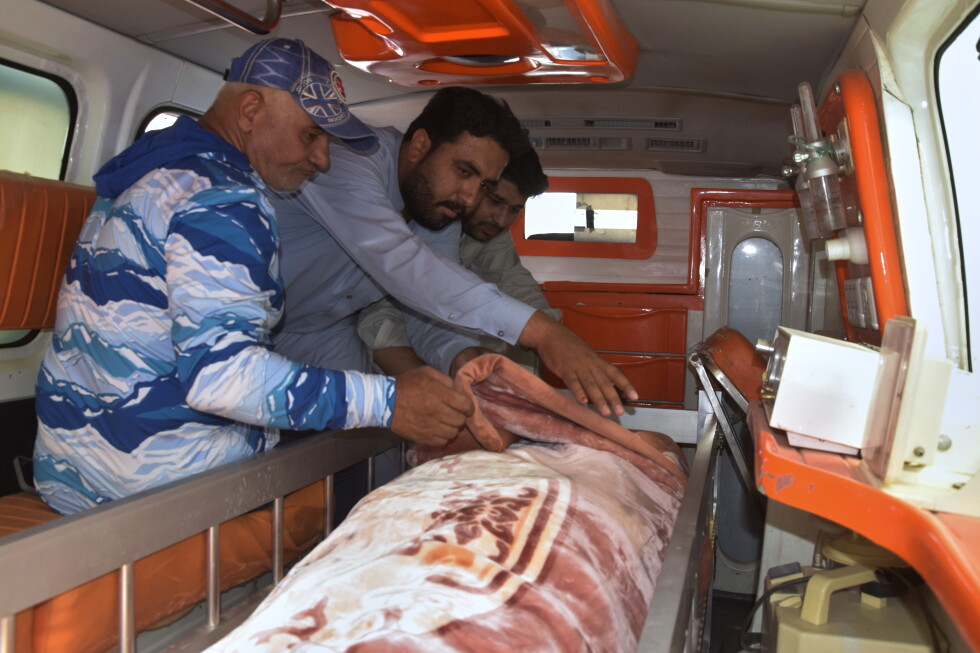
    A brazen militant ambush targeting a district judicial official in Pakistan’s restive southwestern province of Balochistan has left two people dead, triggering swift pledges from the country’s top military leadership to wipe out all terrorist infrastructure operating across the nation. The attack unfolded Thursday on the outskirts of Mastung district, where separatist insurgent groups have sharply ramped up violent operations targeting both security personnel and civilian authorities in recent months. According to local Mastung police chief Abdul Rauf, District Judge Abdul Hakim Kakar was en route from Quetta, the capital of Balochistan, to Mastung to preside over scheduled court hearings when the ambush was carried out. Both Kakar and his assigned security guard were killed at the scene, with the assailants fleeing before security reinforcements arrived. As of Friday morning, no militant organization has issued a public claim of responsibility for the attack. Counterterrorism analysts and local law enforcement however point to long-active Baloch separatist insurgent networks as the prime suspects, particularly the Baloch Liberation Army (BLA), an outlawed faction that has led a years-long insurgency against the Pakistani government. The BLA was officially designated a global terrorist organization by the United States in 2019, and has carried out dozens of high-profile attacks targeting government officials, security personnel, and civilian infrastructure across Balochistan in recent years. The targeted killing of Judge Kakar drew immediate and widespread condemnation from Pakistan’s top civilian leadership. President Asif Ali Zardari, Prime Minister Shehbaz Sharif, and Balochistan Chief Minister Sarfraz Bugti all issued statements denouncing the attack, with Bugti ordering law enforcement and counterterrorism units to launch an urgent manhunt to track down and apprehend all those involved in planning and executing the ambush. The attack comes against a backdrop of intensifying clashes between Pakistani security forces and Baloch insurgent groups across the province. In recent weeks alone, security operations targeting insurgent cells have killed more than 100 alleged Baloch militants across multiple districts of Balochistan, following a string of large-scale insurgent attacks that killed dozens of security personnel and civilians. On the same day as Thursday’s ambush, Pakistan’s Army Chief Field Marshal Asim Munir used a public address at a national security workshop in Rawalpindi, the country’s main garrison city, to reaffirm the military’s unwavering commitment to rooting out terrorism. “Operations against militants in Balochistan and all other parts of the country will continue until the menace of terrorism and its abettors are eliminated from Pakistan,” Munir stated, according to an official statement released by the Pakistani military. He added that coordinated, sustained operations by security forces and law enforcement agencies, supported by broad public backing, would ultimately bring lasting stability and peace to Balochistan. Munir also repeated longstanding Pakistani military accusations that foreign powers are backing proxy insurgent groups in Balochistan to foment unrest and destabilize the province, stressing that these disruptive efforts would be defeated through a “firm and decisive response” from Pakistan’s armed forces. As Pakistan’s largest and least densely populated province, Balochistan has faced decades of insurgent violence. Multiple separatist Baloch factions have waged an armed campaign against the federal government since the early 2000s, demanding greater political autonomy and control over the province’s abundant natural energy and mineral resources. In addition to separatist violence, the province has also faced repeated attacks by the Pakistani Taliban, an affiliate of the Afghan Taliban that has carried out hundreds of attacks across Pakistan in recent years.

  • Kashmiri activist Khurram Parvez and journalist Irfan Mehraj freed on bail, under tight curbs

    Kashmiri activist Khurram Parvez and journalist Irfan Mehraj freed on bail, under tight curbs

    In a closely watched legal development out of India’s capital New Delhi, a prominent Kashmiri human rights campaigner and a respected independent journalist have walked free from jail on bail after years of detention on controversial terrorism financing charges stemming from their work in India-administered Kashmir.

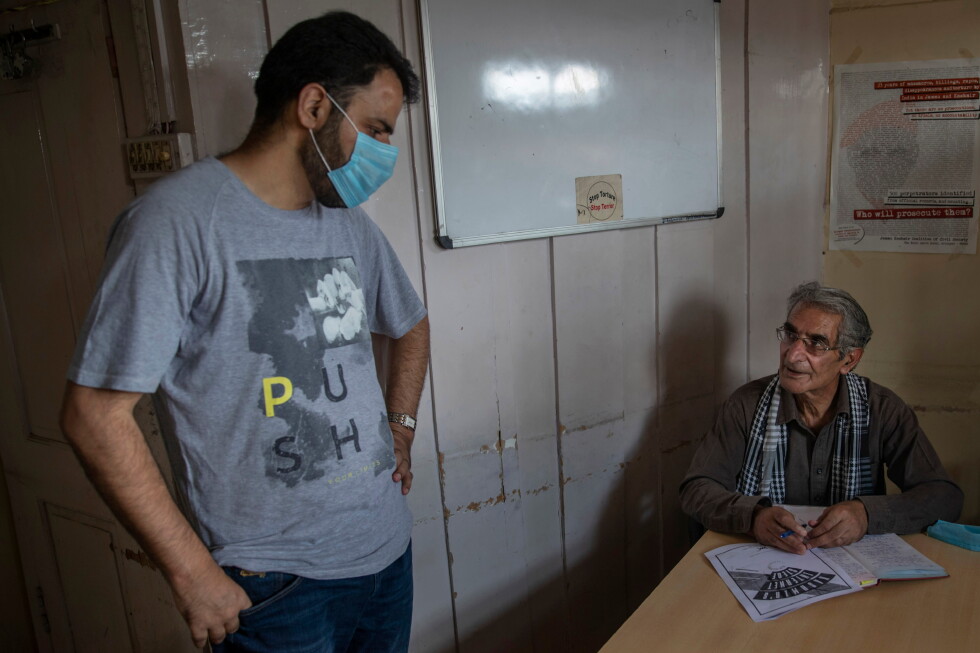
    Rights advocate Khurram Parvez was first taken into custody under India’s sweeping Unlawful Activities Prevention Act (UAPA), a strict anti-terror legislation, back in 2021, while journalist and researcher Irfan Mehraj was arrested under the same law two years later in 2023. Though both were released from New Delhi’s Tihar Jail late Wednesday, their freedom remains heavily constrained by strict court-ordered conditions, as India’s federal National Investigation Agency (NIA), the country’s top counterterrorism body, moves to overturn the bail ruling.

    The release marks a rare win for critics of the Indian government’s widespread crackdown on dissent in Kashmir, a campaign that has ramped up dramatically since New Delhi revoked the Himalayan region’s long-held semi-autonomous special constitutional status in August 2019. In the years following that policy shift, authorities have used the stringent anti-terror law to detain dozens of rights workers, independent journalists, and political dissidents across the region, drawing widespread international condemnation.

    The path to release began last week, when a lower Indian court granted bail to Parvez and Mehraj. The NIA immediately filed an appeal to block the order, bringing the case before the Delhi High Court. On Tuesday, the high court declined to suspend the lower court’s release ruling, but sided with the agency to impose far harsher restrictions on the pair’s movement, association, and public activity while the appeal proceeds through the legal system.

    International human rights organizations, including the United Nations’ Office of the High Commissioner for Human Rights, have repeatedly called for the pair’s release for years, arguing their detention was solely a result of their legitimate human rights documentation and journalistic work. Parvez has been a leading figure with the Jammu and Kashmir Coalition of Civil Society (JKCCS), a prominent regional human rights organization that has documented widespread abuses by Indian security forces in Kashmir for decades. Mehraj worked as a researcher with the group alongside his independent journalism.

    The NIA’s case alleges that Parvez, Mehraj, and the JKCCS used the organization to channel funding to militant groups and advance a separatist political agenda in the region. Both men have repeatedly and categorically denied all the allegations leveled against them. The JKCCS has become one of the most prominent sources of on-the-ground reporting on human rights violations in Kashmir, publishing in-depth investigations that document what it describes as systemic, routine torture by Indian security forces deployed across the region. India maintains hundreds of thousands of troops in Indian-administered Kashmir, and the JKCCS has repeatedly highlighted that broad legal immunity granted to security personnel has created a culture of impunity that enables ongoing abuse with no accountability.

    Following the pair’s release, two leading global human rights groups issued a statement condemning the legal proceedings against them. The Paris-based International Federation for Human Rights and the World Organization Against Torture called the charges against Parvez and Mehraj “trumped-up,” arguing the entire case is a politically motivated effort to discredit both the men and the legitimate human rights work carried out by the JKCCS. The organizations renewed their call for Indian authorities to drop all charges against the pair entirely.

    Full legal proceedings against Parvez and Mehraj are set to continue in the coming weeks, with the NIA’s appeal against the bail ruling expected to be heard in the Delhi High Court in the near future.

    The Kashmir region has been mired in conflict for nearly 80 years, with both India and Pakistan claiming the entire Himalayan territory. Since 1989, armed militant groups have fought against New Delhi’s rule in Indian-administered Kashmir, where the majority of the population identifies as Muslim, with many supporters backing either unification with Pakistan or full independence for the region.