分类: world

  • Ancient Lebanese city of Tyre added to heritage danger list

    Ancient Lebanese city of Tyre added to heritage danger list

    Against the backdrop of ongoing cross-border conflict between Israel and Lebanese militant group Hezbollah, one of the Mediterranean’s most historically significant ancient settlements has been formally recognized as a cultural site at immediate risk. On Wednesday, during the 48th session of the World Heritage Committee in Busan, South Korea, UNESCO voted to add the ancient Lebanese city of Tyre to its official List of World Heritage in Danger.

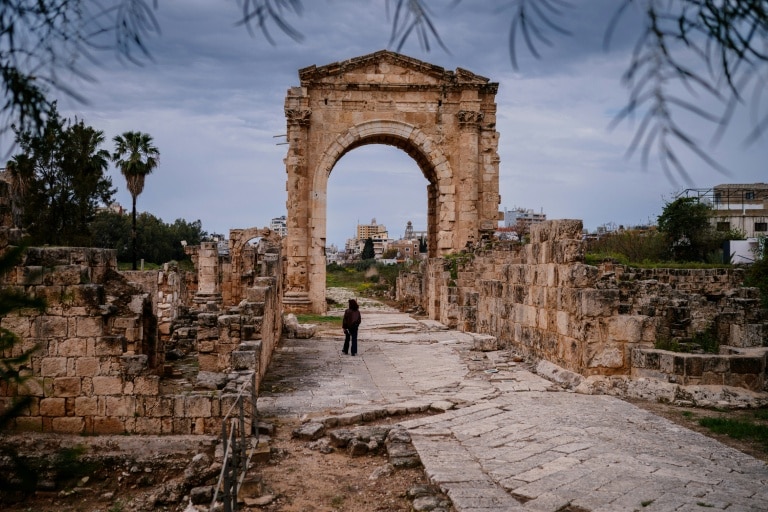
    Located roughly 80 kilometers south of Beirut and just 20 kilometers north of the Israeli-Lebanese border, Tyre was first inscribed as a UNESCO World Heritage Site in 1984. Founded approximately 4,700 years ago, the coastal city carries layers of civilizations across millennia, having been ruled by Phoenician, Persian, Hellenistic, Roman, and Byzantine powers. Its protected heritage zones hold exceptionally well-preserved Roman-era archaeological remains, including a iconic 2nd-century triumphal arch and an ancient hippodrome that draw scholars and tourists from across the globe.

    But the site’s future has been thrown into peril by months of cross-border hostilities. In June this year, one of Tyre’s two protected heritage zones suffered a direct Israeli airstrike. According to Lebanese culture ministry officials speaking to Agence France-Presse after the strike, an on-site administrative building was destroyed in the attack, while flying debris from nearby bombardments caused visible damage to irreplaceable archaeological features including stone columns, decorative capitals, and intricate ancient mosaics.

    As violence intensified in subsequent months, the Israeli military issued mandatory evacuation orders for populated districts of Tyre that overlap with portions of the archaeological site. Tens of thousands of local residents fled the area en masse, though a large majority have since returned to their homes after the immediate intensity of strikes ebbed. In its official announcement of the new danger listing, UNESCO noted that the site has already sustained direct damage from bombardment, and worsening conditions have created growing alarm over its long-term preservation, particularly given the persistent risk of further military impacts. The UN body confirmed that the conditions required to protect and conserve Tyre’s “outstanding universal value” no longer exist, and added that the designation came at the formal request of the Lebanese government.

    Lebanese Culture Minister Ghassan Salame welcomed UNESCO’s decision, saying the designation would draw urgent attention from the global body and its member states to a culturally critical site located at the heart of one of the world’s most volatile ongoing conflicts. Earlier this year, Salame publicly condemned Israel for failing to adhere to the 1954 Hague Convention for the Protection of Cultural Property in the Event of Armed Conflict, an international treaty that requires all warring parties to avoid targeting recognized cultural sites. He also accused Israeli forces of intentionally disregarding “blue shield” markings—the internationally recognized emblem established by a UNESCO-linked committee to mark protected cultural sites during armed conflict.

    The conflict that pushed Tyre to this point began when Hezbollah opened rocket fire on Israeli targets to avenge the killing of Iran’s supreme leader by a joint US-Israeli operation. Israel responded with intense air strikes and limited ground incursions into southern Lebanon that have killed more than 4,300 Lebanese people to date, leaving cultural sites and civilian communities across the border region facing widespread destruction and displacement.

  • Russia’s businesses under strain from Ukraine’s attacks on Wildberries

    Russia’s businesses under strain from Ukraine’s attacks on Wildberries

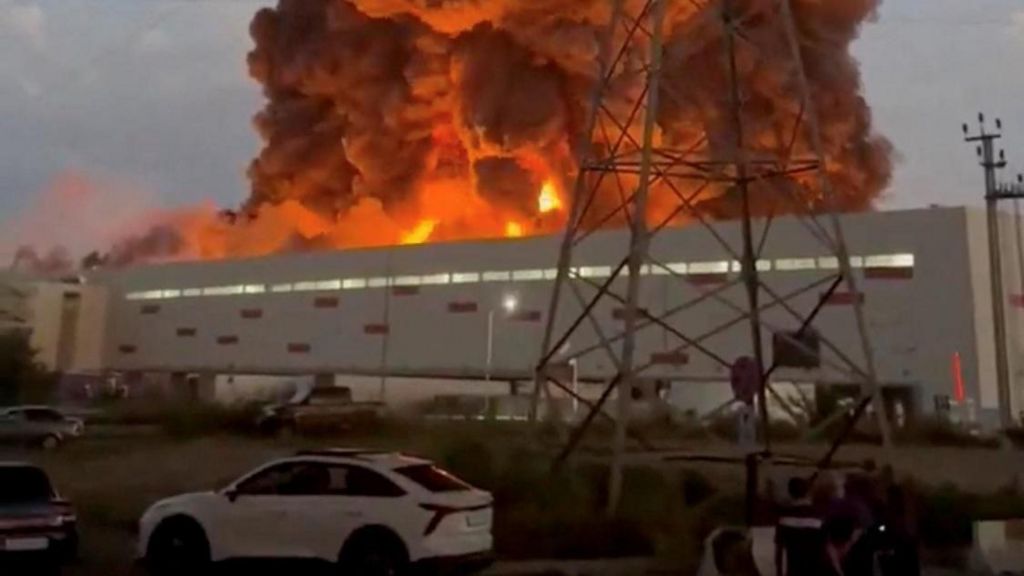
    Nearly four and a half years into Russia’s full-scale invasion of Ukraine, Kyiv has expanded its long-range drone campaign to target critical domestic logistics infrastructure inside Russia, shifting focus from energy facilities to warehouses operated by Wildberries, Russia’s largest online retail marketplace. Over a four-day span, four separate Wildberries distribution hubs have been hit by drone attacks, leaving eight workers dead, dozens injured, and an estimated $1 billion worth of stored inventory reduced to ash.

    The first wave of attacks struck over the weekend, targeting facilities in Elektrostal, just east of Moscow, and Kotovsk in the Tambov region, roughly 250 miles from the Ukrainian border. Seven night-shift employees were killed in the Kotovsk strike, with one additional fatality recorded at Elektrostal. Follow-up attacks overnight Wednesday hit two more hubs in Krasnodar and Nevinnomyssk in Russia’s Stavropol region, with Wildberries owner Tatiana Kim confirming additional unspecified casualties.

    Ukrainian officials have framed the strikes as a deliberate strategic move targeting infrastructure that supports Russia’s military effort. Ukrainian President Volodymyr Zelenskyy affirmed the shift in targeting, stating “We are, quite justly, bringing the war back home – to Russia.” Kyiv claims the targeted warehouses stored sanctioned electronic components used for Russian drone manufacturing and military navigation equipment. Pro-Kremlin military bloggers have also acknowledged that Russian volunteers and military suppliers regularly use major online marketplaces including Wildberries to source tactical gear and dual-use components for frontline forces.

    Independent verification of military stockpiles at the targeted sites has not been obtained, and the Kremlin has denied that domestic online platforms are used to supply the Russian army. Regardless of the military intent, the strikes have imposed devastating costs on thousands of independent Russian small and medium-sized sellers who rely entirely on Wildberries to store, distribute, and sell their goods to consumers across the country.

    Unlike Western marketplace giant Amazon, which operates both a first-party retail business and third-party seller platform, Wildberries and its primary competitor Ozon function almost exclusively as intermediary marketplaces. More than 85% of Russia’s economically active population uses the two platforms, and in many remote, underserved regions of the country, they are the only reliable source of everyday goods from clothing to household appliances. This business model means nearly all losses from the attacks fall to independent sellers, not the company itself.

    Hundreds of sellers have reported losing their entire stockpiles in the strikes, with many sharing devastating accounts of financial ruin on Russian social media. One seller, a mother of a disabled child who built her small business from scratch, wrote in a viral expletive-laden post that she had lost 1 million rubles ($12,700) in inventory, writing “We’re already getting screwed over from every direction as it is.”

    A stationery seller who delivered her full back-to-school inventory to the Elektrostal warehouse just one day before the attack lost all of her stock just weeks before the critical autumn shopping season. A teenage clothing retailer reported 1.4 million rubles ($13,300) in lost inventory and has paused new shipments, noting “The outlook for working with Wildberries is very murky. Right now I have enough of a safety cushion to survive the current losses, but if there are more strikes, I probably won’t manage.”

    Most sellers do not expect any meaningful compensation for their losses. Less than two weeks before the first strike, Wildberries updated its seller contracts to add drone attacks to its list of force majeure events, exempting the company from liability for inventory destroyed in attacks. While Kim has promised not to abandon affected sellers, offering temporary fee waivers and discounted shipping rates, these measures have done little to ease widespread anxiety among the platform’s seller base.

    The strikes come as Russia’s civilian small business sector already faces mounting pressure under the weight of wartime economic policies. Despite Russian President Vladimir Putin repeatedly naming support for small and medium-sized enterprises a top priority even during the war, the sector has faced a cascade of new challenges in 2026. In January, the national value-added tax was increased from 20% to 22% to fund additional defense spending, and targeted tax breaks for small businesses were eliminated. Data from business intelligence platform Kontur.Fokus shows more than 209,000 small and medium-sized companies closed in the first quarter of 2026, a 9% increase from the same period in 2025.

    Additional pressures include widespread internet restrictions, a crackdown on independent messaging apps that disrupted business operations, and a national fuel crisis triggered by earlier Ukrainian drone strikes on Russian oil depots and refineries. Analysts note the Wildberries strikes represent another major blow to a sector already reeling from cumulative strain.

    “There are already a lot of nails, and they keep hammering them in. Is [the attack on Wildberries warehouses] another nail in the coffin? Well, yes, of course,” said Ruben Eniklopov, a professor at Barcelona’s Pompeu Fabra University. While Russian small businesses have demonstrated surprising resilience through the first years of the war, high inflation, widening budget deficits, and a 23% drop in oil and gas revenues compared to the first half of 2025 have left the civilian economy increasingly fragile. Russia’s large peacetime financial reserves are increasingly being diverted to fund the war effort, crowding out support for civilian economic growth.

    The Wildberries strikes mirror a recent pattern of reciprocal targeting of civilian logistics infrastructure by both sides. In recent weeks, Russia has launched drone and missile strikes on sorting terminals and warehouses belonging to Ukraine’s largest private postal operator Nova Poshta, major retail chain ATB, and confectionery group Roshen. With frontline combat largely stalled in a stalemate, both sides have expanded long-range strike campaigns to disrupt supply chains and put increasing pressure on the opposing side’s domestic population.

  • Watch: What it was like inside Maduro’s court hearing

    Watch: What it was like inside Maduro’s court hearing

    For the first time, international press were granted access to a federal courtroom in the United States where a critical procedural hearing unfolded for Nicholas Maduro, the ousted former Venezuelan leader. The BBC’s senior correspondent Kayla Epstein was among the few journalists allowed inside the venue, offering a rare on-the-ground perspective of a legal proceeding that has drawn global geopolitical attention.

    During the session, the presiding judge formally announced a concrete start date for Maduro’s upcoming criminal trial, moving the high-profile case one step closer to a full judicial resolution. The hearing itself unfolded in an orderly, controlled atmosphere, with tight security protocols in place to manage the extraordinary public and diplomatic interest surrounding the proceedings. Maduro was present for the scheduling hearing, participating in the procedural steps alongside his legal team before the court.

    The case marks a historic moment in US-Venezuela relations, bringing a former head of state before an American criminal court on charges that stem from years of international scrutiny of the Maduro government’s activities. The scheduling announcement sets the stage for a months-long legal process that is expected to unpack complex allegations related to narco-terrorism, corruption, and other criminal activities, and will almost certainly amplify already tense diplomatic tensions between the US and remaining Maduro-aligned factions in Venezuela. Epstein’s firsthand access offers the public an unfiltered look at the opening stages of a trial that will be watched closely by policymakers, diplomatic observers, and voters across the Americas.

  • Houthis ‘Gate of Tears’ threat deepens global inflation grief

    Houthis ‘Gate of Tears’ threat deepens global inflation grief

    On July 20, Iran-aligned Houthi rebels based in Yemen delivered a provocative announcement that has sharpened tensions in the broader Middle East standoff: the group intends to enforce a full maritime embargo against Saudi Arabia, targeting all Saudi-flagged commercial vessels passing through the strategic Bab el-Mandeb Strait. Known colloquially as the “Gate of Tears” from its Arabic translation, this narrow waterway sits between northeastern Yemen and southwestern Djibouti and Eritrea, forming a critical chokepoint that links the Red Sea to the Gulf of Aden. Combined with the Red Sea and the Suez Canal, it creates one of the world’s most essential maritime trade arteries, connecting manufacturing and consumer markets across Europe, Asia, and the Pacific. Annually, 10 to 12 percent of all global maritime trade transits this route, making any disruption to traffic here a matter of international economic concern.

    This latest escalation comes at a uniquely vulnerable moment for Saudi Arabia’s energy exports. For months, ongoing security disruptions in the Strait of Hormuz—another major global chokepoint that traditionally carries roughly one-fifth of the world’s total oil and gas shipments—have pushed Riyadh to shift the bulk of its crude exports to the Red Sea corridor as a strategic alternative. Earlier this year, the kingdom completed maintenance work to restore full operating capacity to its east-west oil pipeline, which connects the major Abqaiq oil processing hub in eastern Saudi Arabia to the Red Sea port of Yanbu. Current data indicates that more than 70 percent of Saudi Arabia’s total crude oil exports now move through Yanbu, making the kingdom heavily reliant on safe passage through the Bab el-Mandeb Strait.

    In an official response issued shortly after the Houthi announcement, Saudi Arabia’s foreign ministry issued its strongest possible condemnation of the threats, confirming that the kingdom would deploy all necessary defensive and security measures to protect its commercial shipping traffic. However, analysts note that it remains unclear whether these measures will be sufficient to prevent disruptions. Historical precedent in the region shows that even unfulfilled threats of attack can significantly disrupt shipping activity, drive up operational costs, and delay cargo deliveries.

    At present, the Houthi embargo is limited exclusively to Saudi-registered vessels, rather than a full closure of the strait to all international traffic. But should the conflict escalate and the blockade be expanded to include ships from other nations, the impact would reverberate across global supply chains for everything from consumer electronics and manufactured goods to retail products and industrial machinery. For carriers that choose to avoid the Red Sea entirely, the only alternative route is a lengthy detour around South Africa’s Cape of Good Hope—a path that adds thousands of nautical miles to voyages, sharply increasing fuel costs and transit times.

    Beyond trade delays, the announcement has already triggered a sharp rise in marine insurance premiums for vessels transiting the Red Sea. Already, insurance costs for the Strait of Hormuz have surged to between 3 and 10 percent of a vessel’s hull value since regional tensions began escalating, adding millions of dollars in extra costs for single voyages. Industry reports confirm that Red Sea insurance rates have begun climbing in the wake of the Houthi announcement. These increased operational costs are almost always passed downstream to end consumers, adding new inflationary pressure to already strained global economies that are still recovering from multiple recent supply chain shocks.

    As of yet, there is no clarity on how effective the Houthi blockade will prove to be, nor whether the situation will escalate further in the coming weeks. For governments and businesses worldwide, the new threat has dashed early hopes that regional conflict-related economic disruptions would ease in the near term. Sanjoy Paul, associate professor of operations and supply chain management at the University of Technology Sydney’s Business School, notes that both public and private stakeholders need to continue strengthening supply chain resilience, evaluate long-term alternative shipping routes and sourcing options for critical commodities including crude oil. In the long term, Paul argues, the incident also underscores the urgent need to reduce global reliance on fossil fuels and accelerate the transition to renewable energy for transportation, logistics, and manufacturing sectors.

  • Iran war: US launches attacks for 11th night as Trump seeks $70bn more for military

    Iran war: US launches attacks for 11th night as Trump seeks $70bn more for military

    ### Escalating Conflict Reaches New Milestone in the Middle East
    On Wednesday, the United States launched its 11th straight night of military strikes against Iranian targets, prolonging a months-long regional conflict that has already claimed the lives of American service members, crippled global commercial shipping through one of the world’s most critical energy chokepoints, and driven international oil prices sharply higher.

    According to a public statement from US Central Command, the latest attack ran for approximately 75 minutes and was designed to target key Iranian military assets: operational command centers, naval capabilities, aircraft hangars, unmanned aerial vehicle storage sites, and core logistics infrastructure. Multiple Iranian state and semi-state media outlets confirmed the strikes hit locations across multiple regions of the country, including a military installation outside the northwestern city of Tabriz, sites in the southwestern Khuzestan Province, areas in Ilam Province near the Iraqi border, and locations in Kabudarahang County, Hamadan Province.

    ### Iran Launches Retaliatory Drone Strikes Against US Bases Across the Region
    In direct response to the latest American aggression, Iran launched a coordinated drone attack against US military facilities stationed in Kuwait, Jordan, and Bahrain, part of its stated goal to reduce Washington’s military capacity across the Middle East.

    Iran’s military confirmed it targeted ammunition depots and ground force command logistics infrastructure at Camp Doha in western Kuwait, in retaliation for what it calls repeated unprovoked attacks on Iranian territory. “The Armed Forces of the Islamic Republic of Iran – with sacred unity – stand ready to decisively counter any new conspiracy and adventurism by the enemy,” semi-official Tasnim News Agency quoted the military as saying.

    The retaliatory strikes also hit Muwaffaq Salti Air Base in Jordan and Isa Air Base in Bahrain. The Iranian military’s statement added: “The army targeted the ‘housing and welfare buildings’ and ‘equipment warehouses’ of the terrorist US army at the Azraq base in Jordan with drones in the morning. [Drones] also targeted the ‘large equipment warehouses and sheds’ and the ‘heavy aircraft maintenance and repair sheds’ of the child-killing and criminal US army at the Sheikh Isa Air Base in Bahrain.”

    ### Rising Death Toll for US Forces Amid Months of Open Conflict
    The US Department of Defense announced Wednesday that a third American soldier is now confirmed dead following an Iranian strike on Muwaffaq Salti Air Base on July 17. The 28-year-old service member had previously been listed as missing in action. His death brings the total number of US troops killed since the conflict began on February 28 to 18.

    ### Global Shipping Disruption Worsens, Spilling Beyond the Strait of Hormuz
    The conflict has caused severe disruption to international shipping lanes, with new data showing activity collapsing to historic lows at the Strait of Hormuz, the passage through which roughly 20% of global oil supplies transit daily. Shipping analytics firm Kpler reported that only three commercial vessels crossed the strait on Tuesday, down from four on Monday. For the first time in recent memory, no very large crude carriers or liquefied natural gas tankers were recorded moving through the waterway.

    The disruption has now spread to the Red Sea, where two tankers carrying Saudi crude oil bound for Asian markets reversed course near the Bab al-Mandeb Strait after Yemen’s Houthi movement threatened to enact a full blockade on Saudi shipping. Clashes between the Houthis and Yemen’s internationally recognized government have recently spilled into Saudi territory, prompting the United Arab Emirates to condemn the group’s planned blockade.

    ### Collapsed Ceasefire Deal Leaves Path to De-escalation Uncertain
    Despite the ongoing escalation, US Secretary of State Marco Rubio told reporters on the sidelines of a meeting with Southeast Asian foreign ministers in Manila Wednesday that Washington remains open to negotiations with Tehran. The offer comes even though a previous truce agreement between the two parties has already collapsed.

    On June 17, Washington and Tehran signed a memorandum of understanding that declared an “immediate and permanent termination” of all military operations. The deal also required the US to end its naval blockade of Iran and opened a 60-day window for comprehensive long-term negotiations, with the first core requirement being a full halt to Israeli attacks on Lebanon. Washington has since failed to abide by the terms, moving to reinterpret the agreement’s provisions for freedom of navigation through the Strait of Hormuz and taking no action to stop continued Israeli strikes in Lebanon.

    “If they’re serious, we’re serious. If they’re not, then we will do what’s necessary to protect our interests, and also the interests of our allies,” Rubio said. Outside the meeting venue, anti-war protesters held signs reading “War criminals not welcome” and “Ban Trump! Ban Rubio!” to condemn the continuing conflict.

    Regional powers are pushing frantically to prevent further escalation. In a phone call held Tuesday, Qatar’s Prime Minister Mohammed bin Abdulrahman Al Thani and Saudi Foreign Minister Prince Faisal bin Farhan Al Saud discussed coordinated efforts to lower tensions. Qatar has publicly called on all parties to fully implement the US-Iran memorandum of understanding, including binding guarantees for unimpeded shipping through the Strait of Hormuz.

    ### Energy Markets React, Domestic Political Divide Grows in the US
    International energy markets reacted sharply to the escalating conflict on Wednesday, with Brent crude futures rising more than 2% to top $94 per barrel, as investors grew increasingly concerned over potential disruptions to global energy supplies.

    Back in Washington, the Trump administration is asking Congress to approve an additional $70 billion in emergency military funding for the conflict, alongside a record $1.5 trillion Pentagon budget for fiscal year 2027. The request has sparked fierce pushback from opposition lawmakers, who argue the administration is prioritizing endless war over domestic needs.

    Democratic Senator Kirsten Gillibrand accused the White House of demanding “unlimited money for bombs” while ignoring urgent domestic priorities including healthcare, food assistance, affordable housing, and support for American farmers. Senator Gary Peters framed the conflict, which already has a mounting price tag for US taxpayers, as a failure of presidential leadership. “It’s not a question of money. It’s a question of leadership,” Peters told US Defense Secretary Pete Hegseth during a recent congressional hearing.

    Independent cost trackers have already put the cumulative price of the conflict at staggering levels. The Iran War Cost Tracker, which last updated its estimates on June 16, calculated that the conflict has cost US taxpayers more than $100 billion to date. Brown University’s Iran War Energy Cost Tracker adds that American households have paid an extra $72 billion in collective fuel costs since the conflict began, equal to roughly $544 per household. With the conflict now escalating into its sixth month, analysts widely expect these costs to continue rising rapidly.
  • Watch: Louvre reopens gallery after jewellery heist

    Watch: Louvre reopens gallery after jewellery heist

    One of Paris’s most iconic cultural landmarks, the Louvre Museum, has welcomed visitors back to its famed Apollo Gallery, marking the end of a nine-month closure triggered by a brazen jewellery heist that sent shockwaves across France.

    The revered gallery, which houses some of the Louvre’s most precious decorative art collections including the legendary French Crown Jewels, was shuttered immediately after the robbery unfolded, prompting urgent security reviews and extensive renovation work to repair damage caused during the break-in. The incident, which took place last year, exposed critical vulnerabilities in the museum’s security infrastructure and sparked widespread public debate about the protection of global cultural heritage held in major institutions.

    Museum authorities confirmed that the reopening proceeded as scheduled, with upgraded security protocols now in place to prevent similar criminal incidents. While investigations into the stolen pieces and the perpetrators behind the heist remain ongoing, the restoration of public access to the Apollo Gallery is being framed as a key milestone in the museum’s recovery from the high-profile crime.

    Cultural officials across France have emphasized that the reopening reaffirms the Louvre’s commitment to keeping world-class cultural heritage accessible to the public, even in the wake of criminal acts targeting its collections.

  • US-Iran strikes: latest developments

    US-Iran strikes: latest developments

    Tensions between the United States and Iran have spiked sharply this Wednesday, with US President Donald Trump announcing a harsh new retaliatory policy targeting critical Iranian civilian infrastructure in response to any attacks on commercial shipping passing through the strategically vital Strait of Hormuz. Against a backdrop of already heightened regional instability, the escalation has triggered immediate ripple effects across energy markets, geopolitical alliances and civilian sectors across the Middle East.

    One of the most immediate impacts of rising tensions played out in global energy markets Wednesday, as benchmark Brent North Sea crude prices surged past the $95 per barrel mark for the first time in almost six weeks. While futures prices later trimmed some of their early gains, the commodity still closed the trading day up roughly 3 percent overall, reflecting widespread investor anxiety over potential disruptions to the 20 percent of global oil supplies that pass through the Strait of Hormuz daily.

    In the Red Sea and adjacent regional waters, the Iran-aligned Houthi movement of Yemen has upped its own actions after announcing a naval blockade against Saudi Arabia. The International Chamber of Shipping confirmed to Agence France-Presse that Houthi operatives have been transmitting radio warnings to commercial vessels transiting through the region, raising further risks to global shipping lanes already disrupted by months of Houthi attacks on commercial traffic.

    President Trump doubled down on Washington’s hardline stance in a post on social media, warning that the US would destroy one Iranian bridge or power plant for every attack on shipping in the Strait of Hormuz. Stating that the US was “not finished” with its campaign against Iran—an effort that has already cost US taxpayers $37.5 billion—Trump specified that retaliation would be triggered regardless of whether Iran used missiles, rockets, drones or any other weapon to target vessels.

    The US military has already carried out new strikes on Iranian soil this week, hitting targets on Larak Island, a key Iranian territory located directly within the Strait of Hormuz. Iran’s semi-official Tasnim news agency reported Wednesday that authorities are still conducting assessments to determine the full extent of damage from the attack.

    Beyond the direct US-Iran confrontation, regional instability continues to impact cultural sites and neighboring states. The United Nations cultural agency UNESCO added the ancient Phoenician city of Tyre in southern Lebanon to its list of World Heritage Sites in Danger, after months of sustained Israeli bombardment of the area that has put its unique cultural heritage at severe risk. In a separate development, Bulgaria’s national parliament voted Wednesday to approve the deployment of up to eight US KC-135 refueling aircraft and 250 American military personnel to the country’s Bezmer Air Base, a deployment that will run from July 24 to October 1 to support US-led military operations across the Middle East. Further south, Jordan’s armed forces announced they intercepted four Iranian missiles launched from Iranian territory Wednesday, with two additional missiles falling in uninhabited remote areas. The military confirmed no casualties or material damage occurred as a result of the incident.

    On the nuclear non-proliferation front, Iran reiterated its denial of claims that it operates a secret nuclear facility at Kolang Mountain, a claim first made by the Trump administration which led to Trump threatening a strike on the central Iranian site. Iranian Foreign Ministry spokesman Esmaeil Baqaei wrote on the social platform X that Washington’s “obsessive focus on Kolang Kouh where no nuclear activity is taking place is nothing more than a fabricated pretext for aggression, destruction, and sabotage.”

    In Lebanese political developments, caretaker Prime Minister Nawaf Salam reaffirmed the country’s goal of achieving a full Israeli withdrawal from occupied Lebanese territory during a visit to a village where the Lebanese army recently deployed. The deployment comes as part of a US-brokered agreement reached last month, which requires Lebanon’s military to disarm Hezbollah in the deployment zones, while Israeli forces withdraw from so-called “pilot areas” that will be taken over by Lebanese government forces.

    Even for major regional tourism hubs, the months-long wave of regional conflict has taken a visible economic toll. The government of Dubai announced a new tourism incentive scheme this Wednesday that will offer up to more than $800 in discounts and promotional deals to local residents who host visiting friends and family. The program, which runs through the end of October, is designed to reverse tourism declines brought on by months of heightened regional tensions. Even outside periods of conflict, Dubai’s summer months typically see lower tourist numbers, as temperatures in the desert emirate regularly climb above 50 degrees Celsius.

  • French police formally investigate woman over 2025 killing of Briton

    French police formally investigate woman over 2025 killing of Briton

    A years-long French homicide investigation has reached a critical milestone, with a 70-year-old local woman placed under formal investigation in the 2025 stabbing death of Karen Carter, a 65-year-old British-South African mother of four who built a new life as a small business owner in rural southwest France.

    Carter had resided in the quiet Dordogne village of Trémolat for more than 10 years, where she and her family ran two popular holiday rental properties catering to tourists drawn to the region’s scenic countryside. In April 2025, a close friend made the horrifying discovery of Carter’s body near her parked vehicle, which bore clear evidence of multiple stab wounds.

    Initial court proceedings began shortly after the killing: the 70-year-old suspect was first taken into police custody in 2025 as part of preliminary fact-finding work, before investigators released her pending further evidence gathering. On Wednesday, lead investigating judge Jacques-Edouard Andrault confirmed in an official statement that the evidence compiled since the formal judicial inquiry opened on May 7, 2025, has resulted in formal charges being filed against the woman.

    In the immediate aftermath of the tragedy, Carter’s husband Alan spoke publicly about the chaotic, heartbreaking way he learned of his wife’s death. He told reporters he first received an unofficial heads-up from a cousin, who spotted news of the killing posted to a local community Facebook group. It was only after his personal assistant contacted local French law enforcement that he received official confirmation of the tragedy.

    Alan Carter, who described himself as an introvert, painted a warm portrait of his late wife as his total opposite: a vivacious, big-hearted extrovert who was beloved across the small village. “She wouldn’t hurt a fly,” he said. “She’s the one who would bring home the lost dog, or cat, or whatever. She’s that sort of person. Everyone liked her. That’s why I married her. She’s just lovely.” He added that the sudden, violent death has left his entire family reeling from trauma, a blow from which they have yet to recover.

    As of Wednesday, no further details about the suspected motive for the attack have been released by investigating officials.

  • Germany has deported a Uyghur man to China, his mother says

    Germany has deported a Uyghur man to China, his mother says

    In a move that has reignited international debate over the treatment of Uyghur ethnic minorities and global asylum policy, Germany has expelled a 21-year-old dual Chinese-Turkish Uyghur asylum seeker to China, where widespread concerns persist that he will face arbitrary detention as part of Beijing’s long-running assimilation campaign in Xinjiang. The man’s mother, Guzelay Adil, who resides in Istanbul with the rest of the family, shared details of the deportation with The Associated Press in an interview Wednesday.

    According to Guzelay Adil, her son Arafat Adil had lived with the family in Turkey after the group left China in 2017. He traveled to Germany to pursue international asylum protection, and was put on a deportation flight out of Frankfurt Airport on Tuesday. By Wednesday morning, he had landed in Beijing, where he was immediately taken into custody for interrogation. Guzelay Adil told reporters she has been told Arafat Adil is expected to board a connecting flight to Istanbul around midnight Thursday, but her fear over the outcome remains palpable. “I don’t know what would happen if my son doesn’t return to Turkey,” she said. “I hope to see my child again.”

    As of Wednesday evening, neither German federal nor Chinese national authorities had issued an immediate confirmation of the deportation. The Interior Ministry of Hesse, the German state that hosts Frankfurt and oversaw the deportation process, did not respond to AP’s request for additional details. A spokesperson for China’s Foreign Ministry also declined to comment on the specific case.

    The revelation of Arafat Adil’s deportation has drawn sharp criticism and concern from Uyghur rights activists worldwide, who point to Beijing’s eight-year campaign of mass detention, forced assimilation, and alleged forced labor targeting the 11 million Uyghurs and other ethnic minority groups native to Xinjiang. Sporadic unrest across the region over previous decades preceded the launch of the large-scale crackdown in 2017, which has been widely condemned by international governments and human rights organizations.

    “It’s heartbreaking to learn of another Uyghur being deported to China,” said Abduweli Ayup, founder of Norway-based Uyghur rights nonprofit Uyghur Hjelp. Ayup emphasized that the decision sends a dangerous precedent from Germany, a leading power within the European Union, that is eroding hope for Uyghur communities both inside China and among the global diaspora.

    In response to general questions about Uyghur deportation policy, the German Federal Interior Ministry noted that while there is no formal blanket ban on deporting Uyghurs to China, federal migration authorities operate under a guiding principle that Uyghurs originating from China should as a rule be granted international protection. The case has also raised questions over why German authorities deported Arafat Adil to China rather than Turkey, where he has resided since 2017 and obtained Turkish citizenship earlier this year, holding a valid Turkish passport at the time of his deportation.

    German asylum rules classify Turkey as a safe third country of origin, so it remains unclear what grounds Arafat Adil used to file his asylum claim in Germany. This is not the first time Germany has faced backlash over a Uyghur deportation: Last November, a bureaucratic error, as confirmed by government sources to German outlet Der Spiegel, led to the deportation of another Uyghur woman, Reziwanguli Baikeli, to China instead of Turkey. Unlike Arafat Adil’s current situation, Baikeli only spent a short period in Beijing before continuing on to her intended destination of Turkey.

    For years, Beijing has exerted diplomatic pressure on governments across the globe to forcibly deport Uyghurs who fled China to escape the mass detention campaign. One of the most high-profile mass deportations took place earlier this year, when Thailand expelled at least 40 Uyghur asylum seekers back to Chinese authorities in February 2025.

  • British woman jailed for blackmail after accusing banker of rape in Hong Kong

    British woman jailed for blackmail after accusing banker of rape in Hong Kong

    A 26-year-old British woman from Hackney, East London, has received a total six-year prison sentence from a Hong Kong court following her conviction on charges of blackmail and perverting the course of justice, for fabricating a rape claim to extort hundreds of thousands of Hong Kong dollars from a British banker.

    Isabel Rose met the unnamed financial professional in Thailand in December 2023, and traveled to Hong Kong on January 31, 2024, to visit him at his residential accommodation. Just one day after her arrival, she first claimed he had raped her during an encounter at his home, triggering the immediate arrest of the man by local law enforcement. The suspect was eventually released without any charges laid after investigators reviewed evidence in the case, and Rose was taken into custody the day after the arrest and charged with two criminal offenses related to the false accusation.

    Rose was formally found guilty of both counts by Hong Kong’s District Court back in March 2025, and she had continuously rejected the charges, maintaining that her rape allegation was truthful. On Wednesday, Judge Adriana Tse Ching handed down the sentencing: five years imprisonment for the blackmail charge, and three years for perverting the course of justice, with one year of the sentences to run consecutively, resulting in a total six-year term behind bars.

    The prosecution’s case rested heavily on a series of WhatsApp messages exchanged between Rose and the banker in the hours and days following the alleged incident. In a message sent the morning after the encounter, Rose first asked the man if he was upset that she did not consent to sex, to which he responded that he was not and respected her boundaries. Later that same day, Rose shifted her narrative, stating the man had violated her while she did not want sexual contact. In a surprising response, the man apologized, saying he had been intoxicated and misread her signals, a statement prosecutors later highlighted as a reflection of his momentary confusion and willingness to take responsibility for a misstep he believed he had made.

    As exchanges continued, Rose explicitly framed the encounter as rape, before turning the conversation to financial compensation. Court documents show the man initially agreed to cover Rose’s travel and accommodation costs, and transferred £5,000 to her the same day they reached an initial agreement, even attempting to send a second £5,000 transfer. Rose rejected the partial payment, claiming the amount transferred was only 10% of the total £100,000 ($134,000) she demanded, writing that the man had “100% of my soul gone.” When the banker responded that he could not afford the six-figure sum, Rose followed through on her threat and filed a formal rape report with Hong Kong Police on February 2, 2024.

    In her guilty verdict, Judge Tse relied significantly on the timeline and content of the text messages, which exposed the inconsistent and manipulative nature of Rose’s claims, local outlet South China Morning Post reported. During the sentencing hearing, Judge Tse condemned Rose’s actions as “cruel and evil,” noting that the defendant had deliberately exploited the banker’s kindness, naivety, existing friendship and romantic interest in her to orchestrate her extortion plot. The judge emphasized that Rose was fully responsible for her own criminal actions, adding that her false police report was a “vengeful and wicked” act that wasted significant law enforcement resources and put an innocent man through severe emotional and legal harm.