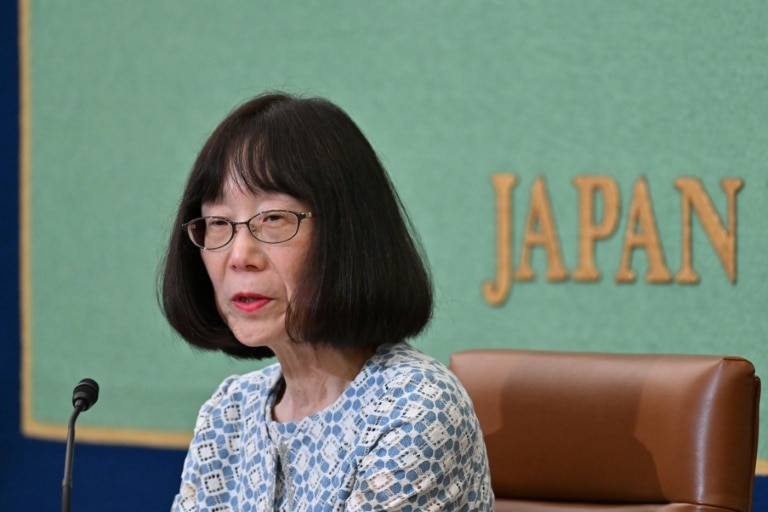
A fresh wave of United States sanctions targeting the top leadership of the International Criminal Court (ICC) has triggered international condemnation, with close US ally Japan leading criticism of the measures against its own national, ICC President Tomoko Akane.
On Tuesday, the second Trump administration imposed economic and travel restrictions on Akane and Senegalese Senior Trial Lawyer Abdoulaye Seye, expanding a long-running US campaign against the Hague-based judicial body. Washington frames the ICC as a “corrupt and fatally politicised” institution that oversteps its authority to threaten national sovereignty. US Secretary of State Marco Rubio claimed in a statement that the two sanctioned officials directly participated in ICC investigations, detentions and prosecutions of officials from governments that have not granted the court jurisdiction, though he provided no specific evidence to support the allegation.
Japan, which is the ICC’s largest financial contributor and has long backed the court’s mission to hold perpetrators of the world’s worst atrocities accountable, formally rejected the sanctions the following day. “Japan has consistently supported the ICC in its efforts to prosecute and punish the most serious crimes of concern to the international community and to uphold the rule of law,” foreign ministry press secretary Toshihiro Kitamura said in an official statement. “From this standpoint, the announced measures are very unfortunate.”
The ICC itself pushed back sharply against the punitive measures, warning that they pose a fundamental threat to the global legal order. “When judicial actors are threatened for applying the law, it is the international legal order itself that is placed at risk,” the court said in a response. The Netherlands, which hosts the ICC at its headquarters in The Hague, also joined the criticism, with Dutch Foreign Minister Tom Berendsen writing on X that the country “disapproves of the latest sanctions against officials and staff of the ICC,” adding that “international courts and tribunals must be able to freely carry out their mandates.”
Israeli Prime Minister Benjamin Netanyahu, meanwhile, praised the US action, echoing Washington’s hostility toward the court. The ICC issued an arrest warrant for Netanyahu earlier in 2024 over alleged war crimes committed during the Gaza war, making the court’s investigations into Israel a core driver of the latest US sanctions. Netanyahu called the ICC a “kangaroo court that cloaks its abuse of power in the language of international law” in an X post Tuesday evening.
This sanctions announcement is the latest escalation in a broader US diplomatic offensive against the ICC launched last month. At that time, Washington accused the court of threatening US national interests and called on partner nations to withdraw from the Rome Statute, the founding treaty that established the court. To date, Chad and the post-Maduro Venezuelan government, which has aligned with the US, have already announced their withdrawals. The ICC has warned that these exits weaken global collective efforts to pursue accountability for mass atrocities.
Founded in 2002, the ICC operates as a court of last resort, only stepping in to prosecute genocide, crimes against humanity and war crimes when national legal systems are unwilling or unable to deliver justice. The US is not a member state: it signed the Rome Statute but never ratified the treaty, joining Israel, Russia and China in remaining outside the institution.
Human rights groups have roundly condemned the new sanctions, with four organizations already filing a lawsuit against Trump in a New York federal court over existing ICC sanctions, arguing the measures block war crime victims from accessing justice. Balkees Jarrah, Middle East and North Africa director at Human Rights Watch, one of the plaintiffs, called the latest action “just the latest example of the Trump administration’s utter contempt for international law and a naked attempt to shield American and Israeli officials implicated in serious crimes from justice.”
Akane, a 70-year-old Japanese jurist who has served as an ICC judge since 2018 and was elected court president in March 2024, has already been targeted by sanctions from another country: Russia issued an arrest warrant for Akane and other senior ICC officials after the court issued an arrest warrant for Russian President Vladimir Putin over the forced deportation of Ukrainian children in 2023. At that time, Akane downplayed the impact of such targeting, noting “Even if one judge were to die, we are easily replaceable, so there is really no value in targeting us.”
The new US sanctions bar Akane and Seye from entering the US and prohibit any transactions involving the pair through the US financial system, marking the fifth round of punitive measures against ICC officials since Washington first launched its campaign against the court.