分类: world

  • Israeli settlers rampage through Palestinian village near Nablus

    Israeli settlers rampage through Palestinian village near Nablus

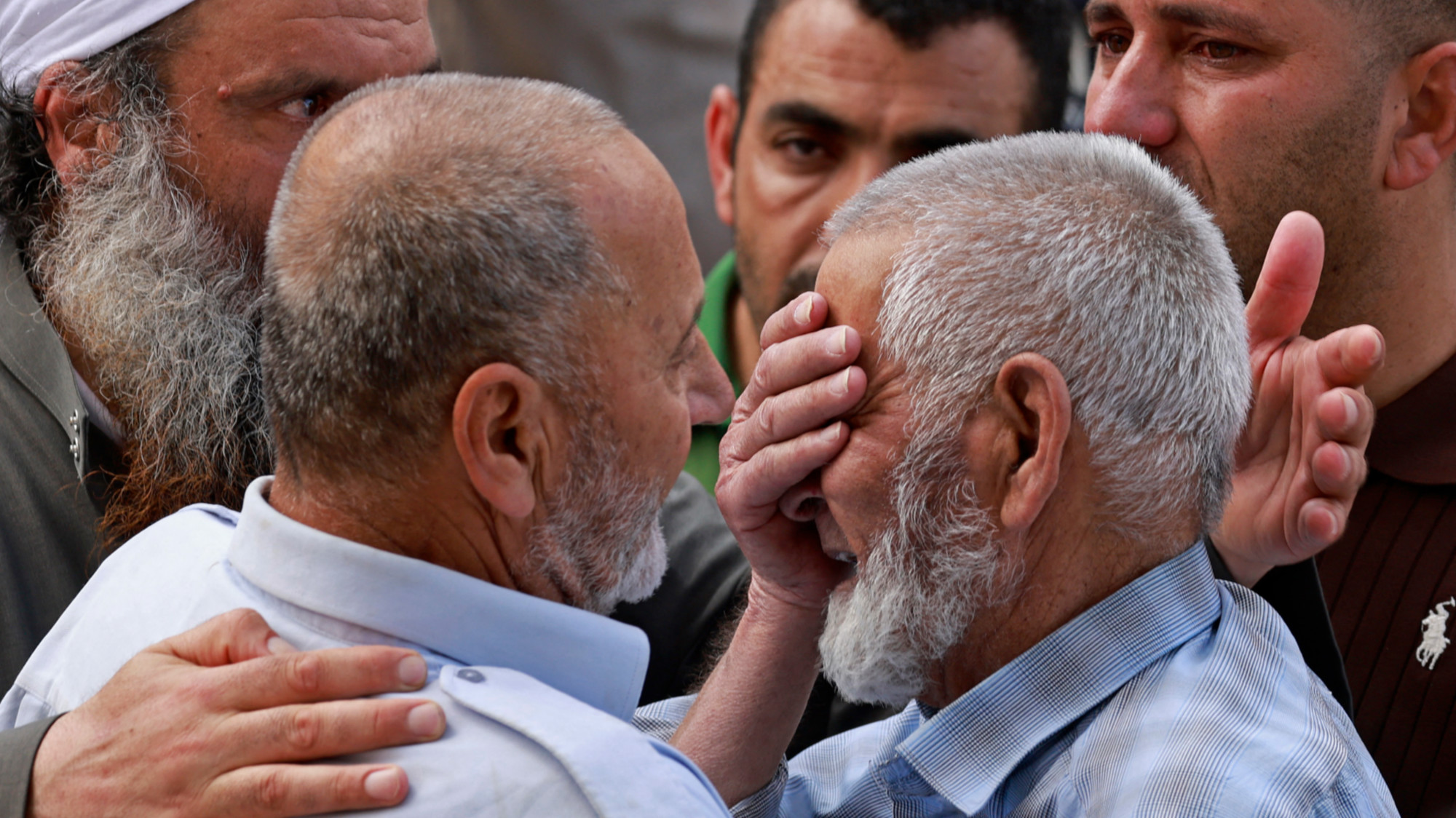
    On a violent Friday in the occupied West Bank, hundreds of Israeli settlers carried out a coordinated assault on the Palestinian village of Sarra, located southwest of the city of Nablus, leaving homes burned, property destroyed, residents injured, and multiple families displaced to seek safety. This attack is the latest in a growing string of settler violence targeting Palestinian communities across the Nablus region that followed a deadly incident in the nearby town of Tel earlier the same day.

    Local residents and village officials shared harrowing firsthand accounts of the assault with independent news outlet Middle East Eye, detailing the scale and brutality of the attack. Mohammed Turabi, a Sarra resident whose home was directly targeted, said settlers hurled stones and Molotov cocktails at his property, setting ablaze his courtyard, ground floor, and parked vehicle. Miraculously, Turabi and his entire family escaped without physical injury, but the attack left them deeply traumatized. Critically, Turabi confirmed that Israeli military personnel were positioned nearby throughout the violence and made no effort to intervene to stop the attackers or protect Palestinian civilians.

    Ahmad Sarrawi, a member of the Sarra municipal council, described the assault as fully organized and premeditated. He explained that in the weeks leading up to the attack, settlers had been constructing informal dirt roads through village lands to create easy access to Palestinian residential areas on Sarra’s outskirts. According to Sarrawi, the attackers originated from the nearby unauthorised Havat Gilad outpost, and they moved rapidly to target outlying homes, setting fire to multiple structures and vehicles within minutes. Local villagers ultimately organized a collective confrontation to push the settlers out of the community and halt additional destruction.

    Elderly resident Umm Wahid shared a devastating account of the terror the attack inflicted on her family. She explained that she already forces all her children to sleep together at her daughter’s home each night out of constant fear of settler aggression. On the day of the attack, she witnessed Israeli bulldozers uprooting olive trees—an economic and cultural lifeline for many Palestinian farming communities—near the property before hundreds of settlers poured into the village from surrounding valleys. Fearing for the safety of her family, she fled the home immediately; moments after they left, settlers set the structure on fire before moving on to other homes, smashing windows and damaging additional vehicles. One of Wahid’s grandchildren lost consciousness after inhaling thick toxic smoke from the fires, leaving all the children in the family severely traumatized.

    Naaman Abdullah, mayor of Sarra, contextualized the attack within the long-standing structural restrictions that shape life for the village’s residents. He noted that the entire western section of Sarra falls within Area C, a designation under the 1990s Oslo Accords that grants Israel full military and civilian control over the territory, leaving Palestinian residents with no legal protection for their land or homes. Abdullah added that following the killing of four Palestinians in the village of Tel earlier that Friday, settlers fanned out across neighbouring villages to launch retaliatory attacks, eventually reaching Sarra to bulldoze land, uproot trees, and burn residential property. He emphasized that repeated settler violence, paired with constant Israeli military restrictions, has made daily life almost unlivable for Sarra’s residents: main roads are routinely blocked by military checkpoints and gates, forcing residents to travel along dangerous unpaved paths to reach their homes and basic services.

    This attack comes amid a documented surge in settler violence across the occupied West Bank, paired with growing incitement to violence against Palestinians by extremist settler groups shared widely on social media platforms. Palestinian leaders and international human rights organisations have repeatedly warned that this ongoing incitement fuels further bloodshed and creates a culture of impunity that allows attacks on Palestinian civilians and their property to continue without consequence. Palestinian authorities have issued repeated calls for the international community to deploy formal protection for Palestinian civilians living under occupation and to hold perpetrators of settler violence accountable.

    The Palestinian Presidency, national government, and the Commission Against the Wall and Settlements issued a formal condemnation of the Sarra attack and other recent settler assaults, framing the violence as a deliberate state-backed policy meant to intimidate Palestinian residents and force them to permanently abandon their ancestral land. The statement renewed calls for urgent international intervention to end the widespread impunity that enables repeated settler attacks and to hold all responsible parties accountable under international law.

  • Ukraine strikes Siberia refinery as Kazakh leader tells Putin war should end

    Ukraine strikes Siberia refinery as Kazakh leader tells Putin war should end

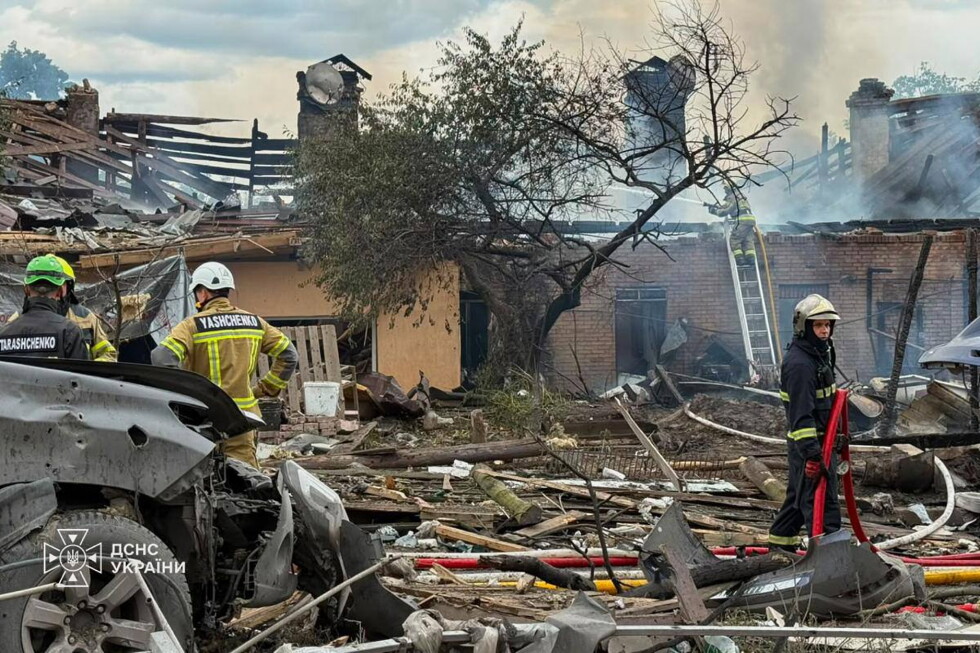
    Nearly four and a half years into Russia’s full-scale invasion of Ukraine, a dramatic escalation of cross-border attacks and a rare public rebuke from a key ally have shifted the trajectory of the conflict in a single 24-hour period. On Saturday, Ukrainian drones reached deep into Russian territory, striking an oil refinery in Western Siberia, disrupting a national athletics competition in the Ural Mountains, and triggering fresh civilian casualties on both sides of the front line, as Kazakhstan’s President Kassym-Jomart Tokayev openly called on Russian President Vladimir Putin to end the war during a bilateral summit in Siberia’s Omsk.

    The wave of strikes marked one of the farthest advances of Ukrainian aerial attacks into Russian territory since the war began. Tyumen region governor Alexander Moor confirmed that a local oil refinery caught fire after the drone attack, while in the Ural city of Yekaterinburg, Russia’s national athletics federation called an abrupt halt to an ongoing all-Russian competition over repeated drone threats. Leading Russian online retailer Wildberries, which has been the target of sustained Ukrainian drone attacks for a week, also evacuated staff from its Yekaterinburg facility amid the alerts, though no damage was reported. Ukrainian President Volodymyr Zelensky later claimed responsibility for the Siberian refinery strike, adding that Ukrainian forces had also hit a military factory in Kirov region for the second consecutive day. Local Russian authorities reported five people were killed in the Kirov strike on Friday.

    The deep strikes have already had widespread ripple effects across Russia. Moscow announced Saturday that it would extend its temporary ban on fuel exports through the end of 2025, a direct response to widespread fuel shortages triggered by repeated Ukrainian attacks on Russian oil infrastructure. Long queues have formed at petrol stations across multiple Russian regions, marking the most severe disruption to civilian life inside Russia since the start of the full-scale invasion. Ukraine has repeatedly stated that its cross-border strikes are a deliberate strategy to weaken Russia’s war economy and force the Kremlin to enter good-faith peace negotiations.

    Civilian casualties continued to mount across the conflict zone Saturday. Russian-installed occupation authorities in Ukraine’s Zaporizhzhia region claimed a Ukrainian strike on a seaside tourist camp in the Azov Sea town of Kyrylivka killed 12 people, including four children, with eight more still missing and rescue operations ongoing. Another civilian death was reported in occupied Kherson region, and two more were killed in Russian border villages near the front line. Kyiv has not yet issued an official comment on the Kyrylivka strike. For its part, Ukraine reported five civilian deaths from Russian attacks across the country: three killed in a double-tap strike on a private courier facility in the northeastern town of Sumy, with two more fatalities recorded in the eastern and southern parts of the country.

    The United Nations has recently warned that civilian casualty rates have climbed sharply in recent weeks, as the conflict intensifies after nearly four and a half years of fighting. Against this backdrop of escalating violence, Tokayev’s public call for peace marked a rare break for Putin, who rarely faces public calls to end the war from leaders of allied states. “It is a shame, young people are dying… All this has to be stopped,” Tokayev said in televised remarks made while sitting beside Putin during the Omsk summit. The Kazakh leader proposed freezing the conflict along existing lines, restarting the 2022 Istanbul peace talks, and working toward a long-term ceasefire. He added that the roots of the conflict remain “not understandable” to him, and has never publicly endorsed Russia’s full-scale invasion, despite maintaining close strategic and economic ties with Moscow.

    Putin offered only a vague response, saying he would share further details of the conflict with Tokayev, and has repeatedly reaffirmed Russia’s goal to seize the entirety of eastern Ukraine by force. US-led international negotiations to end the conflict, which is Europe’s largest military confrontation since World War II, remain stalled, with neither side showing willingness to make significant territorial concessions to restart talks.

  • Russian attack kills 3 in Ukraine’s Sumy region as Romania downs second drone in 2 days

    Russian attack kills 3 in Ukraine’s Sumy region as Romania downs second drone in 2 days

    Escalating Russian aerial attacks across Ukraine have left multiple civilians dead and injured over the past 48 hours, while cross-border drone incursions into NATO member Romania have prompted successive air defense intercepts, stoking new security concerns along the Eastern European alliance’s eastern flank.

    Local Ukrainian officials announced Saturday that a Russian drone assault on a civilian infrastructure site in the northeastern Sumy region claimed three lives. Oleh Hryhorov, the governor of Sumy Oblast, confirmed the victims were all drivers working for Nova Poshta, Ukraine’s largest private postal and courier service. The impact also ignited a large uncontrolled fire at the targeted location.

    The fatal strike in Sumy followed a separate deadly attack near Kyiv on Friday, where a Russian assault on a venue hosting a defense industry gathering left at least 10 people dead and close to 100 more wounded. Overnight Friday, another Russian drone attack targeted southeastern Ukraine’s Zaporizhzhia region, striking a public shopping center. The blast sparked a massive fire that spread across 500 square meters of the complex, leaving an unspecified number of people injured, regional governor Ivan Fedorov confirmed.

    The string of coordinated attacks comes as Ukrainian President Volodymyr Zelenskyy issued an urgent warning in his Friday evening national address. Zelenskyy stated that Ukrainian intelligence assessments show the Russian military is amassing and preparing long-range missiles for a massive new wave of strikes across Ukraine, with clear indicators suggesting the large-scale attack could launch within 48 hours of his address.

    Beyond Ukraine’s borders, the spillover of the conflict has triggered security alerts in Romania, a NATO member that shares a long border with Ukraine. On Saturday, Romanian defense officials confirmed their air defense forces successfully and safely shot down an unauthorized drone that breached Romanian airspace, targeting the unmanned vehicle over an unpopulated area close to the Ukrainian border. Romanian President Nicușor Dan announced via Facebook that the interception was carried out by an F-16 fighter pilot, marking the second such shootdown in as many days.

    Saturday’s interception follows a similar incident on Friday, when Romanian forces downed a drone near the town of Padina, located northeast of the capital city of Bucharest. Cross-border drone incidents have become a recurring threat for Romania and other neighboring NATO allies since Russia launched its full-scale invasion of Ukraine in February 2022, with incursions involving both Russian and Ukrainian unmanned vessels and aircraft.

    In June 2023, a Ukrainian maritime drone deployed in the Black Sea campaign exploded near the major Romanian port of Constanta, while three additional unmanned sea drones detonated in waters outside the harbor. No casualties were reported in that incident. A month prior, a Russian drone that had been launched as part of an attack on Ukraine veered off course and crashed into an apartment building in eastern Romania, leaving two people injured.

  • Georgia’s Okefenokee Swamp among new additions to join UNESCO’s World Heritage List

    Georgia’s Okefenokee Swamp among new additions to join UNESCO’s World Heritage List

    At the United Nations Educational, Scientific and Cultural Organization (UNESCO) World Heritage Committee session hosted in Busan, South Korea, seven culturally and ecologically significant sites across five continents received formal inclusion to the coveted World Heritage List on Saturday. The annual meeting, which will run through next Wednesday, is still evaluating dozens of additional high-profile nominations from around the globe, including France’s Normandy D-Day landing beaches, Greece’s legendary Mount Olympus, and the ancient Asuka-Fujiwara imperial capitals of Japan.

    The first of the newly inscribed natural sites, Georgia’s Okefenokee Swamp, stands as one of the largest intact freshwater wetland ecosystems on the planet. The sprawling interconnected network of marshes and forests supports an extraordinary level of biodiversity and feeds two major regional water systems. According to UNESCO’s official assessment, the swamp’s largely undisturbed peat layers preserve an unbroken 5,000-year timeline of climatic and environmental shift, making it both a critical habitat for rare species and an invaluable scientific archive for studying long-term ecological change. The designation places the Okefenokee National Wildlife Refuge alongside America’s most iconic protected landmarks, including the Grand Canyon and Yellowstone. Still, the listing has faced local opposition, with some residents raising unfounded concerns that it would grant UNESCO excessive regulatory control over site management. Despite this pushback, conservation leaders have embraced the designation as a lasting promise to protect the swamp. “We accept this inscription not as a finish line, but as a commitment to keep the Okefenokee wild, resilient, and thriving for generations to come,” said Kim Bednarek, executive director of the nonprofit Okefenokee Swamp Park, which collaborated with the U.S. federal government to develop the successful nomination.

    Across Southeast Asia, southern Thailand’s 13th-century Buddhist sanctuary Wat Phra Phra Mahathat Woramahawihan also joined the list, marking Thailand’s ninth entry to the World Heritage register. The temple, famous for its 255-foot central stupa and one-of-a-kind fusion of architectural traditions, was recognized as an exceptional example of living Theravada Buddhist heritage. It remains an active center of worship that has preserved centuries-old religious practices that draw hundreds of thousands of devotees for annual gatherings. First nominated to UNESCO back in 2012, the site underwent more than a decade of upgrades and preparation to meet the body’s strict preservation standards. City officials expect the World Heritage designation to drive a sharp increase in tourist footfall, but say they are fully prepared to manage the growth. “We have prepared our infrastructure, buffer zoning and evacuation plan to fit all the requirements of UNESCO,” Kanop Ketchart, mayor of Nakhon Si Thammarat City, told the Associated Press. “More importantly, the people are getting used to all this process for almost 10 years. So they are very much looking forward to (it).”

    Three additional cultural sites rounded out the new Asian inscriptions. India’s ancient Buddhist pilgrimage site of Sarnath, located adjacent to the holy city of Varanasi, was added for its unique spiritual and historical significance: it is recognized globally as the site where the Buddha delivered his first sermon after achieving enlightenment. Despite cycles of decline and rediscovery over millennia, the site’s remaining archaeological and architectural remains retain outstanding universal cultural value, per UNESCO’s assessment. In eastern China, the historic porcelain production hub of Jingdezhen earned inclusion for its centuries-long legacy of handcrafted ceramic innovation. The inscribed sites document the evolution of Chinese porcelain manufacturing from the 10th to 19th centuries, showcasing the technical breakthroughs that turned Jingdezhen into the global center of fine porcelain production. The city’s iconic blue-and-white porcelain remains a worldwide symbol of Chinese artisanal craftsmanship centuries after it first entered global trade routes. South Korea also saw an expansion of its existing tidal flats, or getbol, World Heritage site, with four additional coastal wetlands in the country’s western Seosan, Goheung, Muan and Yeoju regions added to the designation. UNESCO first recognized four South Korean tidal flats in 2021 for their extraordinary biodiversity and critical role as a refueling stop for migratory birds along the East Asian-Australasian Flyway. The South Korean Foreign Ministry noted that the expanded designation “reaffirms the importance of international cooperation for the conservation of the Yellow Sea ecosystem and the East Asian-Australasian Flyway,” a major migratory route stretching from the Arctic to Australia and New Zealand.

    Off the coast of East Africa, the Indian Ocean island nation of Comoros secured its very first World Heritage listing, with six 11th-century historic towns inscribed. The towns grew to become the primary urban centers of Comoros’ pre-colonial sultanates, and their preserved built environments reflect centuries of cultural exchange across Indian Ocean trade networks, blending African, Arab, and Islamic cultural influences to create a distinct regional urban tradition.

  • Ukraine is still fortifying its border with Belarus years after Russia invaded from there

    Ukraine is still fortifying its border with Belarus years after Russia invaded from there

    Four years have passed since Russian forces launched their full-scale assault on Kyiv from Belarusian territory, and Ukraine continues to ramp up defensive fortifications along its 1,084-kilometer shared border with Moscow’s closest military ally. What once served as a bustling, cross-border transit corridor connecting communities on both sides is now a quiet, restricted zone, off-limits to all civilian travel and laced with hidden landmines.

    An on-the-ground reporting trip by the Associated Press to northern sections of the border earlier this month revealed the scale of Ukraine’s defensive buildup. For miles along border-side roads, anti-drone netting has been stretched to shield infrastructure from aerial attacks. The entire border landscape is crisscrossed with lines of razor-wire fencing and reinforced concrete “dragon’s teeth” anti-tank barriers, designed to block any potential armored incursion.

    The AP visit followed a recent spike in bilateral tensions between Kyiv and Minsk. Ukraine issued a formal demand that Belarus shut down a series of Russian communications relay stations, which Moscow had installed on Belarusian soil to extend the operational range of drones targeting Ukrainian population centers. According to Ukrainian officials, Belarus complied with the request, and hostile rhetoric between the two governments has cooled significantly in the weeks since.

    Despite the de-escalation, Ukrainian security officials remain vigilant. They have confirmed that there are currently no visible signs of a new Russian troop buildup inside Belarus, but have stressed that reinforcing the border will remain a top national security priority for the foreseeable future. Ukrainian border guard units conduct 24/7 patrols across the frontier zone, using armored fighting vehicles, surveillance drones, and integrated monitoring systems to track any unusual activity.

    Belarusian authoritarian leader Alexander Lukashenko has repeatedly stated that his country has no intention of deploying its own troops to join Russia’s invasion of Ukraine, unless Belarus itself comes under direct attack. Even so, for residents living on the Ukrainian side of the border, the persistent risk of deeper Belarusian involvement in the war remains a constant source of anxiety.

    For many local communities, the sprawling network of new fortifications carries a dual meaning: the heavy defensive works serve as a stark reminder of the chaotic, uncertain early days of the 2022 invasion, when Russian forces advanced to the outskirts of Kyiv from this very border, while also offering a measure of reassurance that Ukraine is prepared for every possible security scenario. Additional reporting for this story was contributed by AP journalist Volodymyr Yurchuk based in Kyiv.

  • Kuwait and Bahrain launch air strikes on Iran: Report

    Kuwait and Bahrain launch air strikes on Iran: Report

    A sharp new escalation has rocked the Persian Gulf region after The Wall Street Journal reported Friday that Bahrain and Kuwait have launched retaliatory air strikes against Iran, in response to a recent wave of Iranian attacks on their territory. According to anonymous sources cited by the outlet, the joint operation targeted Iranian facilities used to store drones and missiles, with the United Arab Emirates providing critical support in the form of battlefield intelligence and defensive air cover for the mission.

    This development marks a significant widening of the ongoing regional conflict, which reignited earlier this year after a major offensive by the United States and Israel against Iran. Bahrain and Kuwait are the latest Gulf nations to join direct military action against Tehran, joining the UAE and Saudi Arabia, which both launched strikes against Iran in the opening weeks of the conflict. Abu Dhabi has maintained one of the most hawkish stances among Gulf states, carrying out dozens of strikes on Iranian targets after coming under sustained Iranian drone and missile assault, the report notes.

    In recent weeks, both Bahrain and Kuwait have faced an intensification of Iranian attacks, as a June-brokered ceasefire extension has effectively collapsed across the region. Regional analysts point out that Iran has deliberately focused its strikes on these two smaller Gulf nations, avoiding direct attacks on larger, wealthier neighbors Saudi Arabia and the UAE. Both Kuwait and Bahrain face unique vulnerabilities shaped by their geography and economic dependence on critical Gulf waterways: the two nations rely almost entirely on the Strait of Hormuz, the world’s most important oil chokepoint, for their energy exports, leaving their economies exposed to disruption.

    Bahrain, an island kingdom, only maintains one land connection to the outside world: a single causeway linking it to Saudi Arabia. The nation has invested heavily in expanding its defense capabilities in recent years, and made regional waves in 2020 when it normalized diplomatic relations with Israel as part of the U.S.-brokered Abraham Accords.

    Kuwait, located at the northern tip of the Persian Gulf bordering Iraq, has faced dual pressure: regional officials confirm the country has come under heavy attack not just from Iran, but also from Iranian-aligned militia groups based in neighboring Iraq. Earlier this week, Kuwait’s foreign ministry confirmed that an Iranian strike damaged a local power plant and a key water desalination facility. While the damage from that attack was contained, security and public health experts have warned that large-scale targeting of the Gulf’s desalination infrastructure — which supplies nearly all of the region’s drinking water — could trigger a catastrophic humanitarian crisis.

    Unlike the UAE and Saudi Arabia, which boast large, well-funded modern militaries, both Bahrain and Kuwait are relatively minor military players in the regional balance of power. Military analysts broadly agree that the new retaliatory strikes by the two nations are unlikely to shift the overall trajectory of the conflict.

    The current round of hostilities began earlier this year when the United States and Israel launched a large-scale offensive against Iran. A ceasefire deal reached in June has all but fallen apart in recent weeks, with Iran resuming attacks on Gulf states and commercial shipping transiting the Strait of Hormuz. Saudi Arabia, which joined U.S.-led strikes in the opening phase of the conflict, has since shifted its position to back Pakistani-led mediation efforts, though it has still granted the U.S. expanded access to its airbases and airspace for operations against Iran.

    The conflict has drawn renewed international attention after U.S. President Donald Trump told Axios Thursday that he is considering carrying out a massive new attack on Iran. U.S. military officials confirmed Friday that American forces have now carried out 13 consecutive nights of air strikes against Iranian targets.

  • Rights groups call for help stopping Israeli ‘pogrom’ against Palestinians in West Bank

    Rights groups call for help stopping Israeli ‘pogrom’ against Palestinians in West Bank

    A fresh wave of deadly violence in the occupied West Bank has prompted leading Israeli and Palestinian human rights organizations to issue an urgent plea for global intervention, warning that unchecked escalation could spiral into mass targeted violence against Palestinian communities.

    The unrest erupted Friday when armed Israeli settlers entered the Palestinian village of Tel, located near the northern West Bank city of Nablus. Clashes during the incursion left four Palestinians dead; in the confrontation, a local Palestinian seized a firearm from one of the settlers and returned fire, killing two Israeli men, one a soldier and one a settler.

    Following the incident, an initial Israeli military inquiry confirmed the settlers had entered a restricted area off-limits for civilian entry. Despite this finding, the Israeli government ordered the military to demolish the family home of the Palestinian accused of the fatal shooting, a controversial punitive measure widely criticized by international human rights monitors. The Israel Defense Forces also launched a large-scale arrest operation across Nablus, aiming to detain dozens of Palestinians said to have been involved in the confrontation.

    In a joint statement released after the violence, leading rights groups including Israel’s B’Tselem, Rabbis for Human Rights, and Palestinian-led Adalah called for immediate international pressure on the Israeli government to de-escalate the crisis. The groups warned that ongoing settler militia violence, which they say is actively enabled and backed by Israeli military forces, has reached dangerous new levels across the territory. In recent weeks, attacks have included the arson and complete destruction of Palestinian civilian property, and forced displacement of entire Palestinian families and communities from their land, the statement said.

    The organizations added that the persistent silence and inaction from most of the international community has created a permissive environment that allows this violence to continue and accelerate, putting countless civilian lives at imminent risk. They frame the current moment as a critical juncture, requiring urgent intervention to prevent what they describe as an impending pogrom against Palestinian communities in the West Bank.

    This latest escalation comes amid a longer-term trend of soaring casualty rates, particularly among Palestinian children, according to research from B’Tselem. Last month, the group reported that Israeli forces are killing Palestinian children in the occupied West Bank at a rate not seen since the 1967 occupation began. Already in 2025 alone, 54 Palestinian children have been shot and killed by Israeli forces in the territory. Since the start of the 2023 Israel-Hamas war in October 2023, B’Tselem found that nearly one in four Palestinians killed by Israeli forces in the West Bank has been a minor — the highest share of child fatalities recorded in the 58-year history of the occupation.

    Crucially, the group confirmed that no Israeli security personnel or settlers have faced legal accountability for these child killings to date. There are no public indictments connected to any of the fatalities recorded after October 2023. B’Tselem rejects the framing of these deaths as isolated mistakes or rogue violations of military protocol. Instead, the organization argues the rising death toll is the deliberate outcome of official Israeli policy: a policy that establishes loose rules of engagement for forces operating in the West Bank, systematically categorizes all Palestinians as terrorist suspects, and grants legal immunity to soldiers and settlers who use lethal force against Palestinian civilians.

    The original incident report was first published by Middle East Eye, an independent media outlet covering the Middle East and North Africa region, in a post to social media on 24 July 2026.

  • Israeli settlers kill four Palestinians in West Bank attack

    Israeli settlers kill four Palestinians in West Bank attack

    On a Friday morning in the occupied West Bank, a violent, deadly confrontation unfolded in the village of Tel, located southwest of Nablus, leaving four Palestinian residents dead and another Israeli settler killed in the crossfire, according to multiple on-the-ground accounts and official statements. The violence has sent already fraught regional tensions soaring, with top Israeli officials calling for harsh retaliation and Palestinian leaders decrying the attack as part of a systemic state-backed displacement campaign.

    Eyewitnesses confirm that a contingent of armed Israeli settlers pushed into residential homes and agricultural plots on Tel’s outskirts in the pre-dawn hours. Village resident Mahmoud al-Hindi told Middle East Eye that local residents assembled quickly to push back the incursion, turning a targeted incursion into a full-scale confrontation. The clash pitted unarmed Palestinian villagers against heavily armed settlers backed by uniformed Israeli troops, with violence escalating rapidly when Israeli forces and settlement security personnel opened fire on the assembled Palestinian group.

    The Palestinian Ministry of Health confirmed that four Palestinian men were killed in the shooting, with four additional people wounded, most by gunshots to the upper body. Three of the wounded remain in critical condition as of the latest updates. All four fatalities were members of the extended Saifi family: brothers Ibrahim Hussein Ali Saifi and Jawad Hussein Ali Saifi, their cousin Farouq Adnan Ali Saifi, and relative Imran Ahmed Ali Saifi. Al-Hindi noted that land grabs and incursions by settlers are a regular occurrence in the area, but Friday’s attack marked the most violent episode residents have ever experienced.

    Video footage published by Quds News Network on social media platform X (formerly Twitter) documents the attack unfolding under the direct protection of Israeli occupation forces, confirming witness accounts of military backing for the settler incursion. Israeli state media, by contrast, has confirmed that one Israeli settlement security guard was killed in the clash, with three other settlers sustaining injuries.

    The Israeli military has offered an alternate narrative of the incident, claiming the group of settlers was engaged in a recreational hike through the area when clashes erupted with local residents. According to the military’s account, settlers fired only warning shots before troops arrived to de-escalate the standoff. They claim a Palestinian attacker seized a weapon from a settlement guard, killed the guard and wounded three other settlers, before being shot and killed by an Israeli soldier. The military added that the deaths of the three other Palestinian victims remain under active investigation.

    That account was immediately rejected by Nablus governor Ghassan Daghlas during an interview with Al Araby TV. Daghlas refuted the Israeli military’s claim, confirming that settlers intentionally stormed the village, attempted to set residential structures on fire, and opened fire on residents who gathered to oppose the incursion. Witnesses who spoke to Middle East Eye added that after the shooting, Israeli forces escorted all involved settlers out of the village before launching a full raid on the community, closing all military checkpoints leading into Nablus and imposing a strict security lockdown across the entire region.

    In the hours following the initial clash, follow-up violence erupted as additional Israeli settlers launched coordinated attacks on multiple Palestinian villages near Nablus and Qalqilya. Local reports confirm that settlers set fire to dozens of civilian cars and agricultural land, and assaulted local residents who attempted to intervene. Settlers also took to social media to issue open calls for revenge and further targeted attacks against Palestinian communities across the occupied territory. The Israeli military acknowledged it was bracing for widespread retaliatory settler violence across the West Bank in the wake of the incident.

    Top far-right Israeli officials, key figures in Prime Minister Benjamin Netanyahu’s ruling coalition, have issued incendiary calls for harsh collective punishment against Palestinian communities in the area. Finance Minister Bezalel Smotrich, who resides in an Israeli settlement near Nablus, called for aggressive military action, comparing the targeted villages to refugee camps in Nablus and Tulkarm that were subjected to widespread destruction by Israeli forces in 2025. Smotrich also confirmed he would ask Netanyahu to approve construction of a new Israeli settlement directly on the site of Friday’s confrontation. National Security Minister Itamar Ben Gvir, a far-right settler based in Hebron, went further, saying Palestinian villages in the occupied West Bank should be destroyed to match the level of devastation inflicted on Beit Hanoun, a northern Gaza town that has been almost entirely leveled by Israeli military operations. “For every Jew killed, the enemy must bear the loss of land and homes,” Ben Gvir stated.

    Netanyahu’s office confirmed the prime minister held an emergency meeting with Israel’s defense minister and Israel Defense Forces chief of staff to coordinate a formal response to what the office described as a Palestinian “attack” on Israeli settlers. “We will act forcefully against the terrorists and those who send them, and we will not allow terrorism to resurface in the West Bank,” Netanyahu said in a post-meeting statement. The Israeli military later announced it would reinforce its presence across the occupied West Bank by deploying five additional infantry companies to the region.

    Palestinian leaders have condemned the attack and called for urgent international intervention. Palestinian Vice President Hussein al-Sheikh said he had held urgent diplomatic talks with officials from multiple countries, urging world powers to take immediate action to protect Palestinian civilians from what he labeled joint settler and Israeli military “terrorism.” The Palestine Liberation Organization (PLO) said the four killings in Tel were a direct reflection of long-standing “official Israeli policy” of forced displacement, carried out in coordinated fashion by the Israeli military and extremist settler groups.

    Friday’s deadly clash comes amid a years-long surge in settler violence against Palestinian communities in the occupied West Bank, a trend that has accelerated dramatically since the outbreak of the Gaza war in October 2023. Today, settlers carry out near-daily attacks on Palestinian communities, including arson, property vandalism, physical assaults, and coordinated campaigns to force residents off their land. These attacks almost always proceed with the explicit protection of Israeli military forces, according to on-the-ground monitoring groups.

    Just three days before the Tel clash, two Palestinian men were killed by Israeli fire during another military-backed settler incursion in the town of Deir Jarir, northeast of Ramallah. Palestinian health ministry data shows that at least 87 Palestinians have been killed by Israeli fire in the occupied West Bank since the start of 2026, 21 of whom were killed directly by settlers. The Colonization and Wall Resistance Commission, a Palestinian body that monitors settlement expansion and violence, confirms that deadly settler attacks have increased year over year since 2023. Eleven Palestinians were killed by settlers in 2024, a number that rose to 14 in 2025, and has already hit 21 in the first seven months of 2026. The commission notes that most victims die from direct gunfire from settlers, while others are killed in assaults, from tear gas inhalation, or from denied access to medical care during attacks — a trend that underscores the growing scale and brutality of settler violence across the occupied territory.

  • Japanese ‘Arab resistance fighter’ Kozo Okamoto dies at 78

    Japanese ‘Arab resistance fighter’ Kozo Okamoto dies at 78

    Kozo Okamoto, the 78-year-old Japanese leftist militant whose decades-long life tied to the Palestinian resistance movement made him a polarizing but iconic figure across the Middle East, has died in Beirut following a long-term illness. The Popular Front for the Liberation of Palestine (PFLP), the group that hosted and supported Okamoto throughout his decades of residence in Lebanon, confirmed his death in an official statement released Thursday.

    Born in Japan, Okamoto joined the ranks of the Japanese Red Army (JRA), a far-left internationalist militant faction founded in 1971 that aligned closely with Palestinian resistance groups opposing Israeli occupation. On May 30, 1972, he and two fellow JRA members carried out a coordinated attack on Israel’s Lod Airport—now known as Ben Gurion International Airport—near Tel Aviv, an operation planned in partnership with the PFLP.

    After arriving on a flight originating in Europe, the three militants collected hidden rifles and grenades from their checked luggage before opening fire on airport crowds. Okamoto’s two accomplices were killed during the assault, while Okamoto himself was wounded and taken into custody by Israeli security forces. The attack left 26 people dead: 17 Christian pilgrims from Puerto Rico, eight Israeli citizens, and one additional casualty. The PFLP has long framed the 1972 operation as a direct retaliation for a 1968 Israeli commando raid on Beirut International Airport, which destroyed 13 civilian aircraft and drew widespread global condemnation.

    Following his capture, an Israeli military tribunal sentenced Okamoto to life in prison. He spent 12 years in Israeli custody, much of it in solitary confinement. According to the PFLP’s statement, Okamoto endured abusive conditions during his imprisonment, including being forced to eat from the floor with his hands cuffed behind his back. In 1985, Okamoto was released in a prisoner exchange between Israel and Palestinian resistance factions, after which he traveled to Lebanon and was granted political asylum.

    Over his decades in Lebanon, Okamoto went by the alias Ahmad al-Yabani, or “Ahmad the Japanese,” among Palestinian communities. He rarely made public appearances, but remained a potent symbol of transnational solidarity with the Palestinian cause. In 1997, Lebanese authorities detained Okamoto and four other Japanese citizens over irregular immigration status. While the other four were deported back to Japan in 2000, Lebanese authorities repeatedly rejected Tokyo’s extradition requests and allowed Okamoto to remain in the country. During his 1990s legal proceedings in Lebanon, Okamoto publicly identified himself as “an Arab resistance fighter.”

    Okamoto made one of his final public appearances in May 2022, at a ceremony in a Beirut cemetery honoring Palestinian resistance figures, marking the 50th anniversary of the Lod Airport attack. The JRA, which carried out multiple attacks across the globe in the 1970s, eventually disbanded in later decades, but Okamoto never abandoned his stated commitments. In its tribute, the PFLP described Okamoto’s life as one “marked by immense sacrifices spanning for decades on the battlefields of struggle in support of the Palestinian cause,” adding that he “never compromised nor faltered but remained steadfast to his principles.”

    To supporters across the Arab world, Okamoto leaves behind a legacy as a foreign activist who abandoned his home country to stand in solidarity with Palestinians fighting Israeli occupation. His death closes a decades-long chapter of transnational militant solidarity linked to one of the most high-profile attacks of the Israeli-Palestinian conflict.

  • Israeli banks set to sever financial links with Palestinian banks, sparking payment fears

    Israeli banks set to sever financial links with Palestinian banks, sparking payment fears

    Two major Israeli financial institutions, Bank Hapoalim and Discount Bank, have notified Palestinian lenders that they will terminate critical correspondent banking relationships in the coming weeks, international news agency AFP has reported. Citing anonymous Palestinian banking officials, the report outlines a clear timeline for the cut-off: the five Palestinian banks that rely on Bank Hapoalim for cross-system financial links will lose access starting August 13, while institutions that use Discount Bank’s services will face the same disruption by September 1.

    The Israeli Ministry of Finance has confirmed the pending termination, framing the decision as a response to “growing public risks and growing concerns over potential private legal action targeting Israeli banking entities.” In an official statement, the ministry added that it is currently holding negotiations with the two banks to find a pathway to maintain correspondent services “in a safe and responsible framework” that prioritizes Israel’s national security and economic interests.

    Correspondent banking arrangements form the foundational operational connection between the Palestinian and Israeli financial systems, enabling a wide range of activities that are essential to daily Palestinian economic life. These ties allow for seamless shekel-denominated payments between Palestinian and Israeli lenders, clear transactions for Palestinian imports from Israel—imports that make up the overwhelming majority of the Palestinian Authority’s total trade volume—and the smooth transfer of wages for thousands of Palestinians employed in Israel and Israeli-occupied settlements. The arrangement also facilitates the repatriation of excess shekel banknotes held by Palestinian banks back to the Israeli financial system, and streamlines business transactions between Palestinian and private Israeli companies.

    Economic observers and Palestinian officials warn that a complete, unmitigated severance of these ties would trigger cascading, far-reaching harm across the Palestinian economy. First, cross-border business payments between Palestinian and Israeli firms would face major disruptions. Critical imports of staple goods including food, fuel, and pharmaceutical products would also be interrupted, exacerbating existing shortages that have already strained Palestinian households. The cut-off would also deepen an ongoing crisis of accumulated shekel cash in Palestinian banks, a problem that already exists due to longstanding Israeli restrictions on moving excess currency out of Palestinian financial institutions.

    The severity of the impact on the Palestinian Authority will depend on the duration of the disruption and whether a viable alternative arrangement can be negotiated. If the severing of ties becomes permanent, the Palestinian Authority could face severe challenges in covering public sector salaries, as fund transfers would be delayed or become drastically more expensive. Disruptions to cross-border trade would also erode the Palestinian Authority’s core tax revenue, increasing already extreme fiscal pressure, while widespread shekel shortages and payment delays could erode public trust in the Palestinian banking system as a whole.
    Nasr Abdel Karim, an independent Palestinian economic analyst, told Middle East Eye that the decision fits into a years-long pattern of Israeli policy designed to pressure Palestinian communities. “For the past four years, the Israeli government has implemented every possible policy to subdue the Palestinians in one way or another,” Karim explained, noting that the move is explicitly politically motivated and will compound a slew of existing crises already facing Palestinians, including ongoing fuel shortages, delayed public sector salaries, a glut of excess shekels in local banks, sky-high youth unemployment, and rapidly deteriorating living standards. He added that the termination will place even more strain on Palestinian traders and the already fragile private sector.
    Karim further contextualized the decision: “Banks make decisions based on minimizing risk and protecting the interests of their shareholders and depositors. The uncertainty created by [Israeli far-right Finance Minister Bezalel] Smotrich left the banks no room to maneuver, so they opted to cut the relationship. But this, without question, falls within the framework of Israel’s expansionist political agenda.”
    Beyond macroeconomic harm, the Palestinian banking sector would face a growing shift toward cash-only transactions instead of electronic transfers, bringing higher operational risks and costs for local lenders. If the disruption stretches into months, Palestinian banks may also be forced to scale back access to core financial services for ordinary customers.
    Palestinian political and economic officials, alongside major international bodies, have issued stark warnings that the absence of a viable alternative mechanism or an extension of the current arrangements could trigger a full-scale economic and banking collapse across the Palestinian territories.
    Mohammed al-Qeeq, a prominent Palestinian political analyst, argued that the move is a deliberate step in a broader Israeli strategy to dismantle the Palestinian Authority. “Israel is deliberately seeking to cut all official ties with the Palestinian Authority to pave the way for its collapse, and instead deal with private Palestinian companies as substitutes,” al-Qeeq told Middle East Eye. This framework would allow Israel to govern the Palestinian population without engaging with a sovereign Palestinian governing body.
    “Israel refers to the West Bank as Judea and Samaria, a framing that signals to the international community that it does not recognize a sovereign Palestinian state. In this view, the territory is Israeli land, and all dealings should be with private companies, not a Palestinian national authority,” he explained. In al-Qeeq’s analysis, the banking decision is a core component of Israel’s annexation agenda: it aims to dismantle the Palestinian Authority, cripple any prospect of an independent Palestinian economy, cut off access to basic necessities like fuel, and reduce Palestinians to the status of temporary residents in their own territory.