分类: sports

  • Celebrations in Morocco

    Celebrations in Morocco

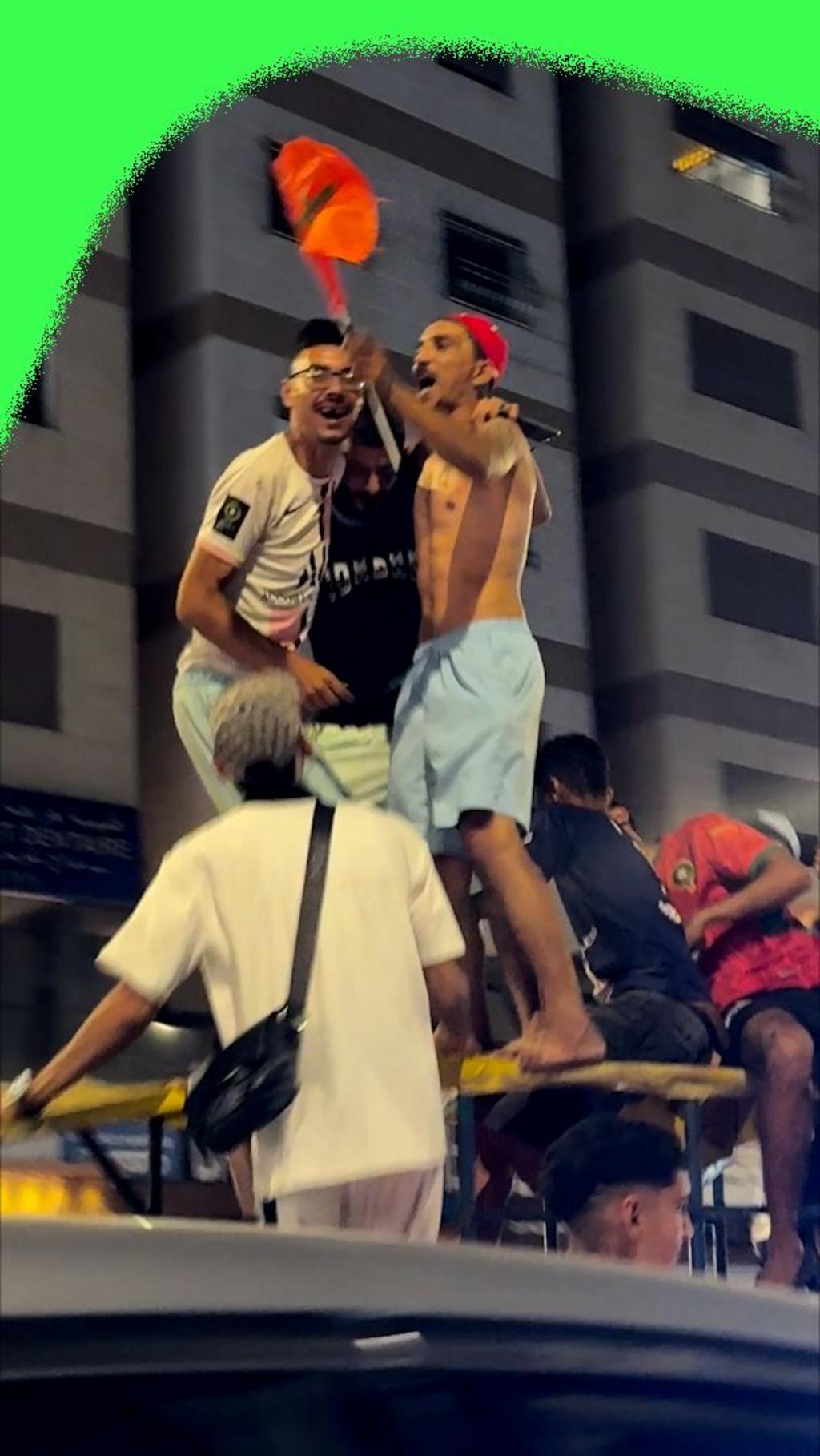
    Thousands of jubilant Morocco football supporters have taken to the streets to celebrate their national team’s historic 3-0 victory over Canada, which secured the Atlas Lions a spot in the 2022 FIFA World Cup quarter-finals and extended their remarkable undefeated streak to 34 consecutive matches.

    The stunning win over Canada capped off an impressive group stage campaign for the North African side, which has now emerged as one of the most surprising and dangerous contenders in the tournament. Fans waving red and green flags set off fireworks, cheered, and sang team chants across cities in Morocco as they celebrated the nation’s deep run in the world’s biggest sporting event.

    Football analysts have turned their attention to Morocco’s unexpected success this tournament, questioning how the side has managed to maintain such an incredible long-term unbeaten run against top international competition. The team’s solid defensive organization, clinical finishing in attacking moments, and cohesive team chemistry have all been cited as key factors behind their rise from underdog to legitimate title contender. With their spot in the final eight now confirmed, Morocco is set to face off against another major tournament favorite as they continue their push for an unprecedented World Cup title.

  • England returns to Estadio Azteca but isn’t seeking revenge over Maradona in 1986

    England returns to Estadio Azteca but isn’t seeking revenge over Maradona in 1986

    MEXICO CITY — For England’s national football team, the only previous competitive match played at Mexico City’s legendary Estadio Azteca is a memory that still stings, four decades after the final whistle blew. The fateful 1986 FIFA World Cup quarterfinal between England and Argentina remains one of the most celebrated and controversial matches in the sport’s global history, a contest defined by two once-in-a-lifetime, opposing goals from Argentine icon Diego Maradona that sealed a 2-1 win for Argentina on their path to lifting that year’s World Cup trophy.

    That game has lived rent-free in the minds of football supporters across the world for 40 years. Maradona’s first goal, the infamous “Hand of God”, saw the attacker punch a looping loose ball past England goalkeeper Peter Shilton with his left hand, a moment of unpunished cheating that has become legendary. Just minutes later, Maradona scored what is widely known as the “Goal of the Century”: he collected possession deep in his own half, then weaved past five England outfield players in a mesmerizing run that ended with a clinical finish to seal what many still rank as the greatest goal in World Cup history.

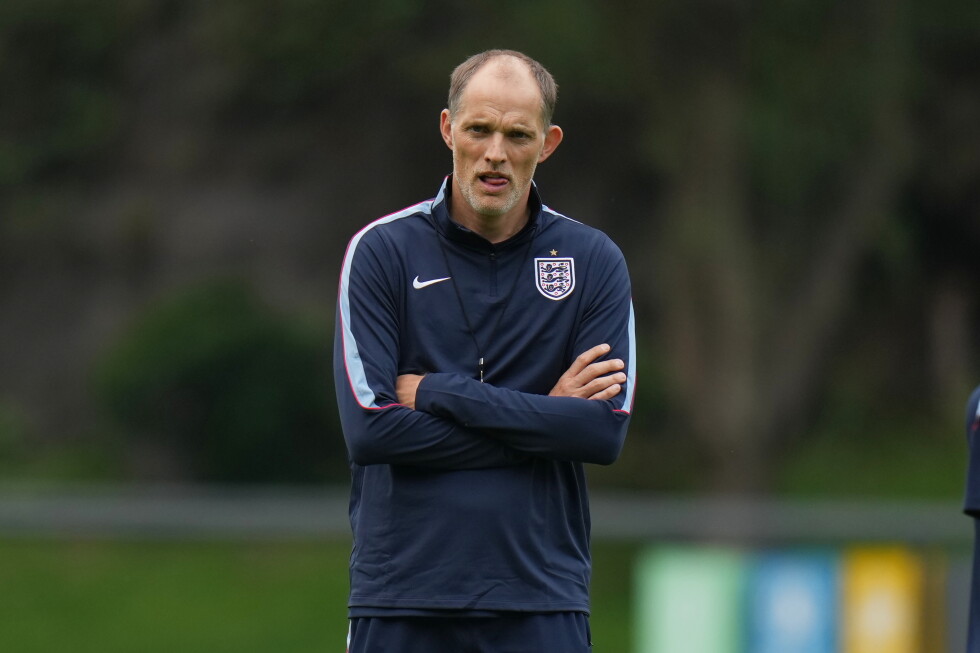
    On the eve of England’s 2026 World Cup Round of 16 clash against co-host Mexico at the same iconic venue, Three Lions head coach Thomas Tuchel sat down with reporters Saturday to address the heavy historical baggage waiting for his squad at the Azteca. Today, the stadium honors Maradona’s iconic 1986 performance with a permanent plaque mounted in one of the player tunnels leading out to the pitch. When the venue is not hosting World Cup matches, hundreds of tourists, most of them Argentine supporters, line up daily to snap photos with the commemorative marker on stadium tours.

    Acknowledging the lasting pain of that 1986 defeat for English football, Tuchel made clear that his squad is not heading into Sunday’s knockout match craving revenge. “It’s something that still hurts; the wound is open, but we aren’t here for revenge,” Tuchel told reporters. The veteran coach, who is leading England at a World Cup for the first time, emphasized that the context of this match is entirely different from the 1986 quarterfinal. “It’s the same stadium, but not the same opponent — and even if it were, looking for revenge wouldn’t make sense,” Tuchel said. “We are here to write a new chapter.”

    Four decades on from England’s heartbreaking 1986 loss to Argentina, the narrative has completely shifted in 2026. This time around, England do not face Maradona and his Argentine side, but host nation Mexico, who are playing in front of a home crowd hungry to end a 40-year drought and reach the World Cup quarterfinals for the first time since 1986.

    Mexico will bring more than just home advantage to Sunday’s clash: the Azteca sits at more than 7,200 feet (2,200 meters) above sea level, a high altitude that has long been a tough challenge for visiting teams unaccustomed to the thinner air. Tuchel also expects the home crowd to create a raucous, intimidating atmosphere that will test his squad’s resolve. “It will take a lot of courage to put out a top performance against Mexico. But we have a brave team,” Tuchel said. “We have an experienced team and at the same time a young team who is ready to take these challenges.”

  • France survive Paraguay’s ‘disgraceful’ and ’embarrassing’ dark arts

    France survive Paraguay’s ‘disgraceful’ and ’embarrassing’ dark arts

    The 2026 FIFA World Cup’s round of 16 delivered one of its most bad-tempered encounters in Philadelphia, where France battled both extreme heat and a physical, aggressively tactical Paraguay side to secure a 1-0 victory and book a quarter-final spot against Morocco. Playing in brutal conditions that saw kick-off temperatures hit 38.3C – one of the hottest in World Cup history, just short of the 43C record set at the 1994 tournament between Ireland and Mexico – Les Bleus entered the match as heavy favorites, having breezed through earlier rounds with free-flowing, high-scoring football. For France, chasing a second consecutive World Cup title after their 2018 triumph, this match would demand a far grittier performance than any they had given so far in the competition.

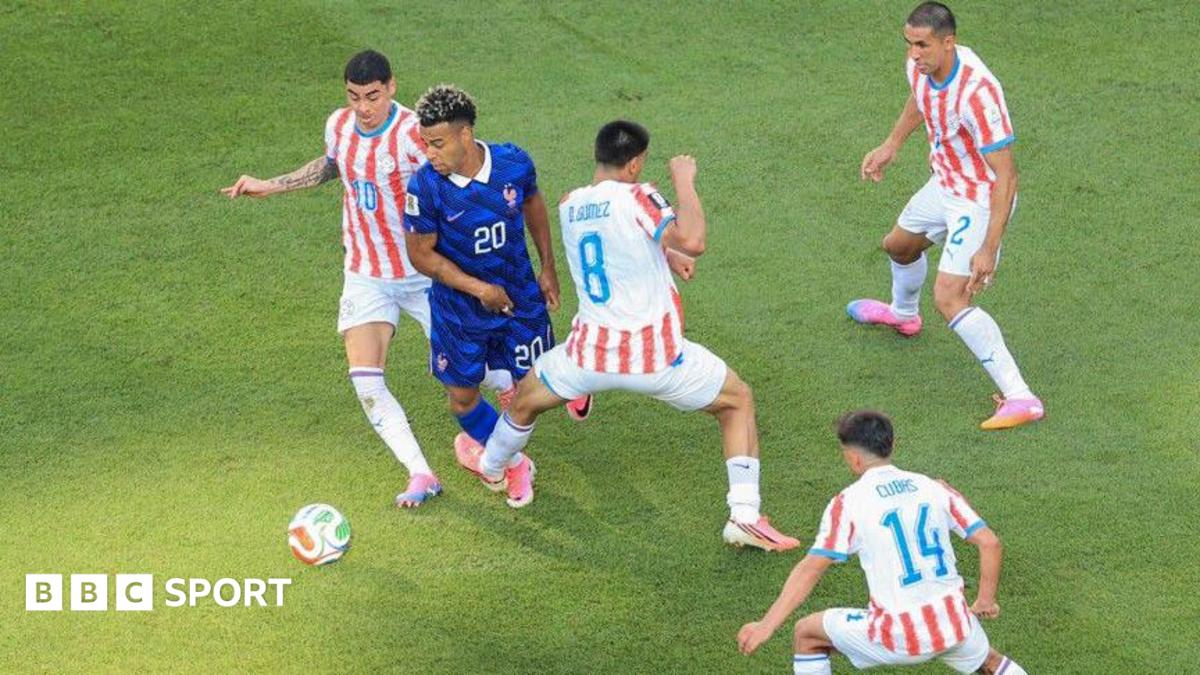
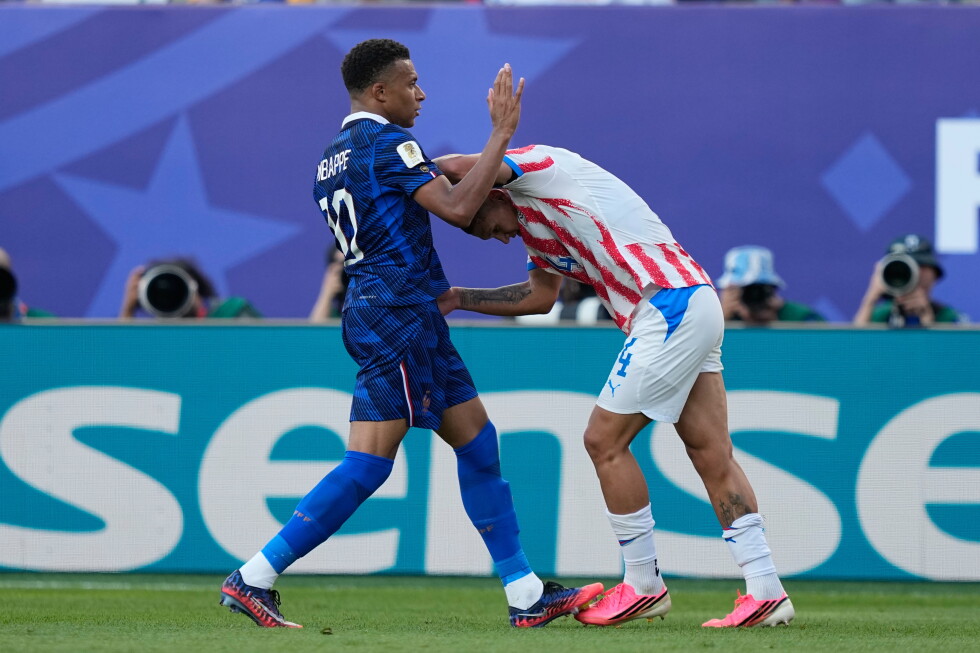
    Paraguay arrived at this fixture with plenty of goodwill from neutral fans, having pulled off one of the tournament’s biggest upsets in the previous round by knocking out four-time winners Germany on penalties. But any positive reputation they earned quickly evaporated in the Philadelphia heat, as the South American side deployed a array of aggressive, unsportsmanlike tactics targeted at disrupting France’s rhythm, most notably focusing on star forward Kylian Mbappe. Multiple high-profile fouls went unpunished by Uzbek referee Ilgiz Tantashev, who faced widespread criticism for failing to exert control over the match: Andres Cubas avoided a booking after a bone-rattling challenge on Adrien Rabiot, Juan Jose Caceres escaped sanction for kicking out at Mbappe, and Gabriel Avalos did not receive a card for elbowing Dayot Upamecano in the stomach late in the game as Paraguay pushed for an equalizer. Astonishingly, three French players received cautions over the course of 90 minutes, while not a single Paraguayan player was booked. Even off-the-ball incidents were rife: Matias Galarza attempted to trick officials into booking Michael Olise by going down easily after a minor shirt tug, and put his hand directly in Jules Kounde’s face during off-the-ball scuffles.

    Former England goalkeeper Joe Hart, working as a pundit for BBC One, did not hold back in his criticism of Paraguay’s conduct. “Paraguay’s players were an absolute disgrace,” Hart said. “If they were on my team, I’d be dragging them off the pitch. I love how Mbappe has behaved in this game. The Paraguay players have come for him from minute one. When he was laughing at the players, he is allowed to be arrogant. The referee didn’t help in any circumstances. The fact that not one Paraguayan was booked inside the 90 minutes is astonishing.”

    Former England defender Micah Richards echoed that sentiment, noting that Paraguay’s strong defensive play made their antics unnecessary. “It was embarrassing to see,” Richards said. “Paraguay are better than that. Defensively they were so good and they didn’t need to get into these antics.” Former Germany midfielder Thomas Hitzlsperger went further, saying he had no respect for Paraguay over their performance. “If you are from Paraguay, you probably like the team – they are like warriors,” he explained. “If you are French or neutral, you can have no respect for them any more. This is not just disgraceful, this is even worse.”

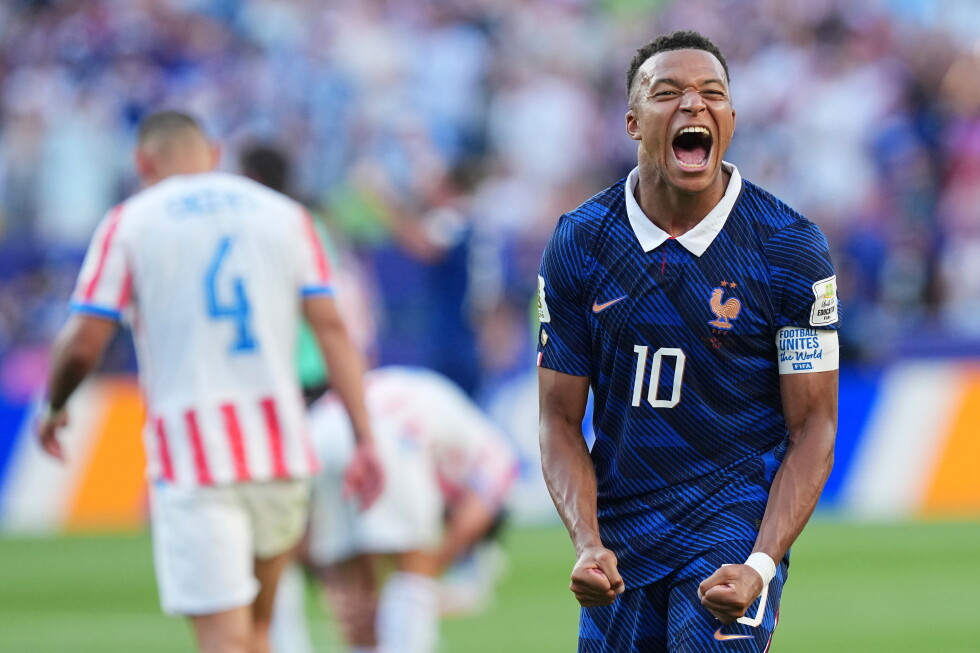
    The defining moment of the match came with 20 minutes remaining, when Diego Gomez brought down Desire Doue in the penalty area. After initially waving away appeals, referee Tantashev reviewed the incident on the pitchside monitor at the encouragement of VAR and awarded France a penalty. Even before the kick, Paraguay players continued their gamesmanship: the entire team crowded Tantashev to delay the penalty, while Gustavo Velazquez deliberately scuffed the penalty spot to disrupt Mbappe’s run-up. Mbappe kept his composure, however, and converted the spot kick to score his seventh goal of the tournament, pulling him level with Lionel Messi at the top of the Golden Boot race. The goal also took Mbappe’s all-time World Cup tally to 19 goals in 19 tournament matches, leaving him just one behind Messi’s all-time knockout stage record. Remarkably, since 2018, Mbappe has scored more World Cup knockout goals (11) than entire elite nations including Brazil (10), England (10), Portugal (9) and Spain (4).

    Tensions did not ease after the penalty, or even after the final whistle. After the match ended, Velazquez attempted to confront French players, sparking a minor scuffle on the pitch. French manager Didier Deschamps, who made history on the night by becoming the first head coach to record 10 World Cup knockout stage victories, revealed that his side had endured verbal abuse from the Paraguayan bench throughout the second half. “There were some insults from the other bench we could have done without,” Deschamps said in his post-match press conference. The French manager added that he had anticipated Paraguay would target Mbappe late in the game, instructing his physically largest players to surround the forward to protect him from potential rough challenges. “I asked the two biggest lads to go and stand around Kylian at the end because they were going to chop him down,” Deschamps explained. “It wasn’t easy. They use every trick in the book. It’s not the kind of football that will bring people to the stadium, but they defended well. It is always difficult against these South American teams.”

    Mbappe, who laughed off Paraguay’s repeated provocations on the pitch instead of responding with aggression, offered a characteristically calm assessment of the win after the final whistle. “We know how to play ugly football,” Mbappe said. “They [Paraguay] thought we’d show up in tuxedos, but we were ready. Even at that game, we were better than them. That’s their style of football – there’s no right or wrong way to play the game. They tried to beat us that way, but we won.”

    French players echoed Mbappe’s perspective, framing the hard-fought win as proof that Les Bleus can win in different ways, after cruising through earlier rounds with high-scoring, attractive football. Defender William Saliba, a Premier League winner with Arsenal, said France had prepared for Paraguay’s physical approach. “They were going to come at us hard, commit fouls, and try to provoke us,” Saliba said. “We had to stay in the game, because if we started wasting energy, getting into arguments, and losing our focus, things wouldn’t go well. It’s not easy, but sometimes it feels good to win a tough match like this, because since the start of the tournament, we’ve been used to scoring three goals. Today, it was a 1-0 win, but it’s just as valuable.” Forward Rayan Cherki added that the match proved France could compete through a physical battle as well as they do through free-flowing attack: “We knew it was going to be a fiercely contested match. But it was important to us to play a game like this during the World Cup – to remind everyone that the French team can play beautiful football, but can also go to war.”

    BBC football issues correspondent Dale Johnson argued that the root of the match’s bad temper lay in the referee’s failure to establish control early on, a problem amplified by the 2026 World Cup’s mandate for referees to allow more physical play to promote free-flowing football. Johnson noted that referee Michael Oliver set a clear tone in an earlier round of 16 match between Canada and Morocco, handing out six yellow cards before half-time to clamp down on foul play, which led to a calmer second half with only two additional cautions. That stands in stark contrast to Tantashev’s performance in Philadelphia: while the official foul count was 13 for Paraguay and 11 for France, that statistic does not reflect the multiple unpenalized tactical and off-the-ball fouls committed by the South American side. The only correct decision that led to France’s win came via VAR intervention, not the referee’s initial call, Johnson added.

    With the win secured, France now advance to the quarter-finals, where they will face Morocco at Boston Stadium on Thursday, with kick-off scheduled for 21:00 BST.
  • Paraguay gets physical in a heated World Cup loss to France in steamy Philadelphia

    Paraguay gets physical in a heated World Cup loss to France in steamy Philadelphia

    PHILADELPHIA — The final 2026 FIFA World Cup match hosted at Lincoln Financial Field, the home stadium of the NFL’s Philadelphia Eagles, will be remembered far more for its brutal physicality than its on-pitch flair, after France edged Paraguay 1-0 in a tense Round of 16 knockout clash marred by unsportsmanlike contact and post-match friction.

    Paraguay, known colloquially as La Albirroja, adopted a bruising, physical playing style that drew comparisons to the hard-hitting bone-crunching contact common in the NFL games held at the same venue. While Eagles head coach Nick Siranni would likely approve of such aggressive intensity, the French side, Les Bleus, was left frustrated and sore by the constant foul play.

    France midfielder Manu Koné summed up the chaotic experience of playing against Paraguay’s approach, noting he had never encountered a match with so many unregulated hard challenges. “I mean, cheap shots, shoves in the back. So, yes, it was complicated,” Koné told reporters after the final whistle.

    Much of Paraguay’s aggressive attention focused on French star forward Kylian Mbappé, who ultimately netted the match’s only goal from a 70th-minute penalty that carried France into the quarterfinals. Multiple Paraguay players targeted Mbappé through unmarked, off-the-ball contact throughout the first half: in the 35th minute, Andrés Cubas dragged Mbappé to the ground in the attacking third, sparking a mass confrontation between both squads. Before halftime, Matias Galarza caught Mbappé with an off-the-ball challenge that sent the French star sprawling across the turf. In the 77th minute, Juan José Cáceres kicked Mbappé sharply on the right shin. Shockingly, none of these hard fouls drew a yellow card from the match officials.

    In a striking turn of refereeing, France received all three of the yellow cards issued during regulation play. Paraguay only picked up a single yellow card after the final whistle, when one of its staff and players argued with the referee over calls.

    Paraguay’s aggressive game plan did not catch France off guard, Mbappé said after the match. “We knew what kind of match it was going to be. We can also get our hands dirty. We know how to do it. We know how to play ugly football. Guess they were expecting us to show up playing fancy pretty football, but we were ready. Even at that kind of game, we were better than them,” the star forward added.

    Temperatures ran as high off the pitch as they did on it, with the match played in scorching Philadelphia heat. After the final whistle, tensions boiled over when players from both sides converged at the center circle for a post-match shouting match. Paraguay goalkeeper Orlando Gill threw a football directly at Mbappé’s back, an action he later defended by saying he had tried to shake Mbappé’s hand and lost his temper when the French star did not acknowledge him.

    Gill defended La Albirroja’s tactical approach, saying the squad had planned from kickoff to impose itself physically on France. “From the very first moment, we set out to make our presence felt on the pitch — to play hard. If the ball gets through, the man doesn’t. And, honestly, I think the team handled itself well,” Gill said.

    France head coach Didier Deschamps offered a scathing rebuke of Paraguay’s tactics, arguing the aggressive approach had no place in elite international football. “They pull out every trick in the book. It’s not the kind of football that draws people to the stadium. Each team played the way they want. But there were insults from the other bench that I could do without,” Deschamps said.

    Verbal altercations also broke out on the pitch during play, with Mbappé and Galarza caught in a heated shouting match at one point. At multiple junctures during the match, observers joked that the referee could have used American football-style penalty flags to keep up with the constant foul play that went unpunished.

    For France, the messy result was still a win that keeps their World Cup title hopes alive. “We fought a battle,” French defender William Saliba said after the match. “We won the battle.”

  • Cowboys, fighter jets and US Border Patrol – inside Trump’s big recruitment drive

    Cowboys, fighter jets and US Border Patrol – inside Trump’s big recruitment drive

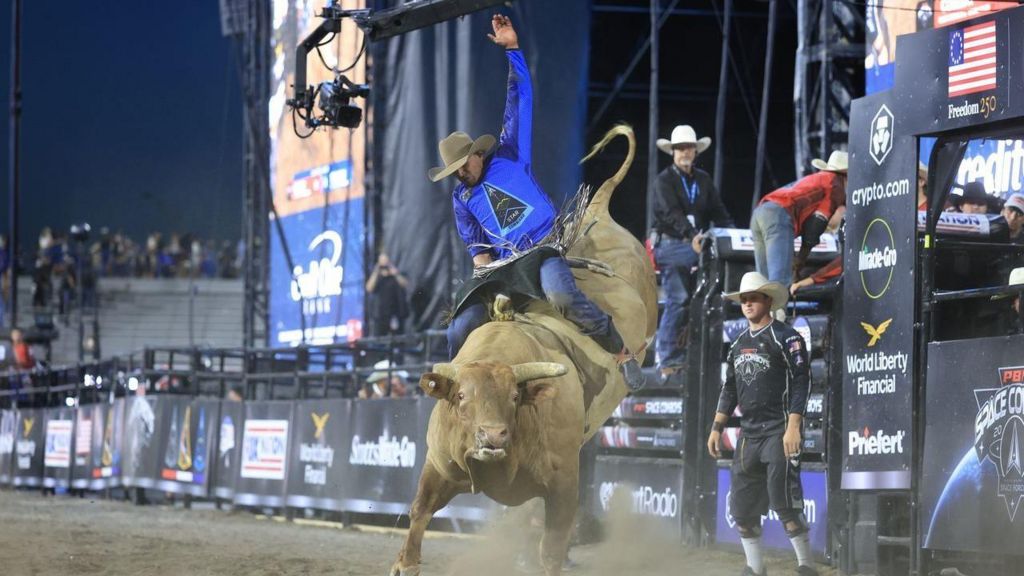
    On a sweltering July Saturday in Colorado Springs, two seemingly disparate worlds collided inside the Air Force Academy’s Falcon Stadium: the dust, grit and roar of professional bull riding and the crisp, disciplined tradition of U.S. military service. What unfolded was a one-of-a-kind event dubbed PBR Space Cowboys, staged to mark the 250th anniversary of the United States, and doubling as an unconventional, high-stakes recruitment push for two of the nation’s fastest-growing security agencies: the U.S. Space Force and U.S. Border Patrol.

    Thirty-three new Air Force and Space Force recruits, many still young and fresh-faced, lined up first to take their oath of enlistment, while just off the main floor, 33 bull riders clad in leather chaps waited to face off against 1,600-pound horned bovines. For event organizers, the pairing of Western rodeo culture and modern military strength was no random accident. Professional Bull Riders (PBR) CEO Sean Gleason framed the partnership as a natural alignment of core values.

    “Our cowboys, and the cowboys in our audience, they believe in hard work, honesty, integrity, help your neighbour, some selflessness,” Gleason told reporters on site. “So that’s what it takes to be in the military or in the US Border Patrol or any type of first responder.” This is not a new collaboration: Border Patrol has held the title of “Official Federal Law Enforcement Officers of the Professional Bull Riders” since 2008, a relationship that has expanded dramatically amid the Trump administration’s intensified focus on border security.

    Over the past year, President Trump has advanced sweeping border policy, signing legislation last summer requiring the hiring of 3,000 new Border Patrol agents, and approving a $70 billion border security package earlier this month that allocates $26 billion specifically to Border Patrol, with much of that funding earmarked for recruitment and retention. The agency announced earlier this week that it has surpassed 21,000 active agents for the first time since its founding in 1924, and recruitment numbers are surging: between January and April 2025 alone, the agency received 34,650 applications, a 44% jump from the same period in 2024. The Department of Homeland Security attributes this historic spike to new administration policies and generous incentives, including signing bonuses of up to $60,000 and starting salaries of $50,741 that can climb to more than $110,000.

    At the PBR event, those recruitment efforts were on full display. A Border Patrol SUV and recruitment tent were positioned front and center in the event’s outdoor Fan Zone, just feet away from a children’s junior rodeo area and a main stage blaring live country music. For many young attendees, the tent opened doors they never thought possible. Eighteen-year-old Cody Price, who had deferred his admission to the University of Colorado Boulder to explore service options, had long dreamed of joining the military but was disqualified due to asthma. Unlike the armed forces, Border Patrol does not disqualify candidates with well-managed asthma, and after speaking with recruiters who walked him through both the benefits and challenges of the role, Price left with new prospects.

    Similarly, 19-year-old Davin, a Grand Junction native who declined to share his last name, had always wanted to follow his grandfather and older brothers into military service, but a heart condition barred him from enlistment. “The restriction’s a little less heightened with the Border Patrol,” he explained. After meeting with recruiters, he added, “I feel really confident in it after that conversation.” Davin said he is drawn to the agency’s culture of patriotism and camaraderie, and the chance to make a tangible difference for the country.

    Border Patrol was not the only agency courting talent at the event. The U.S. Space Force, the youngest branch of the U.S. military founded by the Trump administration in 2019, co-sponsored the event and brought its own recruitment team to connect with attendees. Tasked with protecting U.S. interests in, from and to outer space, Space Force is in a period of rapid expansion, with a goal to double its active personnel over the next five years. In February, the branch exceeded its annual recruitment goal by 125%, but it faces stiff competition for skilled workers, going head-to-head with Silicon Valley tech giants and major aerospace companies for top talent.

    A Space Force spokesperson told the BBC that the PBR event offered a unique opportunity to introduce the branch to young adults and their families, “showcasing the vital role Guardians play in our national security and the outstanding career paths available to the next generation.” Gleason echoed that framing, drawing a throughline between the Western pioneers who settled the American frontier and the space professionals who are now exploring a new frontier: “The cowboys tamed the West, and Space Force is going to tame… space.”

    By the end of the day, the event drew more than 30,000 attendees, exceeding organizers’ expectations. Beyond the bull riding, the celebration featured a flyover, a performance by country music superstar Tim McGraw, and a drone show that lit up the night sky with images of a bull rider, a cowboy hat, and the Space Force logo. When the emcee asked all active-duty service members and veterans in the crowd to stand, nearly half the stadium rose to their feet in recognition.

    For PBR, the sold-out event is further evidence of the sport’s exponential growth in recent years, a milestone Gleason calls particularly meaningful after years of planning to bring the event to the Air Force Academy. For the U.S. military and law enforcement agencies, the event is just one example of the creative, out-of-the-box recruitment strategies being deployed to meet growing personnel targets amid shifting demographics and evolving public interest in public service.

  • Kylian Mbappé scores again and France reaches World Cup quarterfinals with 1-0 win over Paraguay

    Kylian Mbappé scores again and France reaches World Cup quarterfinals with 1-0 win over Paraguay

    PHILADELPHIA — On a sweltering July 4 marked by the 250th anniversary of U.S. independence, France secured a hard-fought 1-0 victory over Paraguay at the 2026 World Cup held in the United States, booking the defending runners-up their fourth consecutive quarterfinal berth thanks to a milestone penalty from Kylian Mbappé.

    From kickoff, players battled more than just their opponents: an extreme heat warning was in effect for the full 90 minutes, with temperatures peaking near 38 degrees Celsius (100 degrees Fahrenheit). Organizers added scheduled hydration breaks to cool competitors down — a adjustment that has drawn criticism for slowing match tempo, but proved indispensable on this steamy, humid afternoon. Sprinklers doused the Lincoln Financial Field grass during breaks and halftime, while more than 68,000 spectators packed into the stands flooded the shaded concourses at halftime to escape the brutal sun.

    Paraguay, fresh off a stunning upset victory over Germany in a penalty shootout to reach the round of 16, set up a deeply physical, defensively compact block to frustrate the high-scoring French side. Les Bleus, who had netted 13 goals in their first five tournament matches, could find no breakthrough in the first half, with tempers flaring repeatedly. Paraguay’s Andrés Cubas brought down Mbappé in a rough challenge that sparked a brief scuffle between both squads, and Matías Galarza later sent Mbappé crashing to the turf with a sharp elbow to the body.

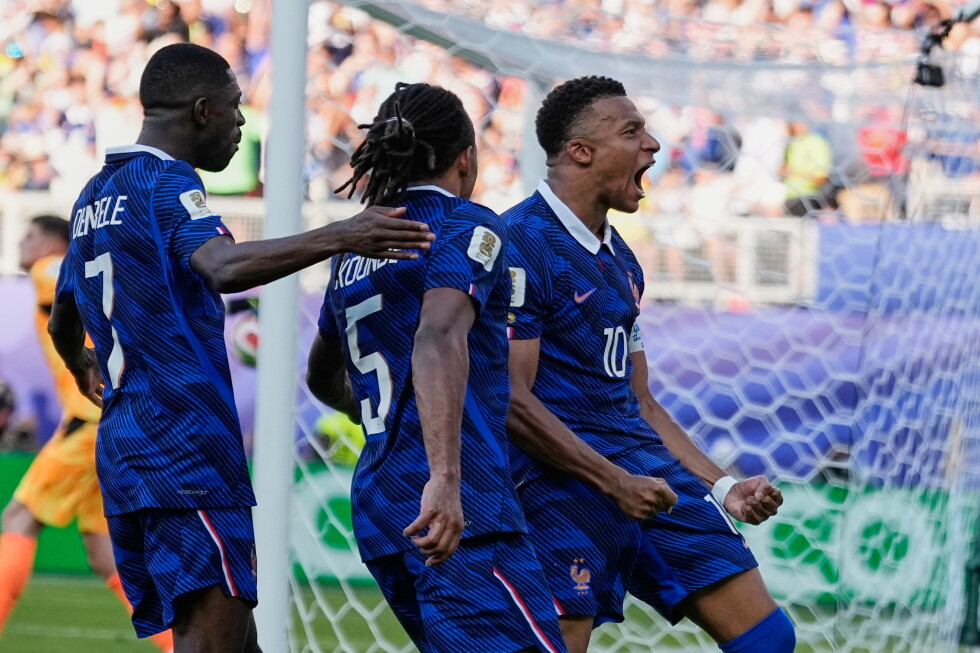
    The deadlock finally broke in the 70th minute, after a video assistant referee review ruled Paraguay’s Diego Gomez tripped Mbappé inside the penalty area. The French star stepped up to the spot, used a signature stutter-step to wrong-foot goalkeeper Orlando Gill, and slotted home his 19th career World Cup goal. The milestone puts him just one goal behind all-time career World Cup scoring leader Lionel Messi of Argentina, with both players tied on seven goals in this year’s tournament to lead the race for the Golden Boot, the award Mbappé won at the 2022 Qatar World Cup.

    France had multiple chances to extend their lead late in the match: Mbappé missed a clear breakaway opportunity, Manu Koné saw a blistering top-corner strike pushed away by Gill, and the Paraguay shot-stopper pulled off two more sharp saves to deny Mbappé in second-half stoppage time. But the early second-half penalty proved enough to see France through.

    The match carried extra cultural context, held in the birthplace of American independence on the exact 250th anniversary of the country’s founding. Fans filled the stadium parking lots for pre-match tailgates, many draped in U.S. flags or wearing patriotic Uncle Sam hats far more than at any other Philadelphia match of the tournament. Pre-match entertainment featured performances from Idina Menzel, hip-hop icons The Roots and DJ Jazzy Jeff, blending World Cup soccer action with Independence Day celebrations.

    France will next face Morocco in the quarterfinals next Thursday in Foxborough, Massachusetts. Entering that matchup, Didier Deschamps’ side remain undefeated in this year’s tournament with a 5-0 record, having outscored all opponents 14-2 so far. Les Bleus won the 2018 World Cup title before falling to Messi’s Argentina in a penalty shootout in the 2022 final, and they remain one of the favorites to lift the trophy in 2026.

  • Kylian Mbappé of France scores 19th career World Cup goal, 1 behind Golden Boot rival Messi

    Kylian Mbappé of France scores 19th career World Cup goal, 1 behind Golden Boot rival Messi

    PHILADELPHIA — The 2026 World Cup Round of 16 delivered another iconic chapter for men’s football on Saturday, as France captain Kylian Mbappé inched closer to an all-time World Cup scoring record with a match-winning penalty that secured Les Bleus a 1-0 victory over Paraguay and a spot in the tournament’s quarterfinals.

    The 70th-minute strike marked Mbappé’s 19th career World Cup goal, pulling him just one goal behind all-time record holder Lionel Messi of Argentina. Messi, who notched his 20th career World Cup goal in Argentina’s 3-2 win over Cape Verde 24 hours earlier, also holds the unique record of scoring in eight consecutive World Cup matches, a streak still active through this year’s tournament.

    Mbappé’s winning goal broke a tense scoreless deadlock that had been marked by aggressive physical play from the Paraguayan side. After a VAR review, referee officials awarded France a penalty when Paraguayan defender Diego Gomez was judged to have tripped Mbappé inside the 18-yard box. The French captain used a stuttering run-up to wrongfoot goalkeeper Orlando Gill, slotting the ball into the net for his seventh goal of the 2026 tournament. With the finish, Mbappé leveled Messi atop the Golden Boot race for the tournament’s top scorer.

    The physicality boiled over into tension in the first half, when Paraguayan midfielder Andrés Cubas took Mbappé down with a hard tackle, triggering a brief scuffle between both squads. Later, Matías Galarza caught Mbappé with a right elbow to the chest, sending the French star crashing to the turf. Tempers flared again after the final whistle: after Mbappé declined Gill’s offer of a post-match handshake, the Paraguayan goalkeeper threw a match ball at Mbappé’s back as he walked away.

    In post-match comments, Mbappé acknowledged the physical nature of the contest, noting that France was fully prepared to match Paraguay’s aggressive style of play. “We knew what kind of match it was going to be. We can also get our hands dirty, we know how to do it,” the captain said. “We know how to play ugly football. Guess they were thinking we were going to show up in tuxedos, but we were ready. Even at that kind of game, we were better than them. That’s their style of football. There’s no right or wrong way to play the game. They tried to beat us that way, but we won.”

    France head coach Didier Deschamps praised his captain’s performance and leadership both on and off the pitch following the win. “I’ve said from the first day that he had the spirit. He gave all the athletic efforts,” Deschamps said. “He’s a great top-notch player on the pitch. But when he speaks, he speaks for the entire group.”

    Saturday’s result cemented another historic milestone for Mbappé: he is now the only men’s player in World Cup history to score at least three knockout-stage goals across three different World Cup tournaments. He also holds a key advantage in the Golden Boot race should he remain level with Messi at the end of the tournament. Under FIFA rules, the first tiebreaker for tied goal tallies is number of assists, and Mbappé currently holds a 2-0 lead over Messi in that category. If assists remain level, the second tiebreaker goes to the player who has played fewer minutes throughout the tournament. Norway’s Erling Haaland and England’s Harry Kane trail the two superstars, sitting on five goals each heading into the quarterfinal round.

  • US players and coach Mauricio Pochettino represent the diversity of America on July Fourth

    US players and coach Mauricio Pochettino represent the diversity of America on July Fourth

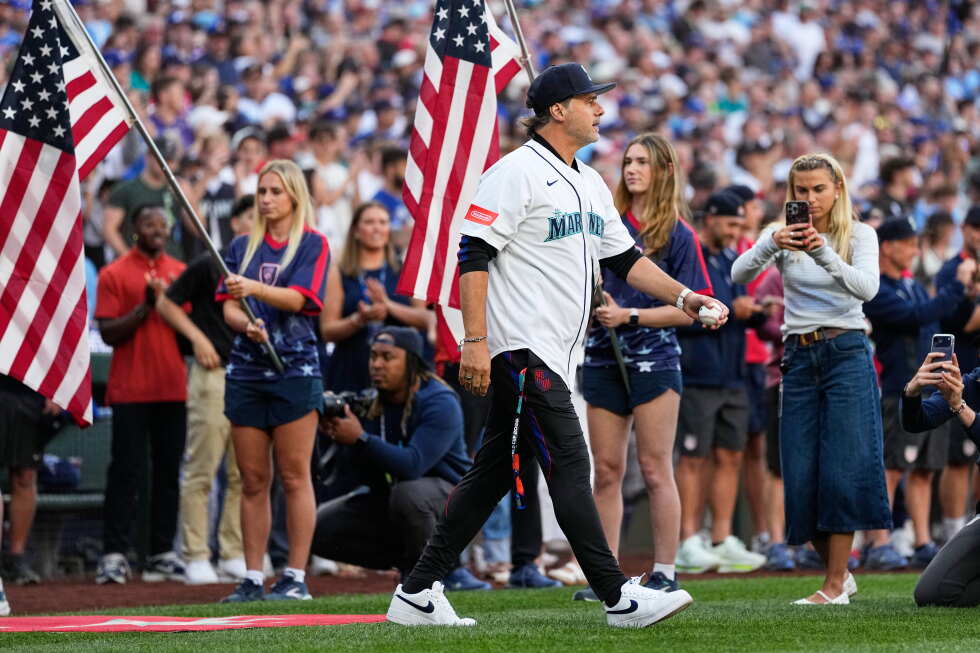
    SEATTLE — Fresh off throwing the ceremonial first pitch alongside his full squad at a Seattle Mariners baseball game fewer than 24 hours earlier, United States men’s national soccer team head coach Mauricio Pochettino had an unexpected set of birthday wishes to share Friday. Instead of marking forward Folarin Balogun’s 25th birthday, the 54-year-old Argentine-born coach turned his attention to the nation his side is representing at the 2026 FIFA World Cup, which celebrated its 250th anniversary of independence on Saturday.

    Speaking to reporters Saturday while walking the training pitch at Husky Soccer Stadium, Pochettino smiled and offered a simple, warm greeting: “Happy birthday. It’s 250 years, no?” Since arriving for this summer’s tournament, Pochettino, who was raised in Argentina and maintains a residence in Spain, has fully immersed himself in American culture, joining thousands of elated fans in belting John Denver’s iconic folk anthem “Take Me Home, Country Roads” after every U.S. victory, while still making sure his squad never forgets his South American roots.

    U.S. captain Tim Ream, who returned to Major League Soccer’s Charlotte FC after a long stint with England’s Fulham FC in the Premier League, noted the coach’s unwavering connection to his home. “He’s 200 percent Argentine,” Ream explained. “I think he’s obviously taken to the culture, and at the same time has added his bit of culture to us as well. The group is such a melting pot of staff, players. And, it’s just an incredible representation of who we are as people. But, he definitely won’t let us forget that he still is Argentine at the end of the day.”

    Pochettino is far from the only member of the U.S. camp with international roots that shape the team’s identity. Six of the 26 rostered players were born outside the United States, and others including Balogun grew up playing soccer in European academies. Balogun, who was born in Brooklyn, New York, to Nigerian parents and raised in London from a young age, was eligible to represent three different nations at the international level, but ultimately chose to commit his senior career to the U.S. “This is a unique experience for me,” Balogun said, “being in the World Cup in your home nation.”

    While soccer has long trailed American football, basketball and baseball in mainstream popularity among U.S. sports fans, new exclusive polling from Ipsos Sports shared with the Associated Press confirms this co-hosted World Cup has reignited passion among existing fans and drawn the curiosity of casual supporters across the country, even as the sport continues working to cement its place as a core part of American sports culture.

    On Monday, the U.S. will get a chance to build on that growing momentum when it faces off against Belgium in a Round of 16 knockout match at Seattle’s Lumen Field. A win would mark a historic milestone for U.S. men’s soccer: it would be the first time the nation has ever won two consecutive knockout matches at a World Cup, and would send the team to only its second quarterfinal appearance in tournament history, with the first coming back in 2002.

    For Ream, the moment represents more than just a game. “(An) opportunity to continue to inspire tens of millions of people, inspire kids,” Ream said. “It’s an opportunity for us to win another knockout-stage game in a World Cup.” That run will depend on contributions from across the team’s deeply diverse roster, which includes standouts like Weston McKennie and Sergiño Dest, both sons of U.S. service members, who bring unique backgrounds to the squad.

    Dest is confident the team has improved dramatically since a 5-2 warm-up loss to Belgium back in March, and says the U.S. is more than capable of pulling off an upset Monday. “Belgium is a great opponent,” Dest acknowledged. “But, we also see some opportunities for us to be able to win that game. ‘Cause we are also a great team at the moment. We grew a lot, as well, in this tournament. And, at the moment, it’s really difficult to beat us. So, it will be difficult for Belgium as well.”

    Saturday’s 250th independence anniversary gave the squad a chance to step away from training and celebrate the occasion together, with Ream and his teammates watching the city’s fireworks display from a rooftop bar overlooking Puget Sound. Ream noted that celebrating the Fourth of July in Seattle feels far different than marking the holiday in the U.K., where many fans do not understand the history of the holiday. “It’s a little bit different celebrating here than over there because obviously, in a lot of ways, a lot of people don’t actually know why we celebrate the Fourth, which is crazy to me, because they were a big part of why we celebrate the Fourth,” he said.

    For Ream, the team’s varied origins — spanning every continent and background — make it the perfect reflection of modern American identity. As the team looks to cap off the holiday weekend with a historic win, he summed up the squad’s ethos: “With all our different backgrounds, where we all have grown up, it’s a true representation of what America is. It’s a melting pot of people, personalities, of characters. It’s the perfect representation of what the U.S. is.”

  • Hodgkinson beaten into second by Odira in Eugene

    Hodgkinson beaten into second by Odira in Eugene

    The Prefontaine Classic Diamond League meet in Eugene delivered a full slate of dramatic upsets, standout performances and unexpected results over the weekend, headlined by a surprise defeat for Olympic 800m champion Keely Hodgkinson at the hands of Kenyan world champion Lilian Odira.

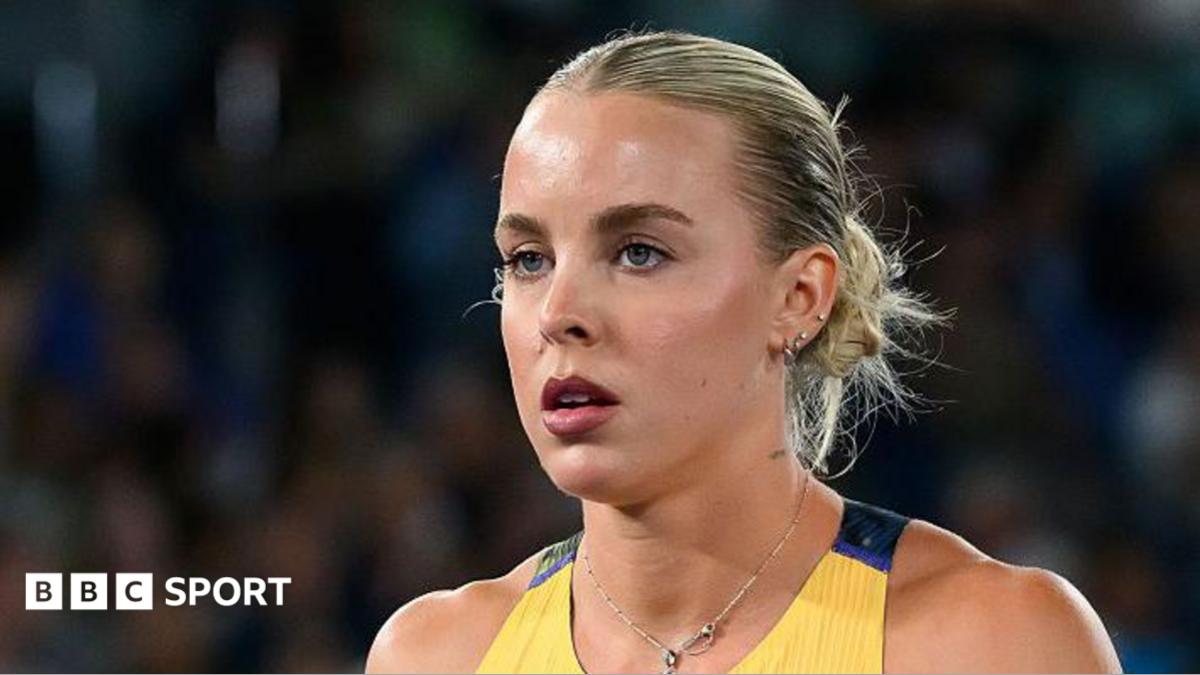
    Hodgkinson, who entered the race with clear ambitions of challenging the sport’s longest-standing world record – Jarmila Kratochvilova’s 1:53.28 mark set back in 1983 – was forced to settle for second place after a hampered performance. The British 24-year-old, who had recently broken her own national 800m record at the Stockholm Diamond League stop last month, took to the track in Oregon with heavy strapping on both knees following a recent hard fall. The injury forced a slow, labored start from Hodgkinson, and she was never able to close the gap on Odira in the closing stages, crossing the finish line in 1:56.73 – far off her June British record of 1:55.17.

    Odira, for her part, produced a season-best surge down the home straight to overtake Hodgkinson and claim victory in 1:56.19. This marks the second consecutive Diamond League defeat for Hodgkinson, who has endured an up-and-down 2024 season. Last month, she was forced to withdraw from the 400m final at the UK Athletics Championships after experiencing a muscle twinge. Hodgkinson has been competing in the shorter 400m distance this season specifically to build her first-lap speed, a strategic adjustment aimed at finally breaking Kratochvilova’s decades-old world record before the end of the summer.

    The women’s mile race brought its own share of surprise results, as American Nikki Hiltz timed a final sprint perfectly to hold off Kenya’s Dorcus Ewoi and defending world record holder Faith Kipyegon to take the win. British distance runners struggled to keep pace in the elite field: Georgia Hunter Bell clocked an improved personal best of 4:18.52, but the strong time only earned her eighth place, while Olympic medalist Laura Muir faded badly in the closing laps to finish a distant 10th.

    In the women’s 100m, world champion Melissa Jefferson-Wooden secured a narrow victory, clocking 10.78 seconds to edge out fellow American Sha’Carri Richardson by just one hundredth of a second. British sprint star Dina Asher-Smith finished ninth in the competitive field.

    Teenage sprint talent Tate Taylor made a memorable Diamond League debut in the men’s 200m, claiming gold and breaking his own personal best with a blistering 19.75-second finish that outpaced Olympic gold medalist Letsile Tebogo of Botswana, who took second. In the men’s 100m, Nigeria’s Kayinsola Ajayi pulled off a major upset, defeating world champion Oblique Seville to win in 9.84 seconds, with American sprint star Christian Coleman rounding out the podium in third.

  • Unbeaten in 34 matches – why Morocco are World Cup contenders

    Unbeaten in 34 matches – why Morocco are World Cup contenders

    In a gritty, hard-fought 2026 FIFA World Cup round of 16 clash in Houston, Morocco earned a 3-0 victory over co-host Canada to punch their ticket to the quarter-finals, extending one of the most remarkable unbeaten runs in international men’s football and cementing their status as genuine title contenders. Unlike the dramatic, dreamlike run that carried them to a historic semi-final finish in Qatar 2022, this win was far from a display of free-flowing attacking beauty – it was a masterclass in winning when not at their best, a hallmark of championship-caliber sides.

    Morocco managed to secure the three-goal win despite registering only five total shots on target, the lowest number recorded by any winning side in a men’s World Cup knockout match in tournament history. To add to the game’s unusual dynamic, the opening 45 minutes became the first half in World Cup history to see more yellow cards issued than shots on goal. The North African side spent the opening 15 minutes without even registering a touch inside Canada’s 18-yard box, the second consecutive match where they have started slowly in that regard.

    Canada, fielding one of the most talented generations in their men’s football history, made the most of Morocco’s slow start, earning two early clear scoring opportunities. Star forward Jonathan David saw a low shot saved by Moroccan goalkeeper Yassine Bounou, and striker Tani Oluwaseyi also failed to convert his follow-up chance. Injured star Alphonso Davies could only watch from the sidelines, unable to impact the game, and Morocco’s organized defense quickly shut down Canada’s key playmakers: neutralizing playmaker Stephen Eustaquio’s dangerous distribution and cutting off all service to David, leaving the Canadian attack stagnant for the rest of the match.

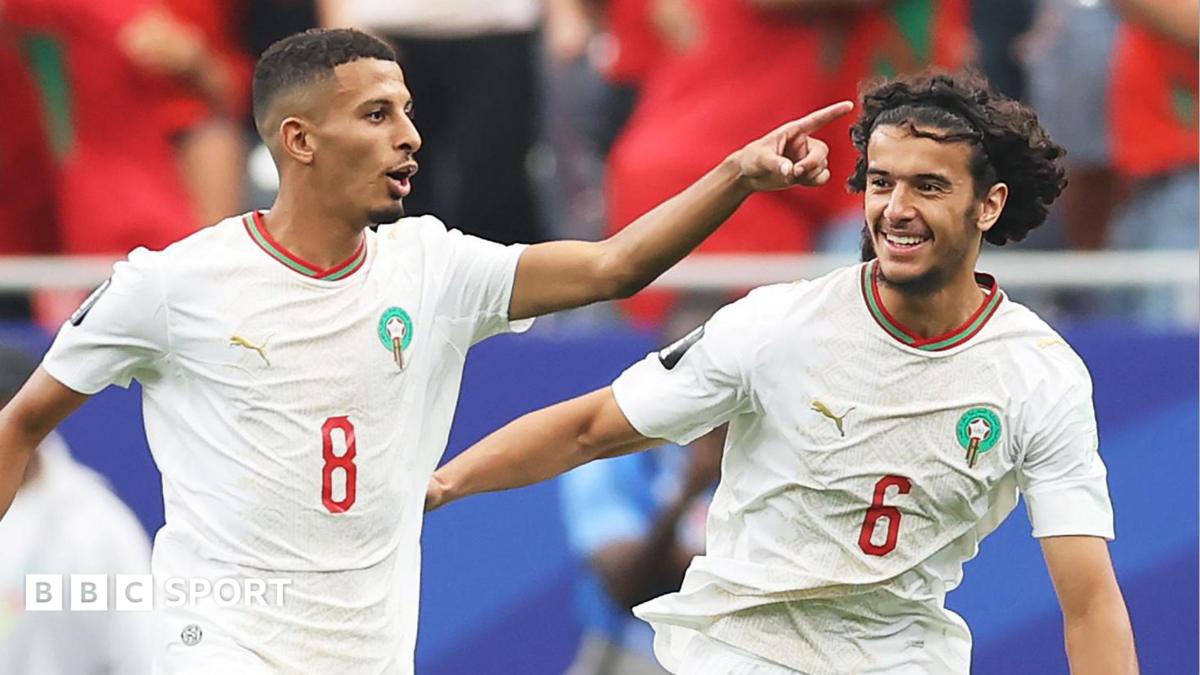
    Once Morocco found their rhythm, they never relinquished control. Their captain Achraf Hakimi, widely regarded as the best right-back in world football, was a constant threat both going forward and in pressing, disrupting Canada’s build-up at every turn. Playmaker Brahim Diaz delivered a standout performance, notching two assists to bring his total World Cup assist tally to four – the most of any African men’s player in tournament history.

    Speaking after the match, Morocco head coach Mohamed Ouahbi emphasized the team’s resilience and commitment to their core identity through tough stretches. “The first half was very intense. There were a few adjustments to be made at half-time. We were never safe from pressure,” Ouahbi told reporters. “What matters is we didn’t change our identity, we didn’t change our game philosophy. We are playing the World Cup which means there will be difficult moments. What matters is when we are not at our best, we have to be resilient. We have to remember who we are playing for and what we are playing for.”

    The result pushes Morocco into its second consecutive men’s World Cup quarter-final, matching the five-match progression they achieved in Qatar 2022. With four total knockout stage wins across the last two World Cups, Morocco has now matched the total number of knockout wins earned by every other African men’s national team combined. One more win will see them equal their historic 2022 run, when they became the first African men’s side ever to reach a World Cup semi-final.

    Morocco’s current run extends their remarkable unbeaten streak to 34 matches across all competitions, dating back to a 1-0 loss to Kenya in the 2025 African Nations Championship, a tournament limited to domestic league players. While the streak carries a minor asterisk, due to a retroactively awarded 2026 Africa Cup of Nations final win over Senegal that is currently being challenged in court, the run’s consistency remains unprecedented for an African side.

    Analysts and pundits have noted that Morocco has yet to face a full 90-minute test of their capabilities at this tournament. They opened with an impressive draw against Brazil, secured a hard-fought win over Scotland after scoring inside two minutes, and beat an already eliminated Haiti side 4-2 in the final group stage match. In the round of 32, they outplayed Netherlands but needed a stoppage-time header to avoid elimination. Their performance against Canada, while ultimately comfortable, did little to quiet doubters ahead of a potential quarter-final clash with defending champions France.

    BBC 5 Live pundit Chris Sutton pointed out Morocco’s slow start and lethargy in the first half, warning that a repeat performance against top opposition would end their run. “Morocco were just not at their very best, and there are tougher tests to come. They surprised me with their lethargy at the start. I don’t know whether there was a bit of arrogance in dismissing the Canada team. Something was amiss with their performance,” Sutton said. “They are devastating on the counterattack. But if France get through and Morocco perform like they did in the first half against a team like France, they will be crushed.”

    Even with questions over their form, no one can deny that Morocco has a better chance of becoming the first African men’s team to win the World Cup than any side in history. This success is no overnight fairytale: it is the product of more than 15 years of deliberate, heavy investment backed by King Mohammed VI. A national academy opened in 2009 and a $65 million training facility opened in 2019, both named for the king, have laid the foundation for Morocco’s rise to the top of African football. After 20 years of failing to qualify for the World Cup between 1998 and 2018, the infrastructure overhaul turned the program around, and also allowed the federation to recruit top talent from the Moroccan diaspora in Europe – including Hakimi and Diaz, both born in Spain.

    Ouahbi emphasized that this long-term investment is the backbone of the team’s current success. “Everything that is happening right now in Moroccan football is thanks to Mohammed VI. He has invested a lot in the last few years, especially this academy,” he said. The coach added that Morocco is no longer seen as a surprise underdog, and the program’s growth is a source of national pride. “It’s not a surprise, we are no longer a surprise as of today. When people talk about Morocco they talk about a real contender, a major footballing nation and it’s a great source of pride. It’s only the beginning and I hope we can continue to have similar World Cup runs for many years. We want to keep going, we don’t want to stop.”

    Morocco will face their next test in the quarter-finals on Thursday, 9 July, with kickoff scheduled for 21:00 BST in Boston.