分类: sports

  • Japan stifles Italy for the first time since 2018 in Nations Championship rugby

    Japan stifles Italy for the first time since 2018 in Nations Championship rugby

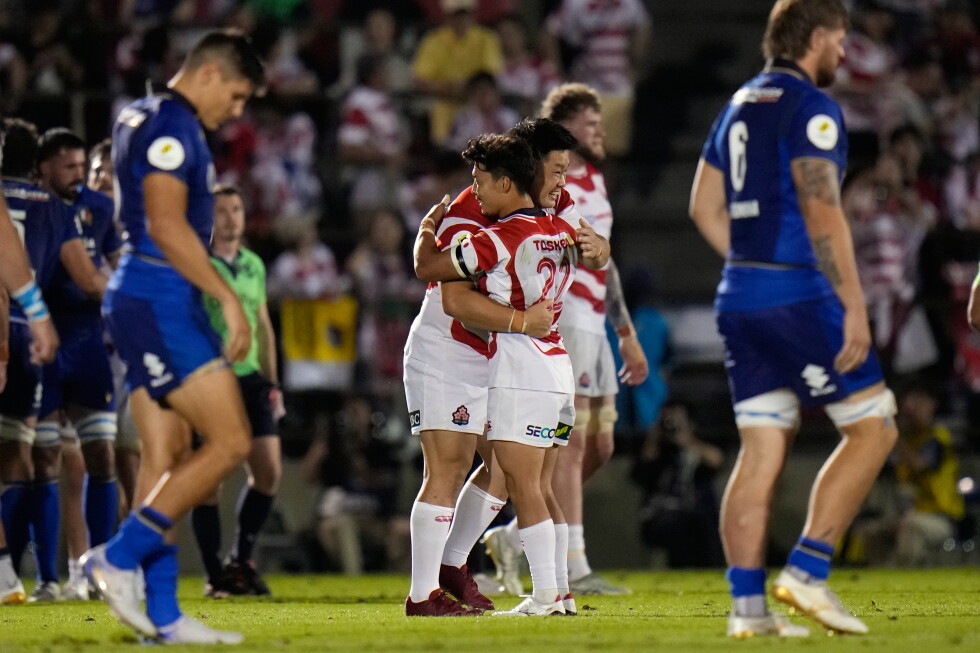
    TOKYO — In a standout display of defensive grit and clinical finishing at a packed, red-and-white clad Prince Chichibu Memorial Stadium on Saturday, Japan secured a landmark 27-10 victory over Italy in the Nations Championship, claiming their first win against the European side in six years.

    Italy got off to a promising start, drawing first blood when flyhalf Paolo Garbisi slotted a pass through a gap in Japan’s defense for midfielder Juan Ignacio Brex to score, before converting the try to put Italy up 7-0. But it took Japan less than 10 minutes to turn the tide and seize control of the scoreboard.

    Buoyed by quick, clean ruck ball from scrumhalf Naoto Saito, Japan captain Warner Dearns powered across the try line to level the scores. Fullback Takuro Matsunaga, who would go on to anchor Japan’s performance with 17 total points, finished a sharp break from winger Yuya Hirose to score, converted his own try, and added a penalty kick to push Japan to a 17-7 lead. Italy closed the first half with a strong push, but Japan’s defense held firm against Garbisi’s repeated grubber kicks into the in-goal area, forcing Italy to settle for just three points from a scrum penalty. That left the host with a 17-10 lead going into halftime.

    The second half belonged entirely to Japan. The Brave Blossoms’ defense locked down, holding Italy scoreless for the full 40 minutes while notching 12 dominant tackles that left the Italian offense with no space to generate attacking opportunities. Just minutes after the break, after 16 consecutive phases of sustained pressure, man of the match Ben Gunter broke through four Italian defenders to score Japan’s third try of the match, extending the lead to 24-10.

    As Japan rotated in five fresh substitutes including veteran flanker Michael Leitch, Italy’s error rate climbed sharply under unrelenting defensive pressure. Matsunaga, who finished a perfect five-for-five on kicking attempts, slotted his third penalty just after the 60-minute mark to cap the 17-point win.

    The upset win came as a surprise to many pre-match analysts, who had questioned how Japan would perform starting without star flyhalf Seungsin Lee. Lee, who started every test match for Japan last year, finished as the top point-scorer in global test rugby with an 88% goalkicking success rate, and was set to miss the match to undergo hand surgery. His replacement, 20-year-old Ryunosuke Ito called up directly from Meiji University, delivered a composed, error-free debut that included setting up Matsunaga’s first try, quieting all pre-game concerns.

    After the match, Italy head coach Gonzalo Quesada acknowledged his side’s struggles, saying: “We were tired and physically challenged, and when you lose 25 possessions it’s difficult to create opportunities.”

    Both teams will head to the Southern Hemisphere for their next matches next weekend. Japan will travel to Sydney to face Ireland, while Italy will take on the All Blacks in New Zealand.

  • Ireland scores late try to beat Australia 33-31 at Nations Championship match in Sydney

    Ireland scores late try to beat Australia 33-31 at Nations Championship match in Sydney

    SYDNEY, Australia — The first match of World Rugby’s groundbreaking new Nations Championship delivered a thriller for the packed crowd at the sold-out Sydney Football Stadium Saturday, as Ireland pulled off a late 33-31 victory over a valiant Australian Wallabies side thanks to a match-winning conversion from flyhalf Sam Prendergast.

    The momentum swung wildly from start to finish in the 10-try contest, with the lead changing hands seven times across 80 minutes. Australia got off to a blistering start, crossing the try line twice early through winger Dylan Pietsch and fullback Jock Campbell — who was making his first Wallabies appearance in four years — to hold a 24-19 advantage at halftime. Ireland stayed within striking distance, however, with first-half tries from Cian Prendergast, Josh van der Flier, and scrumhalf Jamison Gibson-Park, who dotted down just minutes before the break to keep the visitors in touching distance.

    The match’s decisive moment came with three minutes left on the clock. Replacement forward Thomas Clarkson crossed the line for Ireland to set up a conversion that would put the Irish one point ahead, and Sam Prendergast coolly slotted the kick to give Ireland the narrow lead. Australia still had a chance to steal the win in the final dying seconds: flyhalf Ben Donaldson was handed a long-range penalty attempt from more than 40 meters out, but his kick drifted wide of the posts, handing Ireland the opening match victory.

    Saturday’s result kicks off the Nations Championship, a new 12-team global tournament organized by World Rugby designed to crown an official men’s world number one. Competing sides are split into northern and southern conferences, with northern hemisphere teams traveling south for July matches and southern teams heading north for November fixtures. After six rounds of round-robin play, the top four teams will advance to a finals series hosted in London this November, where the world’s best team will be determined.

    The opening match also marked a key transition point for the Wallabies coaching setup. Current head coach Joe Schmidt is set to step down after the team’s next two Nations Championship matches: a clash with France in Brisbane next Saturday, and a match-up with Italy in Perth on July 18. Long-time rugby coach Les Kiss, currently wrapping up his duties with the Queensland Reds Super Rugby side, will officially take over the head coaching role on July 20, and will make his debut in charge for a two-test series against Japan in August. Schmidt’s tenure has been marked by recent poor form, with the Wallabies ending 2023 on a four-match losing streak, including a winless tour of the United Kingdom late last year.

    For Ireland, Saturday’s win comes off the back of a strong 2024 Six Nations campaign. Ireland finished as runners-up in the tournament behind France, with a 36-14 opening loss to the French followed by wins over Italy, Scotland, Wales and England. The wins over the home nations saw Ireland claim their 15th Triple Crown title, one of the most prestigious honors in northern hemisphere rugby.

    Two other opening-round Nations Championship matches were held Saturday. In Christchurch, New Zealand, the All Blacks pulled off a narrow 34-32 win over France, with uncapped flyhalf Ruben Love named in the starting lineup for the hosts. In Tokyo, Japan secured a comfortable 27-10 victory over Italy, with goal-kicking fullback Takuro Matsunaga scoring 17 total points for the home side. Notably, Japan head coach Eddie Jones was absent from the sideline for the match, serving the final game of a four-match suspension for verbally abusing match officials at an under-23 tournament in Australia back in April.

  • Cape Verde fans ‘proud’ despite 3-2 defeat to Argentina

    Cape Verde fans ‘proud’ despite 3-2 defeat to Argentina

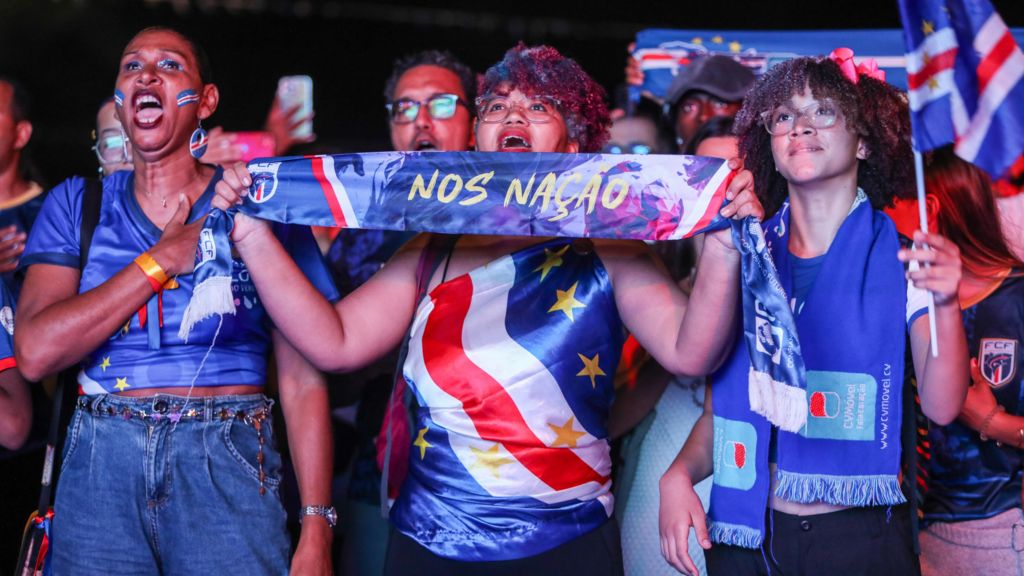
    One of the biggest underdog stories of this World Cup cycle has come to a close, but the tiny Atlantic island nation of Cape Verde is stepping off the global stage not with defeat, but with collective pride. After a tightly contested, high-scoring 3-2 clash against two-time world champions Argentina that eliminated Cape Verde from tournament contention, supporters from across the country and around the globe made one message clear: their team exceeded every expectation, and there is nothing but pride in their historic run.

    What made the result even more remarkable for Cape Verde was their ability to go toe-to-toe with a heavily favored Argentine side, pushing the global powerhouse all the way to the final whistle before seeing their World Cup dreams cut short. Even in elimination, the team’s fearless performance and fighting spirit turned new fans onto the side, cementing their status as one of the tournament’s most beloved surprise entrants. For a nation with a fraction of the population and soccer infrastructure of global giants like Argentina, simply reaching this stage of the competition was already a historic milestone, and the narrow, hard-fought loss only amplified the respect the side earned from neutrals and opponents alike.

    In post-match interviews and on social media, Cape Verde supporters repeatedly emphasized that their pride in the team’s effort outweighed any disappointment from the elimination. Many noted that the team put their small island nation on the global soccer map in a way that will inspire a new generation of young players, turning a heartbreaking end to the tournament into a watershed moment for Cape Verdean soccer.

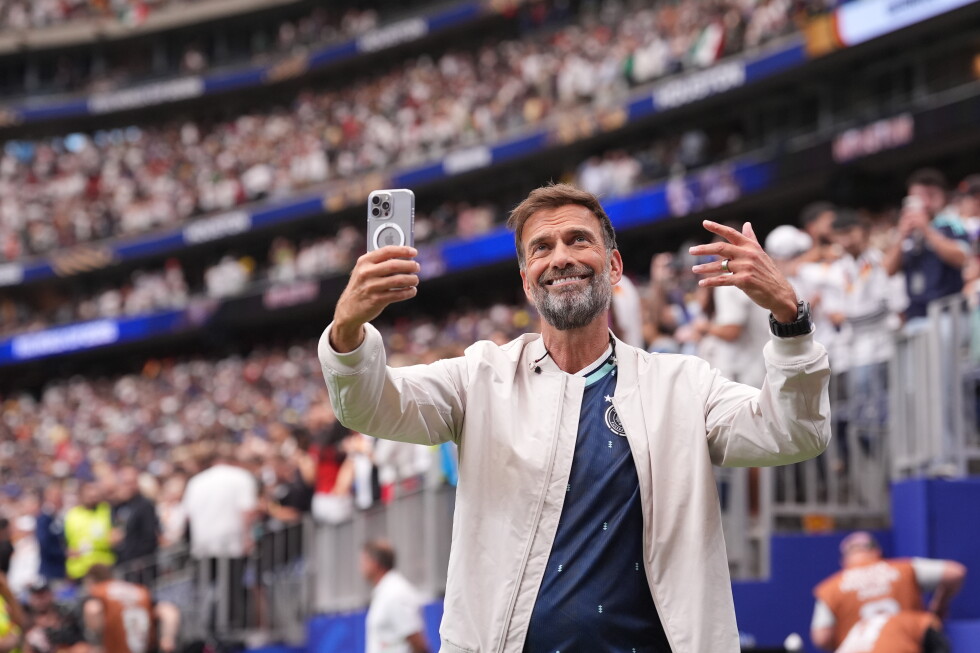
  • Klopp confirms Germany talks and says he’s ‘recharged’ since leaving Liverpool

    Klopp confirms Germany talks and says he’s ‘recharged’ since leaving Liverpool

    Less than 24 hours after former Germany head coach Julian Nagelsmann stepped down in the wake of an early 2026 FIFA World Cup exit, legendary German manager Jürgen Klopp has confirmed he is in active negotiations to take the vacant national team job, revealing he has regained full energy after stepping away from elite club coaching two years ago.

    Nagelsmann’s resignation came on the back of a frustrating round of 32 exit for Germany, who were eliminated by Paraguay in a penalty shootout. The German Football Association (DFB) quickly identified Klopp as their top candidate to replace the outgoing coach, and the 59-year-old confirmed the approach during an appearance on German broadcaster Magenta TV, where he has been working as a pundit throughout this World Cup from his base in New York.

    “Julian has stepped down and the federation is working on the succession and has approached me in the course of those considerations,” Klopp explained to reporters late Friday. A DB statement later confirmed Klopp was the only candidate named in internal discussions over the team’s future, noting that the former Liverpool boss has already signaled his openness to taking the role. That said, Klopp added that any deal will take time to finalize, as he remains under contract as Global Head of Soccer for Red Bull’s global network of clubs.

    Klopp has not held a senior coaching position since he left Liverpool at the end of the 2023-2024 Premier League season. At the time of his departure, he made clear he was stepping away because he had exhausted his energy after eight trophy-laden years at Anfield, where he led the club to a long-awaited Premier League title and a sixth UEFA Champions League crown, among other major honors. Today, however, Klopp says that break has fully restored his drive to return to the touchline.

    “About two years ago I stopped at Liverpool and said that I lacked the energy for another job or for another year with Liverpool. Since then I’m more than recharged, I’m ready,” he said.

    Whoever takes over the Germany job will inherit a side facing deep structural challenges, with the nation experiencing a prolonged slump in international men’s football. This World Cup exit marks the third consecutive men’s World Cup where Germany failed to advance past the group stage round equivalent, and the side has not won a knockout match at the tournament since lifting the trophy with a victory over Argentina in the 2014 final. Klopp stressed that any successful rebuild will require fundamental changes to the national team setup, and he plans to hold intensive negotiations with DFB officials to align on a roadmap for transformation before agreeing to any deal.

    “German soccer is obviously at a turning point now,” Klopp said. “Now we need to change things fundamentally. Whether that’s me in the end or whoever it may be, that doesn’t change the fact that changes are necessary.”

    Klopp also defended his predecessor, noting that Nagelsmann should not be held responsible for the national team’s long-running issues. “Nagelsmann is an excellent coach,” he added.

    Klopp has been one of the most high-profile pundits working on World Cup coverage for German outlets during this tournament, even conducting on-field post-match interviews with Nagelsmann after group stage matches. In the immediate aftermath of Germany’s penalty defeat to Paraguay, Klopp said he had not considered taking over the vacant national team role.

  • Africa’s World Cup surge fades as Ghana falls to Colombia, leaving Morocco and Egypt still standing

    Africa’s World Cup surge fades as Ghana falls to Colombia, leaving Morocco and Egypt still standing

    KANSAS CITY, Mo. (AP) — The 202X FIFA World Cup has already cemented a historic milestone for African football, as the continent secured an unprecedented nine spots in the tournament’s knockout Round of 32. Yet despite this breakthrough, seven of the nine African sides exited the competition in their opening knockout fixture, leaving just Morocco and Egypt to carry the hopes of the entire continent into the Round of 16.

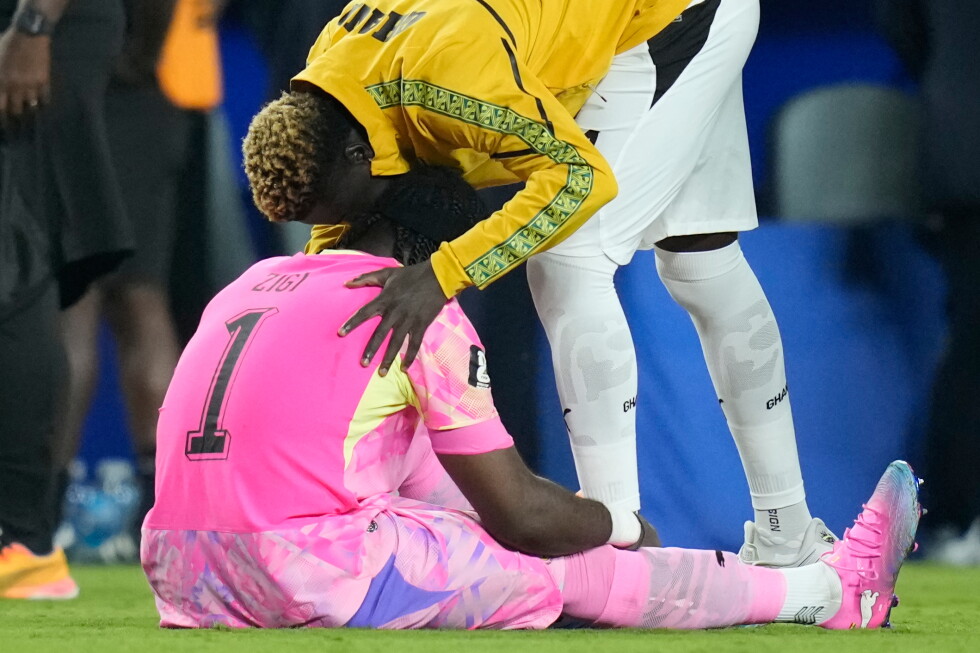
    Ghana, the final African team to kick off its Round of 32 match on Friday, suffered a quiet 1-0 defeat to Colombia, ending the Black Stars’ tournament run. That left Morocco — which captured global attention with a shock run to the World Cup semifinals in Qatar 2022 — and Egypt to compete for places in the final quarterfinals. Morocco is set to face Canada in the first Round of 16 matchup on Saturday in Houston, while Egypt earned its spot after a tense penalty shootout victory over Australia earlier Friday, and will face Lionel Messi’s defending champion Argentina in Atlanta on Tuesday.

    The tournament already served up one of its most thrilling matches on Friday, when tiny Cape Verde — an African island nation off West Africa — pushed Argentina to extra time, coming within minutes of a historic upset that would have eliminated the defending champions. Argentina ultimately edged out the underdogs 3-2 to advance.

    For African football, the nine-team Round of 32 haul already marks a historic achievement that has never been matched before. Previously, the maximum number of African sides to reach the Round of 16 was two: Senegal and Morocco in 2022, and Algeria and Nigeria at the 2014 Brazil World Cup — both times, the two advancing African sides were eliminated in their first Round of 16 fixture.

    “It’s a source of great pride so many African teams qualified for the round of 32,” said Sébastien Desabre, head coach of Congo.

    Many across the African football ecosystem have framed the 202X tournament as a turning point, pushing back against longstanding skepticism about African nations’ competitiveness at top global football competitions.“For a long time, African nations have been doubted in what they can do at major competitions,” Ghana forward Brandon Thomas-Asante said earlier this week, “and I’m glad to see so much success among all the African nations, and it just shows how much talent there is all across the world, and Africa is no different.”

    Even in defeat, most of the eliminated African sides earned praise for their competitive performances against top-ranked global opposition. Congo held a lead over England for most of their knockout match before Harry Kane scored two late goals to secure a comeback win for the Three Lions. Senegal pushed 202X contenders Belgium all the way to extra time, conceding a winning goal only in the final seconds of stoppage time after Belgium notched two late equalizers in regulation. Ivory Coast remained level with Norway until Erling Haaland’s 86th-minute strike put Norway through to the next round.

    The only other eliminations came for South Africa, who fell to a low-scoring defeat to Canada, and Algeria, who lost to Switzerland after failing to find the back of the net — a fate that also befell Ghana against Colombia.

    “Well, all teams that get to the Round of 32 have the will to go forward,” said Algeria head coach Vladimir Petkovic. “Some get there wanting to continue — wanting to continue their adventure — and others will be happy (just to be there). There are certain teams that are a lot stronger on paper, but at this World Cup, we realize you can’t really be sure of anything. You can’t be sure that the strong teams will prevail over the less strong ones. We’ve had several examples of that.”

    The remaining two African sides now look to break the longstanding Round of 16 barrier, aiming to become the first tournament where three African nations advance to the quarterfinals, building on the historic foundation set by this year’s breakout qualifying run.

  • Jhon Arias scores and Colombia beats Ghana 1-0 to reach the World Cup Round of 16

    Jhon Arias scores and Colombia beats Ghana 1-0 to reach the World Cup Round of 16

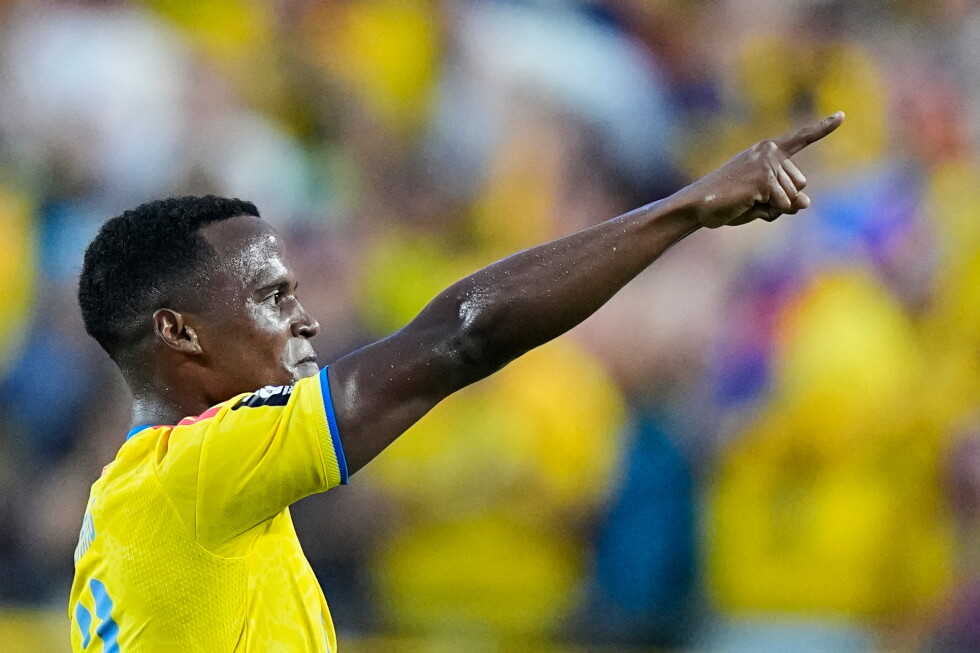
    KANSAS CITY, Missouri — On a suffocatingly hot Friday night at Arrowhead Stadium, Colombia secured its place in the World Cup Round of 16 with a controlled 1-0 victory over Ghana, capitalizing on an early goal from Jhon Arias that was set up by a perfectly placed cross from substitute Luis Suárez. The South American side will next face off against Switzerland on Tuesday in Vancouver, British Columbia, with a quarterfinal berth on the line. The match’s decisive moment came far earlier than anyone could have predicted, sparked by an unexpected early substitution. Just minutes after kickoff, Colombian forward Jhon Córdoba suffered an apparent groin injury, forcing head coach Néstor Lorenzo to turn to his bench early. The player who stepped in was Suárez, the Sporting CP standout who shares a name with the famous Inter Miami forward. He made an immediate impact on the game. In the 14th minute, Daniel Muñoz played a precise forward pass to Suárez, who drove toward the penalty area and whipped a low cross across the face of goal. Arias was waiting at the near post to flick the ball past Ghana goalkeeper Lawrence Ati Zigi, putting Colombia up 1-0 just a quarter of an hour into the match. Colombia came close to doubling its lead in the 56th minute, when star winger Luis Díaz found the back of the net. The celebration was cut short, however, when the assistant referee raised the offside flag to disallow the goal. Minutes later, Díaz had another clear scoring chance from point-blank range, but Ati Zigi reacted quickly to make a crucial stop. Ati Zigi turned in a standout individual performance for Ghana, finishing the night with seven total saves that kept his side in the game until the final whistle. The conditions at kickoff tested every player on the pitch: when the match got underway at 8:30 p.m. local time, the air temperature hit 88 degrees Fahrenheit (31.1 degrees Celsius), with a heat index reaching 96 degrees. Organizers scheduled the late start specifically to avoid the worst of the Midwestern summer heat, but even so, players from both sides struggled with dehydration and muscle cramps, turning the mandatory hydration breaks that have sparked controversy across the tournament into a much-needed reprieve. Colombia entered Friday’s match as one of the most in-form teams in the group stage, having put together an impressive run of results: they defeated Uzbekistan and Congo, earned a draw against Portugal, and conceded just one single goal across their three group matches. Their strong performances have drawn high praise from across the soccer world: even Spain head coach Luis de la Fuente, whose team is widely counted among the top favorites to win the entire tournament, named Colombia as a legitimate contender to lift the trophy. Colombian fans have fully embraced that underdog title, turning Arrowhead Stadium — home of the NFL’s Kansas City Chiefs, which features a signature band of yellow seats between two tiers of red seating — into a sea of bright yellow Colombian supporters more than two hours before kickoff. Going into the match, Ghana entered as the clear underdog. The side missed out on qualification for last year’s Africa Cup of Nations for the first time in nearly 20 years, but defied all expectations to advance out of a tough group topped by England and Croatia, silencing a wave of pre-tournament criticism. The big question heading into their clash with Colombia was whether the Black Stars could generate enough offensive pressure to upset the favored South American side. As expected, Colombia dominated possession throughout the 90 minutes. Ghana had already recorded just 36.1% possession across their group stage matches, the second-lowest total of any team that advanced to the knockout round, and their offensive struggles continued against Colombia. Even when Ghana managed to string together a attacking sequence, Colombia’s pace on the counter, led by Suárez, Díaz and their dynamic midfield, quickly snuffed out the threat. By the final whistle, Ghana had taken eight total shots — not a single one of which tested Colombian goalkeeper or ended up on target.

  • Farewell Cape Verde – the underdogs the World Cup will never forget

    Farewell Cape Verde – the underdogs the World Cup will never forget

    When the 2026 FIFA World Cup knockout round kicked off in Miami, few gave tournament debutants Cape Verde — the smallest nation competing in this edition of the tournament — a fighting chance against reigning champions Argentina, led by global superstar Lionel Messi. What unfolded over 120 minutes of play would go down as one of the most memorable underdog stories in World Cup history, cementing Cape Verde’s place in football lore long after their exit from the competition.

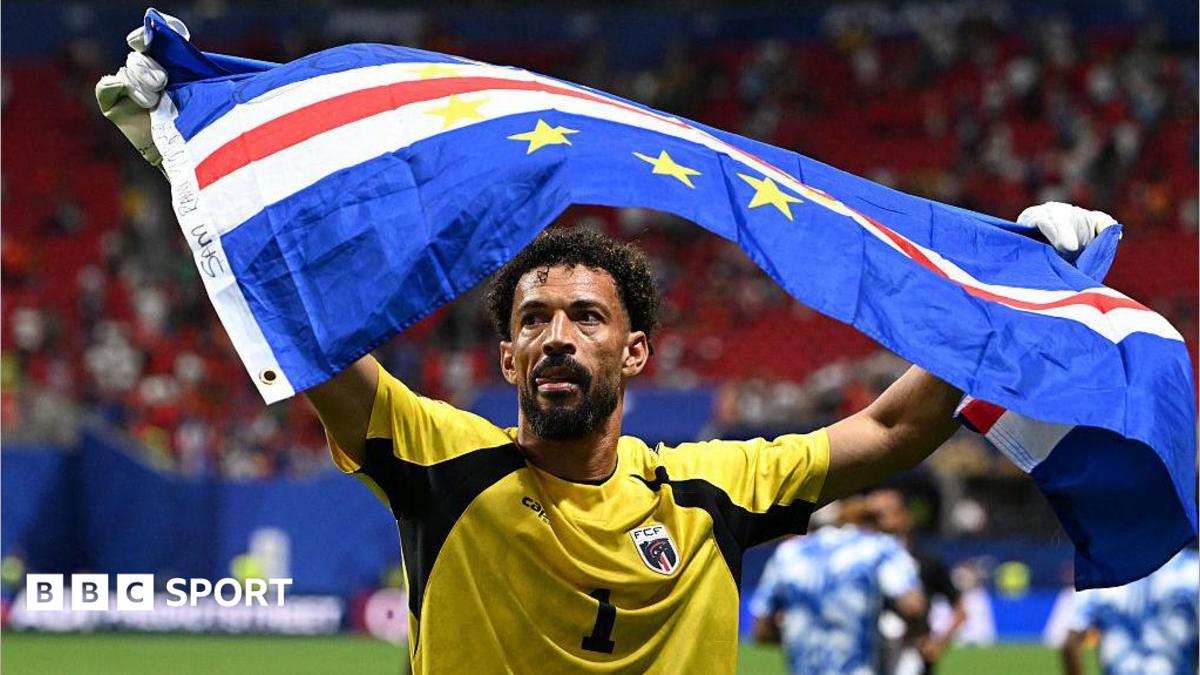
    Entering the tournament ranked 67th in the world, Cape Verde defied all pre-tournament predictions to claw their way out of the group stage, notching three draws that included a stunning 0-0 hold against European champions Spain in their opening match. Heroics from 40-year-old clubless goalkeeper Vozinha, who made seven saves to shut out Spain, turned the unheralded shot-stopper into an overnight global sensation. A viral photo of Vozinha in tears after the Spain draw, holding his country’s flag aloft with unbridled pride, circulated across social media, and his consistent elite performances — 18 total saves through four matches, the third-highest total of any keeper at the tournament — only amplified his growing fanbase. Former England right-back Gary Neville predicts Vozinha will not be without a club for long, calling his performances at the tournament calm, composed, and world-class.

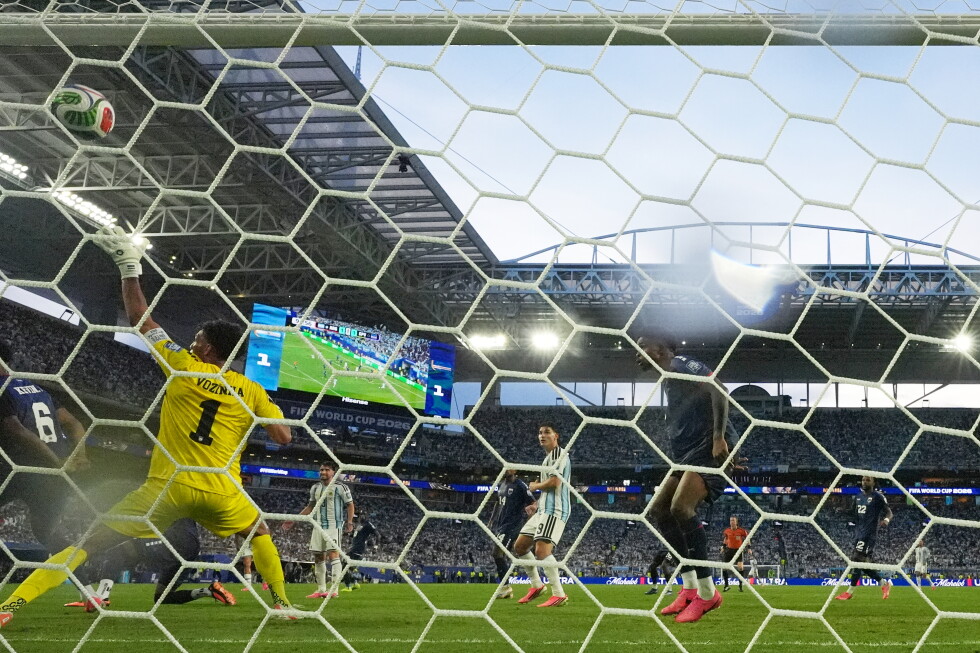
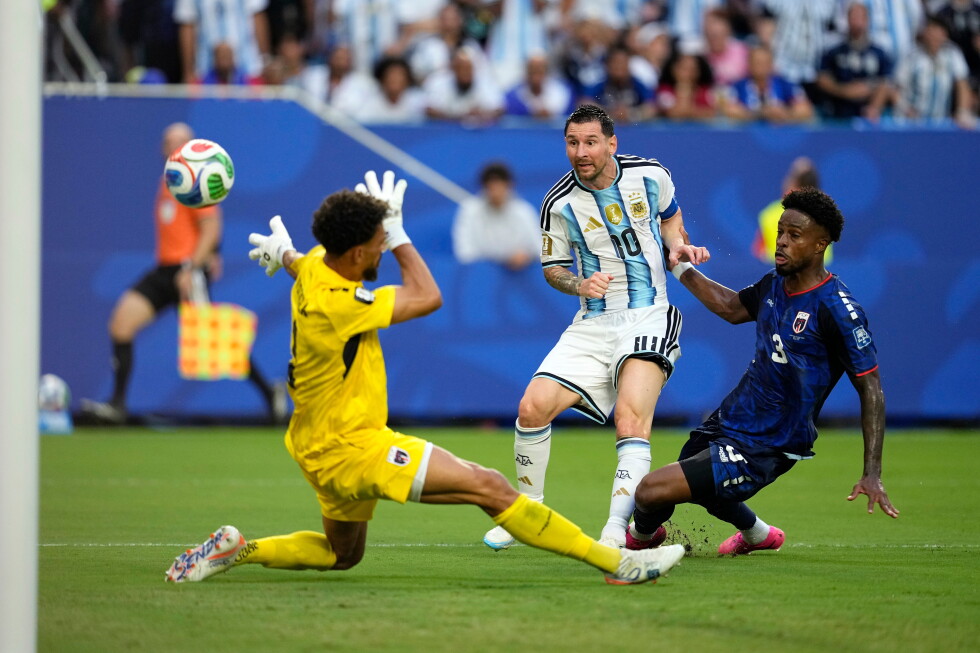
    Against Argentina, Cape Verde’s Cinderella run nearly delivered the biggest upset in modern World Cup history. After Messi put the defending champions ahead early, Cape Verde fought back to level the score at 1-1, forcing the match into extra time. Argentina retook the lead late in extra time, only for Sidny Lopes Cabral to strike a sensational long-range wonder goal that drew the Blue Sharks level once more. A late cruel deflection off Diney Borges from Cristian Romero’s header ultimately broke Cape Verde hearts, sealing a 3-2 win for Argentina that sent the defending champions through to the last 16.

    When the final whistle blew, Cape Verde’s players collapsed to the turf, their magical run cut short just 10 minutes short of a penalty shootout. But while the scoreline put them on the exit lane, the small island nation left the United States having won over millions of fans around the world, and earned universal praise from football legends for their courage, unity, and unwavering competitiveness against the world’s best.

    “Cape Verde have lost, but they’ve won,” former Scotland international James McFadden told BBC Radio 5 Live. “They have shown courage, togetherness, unity and unwavering belief in what they are and what they can do. The story of this tournament is Cape Verde. That is what you want to see in a football side.”

    Neville described Cape Verde’s performance as “one of the greatest performances” he had ever seen from an underdog, adding: “They are crying because they are going home. They don’t want to go home. They want to be here for the rest of their lives. This is a moment that’s probably not going to come back for some of these players. It’s magical but also upsetting.”

    Cape Verde manager Bubista said he was bursting with pride for his players’ historic effort, noting: “We showed that we may be a small country but we can play against the best teams in the world. That’s a reason for pride. We made history for our country. To be able to play the way we did against the world champions, and to draw level twice, is something incredible.”

    Roberto ‘Pico’ Lopes, a centre-back for Shamrock Rovers who featured in all four of Cape Verde’s tournament matches, summed up the team’s legacy: “One of the best things to come from this World Cup is nobody asks where Cape Verde is on the map any more – this is history in itself for us. We’ve put ourselves on the map. We’re a small nation but with big hearts and we showed what is possible – and if you believe, you can achieve.”

    The breakout performance by Cape Verde has reignited debate around global football development, with pundits calling for global governing body FIFA to expand resources to smaller footballing nations. Former England striker Ian Wright told ITV that FIFA must ensure funding reaches all corners of the global game to create more “Cape Verde moments.”

    “That’s what you’re ideally hoping will happen around the world and this is why Fifa have to do so much to make sure the funds they get do reach everybody,” Wright said. “What this does show people is that when you give people the opportunity they can get onto the biggest stage no matter how small they are and they can have it with the world champions, with one of the greatest players in the world. It was a Herculean effort from them, absolutely.”

    The 48-team World Cup expansion, a hotly debated topic ahead of this 2026 tournament, has also found a new wave of support from pundits who saw Cape Verde’s run as proof that smaller nations can deliver magic on the global stage. Neville, a former sceptic of expansion, said he has changed his mind after watching the Blue Sharks’ historic run.

  • Magical World Cup ride of Vozinha and Cape Verde ends after pushing Messi and Argentina to the brink

    Magical World Cup ride of Vozinha and Cape Verde ends after pushing Messi and Argentina to the brink

    MIAMI GARDENS, Fla. – For Vozinha, the journey to the 2026 FIFA World Cup began with one simple, heartfelt wish: for his mother to watch him compete on soccer’s biggest global stage. By the end of Cape Verde’s historic tournament run, the 40-year-old goalkeeper had turned that small personal goal into one of the most unforgettable underdog stories in modern World Cup history.

  • Argentina and Cape Verde head to extra time at World Cup after ending regulation tied at 1-1

    Argentina and Cape Verde head to extra time at World Cup after ending regulation tied at 1-1

    MIAMI GARDENS, Florida – A dramatic Round of 32 World Cup clash between defending champion Argentina and debutant Cape Verde finished regulation time deadlocked at 1-1 on Friday, forcing the two sides into 30 minutes of additional play to determine who will advance to the tournament’s next stage.

    The match lived up to its underdog billing from the opening whistle, with Argentine talisman Lionel Messi breaking the deadlock in the 29th minute to extend his unprecedented World Cup scoring record. The goal marked Messi’s 20th career World Cup strike, further cementing his status as the competition’s all-time leading top scorer and putting the two-time world champions firmly in control of the fixture.

    But Cape Verde, making their historic first knockout-stage appearance at a men’s World Cup, responded defiantly just before the hour mark. Midfielder Deroy Duarte netted a breathtaking equalizer that silenced the heavily pro-Argentine crowd packing South Florida’s Hard Rock Stadium. The goal, Duarte’s first ever at the senior international level, set the stage for what would go down as one of the biggest upsets in World Cup history if the African underdogs can hold on to secure victory in extra time.

    Regulation time ended with no further goals from either side, triggering the 30-minute extra time period split into two 15-minute halves. Should the scoreline remain level after extra time, the two nations will face a penalty shootout to claim a spot in the World Cup Round of 16.

    Cape Verde’s run at this year’s tournament has already defied all pre-tournament expectations. The tiny island nation, located roughly 350 miles off the western coast of Africa, has turned heads from the group stage onward, becoming the smallest country ever to qualify for the World Cup knockout round. Under the leadership of veteran 40-year-old goalkeeper Vozinha, Cape Verde secured three shock draws in group play against European powerhouse Spain, South American side Uruguay, and Asian contender Saudi Arabia to advance, a result that almost no analyst outside of the country predicted.

    Vozinha continued his elite form against Argentina on Friday, racking up seven total saves, four of which came against Messi, and has now conceded just three goals across the entire tournament to date.

  • World Cup what to know: France takes center stage in Philly heat as Round of 16 begins

    World Cup what to know: France takes center stage in Philly heat as Round of 16 begins

    The 2026 FIFA World Cup has reached its knockout Round of 16, bringing a double whammy of ramped-up competitive pressure and extreme summer heat that will test players and fans alike across North America this weekend.

    The 8-match, 4-day slate of knockout games gets underway on Saturday, July 4, with two hotly anticipated contests kicking off the round. Canada will open the day’s play at 1 p.m. EDT against Morocco at Houston’s NRG Stadium, while defending champions France, led by global superstar Kylian Mbappé, will wrap up the day against Paraguay in Philadelphia’s Lincoln Financial Field at 5 p.m. EDT. Two matches will be held daily through July 7, with the winners advancing to the tournament’s quarterfinal round.

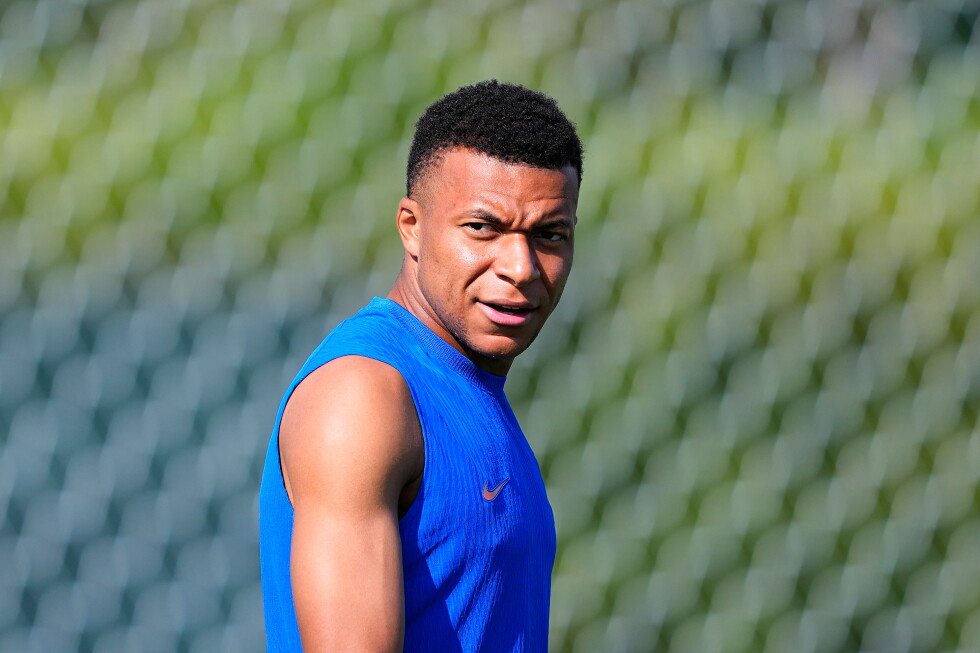
    For Mbappé, the stakes could not be higher. The French forward has entered the Round of 16 as one of the tournament’s most in-form players, currently locked in a chase to break Lionel Messi’s all-time career World Cup goals record. Already netting two goals to push France past Sweden 3-0 in their final group stage match in East Rutherford, New Jersey, Mbappé will now have to contend with an unprecedented environmental challenge: a severe heat wave rolling through the Mid-Atlantic that is projected to push game-day temperatures above 100 degrees Fahrenheit (38 degrees Celsius). More than 68,000 fans are expected to pack the stadium for the match, and the sweltering conditions are widely expected to sap stamina from every player on the pitch, including Mbappé, who already joked about craving air conditioning after playing through 90-degree heat for the Sweden match last weekend.

    Tournament organizers have put in place a suite of heat mitigation measures to protect attendees ahead of the Philadelphia match. Misting stations will be deployed for fans arriving at the stadium, dedicated cooling tents will operate across the stadium’s fan experience zone, and all spectators are permitted to bring one disposable plastic water bottle into the venue – a rule that applies to all World Cup matches held across the U.S. and Canada. Additional water fountains have been made accessible across nine concourse sections to keep fans hydrated.

    Across the country in Houston, the opening match of the round will escape the worst of the weekend’s extreme heat, thanks to NRG Stadium’s retractable roof. With outdoor temperatures forecast to hit 95 degrees Fahrenheit amid high humidity, organizers will keep the roof closed, keeping the playing surface and stands cooled to a comfortable temperature for players and fans.

    Beyond the heat, the Canada-Morocco matchup carries its own layer of historical stakes. The two sides last met in the 2022 World Cup group stage, where Morocco secured a 2-1 win on their way to becoming the first African men’s team to reach a World Cup semifinal. This year, both teams enter the contest with history on the line: Canada is fresh off its first-ever World Cup knockout win, a 1-0 victory over South Africa, and is hungry to avenge its 2022 loss and continue its historic run.

    “We’re excited for the moment,” Canada head coach Jesse Marsch said of the matchup. “We wanted to get to a point in the tournament where we were playing against some big opponents and Morocco is exactly that.”

    Canadian defender Alistair Johnston added that his side is embracing the underdog challenge against the tournament powerhouse. “We’ve created so much new history, so many firsts. Now this is the chance that we wanted. To make sure that we got to the point in the tournament where we’re going to get to play a Goliath, and that’s what the Moroccan team is.”

    Morocco, for its part, advanced to the Round of 16 after a tense penalty shootout win over the Netherlands. A win over Canada would make Morocco the first African team to reach the World Cup quarterfinals twice, another milestone for the program. Moroccan head coach Mohamed Ouahbi stressed that his side is taking nothing for granted against the improving Canadian side.

    “It will be very important for us to play at our level. The level that we have shown the last few games will not be enough,” Ouahbi said. “It’s going to be the most important game in this World Cup and the most challenging one. It’s not about being tentative about our approach. We’re playing a Round of 16 match and if we’re not good enough, we’re going home.”

    The full Round of 16 schedule is as follows:
    – **Saturday, July 4**: Canada vs Morocco (1 p.m. EDT, Houston); Paraguay vs France (5 p.m. EDT, Philadelphia)
    – **Sunday, July 5**: Brazil vs Norway (4 p.m. EDT, East Rutherford, New Jersey); Mexico vs England (8 p.m. EDT, Mexico City)
    – **Monday, July 6**: Portugal vs Spain (3 p.m. EDT, Arlington, Texas); United States vs Belgium (8 p.m. EDT, Seattle)
    – **Tuesday, July 7**: Winner of Argentina/Cape Verde vs Egypt (noon EDT, Atlanta); Switzerland vs Winner of Colombia/Ghana (4 p.m. EDT, Vancouver, British Columbia)

    All Round of 16 matches will be broadcast across Fox, Telemundo and Peacock. Ahead of the tournament’s second knockout round, one historic milestone has already been set: 41-year-old 147-day-old Cristiano Ronaldo of Portugal became the oldest player to earn Player of the Match honors in a World Cup knockout game, beating the previous record held by France’s Olivier Giroud, who set the mark at age 36.