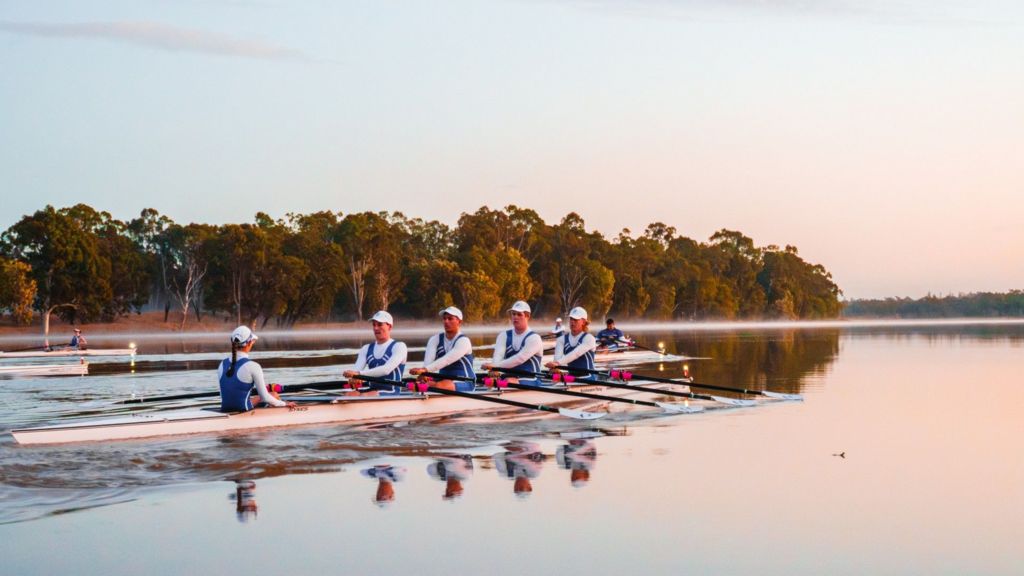
For years, the annual school rowing regatta on Queensland’s Fitzroy River flew under the radar. Drawing more than 600 top young rowers to the crocodile-populated waterway in the regional city of Rockhampton, the event never attracted national or international media attention, according to Anthea O’Loughlin, chief of Rowing Queensland. But 2026 marks a historic turning point: this same stretch of river has formally cleared technical assessment and earned official endorsement to host rowing and canoe sprint competitions at the 2032 Brisbane Olympic and Paralympic Games.
The approval comes after months of heated debate within the global rowing community, with concerns raised on multiple fronts. The most widely discussed issue centers on competitive fairness, not the presence of around 500 saltwater crocodiles that call the Fitzroy home – reptiles that can reach up to four meters in length. While crocodile sightings are common along the river, official state records stretching back more than 40 years show zero recorded attacks on humans, and the apex predators were never the top priority for critics.
Instead, critics have zeroed in on the Fitzroy’s natural characteristics as a tidal river, with shifting bends and variable currents that many rowing leaders argue create an uneven playing field for elite athletes. Three-time Australian Olympic rowing gold medalist Drew Ginn shared his concerns with BBC Radio, flagging potential flooding risks and questions over the venue’s commitment to competitive fairness and integrity. Ginn noted that while crocodiles are not his primary worry, the reptile presence remains a low-priority concern that was raised early in discussions.
Other global rowing leaders have questioned the sustainability and logic of hosting the event 600 kilometers outside of Brisbane, the main Olympic host city. German Rowing Federation president Moritz Petri emphasized that athletes’ concerns stem from their four years of dedicated training for a shot at Olympic gold, a dream that demands the best possible competitive conditions. New Zealand Rowing chief executive Simon Wickham echoed that sentiment, stressing that criticism focused solely on fairness, not any bias against regional venues.
Queensland Premier David Crisafulli pushed back hard against these objections, dismissing the concerns as pressure from out-of-state and international elites who simply do not want to travel to regional Queensland. “It is a group of interstate and overseas elites who are trying to bully their way because they don’t want to go to regional Queensland, and that’s not right,” Crisafulli said shortly after last month’s World Rowing congress in Amsterdam, where the venue was debated. Rowing leaders declined to directly respond to Crisafulli’s remarks when contacted by the BBC ahead of the final approval vote.
The final decision rested with global governing bodies World Rowing and the International Olympic Committee (IOC), which greenlit the venue following a comprehensive technical assessment conducted by an independent engineering firm and the Brisbane 2032 Games infrastructure authority. The assessment evaluated the riverbed, competition course layout, natural flow patterns, water levels, and typical weather conditions during the July-August Olympic window. “Based on the extensive analysis undertaken, we now know that the Fitzroy River is capable of providing fair competition conditions during the period of the Games,” World Rowing president Jean-Christophe Rolland said in a statement announcing the approval. Thomas Konietzko, president of canoe sprint governing body Paddle Worldwide, added that the assessment also delivered confidence the river would meet the needs of his sport’s athletes.
Crisafulli celebrated the outcome in state parliament, declaring: “The Fitzroy has passed with flying colours. It’s official. Signed, sealed and delivered.” Notably, the approval came despite a 2025 report commissioned by the Queensland government itself that deemed the Fitzroy unsuitable and recommended using the purpose-built rowing venue constructed for Sydney’s 2000 Olympic Games as a more viable option. The Fitzroy now only needs to pass a final assessment of its design, cost efficiency, and long-term legacy benefits for the local community, a hurdle that is widely expected to be cleared given the state government’s unwavering support for the project.
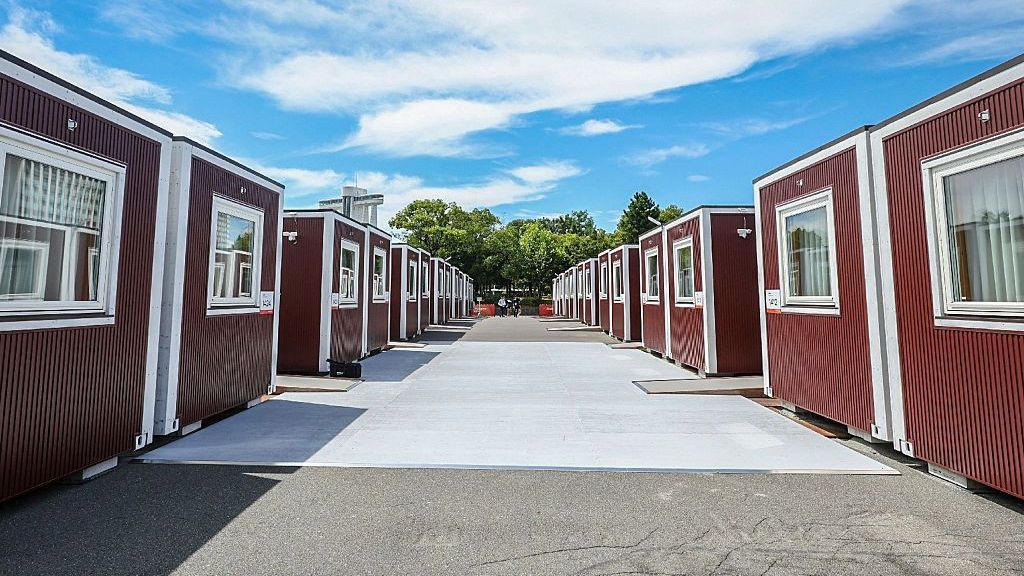
Questions do remain, however, about Rockhampton’s ability to accommodate the sudden influx of tens of thousands of athletes, officials, and spectators in 2032. The regional city, whose surrounding economy is dominated by cattle production, typically only sees a major visitor surge every three years during its popular Beef Week event. Ongoing debate also continues around whether heavy public investment in upgraded rowing facilities at the site represents the best use of state resources.
When it comes to the most famous talking point – the crocodiles – the IOC and World Rowing’s latest official update does not mention the reptiles at all, and they were not included in the formal technical assessment. But local event organizers take the risk seriously: the safety plan for this year’s school regatta mentions “crocodile” 28 times, explicitly noting that the Fitzroy sits within recognized crocodile habitat and that no natural waterway in the region can ever be guaranteed to be completely crocodile-free. The regatta’s protocols call for an immediate suspension of racing and a full return of competitors to shore if a crocodile is spotted, with a repeated three-word call serving as the official alert.
Hancock Prospecting, the company owned by Australian billionaire Gina Rinehart that has poured millions of dollars into supporting Rockhampton’s bid, has dismissed concerns about crocodiles and flooding as manufactured fake narratives. “The people of Rocky for many years have sent their own children to train in this river, and for competitions, without a single crocodile incident,” a company spokesperson said.
Brisbane 2032 organizers confirm they have maintained contingency plans, as they do for all Olympic venues, with the 2000 Sydney rowing course remaining on standby as a backup – an outcome that would be deeply unpopular with Queensland stakeholders.
For the young rowers competing in this year’s regatta, the high-stakes national and international debate means little as they take to the water they have trained on for years. Among them are likely future contenders who could compete on the same course at the 2032 Games. “For our students, the Fitzroy is first and foremost their home water,” said Phillip Moulds, headmaster of Rockhampton Grammar School. “The Fitzroy has also been the starting point for many… some of whom have gone on to compete at the highest levels of the sport nationally and internationally.”