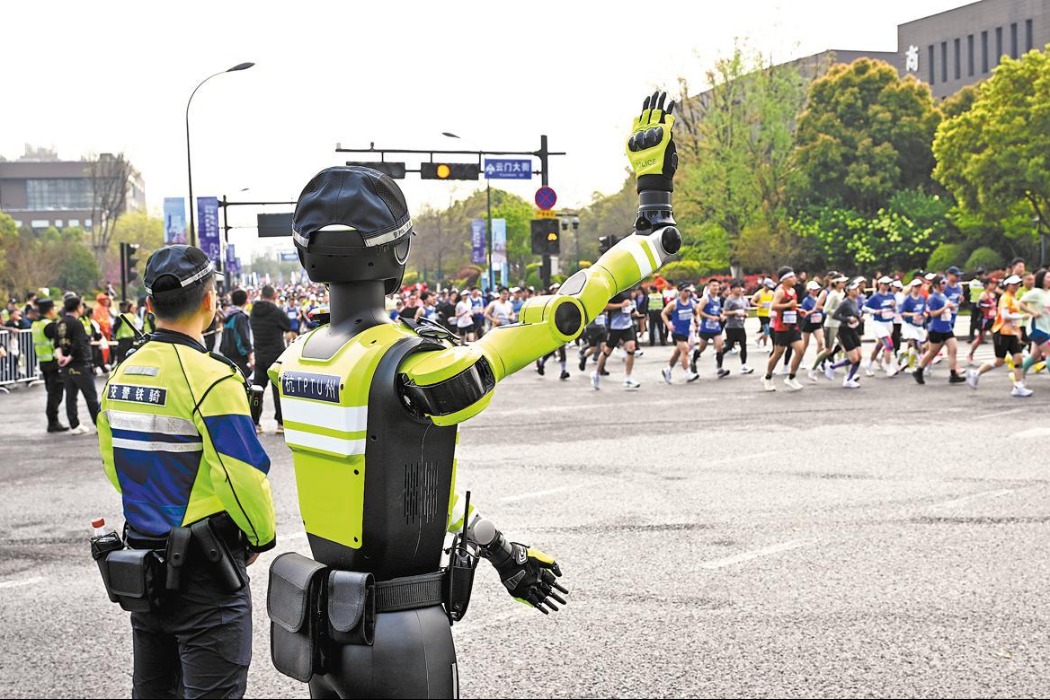
When 22,000 runners line up at Beijing’s Tian’anmen Square this Sunday for the capital’s annual Half Marathon, they will step into a rapidly changing landscape for long-distance running events across China. This shift, driven by new safety and quality standards, has already rolled out at high-profile spring races in Wuxi and Wuhan, setting a new benchmark for how marathons are organized and experienced nationwide.
Ahead of the Beijing race, the Chinese Athletics Association released the 2025 China Marathon Races Blue Book on April 4, which laid out the tangible effects of the regulatory overhaul. For the first time in the modern boom of Chinese marathons, the total number of marathon-related events across the country dropped significantly in 2025, falling to 594 from 696 recorded in 2024. This marks the sport’s first large-scale industry “slimdown”, as authorities cull unregulated, low-quality events to raise overall standards.
But fewer events do not equal a shrinking industry. The blue book data reveals that the economic impact and overall quality of remaining events have grown sharply. A-class certified events alone generated a direct economic output of 18.51 billion yuan (equivalent to $2.68 billion) in 2025, drove a total national economic benefit of 45.4 billion yuan, and supported more than 183,000 jobs across related sectors from hospitality to retail.
Shen Hui, an associate professor in the Department of Physical Education at Southeast University and an international-level athletics judge, explains that marathons have long outgrown their identity as purely competitive sporting events. Today, they function as multifaceted platforms that drive local city tourism, polish regional brand images, stimulate domestic consumer spending, and fuel broad-based economic development.
Interviews with industry insiders deeply involved in event execution show a clear industry trend toward more standardized, refined, and accountable event management. “While gaps still remain between cities with different infrastructure foundations, and some small niche events still struggle with limited resources, the overall direction is undeniable,” Shen noted. “The sector is moving from rough, scattershot growth to precise, intentional operation, and from perfunctory event planning to responsible, participant-centered organizing.”
Analysis of 284 A-class certified events included in the blue book confirms this trend: the intentional reduction in event quantity has directly sparked a surge in overall quality, reshaping not only the experience for long-distance runners but also the contributions marathons make to urban economies and national public health across China.