Every year, when the Women’s Six Nations kicks off, the dynamic mirrors the iconic moment NBA legend Larry Bird shared ahead of the 1988 three-point shootout: when the defending champion looked at his rivals and asked, “Which one of you guys is playing for second?” For England’s women’s rugby side, that unspoken aura of dominance has become a permanent part of the global rugby landscape. While the Red Roses would never voice that level of brash confidence publicly, their decades of unparalleled success make the comparison impossible to ignore.
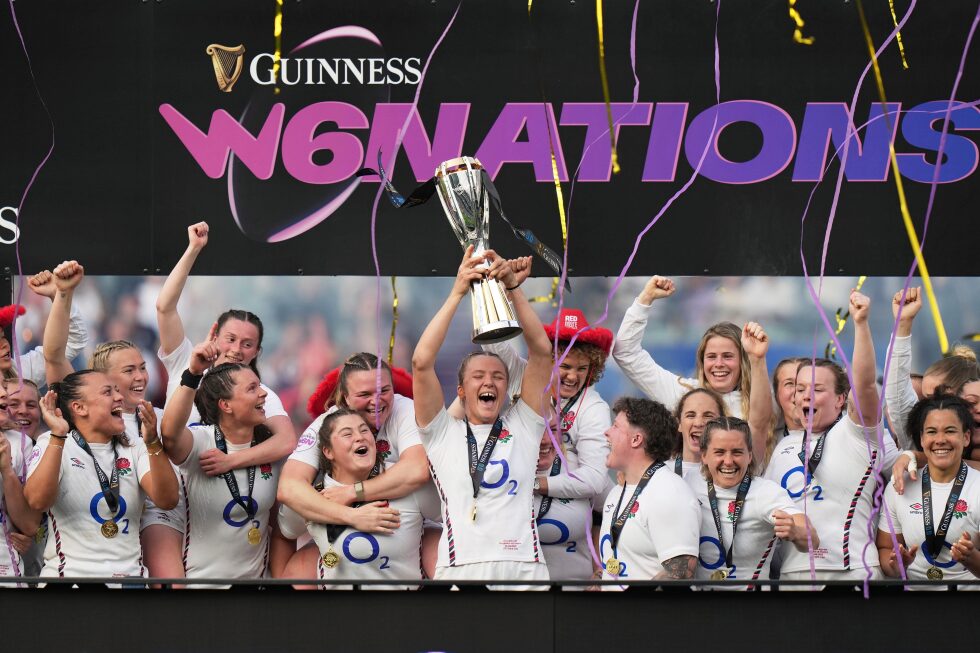
England’s legacy in the Women’s Six Nations stands alone: out of 30 total tournaments held to date, the side has claimed 21 titles, including a seven-year winning streak that stretches back to 2019. Beyond regional dominance, the team holds the all-time world record for consecutive test match victories, with 33 wins on the bounce. That streak was capped by a spectacular Women’s Rugby World Cup triumph last September, where they lifted the trophy in front of a sell-out crowd of 82,000 fans at Twickenham Stadium – a record attendance for any women’s rugby match.
Even with key roster changes following the 2025 World Cup, the team’s core strength remains intact. Head coach John Mitchell, who has not lost a match in his two years at the helm, has already extended his contract through the 2029 World Cup hosted in Australia. This tournament sees notable absences: former captain Zoe Aldcroft and veterans Abbie Ward, Lark Atkin-Davies and Rosie Galligan are all currently pregnant, starting center Tatyana Heard is sidelined with a foot injury, and two of the team’s most decorated players – Emily Scarratt, the only England player ever to compete in five World Cups, and winger Abby Dow – have retired from international play. Scarratt has since transitioned to a role on Mitchell’s coaching staff, bringing her decades of experience to the side from the sideline.
Despite Mitchell’s public declaration of a “clean slate” for 2026 squad selection, his 32-player roster still features 25 returning World Cup winners. The only uncapped player set to make her debut in Saturday’s opening match against Ireland is 19-year-old forward Haineala Lutui, daughter of former Tonga men’s national team captain Aleki Lutui. The captaincy for this tournament has been handed to center Megan Jones, a tenacious, team-first veteran who has nothing left to prove at the international level. Jones made her debut at just 18 years old against New Zealand back in 2015, has competed in three World Cups, and was the only English player shortlisted for World Rugby’s Women’s Player of the Year award in 2025. When asked about England’s relentless drive to win, Jones summed up the side’s mindset simply: “We’re just highly competitive humans who want to keep winning.”
For the last five years, France has stood as the eternal runner-up to England, finishing second every tournament since 2020, but has consistently fallen short due to unforced 10 to 20-minute form lapses that have derailed title bids. At the 2025 World Cup, France was the least experienced side to reach the semifinals, and eventually bowed out to England with a 35-17 defeat. The off-season has seen a major coaching change for Les Bleues: iconic former player Gaëlle Mignot, one of the few women leading a top European national side, has been replaced by François Ratier, who previously took Canada to the 2014 World Cup final and most recently led Stade Bordelais to back-to-back French domestic titles. Ratier will give six uncapped players their debut this weekend when France hosts Italy in Grenoble, and the side holds the advantage of three home matches this tournament, with a highly anticipated final-round title decider against England scheduled for May 17 in Bordeaux – a match French fans hope will be the moment their side dethrones the champions.
The other competing sides have all built their own narrative of ambition heading into the opening round. Italy, led again by captain and No. 8 Elisa Giordano, has named nine players who compete in the French domestic league to its squad. Head coach Fabio Roselli has prioritized defensive improvements to shut down France’s explosive backline, and the side is inspired by their men’s team’s historic first win over England last month, as they target their first ever victory over France on French soil.
Ireland will open their campaign against England, with Dynamo flanker Erin King set to lead the side after missing last year’s World Cup with a knee injury. King will anchor the back row alongside last year’s Six Nations MVP Aoife Wafer. A unique subplot marks the opening match: Irish hooker Cliodhna Moloney-MacDonald will earn her 50th international cap, and for the first time in her career, she will share the field against her wife, England winger Claudia Moloney-MacDonald. Tickets for the opening match at Twickenham have already sold more than 75,000, which guarantees a new all-time attendance record for any Women’s Six Nations match.
Wales, which was whitewashed for the first time in tournament history in 2025, is targeting a fresh start under coach Sean Lynn, who has had a full year to implement his system, added new coaching staff and named nine uncapped players to his squad. Flanker Kate Williams has been named the sole captain, and 12 of the Welsh side’s players come from English domestic side Gloucester Hartpury, which went undefeated in their recent domestic season. When Wales hosts Scotland at the Principality Stadium on Saturday, the side is also hoping to break its own attendance record of 21,186 set against England last year.
Scotland advanced to the World Cup quarterfinals last year with a 38-8 win over Wales, but the side has faced major roster turnover ahead of this tournament. Key players from that 2025 win – including try-scoring star Fran McGhie, Evie Gallagher, Sarah Bonar and Lisa Thomson – are all sidelined with injury, and three other veterans have retired. New head coach Sione Fukofuka, who previously led the United States at the 2025 World Cup, will give teenage flanker Emily Coubrough her international debut this weekend as Scotland looks to build a new generation of competitive talent.