
Striking footage captured by a dashboard camera has documented the sudden moment a heavy goods tractor trailer collided with a highway overpass in New York. The incident, which unfolded on a local roadway, has drawn attention to the importance of adhering to infrastructure clearance regulations for large commercial vehicles. According to official reports, the operator of the tractor trailer walked away from the crash without sustaining any physical injuries. Despite the lack of harm to the driver or other motorists on scene, law enforcement officials issued a traffic citation to the driver in response to the violation: the vehicle’s total height surpassed the posted maximum clearance limit for the overpass. The video, which has circulated in local media, highlights how a seemingly straightforward administrative oversight can lead to dangerous and avoidable roadway incidents. Local transportation authorities have reiterated that clear height markings are posted at low-clearance structures across the state to prevent these types of collisions, which can cause long-term damage to infrastructure and create major traffic disruptions for commuters.
分类: society
-

Australia adds optional gender identity and sexual orientation questions to census
Australia’s five-year national census, carried out on August 11, 2024, marks a landmark milestone for LGBTQ+ inclusion across the country, as it introduces the first-ever questions about sexual orientation and current gender identity for respondents aged 16 and older. This iteration of the 66-question survey is also the first national census conducted under Australia’s center-left Labor Party government since the party returned to power in 2022, following nine years in opposition.
The addition of these new questions was not without political controversy. Two years ago, the current Labor government initially dropped the planned questions, labeling them as potentially divisive, and reaffirmed that position as recently as August 2024 when Deputy Prime Minister Richard Marles stated the government would avoid deviating from the 2021 census question set to preserve social cohesion. However, just days after this announcement, the government reversed course amid intense public backlash from LGBTQ+ rights advocates and internal criticism from progressive members of the Labor caucus. Prime Minister Anthony Albanese — who has participated in Sydney’s annual Gay and Lesbian Mardi Gras twice since taking office — confirmed the reversal in a public radio interview, reinstating the two contested questions ahead of census day.
Both new questions are optional, mirroring the longstanding optional question about religion that has appeared in every Australian census since 1911. For the sexual orientation question, respondents can select from pre-written options: straight, gay or lesbian, or bisexual; additional options include “don’t know”, “prefer not to answer”, or a blank space to write in a self-described orientation. For gender identity, respondents who identify with a gender different from that recorded at birth can select man, woman, nonbinary, “prefer not to answer”, or write in another gender identity.
The Australian Bureau of Statistics (ABS), which is responsible for designing census question wording and administering the national count, found widespread public demand for the new questions during pre-census public consultations. ABS Chief Statistician David Gruen explained the reasoning behind making the questions optional to Australian Broadcasting Corporation, noting that while collection of this data is deeply important for many segments of the population, other respondents prefer not to share this personal information.
Demographic experts point out that Australia is playing catch-up to other comparable high-income democracies that have already collected this data through national censuses. The United Kingdom included similar questions in its 2021 census, New Zealand added the questions in 2023, and Canada carried out its own inquiry with these questions just three months before Australia’s 2024 count. Liz Allen, a leading demographer at Australian National University, noted that the previous conservative Australian government refused to act on calls to add the questions, leaving the ABS unable to move forward with the change before the 2024 count. Allen also added that the current questions have a gap: they do not include a specific option for intersex people, who are born with biological sex characteristics that do not fit typical binary definitions of male or female.
By comparison, the United States’ most recent 2020 decennial census only allowed two binary gender responses and did not ask specifically about sexual orientation, though it did permit same-sex couples to list their relationship for the first time in the household section.
The ABS projects that 85% of respondents will submit their census forms online this cycle, up from nearly 80% in 2021 when much of Australia was under COVID-19 pandemic lockdown. Paper forms are available on request, and field outreach workers are deployed to support participation among people experiencing homelessness and residents of remote regional areas. While completion of the core census is legally required, with fines of up to 257 Australian dollars per day for non-compliance, the new gender and sexual orientation questions remain entirely voluntary. As of the Monday before census day, more than 3.6 million completed forms had already been submitted, with officials expecting a total of 11 million completed responses by the close of the collection period.
-
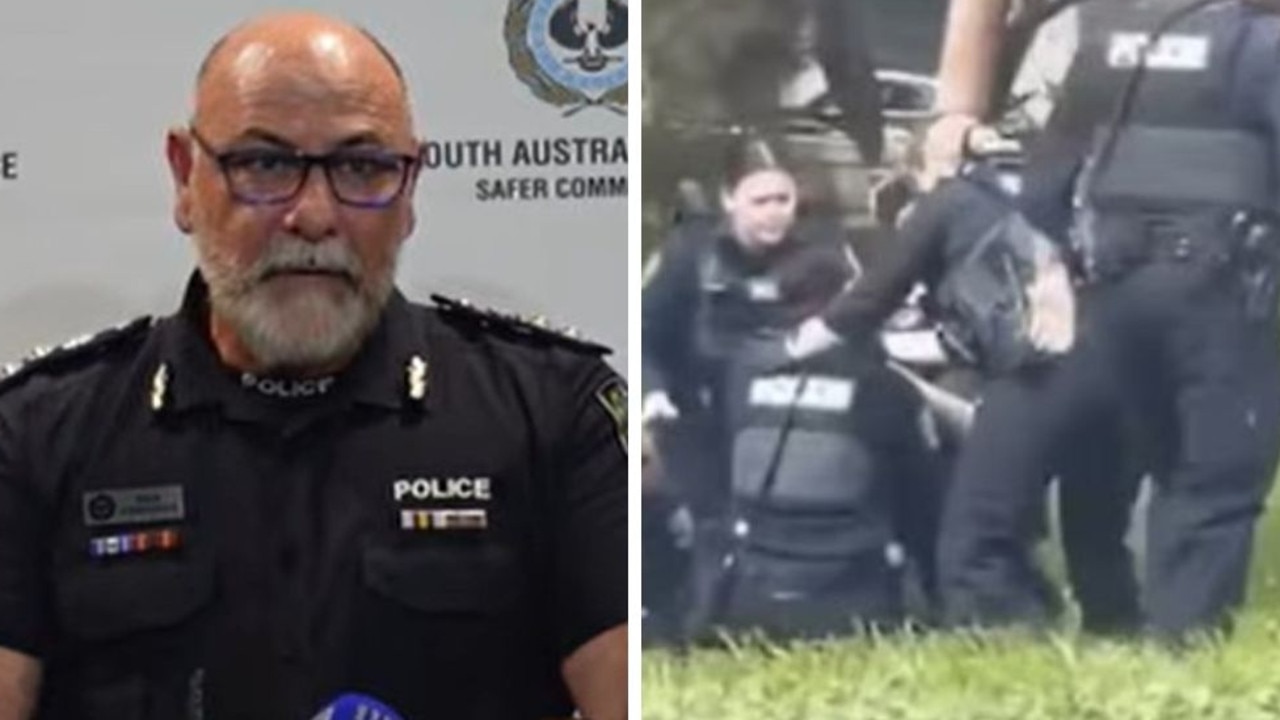
Top cop offers major condition update on colleague who was stabbed
Two weeks after a brutal stabbing attack left a South Australian female police officer with serious neck injuries, state police have confirmed the public servant may face additional surgical procedures in the coming months as her recovery continues. The officer, identified only as Jessie, was rushed to hospital following the July 29 assault in Elizabeth East, a residential suburb located on Adelaide’s northern outskirts. Immediately after the alleged attack, responding officers shot the 27-year-old male suspect, who has since been formally charged in connection to the incident.
At a Monday press conference focused on monthly state crime statistics, Acting Assistant Commissioner David O’Donovan of South Australia Police (SAPOL) shared the latest update on the officer’s road to recovery. “Jessie is recovering well, she is receiving continued specialist medical treatment but it is too early in her treatment to understand the full effects of the physical injury,” O’Donovan told reporters. “The one thing we can’t rule out is that she will be facing further surgical procedures in the future.”
O’Donovan also noted that beyond the clear physical harm of the attack, the traumatic experience has left lasting psychological impacts, meaning Jessie faces a long, gradual recovery process. He confirmed that SAPOL has mobilized full support resources for both the officer and her family to help them navigate this challenging period.
The suspect, who did not appear in person, recently faced the Elizabeth Magistrates Court via a remote phone hearing. He faces multiple serious charges, including attempted murder and aggravated assault, and has been remanded in official custody until his next scheduled court hearing in November.
O’Donovan’s update on the stabbing came alongside the release of new SAPOL crime data that paints a troubling picture of growing violence against frontline police in the state. The recently updated figures show a 27% year-over-year jump in assaults on officers, rising from 620 reported incidents to 790. These attacks run the gamut from physical assault such as kicking, punching and biting, to the increasingly common act of spitting on officers.
“Spitting is becoming quite a prevalent and quite a disgusting thing for people to do at police officers, and it is not okay,” O’Donovan emphasized. “This is absolutely not okay to be doing that towards our people. We will respond appropriately and these people will absolutely face the full weight of the law.”
-

The lonely Chinese men being conned by fake brides
Decades of skewed population dynamics in China have created a fertile ground for a new type of predatory fraud: the “flash marriage” scam, which preys on tens of millions of single men who face a massive shortage of potential female partners. For 37-year-old Wang Zhuang, the glossy advertisements from Guizhou-based matchmaking agencies felt like the last chance he had to build a family. After years of facing steep requirements for marriage — including demands for owned property, a car, and a high bride price in his home region of Hebei — he had nearly abandoned hope of finding a spouse.
The agencies promised exactly what Wang craved: demure, family-oriented women from low-income backgrounds who would settle down permanently after marriage, with no need for years of slow courtship. Lured by these guarantees, Wang traveled more than a thousand kilometers to Guiyang, the capital of southwestern China’s Guizhou province, where the unregulated flash marriage industry has exploded in recent years.
Wang was quickly matched with a woman who fit every description he had given. Agency staff enforced strict rules: clients were banned from exchanging private contact information during the short, supervised meetings, with steep fines for violations. After just four or five 10-minute meetings, Wang agreed to marry, paying more than 300,000 yuan ($44,000) in bride price, plus additional costs for the wedding that pushed his total spending to nearly 500,000 yuan. It was only months after the wedding that the deception unraveled: debt collectors began contacting Wang about his new wife’s hidden outstanding loans, and an investigation of her personal documents revealed a long list of lies. She was a former karaoke hostess who had been married three times already, had three children, lied about her age, and lived with a serious sexually transmitted disease. When confronted, she immediately offered a divorce but refused to return any of the bride price. By the time Wang returned to the matchmaking agency to demand answers, it had vanished without a trace.
Today, more than a year after the wedding, Wang’s life remains in tatters. He rents a small apartment across from the former agency district in Guiyang, where he has turned his home into a informal refuge for other victims of flash marriage scams. His parents blame him for the financial ruin, he struggles with chronic insomnia and anxiety that have left him unable to hold steady work, and he remains trapped in a lengthy divorce process that shows no sign of ending quickly. “My whole family has been thrown into chaos,” Wang says. He now posts warning videos on Chinese social media and travels across the country to push authorities for stronger action against the scammers.
Wang’s tragedy is not an isolated case. It is a direct outcome of a demographic crisis decades in the making. Following decades of China’s one-child policy, paired with a long-standing cultural preference for sons, the country now faces a gap of 30 million more men than women — a number larger than the entire population of Australia. For men in rural areas, smaller cities, and those entering their late 30s and older, the shortage of available partners has left few options. Traditional bride prices have skyrocketed in regions with severe gender imbalance, putting marriage out of reach for many working-class men. This context has made the quick, one-stop “flash marriage” model offered by unregulated Guizhou agencies extremely appealing to vulnerable singles.
As the scam has grown, it has drawn the attention of national Chinese authorities. Between January 2024 and March 2025, Chinese prosecutors processed cases involving 1,546 individuals linked to illegal activity in the matchmaking industry. This month, five national government departments jointly launched a nationwide crackdown on the sector, responding to widespread public outcry over the fraud. In one high-profile prosecuted case, a Guizhou-based agency used employed karaoke waitresses as fake potential brides to defraud 128 men out of more than 2.5 million yuan ($371,000).
One agency manager who agreed to speak with reporters on condition of partial anonymity defended the industry, claiming that less than 10% of agencies engage in fraud, and that local matchmakers rely on personal village knowledge to vet potential brides instead of formal background checks. He claimed that the sector merely connects women from Guizhou, where local families often had multiple children including daughters despite the one-child policy, to wealthier men from central and northern provinces that face far more severe gender gaps. “Three days with the right introduction can beat three years of dating,” reads one typical advertisement for the service.
But for victims like 59-year-old Xu Rulin from Jiangxi province, who spent nearly 500,000 yuan to arrange a flash marriage for his son, the industry is nothing but organized fraud. Xu’s son married his bride just seven days after their first meeting, but she ran away less than two weeks after the wedding, after extracting an additional 140,000 yuan for a business, an iPhone, and wedding jewelry. While the bride and agency owners have been arrested, Xu remains in Guiyang months later, still fighting to recover his lost life savings.
Legal experts note that prosecuting these cases remains extremely difficult under current Chinese law, which lacks a specific criminal statute for this type of marriage fraud. To win criminal charges, victims must prove that the bride and conspirators never intended to enter a genuine marriage, a high bar that is hard to meet, because suspects often argue that they entered the marriage in good faith but later realized they were incompatible. “In situations like that, the line becomes blurred. Relationship issues are difficult to disprove,” explains Fan Binghe, a lawyer with the Nanjing Office of Beijing Jingshi Law Firm who specializes in these cases. Many sham agencies also shut down immediately after scamming victims, leaving little to no trace to pursue for financial recovery.
For Wang and the dozens of other victims staying in his Guiyang refuge, there is no clear end in sight. Most have lost their entire life savings, and many remain trapped in unresolved divorce proceedings that prevent them from moving forward with their lives. “After going through something like this, I don’t even know if I can still get married. It was already hard for me to find someone. And now I’ve spent so much money. I won’t consider it now,” Wang says. Staring at piles of legal documents, he adds, “I don’t know when this will be resolved, so I can restart a normal life. It feels endless.”
-
Man dies in Cavan crash involving car and van
A serious road traffic incident in the Republic of Ireland has claimed the life of a man in his 60s, after a head-on collision between a car and a commercial van on a major regional route on Monday afternoon.
The crash unfolded on the N3 highway at Drummallaght, a stretch of road connecting the towns of Virginia and Cavan, according to initial official reports. Irish national public service broadcaster RTÉ has confirmed that the fatality was the driver of the passenger car involved in the incident.
A second person in the car, a woman also in her 60s who was travelling as a passenger, sustained life-threatening critical injuries in the impact. Emergency responders activated a major medical response, airlifting her to a nearby major trauma hospital for urgent treatment. The operator of the van, a 50-year-old man, escaped the collision with only minor physical harm and was transported to a local medical facility for observation and routine care.
In the wake of the crash, local law enforcement has launched a formal investigation into the exact cause and circumstances of the collision. Investigators are now issuing a public appeal for any members of the public who witnessed the incident to come forward to share information. Specifically, police are asking any motorists who were travelling through the Drummallaght area of the N3 between 1:00 PM and 2:00 PM local time on Monday, and who have dashcam footage that captures the stretch of road where the crash occurred, to submit their recordings to assist with the investigation.
-

Canada flight cancelled after child refuses to wear seat belt
A recent incident on a Canadian commercial flight has thrown long-simmering tensions between air safety protocols, family travel accommodations, and public etiquette into the global spotlight, after an entire flight was canceled when a young child refused to remain buckled in their seat ahead of departure.
On August 6, a Porter Airlines flight scheduled to travel from Victoria to Toronto was already in its final departure preparations when the crew encountered the unsafe situation: the young child, traveling with a parent, repeatedly left their seat and would not comply with seat belt requirements. Crew members and the child’s parent made multiple attempts to resolve the issue, according to the airline’s official statement, but all efforts failed. With takeoff impossible under unsafe conditions, the crew made the decision to return to the terminal and remove the two passengers from the flight.
The resulting delay pushed the flight’s scheduled departure past the midnight closure of the airport’s runway, forcing all remaining passengers to rebook their travel for the following day. The incident has quickly divided public opinion across social media and mainstream news outlets, with two distinct camps clashing over how airlines should respond to non-compliant child passengers and what responsibilities parents hold during air travel.
Child aviation safety specialist Lia Tuso emphasized in an interview with the BBC that the Porter Airlines crew’s decision was fully justified by core flight safety principles. Tuso explained that an unrestrained child, just like an unsecured piece of checked or carry-on luggage, becomes a dangerous projectile during unexpected turbulence, a hazard that poses severe risk to the child themselves and all other passengers and crew on board, particularly during the critical phases of takeoff and landing.
Critics of the airline’s decision, however, have pushed back by noting that young children often act out not out of intentional disruption, but because of fear of air travel. Aryeh Kozuch, a passenger on the canceled flight, told Canadian broadcaster CBC News that the child was not unruly, but visibly anxious. “They just kept hiding under their seat. If they got forced into [being] strapped in, they just kind of slid out underneath,” Kozuch recalled. Many observers have also questioned why the entire flight had to be canceled rather than only removing the non-compliant family, a step that Porter ultimately took but which still resulted in a missed runway closure window.
This incident is far from unique, and comparisons to similar high-profile cases stretching back more than a decade have only amplified the ongoing debate. In 2018, a father and young daughter were removed from a Southwest Airlines flight traveling from Chicago to Atlanta after the child threw a tantrum over buckling her seat belt. Passenger video of the ejection showed that the child had already calmed down and been seated for more than five minutes before crew ordered the pair off the plane, drawing widespread criticism of the airline’s overreach. A 2012 incident on a JetBlue flight that ended with a traveling family being removed also sparked public outcry, with the family appearing on NBC’s *Today Show* to accuse the airline of lacking compassion. JetBrains defended the captain’s decision at the time, stating that prolonged non-compliance with crew instructions threatened the safety of everyone on board.
As family travel continues to rebound following global travel restrictions, the Porter Airlines incident has reopened core questions that have yet to be resolved across the aviation industry: how to balance non-negotiable safety standards with empathy for families traveling with young, anxious children, and what protocols best minimize disruption for all passengers when non-compliance occurs.
-
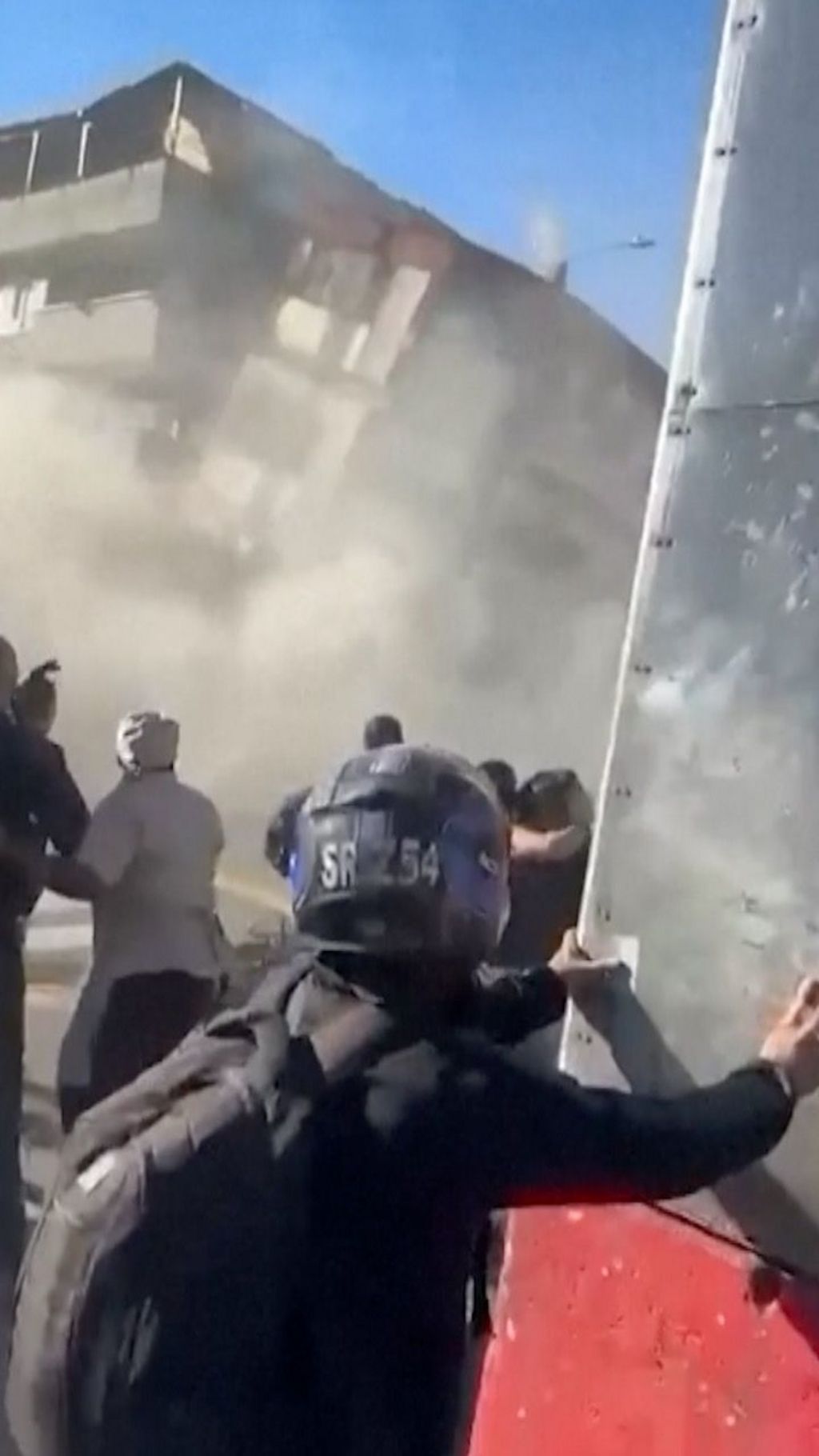
Building collapses in Pereira
A structural failure has resulted in a building collapsing in the city of Pereira, located in the coffee-growing region of western Colombia. Local emergency response teams have been activated immediately following the incident, with first responders rushing to the collapse site to conduct search and rescue operations. As of the initial public report, details on the number of people affected, potential casualties, and the root cause of the collapse remain under active investigation. Authorities have cordoned off the surrounding area to ensure public safety and facilitate evidence collection to determine what led to the structural failure. Pereira residents have been urged to avoid the vicinity of the incident to allow emergency crews to work unimpeded.
-

Church tower collapses
A sudden structural failure has resulted in the complete collapse of a church tower, an incident that has sent shockwaves through the local community where the religious landmark has stood for decades. Emergency services were dispatched to the scene immediately after reports of the collapse reached local authorities early [relevant recent time frame, per original limited context]. No injuries have been confirmed as of the latest updates, though local residents who gathered near the site expressed widespread shock and grief over the loss of a structure that had long been a central part of the town’s cultural and social identity. The church, which had served as a place of worship and community gathering for generations, saw its tower topple amid ongoing discussions about needed structural repairs, according to local council records. Engineers and structural safety experts have now been called in to conduct a thorough investigation to determine the exact cause of the collapse, with preliminary assessments pointing to potential long-term water damage eroding the tower’s foundation that went unaddressed in recent years. Local leaders have announced that they will launch a full review of historic building safety protocols across the region to prevent similar incidents from occurring at other aging landmarks. Community members have already begun organizing efforts to document what remains of the structure and discuss plans for potential restoration, should that be feasible, though many acknowledge that the loss of the original tower is an irreversible blow to the area’s heritage.
-

Man allegedly armed with two knives arrested after police chase through Burwood
A dramatic high-speed foot pursuit through busy commercial streets in inner-west Sydney ended with police using a Taser to subdue a 43-year-old man accused of carrying two concealed knives, with a second person also taken into custody following the Monday afternoon incident. Emergency services were first dispatched to the popular Belmore Street shopping complex just after 4:15 p.m., after multiple witnesses alerted authorities to suspicious behavior in the crowded urban hub. When responding officers approached two men to question them about the reports, the pair allegedly fled on foot, launching a chase that wound through surrounding streets crowded with shoppers and commuters. The pursuit came to a stop when officers deployed a conducted energy device (Taser) against the 43-year-old, who officers confirmed was carrying two knives at the time of his arrest. Eyewitness video filmed at the scene captures two officers moving in on the suspect, who was dressed in all black, standing on a marked pedestrian crossing as nearby motorists waited for the incident to end. One officer discharged the Taser, bringing the suspect to the ground. When the man attempted to stand back up, officers fired a second Taser shot before multiple additional officers swarmed the suspect to place him in custody. Following his arrest, paramedics with New South Wales Ambulance attended the scene to conduct an initial medical assessment of the 43-year-old. He was then transferred to a local hospital for further mandatory evaluation, under constant police guard. A 32-year-old man, who was the second person pursued by officers, was also taken into custody in connection with the incident. New South Wales Police have confirmed that investigations into the circumstances of the suspicious activity report and the alleged possession of weapons remain ongoing, with no further details released to the public as of the latest update.
-

Five more teens charged over alleged dating app attack spree as police say victims lured, then robbed and beaten
Melbourne law enforcement has taken five additional teenagers into custody as part of a sweeping crackdown on a coordinated criminal ring that lures male victims via dating platforms and social media, before carrying out violent assault, theft and verbal abuse. Victoria Police announced the latest arrests on Monday, noting the teens taken into custody range in age from 16 to 18 years old. Investigators from the Greater Dandenong Crime Investigation Unit executed the arrests last week, following 11 reported incidents of this targeted criminal activity in the Greater Dandenong region alone. According to official police allegations, the group of young offenders creates fake profiles to pose as genuine users on popular dating and social platforms, tricking men into agreeing to an in-person meeting. Once victims arrive at the arranged location, they are violently attacked, robbed of their belongings, threatened, and targeted with homophobic slurs, per the official account. Each of the five teens has been hit with a range of serious criminal charges, tailored to their alleged involvement in the ring. One 16-year-old faces counts of robbery, armed robbery, fraudulently obtaining property, and intentionally causing bodily harm. A second 16-year-old is charged with kidnapping, robbery, attempted robbery, and intentionally causing injury. A 17-year-old faces charges including armed robbery, fraud, intentional injury, and sexual assault. The two 18-year-old suspects, both residents of Dandenong, also face robbery charges: one faces additional counts of sexual assault and intentional injury, while the other is charged with kidnapping, armed robbery, attempted robbery, sexual assault, intentional injury, and fraudulently obtaining property. These latest alleged incidents are part of a much larger pattern of criminal activity: since January 2024, Victoria Police have received 113 official reports of dating app-related crimes matching this modus operandi. To date, a total of 50 people have been arrested in connection with these coordinated attacks. In 2026 alone, 11 additional incidents have already been reported across multiple local jurisdictions in the broader Melbourne area, including Manningham, Casey, Hume, Moorabbin and Knox. Acting Inspector Jarrod Dwyer of the Southern Metro Region Investigation & Response team emphasized that this pattern of harmful, predatory behavior will not be tolerated by law enforcement. “This would have no doubt been a distressing situation for the victims involved,” Dwyer said in an official statement. “These arrests show just how serious we are in holding offenders to account.” Dwyer added that investigators treat every report of this nature with the highest priority, and urged any person who has fallen victim to this scheme to come forward to file an official report to aid ongoing investigations. Victoria Police are able to collaborate directly with dating app and social media platforms to trace offender activity and identify suspects, making victim reports critical to shutting down the remaining criminal network. “It is never too late to make a report – so when you’re ready, please speak to us,” Dwyer said. “Everyone has a right to go about their lives, meet new people and start a relationship in safety.”