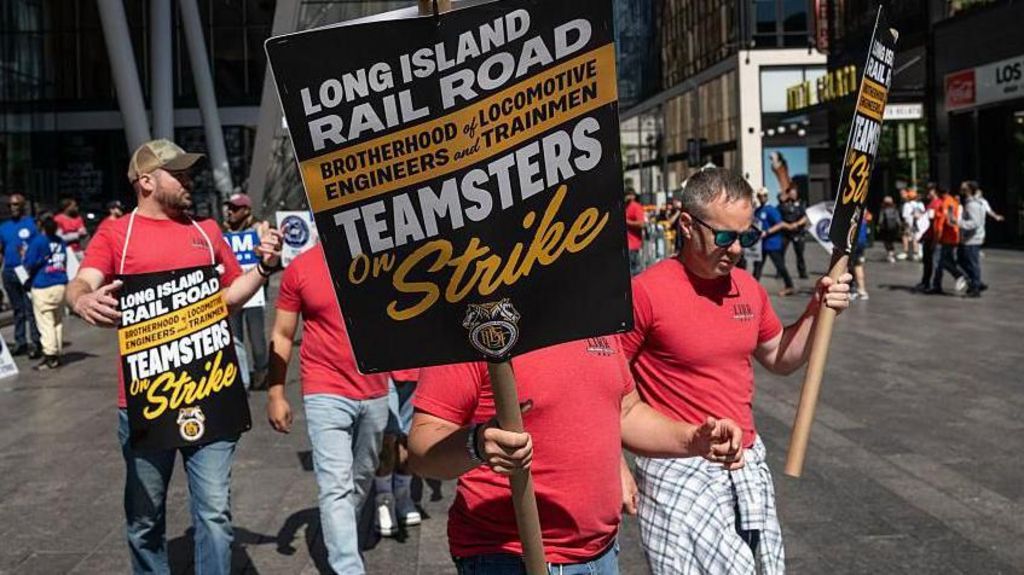
Monday’s morning rush hour devolved into widespread travel disruption for tens of thousands of New York area commuters after a work stoppage by Long Island Rail Road (LIRR) personnel ground the nation’s busiest commuter rail route to a complete halt, even as both sides in the dispute returned to the bargaining table to resolve the standoff.
At Penn Station, the central transit hub that typically sees more than 600,000 passengers pass through its concourses on an average weekday, the usually bustling space was unnervingly quiet on Monday. Stranded commuters scattered across the city, scrambling to cobble together alternate travel plans to reach work, appointments and critical commitments.
Among those caught off guard was Mekan Esenov, a Brooklyn resident attempting to travel to a Long Island airport to catch a scheduled flight. “There are no trains,” Esenov explained to reporters. Rideshare options like Uber were priced out of reach for most travelers, he added, with quotes reaching as high as $250 for the single trip.
To mitigate the disruption, the Metropolitan Transportation Authority (MTA), which oversees the LIRR, has deployed free shuttle buses to cover several high-demand routes in the city. Even with the added service, MTA officials have warned commuters to expect severe overcrowding and lengthy delays across all alternate transit options.
The work stoppage, which marks the first major strike on the LIRR in more than three decades, was launched Saturday by unions representing roughly 3,500 rail workers after talks between labor representatives and LIRR management collapsed over disagreements on pay and work rule reforms. Union leaders say their members have gone years without wage adjustments, and are pushing for improved compensation and safer working conditions ahead of a new contract set to take effect in June. The unions have formally requested a 5% annual wage increase for the upcoming contract term.
After New York Governor Kathy Hochul publicly called on both parties to restart negotiations, talks with MTA leadership resumed Sunday, with a federal labor mediation agency stepping in to facilitate productive bargaining on the same day. On Monday, LIRR union members held peaceful protests across the city, including a large gathering in Midtown Manhattan where workers marched in a circle chanting for fair contracts, living wages and workplace dignity.
Speaking to reporters on the picket line at the LIRR’s Jamaica Station in Queens, Olivier Desinor, a representative for the Brotherhood of Railroad Signalmen, said the vast majority of striking workers would prefer to be on the job rather than walking the picket line. “We’re hardworking men and women,” Desinor said. “It’s not one of the best positions we want to be in, but, thankfully, we’re together in solidarity, and we’re gonna get through this.”
As of Monday, the MTA’s latest contract offer included a base 3% annual raise, with potential performance adjustments that could lift the total increase to 4.5%, according to CBS News, the U.S. partner of the BBC. Governor Hochul, who has called for a swift resolution that balances worker demands with fiscal responsibility, defended the MTA’s position on Sunday, noting that New York is a “pro-labour state.”
“We believe in working men and women receiving a fair wage and benefits, but the MTA cannot agree to a contract that would raise fares as much as 8% and risk hiking taxes for Long Islanders,” she said in a statement.
The strike is projected to impact approximately 250,000 weekly LIRR riders, including commuters traveling to New York City from eastern suburbs and summer travelers heading to Long Island’s popular Atlantic coast beaches, which run from the city’s outer boroughs through the Hamptons to Montauk.