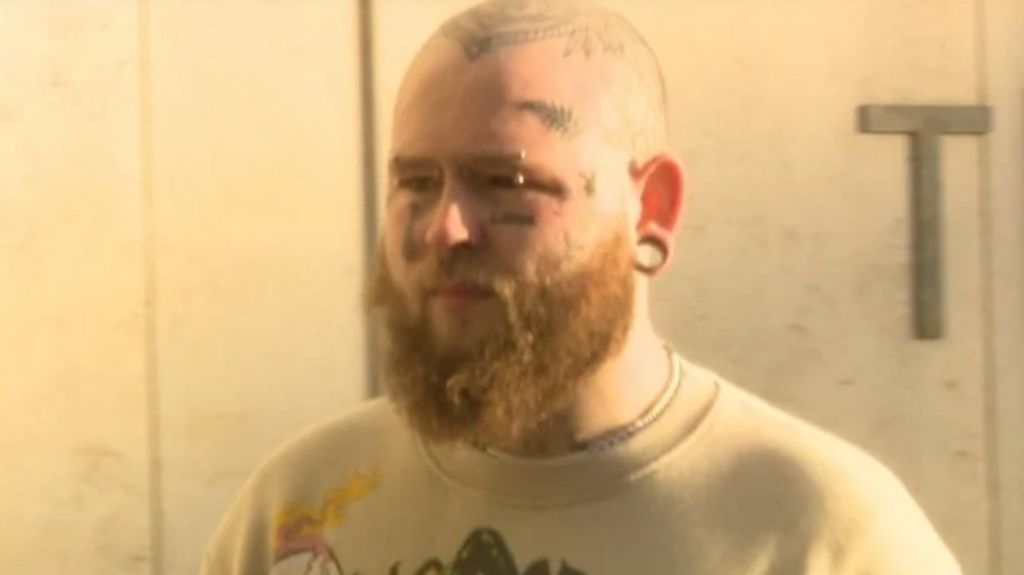
In a landmark judgment delivered Monday, Ireland’s Court of Appeal has overturned the murder conviction of Aaron Connolly, who had served more than three years of a life sentence for the 2018 killing of 18-year-old hospitality student Cameron Reilly.
The case dates back to the late hours of May 25, 2018, when a group of roughly 15 young people gathered in an open field on the outskirts of Dunleer, County Louth for a casual night out. Some members of the group consumed alcohol and cannabis, though Reilly’s closest friend testified the teenager never used drugs. Shortly after midnight, the group left the field to collect takeaway food, but Reilly did not return with them. The next morning, a local man walking his dog discovered Reilly’s body in the field.
Chief State Pathologist Dr Linda Mulligan confirmed the victim’s cause of death was asphyxiation caused by external pressure to the neck, with no other contributing factors. Connolly, now 26, from Willistown, Drumcar, has always maintained his innocence in the killing. In his initial statements to Gardaí (Irish national police), he told investigators he was heterosexual and denied any sexual contact had occurred between him and Reilly on the night of the death, adding that the pair went separate directions at the end of the night and he did not check which route Reilly took. He also claimed he could not account for a ‘missing hour’ that night, saying a mix of drugs had caused him to black out.
Midway through his original trial in December 2022, Connolly admitted through his legal team under Section 22 of Ireland’s 1984 Criminal Justice Act that sexual activity had occurred between the two men that night, and stated Reilly was alive and standing when he left the field. The provision means such admissions count as conclusive evidence of the facts admitted, eliminating the need for the prosecution to call witnesses to prove those details. He was ultimately found guilty of murder and sentenced to life in prison.
Connolly’s legal team launched an appeal against the conviction in June 2023, arguing that trial judge Mr Justice Tony Hunt had unfairly undermined the defence’s case. Counsel Michael Bowman SC told the three-judge appellate panel that Hunt had reduced the defence’s argument to an unfair framing of a stranger attacker, repeatedly denigrated the defence’s position, overstepped by criticizing the defence’s handling of prosecution witnesses, and misrepresented how Connolly’s mid-trial admissions should be interpreted by the jury.
Delivering the Court of Appeal’s ruling, Mr Justice John Edwards acknowledged that Hunt provided juries with technically correct, ‘impeccable instructions’ on the applicable legal principles for the case. However, Edwards found that the stridency and repeated emphasis of Hunt’s comments during his jury charge created a real risk that jurors believed the judge was personally convinced of Connolly’s guilt and was implicitly pressuring them to return a guilty verdict. Edwards added that some of Hunt’s comments could be reasonably perceived as disparaging and mocking of the defence’s arguments.
‘He did over and over again, and with great insistency, seek to make clear to the jury that he had strong personal views on certain aspects of the case,’ Edwards wrote in the judgment. The court also confirmed it found no evidence the trial judge intentionally acted improperly, noting he had attempted to avoid bias despite falling short of the required standard of impartiality.
The appellate court has formally quashed Connolly’s conviction. The final next step in the case now falls to the Director of Public Prosecutions, who will decide whether to seek a retrial against Connolly.