分类: society

  • US: At least three dead in attack at San Diego mosque

    US: At least three dead in attack at San Diego mosque

    On a Monday afternoon in Southern California, emergency dispatchers flooded with calls of an active shooter at the Islamic Centre of San Diego triggered a massive law enforcement response, leaving three people dead – including an on-site security guard – and sending shockwaves through the local Muslim community. Dozens of patrol cars and emergency vehicles descended on the mosque complex, which is formally recognized as the largest Muslim place of worship across San Diego County, according to the institution’s official website.

    Local officials quickly confirmed the unfolding situation via social media. “I am aware of the active shooter situation at the Islamic Center of San Diego,” Todd Gloria, mayor of San Diego, posted on X, the platform formerly known as Twitter, adding that first responders had already deployed to the site to secure the area and safeguard local residents.

    Within hours of the initial response, San Diego Police Chief confirmed during a formal press briefing that two teen suspects were located dead inside a vehicle parked just a few blocks from the mosque. The chief noted that preliminary evidence indicates both suspects died from self-inflicted gunshot wounds, and that law enforcement is officially treating the attack as a bias-driven hate crime. Shortly after clearing the scene, the San Diego Police Department announced the active threat had been fully neutralized, with no further danger to community members remaining in the area.

    California Governor Gavin Newsom received full briefings on the developing incident from state and local law enforcement, according to his press office. “We are grateful to the first responders on the scene working to protect the community and urge everyone to follow guidance from local authorities,” the governor’s office shared in a post on X.

    Federal law enforcement resources have also been mobilized to support the investigation: CNN confirmed Monday that the FBI is assisting local authorities with the probe into the deadly attack.

    This shooting comes amid a documented sharp upward trend in anti-Muslim violence across the United States. A report released last month by the Muslim Public Affairs Committee (MPAC) revealed that Islamophobic attacks across the country surged to a 15-month high in April of this year. The organization linked this surge in targeted violence to shifting U.S. foreign policy in the Middle East, specifically pointing to the Trump administration’s military strike on Iran that began in late February. Khuram Zaman, founding director of the Center for Security, Technology and Policy at MPAC, previously told Middle East Eye that the strike marked a clear turning point in hate crime statistics: “The one factor we can identify in March is that at the end of February, the war in Iran started, and that is what we think is the delineation between what we saw before in 2025 versus what we’re seeing here.”

  • Tasmanian government apologises over stolen body parts scandal

    Tasmanian government apologises over stolen body parts scandal

    A decades-long breach of trust involving unauthorized retention and display of human body specimens at a University of Tasmania museum has come to a head, with the Tasmanian state government issuing a formal apology to affected families for the profound harm caused by the unethical practices.

    The scandal traces its roots back to 1966, when the RA Rodda Pathology Museum was founded at the university’s Hobart campus to support medical education and research. For 25 years, ending in 1991, forensic pathologists secretly sourced 177 human tissue and organ specimens from coroner-ordered autopsies, transferring the samples to the museum without ever obtaining consent from the deceased’s next of kin or the coroners overseeing the cases. Coroner Simon Cooper’s 2024 investigation confirmed that the vast majority of these specimens were provided by the late Dr Royal Cummings, a prominent forensic pathologist, with the practice also carried out by his predecessors and successors. In many instances, pathologists actively sought out specimens for the museum collection, a deliberate violation of ethical and legal protocols.

    Concerns about the museum’s collection first emerged in 2016, when three bone specimens were flagged as potentially obtained without family consent. The allegations prompted the state coroner to launch a full formal investigation in April 2023, with the final damaging findings released in September 2024. All 177 problematic specimens had already been removed from public display back in 2018, years before the investigation concluded.

    On Tuesday, a number of affected family members gathered in Tasmania’s parliament to hear the health minister’s formal apology. Minister Bridget Archer addressed the lasting harm of the unethical practices, which ended 35 years ago but have continued to inflict trauma on surviving relatives. “Although these historical practices ended 35 years ago, the deep impact this has had on the families and loved ones of the deceased continues to this day,” Archer told parliament. “It’s important to remember that these were not just body parts or specimens or human remains. They were people.”

    Many family members have carried decades of grief after learning their loved ones’ remains were held without permission. Cheryl Springfield’s 14-year-old brother David Maher died in a 1976 car crash; she described learning of the retained specimens as a lifelong nightmare. While she welcomed the apology, she stressed that it could not undo the harm. “It’s in the right direction, but it’s not going to fix it all,” she told local media. Similarly, John Santi, whose 19-year-old brother Tony died in a 1976 motorcycle accident, said his family buried his brother 50 years ago, only to discover decades later that his brain had been stolen for the museum collection. “We buried him 50 years ago, only to find out 50 years later that these people had stolen his brain,” Santi told Australian Associated Press.

    Shortly after the government’s apology, University of Tasmania Deputy Vice-Chancellor for Health Professor Graeme Zosky also issued an acknowledgment of the wrongs committed, noting that university staff had already met with dozens of affected families. “While we recognise an apology cannot fix the hurt and distress families have felt, we are sorry,” Zosky said.

  • Professional mourners mix tribal tradition with Kenya’s widespread Christianity

    Professional mourners mix tribal tradition with Kenya’s widespread Christianity

    Along a sunbaked roadside in Kisumu, western Kenya, the body of 64-year-old Tom Ochieng Mima lies in state, dressed in crisp formal funeral garments. Gathered under white canvas tents, hundreds of attendees sit on lightweight plastic chairs, their voices rising and falling in a raw, haunting blend of hymn-like singing and unfiltered weeping. A cluster of mourners sways in unison, waving leafy branches and striking them against the dusty earth in a steady, rhythmic pattern. To an outside observer, this scene reads as a conventional, deeply emotional community funeral — until the context comes into light.

    None of these performing mourners ever met Mima, nor do they have any personal connection to his grieving family. They are part of a growing, unique trade in western Kenya’s poorer regions: professional mourners, hired to channel open, visceral grief in accordance with long-held Luo cultural customs. For many practitioners, this unlikely occupation offers a rare source of consistent, livable income in an area plagued by widespread economic uncertainty.

    Unlike many skilled trades that require years of formal training, professional mourning is open to anyone who can connect deeply with emotion and extend genuine empathy to grieving families, according to Francis Oyoo, a two-year veteran of the field. Oyoo typically takes on one to two funerals per month, earning roughly $80 per assignment — a modest sum that is nevertheless enough to cover his basic living costs. For Oyoo, the work is rooted in personal experience: he entered the profession after losing his uncle in a sudden accident, and now draws on his own unresolved grief to connect with the families he serves. When channeling emotion for a stranger’s funeral, he says he simply calls to mind the loved one he lost, letting that natural pain flow out.

    James Ajowi, another professional mourner at Mima’s service, has been practicing the trade for more than two decades. His own journey into the work was shaped by grief as well: a few years ago, he lost his daughter to a progressive lung disease, and he says his personal experience of devastating loss has only deepened his commitment to comforting other grieving people. “It’s as if she was preparing me for this work,” Ajowi explained.

    For bereaved families like Mima’s, the presence of these hired mourners brings unexpected and profound comfort, even though they never knew the deceased. In western Kenya, funerals are major community gatherings, designed to be loud, crowded, and collective affairs that bring together neighbors and loved ones to mourn as one. “They support us. They show us love,” said Lawrence Ouma Angira, Mima’s nephew, who was raised by his late uncle. “They help fill the emptiness left by his passing, and they comfort us — they understand what it means to lose someone you love.”

    Anthropologists explain that the role of professional mourners grows out of a centuries-old fusion of Luo traditional beliefs and modern Christianity that defines cultural life in the region, where Luo communities are concentrated around the shores of Lake Victoria. For the Luo, mourning serves a dual purpose: it is not just a space to express personal grief, but a ritual that protects the community from harmful evil spirits, explained Charles Owour Olunga, an anthropologist who studies Luo cultural practices. Collective singing, weeping, and rhythmic movement by large groups of mourners works to drive away negative forces surrounding a death. While unrelated hired mourners (most often women) are a traditional fixture of funeral rites across many regions of Africa and Asia, Olunga noted that it is relatively unusual for men to participate in the practice alongside women. Beyond expressing grief, the professional mourners also help manage crowds and maintain order at large funerals.

    The professionalization of this ancient ritual, however, is a relatively new development, tied directly to the forces of urbanization and growing commercialization across rural Kenya, Olunga said. “We are moving away from the fully authentic, community-led version of the rite, but we are still holding tight to the core of the tradition. These professional mourners add depth and color to the existing ritual process.”

    This blend of ancient Indigenous tradition and mainstream Christianity is a defining feature of religious life across western Kenya. Research from the University of Nairobi notes that the region is home to a large number of African-initiated churches, religious movements that emerged as a local response to the strict prohibitions on Indigenous ritual imposed by early colonial Christian missionaries. These churches allow followers to hold both Christian beliefs and honor long-held traditional cultural practices, creating a unique religious tapestry.

    For the professional mourners themselves, the theological nuances of this blended faith matter far less than the core purpose of their work: building collective connection around grief, and bringing comfort to people when they need it most. “Death is painful,” Oyoo said. “But I also find strength in knowing that one day, I too will die — and people will gather for me.”

    This report is part of Associated Press religion coverage, produced in collaboration with The Conversation US through funding from Lilly Endowment Inc. The AP holds sole responsibility for all content.

  • Mother with $320k stolen Lego haul stashed in her shed learns court fate

    Mother with $320k stolen Lego haul stashed in her shed learns court fate

    In a case that has captured public attention across South Australia, a 34-year-old mother of three has avoided a custodial prison sentence despite being convicted for possessing a massive cache of stolen Lego worth an estimated $320,000, hidden in the garden shed of her former Adelaide home.

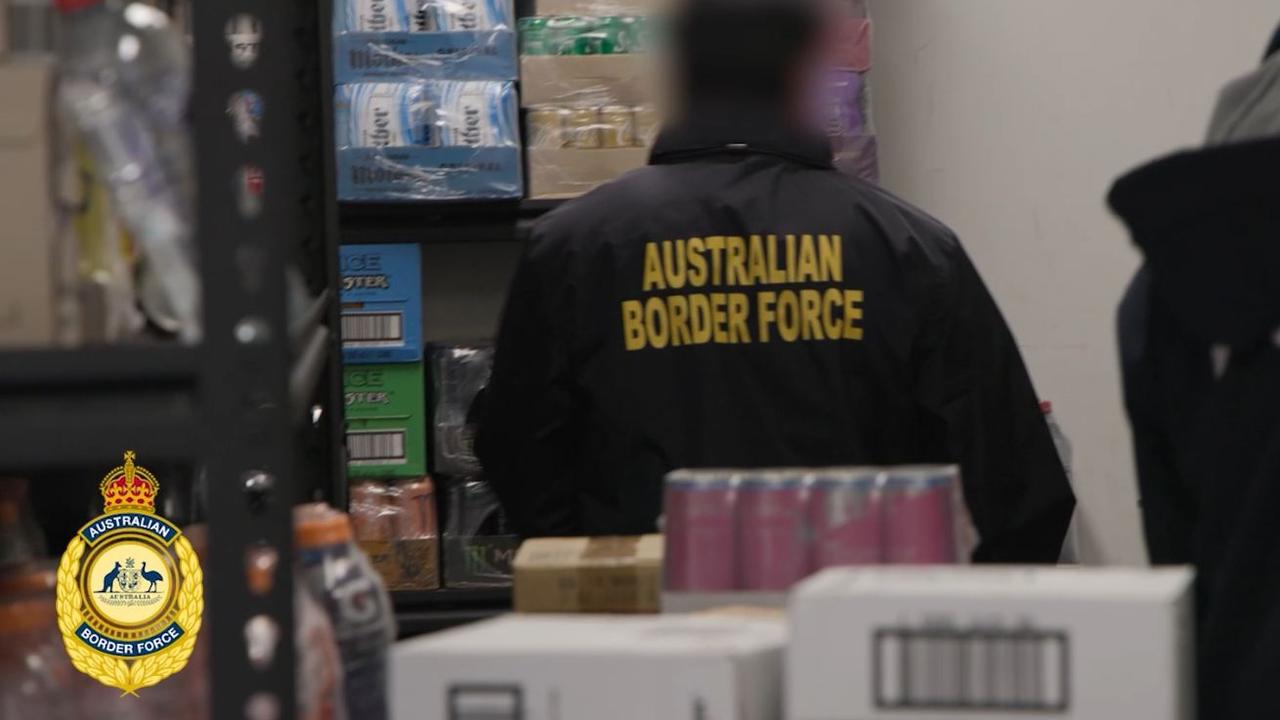
    Dai Truong, a Vietnamese national currently residing in Devon Park, entered guilty pleas last week to four criminal charges brought against her: one count of unlawful possession of stolen property, and three separate counts of dealing with property without the owner’s consent. The charges stem from a police search warrant executed at Truong’s former Dudley Park residence on March 31 this year. When officers arrived at the property, they uncovered an enormous stockpile of unopened, brand-new Lego sets spanning popular franchises from Star Wars to Disney, all stashed out of sight in the backyard shed.

    The sheer scale of the stolen haul was extraordinary: authorities required 15 full pallets and two large horse boxes to transport all the seized Lego sets away from the property. While the court did not receive evidence detailing the full origin of the entire massive cache, Truong confessed to direct involvement in three individual thefts carried out at the same Kmart location, and admitted that all the Lego found in her shed was stolen property.

    Court documents outline that Truong carried out the three small-scale thefts weeks apart from one another, sneaking Lego boxes out of the Kmart branch at Marion Shopping Centre by hiding them in the bottom storage compartment of her child’s pram. She only took a small number of sets per incident, and the combined value of these three thefts amounts to just $1,774 – a tiny fraction of the total $320,000 worth of Lego seized by police.

    One week after entering her guilty pleas, Truong appeared before Port Adelaide Magistrates Court for sentencing. Despite prior warnings that a prison term was a likely outcome, Magistrate Aaron Almedia opted to grant a home detention order instead of immediate custody, allowing Truong to serve her sentence at her current Devon Park residence.

    For the charge of unlawful possession covering the entire cache, Truong received an initial seven-month prison sentence, which was reduced to four months and six days to account for her early guilty pleas. In addition to the home detention order, the magistrate ordered Truong to pay $1,774 in compensation to Kmart Marion to cover the value of the three sets of Lego she directly stole, plus an additional $1,112 in victim-of-crime levies to the court.

  • Three killed in suspected hate crime at San Diego mosque

    Three killed in suspected hate crime at San Diego mosque

    On a Monday morning in San Diego, California, a brutal shooting at the Islamic Center of San Diego left three people dead, in what federal authorities are investigating as a targeted hate crime. The two attackers, a 17-year-old and an 18-year-old, died from self-inflicted gunshot wounds shortly after the assault, law enforcement officials confirmed.

    The tragic sequence of events unfolded nearly two hours before the mosque attack, when the mother of one of the teens placed an emergency call to local police. She reported that her son had fled home, taken multiple of her firearms and her car, and left behind a handwritten note filled with generalized hate rhetoric. She added that her son was accompanied by another young person, and both were wearing full camouflage clothing. Initially dispatched to follow up on a report of a potentially suicidal runaway, investigators quickly noted the teen’s behavior did not align with the profile of a person in acute suicidal crisis, and began searching local sites including the high school where one of the suspects was enrolled and a shopping mall where the vehicle had last been spotted.

    At 11:43 a.m. local time, as responding officers were still interviewing the suspect’s mother just blocks from the Islamic Center, dispatch received a new call reporting an active shooting at the mosque. Arriving officers found three fatally shot victims lying outside the building’s entrance. Among the deceased was an on-site security guard who law enforcement credits with heroic action that prevented a higher death toll, though no additional details on his intervention have been released at this time. No officers fired their weapons during the response, and no active shooter was found on the premises when police swept the building per active shooter protocol.

    Minutes after officers secured the mosque, a second report of gunfire came in from a nearby location. The two suspects had opened fire from their vehicle on a local landscaper working in the area. Miraculously, the landscaper escaped without injury; law enforcement says preliminary reports suggest a bullet aimed at his head was deflected by his protective hard hat, though this detail is still under verification. When officers arrived at the second scene, they found both suspects already dead from self-inflicted gunshot wounds.

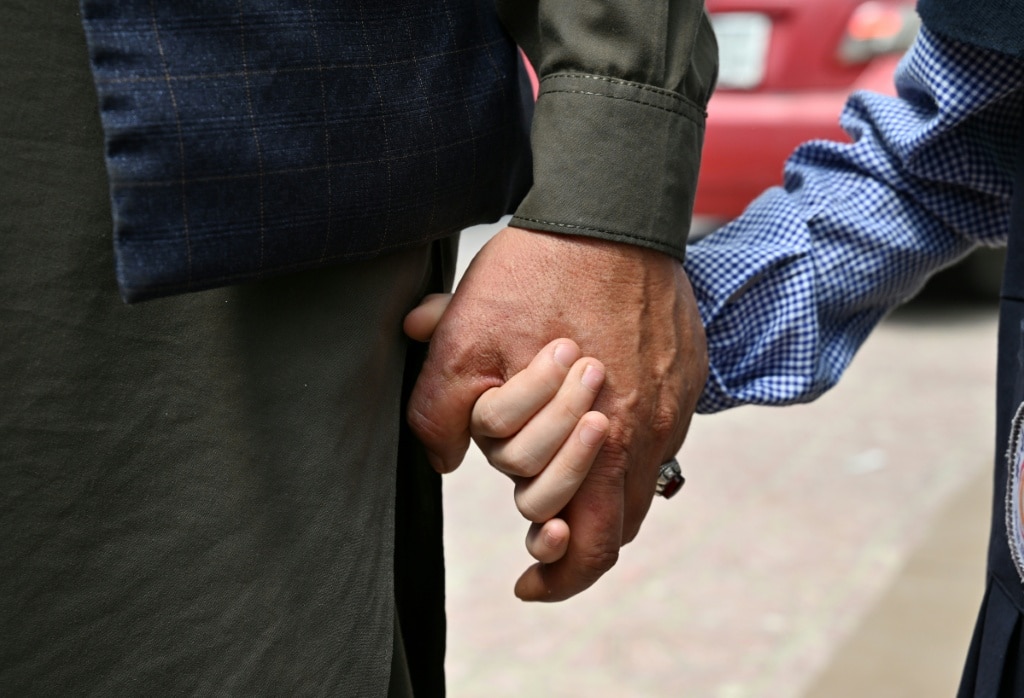
    The Islamic Center of San Diego campus is also home to the Al Rashid School, which offers religious and language instruction, meaning children were present on the grounds when the attack began. Aerial footage captured by local news outlets shows children being escorted hand-in-hand out of the campus by emergency personnel through the center’s parking lot, while all nearby schools were immediately placed on full lockdown as a safety precaution.

    The Federal Bureau of Investigation confirmed it is treating the incident as a hate crime, after the handwritten note left by one suspect was recovered. San Diego Police Chief Scott Wahl told reporters that while the note contained no explicit threat targeting the mosque or any other specific site or individual, the targeting of a major Islamic place of worship, combined with the hate-filled content of the note, leads investigators to presume the attack was motivated by bias.

    One retired local witness, who was eating lunch at his home near the mosque when the shooting began, told reporters he counted roughly 30 shots total from what he described as a semi-automatic weapon, split between two bursts of around a dozen shots separated by a short pause. He noted that the mosque is far more crowded on Fridays and during major religious holidays, saying “It’s a good thing it didn’t happen on a Friday, because the streets would be full of people.”

    The attack comes just days before Eid al-Adha, the “Festival of Sacrifice,” one of the two holiest major holidays in the Islamic faith, when Muslim communities gather with family to commemorate the prophet Ibrahim’s obedience to God. Imam Taha Hassane, director of the Islamic Center of San Diego, called the attack on a house of worship “extremely outrageous” in a press conference, emphasizing “this facility is a house of worship, not a battlefield.”

    California Governor Gavin Newsom released a statement condemning the violence, saying he was horrified by the attack on a space where “families and children gather, and neighbors worship in peace and fellowship.” He added that the state of California “will not tolerate acts of terror or intimidation against communities of faith.” At an unrelated White House event Monday, US President Donald Trump called the shooting a “terrible situation,” saying he had received early briefings and that authorities would conduct a full, thorough review of the incident.

    As of Monday, the investigation remains ongoing, and the FBI has issued a public call for any member of the community with relevant information, including photos or video from the area taken that morning, to contact investigators to assist with the case.

  • Los Angeles World Cup workers vow strike over ICE guarantees

    Los Angeles World Cup workers vow strike over ICE guarantees

    Less than a month before the 2026 FIFA World Cup kicks off across North America, hospitality staff at Los Angeles’ SoFi Stadium — one of the tournament’s key U.S. host venues — have drawn a hard line, vowing to walk off the job if federal Immigration and Customs Enforcement (ICE) agents are granted access to the facility during matches.

    Represented by UNITE HERE Local 11, the roughly 2,000 food and beverage, cleaning, and concession workers behind the threat are pushing for two binding guarantees: first, that ICE will not conduct any operations or deploy personnel at the stadium during the eight World Cup matches scheduled there, and second, that FIFA will not share workers’ personal data collected for tournament accreditation with ICE, foreign governments, or intelligence agencies.

    For the largely immigrant workforce that keeps the $5 billion arena running, an ICE presence inside the stadium is not just a logistical disruption—it is a direct threat to their safety and peace of mind. Speaking at a Monday protest outside SoFi Stadium, cook Isaac Martinez, speaking on behalf of the bargaining unit, laid out the workers’ core concern. “ICE should have no role in these games,” Martinez said. “We do not want to live in fear coming to work, or fear being detained going home.” Without a satisfactory agreement from event organizers and local officials, Martinez added, the workforce is fully prepared to launch strike action that would disrupt tournament operations.

    Workers’ concerns are rooted in a long pattern of controversial and violent enforcement actions by ICE. The agency became the face of aggressive immigration crackdowns during the Donald Trump administration, and human rights organizations have repeatedly condemned its conduct during widespread raids across U.S. cities, including a major operation in Los Angeles last year. Most recently, early in 2026, ICE agents fatally shot two civilian protesters during an operation in Minneapolis, intensifying widespread criticism of the agency’s aggressive tactics.

    Beyond ICE deployment, workers have also raised alarms about FIFA’s mandatory accreditation process, which requires all venue staff to submit extensive personal information ahead of the month-long tournament, which runs from June 11 to July 19 across 16 host cities in the United States, Canada, and Mexico. Worker Yolanda Fierro emphasized that staff have no guarantee their sensitive data will not be misused, calling on FIFA to commit explicitly to not sharing information with immigration enforcement bodies.

    The workers’ protest has already drawn high-profile political backing from Tom Steyer, a leading Democratic candidate in California’s upcoming gubernatorial race, who joined demonstrators outside the stadium Monday. Carrying signs reading “Kick ICE Out of the World Cup” and plastic soccer balls, protesters got a firm show of support from the candidate, who questioned the agency’s presence at a global sporting event. “ICE’s mandate is border control,” Steyer said. “Can anyone explain what that has to do with the World Cup? Nothing. How is it possible that this is the agency that is going to be here when we know in fact they’re an absolute threat, a lawless threat, to workers in California?”

    As of Monday, neither FIFA nor event organizers had issued a formal response to the workers’ demands, leaving the threat of a strike hanging over one of the World Cup’s highest-profile U.S. venues.

  • ‘FedEx says your parcel has drugs’: The scam that trapped an Indian comedian

    ‘FedEx says your parcel has drugs’: The scam that trapped an Indian comedian

    In October 2024, Mumbai-based stand-up comedian Ankita Shrivastav received a routine phone call that would turn into an eight-hour ordeal of extortion and psychological manipulation, becoming a stark example of India’s exploding digital fraud crisis. The caller, claiming to represent FedEx, told Shrivastav that police had intercepted a package she had supposedly sent to Iraq containing illegal narcotics. The conversation quickly shifted to what scammers now call a “digital arrest”: the fraudsters connected her to two men posing as uniformed police officers over a video call, who ordered her to comply with their demands while her identity was being verified.

    For nearly a full workday, the fake officers controlled Shrivastav through her laptop camera: she was forbidden from turning off the device, leaving her home, or contacting any friends, family, or actual law enforcement. They bombarded her with detailed questions about her personal finances, bank accounts, and transaction history, repeatedly emphasizing the severity of the false charges and the legal trouble she would face if she did not cooperate. Speaking to the BBC, Shrivastav recalled the unrelenting pressure leaving her disoriented and emotionally drained, desperate to end the terrifying experience. By the time the scammers cut contact, she had authorized transfers totaling 900,000 Indian rupees, equal to roughly $9,300, only to realize minutes later that the entire operation was an elaborate scam.

    Like many scam victims, Shrivastav faced the added sting of judgment after the incident. “‘You’re educated, how did you get scammed?’ That is what everyone I told asked me,” she said, a question she has repeatedly asked herself. Shrivastav kept her experience private until April 2025, when she turned her trauma into a 30-minute stand-up set uploaded to her YouTube channel, designed to raise public awareness of how easily anyone can fall victim to these schemes.

    Shrivastav is far from alone in facing this type of cybercrime. New data from India’s National Crime Records Bureau (NCRB) shows that cybercrime incidents rose nearly 18% year-over-year in 2023-2024, with total losses to digital fraud exceeding 220 billion rupees. Registered cybercrime cases hit 101,928 in 2024, a nearly 50% jump from just three years prior in 2021. Among the most common cons reported nationwide is the “digital arrest” scam, a rapidly evolving tactic where criminals impersonate police or government officials to falsely accuse victims of crimes, trap them in continuous video calls, and intimidate them into transferring funds.

    Digital scams extend far beyond fake arrests: fraudsters also deploy fake investment platforms, phishing emails and SMS messages to steal sensitive credentials such as one-time passcodes (OTPs) and account passwords, and increasingly use artificial intelligence to clone voices of loved ones or public figures to extract money. Experts note that while rising reported cases partly reflect improved reporting systems, the trend also underscores a dramatic shift in the nature of criminal activity in India. An editorial in *The Telegraph* framed the NCRB data as a reflection of “the emerging anxieties of a society that is being reshaped by technology, urbanisation and economic change,” noting that new forms of cybercrime are putting unprecedented pressure on India’s overstretched criminal justice system.

    For Shrivastav, that pressure has translated to little progress recovering her lost funds. After multiple trips to local law enforcement and banking institutions, she said she has yet to see any results: “The scammers were one step ahead of the police and bank authorities.” NCRB data supports her frustration: by the end of 2024, roughly 100,000 cybercrime cases remained stuck in the investigation pipeline, with close to 75,000 yet to go to trial.

    Indian authorities have not ignored the growing crisis. In 2020, the federal government launched the Indian Cybercrime Coordination Centre (I4C), a national body that partners with domestic and international agencies to disrupt cybercrime networks. The government has also rolled out a dedicated 1930 cyber fraud helpline, an online portal for reporting and blocking fraudulent activity, run widespread public awareness campaigns, and updated data protection and technology laws to crack down on deepfake and AI-enabled voice scams. Most recently, Home Minister Amit Shah announced that I4C is collaborating with the Reserve Bank Innovation Hub to leverage artificial intelligence to identify and shut down “mule accounts” – the bank accounts and digital wallets scammers use to launder stolen funds while hiding their identity. India’s central bank is also currently drafting new regulatory measures to target digital scammers.

    Even with these interventions, cybercrime rates continue to climb. Journalist and author Soumya Gupta, who wrote *Bharat Bluff: Inside the cons of India’s internet revolution*, explains that the rapid expansion of internet and smartphone access across India has put hundreds of millions of new users at risk. Recent government data shows that more than 86% of Indian households now have internet access, but digital literacy initiatives have failed to keep pace with this boom. While public awareness campaigns and media reporting are slowly closing that gap, Gupta emphasizes that scamming relies far more on psychology than technology.

    In her writing, Gupta notes that scammers build schemes to exploit universal human vulnerabilities: fear, greed, core beliefs, and social connections. Once a victim is pulled into a scam, many struggle to extract themselves, either out of shame to admit their mistake or due to the sunk-cost fallacy that keeps them complying as more money is on the line. Scammers also closely track users’ online activity to craft personalized cons that feel credible and compelling to their targets.

    For Shrivastav, the scammers exploited two deep-rooted vulnerabilities: a cultural fear of police authority and a desire to protect her public reputation as a comedian. “From a young age, we’re taught to be afraid of the police and to obey authority. That ingrained fear overrode the alarm bells that were ringing in my brain,” she explained. “I was also eager to prevent any incident that would spoil my reputation among fans.”

    Sharing her story through stand-up comedy felt like a risky, vulnerable step – she worried audiences would judge her as foolish for falling for the scam. But she said the choice to go public was necessary: “I wanted people to know that if I – an educated, urban woman who considers herself to be street-smart – could get scammed, it could happen to anyone.”

    Gupta echoed Shrivastav’s call for caution, urging internet users to carefully protect their personal data online and follow two core rules: any offer that seems too good to be true almost certainly is, and if a situation feels off, stop all communication and reach out to a trusted source or official authority for help.

  • Three killed in San Diego mosque shooting, two attackers dead

    Three killed in San Diego mosque shooting, two attackers dead

    A horrific act of violence has shaken the Muslim community in Southern California, after a mass shooting at the region’s largest mosque left three people dead on Monday, with the two teenage attackers dying from self-inflicted gunshot wounds shortly after the assault, local law enforcement confirmed.

    According to San Diego Police Chief Scott Wahl, emergency dispatch received an active shooter call targeting the Islamic Center of San Diego — a sprawling worship complex that also hosts an adjacent school — and first responders arrived at the scene in just four minutes. When officers pulled up to the property, they immediately found three deceased victims lying outside the center’s main building. One of those killed has been confirmed as a security guard employed by the mosque, though the identities of the other two victims have not been released to the public as of Monday evening.

    Authorities also received follow-up reports of additional gunfire near the campus, where a local landscaper working in the area came under fire but escaped without injury. Law enforcement teams launched an immediate active shooter sweep of the mosque and the connected school, confirming that all staff, teachers and children inside the facility were unharmed. Following a short lockdown order that urged local residents to shelter in place, police announced the threat had been fully neutralized.

    Aerial television footage from the scene showed dozens of law enforcement patrol cars surrounding the mosque complex, with heavily armed response units congregating outside the main building and one person visible lying on the ground in a large pool of blood. A short distance from the worship center, officers found the suspects’ vehicle parked in the middle of a street, with the two attackers — a 19-year-old and a 17-year-old — dead inside from self-inflicted gunshot wounds. Chief Wahl confirmed that no officers fired their weapons during the response to the attack.

    Mosque imam Taha Hassane expressed shock and grief over the unprecedented attack on the community’s place of worship. “We have never experienced tragedy like this before. And at this moment all that I can say is, sending our prayers and standing in solidarity with all the families in our community here,” Hassane said. “It is extremely outrageous to target a place of worship.”

    Political leaders across levels of government have offered responses to the violence. Former U.S. President Donald Trump called the shooting a “terrible situation” during a press briefing, noting that he had received initial updates and would be reviewing the incident closely. California Governor Gavin Newsom was also briefed on the attack immediately after it unfolded, with his press office releasing a statement on social media platform X thanking first responders for their rapid work to secure the area and protect local residents, while urging the public to follow instructions from local law enforcement.

    The attack has prompted renewed conversations about religious-based violence and gun safety in the United States, as the San Diego Police Department continues to process evidence at the scene and investigate the motive for the assault on the Muslim community.

  • MPs question lack of action on hate speech at Tommy Robinson’s anti-Muslim rally

    MPs question lack of action on hate speech at Tommy Robinson’s anti-Muslim rally

    A mass far-right rally organized by notorious convicted extremist Tommy Robinson in central London has sparked widespread outrage across British Muslim communities and political circles, with critics slamming the UK government for its failure to publicly denounce virulent anti-Muslim rhetoric delivered from the event’s main stage.

    Held Saturday and drawing an estimated crowd of 60,000 attendees, the “Unite the Kingdom” rally was led by Stephen Yaxley-Lennon, better known by his pseudonym Tommy Robinson — a far-right activist with a long rap sheet that includes convictions for violence, fraud, and contempt of court. Footage captured at the event captured Robinson making a series of inflammatory, anti-Muslim remarks: he told attendees he would “stop Islam” if he took national power, called for a mass “remigration” policy that would force ethnic and religious minorities out of the country, and demanded the military be deployed to remove migrants from government-funded accommodation hotels. Robinson went even further, declaring publicly that “it’s time for many Muslims to leave this country,” and urged the gathered crowd to prepare for what he framed as a coming “battle of Britain.”

    Robinson was not the only speaker to spread anti-Muslim animus at the rally. Kellie-Jay Keen-Minshull, who goes by the name Posie Parker and leads a small fringe group called the Party of Women, told the crowd that “it is not too late to get Islam out of every single official office in this country… we have to remove Islam from every single place of authority.” In a widely condemned stunt, three members of French anti-Islam far-right group Collectif Nemesis took the stage wearing full burqas as a deliberate mockery of Muslim women who choose to wear the Islamic veil. Alice Cordier, the group’s founder, told the crowd the movement stands “alone against the system that wants to destroy our Christian civilisation,” doubling down on the group’s open anti-migrant and Islamophobic ideology.

    In the aftermath of the rally, Muslim civil society organizations and cross-party political figures have launched sharp criticism of the UK government, which has not issued any formal condemnation of the anti-Muslim remarks made from the stage. While Prime Minister Keir Starmer did criticize the rally in advance of the event, warning “I will not let the likes of Tommy Robinson use their hate to drag our country backwards,” no senior minister has publicly addressed the specific hate speech delivered during the gathering.

    Independent Member of Parliament Ayoub Khan, speaking to independent news outlet Middle East Eye, rejected attempts to frame the remarks as ordinary heated political debate, arguing that the comments amounted to open, public anti-Muslim agitation. “Any government that fails to respond decisively to such rhetoric is failing in its basic duty to protect equal citizenship and public safety,” Khan said. “Ministers cannot claim to oppose extremism while remaining silent as an entire minority community is demonised in plain sight.”

    Fellow MP Iqbal Mohamed echoed that criticism, noting that speakers faced no immediate pushback from the government after calling for the exclusion of Muslims from public life, demanding Muslims leave the country, and mocking Muslim women’s religious clothing. “That tells you all you need to know about this government’s stated commitment to combatting Islamophobia,” Mohamed said, adding that political leaders have a clear responsibility to speak out consistently and take meaningful action against all forms of bigotry, including anti-Muslim hate.

    Baroness Shaista Gohir, a member of the House of Lords and CEO of Muslim Women’s Network UK, condemned the burqa mocking stunt as a deliberate act of public humiliation. “It was deliberate humiliation of Muslim women and a public display of anti-Muslim hostility aimed at dehumanising visibly Muslim women and reducing their religious dress to a source of ridicule and contempt,” Gohir said. “Such stunts have a direct and harmful impact on the safety and well-being of Muslim women.”

    Leading national Muslim organizations have amplified these calls for action, demanding the Metropolitan Police launch a full investigation into the rally speakers’ comments as potential incitement to religious hatred. The Muslim Council of Britain (MCB), the UK’s largest umbrella group for Muslim communities, said Robinson’s remarks were not protected political speech — they were criminal incitement. The group questioned why this virulent hate targeting Muslims is tolerated, when comparable rhetoric directed at any other minority community would almost certainly result in prosecution and immediate political condemnation.

    The Muslim Engagement and Development Initative (Mend) also condemned the rally’s rhetoric as incitement to religious hatred and violence against British Muslims, and announced it would file a formal request with the Metropolitan Police to obtain the force’s internal legal assessment explaining why no rally speakers had been arrested on hate crime charges. Thus far, Metropolitan Police have confirmed 20 total arrests were made at the rally, nine of which were for alleged hate crimes — but none of those arrests targeted the event’s featured speakers.

    The criticism over government silence comes amid ongoing scrutiny of UK policing and political responses to protests, with critics pointing to a stark contrast in how the government and police handled a simultaneous pro-Palestine Nakba Day march also held in London the same day. Three arrests were made at the pro-Palestine gathering: one for carrying a sign reading “Globalise the intifada” (a slogan recently criminalized under UK public order law), a second for a sign reading “We will not surrender, victory or martyrdom,” and a third for displaying support for Palestine Action, a direct action group the government banned as a terrorist organization last year.

    Ahead of the far-right rally, the government had announced it had barred 11 foreign far-right agitators from entering the UK to attend the event, including high-profile Colombian-American anti-Muslim campaigner Valentina Gomez. Middle East Eye, which first reported on the post-rally criticism, has reached out to the Metropolitan Police for comment on the calls for an investigation into the rally speakers’ remarks, and had not received a response as of publication.

  • Man’s conviction quashed for 2018 murder in County Louth

    Man’s conviction quashed for 2018 murder in County Louth

    In a landmark judgment delivered Monday, Ireland’s Court of Appeal has overturned the murder conviction of Aaron Connolly, who had served more than three years of a life sentence for the 2018 killing of 18-year-old hospitality student Cameron Reilly.

    The case dates back to the late hours of May 25, 2018, when a group of roughly 15 young people gathered in an open field on the outskirts of Dunleer, County Louth for a casual night out. Some members of the group consumed alcohol and cannabis, though Reilly’s closest friend testified the teenager never used drugs. Shortly after midnight, the group left the field to collect takeaway food, but Reilly did not return with them. The next morning, a local man walking his dog discovered Reilly’s body in the field.

    Chief State Pathologist Dr Linda Mulligan confirmed the victim’s cause of death was asphyxiation caused by external pressure to the neck, with no other contributing factors. Connolly, now 26, from Willistown, Drumcar, has always maintained his innocence in the killing. In his initial statements to Gardaí (Irish national police), he told investigators he was heterosexual and denied any sexual contact had occurred between him and Reilly on the night of the death, adding that the pair went separate directions at the end of the night and he did not check which route Reilly took. He also claimed he could not account for a ‘missing hour’ that night, saying a mix of drugs had caused him to black out.

    Midway through his original trial in December 2022, Connolly admitted through his legal team under Section 22 of Ireland’s 1984 Criminal Justice Act that sexual activity had occurred between the two men that night, and stated Reilly was alive and standing when he left the field. The provision means such admissions count as conclusive evidence of the facts admitted, eliminating the need for the prosecution to call witnesses to prove those details. He was ultimately found guilty of murder and sentenced to life in prison.

    Connolly’s legal team launched an appeal against the conviction in June 2023, arguing that trial judge Mr Justice Tony Hunt had unfairly undermined the defence’s case. Counsel Michael Bowman SC told the three-judge appellate panel that Hunt had reduced the defence’s argument to an unfair framing of a stranger attacker, repeatedly denigrated the defence’s position, overstepped by criticizing the defence’s handling of prosecution witnesses, and misrepresented how Connolly’s mid-trial admissions should be interpreted by the jury.

    Delivering the Court of Appeal’s ruling, Mr Justice John Edwards acknowledged that Hunt provided juries with technically correct, ‘impeccable instructions’ on the applicable legal principles for the case. However, Edwards found that the stridency and repeated emphasis of Hunt’s comments during his jury charge created a real risk that jurors believed the judge was personally convinced of Connolly’s guilt and was implicitly pressuring them to return a guilty verdict. Edwards added that some of Hunt’s comments could be reasonably perceived as disparaging and mocking of the defence’s arguments.

    ‘He did over and over again, and with great insistency, seek to make clear to the jury that he had strong personal views on certain aspects of the case,’ Edwards wrote in the judgment. The court also confirmed it found no evidence the trial judge intentionally acted improperly, noting he had attempted to avoid bias despite falling short of the required standard of impartiality.

    The appellate court has formally quashed Connolly’s conviction. The final next step in the case now falls to the Director of Public Prosecutions, who will decide whether to seek a retrial against Connolly.