
Melbourne law enforcement has taken five additional teenagers into custody as part of a sweeping crackdown on a coordinated criminal ring that lures male victims via dating platforms and social media, before carrying out violent assault, theft and verbal abuse. Victoria Police announced the latest arrests on Monday, noting the teens taken into custody range in age from 16 to 18 years old. Investigators from the Greater Dandenong Crime Investigation Unit executed the arrests last week, following 11 reported incidents of this targeted criminal activity in the Greater Dandenong region alone. According to official police allegations, the group of young offenders creates fake profiles to pose as genuine users on popular dating and social platforms, tricking men into agreeing to an in-person meeting. Once victims arrive at the arranged location, they are violently attacked, robbed of their belongings, threatened, and targeted with homophobic slurs, per the official account. Each of the five teens has been hit with a range of serious criminal charges, tailored to their alleged involvement in the ring. One 16-year-old faces counts of robbery, armed robbery, fraudulently obtaining property, and intentionally causing bodily harm. A second 16-year-old is charged with kidnapping, robbery, attempted robbery, and intentionally causing injury. A 17-year-old faces charges including armed robbery, fraud, intentional injury, and sexual assault. The two 18-year-old suspects, both residents of Dandenong, also face robbery charges: one faces additional counts of sexual assault and intentional injury, while the other is charged with kidnapping, armed robbery, attempted robbery, sexual assault, intentional injury, and fraudulently obtaining property. These latest alleged incidents are part of a much larger pattern of criminal activity: since January 2024, Victoria Police have received 113 official reports of dating app-related crimes matching this modus operandi. To date, a total of 50 people have been arrested in connection with these coordinated attacks. In 2026 alone, 11 additional incidents have already been reported across multiple local jurisdictions in the broader Melbourne area, including Manningham, Casey, Hume, Moorabbin and Knox. Acting Inspector Jarrod Dwyer of the Southern Metro Region Investigation & Response team emphasized that this pattern of harmful, predatory behavior will not be tolerated by law enforcement. “This would have no doubt been a distressing situation for the victims involved,” Dwyer said in an official statement. “These arrests show just how serious we are in holding offenders to account.” Dwyer added that investigators treat every report of this nature with the highest priority, and urged any person who has fallen victim to this scheme to come forward to file an official report to aid ongoing investigations. Victoria Police are able to collaborate directly with dating app and social media platforms to trace offender activity and identify suspects, making victim reports critical to shutting down the remaining criminal network. “It is never too late to make a report – so when you’re ready, please speak to us,” Dwyer said. “Everyone has a right to go about their lives, meet new people and start a relationship in safety.”
分类: society
-
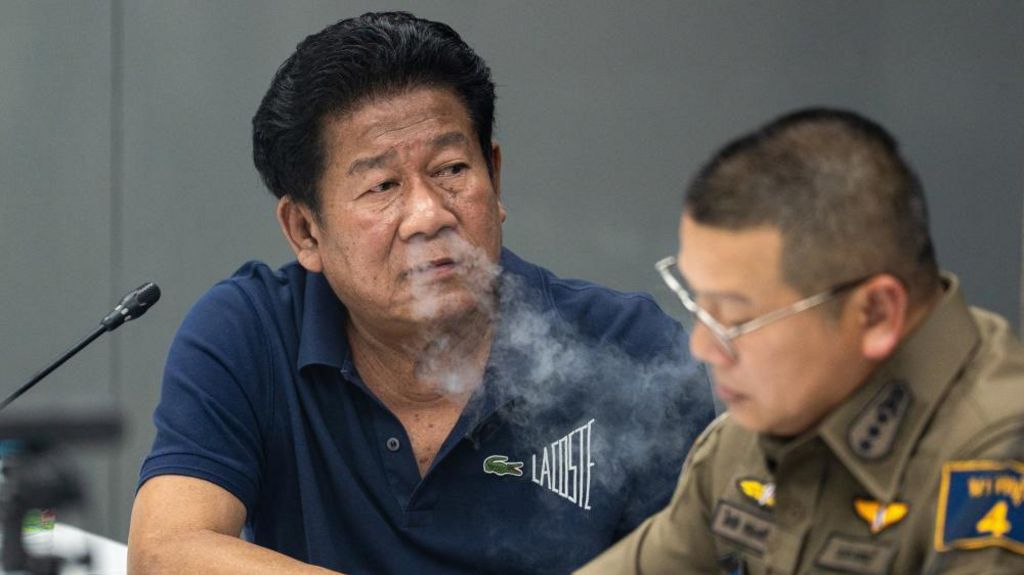
Former Thai MP allegedly kills official and confesses on YouTube
Just three days after Thailand suffered its deadliest mass shooting in three years, a second high-profile firearms incident has shaken the country, reigniting urgent calls for stricter gun regulations across the Southeast Asian nation.
On Monday, a former member of Thai parliament from Nonthaburi province, Chalong Riewrang, allegedly shot and killed Thongchai Yenprasert, the retired police colonel who served as president of the Nonthaburi Provincial Administrative Organization, outside the local official’s office. The attack also left Thongchai’s driver wounded with gunshot injuries to the arm and hand; Thongchai, who was struck in the neck, succumbed to his wounds after being rushed to a local hospital.
In an extraordinary sequence of events that unfolded after the shooting, Chalong placed a call to political pundit Anchalee Paireerak while she was hosting a live YouTube program, confessing the killing to her on air. Footage of the broadcast captured Anchalee’s stunned reaction as she processed the former lawmaker’s admission, urging him to stay at the scene and wait for law enforcement to arrive.
Chalong was subsequently taken into police custody, where officials granted him permission to hold an on-site press conference at the local police station. During the briefing, where he was photographed smoking a cigarette while addressing reporters, Chalong offered conflicting remarks about the encounter. He claimed the shooting was unplanned, described Thongchai as a close personal friend, and alleged the incident stemmed from a confrontation where Thongchai pushed him away when he requested a conversation. Chalong also stated he only fired his weapon after the driver pulled a gun and aimed it at him, though he offered no clear explanation for the underlying tension between the two men. Local media reports have indicated the confrontation grew out of a long-running personal dispute between the pair.
Thai authorities have confirmed the shooting is unrelated to the mass shooting that occurred three days prior, in which a 14-year-old teenager killed eight people at his home and school before taking his own life. That incident was already the worst mass shooting the country has seen since 2022, and it prompted immediate action from Prime Minister Anutin Charnvirakul, who ordered a national crackdown on unregulated gun ownership. The new measures announced after the school attack include increased police checkpoints and tighter oversight of firearm possession, carrying, and use across the country.
This latest fatal shooting is expected to amplify already fierce national debate around gun control in Thailand, which holds the distinction of having the highest rate of civilian gun ownership in Southeast Asia by a substantial margin. With two deadly gun incidents making headlines within a single week, pressure is growing on Thai officials to move beyond temporary crackdowns and implement more sweeping reforms to the country’s lax firearms regulations.
-
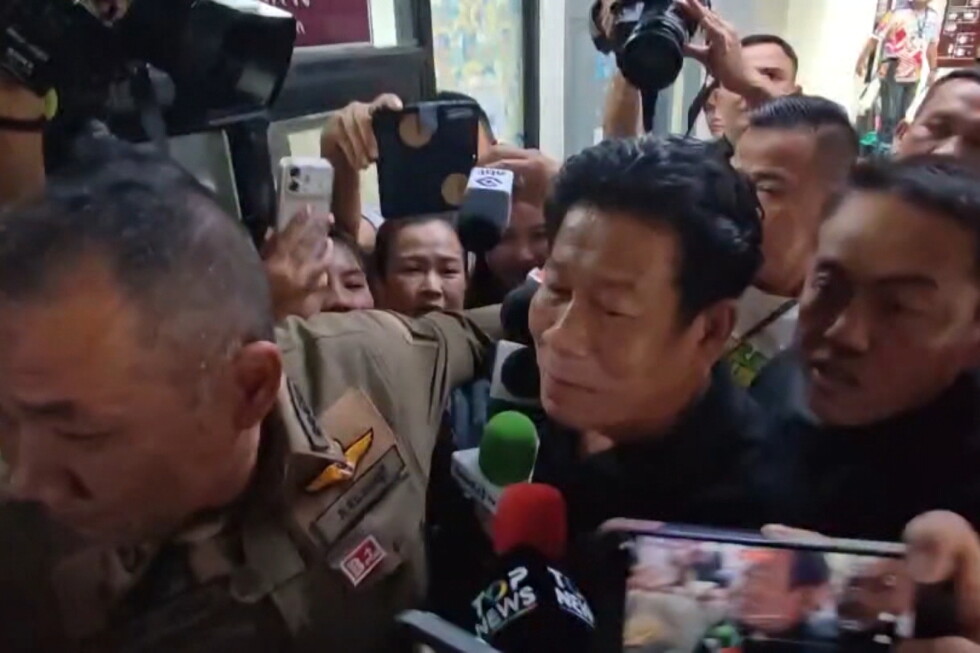
A former Thai lawmaker arrested after a shooting at a government office kills 1
Less than a week after a mass school shooting that left eight people dead in Thailand’s Nonthaburi province, a second fatal shooting has shaken the region, this time targeting a senior local government official and renewing longstanding concerns about the country’s lax gun regulations and high civilian gun ownership rates.
The Monday morning attack unfolded shortly before 11 a.m. on the grounds of the Nonthaburi Provincial Administrative Organization, according to provincial public health officials. The alleged shooter, identified as Chalong Riewraeng, a former Thai lawmaker, was taken into custody immediately after the incident by local law enforcement.
Authorities confirmed that the primary target of the attack was Thongchai Yenprasert, chief executive of the Provincial Administrative Organization. Thongchai suffered critical gunshot wounds to the face and neck and died after being transferred to a local hospital. Thongchai’s driver, who was also shot in the arm during the attack, is currently in stable condition, per official updates.
Speaking to reporters from a local police station following his arrest, Chalong claimed the shooting stemmed from a long-running personal dispute over an unpaid loan he had extended to Thongchai. He told reporters that he followed Thongchai to his vehicle to confront him, and opened fire only after the driver drew a weapon and aimed it at him first. “I wanted to apologize to the people of Nonthaburi,” Chalong said. “I had no intention [to kill]. We were friends and I thought we could talk it out, but he wouldn’t talk to me.”
Regional police commander Wattana Yeejeen confirmed that Chalong has formally confessed to the shooting, and investigators have ruled out any broader public threat, noting the attack was driven by personal motives.
This most recent shooting comes just four days after a separate devastating mass shooting in the same province, carried out by a 14-year-old student who killed eight people before taking his own life. The teen’s attack claimed the lives of a 12-year-old female student, five school staff members at Debsirin Nonthaburi School, and his own two grandparents, who were killed at the family home earlier that morning.
As of Sunday, investigators have not yet identified a clear motive for the school shooting, though deputy regional police commander Atthapol Anusit noted that the teen had documented struggles with personal issues connected to both his family and school life. A forensic analysis of the teen’s electronic devices found he had regularly consumed violent content on social media, and had researched firearms and mass shootings as far back as one to two years ago. Witnesses also told investigators that the teen had brought a BB gun to school the previous year, which was confiscated by a teacher.
Back-to-back deadly shootings have thrown a harsh spotlight on Thailand’s gun ownership landscape, which is among the most permissive in Asia. Data from the 2017 Small Arms Survey, the most recent comprehensive international analysis of civilian gun ownership, found that Thailand has approximately 15.1 civilian-owned guns per 100 residents, the highest rate in Asia after Pakistan and far outpacing all of its Southeast Asian neighbors. For comparison, neighboring Malaysia reports fewer than one gun per 100 residents.
2023 data from World Population Review puts Thailand’s firearm death rate at 3.49 per 100,000 people. While that figure is far lower than rates seen across Latin America and the Caribbean, it remains one of the highest in Asia, with only the Philippines recording a higher rate in Southeast Asia.
While random mass shootings remain relatively uncommon in Thailand, officials and analysts have noted a clear upward trend in high-profile fatal shooting incidents in recent years. In February 2024, a 17-year-old stole a service weapon from a local police officer and carried out a shooting at a public high school in southern Thailand that killed one person and wounded two others after a two-hour hostage standoff. In 2023, a 14-year-old boy was charged in a fatal shooting at a major central Bangkok shopping mall that shocked the nation.
-
Eight more people charged after teen allegedly tied to tree, assaulted in Townsville
A violent, orchestrated attack on a 17-year-old in North Queensland has led to eight new charges, bringing the total number of accused individuals facing criminal proceedings to 11, Queensland Police have confirmed.
The incident unfolded on July 18, when the injured teenager was discovered by passing joggers around 6:35 a.m. in remote bushland just off Cape Pallarenda Road in Town Common, near Townsville. When found, he was tied to a tree with severe, life-altering injuries, and was immediately transported to Townsville University Hospital in stable condition. Law enforcement later confirmed the victim required surgical intervention to treat his wounds.
Initially, three suspects were taken into custody and charged shortly after the attack in July. That group includes a 13-year-old boy from Deeragun, who faces four charges: unlawful deprivation of liberty, assault causing bodily harm while in company, grievous bodily harm, and torture. A 14-year-old girl from Kirwan faces the same four offences and has been processed under Queensland’s Youth Justice Act. The third original suspect is a 35-year-old Kirwan woman, who faces the same four core charges plus an additional count of driving with a suspended Queensland driver’s license. She is scheduled to appear in court on September 28.
On Monday, police announced that eight more people have now been arrested and charged in connection with the brutal assault. Five adult suspects were taken into custody: a 40-year-old Heatley woman, a 36-year-old Cranbrook woman, a 32-year-old Kirwan woman, a 30-year-old Heatley man, and a 24-year-old Heatley man. All five face one count each of the same four core offences: unlawful deprivation of liberty, grievous bodily harm, assault causing bodily harm in company, and torture. They are set to appear before Townsville Magistrates Court this coming Monday.
Alongside the five adults, three 15-year-old boys were also charged with the same four offences. Two of the teens are from Kirwan and already appeared at Townsville Children’s Court on August 8, while the third boy, from Mount Low, is scheduled for a court appearance on August 14.
Detective Senior Sergeant Dave Miles, head of the Townsville Child Abuse and Sexual Crime Unit, shared key details about the investigation and the nature of the attack. He confirmed the attack was not random, but a pre-planned act coordinated by the group of suspects against the 17-year-old victim. Only some of the accused are known to the victim, he added. Miles also revealed that after abandoning the injured teen, the suspects engaged in dangerous driving around the Townsville Strand area, which ended in a vehicle collision.
Queensland Police investigations into the incident remain ongoing. Law enforcement is urging any member of the public who has information related to the attack, regardless of how minor it may seem, to contact investigators to assist with the case.
-
Thai school shooter learnt how to use guns via social media
Thailand is grappling with its deadliest mass shooting in recent years, after a 14-year-old student carried out a premeditated attack that left eight people dead, including the perpetrator himself. The tragedy, which unfolded in Nonthaburi province — a region bordering the Thai capital Bangkok — began at the teen’s home before continuing at his campus, Debsirin Nonthaburi School, a respected local branch of one of the country’s elite secondary schools.
According to senior Thai law enforcement official Atthapol Anusit, the teen first used his grandfather’s legally owned handgun to kill his grandparents, who had raised him from the age of two after his parents separated. He then brought the weapon, along with a knife, to his school, where he opened fire on fellow students and teachers. To date, investigators have interviewed 17 witnesses as they work to unpack the full set of motivations behind the attack.
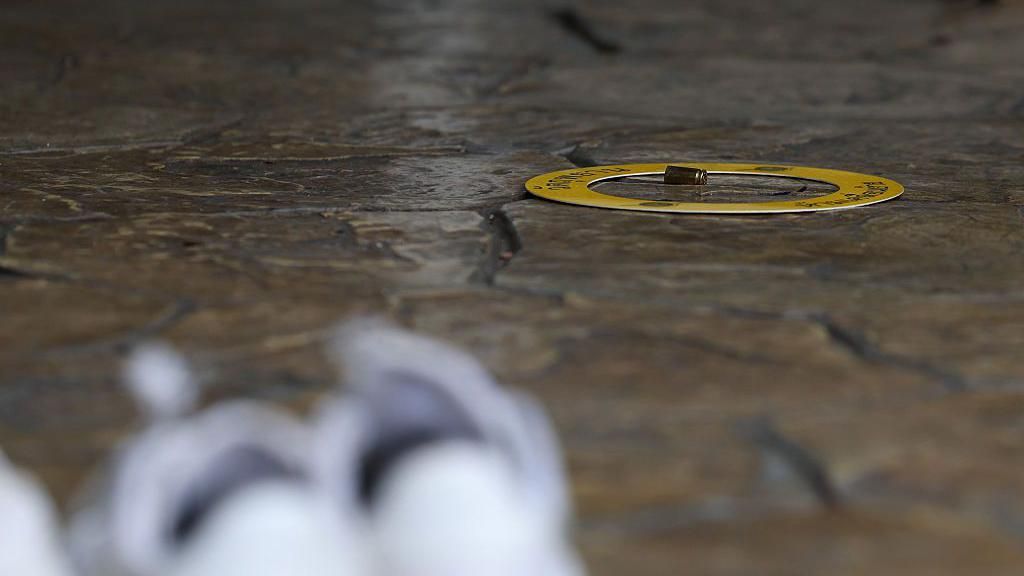
Early investigative findings point to multiple potential contributing factors. Forensic analysis has found that the teen’s shots were surprisingly accurate, with many striking vital areas of victims’ bodies. Despite this precision, police have found no evidence that the attacker received formal firearms training or practiced at a registered shooting range. Instead, investigators confirm the teen taught himself to handle guns through content he accessed on social media platforms, where he also repeatedly viewed violent material. Investigators also note that the teen had previously brought an illegally ordered BB gun to school, which was confiscated by his teachers. Beyond social media influence, authorities cite personal stressors that may have fueled the attack: academic anxiety, unresolved family tensions, and conflicts with his circle of friends. When asked if the attack was pre-planned, Atthapol told reporters Sunday that premeditation was “probable” based on the evidence collected so far, which includes the used firearm, spent cartridge cases, the attacker’s mobile phone, and the knife recovered from his school bag. A search of his home computer confirmed repeated access to violent social media content.
The attack has shaken families and communities across the country, with conflicting accounts emerging of the teen’s demeanor and character. His unnamed mother, who told Reuters she last saw her son during a recent school break, described him as a bright, cheerful teenager who behaved normally. “We are truly devastated, because no one thought this would happen,” she said. Local media also confirmed that the teen’s father has issued a public apology for his son’s actions. A teacher from the school recalled the teen as a high-performing good student, while education officials noted he was an enthusiastic video game player. Prime Minister Anutin Charnvirakul previously shared that the teen’s grandmother, who was one of the victims, worked as a teacher and may have been strict with her grandson.
In the wake of the tragedy, communities across Nonthaburi are mourning the lost lives. Mourners have laid flowers and left tributes outside the school campus, while Buddhist funeral rites have begun for victims. On Sunday, dozens of mourners dressed in black gathered at a local temple to lay to rest a 12-year-old girl who succumbed to her injuries two days after the shooting. Her music teacher remembered her to AFP as a joyful, active child who loved dancing and taking part in every school activity.
In response to public outcry and growing calls for reform, Thai Prime Minister Anutin Charnvirakul has pledged to introduce new, stricter gun control legislation in the wake of the attack, as the country continues to process the worst mass shooting it has seen in decades. Investigations remain ongoing as authorities work to finalize their findings on motive and potential systemic failures that allowed the attack to occur.
-
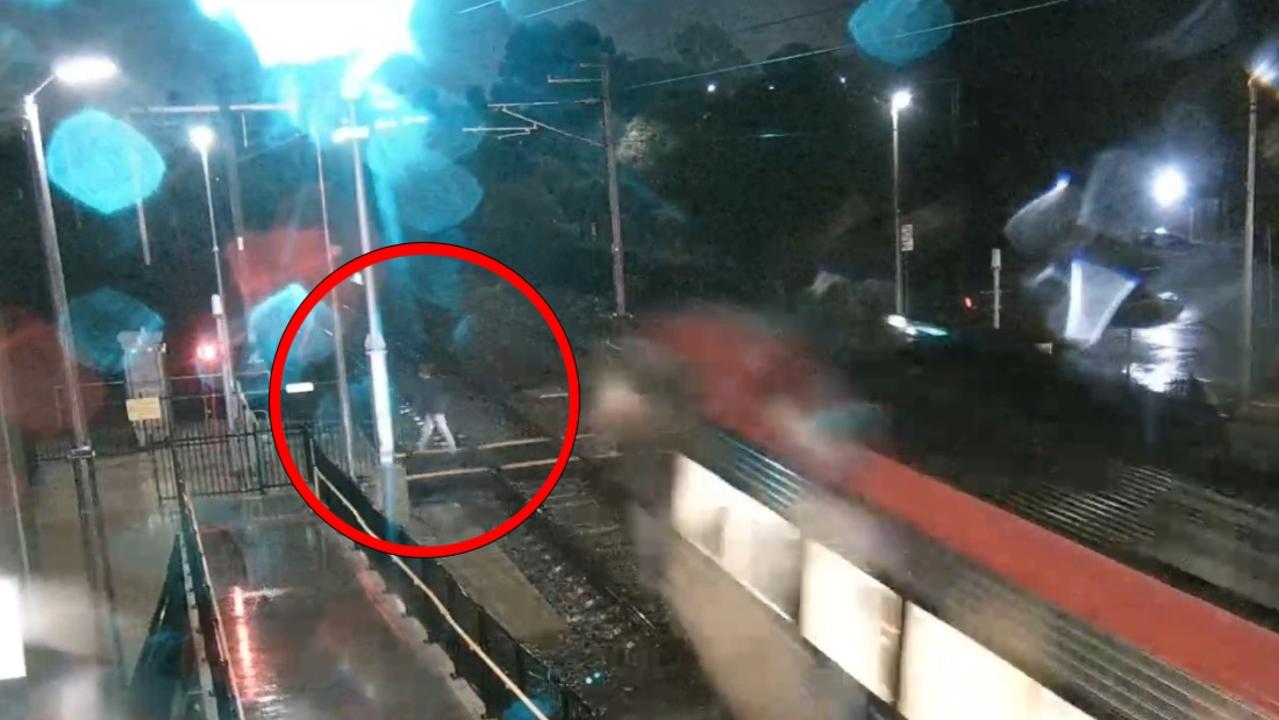
‘Terrifying’: CCTV compilation captures woman’s heart-stopping near-miss on SA train line
South Australia is grappling with a troubling upward trend in dangerous close calls between trains and road users, newly released government data and compiled security footage have revealed. Released to mark national Rail Safety Week, the collection of closed-circuit and on-train footage captures a series of heart-stopping near-disasters that have underscored growing risks along the state’s busiest commuter rail lines.
In one of the most viral clips from the compilation, a woman hesitates mid-step while crossing active tracks before reaching the opposite side, only for a speeding passenger train to emerge from around a bend mere seconds after she clears the rail bed. A second incident shows a cyclist darting across tracks just as an oncoming train approaches at full speed, narrowly escaping a catastrophic collision. These clips are far from isolated: official statistics for the 2025-26 fiscal year show 163 dangerous near-miss incidents were recorded across Adelaide’s Metro rail network, marking a 4% year-on-year increase. That works out to an average of one near-disaster every two days.
The data also pinpoints one particularly high-risk corridor: the Gawler line, which connects central Adelaide to growing northern suburban communities including Elizabeth, Mawson Lakes and Salisbury. The busy commuter line accounted for 72 of the state’s total near-miss incidents, or 44% of all cases, with incidents jumping more than 20% compared to the previous year. In a contrasting trend, Adelaide’s tram network recorded a major 30% drop in near-miss incidents over the same period.
Further breakdown of the data reveals other alarming patterns. Incidents at designated pedestrian rail crossings jumped 54% to 98 total cases in 2025-26. Cyclists were involved in 35% of all recorded near-misses, and the most dangerous window for risky behavior around tracks falls between 7pm and 8pm daily.
South Australia’s Transport Minister Joe Szakacs described the compiled footage of near-misses as truly terrifying, warning that reckless behavior around rail lines carries far-reaching consequences for entire communities. “The irresponsible actions by a few reckless individuals can have a lasting impact on those around them,” Szakacs said. “We are seeing an alarming rise in these close calls which can have a traumatic effect on our train drivers and cause injuries to passengers when emergency brakes are activated.”
Szakacs emphasized that the timing of the public release of footage and data is intentional, coinciding with Rail Safety Week to remind commuters and local residents of the deadly risks of distraction and impatience around active rail lines. He urged all people crossing tracks to remove headphones, put away mobile devices, and stay fully focused on their surroundings to avoid preventable tragedies.
-
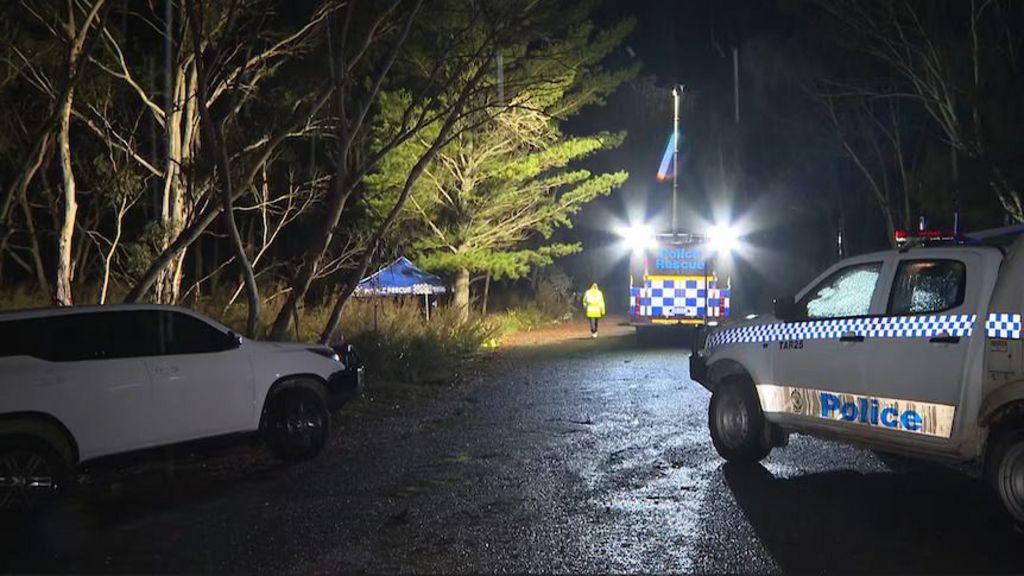
Lifelike doll with ‘bruises and grazes’ sparks mistaken Australian murder inquiry
What began as a grisly reported discovery of a body in a suitcase quickly unravelled into one of the most unusual police cases of the year in regional New South Wales, Australia, after forensic tests confirmed the supposed corpse was actually an incredibly realistic doll.
The incident unfolded on Sunday afternoon, when two men out for a casual weekend drive pulled over for a rest near the tiny rural village of Oallen, roughly 230 kilometers southwest of Sydney. Spotting a discarded suitcase by the side of the road, the pair opened it to find what appeared to be the body of a woman, complete with realistic hair, a nose piercing, and markings that mimicked bruises and abrasions. Shaken by the find, they immediately contacted local police to report their discovery.
By Monday morning, NSW Police had formally launched a full murder investigation, a announcement that triggered widespread media and public attention across the country. But just hours after the investigation was announced, authorities issued a rapid correction: forensic analysis had ruled out any human remains at the scene.
Superintendent Linda Bradbury, commander of the Hume Police District, explained that the hyper-realistic design of the doll had understandably led investigators to misidentify it initially. “They are very realistic in terms of looking like human remains, so the original call that this was a body was completely understandable,” Bradbury said.
The superintendent emphasized that police followed all proper protocols from the moment the report came in. Forensic teams and investigators secured the site immediately to preserve potential evidence, a step Bradbury defended as necessary to protect investigation integrity. “I have no regrets about how we handled this case,” she stated. “Our priority when any report of potential foul play comes in is to treat it seriously, and that is exactly what we did.”
Bradbury also noted that the two men who made the discovery were left shaken by the incident, saying “it has been quite a shocking discovery” for the pair, who were just enjoying a routine weekend outing. She added that the men made the correct choice to alert police immediately, and officers have since followed up with them to confirm the doll was not human remains, closing the case.Police have not yet released information about how the realistic doll ended up abandoned by the roadside, but the investigation into any potential criminal activity has now been formally closed.
-
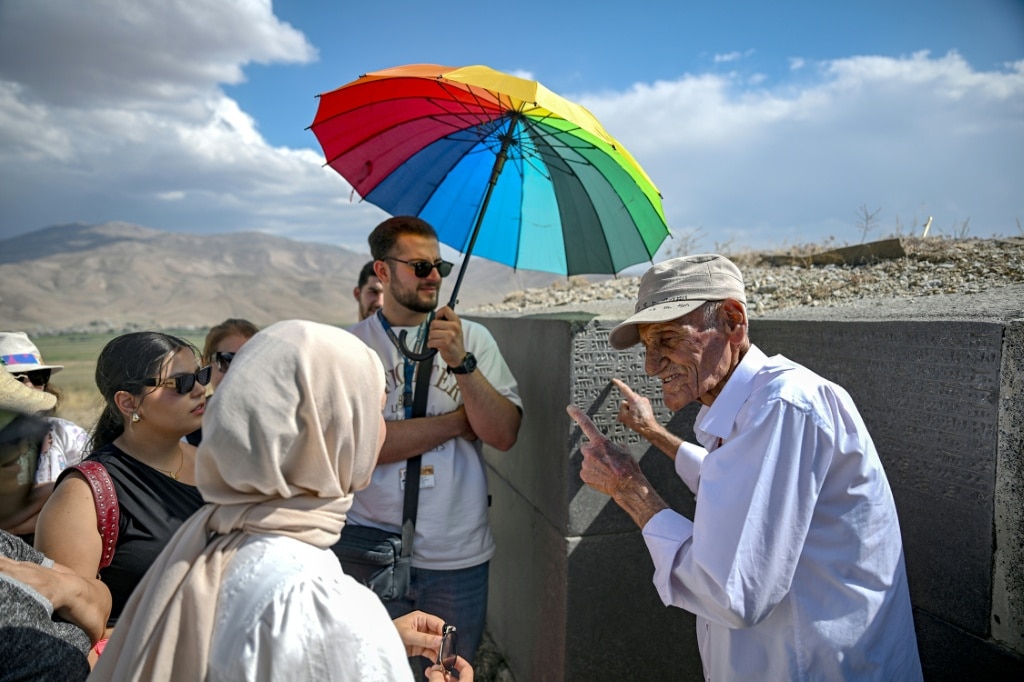
Self-taught Turkish ‘linguist’ keeps dead language alive
Nestled among the sun-scorched ruins of the Cavustepe fortress in eastern Turkey, 86-year-old Mehmet Kusman has built a life mission few would dare take on: keeping the long-lost language of the ancient Urartu kingdom alive, despite never completing formal education.
Running his fingers over cuneiform inscriptions carved into solid black basalt, Kusman deciphers lines written nearly 3,000 years ago: *”Before me there was nothing. But by the power of the god Haldi I founded this city.”* For six decades, he has devoted himself to this forgotten Iron Age civilization, its forgotten deities, and its lost written language.
Kusman’s connection to Urartu began in the 1960s, shortly after he finished military service. Hired as an unskilled laborer for the initial archaeological excavations at Cavustepe, he stumbled across his first ancient stone stele and was immediately captivated by the elegant, unfamiliar script. When the excavation’s lead archaeologist warned him the cuneiform writing system adapted from Assyrian was far too complex for an untrained man to learn, the brush-off only fueled his determination. *”His telling me ‘No’ hurt me,”* Kusman recalled to AFP. *”I became relentless, thinking: ‘In my lifetime, I will learn it.’”*
With no academic training or formal linguistic guidance, Kusman set out to teach himself the language. He spent years traveling across the historic territory of Urartu, which once spanned parts of modern eastern Turkey, Iran, and Armenia, copying every inscription he found at excavation sites. In just three years, he had memorized the full Urartu cuneiform alphabet, though mastering the limited surviving vocabulary took far longer: it took 22 years for him to commit 650 known Urartu words to memory.
Today, the silver-haired guardian is a local legend, who refers to himself as one of only seven people in Turkey who can work with the Urartu language. Academics across Turkey have mixed assessments of his claims, but nearly all praise his unwavering passion for bringing Urartu to public attention.
To contextualize Urartu’s place in history, Istanbul University ancient history professor Erkan Konyar explains the kingdom was one of the most dominant powers in the ancient Near East between the 9th and 7th centuries BCE. Emerging after the early Mesopotamian kingdoms of Sumer, Babylon, and Assyria, Urartu unified scattered mountain tribal communities under a centralized government, building sophisticated fortresses, cities, irrigation systems, and large-scale food storage infrastructure. Konyar, a leading specialist on Urartu’s original capital Tuspa, notes that even after retiring from his official role at Cavustepe in 2005, Kusman has never left the site.
“For 60 years, he has lived amid the excavations and introduced thousands of visitors to the history of Urartu,” Konyar said. Still, he pushes back on Kusman’s claim to speak the language: the full pronunciation of Urartu has been lost to history, and only around 100 words have their meanings confirmed with certainty. Unlike modern living languages, Urartu was only used for official inscriptions, not everyday conversation, even during the kingdom’s peak. Mehemet Isikli, head of the Department of Near Eastern Archaeology at Ataturk University, echoed this clarification, noting Kusman’s work is public outreach, not formal academic research.
“I admire him,” Isikli said. “He has worked hard and brought Urartian culture to light. Mehmet Kusman provides a sort of publicity for Urartu, but it has nothing to do with academic work: he knows only a few alphabetical signs, or a few letters, and some very, very general information about them.”
Undeterred by academic skepticism, Kusman remains proud of his work guarding the Cavustepe site and welcoming guests from his small stone hut at the excavation entrance. Calling himself a literal descendant of the Urartu people, he says his life’s work proves the civilization has not been entirely lost to time. His passion has even taken him across the globe: he has lectured five times in the United States, as well as in Germany, the Netherlands, and Belgium, and is now planning a trip to Japan to share his love for Urartu with new audiences.
As ongoing excavations like the one at the Ayanis fortress, 22 miles north of Lake Van, continue to uncover new clues about how the Urartu kingdom collapsed (recent research points to a massive earthquake as a key contributing factor), Kusman remains the public face of the civilization for visitors and casual enthusiasts. Standing to greet a new group of tourists at Cavustepe, he declared, *”They disappeared, but look, they are not all dead.”*
-

Elderly man, 82, hospitalised after repeated assaults by teen on e-scooter in Melbourne
A shocking act of unprovoked violence has left an 82-year-old man seriously injured in Melbourne’s eastern suburbs, prompting Victoria Police to issue an urgent public appeal for information to track down the teenage attacker. The entire incident, which left the elderly victim with significant facial bruising and deep lacerations, was triggered by nothing more than a polite request for the young rider to slow down on a popular shared recreational trail.
The assault unfolded on July 6 along the Blind Creek Trail, a well-used walking and cycling route stretching between Bond Street and Lewis Road in Ferntree Gully. According to official statements from Victoria Police, the senior citizen had called out politely to the teenager, asking him to reduce his speed as he rode along the trail. What followed was a sudden and brutal escalation of aggression.
Investigators outline that the teen first launched into a verbal tirade against the elderly man, before throwing repeated punches directly at his face and head. The repeated blows knocked the victim off his feet, sending him crashing to the ground. When the 82-year-old managed to regain his footing, the attacker struck him again, knocking him to the ground for a second time. In an added display of disrespect and aggression, the teen then pulled out a device to photograph the injured man as he lay helpless on the trail.
Witnesses at the scene eventually stepped in to help the victim get back on his feet, while the teenage offender fled the area on his distinctive orange and black electric scooter. In a further disturbing turn of events, the attacker returned just a short time later and struck the elderly man for a third time, hitting him from behind on nearby Rankin Road.
Emergency services transported the victim to a local hospital for treatment. While his injuries are not considered life-threatening, they have still left the 82-year-old facing a painful recovery period. As of the latest update, no charges have been filed, and the offender remains at large.
Victoria Police has now released a public image of the person they wish to question in connection with the attack, alongside a detailed description of the suspect. He is believed to be between 16 and 18 years old, with a slim build and blond hair. At the time of the assault, he was wearing dark clothing and a motorcycle helmet.
Law enforcement is calling on any member of the public who may have been in the area on the day of the incident, who captured relevant footage from CCTV or dashcam, or who holds any other information that could help identify the teen to come forward immediately. Anyone with details can contact Crime Stoppers anonymously on 1800 333 000, or submit a confidential report through the official Crime Stoppers Victoria website at www.crimestoppersvic.com.au.
-

Adelaide man sentenced over homemade bombs found in car days before Christmas
A high-stakes emergency incident that unfolded just days before Christmas in suburban Adelaide has concluded with a sentencing that will see the man at the center of the scare walk free from custody in less than a fortnight. On December 23, concerned members of the public in Clovelly Park, a residential neighborhood roughly 7 kilometers south of Adelaide’s central business district, called police after spotting 39-year-old Tristan Atkins slumped unconscious in a running vehicle. What started as a standard welfare check quickly escalated into a major bomb response when officers discovered two homemade explosive devices stowed inside the car.
The discovery sparked particular anxiety across the region, coming only days after the fatal terror attack at Sydney’s Bondi Beach that put Australian law enforcement on high alert for further violence. Atkins, who was homeless and sleeping in his vehicle at the time of the incident, was taken into custody immediately and charged with two offenses: possessing materials for explosive manufacturing and taking preperatory steps to build an explosive device. He entered guilty pleas at an earlier court hearing, and his sentencing was handed down Monday at South Australia’s District Court.
While the court did not hear a detailed account of why Atkins had the devices in his possession, prosecutors confirmed his intentions were not classified as malicious or terror-related. According to Judge Nicolas Alexandrides, who presided over the sentencing, Atkins told authorities he had acquired the components to build sparkler bombs, which he claimed he believed were comparable to legal consumer fireworks. Judge Alexandrides noted that Atkins had stored the components in his car only after collecting them from a recently vacated rental property, and that he failed to grasp how dangerous the unregulated devices actually were.
“The explanation you provided for possessing these materials is inadequate, and it does nothing to reduce the risk or potential harm that came from keeping them in your vehicle,” the judge stated in his remarks. “While these devices were unlikely to cause death, they were fully capable of inflicting catastrophic permanent injury, including the loss of a hand or arm.”In total, Atkins was sentenced to 11 months and eight days in prison, with a non-parole period of eight months. Because the sentence was backdated to the date of his arrest on December 23, Atkins has already served the vast majority of his sentence behind bars. He will become eligible for release from custody in just two weeks. The incident triggered a massive emergency response at the time, including the deployment of specialist bomb disposal units and increased police patrols through the Clovelly Park residential area, with the devices found stowed on the passenger seat and inside the driver’s side door compartment. The court also acknowledged that Atkins had been experiencing significant personal hardship in the period leading up to the incident, which contributed to him living out of his vehicle.