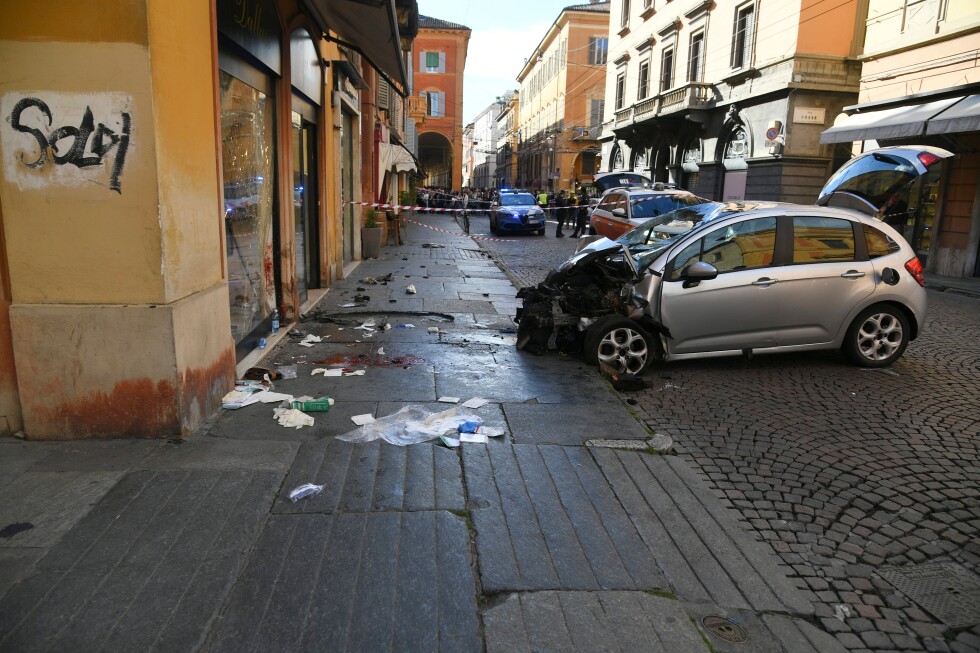
On a recent Saturday in the northern Italian city of Modena, a violent assault left eight civilians wounded, one currently in critical, life-threatening condition, that has quickly ignited a charged national conversation around social integration, mental health, and the place of second-generation communities in Italy.
The attacker, 31-year-old Salim El Koudri, is an Italian citizen born in the country to parents of Moroccan descent, and holds a university education. According to official accounts, he first drove his vehicle into a crowd of pedestrians before crashing into a storefront. After attempting to flee the scene, he stabbed and slightly injured a bystander with a knife, before being subdued by brave members of the public and taken into police custody. Prosecutors have formally charged him with crimes including massacre and aggravated infliction of grievous bodily harm, with a court set to rule on the validity of his arrest within hours of the interior minister’s Monday announcement.
Speaking in an interview with Italian daily newspaper *Il Giornale* on Monday, Interior Minister Matteo Piantedosi explicitly ruled out terrorism as a motive for the assault. “At this stage, there are no elements that correspond to the classic profile of a terrorist who plans violent actions,” he stated. However, he pushed back against widespread attempts to frame the attack as the isolated action of a single person with untreated mental illness, noting that it exposes deeper, systemic societal vulnerabilities.
Local authorities have confirmed that El Koudri received a formal diagnosis of a schizoid personality disorder in 2022, but discontinued treatment shortly after beginning care. He had also documented longstanding frustration with his employment and personal social circumstances, and investigators discovered he had sent an email to his former university containing anti-Christian insults, before issuing a later apology. Piantedosi suggested the attack may stem from personal resentment rooted in a perceived experience of systemic discrimination, while cautioning that the full investigation into the motive remains ongoing.
The incident has thrown gasoline on already heated political debate in Italy, where migration control stands as a core policy priority for Prime Minister Giorgia Meloni’s right-wing ruling administration. Though Piantedosi acknowledged the connection to broader integration failures, he drew a clear line between the Modena attack and the government’s migration enforcement agenda, pointing out that El Koudri is a legal Italian citizen, not an undocumented migrant. “We are working on repatriations of foreign nationals who commit crimes, but here we are talking about an Italian citizen,” he explained. “This is something different.”
He emphasized that legal status, formal citizenship, and even academic achievement do not automatically guarantee successful social integration, warning against oversimplifying the attack by reducing it solely to a psychiatric issue. “It would be superficial to deny psychiatric discomfort, just as it would be to use it to avoid a broader reflection on social and cultural fragilities,” he said.
Political reactions have been deeply divided across the Italian political spectrum. Deputy Prime Minister Matteo Salvini, leader of the hardline anti-migrant League party, labeled El Koudri a “second-generation criminal” in a social media post, and renewed his calls for stricter border and migration controls. That characterization was immediately rejected by Foreign Minister Antonio Tajani, who pointed out that the attacker is an Italian citizen, not a foreign migrant. Tajani planned to travel to Modena on Monday to visit wounded victims in the hospital.
Opposition politicians and local officials have pushed back against attempts to exploit the attack for political gain, rejecting attempts to tie the violence to immigration policy more broadly. Modena Mayor Massimo Mezzetti dismissed broad generalizations about foreign-born communities as “nonsense,” noting that two Egyptian migrants were among the members of the public who intervened to stop El Koudri and take him down before police arrived.
The attack has also refocused national attention on the unique challenges faced by so-called second-generation Italians, people born and raised in Italy to immigrant parents, who often fall into gaps in the country’s citizenship and social systems. Under current Italian law, second-generation individuals are not automatically granted citizenship at birth, and must apply for status later in life. Even when they grow up, attend school, and build their lives in Italy, many continue to face persistent barriers to employment, social inclusion, and a shared sense of national identity.
Thousands of Modena residents gathered over the weekend in the city’s central Piazza Grande to hold a public gathering in solidarity with the attack’s victims, as medical teams continue to treat the wounded, with one woman still listed in life-threatening condition as of Monday.