分类: society

  • Police say dozens of people and organizations could be charged over deadly 2017 London fire

    Police say dozens of people and organizations could be charged over deadly 2017 London fire

    LONDON – Nearly 10 years after the deadliest residential fire in modern British history claimed 72 lives at London’s Grenfell Tower, Metropolitan Police announced Tuesday that investigators will submit cases against 57 individuals and 20 organizations to public prosecutors, to review potential criminal charges over the disaster.

    According to police, all compiled evidence files will be delivered to the Crown Prosecution Service by the end of September this year, with a final charging decision scheduled for June 14, 2027 – exactly 10 years after the 2017 blaze that ripped through the 24-storey west London public housing block. For bereaved families and survivors who have waited years for accountability, any additional delay to justice would be impossible to accept.

    The 2017 disaster began when a small fourth-floor apartment kitchen fire broke out in the early hours of June 14. Instead of being contained, the fire spread rapidly up the building’s exterior, fueled by highly combustible cladding panels that had been installed during a recent renovation. The blaze tore through the entire tower in just minutes, trapping residents inside and killing 72 people – among them 18 children and multiple elderly retirees. It remains the worst fire disaster the United Kingdom has experienced since World War II.

    A damning multi-year public inquiry released its final findings in 2024, concluding that all 72 deaths were entirely preventable. The report laid out a devastating chain of failure: private manufacturing and construction companies cut corners to use cheap, non-fire-resistant cladding materials and engaged in widespread, systematic dishonesty to hide safety risks. These corporate failures were compounded by incompetent industry regulators and systemic government negligence that failed to enforce basic building safety rules, allowing the lethal cladding to be wrapped around the 25-story building full of working-class residents.

    Grenfell United, the advocacy group representing many bereaved families and survivors, said frustration has mounted after years of waiting. “We have waited almost a decade for accountability,” the group said. “No family should have to wait over 10 years for justice for their loved ones, if it comes at all.”

    Investigators confirmed that potential criminal charges under consideration include corporate gross negligence manslaughter, fraud, and breaches of UK health and safety legislation. The probe into the disaster stands as the largest and most complex criminal investigation in the Metropolitan Police’s history: officers have collected more than 165 million electronic documents, and reviewed the potential roles of 15,000 individuals and 700 different organizations connected to the tower’s design, construction and renovation.

  • Son of Mango boss arrested over father’s fatal fall from cliff

    Son of Mango boss arrested over father’s fatal fall from cliff

    Catalan law enforcement officials have taken 43-year-old Jonathan Andic, son of deceased Mango founder Isak Andic, into custody as part of a reinvestigation into the 2024 death of the global fashion industry icon. The detainment, which took place at Andic’s residence shortly after 11 a.m. local time on Tuesday, marks a major new development in a case that was originally ruled an accidental death before being reopened amid inconsistencies in testimony.

    Isak Andic, a 71-year-old Turkish-born business magnate who built Mango into one of the world’s largest fast fashion chains, lost his life in December 2024 after falling into a ravine during a hiking trip in the Montserrat mountain range outside Barcelona. Conflicting public reports have emerged over the years about who was present during the outing, with initial accounts placing only Isak and Jonathan together on the trail, while other claims note additional family members were in the area.

    Shortly after the incident, Catalan investigators closed the case in early 2025, concluding their initial review found no evidence of criminal conduct connected to Isak’s death. But per reporting from Spanish daily newspaper La Vanguardia, authorities made the decision to reopen the probe later that year after identifying unresolved discrepancies in statements Jonathan Andic provided to investigators.

    Jonathan Andic, who joined the Mango executive team in 2005, went on to lead the brand’s popular Mango Men menswear line before ascending to the position of vice-chairman of the company’s board of directors following his father’s death. He has repeatedly maintained that he bears no responsibility for the tycoon’s death. A representative for the Andic family confirmed to Reuters that Jonathan was undergoing formal police questioning following his detainment, and emphasized the family holds unwavering confidence that he will be cleared of any wrongdoing. Following his questioning, local reports indicate Andic was scheduled to appear before a judge in a Catalan court later the same day.

    Isak Andic co-founded Mango in 1984 alongside his brother Nahman, launching the brand from its first Barcelona storefront into a global retail powerhouse. Today, the fashion chain operates nearly 3,000 retail locations across 120 countries around the world. At the time of his passing, Forbes calculated Isak Andic’s personal net worth at approximately $4.5 billion (equal to around £3.6 billion).

    Following Isak’s death in 2024, Mango Chief Executive Officer Toni Ruiz released a statement honoring the brand’s founder, noting that his passing would leave an enormous gap across the company. “All of us are, in some way, his legacy and the testimony of his achievements,” Ruiz said at the time. “It is up to us, and this is the best tribute we can make to Isak and which we will fulfil, to ensure that Mango continues to be the project that Isak aspired to and of which he would feel proud.”

  • Father-of-8 security guard hailed as hero in San Diego mosque shooting

    Father-of-8 security guard hailed as hero in San Diego mosque shooting

    A devastating shooting attack at the Islamic Center of San Diego has left three community members dead, including a long-serving security guard hailed as a hero for actions that authorities confirm saved countless lives. In the wake of the Monday violence, investigators have confirmed the attack is being probed as a hate crime, with evidence linking the assailants to harmful hate rhetoric.

    The fallen security guard has been identified as Amin Abdullah, an 88-year-old father of eight who had served the San Diego mosque community for more than a decade, according to Tazheen Nizam, spokesperson for the Council on American-Islamic Relations-San Diego (CAIR-SD). Speaking at an official press conference hours after the attack, San Diego Police Chief Scott Wahl called Abdullah’s actions unequivocally heroic, emphasizing that his quick, brave response prevented an even higher death toll. “Undoubtedly, he saved lives today,” Wahl stated.

    Joining Abdullah in the fatal casualties were two other mosque community members, named by CAIR-SD as Mansour Kaziha and Nader Awad. The two attackers, a 17-year-old and an 18-year-old who have not yet been publicly identified, died from self-inflicted gunshot wounds shortly after the shooting, located in a vehicle just a few blocks from the mosque.

    The timeline of the tragedy began earlier Monday, when the mother of one of the teenage attackers contacted local police to report her son had run away with a friend and was potentially suicidal. As law enforcement launched a citywide search for the pair, officers discovered the three gunshot victims outside the mosque grounds hours later. Within minutes of that discovery, they located the two deceased suspects nearby.

    Friends and community members who knew Abdullah have paid tribute to his lifelong commitment to serving others. Shaykh Uthman Ibn Farooq, a family friend, told the Associated Press that Abdullah intentionally took on the security guard role specifically to protect innocent community members. Sam Hamideh, who knew Abdullah through mosque activities, told CBS News, the BBC’s US partner, that Abdullah’s kindness extended to everyone who crossed his path. “It didn’t matter who walked up… any random person could just walk up and, [Abdullah] would greet them, make sure they are OK,” Hamideh said. “Whether they were homeless off the street looking for something, whether it was a child or elderly.”

    Tributes have poured in across social media, with dozens of community members describing Abdullah as “the nicest man you’ll ever meet.” In an official statement released after the attack, the Islamic Center of San Diego honored his sacrifice, saying: “[He was] a courageous man who put himself on the line for the safety of others, who even in his last moments did not stop protecting our community.”

    Chief Wahl confirmed that investigators have already uncovered ties to hate rhetoric tied to the attack, confirming the case will move forward as a formal hate crime investigation.

  • Animal welfare groups say 3 South African zoo elephants are depressed and sue to move them

    Animal welfare groups say 3 South African zoo elephants are depressed and sue to move them

    A landmark legal battle over the mental health of three captive elephants at Johannesburg’s public zoo is set to get a court hearing this week, pitting leading animal welfare advocates against city authorities in a case that could reshape animal protection standards across South Africa.

    The dispute centers on three elephants — Lammie, Ramadiba and Mopane — held in the zoo’s enclosure. Animal welfare groups, including Animal Law Reform South Africa, argue that the confined space and lack of species-appropriate stimulation have left the animals clinically depressed, and they are demanding the elephants be transferred to a larger, semi-wild conservation park where their complex biological and social needs can be met.

    David Bilchitz, board member of Animal Law Reform South Africa, one of the lead petitioners in the case, explained that the legal challenge focuses on whether South African state authorities are fulfilling their constitutional obligations to protect animal welfare. A core plank of the petitioners’ argument draws on a clause in South Africa’s Constitution that explicitly imposes a duty on governing bodies to safeguard animal well-being, and expert witnesses are set to testify in court to confirm the elephants’ poor psychological state.

    Unlike their wild counterparts, who naturally live in large herds of 20 to 50 individuals and roam across vast expanses of terrain, the three zoo elephants are confined to an enclosure only slightly larger than a standard soccer pitch. Bilchitz noted the space lacks key features elephants require for natural foraging and stimulation, including mature trees to feed on and mud pools to bathe in.

    “There is no doubt these animals are sad, depressed and deeply frustrated,” Bilchitz told the Associated Press. “They spend their days listless, standing around with nothing to engage them, and they’ve developed clear signs of psychological distress: repetitive rocking movements and other compulsive behaviors that are well-documented indicators of poor mental health in captive elephants.”

    Officials at the publicly owned Johannesburg Zoo have pushed back against the claims, defending their care of the three animals. In an official statement, the zoo argued that coverage of the elephants’ condition has amounted to a “media scourge,” maintaining that the trio are in good physical health, well cared for by staff, and remain a popular attraction for visitors. The institution also warned that relocating captive elephants to semi-wild sanctuaries does not always result in positive outcomes for the animals.

    The case is not entirely without precedent in South Africa. In 2024, an elderly bull elephant named Charley was successfully moved from another South African zoo to an extensive game reserve following advocacy from animal welfare groups. Charley had outlived all his herd mates in captivity, after spending 16 years performing in a circus, and experts confirmed he was suffering from profound loneliness. The zoo ultimately agreed to the relocation, allowing Charley to spend his final years in retirement in a more natural environment.

    The outcome of this new case could set a transformative legal precedent for animal welfare regulation across South Africa, testing the scope of constitutional protections for animals kept in captivity and potentially forcing a re-evaluation of housing conditions for elephants and other large wild animals in the country’s public and private zoos.

  • A fuel strike in Kenya is suspended after 2 days of protests that left 4 people dead

    A fuel strike in Kenya is suspended after 2 days of protests that left 4 people dead

    NAIROBI, KENYA – After two days of widespread, deadly civil unrest driven by skyrocketing fuel costs, Kenya’s public transport operators agreed Tuesday to pause a nationwide strike for a seven-day window to hold formal consultations with government officials. The temporary truce comes after violent clashes left four dead and over 30 injured across the country, disrupting travel and bringing major road corridors to a standstill.

    The industrial action first erupted after Kenya’s Energy and Petroleum Regulatory Authority announced historic fuel price hikes last Friday. The new pricing adjusted diesel costs up by 23.5% and gasoline by 8%, pushing already strained operating budgets for transporters and household costs for commuters to breaking point. An initial round of talks between operators and government representatives collapsed Monday, when providers refused to back down from their core demand: an immediate rollback of fuel prices to offset spiking transportation costs for both operators and regular commuters.

    Even as the strike suspension was announced early Tuesday, commuters across the country spent a second consecutive day stranded, as most transport operators had already pulled their vehicles off roads before the truce agreement was reached. The two days of unrest saw chaotic confrontations between demonstrators and police on major highways, where protestors lit burning tire barricades that blocked through traffic for hours. At least 348 people arrested during the unrest are scheduled to face criminal charges related to participation in the illegal demonstrations, authorities confirmed.

    The national government has pinned the sharp price increase on global market volatility stemming from the ongoing conflict between Iran and Israel, which has disrupted global energy supply chains and pushed up crude prices globally. But Kenya’s opposition has pushed back on that narrative, arguing the dramatic jump is instead driven by corrupt industry insiders colluding to inflate profit margins at the expense of ordinary Kenyans.

    In a live televised address to the nation this week, Interior Cabinet Secretary Kipchumba Murkomen confirmed that the government would open inclusive negotiations with all fuel sector stakeholders over the next seven days to address the growing public anger over pricing. Kennedy Kaunda, a senior spokesperson for Kenya’s transporters association, confirmed that operators would resume service while negotiations proceed. Kaunda added that if the seven-day talks fail to produce a satisfactory agreement on fuel price relief, the association will issue new guidance to members within a week on next steps for the industrial action.

  • Deadly shooting at San Diego mosque leaves 5 dead, including teen suspects

    Deadly shooting at San Diego mosque leaves 5 dead, including teen suspects

    On May 18, 2026, a mass shooting at the Islamic Center of San Diego, one of Southern California’s largest Muslim places of worship, left five people dead, three congregants and two teenage suspects, and sent shockwaves through Muslim communities across the American West Coast. What began as a routine Monday of worship and study at the mosque in San Diego’s quiet Clairemont neighborhood erupted in violence shortly before noon, triggering an immediate large-scale response from local law enforcement.

    San Diego Police Chief Scott Wahl told reporters that officers arrived on scene within four minutes of the first active shooter call. First responders discovered three fatally shot adult victims outside the building, among them a security guard who officials have credited with stopping the attack from becoming far deadlier. “The security guard played a pivotal role in keeping this from being much worse,” Wahl confirmed at a press briefing shortly after the shooting.

    As law enforcement teams swept the mosque and its surrounding grounds for additional threats, reports of fresh gunfire surfaced several blocks from the site of the initial attack. Authorities ultimately tracked the two suspects, 17-year-old and 19-year-old males, to a vehicle where they were found dead from what appear to be self-inflicted gunshot wounds, according to police statements.

    Investigators are currently working to confirm that anti-Muslim extremist ideology motivated the attack. The Los Angeles Times reported that law enforcement found a cache of hate-related materials, anti-Islamic writings, and a suicide note referencing racial supremacy inside the suspects’ vehicle. Authorities also noted that at least one of the firearms used in the shooting is believed to have been obtained from one of the suspects’ parent’s home. The Federal Bureau of Investigation has joined local law enforcement to lead the investigation, which is officially being treated as a hate crime probe.

    The Islamic Center of San Diego does not only operate as a place of worship – it also hosts an accredited K-12 Islamic school on its grounds. Police immediately evacuated all students and staff from the campus during the response, and community leaders later confirmed that no children were harmed in the attack. The timing of the violence, which came at the start of Dhu al-Hijjah, one of the holiest months in the Islamic calendar when Muslims worldwide prepare for the annual Hajj pilgrimage and Eid al-Adha celebrations, has deepened the community’s trauma.

    “This is obviously very alarming,” said Deana Helmy, chair of the Islamic Shura Council of Southern California. “This is a house of worship. There’s a school with children there who are trying to learn.” Taha Hassane, the mosque’s long-serving imam, added that the attack had left an unprecedented mark on the local Muslim population. “We have never experienced tragedy like this before,” Hassane said. “It is extremely outrageous to target a place of worship.”

    In the wake of the shooting, regional civil rights groups including the California chapter of the Council on American-Islamic Relations (CAIR-California) have begun working with mosques across the state to audit and upgrade existing security protocols to prevent similar attacks. Both California Governor Gavin Newsom and San Diego Mayor Todd Gloria confirmed they have received full briefings on the incident and issued statements praising the speed and work of first responders at the scene.

    As of May 19, the investigation remains ongoing, with authorities still working to piece together the full sequence of events and confirm all motivating factors behind the attack. The shooting has renewed conversations about rising anti-Muslim hate violence and gun control in the United States.

  • Security surveillance officer wins legal fight with boss after being sacked for falling asleep on the job

    Security surveillance officer wins legal fight with boss after being sacked for falling asleep on the job

    An Australian casual security surveillance officer has secured a legal victory after the country’s Fair Work Commission (FWC) ruled his termination for falling asleep on duty was harsh and unjust.

    Chanaka Ranawakage had been employed by MSS Security, a national security services provider contracted to government agencies across Australia, for roughly one year before his dismissal in October last year. The officer was assigned to a 7pm to 5am night shift with Sydney Trains, the New South Wales state government-owned rail operator, when he was spotted sleeping in his personal vehicle while on shift.

    Three misconduct allegations were brought against Ranawakage following the incident: that he failed to complete required patrols for an extended period, neglected to offer backup to his work partner, putting the colleague at unnecessary risk, and was found asleep on duty with a sports match streaming on his mobile phone. FWC Deputy President Judith Wright, who delivered the ruling on Tuesday, only upheld the third allegation, dismissing the other two claims due to lack of supporting evidence.

    Ranawakage argued he had been on an official break when he fell asleep, though he acknowledged he failed to log the break in his shift records. Wright accepted this account, noting there was no evidence the officer had already taken his allotted break time earlier in the shift. She also confirmed that MSS Security and Sydney Trains did not prohibit surveillance officers from streaming content during breaks, as long as they remained available to respond to operational alerts. Wright did, however, agree that sleeping during a break ran counter to the requirements for on-duty staff to remain alert and responsive at all times.

    Despite confirming the misconduct, Wright found the termination was disproportionate to the offense. Key to her ruling was the fact that Ranawakage had maintained a spotless, positive employment record with MSS Security in the year leading up to the incident, with no prior performance concerns. Wright also noted the incident was an isolated, unintentional occurrence, not a deliberate violation of company policy. She pointed out that the discovery of Ranawakage sleeping came shortly after Sydney Trains had raised broader concerns about security staff napping on shift, making it an unfortunate coincidence rather than a pattern of poor conduct.

    Instead of ordering Ranawakage’s reinstatement to the role, the FWC ruled that appropriate remedy for the unfair dismissal was financial compensation. MSS Security has been ordered to pay Ranawakage the equivalent of five weeks of base wages, plus additional superannuation contributions, minus standard tax deductions. The ruling has drawn attention to workplace justice standards in Australia’s security sector, where casual workers often face less job protection than permanent employees, and highlights the FWC’s approach to balancing employer policy requirements with fair treatment of staff for isolated, low-severity misconduct.

  • Rescuers search for 3 missing after German building collapse possibly caused by gas explosion

    Rescuers search for 3 missing after German building collapse possibly caused by gas explosion

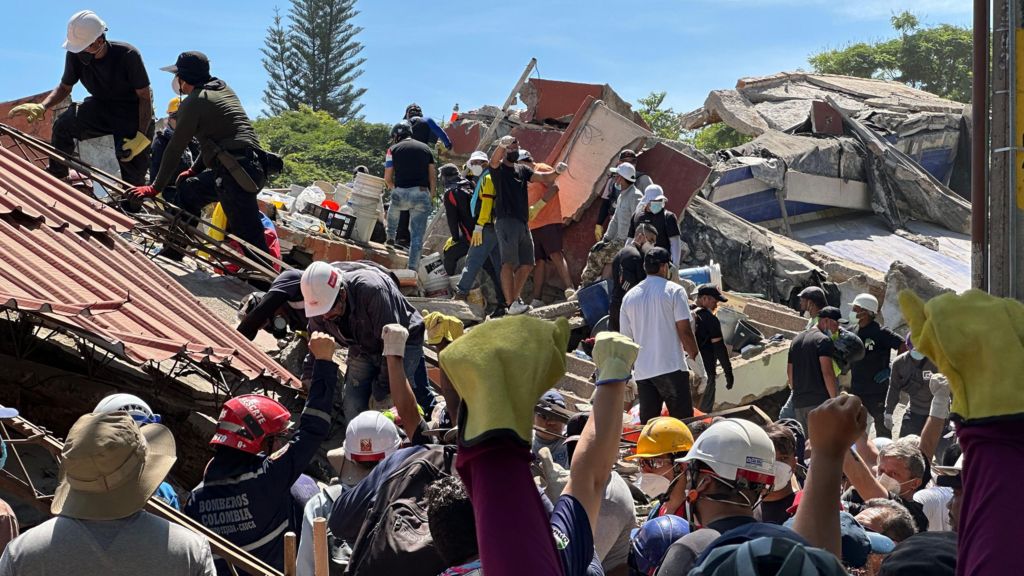
    GÖRLITZ, Germany — Rescue operations entered their second day Tuesday as search crews scrambled to locate three people missing following a catastrophic overnight building collapse in this eastern German city, just kilometers from the Polish border. Local law enforcement confirmed Monday night’s structural failure may have been triggered by an undetected gas explosion, and first responders have proceeded with extreme care at the disaster site to avoid secondary hazards from potential unaddressed gas leaks, according to reporting from Germany’s national news agency dpa.

    Initial search efforts deployed specially trained search canines to detect signs of life trapped beneath the thousands of tons of rubble, but when those attempts failed to turn up any leads, crews shifted strategy around 2 a.m. on Tuesday. Heavy excavators were brought in to carefully clear large debris, while teams of workers also dug through smaller fragments by hand to avoid endangering any possible survivors. Early fears that as many as five people could be buried under the collapsed structure have since been ruled out after a full accounting of local residents and visitors, police confirmed.

    One distraught relative, who told reporters he had been shopping at a nearby neighborhood supermarket when the blast occurred, said his wife and cousin had arrived in the city earlier that day for a vacation, staying at one of the building’s rental units. When he rushed back to the property after hearing the explosion, he found the multi-story structure reduced to a massive, chaotic pile of broken concrete and splintered wood. Law enforcement officials confirmed the fallen building, constructed in the historic Wilhelminian architectural style popular in the late 19th and early 20th centuries, housed both long-term rental apartments and short-term vacation accommodation.

    Located in Germany’s far eastern state of Saxony, Görlitz is the country’s easternmost city, home to roughly 57,000 residents. Its well-preserved, centuries-old old town — which remained largely undamaged through World War II — is a major draw for tourists and a popular filming location for international film and television productions, drawing production crews from across the globe each year.

  • Finnish divers recover 2 of the dead Italians from an underwater cave in the Maldives

    Finnish divers recover 2 of the dead Italians from an underwater cave in the Maldives

    A tragic diving disaster in the Maldives has moved one step closer to resolution, as a team of expert Finnish divers has recovered the remains of two of the four Italian divers who died deep inside a remote Vaavu Atoll underwater cave, a Maldivian government official confirmed Tuesday. The recovery mission, one of the most high-risk search operations in the Indian Ocean nation in recent years, follows a series of deadly setbacks that paused recovery efforts earlier this month. All four lost divers were located deep inside the cave system on Monday by the Finnish team, as search operations restarted after a suspension prompted by the death of a Maldivian military diver during a previous attempt to reach the trapped bodies. The tragedy unfolded last Thursday, when five Italian divers set out to explore the unregulated underwater cave system off the Maldivian coast. One of the five, a diving instructor, was recovered the same day he was reported missing, found just outside the cave’s entrance. The other four remained trapped deep in the cave’s third and largest segment, out of reach of initial local search teams. After the fatal accident that claimed the life of the local military diver, authorities suspended the search and called in international specialized expertise. The Divers’ Alert Network Europe deployed three Finnish technical and cave diving specialists with extensive experience in high-risk recovery operations, including deep dives in confined overhead environments that exceed the limits of standard recreational diving. Supported on-site by Maldivian police and military personnel, the Finnish team located all four bodies in the deepest, innermost section of the cave, with all four remains found grouped closely together. The bodies rest at an approximate depth of 60 meters, twice the maximum legal limit for recreational diving in the Maldives, which is set at 30 meters. To complete the mission, the team used specialized advanced diving technology, including closed-circuit rebreathers — systems that recycle exhaled breathing gas after filtering out carbon dioxide, allowing divers to stay submerged far longer than they could with standard open-circuit diving equipment. Initial search teams had previously mapped the cave entrance, but the extreme depth and narrow confined passages prevented early teams from reaching the trapped divers. Presidential spokesperson Mohamed Hussain Shareef made the official announcement of Tuesday’s successful recovery of two of the four bodies, with authorities confirming that recovery operations for the two remaining remains are scheduled to continue on Wednesday. Italy’s Foreign Ministry has confirmed that the five divers were conducting an exploratory dive at roughly 50 meters when the accident occurred, a depth that already far exceeds the regulated limit for recreational diving in the country, raising questions about the safety practices that led to the disaster.

  • Starbucks Korea sacks CEO over controversial ‘Tank Day’ promotion

    Starbucks Korea sacks CEO over controversial ‘Tank Day’ promotion

    A major marketing misstep has roiled South Korea this week, ending with the abrupt dismissal of Starbucks Korea’s top executive after a coffee tumbler promotion was widely linked to the country’s deadly 1980 Gwangju Uprising crackdown, triggering mass boycott calls and harsh condemnation from South Korean President Lee Jae Myung.

    Launched on Monday, the annual national commemoration of the 1980 pro-democracy uprising, the limited-time “Tank Day” promotion for the chain’s new Tank Series insulated tumblers quickly ignited public anger. For many South Koreans, the “tank” branding was an unforgivable nod to the military tanks deployed by former dictator Chun Doo-hwan’s authoritarian regime to crush the 18 May 1980 pro-democracy protests in Gwangju. The incident, a foundational moment in South Korea’s transition to democracy, left hundreds of protestors dead, and subsequent probes confirmed widespread atrocities including extrajudicial killing and sexual violence committed by regime troops.

    Within hours of the promotion going live, Starbucks Korea pulled the campaign. Shinsegae Group, the South Korean conglomerate that holds a 67.5% controlling stake in the local Starbucks franchise (US-based Starbucks Corporation divested its remaining operational stake in 2021), moved quickly to address the public fury: it issued a formal apology for the “inappropriate marketing” and announced the immediate termination of CEO Sohn Jeong-hyun.

    Company officials initially attempted to clarify that the Tank Series was just one of several new tumbler lines rolled out as part of a broader promotion running from 15 to 26 May, with the “tank” label meant to reference the containers’ advertised “spacious volume” for large coffee servings. The explanation did little to calm public anger. Critics also pointed to a second, equally incendiary detail in the promotional material: a Korean phrase “tak on the table!” The word “tak” matches the onomatopoeia used in a notorious 1987 police statement about the death of student activist Park Jong-chul, who died in police custody after being tortured. Police infamously claimed Park collapsed after an interrogator slapped the table — a lie that fueled the 1987 pro-democracy movement that ultimately ousted Chun’s regime.

    Public reaction was swift and fierce across South Korean social media. “I can’t believe they thought they could pull off something like this and people would just let it slide… it’s utterly absurd and infuriating,” one X (formerly Twitter) user posted early Tuesday. Thousands of users shared calls to boycott both Starbucks Korea and all Shinsegae Group affiliates.

    President Lee joined the widespread condemnation, writing in his own X post that the campaign “insults the victims and the bloody struggle” of Gwangju residents. “What on earth were they thinking, knowing how many lives were taken that day and how seriously that set back our country’s justice and history?” Lee wrote. “I am outraged by such a low-class merchant’s inhumane behaviour, which denies our country’s values of basic human rights and democracy.”

    For South Korea, 18 May is far more than a historical date: it is recognized annually as a sacred day of national remembrance for the pro-democracy movement, etched into public consciousness as a core national trauma that paved the way for the country’s democratic transition. The 1980 uprising became a unifying rallying cry for pro-democracy activists over seven years, leading to the 1986 June Democracy Movement that forced Chun Doo-hwan to step down and cemented democratic rule in South Korea.

    Shinsegae Group chairman Chung Yong-jin echoed the public anger in his own official statement Tuesday, calling the marketing campaign “an inexcusable mistake that trivialised the suffering and sacrifices of all those who have dedicated themselves to the democracy of this country”. Chung pledged to launch a full investigation into the event’s internal approval process and implement a top-down re-examination of all marketing review protocols across every Shinsegae affiliate. The remaining 32.5% stake in Starbucks Korea is held by Singapore’s sovereign wealth fund GIC, and US-based Starbucks has no operational involvement in the South Korean chain following Shinsegae’s 2021 buyout.