BUDAPEST, Hungary — Hungary’s new government has opened a wide-ranging official investigation into a major Chinese electric vehicle investment by global industry leader BYD, a project that was negotiated by former foreign minister Péter Szijjártó — who resigned from parliament last week to take a senior executive role at the automaker. The sudden career move has sparked fierce accusations of conflict of interest, and thrown a spotlight on the hundreds of billions of forints in public support Szijjártó helped secure for BYD while he held public office.
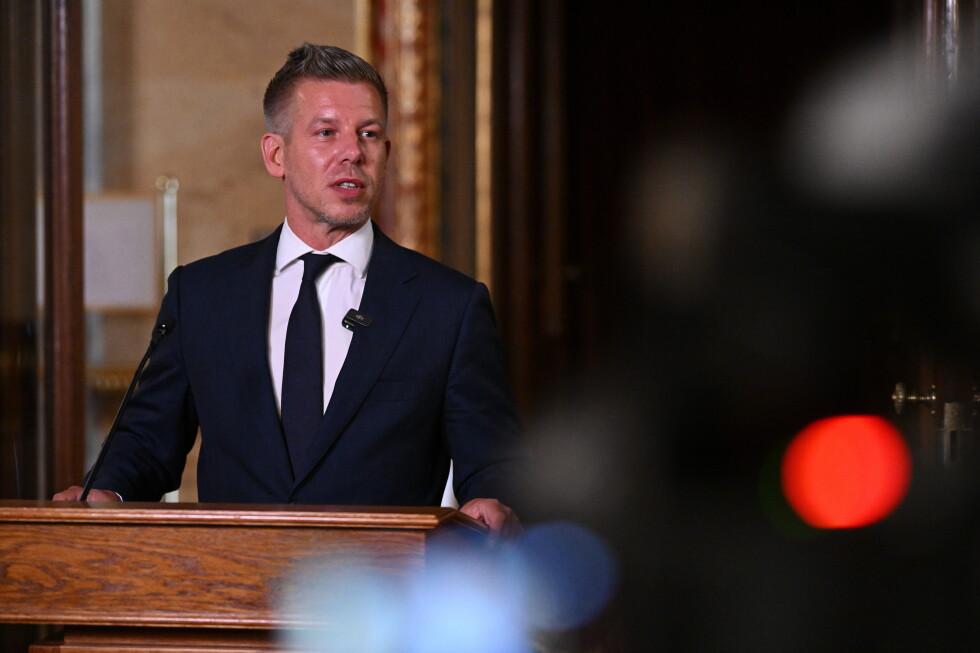
Prime Minister Péter Magyar outlined the scope of the probe to Hungarian lawmakers on Monday, noting that Szijjártó, a long-time close ally of former prime minister Viktor Orbán, backed BYD’s expansion in Hungary with hundreds of billions of forints in public funding, diplomatic backing, and state-supported infrastructure development. “We will examine every decision, every negotiation, and every state commitment that Péter Szijjártó made that is connected to the BYD Hungary investment,” Magyar stated.
The investigation will not be limited to the BYD deal alone. Magyar confirmed that reviewers will scrutinize all subsidies, tax incentives, construction permits, environmental regulatory exemptions, and public-paid infrastructure projects granted to large multinational corporations over the course of Orbán’s 12-year tenure in office. “We will look into who made these calls, who drafted the policies, what expert warnings were overlooked, and what burdens these decisions have left for Hungarian taxpayers, workers, local communities, and the natural environment,” Magyar added.
To date, neither Szijjártó nor BYD have issued a public response to the conflict of interest allegations leveled by the prime minister. Szijjártó has previously framed his new role at BYD as a prestigious opportunity to contribute to what he calls one of the most successful modern stories in the global automotive sector.
During his time in government, Szijjártó was the central figure in courting Chinese foreign direct investment for Hungary, including landing the BYD projects that have now come under scrutiny. In 2023, he announced BYD would build its first European manufacturing plant in the country, a move that lets the company avoid the European Union’s punitive import tariffs on Chinese-built electric vehicles, which were enacted to protect the bloc’s domestic auto industry. Two years later, in 2025, he revealed plans for BYD to locate its European headquarters and a new research and development center in Budapest, in exchange for 20 billion forints ($63.7 million) in direct government assistance.
The BYD investments are part of a broader strategy carried out by the Orbán administration to position Hungary as a global hub for lithium-ion battery manufacturing, a push that has centered heavily on attracting Chinese battery firms to build a string of new production facilities across the country. This policy has already sparked widespread pushback from local residents, environmental activists, and opposition politicians, who have raised concerns that the expanding new industry will worsen existing environmental degradation, strain Hungary’s limited freshwater supplies, and increase the country’s economic dependence on China.
The BYD probe is not the only investigation Szijjártó is facing. The former foreign minister has long drawn international controversy for his close ties to the Kremlin, which he maintained even after Russia launched its full-scale invasion of Ukraine in February 2022. Breaking with nearly all other EU foreign ministers, Szijjártó made repeated trips to Moscow to negotiate energy purchase agreements for Russian oil and natural gas, and repeatedly met with his Russian counterpart Sergey Lavrov, whom he has publicly referred to as a personal friend.
He became a major point of contention during Hungary’s 2026 election campaign after the Washington Post published a report alleging that he provided live updates on discussions during high-level EU meetings to Lavrov via regular phone calls. Szijjártó has denied the core of the report, though he has acknowledged that he consulted with Lavrov before and after EU foreign minister gatherings to discuss meeting agendas and policy outcomes. During a government press briefing last week, Magyar confirmed that a separate investigation into Szijjártó’s ties to the Russian government has already been launched, “as far as I know.”