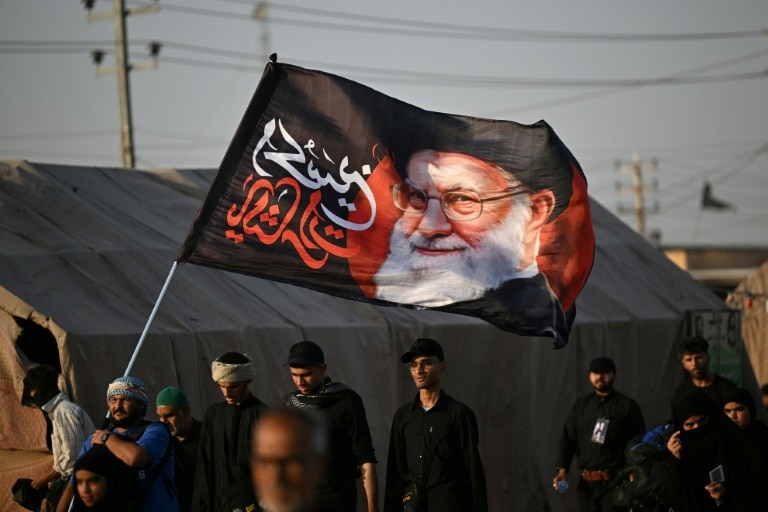
Escalating cross-border strikes between the United States and Iran have plunged the Middle East into deepening instability, with Iranian President Masoud Pezeshkian openly confirming his nation is engaged in a “full-scale war” against Washington. As military confrontations expand from Iranian territory to neighboring Gulf states, multiple interconnected developments unfolded on Monday that have shifted the trajectory of the crisis.
One of the most consequential announcements came from Yemen’s Iran-aligned Houthi movement, which declared a new maritime blockade against Saudi Arabia. The move marks a major escalation after the two regional rivals exchanged direct fire last week for the first time in several years, ending a years-long truce. While the Houthis have not yet outlined concrete measures to enforce the embargo, a fully implemented blockade would threaten critical Saudi infrastructure: the kingdom’s Red Sea ports have served as key alternative export routes for oil shipments redirected away from the already volatile Strait of Hormuz, creating significant new risks to Saudi Arabia’s oil-dependent economy.
Separately, maritime security authorities reported a vessel attack off the coast of the United Arab Emirates. The UK Maritime Trade Operations agency confirmed the incident took place 17 nautical miles east of Dibba, just a short distance from the strategic Strait of Hormuz, through which nearly a fifth of global oil supplies pass daily.
Former U.S. President Donald Trump issued a stark warning to Tehran following the Pentagon’s announcement that three American service members had been killed and one remains missing in recent attacks tied to Iran-aligned groups. “Every time Iran kills an American Soldier they will pay for that killing many times over!” Trump wrote on his Truth Social platform, adding that the directive had been communicated to Secretary of War Pete Hegseth, Joint Chiefs of Staff Chairman Daniel Caine, and all senior U.S. military leadership.
In southern Lebanon, the Lebanese military launched new security operations in three key border villages identified as “pilot zones”: Froun, Srifa, and Zawtar al-Gharbiya, according to an announcement from the U.S. State Department. The deployment comes as tensions along the Israel-Lebanon border have risen alongside the broader US-Iran crisis.
French authorities also leveled serious accusations against Iranian security services, with Foreign Minister Jean-Noel Barrot confirming that two French diplomats stationed in Iran were subjected to an “extremely serious act of intimidation,” including physical abuse against one of the envoys.
Two Gulf states that host U.S. military installations, Bahrain and Kuwait, confirmed they were targeted by Iranian drones over the weekend. Bahrain reported that Iranian unmanned aerial vehicles struck its air navigation systems, though air traffic operations continued without disruption. Both nations have faced repeated attacks since the latest round of US-Iran hostilities began earlier this month.
Global energy markets reacted sharply to the escalating tensions, with benchmark Brent crude prices surging above $91 per barrel to hit a one-month high not seen since June 11. Prices partially retreated later in the day after Iranian officials confirmed that diplomatic negotiations with Washington were still ongoing through third-party mediators, easing some fears of a full regional conflict that would disrupt global oil supplies.
In a move linked to ongoing mediation efforts, Iran’s Interior Minister Eskandar Momeni is scheduled to travel to Islamabad, the capital of Pakistan, which has repeatedly served as a mediator between Washington and Tehran. A Pakistani interior ministry source confirmed the upcoming visit to AFP, though no details were provided on whether talks would specifically focus on de-escalating the current conflict.