The 2026 FIFA World Cup final between Argentina and Spain carried far more stakes than just a global football title, turning the world’s most-watched sporting event into an unexpected public stage for the ongoing Middle East conflict, driven by sharp shifts in the two nations’ foreign policy stances toward Israel and Palestine.
Hours before kickoff at the final, Israeli Prime Minister Benjamin Netanyahu issued a public message of support to Argentine President Javier Milei, framing the new Argentine leader as a key ally. “Javier [Milei], you are a real friend, a great friend. We support you, we support Argentina, in so many ways,” Netanyahu said. While Spain ultimately claimed the trophy with a 1-0 victory over Argentina, the political symbolism of the match had already cemented itself in global public discourse, with social media users quickly aligning the two teams along the Israeli-Palestinian divide: Argentina was cast as Israel’s proxy side, while Spain was identified with Palestine.
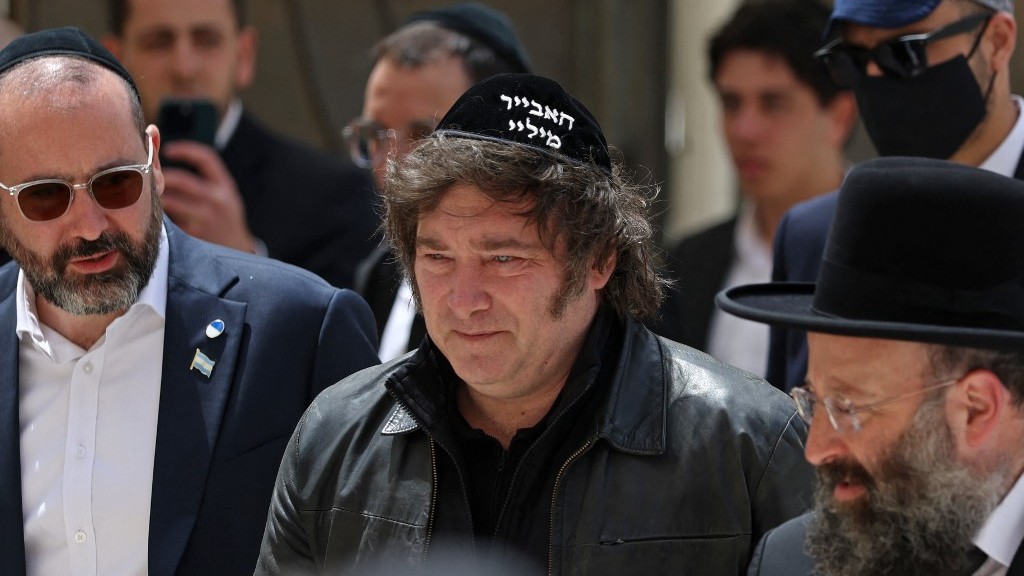
This alignment did not emerge out of thin air. Since taking office in December 2023, Milei has made unwavering support for Israel the cornerstone of Argentina’s foreign policy, a dramatic reversal of the country’s longstanding position. His predecessor, Cristina Fernandez de Kirchner, officially recognized Palestinian statehood back in 2010. Milei, by contrast, has stood firmly with Netanyahu throughout Israel’s military campaign in Gaza, has publicly announced his intention to convert to Judaism, and has pledged to relocate Argentina’s embassy from Tel Aviv to Jerusalem – a move that aligns Argentina closely with Israeli policy.
On the other side of the divide, the Spanish government under Prime Minister Pedro Sanchez has taken the opposite approach. Sanchez has openly condemned what the original report terms Israel’s genocide in Gaza, has called for Israeli leaders responsible for civilian casualties to face international arrest, and officially recognized the State of Palestine as a sovereign nation in 2024. Even the teams’ star players became wrapped up in this political contrast: Argentina captain Lionel Messi has faced repeated scrutiny over his past ties to Israel, while young Spanish star Lamine Yamal made headlines last season when he displayed a Palestinian flag after FC Barcelona won the Spanish La Liga title.
Netanyahu was far from the only Israeli politician to publicly back Argentina ahead of the final, with the entire right-wing Israeli cabinet leaning into the political narrative. Argentina’s newly appointed ambassador to Israel, Rabbi Shimon Axel Wahnish, met with far-right Finance Minister Bezalel Smotrich ahead of the match, gifting him an Argentina national team jersey and an official 2026 World Cup match ball. Smotrich – who the ICC prosecutor has also requested an arrest warrant for over alleged war crimes against Palestinians in the occupied West Bank – echoed Netanyahu’s support, saying “Every patriotic Israeli supports Argentina. Go Argentina!”
Other senior Israeli officials quickly followed suit. National Security Minister Itamar Ben Gvir, another controversial far-right figure, stated “We will love those who love Israel. Let’s go, Argentina.” Transport Minister Miri Regev posted public congratulations to Milei and the Argentine people, writing “Fingers crossed for you in the final!” Even Foreign Minister Gideon Saar and Israel’s UN ambassador Danny Danon publicly celebrated Argentina’s previous victories on the road to the final.
However, Israeli leaders’ enthusiastic support for Argentina is rooted in its alignment with Milei, not the Argentine people themselves – a distinction that both Netanyahu and Argentine public opinion have made clear. A February-to-May 2026 Pew Research Center survey of Argentine public opinion found that 55% of respondents held a very or somewhat unfavorable view of Israel, with just 21% holding a favorable opinion. The divide between Milei’s policy and public sentiment was captured in a viral video filmed after Argentina’s semi-final win over England, where one Argentine fan rejected the framing of the team as an Israeli proxy. “No Argentinian that is a real Argentinian supports Israel,” she said. “Don’t believe our fucking president that has been put with money there.”
Netanyahu himself has openly acknowledged that Israel’s support stems from Milei’s leadership, not broader Argentine sentiment. Speaking on the Ben Ben Baruch podcast, he noted “They have a president who’s a superstar… Milei is a huge friend of Israel.” In a meeting with Argentina’s ambassador to Israel, he added: “I don’t hide the fact that I’m an Argentina fan. Most Israelis are Argentina fans, because President Milei has revolutionised Argentina’s relations with us. We have no greater or better friend.”
The political contrast also evokes the legacy of legendary Argentine footballer Diego Maradona, who took a very different stance from Milei’s current alignment with Israel. Unlike Messi, Maradona – who died in 2020 – was an outspoken supporter of Palestinian statehood, and met with Palestinian Authority President Mahmoud Abbas during the 2018 World Cup in Russia. “In my heart, I am Palestinian,” Maradona said at the time.