分类: politics

  • How Xi Jinping is rewriting the rules of global power

    How Xi Jinping is rewriting the rules of global power

    An ancient Chinese proverb holds that a master hunter does not waste energy chasing prey — instead, they position themselves where the rabbit is destined to run. For critics and supporters alike, one fact stands out about Xi Jinping’s long-term statecraft: he has moved with extraordinary, deliberate patience. Now, over a single historic stretch of weeks, that patience appears to be paying off, as both Russian President Vladimir Putin and former U.S. President Donald Trump traveled to Beijing for high-level summits in quick succession.

    Far from a random confluence of diplomatic schedules, the dual visits are the product of decades of intentional geopolitical architecture. The fact that both Washington and Moscow — two powers that formally occupy opposing poles of the existing global order — have been drawn to Beijing in parallel carries a clear, unignorable message: the center of geopolitical gravity has shifted. China is no longer a passive actor responding to rules set by others; it is now actively, quietly reshaping the global system on its own terms.

    Putin’s Visit: A Partnership Framed By Growing Asymmetry
    Putin’s trip to Beijing carried a clear, unspoken subtext: what was framed as a meeting of equal partners was in reality a visit from a power increasingly dependent on Chinese goodwill. Since the outbreak of the full-scale war in Ukraine, Russia has faced sweeping Western sanctions, and has pivoted its entire economic infrastructure eastward, redirecting the bulk of its energy and raw material exports to Chinese markets. These sales are made at steeply discounted rates, negotiated from a position of weakness: Russia has few alternative buyers for its vast energy resources, a reality Beijing has leveraged to its full advantage.

    Take the long-stalled Second Power of Siberia natural gas pipeline as a case in point. Moscow has pushed aggressively to finalize the project for years, while Beijing has faced no pressure to rush the deal. This dynamic mirrors a broader historical pattern: great powers that allow themselves to become economically dependent on a single major partner gradually, then suddenly, lose their strategic independence. Just as Habsburg Spain, awash in New World silver but reliant on Genoese bankers for financing, saw its foreign policy constrained by financial obligation, modern Russia retains its military standing and nuclear deterrence, but its room for independent geopolitical maneuver has shrunk steadily into a corridor defined by Beijing’s priorities.

    This shift has ripple effects across South Asia, where India has long maintained a close relationship with Moscow as a counterbalance to Chinese and Western pressure. Today, every Russian arms deal, energy contract, and diplomatic signal carries an implicit Chinese veto, a reality New Delhi has noted with quiet but growing discomfort.

    Trump’s Summit: Exposing American Diplomatic Uncertainty
    If Putin’s visit laid bare Russia’s growing structural weakness, Trump’s trip to Beijing revealed a more striking shift: America’s growing diplomatic disorientation. Trump arrived in Beijing accompanied by a cohort of top U.S. corporate CEOs, a choice that read to global observers as a solicitation for Chinese investment and access, a far cry from the image of unrivaled American power that Washington has projected for decades.

    Xi received Trump with the calm authority of a leader who already holds the upper hand in setting the terms of engagement. When he invoked the Thucydides Trap — the theory that a rising power and an established hegemon are fated to clash — he framed it not as a warning to avoid, but as an almost settled verdict. China’s posture made clear it has already completed its rise; the open question is whether the U.S. will accept the new global order or exhaust itself trying to reverse it.

    The most striking outcome of the summit was what did not happen: there was no joint statement from the two sides. This absence speaks far louder than any negotiated communiqué could. When two leading global powers meet at the highest level and cannot agree on a shared public statement, it confirms that the gap between their core worldviews is too wide to paper over with diplomatic language. The two sides released separate readouts, and the U.S. version was notably muted, stripped of the triumphal rhetoric Trump typically deploys after meetings he claims as a win. A man who once described a brief phone call with a foreign leader as “incredible and productive” only called this meeting “good” — a telling retreat from his usual boosterism.

    On core issues from trade and Taiwan to technology restrictions and rare earth exports, China has clearly abandoned its past approach of quietly absorbing U.S. pressure. Today, it retaliates systematically, with growing confidence in its ability to impose meaningful costs on Washington. The 2025 Chinese export restrictions on critical rare earth elements, which directly disrupted U.S. defense supply chains, were not the action of a power afraid of confrontation. They were the calculated move of a state that has modeled its leverage and is confident in its position.

    The Push for a G-2 Global Order
    Xi’s most consequential move during the Trump summit was not a trade concession or a diplomatic compromise — it was a conceptual shift. By framing the bilateral relationship as a “constructive, stable strategic relationship,” and emphasizing that China and the U.S. share joint responsibility for global peace, Xi advanced a framework Washington has long resisted: the formal recognition of a G-2 world order.

    Beyond the headline disputes over tariffs and technology, this is China’s core demand. It is not chasing symbolic equality on paper; Beijing has long moved past that need. Instead, it wants structural recognition that the international system cannot function without Chinese consent, that no global crisis — from the Middle East to Ukraine to the Taiwan Strait — can be resolved without Beijing’s active or implicit cooperation.

    The unresolved standoff over Iran underscores this reality. Washington’s failure to decisively end the conflict over the Strait of Hormuz, through neither military pressure nor diplomatic leverage, served as visible evidence to Beijing that American power now overstretches its grasp. Xi did not need to point this out; the global status quo said it for him.

    The Quiet Construction of a New Geopolitical Center
    The deeper significance of these two back-to-back visits has little to do with Putin or Trump themselves. It is proof of the decades-long, patient project China has pursued to make itself indispensable to every corner of the global system: to energy markets, global supply chains, diplomatic crisis resolution, and the infrastructure ambitions of the Global South.

    China did not stumble into its central position in global affairs; it engineered it, through initiatives from the Belt and Road to its deliberate buildup of rare earth market dominance, to the construction of a trade network centered on its own economy. This kind of multi-decade strategic thinking is structurally difficult for Western democracies, bound by short electoral cycles and shifting public attention, to match.

    As former U.S. Secretary of State Henry Kissinger once observed, great powers rarely announce their dominance openly. Instead, they simply begin making decisions that other powers find themselves bound by. Beijing is increasingly in that position today. When both your primary geopolitical rival and your most prominent Eurasian partner travel to your capital within weeks, each seeking your support for their most urgent challenges, the question of who holds the structural advantage answers itself. Xi Jinping did not need a joint communiqué to declare victory; the visits themselves were the announcement.

    The world is not becoming Chinese in culture or ideology. But it is becoming a system where Beijing’s preferences carry a weight that cannot be erased by sanctions, tariffs, or rhetorical pushback. That is the new geopolitical reality that both Washington and Moscow are now forced to reckon with, whether they are willing to admit it publicly or not.

  • Conference at UN to review nuclear nonproliferation treaty fails to reach agreement

    Conference at UN to review nuclear nonproliferation treaty fails to reach agreement

    UNITED NATIONS — After four weeks of tense negotiations among 191 global signatories, the latest United Nations review conference for the landmark Nuclear Nonproliferation Treaty (NPT) concluded on Friday with no consensus on a final outcome, derailed by sharp open confrontation between the United States and Iran over Tehran’s contested nuclear program.

    Do Hung Viet, Vietnam’s U.N. Ambassador and the chair of the 2025 review conference, confirmed that participating states could not reach agreement even on a heavily compromised, watered-down closing document. While he declined to name which delegation or group of delegations blocked consensus, the entire conference was overshadowed by escalating tensions between Washington and Tehran that intensified ahead of the U.S.-Israeli military campaign against Iran that launched in late February.

    This outcome marks the third consecutive failure for a major NPT review conference, a discouraging milestone for the global pact that has stood for more than five decades as the foundational framework for international nuclear nonproliferation and disarmament efforts. The 2022 NPT review also ended without agreement, after Russia blocked consensus over language condemning its invasion of Ukraine and its illegal occupation of Europe’s largest nuclear facility, the Zaporizhzhia Nuclear Power Plant.

    Clashes between U.S. and Iranian delegates dominated the conference from its opening session on April 27. The U.S. opened with sharp accusations that Iran has openly violated its NPT commitments, escalating those attacks in closing remarks that labeled Tehran a “prolific treaty violator” that spent the conference evading accountability for “grotesque violations” of its obligations. U.S. officials point to Iran’s previous enrichment of uranium to near weapons-grade purity, as well as its refusal to grant inspection access to nuclear sites damaged in U.S. airstrikes last June, as evidence of its noncompliance. Under the NPT, all signatory nations are required to grant full, unrestricted access to International Atomic Energy Agency inspectors to verify civilian nuclear activities.

    Iran has pushed back aggressively against these claims, rejecting U.S. assertions that it is pursuing a nuclear weapons program and maintaining that all its nuclear activities are strictly for peaceful civilian purposes, including energy production and medical research. Iranian delegates countered that the U.S. and Israel’s repeated airstrikes on Iranian nuclear facilities themselves represent clear violations of international law, and accused the U.S. of leading a “relentless campaign” to frame Iran’s defensive actions and legitimize Washington’s own unlawful military attacks on the country.

    The failure to reach agreement has sparked deep concern among arms control experts, who warn that the deadlock signals growing erosion of the global nonproliferation framework. Daryl Kimball, executive director of the Washington-based Arms Control Association, noted that while many nations continue to express rhetorical support for the NPT, the landmark agreement’s foundational pillars are weakening due to persistent inaction, disengagement, and intransigence from major global powers.

    “Much more enlightened, engaged, and pragmatic leadership and diplomacy will be needed to guard against the growing risks of an unconstrained nuclear buildup, threats to resume nuclear testing, and the risk of a nuclear-armed Iran,” Kimball said.

    Rebecca Johnson, founding executive director of the U.K.-based Acronym Institute for Disarmament Diplomacy, extended criticism to the world’s two largest nuclear arsenals, the U.S. and Russia, arguing that both major powers have consistently refused to uphold their own NPT disarmament commitments. She charged that the two nuclear superpowers continue to double down on explicit nuclear threats, shift blame to other nations, and actively undermine or ignore the disarmament obligations they agreed to under the treaty and related global pacts.

  • Race for French presidency sees ex-PM Philippe as early favourite to beat populists

    Race for French presidency sees ex-PM Philippe as early favourite to beat populists

    With exactly 12 months remaining until France heads to the polls to elect its next president, the most pressing question hanging over the race is whether any candidate can prevent the final runoff from devolving into a head-to-head clash between the hard left and hard right. As of now, polling consistently points to one figure as the answer: Emmanuel Macron’s former prime minister, centre-right politician Edouard Philippe.

    Recent public opinion surveys are unanimous: the 55-year-old leader of the small Horizons party is the sole centrist contender capable of defeating any hard-right National Rally (RN) candidate in the May 2026 second round, whether that be veteran party leader Marine Le Pen or her 30-year-old rising deputy Jordan Bardella. In every other projected matchup, all other centrist candidates would fall short, clearing the path for a populist-right head of state. Beyond that, Philippe is also the best-positioned candidate to block hard-left leader Jean-Luc Mélenchon from advancing to the runoff, eliminating the outcome that ranks as a nightmare for French business leaders and the country’s European Union partners: a binary choice between two far-flung radical extremes.

    For Philippe’s backers, these polling numbers make a clear case for him to emerge as the unified, natural candidate of France’s centre-right in the coming months. They expect other contenders occupying the same moderate political space to recognize his lead by the end of 2025 and gracefully exit the race to avoid splitting the centrist vote. Those potential rivals include former centrist prime minister Gabriel Attal, who formally launched his candidacy for Renaissance on May 23, and conservative Republicans hopeful Bruno Retailleau.

    The structure of France’s presidential election system makes this vote-splitting risk particularly catastrophic. In the first round of voting, all candidates appear on the ballot, with only the top two finishers advancing to the decisive runoff. When multiple candidates compete for the same demographic of voters, their support is fragmented, and all end up failing to qualify for the second round – a outcome that amounts to political suicide for the centre. This dynamic has existed throughout French political history, but it has grown far more acute in recent years as traditional mainstream left and right parties have been steadily displaced by populist movements on their ideological flanks.

    Mindful of the reality that early front-runner status in French presidential races is as often a curse as a blessing, Philippe has begun ramping up his campaign slowly and cautiously. Earlier this month, during a gathering in Reims, a city east of Paris, he unveiled his three senior campaign directors and launched his election slogan: “France Libre”, a distinctly Gaullist framing that nods to conservative French political tradition. On policy, Philippe leans clearly right on economic issues: he supports raising the retirement age beyond the current 64 years, and has proposed enshrining a requirement for balanced national budgets in law. Both policies would be put to early public referendums if he wins next year. In June, he plans an innovative campaign event: a mass “apartment meeting” that will beam his image directly into 1,000 private living rooms across the country, followed by his first official candidate rally in Paris on July 5.

    As a profile in Le Monde newspaper put it, Philippe’s core strategic goal is to cement a narrative of the race pitting him against the RN as the inevitable final matchup, casting himself as the only credible bulwark against far-right control of the presidency. But the path to the Elysee Palace is littered with far more unknowns than certainties, and it remains unlikely that the race will unfold as smoothly as Philippe’s supporters hope.

    First, there is no guarantee that his centre-right rivals will choose to step aside voluntarily. Even if they eventually exit, most are expected to stay in the race as long as possible to build their own political profiles, opening rifts within the centrist camp that radical candidates will be quick to exploit. For the moment, the challenge from the centre-left, made up of the Socialists and their allies, appears minor: the faction remains as divided as ever over candidate selection, with the real possibility that four or five different centre-left names will appear on the first-round ballot. But that could change: facing the threat of total electoral wipeout, the mainstream left could coalesce around a single unifying candidate such as MEP Raphael Glucksmann, leader of the small Place Publique party, who could draw moderate left-centre voters away from Philippe.

    Another complicating factor is the recently launched corruption investigation into Philippe’s conduct while serving as mayor of Le Havre, the major northern French port city. Philippe’s campaign team has denied the favoritism allegations outright and says they will contest the claims vigorously, but the cloud of investigation is unlikely to help his standing with voters.

    Most notably, any sober assessment of Philippe’s chances must acknowledge that the strongest political momentum in France ahead of next year’s election lies not in the moderate centre, but with the radical extremes – particularly on the right. Widespread anti-elite sentiment, persistent economic insecurity, rising social tensions, and declining access to public services have created fertile ground for candidates promising radical systemic change. For these movements, Philippe is an easy target: he is a walking symbol of the old established political order, having served as Macron’s prime minister from 2017 to 2020, and opponents never miss an opportunity to brand him as a loyal Macron loyalist.

    Two days after Philippe’s July 5 Paris rally, a critical pre-campaign milestone will arrive: an appeals court will deliver its verdict in the RN’s EU funds corruption trial, and the country will learn whether Le Pen will be found ineligible to run for office next year. Polling suggests that Le Pen’s eligibility status may barely shift the RN’s electoral fortunes; Bardella, the party’s young media-savvy leader, actually polls slightly better than Le Pen in hypothetical matchups. Philippe is widely reported to favor a Bardella candidacy, arguing that the 30-year-old’s relative inexperience will become a clear liability once full campaigning gets underway, in contrast to Le Pen – a 57-year-old seasoned campaigner with deep connections to voters across the country.

    The RN, a nationalist party, has campaigned on strict limits to immigration, including ending family reunification for migrant workers and repealing birthright citizenship. The party also officially supports rolling back the recent retirement age increase to return it to 62 years.

    On the opposite extreme, hard-left France Unbowed (LFI) leader Jean-Luc Mélenchon formally launched his candidacy earlier this month, promising that one of his first acts as president would be dismantling the media empires controlled by French billionaires such as Vincent Bolloré. The 70-year-old former minister is calling for steep new taxes on large corporations and France’s withdrawal from key EU rules, and has built a substantial support base in the high-immigration working-class banlieues surrounding major French cities, as well as among university-educated young people facing limited economic prospects. He came within a hair’s breadth of advancing to the 2022 runoff against Macron, and is convinced he will ultimately face off against Le Pen next year. “When the rest are gone, it’ll be me and her,” he has said.

    But if the race does end in that long-feared “battle of the extremes” pitting populist left against populist right, all polling points to one clear winner – and it is not Mélenchon.

  • New German list of symbols conflates anti-genocide advocacy with antisemitism

    New German list of symbols conflates anti-genocide advocacy with antisemitism

    In the wake of escalating tensions over the Gaza conflict, Germany’s domestic intelligence agency, the Federal Office for the Protection of the Constitution (BfV), has released an 80-page official brochure that has ignited fierce controversy for conflating legitimate pro-Palestinian speech and criticism of Israeli military action with antisemitism. Titled “Hidden Messages — Anti-Semitic Codes and Ciphers,” the document was published last week with the stated goal of raising public and educational awareness of covert antisemitic rhetoric and imagery. However, its sweeping categorization of pro-Palestinian advocacy as inherently antisemitic has drawn sharp condemnation from human rights organizations, which warn it legitimizes a broader crackdown on peaceful pro-Gaza protest across the country.

    The brochure builds on a prior controversial BfV dossier released just days earlier, which labeled iconic Palestinian symbols — including the watermelon, a widely used visual shorthand for Palestinian solidarity, and Handala, the famous cartoon of a displaced 10-year-old Palestinian refugee — as identifying markers of “secular pro-Palestinian extremism.” For its new publication, the BfV adopts the widely contested International Holocaust Remembrance Alliance (IHRA) working definition of antisemitism, which the agency frames as a universally accepted standard. The definition expands the scope of antisemitic harm to include targeting the State of Israel as a Jewish collective, a framing that critics argue effectively shields Israeli policy from legitimate political critique.

    Targeted primarily at teachers and educational staff as a guideline for identifying antisemitic speech in academic and workplace settings, the brochure is also distributed to members of the public interested in German social and political developments. In its opening section, the BfV frames antisemitism as a persistent “bridging phenomenon” that connects disparate ideological groups across the political spectrum — from mainstream society to right-wing extremism, left-wing extremism, Islamist extremism, and a vaguely defined category of “foreign-related extremism.” The document claims that despite rare actual collaboration, shared anti-Jewish and anti-Israel sentiment can unite otherwise opposing groups, pointing specifically to post-October 7 pro-Palestinian protests. It argues that left-wing and far-left expressions of solidarity with the Palestinian liberation movement normalize Hamas’ October 7 terrorist attacks, a claim that lacks supporting statistical data on connections between antisemitic attacks and the groups it names. To visualize this purported cross-ideological alliance, the BfV included an AI-generated graphic showing different ideological groups connected by bridges leading from antisemitism to the “middle of society.”

    The bulk of the brochure catalogs historic and contemporary symbols, terms, and images the BfV classifies as antisemitic. It correctly includes classic Nazi-era antisemitic tropes: the octopus motif used to falsely claim Jewish control of global society, caricatures depicting Jews as power-hungry, the ancient blood libel myth, dehumanizing imagery comparing Jews to rats, parasites or monkeys, and modern dog whistles such as references to “Wall Street” and the “East Coast” as code for Jewish-controlled financial power. However, the publication mixes these unambiguous hate symbols with examples of peaceful pro-Palestinian advocacy and documentation of civilian harm in Gaza, labeling them antisemitic by extension.

    Two high-profile examples included in the brochure have drawn particular criticism. The first is a viral graphic circulated online to highlight the catastrophic child death toll in Gaza, which reads: “Israel kills an entire classroom every day – 28 kids.” The image was created to draw attention to data from Save the Children, released in September 2025, which recorded that at least one Palestinian child had been killed on average every hour by Israeli forces in Gaza, with total child fatalities surpassing 20,000. While the BfV includes a minor disclaimer acknowledging room for interpretation over the image’s antisemitic content, it argues the graphic reverses perpetrator and victim, erases the October 7 Hamas attacks and the broader context of the Israeli-Palestinian conflict, and revives the historic antisemitic “Jewish child murderer” trope by framing Israeli killings of children as a ritualized act.

    The second contentious example is a political cartoon depicting an Israeli soldier pulling the plug on an incubator holding a Palestinian infant, while asking “Do you condemn Hamas?” The cartoon references a verifiable real-world event: a November 2023 Israeli airstrike on Gaza’s al-Nasser Medical Complex that cut oxygen to the hospital’s neonatal intensive care unit. When medical staff returned following a ceasefire days later, four unevacuated babies were found dead. The BfV labels the cartoon antisemitic, claiming it simplifies the decades-long conflict into a binary good-versus-evil framing and reinforces the antisemitic trope that Jews lack basic human morality out of a ruthless desire for power. The brochure makes no mention of the actual real-world event that inspired the cartoon.

    Critics point to a key absence in the document: it never acknowledges that rising criticism of Israel is a direct response to Israel’s large-scale military campaign in Gaza that has killed hundreds of thousands of Palestinian civilians. Human rights groups including Amnesty International have already condemned the German government’s broader crackdown on peaceful pro-Palestinian activism, a crackdown that this brochure serves to validate. Germany has long been one of Israel’s most prominent international backers, despite its own 20th-century history of genocidal violence against Jewish people, Slavs, Roma, and Indigenous populations in colonial Namibia. The publication has amplified concerns that German authorities are using the country’s historic responsibility to combat antisemitism to silence legitimate dissent against Israeli military action and marginalize pro-Palestinian voices within the country.

  • Senegal’s President Bassirou Diomaye Faye fires prime minister after years of tensions

    Senegal’s President Bassirou Diomaye Faye fires prime minister after years of tensions

    DAKAR, Senegal — In a dramatic shakeup of Senegal’s ruling coalition that has upended the country’s political landscape just months after a historic electoral upset, President Bassirou Diomaye Faye has removed Prime Minister Ousmane Sonko from office, bringing to a head years of growing tension between the once-close political partners. The official announcement of the dismissal was delivered late Friday by government Secretary General Oumar Samba Ba during a televised address to the nation.

    The falling out between Faye and Sonko comes from the same powerful ruling movement, Patriotes Africains du Sénégal pour le Travail, l’Éthique et la Fraternité, better known as Pastef. The pair worked in lockstep to oust the long-standing incumbent party in this year’s general election, making their public split one of the most surprising political developments in West Africa this year.

    Per Ba’s statement, Sonko’s removal automatically triggered the resignation of all sitting cabinet members and the full dissolution of the current government. The breakdown of the Pastef alliance traces back to the turbulent lead-up to the 2024 election, when the movement mounted an aggressive challenge against the then-ruling Alliance pour la République. The campaign was fueled by widespread public anger over allegations that former President Macky Sall, who held office from 2012 to 2024, exploited a 2016 constitutional amendment to attempt extending his time in power. In a turn that defused widespread political unrest, Sall ultimately opted not to seek re-election, clearing the way for an electoral contest that ended in a resounding defeat for his party and a landslide victory for Pastef.

    The path to the Pastef leadership split was set during that election cycle: Sonko, who founded and still leads the Pastef party, was barred from running for president after Senegal’s Supreme Court upheld a defamation conviction against him, and the Constitutional Court formally rejected his candidacy. The party tapped Faye, a close ally of Sonko at the time, to stand in as the Pastef presidential candidate, who went on to win the presidency.

    In a brief, unflinching post on the social media platform X posted immediately after news of his dismissal broke, Sonko struck a defiant tone. “Praise be to Allah. Tonight I will sleep with a light heart in the Keur Gorgui neighborhood,” Sonko wrote.

  • US government releases UFO sighting reports – ‘Orbs swarming in all directions’

    US government releases UFO sighting reports – ‘Orbs swarming in all directions’

    On Friday, the United States Pentagon published a new tranche of declassified records documenting decades of reported Unidentified Anomalous Phenomena (UAP), more commonly known to the public as UFOs. The release, which fulfills a presidential mandate issued earlier this year, adds dozens of new accounts spanning 80 years, stretching from 1948 to modern day, including vivid first-person testimony from a senior intelligence officer and never-before-seen combat footage of a shootdown of an unknown object.

    The newly released materials consist of six written documents, multiple audio recordings, and 51 separate video files. Among the most notable documents is a 116-page 1950 report compiled by the Armed Forces Special Weapons Program, which catalogs 209 distinct civilian and military sightings of unexplained craft—including green orbs, disc-shaped vehicles, and fireball objects—across the United States between 1948 and 1950. One section of the historic report details a string of encounters in Sandia, New Mexico, where witnesses observed unknown objects that maneuvered erratically, vanished mid-flight, and occasionally exploded in the atmosphere.

    The most dramatic new account comes from an anonymous senior U.S. intelligence officer, who shared a first-hand encounter that occurred in 2025 while he was on board a military helicopter conducting operations over the western United States. The officer and his team had been dispatched to investigate reports of loud, unusual thuds in mountainous test range territory, where multiple other personnel had reported UAP sightings in the days prior. During the more than an hour-long encounter, the officer described counting “countless orange orbs” swarming across the terrain just above ground level. The objects, which he measured as unusually hot on thermal detection, flared their brightness up and down repeatedly, and were oval-shaped with bright white or yellow cores that emitted light in all directions. After several minutes of fluctuating brightness, the swarm of orbs merged into a distinct triangular formation before disappearing entirely. The officer told investigators he was too stunned and focused on assessing whether the objects posed a national security threat to capture any photographs of the encounter, leaving only his written testimony.

    Most of the newly released video footage is grainy infrared footage captured by U.S. military aircraft between 2018 and 2023. One of the most high-profile clips included in the release shows a U.S. fighter jet shooting down an unknown blurry object over Lake Huron in February 2023. This incident occurred at the height of national tension following the transiting of a Chinese surveillance balloon across U.S. airspace, when the Biden administration ordered the downing of multiple unidentified high-altitude objects near the U.S.-Canada border. Another clip documents a spherical UAP moving at high speed over the Yellow Sea in 2022. The Pentagon notes that many of the released videos lack a fully documented chain of custody, meaning there is no guarantee they have not been altered or tampered with at any point since their original capture.

    This release marks the second batch of UAP records declassified under an executive order issued by President Donald Trump earlier this year. The Pentagon published its first tranche of 161 declassified files on May 8, and committed at that time to release additional materials in the coming months. Following the first release, President Trump issued a public statement encouraging American citizens to review the materials and draw their own conclusions, writing, “with these new Documents and Videos, the people can decide for themselves, ‘WHAT THE HELL IS GOING ON?’ Have Fun and Enjoy!”

    Unlike many popular theories surrounding UAP releases, the Pentagon has stressed that none of the declassified files to date draw definitive conclusions about the existence of extraterrestrial life, nor do they provide confirmed evidence of alien technology. U.S. officials have repeatedly stated that the public is free to interpret the disclosed materials as they see fit. The release also includes reference to an unexplained object captured during NASA’s 1969 Apollo 12 mission to the Moon, which has been highlighted and enlarged for public review.

    Transparency advocates in Congress have welcomed the release but pushed for even faster disclosure of remaining classified records. Congressman Tim Burchett, a Tennessee Republican who has long called for full government transparency around UAP encounters, thanked President Trump for the new release on social media platform X, writing simply “Let keep digging!” When the first tranche of files was released earlier in May, Burchett noted that the initial release was just a small fraction of the total records held by the government, teasing that more dramatic revelations are still to come. The Pentagon has confirmed that additional batches of declassified UAP files will be published on a rolling basis in the coming months, as officials complete the declassification review process.

  • What comes next as Alberta plans vote on separation

    What comes next as Alberta plans vote on separation

    Canada’s territorial unity faces its most significant test in decades this fall, after the premier of the resource-rich western province of Alberta announced plans for a historic public vote on October 19 that will set the stage for a possible future binding referendum on provincial separation.
    Premier Danielle Smith made the long-awaited announcement in a televised address to the province on May 21, confirming that while she personally supports maintaining Canadian unity, she is moving forward with the vote to address decades of growing separatist sentiment among a segment of the province’s population. The vote follows a years-long grassroots campaign that gathered more than 300,000 signatures from Albertans demanding a public vote on independence, a petition that was blocked earlier this month by an Alberta court on procedural grounds.
    Unlike a direct vote on separation, the question Albertans will answer this October is structured to gauge public support for launching the formal legal process outlined in the Canadian Constitution to hold a binding separation referendum. Voters will choose between two clear options: Option A endorses Alberta remaining a province of Canada, while Option B calls on the provincial government to begin all required legal steps to arrange a final binding vote on separation. Smith’s office confirmed the binary choice to the BBC, clarifying the structure of the upcoming vote.
    The push for a referendum originated with a grassroots separatist faction organized as the Alberta Prosperity Project, led by Bonnyville-based gun shop owner Mitch Sylvestre and Calgary-based lawyer Jeffrey Rath. Over 12 months, the group held public town halls across the province to build support, then launched the official citizen petition earlier this year that crossed the 300,000-signature threshold. The petition was authorized under Alberta’s existing citizen initiative law, but a judge struck it down earlier this month, ruling that the province failed to fulfill its legal obligation to consult Indigenous First Nations communities whose traditional lands would be directly affected by any declaration of independence.
    Countering the separatist effort, a pro-union group led by former Alberta deputy premier Thomas Lukaszuk gathered signatures for its own anti-separation petition, *Forever Canadian*, which attracted more than 400,000 signatures from Albertans. The province’s total population is just over 4.6 million, meaning both petitions drew significant participation from across the political spectrum.
    Rejecting the court’s ruling as an unfair silencing of public voice, Smith announced that her government has appealed the court decision, and is moving forward with the October vote in the interim. “Kicking the can down the road only prolongs a very emotional and important debate,” she said, noting that she has faced sustained pressure from separatist factions to move forward with a vote regardless of legal challenges. She has committed to accepting the final result of the October vote, and will actively campaign for Option A, keeping Alberta in Canada.
    Separatist sentiment in Alberta is rooted in a decades-old concept known as “western alienation,” the widespread belief among many western Canadians that federal policymakers in Ottawa systematically overlook the region’s interests and underrepresent its priorities. Members of the Alberta Prosperity Project argue that decades of federal Liberal Party rule have held back the province’s economic growth, pointing particularly to federal environmental policies that they claim block pipeline construction and prevent the province from fully leveraging its vast oil reserves. The province has long leaned conservative politically, and many separatists also argue Alberta contributes far more to federal tax revenues than it receives in federal spending, while Ottawa exerts disproportionate control over the province’s internal affairs.
    The separatist movement holds a range of goals, not all aligned on full immediate separation. At public town halls last year, some participants told the BBC they see the threat of independence only as a bargaining chip to force more concessions from Ottawa, while others advocate for a full split from Canada. A small subset of supporters has even floated the idea of Alberta joining the United States, a position echoed by Rath, who has argued the province shares more cultural common ground with neighboring U.S. states than with eastern Canada. Rath has made multiple trips to Washington, D.C. for what he calls “fact-finding” visits, where he and other separatist leaders met with officials from the former Trump administration to explore potential U.S. support, such as a line of credit, for an independent Alberta. He has not publicly named which officials the group met with.
    The October vote will trigger a five-month official campaign period, with organizations on both the pro-union and pro-separation sides gearing up to mobilize voters. Top national political figures have already lined up behind the pro-unity effort. Prime Minister Mark Carney, who was raised in Alberta’s capital Edmonton and has made developing Canada’s energy sector a core policy priority, has emphasized that Alberta is central to his vision for Canada’s future. “We’re renovating the country as we go, and Alberta being at the centre of that is essential,” Carney said in May. Official Opposition Conservative leader Pierre Poilievre, who was raised in Calgary and draws strong support from the province, has also confirmed his party will campaign hard to keep Alberta in Canada.
    Despite the widespread pro-unity positioning from mainstream political leaders, Smith faces pushback from both sides of the debate. Rath, the leading separatist voice, has condemned Smith’s proposed referendum question as a betrayal of the 300,000 signatories who demanded a direct vote on independence, and has threatened to organize a leadership challenge against Smith within her governing United Conservative Party, putting her political future at risk. “To hell with 301,620 Albertans who were promised a vote on their question,” Rath wrote on social media after Smith’s announcement. “Danielle Smith just lost her base!”
    Indigenous First Nations communities in Alberta have also criticized Smith’s decision to move forward with the vote despite the court’s ruling, calling the move undemocratic and authoritarian. If a majority of voters select Option B this October, the vote will only kickstart the multi-step legal process required to hold a final binding separation referendum, with no immediate change to Alberta’s status within Canada.
    Public polling consistently shows that a large majority of Albertans currently support remaining part of Canada. A January Ipsos poll found only 28% of respondents would vote in favor of full independence, with nearly 20% of that group describing their support as symbolic or conditional rather than firm. A March poll from Abacus Data recorded similar results, with 26% support for separation, and an April CBC poll found support for independence has remained unchanged over the past 12 months. The October vote will serve as a critical snapshot of public sentiment, and will shape the future of Canadian national unity for years to come.

  • UK minister praises Israel’s ‘commitment to robust democratic governance’ after flotilla row

    UK minister praises Israel’s ‘commitment to robust democratic governance’ after flotilla row

    The fragile diplomatic balance between the United Kingdom and Israel has been thrown into sharp relief this week, as senior UK officials publicly praised the longstanding bilateral relationship at an event marking Israel’s 76th independence anniversary, just days after viral footage of a far-right Israeli minister’s confrontation with Gaza-bound peace activists triggered a formal diplomatic summons and shocking allegations of detainee abuse.

    On Wednesday, UK Security Minister Dan Jarvis delivered a pre-recorded video address to the London-based independence celebration, emphasizing the deep, historically rooted partnership between the two nations. Jarvis, a member of the newly elected Labour government, noted that the Labour Party has long stood as a formal backer of the Israeli state, highlighting shared values he said underpin the bilateral relationship. “Together we share a commitment to robust democratic governance, rule of law, and judicial independence … and an unwavering dedication to defending our open societies against security threats,” Jarvis said, according to reporting from Jewish News.

    Also in attendance at the event was Jon Pearce, a Labour lawmaker and parliamentary private secretary to Prime Minister Keir Starmer, and former chair of the pro-Israel lobbying group Labour Friends of Israel. Other high-profile British attendees included former Conservative Prime Minister Liz Truss, Chief Rabbi Ephraim Mirvis, and senior leadership from the Board of Deputies of British Jews.

    The celebration went ahead just hours after graphic footage of Israeli National Security Minister Itamar Ben Gvir taunting activists from the Global Sumud Flotilla spread rapidly across social media platforms. The civilian-led flotilla had been attempting to break Israel’s long-running blockade of the Gaza Strip to deliver humanitarian aid when Israeli forces intercepted the vessels and detained all 430 activists on board.

    The following day, the UK Foreign Office formally summoned Daniela Grudsky Ekstein, Israel’s acting top diplomat in London—Israel has not had a permanent ambassador in the UK since Tzipi Hotovely completed her term last September—to protest Ben Gvir’s conduct. In a formal statement following the meeting, the Foreign Office condemned the confrontation. “This behaviour violates the most basic standards of respect and dignity for people,” the statement read. “We are also deeply concerned by the detention conditions depicted and have demanded an explanation from the Israeli authorities. We made clear their obligations to protect the rights of all those involved.”

    In remarks to event attendees earlier Wednesday, Grudsky Ekstein echoed Israeli Prime Minister Benjamin Netanyahu’s public rebuke of Ben Gvir’s actions, distancing the Israeli government from the incident. “The unacceptable, harmful conduct of one of our ministers is not representative of our government’s policy. It is not the face of Israel,” she said. She also framed rising global antisemitism, a growing concern for Jewish communities worldwide, as a moral rather than purely political crisis requiring coordinated action.

    Following their detention, all 430 activists were deported by Israeli authorities to Istanbul, Turkey, on Thursday evening. Multiple activists have since come forward with detailed, graphic allegations of systematic abuse in Israeli custody, including claims of rubber bullet fire, physical beatings, and sexual assault. Miriam Azem, a legal representative with the Israeli human rights group Adalah, documented one account of a detainee being “forced to strip naked and run while guards were laughing.” Australian activist Juliet Lamont also gave a harrowing account of her treatment, saying she was “tied with cables, water-tortured and sexually assaulted,” adding that other detainees “had broken ribs, were tased in the face, and injected with unknown sedatives.”

    The post of Israeli ambassador to the UK has remained vacant for months amid a domestic political scandal in Israel surrounding the nominee, Tzachi Braverman, Netanyahu’s former chief of staff. Braverman has been accused of obstructing an official investigation into leaks of classified information related to Israel’s military campaign in Gaza, charges he and the prime minister’s office have repeatedly denied. In February, Israel’s civil service disciplinary board recommended a six-month suspension for Braverman, and opposition leader Yair Lapid has publicly called on Netanyahu to withdraw the ambassadorial nomination entirely.

    This week’s diplomatic friction is the latest in a growing string of strains on UK-Israel relations, which remain complicated by competing political priorities and international legal obligations. Netanyahu has not visited the UK since the 2023 outbreak of the Gaza war, and a visit is unlikely in the near future: the International Criminal Court has issued arrest warrants for Netanyahu and Israeli Defense Minister Yoav Gallant on charges of war crimes and crimes against humanity related to the military campaign.

    Last June, the UK imposed formal economic sanctions on Ben Gvir and Finance Minister Bezalel Smotrich over their repeated public incitement to violence against Palestinian communities in the occupied West Bank and Gaza. In October 2023, Israeli Diaspora Minister Amichai Chikli sparked a diplomatic row when he made a derogatory comment referring to Starmer as “Palestinian” after the UK prime minister criticized Chikli’s decision to invite far-right British extremist and convicted criminal Tommy Robinson to visit Israel.

    Despite these public tensions, the UK has maintained extensive military and political cooperation with Israel throughout its 19-month campaign in Gaza. Declassified UK and independent investigative outlets have confirmed that Royal Air Force aircraft have carried out hundreds of surveillance flights over Gaza since the war began, a mission the UK Ministry of Defence has repeatedly claimed is solely focused on supporting efforts to rescue Israeli hostages held by Hamas. Critics have questioned this framing, however, noting that the program has been kept entirely secret from public scrutiny, and that UK intelligence has been shared with Israel on days when Israeli airstrikes killed British citizens in Gaza.

    The backbone of bilateral defense cooperation is a 2020 bilateral military agreement between the two states, which was designed to formalize and expand defense partnership and joint activities. The full text of the agreement has never been released to the public; in 2024, Labour junior defense minister Luke Pollard confirmed that the accord remains classified and cannot be released under freedom of information rules, with the Ministry of Defence confirming last October that the agreement is still in force.

  • US Fed chair says will be ‘reform-oriented’ at glitzy White House swearing-in

    US Fed chair says will be ‘reform-oriented’ at glitzy White House swearing-in

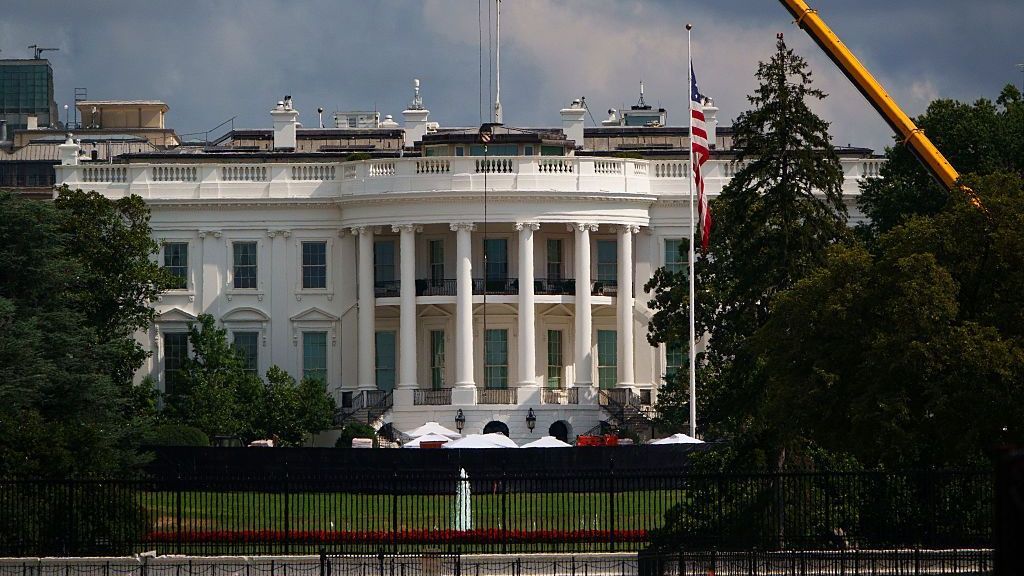
    In a highly unusual high-profile ceremony held at the White House on Friday, Kevin Warsh officially took office as the new Chair of the United States Federal Reserve, marking a fresh chapter for the world’s most influential central bank amid simmering tensions over institutional independence and competing economic priorities.

    Supreme Court Justice Clarence Thomas, one of two sitting Supreme Court justices in attendance alongside Brett Kavanaugh, administered the oath of office to Warsh in the White House East Room, an event that drew a who’s who of American political and economic elite, including former Vice President Dan Quayle, former Secretary of State Condoleezza Rice, and sitting Central Intelligence Agency director. The warm, smiling entrance of Warsh and former President Donald Trump stood in stark contrast to Trump’s only nationally televised second-term meeting with Warsh’s predecessor, Jerome Powell, during which Trump publicly berated the departing Fed leader.

    In his first remarks after taking the oath, Warsh struck a deliberate, reform-focused tone, promising to steer the Fed with a commitment to adaptive policy and unwavering integrity. “I will lead a reform-oriented Federal Reserve, learning from past successes and mistakes both, escaping static frameworks and models, and upholding clear standards of integrity and performance,” Warsh said. He emphasized that central bankers must pursue their core mandates “with wisdom and clarity, independence and resolve,” arguing that effective policy could deliver lower inflation, stronger growth, higher take-home wages, and broader shared prosperity for the American public. During his Senate confirmation process, Warsh firmly pushed back against suggestions he would align with Trump’s political preferences, telling lawmakers he would “absolutely not” be a puppet for the White House.

    For his part, Trump used the ceremony to praise his nominee, insisting the new Fed chief would operate with full institutional autonomy, a statement that comes in the wake of the former president’s unprecedented public and private pressure on the central bank to cut interest rates. “Kevin understands that when the economy is booming, that’s a good thing. We want to stop inflation, but we don’t want to stop greatness,” Trump said. Hours after the inauguration, the former president doubled down on his priorities, telling attendees at a separate event he expected interest rates to fall “very quickly.”

    It is extremely rare for a sitting Federal Reserve chair to be sworn in at the White House; the last time a Fed leader took the oath at 1600 Pennsylvania Avenue was Alan Greenspan’s 1987 inauguration, nearly four decades ago. The ceremony also unfolded as the Supreme Court prepares to rule on Trump’s bid to oust sitting Fed Governor Lisa Cook, a case that could have far-reaching implications for the central bank’s institutional structure.

    Warsh, who has supported interest rate cuts in the past even as inflation remains above the Fed’s long-term target, inherits a divided central bank navigating an extraordinarily tricky economic landscape. Inflation hit 3.8% in April, a three-year high, leaving American households still reeling from years of above-target price hikes that began in the wake of the COVID-19 pandemic. The current inflation surge has been fueled in large part by energy price volatility tied to Trump’s ongoing conflict with Iran. On the labor side, unemployment has held steady around 4.3% over the past year, but monthly job growth has seesawed between expansion and contraction, signaling inconsistent momentum in the broader economy.

    The Fed’s statutory dual mandate requires policymakers to balance 2% long-term inflation with maximum employment, a target that has put the central bank in a bind amid current conditions: bringing inflation down to target typically requires tighter monetary policy, which risks further weakening job growth. Just last month, a majority of sitting Fed policymakers signaled that additional rate hikes could be necessary if inflation stays above target, putting the central bank’s existing outlook at odds with the White House’s demand for rapid cuts.

    Warsh has pushed back on the idea that strong growth necessarily stokes inflation, arguing that productivity gains from artificial intelligence-driven innovation will allow the U.S. economy to expand rapidly without reigniting price growth. Even so, policy analysts warn a clash between the new Fed chair and the White House may be inevitable. “Kevin Warsh will not be able to deliver the rate cuts that the president wants,” said David Wessel, senior fellow at the Brookings Institution. “At some point, the president may grow impatient and will begin attacking Mr. Warsh as he did Jerome Powell.”

    Adding another layer of complexity to Warsh’s tenure is the unprecedented decision by Powell, his predecessor, to remain on the Fed’s Board of Governors after stepping down as chair. Powell has cited growing threats to the Fed’s institutional independence as the core reason for his decision to stay on the board, a move that has drawn pushback from the White House. On Friday, White House economic advisor Kevin Hassett said he hoped Powell would “step aside” soon to allow Warsh to take “complete and easy control of the Fed.”

    Columbia Law professor Kathryn Judge, a leading scholar of central banking, noted that Warsh takes office at a moment of profound shift in the balance of power between the executive branch and independent regulatory institutions. “Warsh takes over at a time of disruption and rebalancing in the overall authority of the president,” Judge explained, a context that adds to the already significant economic and political challenges the new Fed chair will face over his tenure.

  • Carney says Alberta is ‘essential’ to Canada as province plans vote on separation

    Carney says Alberta is ‘essential’ to Canada as province plans vote on separation

    Canada is facing its most significant test of national unity in decades after Alberta’s provincial government announced a non-binding referendum this October on the province’s place within the Canadian federation, capping years of growing separatist sentiment in the resource-rich western region. The announcement came one day after Prime Minister Mark Carney publicly reaffirmed Alberta’s irreplaceable role in the country, emphasizing that the province’s contributions have been foundational to Canada’s growth and that his government’s national reform efforts center on including all regions, including Alberta.

    The separatist movement in Alberta has gained traction over the last several years, driven by widespread frustration among many residents who feel their province’s economic and political priorities are systematically ignored by federal policymakers based in Ottawa. Most polling to date shows a clear majority of Albertans oppose full independence, with roughly one quarter of respondents voicing support for separation. Earlier this year, a pro-unity petition collected more than 400,000 signatures from across the province, demonstrating the depth of support for remaining part of Canada.

    Despite that majority, grassroots separatist pressure forced Premier Danielle Smith to address the demand for a public vote. A separatist petition crossed the 300,000 signature threshold required to trigger a binding independence referendum earlier this year, but a successful legal challenge by Alberta First Nations groups halted the signature verification process earlier this month, leaving the original plebiscite plan in legal limbo. A court ruled that the Alberta provincial government failed to fulfill its legal obligation to consult with Indigenous communities on the referendum plan before approving the petition process.

    Smith has publicly rejected the court ruling, and while the decision blocks her from moving forward with a binding vote immediately, she has pushed forward with a new voting plan for October 19. On that date, Albertans will answer a two-part question: whether the province should remain part of Canada, or whether the provincial government should begin the formal legal process to hold a binding independence referendum at a future date.

    “I will not have a legal mistake by a single judge silence the voices of hundreds of thousands of Albertans,” Smith said in her public announcement. “Alberta’s future will be decided by Albertans, not the courts.” The premier added that her government is appealing the original court ruling, a process that could stretch into a lengthy legal battle, and confirmed she will personally vote to keep Alberta within Canada. She also committed to campaigning for the pro-unity side through a series of summer town halls, arguing the province can no longer delay addressing the independence question. When asked if she risked repeating the legacy of former British Prime Minister David Cameron, who called the Brexit referendum that split the U.K. despite opposing the exit side, Smith said she has no fear of Albertans’ judgement. “You have to be prepared to have the debate, and you have to be prepared to defend your position,” she stated.

    Prime Minister Carney, speaking during a tour of renovation work at Canada’s federal Parliament building on Friday, struck a unifying tone in his first public comments following Smith’s announcement. “We’re renovating the country as we go, and Alberta being at the centre of that is essential,” Carney said, praising the “huge contributions” the province has made to Canada’s national identity and economy, and noting his government is working to improve conditions for all Canadians, including those in Alberta.

    Smith’s compromise plan has failed to win support from either side of the debate, drawing widespread criticism from pro-independence activists, Indigenous leaders and provincial opposition politicians. The Sturgeon Lake Cree Nation issued a harsh statement condemning Smith’s government as “undemocratic, authoritarian, and willing to bend to the whims of a loud, angry minority.” Naheed Nenshi, leader of Alberta’s official opposition New Democratic Party, dismissed the October vote as “needless,” accusing Smith of deliberately delaying action to shore up her own hold on political power. Even separatist leaders have expressed frustration with the plan: Mitch Sylvestre, a leading figure in the pro-independence movement, told the *Globe and Mail* that he “feel[s] duped” by the revised proposal. In response to the criticism, Smith defended her decision during a Friday press conference, saying the province cannot “kick the can down the road” for years by leaving the independence question unresolved.