In a major development that has escalated cross-border diplomatic friction, Mexico’s President Claudia Sheinbaum has publicly stated that Mexico will only act on a potential extradition request for a sitting state governor if Washington provides irrefutable evidence to back up unprecedented U.S. drug trafficking charges. The bombshell accusations were announced Wednesday by the U.S. Department of Justice, which named Sinaloa Governor Ruben Rocha Moya and nine other individuals as co-conspirators collaborating with the infamous Sinaloa Cartel to smuggle massive volumes of illicit narcotics into the United States. Rocha Moya, who has led the violence-plagued northern Mexican state since 2021, is a prominent member of Sheinbaum’s own left-leaning Morena party and a close political ally of former president Andres Manuel Lopez Obrador, the movement’s founder. With a 40-year career in Mexican public service, the 76-year-old governor has previously served as a state legislator, president of the University of Sinaloa, senior advisor to two prior Sinaloa governors, and the state party leader for Morena. Speaking at her regular morning press briefing on Thursday, Sheinbaum laid out a clear legal framework for moving forward: if Mexico’s Attorney General’s Office receives conclusive, lawfully compliant evidence from U.S. authorities, or uncovers evidence of criminal wrongdoing through its own independent investigation, it will fulfill its obligations under any extradition request. However, Sheinbaum added that if sufficient evidence never materializes, it will become clear that the Justice Department’s allegations are rooted in political motives rather than legal fact. Hours after the charges were made public, Rocha Moya took to social media to reject the accusations outright, framing them as a deliberate political attack on Morena, Mexico’s ruling populist movement. Notably, all other nine individuals facing U.S. charges are also affiliated with the Morena party. Sheinbaum emphasized that this marks the first occasion in history that the United States has publicly unsealed narcotrafficking charges against a sitting Mexican governor or any similarly high-ranking sitting Mexican official. Reaffirming her government’s commitment to accountability, the president stressed “We aren’t going to protect anyone.” This unprecedented legal action comes at a moment when bilateral relations between Mexico and the Trump administration are already stretched thin. Recent weeks have seen tensions rise following the death of two U.S. agents, widely reported to be CIA personnel, during an operation linked to a drug seizure. The pair died in a car crash in the northern border state of Chihuahua, and Mexican authorities confirmed the agents had never obtained formal permission from Sheinbaum’s government to conduct operations on Mexican soil. The Sinaloa Cartel, one of Mexico’s most powerful transnational criminal organizations, is among six Mexican drug trafficking groups that the Trump administration has formally designated as foreign terrorist organizations. For months, Washington has pressured Sheinbaum to approve expanded U.S. counter-cartel intervention inside Mexico, including proposals for unilateral drone strikes and the deployment of U.S. military personnel. While the Mexican president has expressed openness to deeper bilateral cooperation on intelligence sharing, she has repeatedly rejected any deployment of U.S. armed forces on Mexican territory, calling such a move a direct violation of Mexico’s national sovereignty and political independence.
分类: politics
-

Telegraph and Politico owner says journalists must support Israel or resign
A fierce debate over journalistic independence has erupted across global media properties owned by German media giant Axel Springer, after CEO Mathias Dopfner explicitly told staffers that unwavering support for Israel is a non-negotiable core condition of employment at the company’s outlets, including Politico and the newly acquired Telegraph. The confrontation has thrown a harsh spotlight on the ideological direction of Axel Springer’s expanding international media empire, raising urgent questions about whether top-down political demands will skew impartial news coverage of the ongoing Israel-Gaza conflict.
The controversy came to a head this week during a charged internal company meeting, convened after a group of Politico journalists submitted an open letter to incoming editor-in-chief Jonathan Greenberger. In the letter, the journalists accused Dopfner — a media magnate long nicknamed “Germany’s Rupert Murdoch” for his outsized political influence and consolidated media holdings — of leveraging the publication to advance his personal partisan political agenda. The letter noted that Dopfner’s recent public opinion pieces have already put Politico’s hard-won reputation as an impartial, trusted political news outlet at serious risk, according to reporting from Jewish Insider.
Axel Springer first acquired Politico, the leading U.S. and European political news platform, in a 2021 deal, and only secured regulatory approval to purchase the iconic UK title The Daily Telegraph earlier this month. That acquisition has amplified industry and newsroom concerns that the ideological mandates set by company leadership will reshape editorial standards and coverage lines across all of Axel Springer’s properties, particularly its coverage of Israel. Israel is currently facing allegations of genocide at the International Court of Justice, stemming from its military campaign in Gaza that has killed at least 72,599 people and injured more than 172,410 others to date.
During the meeting, Dopfner doubled down on his stance, framing loyalty to Israel as a central component of the company’s five publicly stated core values, which it calls the “essentials”: freedom, free markets, individual autonomy, freedom of speech, and explicit support for Israel. He placed support for Israel immediately after the four foundational principles, and made clear that anyone who questions this mandate is not aligned with the company’s identity. “If that is something that somebody wants to question, then we are really reaching the very fundamental principles of our values,” Dopfner told assembled staff. “And that then may lead simply to the decision that, because we are very transparent about it, it is then an individual decision whether Axel Springer and somebody who has so fundamentally different beliefs is really a good fit.”
This mandate is far from an out-of-character statement for Dopfner: it follows a years-long pattern of provocative pro-Israel rhetoric that has sparked controversy. Last year, a leaked internal email published by German outlet Die Zeit ended with the line: “Zionism uber alles. Israel my country.” The phrase “Zionism uber alles” carries uniquely toxic baggage in Germany, as the identical wording opened the national anthem during the Nazi era, and became a symbol of ideological supremacism. The remark drew widespread condemnation across German political and media circles when it was leaked.
The controversy has also drawn attention to Dopfner’s close ties to the Israeli government: in October 2023, Israeli President Isaac Herzog awarded Dopfner the Israeli Presidential Medal of Honor, alongside Miriam Adelson, a prominent casino billionaire, major pro-Israel political donor, and owner of the NHL’s Dallas Stars.During the internal meeting, journalists pushed back directly against Dopfner’s pattern of editorial intervention, calling for stricter fact-checking and evidentiary standards for opinion pieces written by the CEO himself. In one specific exchange, staffers criticized Dopfner for an opinion piece that referred to Iran as an aggressor systematically pursuing nuclear weapons, arguing the claim was misleading and required additional context and clarification. Iran has consistently and repeatedly denied any plans to develop a nuclear weapon, a fact that went unmentioned in Dopfner’s piece. Notably, while Dopfner described the claim that America is the world’s largest democracy as a self-evident fact that requires no proof, global demographic rankings widely recognize India, with a population of 1.4 billion, as the world’s largest democracy.
Dopfner rejected the criticism entirely, arguing that his claims about Iran were beyond debate. “I think you have to qualify or prove arguments or points if they are new or if they are debatable – but for me at least, these two facts – that the Iranians are working on the nuclear bomb and that they are aggressors for decades – are so obvious, so proven for many times, they are almost – it’s like saying America is the biggest democracy in the world,” he said. “I don’t have to prove that.” He closed by confirming that he plans to expand his opinion writing, not scale it back, telling staff he intends to “write more in the future, not less.”
The ongoing confrontation has intensified broader scrutiny of media consolidation and top-down ideological control in global news, as newsroom advocates warn that mandatory loyalty oaths for journalists set a dangerous precedent that undermines the public’s trust in independent news coverage.
-

Turkey is Iran war’s biggest winner — without firing a shot
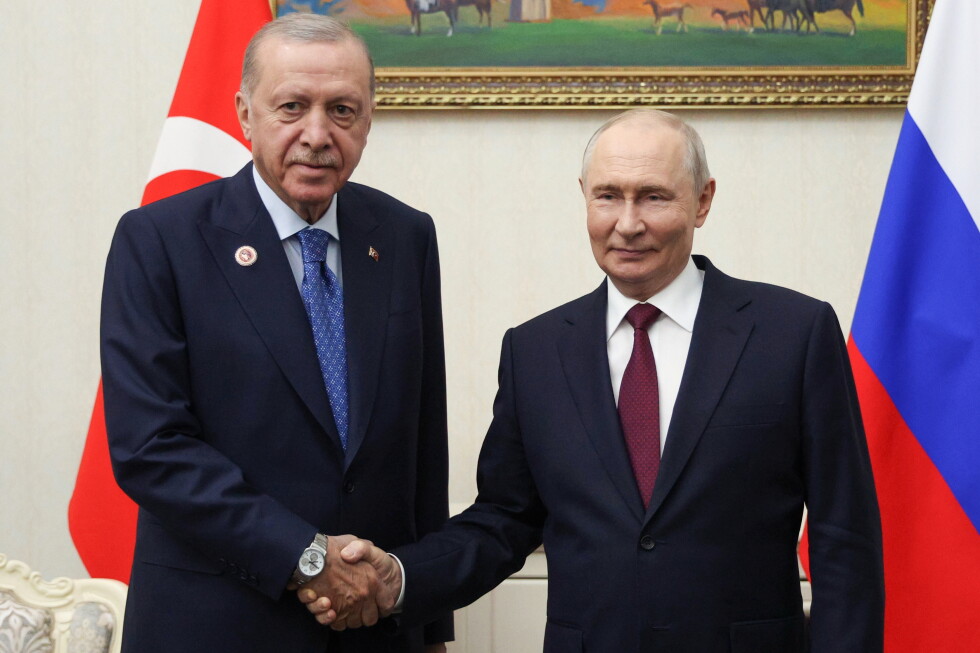
Two months after joint US-Israeli airstrikes on Iran that killed Supreme Leader Ali Khamenei and eliminated much of Tehran’s senior leadership in late February, Ankara’s carefully calibrated response to the conflict has positioned Turkey to claim unprecedented regional influence in modern times — a shift that comes with substantial unresolved risks.
When the strikes first occurred, Turkish President Recep Tayyip Erdogan drew a clear line: he condemned the attack as a blatant violation of international law, shut Turkish airspace to US military forces, and extended official condolences following Khamenei’s assassination. Yet Erdogan’s administration simultaneously moved to distance itself from the fallen Iranian regime, openly criticizing Tehran’s retaliatory strikes on Gulf states and blaming Iranian hardline intransigence for the collapse of diplomatic talks that predated the war. This deliberate, balanced stance — what senior Turkish officials privately term “active neutrality,” signaling Ankara opposed the war but would not align with either belligerent bloc — has delivered compounding strategic dividends as a fragile Pakistani-brokered ceasefire has held since early April.
The most immediate and visible win for Turkey has been its new centrality in regional diplomacy. The four-nation de-escalation format convened in Islamabad on March 29, bringing together Turkey, Saudi Arabia, Egypt, and Pakistan, operates in practice as a Turkey-led initiative. Well before the summit, Reuters reported on March 25 that Ankara had already served as a secret intermediary for backchannel communications between Iran and the US, testing Washington’s negotiating positions while warning Tehran against expanding the scope of the conflict. European Commission President Ursula von der Leyen publicly backed Turkey’s mediation efforts as early as March 1, and the long-standing personal rapport between Erdogan and former US President Donald Trump has lent Ankara’s mediating role a credibility that smaller Gulf hubs like Doha or Muscat cannot match. While Turkish leaders do not expect to broker a full, permanent regional peace settlement, the role of mediator grants Ankara permanent “right of access” to all high-level negotiations that will shape the post-war Middle East order.
Beyond diplomatic clout, the conflict has triggered a deep structural shift in regional geopolitics that plays directly to Turkey’s advantage. For 40 years, Iran served as the core institutional anchor of the so-called “resistance axis” stretching across Iraq, Syria, Lebanon, and the Gulf. After incremental Israeli dismantling of that network starting in 2023, the February decapitation strikes have left the axis completely eviscerated. Combined with Russia’s severely weakened global position following years of grinding attrition in Ukraine, the long-standing Russia-Turkey-Iran triangle that guided Syrian diplomacy through the Astana process has effectively collapsed. This leaves Turkey as the only functioning major power remaining in the format, a shift that has boosted Ankara’s diplomatic influence far beyond Syria’s borders.
These changes are already visible on the ground. After the fall of the Assad regime in late 2024, Turkish-aligned political and military actors hold the central role in Syria’s post-war negotiations, and Ankara’s quiet deconfliction channel with Israel is now the primary mechanism preventing direct armed clashes in Idlib and northeastern Syria. In Iraq, Turkish Foreign Minister Hakan Fidan has announced that Ankara will expand its regional focus beyond Syria to address control of the Qamishli–Sinjar corridor, where Iranian-backed militias have lost the political protection Tehran once provided. Critically, two major infrastructure and trade projects long held up by regional tensions are now newly viable: the $17 billion Development Road project through Iraq, which will connect Turkey and Europe directly to the Persian Gulf, and the Zangezur Corridor through the South Caucasus, which links Turkey to Central Asia while completely bypassing Iranian territory. Once completed, these corridors will redirect a significant share of global East-West trade through Turkish-controlled territory, representing a generational geopolitical realignment rather than a short-term tactical gain.
The Iran war has also accelerated a shift in Gulf security planning that began years before the February strikes, opening new defense and economic opportunities for Ankara. After years of watching Iranian missiles strike civilian infrastructure in Saudi Arabia, the United Arab Emirates, and Qatar despite long-standing US security guarantees, Gulf monarchies have increasingly moved away from exclusive reliance on Washington and are diversifying their regional security partnerships. Turkey is the most natural alternative: over the past decade, Ankara has evolved from a major arms importer to a self-sufficient global defense exporter, with 80% of its military equipment produced domestically by 2026. Key Turkish defense exports include the widely popular Bayraktar unmanned aerial vehicles, the new KAAN fifth-generation fighter jet, and a growing fleet of advanced naval vessels built under the domestic MILGEM program. Multiple confidential defense agreements signed throughout March indicate Ankara is already converting Gulf security anxiety into long-term contracts and deep embedded political partnerships. This momentum is set to grow when Turkey hosts the July NATO summit, where Erdogan will arrive with far more leverage than he held in January: as the alliance’s most strategically exposed frontline state, an indispensable regional mediator, and a credible candidate for reintegration into Western defense-industrial frameworks from which Washington previously sought to exclude him.
For all these structural gains, Turkey’s rising influence carries significant tactical and long-term risks that threaten to undo Ankara’s progress. In the immediate aftermath of the US-Israeli strikes, for example, the Borsa Istanbul stock exchange plummeted 7% on March 2 as global investors reacted to the conflict, and spiking energy costs have worsened Turkey’s already severe domestic inflation. Historically, Iran has supplied roughly 14% of Turkey’s total natural gas imports, and war-related disruptions to this supply have directly translated to rising domestic energy prices for Turkish consumers. By mid-March, NATO air defenses had already intercepted three Iranian missiles reportedly targeting Turkish territory, a stark reminder that Turkey’s geographic proximity to the conflict cannot be mitigated by diplomacy alone.
The most dangerous threat, however, lies in emerging shifts around Kurdish autonomy. Recent reports indicate Washington is exploring new partnerships with Iranian Kurdish opposition groups, particularly the Party for a Free Life in Kurdistan (PJAK), an offshoot of the Kurdistan Workers’ Party (PKK) — a development that strikes at the core of Turkey’s most sensitive national security concerns. In Ankara’s view, the establishment of a Kurdish autonomous zone in western Iran would complete a continuous arc of Kurdish self-governance stretching from the Mediterranean Sea to the Zagros Mountains, a development no Turkish government can accept. It would also likely collapse the fragile domestic peace process with the PKK, which had begun moving toward disarmament in 2025.
The growing rivalry with Israel compounds these risks. In comments made in February 2026, former Israeli Prime Minister Naftali Bennett labeled Turkey “the new Iran” and warned of an emerging Turkish threat to Israeli regional security. While this framing has not become official Israeli government policy, it is no longer limited to fringe political rhetoric. With Iran reduced to a weakened state, regional observers increasingly view the next great Middle Eastern power rivalry as one between Ankara and Jerusalem.
In sum, Turkey’s gains from the post-Iran war order are provisional. Ankara is unambiguously more powerful today than it was on February 27, the day before the strikes, but its new position depends entirely on outcomes outside of Turkish control: that Iran remains weakened but not fully fragmented, that Kurdish regional ambitions remain contained, and that the post-war order rewards neutral mediators rather than belligerent powers. Erdogan’s immediate priority between now and the July NATO summit is to lock in Turkey’s structural advantages — including new Gulf defense ties, control of key trade corridors through Iraq and the Caucasus, and permanent mediation status amid the power vacuum in Tehran — before uncontrollable geopolitical shifts undermine his gains. For the moment, though, a striking paradox remains: the country that most openly opposed the war, refused to join the fighting, and worked to prevent the conflict is the power that has clearly emerged stronger from its aftermath.
-

Pakistan commissions first Hangor-class submarine in China
In a landmark moment for Pakistan’s military modernization and its deepening defense partnership with Beijing, the South Asian nation formally commissioned its first of eight planned Hangor-class submarines at a ceremony hosted in China on Thursday, Pakistan’s military confirmed in an official statement.
The high-profile commissioning event took place in Sanya, the major southern Chinese port city, with Pakistani President Asif Ali Zardari serving as the chief guest. The gathering also brought together Pakistan’s Naval Chief Admiral Naveed Ashraf and senior military delegations from both countries, marking another high-level diplomatic engagement between the two long-time allies—Zardari and other top Pakistani officials have undertaken multiple visits to China in recent years amid growing bilateral cooperation.
Speaking during his official visit to China, Zardari framed the induction of this cutting-edge submarine as a transformative “historic milestone” for Pakistan’s Navy. He emphasized that the new addition strengthens Islamabad’s commitment to upholding a credible, balanced defense posture, and underlined that Pakistan now holds enhanced capability to defend its territorial sovereignty, safeguard its critical maritime interests, and secure its core economic lifelines that run through regional sea lanes.
Widely reported to be developed based on China’s advanced Type 039B submarine design, the Hangor-class platform is engineered to accommodate a core crew of 38, with additional space allocated for special operations personnel. It is outfitted with a modern arsenal including heavyweight torpedoes and anti-ship missiles, granting it multi-mission strike capability. Under Pakistan’s original agreement for the eight-vessel fleet, the first four are being constructed in China, while the remaining four will be built domestically at the Karachi Shipyard & Engineering Works, located in Pakistan’s southern coastal hub.
For decades, Pakistan has positioned its submarine fleet as a core component of its strategic deterrence posture against neighboring India, a rival with whom it has fought three full-scale wars since achieving independence in 1947. Tensions between the two nuclear-armed neighbors remain high, particularly over the disputed Kashmir region; during a 2024 border standoff, Pakistan deployed Chinese-built J-10C fighter jets and claimed to have downed multiple Indian aircraft, including French-made Rafale jets, a claim that India has never corroborated.
Addressing attendees at the commissioning, Admiral Ashraf highlighted growing global security risks stemming from disruptions to critical maritime choke points, which increasingly threaten the stability of global trade flows and international energy security. This shifting security landscape, he noted, makes the development of advanced, capable naval forces more urgent than ever. The new Hangor-class submarines, fitted with state-of-the-art sensors, advanced weapon systems, and air-independent propulsion technology that allows for extended underwater endurance, will play a key role in preserving regional stability and securing critical shipping routes across the Arabian Sea and the broader Indian Ocean, Ashraf added.
The admiral also drew attention to the historical significance of the “Hangor” class name, which honors a Pakistani submarine that sank an Indian warship during the 1971 Indo-Pakistani War—marking the first successful submarine sinking of an enemy warship since the end of World War II. Beyond military advancements, Ashraf emphasized that the commissioning opens a new chapter in the decades-long defense collaboration between Pakistan and China. This deepening defense partnership runs parallel to growing economic ties: just last year, Islamabad and Beijing reaffirmed their commitment to expanding bilateral economic cooperation and investment under the China-Pakistan Economic Corridor, the flagship infrastructure project of China’s global Belt and Road Initiative.
-

New ‘bluster’ from Trump? Germany faces new threat about reduced US military presence in Europe
Fresh transatlantic friction has emerged after former President Donald Trump reignited longstanding threats to cut the United States military footprint in Germany, NATO’s leading European hub and the EU’s biggest economy. The renewed warning comes on the heels of critical remarks from German Chancellor Friedrich Merz, who claimed the U.S. was being publicly humiliated by Tehran amid its slow-rolling diplomatic negotiations tied to the ongoing U.S.-Israel conflict with Iran.
Talk of reducing American troop levels in Germany is far from new. For years, Trump has openly pondered pulling back U.S. military assets from the country, and in recent months he has repeatedly lashed out at NATO for declining to back the U.S. in its two-month military campaign against Iran. Ever since Trump took office, NATO allies have braced for potential troop withdrawals, with repeated warnings that European nations would ultimately have to take full ownership of their own security, including defense support for Ukraine.
Currently, between 80,000 and 100,000 U.S. military personnel are stationed across Europe, a number that fluctuates with ongoing operations, training exercises and rotational deployments. NATO allies widely expect that the additional U.S. troops deployed to the continent after Russia’s 2022 full-scale invasion of Ukraine would be the first to depart if drawbacks move forward. Germany hosts some of the U.S. military’s most critical European infrastructure: this includes the dual headquarters for U.S. European Command and U.S. Africa Command, Ramstein Air Base, the Landstuhl Regional Medical Center that treats wounded service members from conflicts across the Middle East and South Asia, as well as deployed American nuclear missiles.
Ed Arnold, a European security specialist at London’s Royal United Services Institute (RUSI), a leading defense think tank, argues that a full or large-scale withdrawal is highly unlikely, pointing out that the U.S. derives enormous strategic benefit from its German bases, which enable critical logistics and support for combat operations across the Middle East. Arnold labeled Trump’s latest threat as nothing more than political bluster, noting a long-standing gap between civilian political rhetoric and U.S. military priorities. “The issue with some of these threats is that they are not quite as galling as they were a couple of years ago,” he explained, pointing to growing European familiarity with Trump’s patterned rhetorical outbursts.
Neither NATO nor the German federal government issued immediate official responses to Trump’s social media post. During a visit to a military training site in Munster, northern Germany on Thursday, Merz did not directly reference Trump’s comments, but obliquely pushed back by referencing longstanding transatlantic cooperation. “We work shoulder to shoulder for mutual benefit and in deep trans-Atlantic solidarity,” Merz said, adding that his government has made significant progress over the past year to bolster Germany’s own national security.
Arnold notes that European allies are far more concerned about more immediate shifts in U.S. defense policy: the redeployment of American Patriot missile systems and stockpiled ammunition from Germany to the Middle East, as well as official notifications to Eastern NATO allies including Estonia that U.S. weapons orders will be delayed amid Washington’s new priority of supporting operations against Iran. A senior Western official, speaking to the Associated Press on condition of anonymity to discuss sensitive diplomatic matters, said there is no record of any active discussions between the U.S., Germany or other NATO allies about imminent troop reductions in Germany. The official added that Europe, and Germany in particular, have already stepped up to take greater responsibility for continental security following the release of Berlin’s new national military strategy.
This is not the first time unexpected U.S. defense announcements have roiled transatlantic security planning. Last October, Washington confirmed it would cut between 1,500 and 3,000 troops from NATO deployments along the alliance’s border with Ukraine. The last-minute announcement unsettled Romanian officials, who host a key NATO air base on the country’s eastern flank. A full review of U.S. military posture across Europe and other global regions was launched by the Trump administration early last year, with findings originally scheduled for public release in late 2025 that have yet to be published. The U.S. has, however, given allies a formal commitment to provide advance notice of any posture changes to avoid creating dangerous security gaps at a time when Russia grows increasingly confrontational.
Many senior European leaders hold the assessment that Russian President Vladimir Putin could launch an offensive attack on another European nation by the end of the decade, particularly if Russia secures a victory in its ongoing war in Ukraine. The outbreak of the U.S.-Iran conflict has only heightened speculation that U.S. troop withdrawals from Europe could move forward, with a flurry of closed-door meetings held between Trump administration officials, NATO Secretary-General Mark Rutte and European leaders since hostilities began on February 28. Over the past year, European NATO members and Canada have already begun adjusting to a new strategic reality, where they will bear primary responsibility for Europe’s conventional defense, with the U.S. shifting its NATO contribution to primarily nuclear deterrence and a smaller forward-deployed troop presence.
Beyond the current uncertainty over troop levels, European allies have largely grown accustomed to Trump’s frequent public outbursts. In recent months, they have weathered insults labeling them as cowards and seen Trump brand NATO a “paper tiger.” Repeated threats of full withdrawal over issues like alliance defense spending targets have left allies desensitized to social media announcements hinting at potential action. The most lasting damage to NATO cohesion, many officials agree, has come from Trump’s ongoing public fixation on annexing Greenland, a semiautonomous territory of NATO member Denmark, which has included trips to the island by Trump’s family members and senior administration officials. In September, an announced freeze on some security assistance funding for European states bordering Russia also sowed widespread confusion, after Baltic defense leaders confirmed they had received no official advance notification of the policy shift.
-

War in the Middle East: latest developments
In the hours following fresh military activity across the Middle East that has sent shockwaves through global energy markets and sparked diplomatic fallout across continents, multiple world leaders have issued stark responses to unfolding events, while new economic and military data highlights the growing human and financial cost of ongoing conflict.
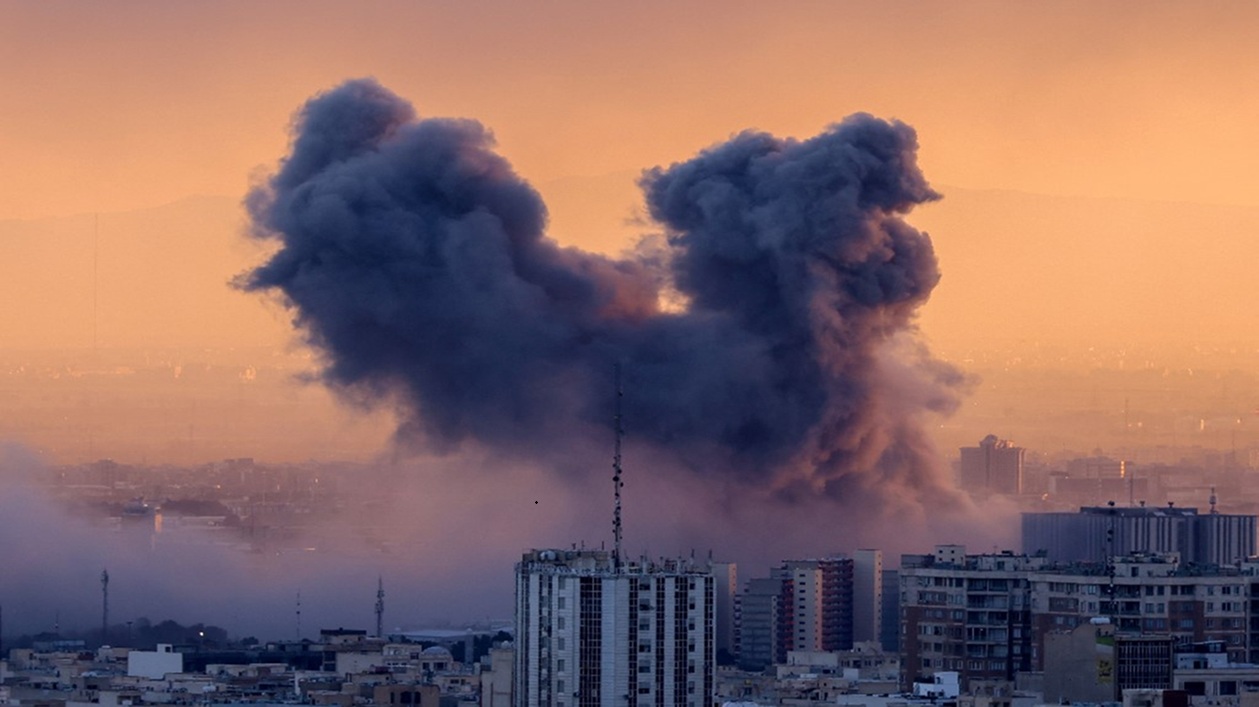
From southern Lebanon, where Israeli shelling has continued despite an existing ceasefire agreement, Lebanese President Joseph Aoun issued a firm condemnation of sustained Israeli incursions into the country’s southern territories. In his statement, Aoun detailed that ceasefire violations have included the destruction of civilian residential properties and religious sites, with casualty numbers climbing steadily each day. He called on the international community to bring coordinated pressure to bear on Israel, demanding that the country uphold longstanding international law and conventions, and end targeted attacks on civilian populations, medical first responders, civil defense teams, and humanitarian relief and health organizations. The strike on the village of Yohmor sent thick plumes of smoke visible across the border from the Lebanese district of Marjeyoun, underscoring the persistent risk of a wider regional spillover from ongoing hostilities.
Beyond the immediate military conflict, the upheaval has created major ripple effects for global energy markets and climate policy. Speaking at an International Energy Agency (IEA) event focused on energy transition in Paris, Turkey’s climate minister Murat Kurum—who is also the president-designate for the upcoming COP31 UN climate conference—argued that the current energy crisis triggered by Middle East conflict makes clear that the global economy must accelerate its shift away from fossil fuels to renewable clean energy. Kurum emphasized that the crisis has exposed the critical need for a complete overhaul of the global energy paradigm.
IEA executive director Fatih Birol echoed those concerns, warning that the world is currently grappling with one of the most severe energy and economic challenges in modern history. In the wake of Middle East hostilities, international oil prices have spiked dramatically, bringing unprecedented economic pressure to nations across every income bracket, Birol explained. As of Thursday, benchmark crude prices hit multi-year highs: Brent crude for June delivery jumped more than 7% to peak at $126.41 a barrel, while U.S. West Texas Intermediate crude climbed 3.4% to reach $110.31, before both benchmarks partially pulled back from their intraday gains.
Iranian President Masoud Pezeshkian pushed back against recent threats of a U.S. naval blockade of Iranian ports, arguing that any such restrictive measure would not only violate core principles of international law but also deepen regional instability in the Persian Gulf while failing to achieve Washington’s strategic goals. “Any attempt to impose a maritime blockade or restrictions is contrary to international law… and is doomed to fail,” Pezeshkian said in an official statement.
Diplomatic tensions have also spilled into transatlantic relations, with U.S. President Donald Trump confirming that Washington is considering significant cuts to its troop deployment in Germany over Chancellor Friedrich Merz’s refusal to join the U.S.-led conflict against Iran. Currently, the U.S. maintains between 35,000 and 50,000 military personnel stationed across Germany. The threat to draw down troops aligns with Trump’s long-running criticism of NATO burden-sharing, and was triggered after Merz claimed earlier this week that Iran was “humiliating” Washington at ongoing negotiating talks.
Shortly after Trump’s announcement, European Union officials pushed back on the suggestion of a drawdown. EU spokeswoman Anitta Hipper noted that the ongoing deployment of U.S. troops across Europe serves core national security interests for the United States, adding that NATO allies are already increasing their collective defense spending at a pace never seen before.
In a high-stakes phone conversation between Russian President Vladimir Putin and U.S. President Donald Trump on Wednesday, Putin issued a clear warning against any resumption of large-scale military attacks on Iran. Kremlin foreign policy aide Yuri Ushakov told reporters that Putin outlined that new military action would bring “inevitable and extremely damaging consequences” for the Middle East region and the entire global community. In his own remarks on the call, Trump claimed that Putin had offered to help mediate an end to the U.S.-Israeli conflict against Iran, but that he had demanded Russia first withdraw its military forces from Ukraine to move forward.
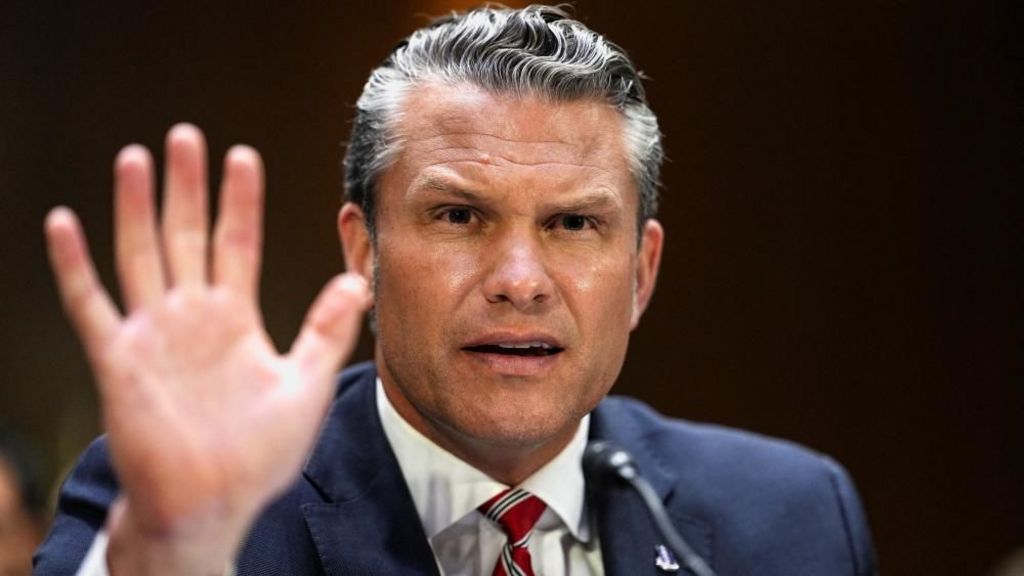
On Capitol Hill, U.S. Defense Secretary Pete Hegseth faced a fiery congressional hearing Wednesday where lawmakers pressed him on the financial cost of 60 days of ongoing U.S. military involvement in the conflict. Hegseth confirmed that total estimated costs to date have remained under $25 billion. He also pushed back against widespread concerns that the conflict has depleted the U.S.’s stockpiles of critical munitions to alarming levels, accusing critics of spreading misinformation that amounts to propaganda for U.S. adversaries.
In a closing provocative message posted to his Truth Social platform Thursday, Trump doubled down on his hardline stance toward Iran. “Iran can’t get their act together. They don’t know how to sign a nonnuclear deal. They better get smart soon!” he wrote, alongside a graphic of himself holding an assault rifle emblazoned with the caption “NO MORE MR. NICE GUY!”
-

Why is China banning drone sales in Beijing?
In recent weeks, new regulations restricting unauthorised drone operations and sales in Beijing have drawn international attention, with observers seeking clarity on the drivers behind the policy shift. Veteran BBC correspondent Laura Bicker has conducted on-the-ground reporting to unpack the motivations behind China’s decision to tighten drone oversight across the capital. According to Chinese authorities, the core impetus for the new rules is rooted in escalating public safety risks that have emerged as consumer and commercial drone ownership has skyrocketed across the country in recent years. Over the past decade, drones have moved from niche hobbyist equipment to widely accessible tools for photography, logistics, and industrial work, with millions of units now in operation nationwide. This rapid proliferation has brought growing safety challenges: unregulated drone flights have disrupted commercial air traffic at major airports, posed collision risks to manned aircraft, and enabled unauthorised surveillance that infringes on personal privacy. In densely populated urban areas like Beijing, the stakes of unsafe drone operation are even higher, with rogue units creating hazards for pedestrians and critical infrastructure. Bicker’s reporting notes that while the new restrictions have sparked some discussion among domestic drone hobby groups, the policy aligns with a broader global trend of governments updating aviation and technology regulations to address the risks posed by the fast-growing drone industry. Chinese regulatory bodies have emphasised that the restrictions are not a blanket ban on all drone activity in Beijing – rather, they are targeted at unregistered sales and unauthorised flights, with provisions for legitimate commercial and recreational operators who complete required registration and safety certification. As drone technology continues to advance and become more accessible, policymakers across the globe are grappling with how to balance innovation and public access with the need to protect communities and critical assets, and Beijing’s new regulatory framework represents one major government’s approach to that balancing act.
-

Myanmar reduces ousted leader Suu Kyi’s prison term in new amnesty
BANGKOK – In a move tied to a major Buddhist religious observance, Myanmar’s military-installed administration has slashed the prison term of ousted democratically elected leader Aung San Suu Kyi, marking the second mass prisoner pardon issued by the regime in just two weeks, according to anonymous legal sources and official state media reports.
The latest commutation, announced Thursday to mark the full moon day of Kason – the holiday that commemorates the birth, enlightenment, and passing of the Buddha – applies a one-sixth sentence reduction to all remaining convicted prisoners across the country, in addition to the full amnesty granted to 1,519 incarcerated people, 11 of whom hold foreign citizenship. It remains unclear how many of the thousands of people detained for opposing military rule are included in the most recent round of clemency.
Two legal officials, speaking on condition of anonymity out of fear of retaliation from state authorities, confirmed that the 80-year-old Nobel Peace Prize recipient would see her sentence reduced by an additional one-sixth under the new order. No official confirmation of her remaining term has been released, but calculations based on prior sentence cuts show she is still expected to serve more than 13 years behind bars.
This latest amnesty follows a broader pardon issued on April 17 that released more than 4,500 prisoners and cut sentences for inmates serving terms under 40 years, which already shaved more than four years off Suu Kyi’s sentence. The sequence of clemency measures comes three weeks after Senior General Min Aung Hlaing, the head of Myanmar’s military, was sworn in as the country’s president. His appointment followed a 2025 election widely dismissed by international observers and critics as neither free nor fair, widely seen as a carefully orchestrated move to cement the military’s authoritarian grip on national power. In his inauguration address, Min Aung Hlaing stated the amnesty program was designed to advance national reconciliation, social justice, and peace across the country.
Suu Kyi’s current detention stretches back to February 1, 2021, when the military seized power in a coup that ousted her democratically elected civilian government. By the end of 2022, she was convicted on a slate of politically charged charges and handed a 33-year prison sentence. Supporters and global human rights organizations have consistently characterized these convictions as a manufactured effort to discredit Suu Kyi, legitimize the 2021 coup, and permanently remove her from Myanmar’s political landscape. Her sentence was first reduced to 27 years in August 2023, before the additional cuts announced in April 2025.
Today, Suu Kyi is being held at an undisclosed location in Myanmar’s capital Naypyitaw. Unconfirmed reports circulated last week suggesting the regime planned to transfer her to house arrest as part of the latest clemency, but no official confirmation of this move has emerged. Information about her current health and well-being remains tightly controlled by state authorities. Unverified reports published in 2024 and early 2025 have documented declining health, including recurring low blood pressure, dizziness, and heart complications. Notably, Suu Kyi’s legal team has not been allowed to meet with her in person since December 2022.
The 2021 military coup sparked widespread popular resistance across Myanmar, which the regime responded to with brutal violent repression. The conflict has escalated into an ongoing bloody civil war that has killed thousands of civilians and displaced millions. As of the latest data from the Assistance Association for Political Prisoners, a Thailand-based human rights monitoring group, more than 22,000 people remain in detention for their opposition to military rule since the coup.
For decades, Suu Kyi has stood as the global face of Myanmar’s pro-democracy movement. The daughter of Aung San, Myanmar’s assassinated founding independence leader, she spent nearly 15 years under house arrest as a political prisoner between 1989 and 2010. Her unwavering nonviolent resistance to military authoritarianism earned her international acclaim and the 1991 Nobel Peace Prize, cementing her status as a global symbol of democratic struggle.
-

Under-fire UK boosts security for Jews after latest attack
Facing mounting criticism over rising antisemitic violence across the country, the UK government has moved swiftly to ramp up protective measures for British Jewish communities, announcing an extra £25 million ($33 million) in funding for security at synagogues, schools, and other community sites. The policy announcement came just 24 hours after a daylight stabbing attack left two Jewish men injured in north London’s Golders Green, the latest in a string of violent incidents targeting the UK’s Jewish population.
The Wednesday attack unfolded in broad daylight on a public street in Golders Green, a neighborhood with a large longstanding Jewish community. The two victims, aged 34 and 76, were hospitalized and remain in stable condition as of Thursday. A 45-year-old British national, who was born in Somalia and moved to the UK as a child, is currently in police custody in connection with the stabbings.
This attack is only the most recent in a growing wave of violence targeting Jewish sites across the UK. Last year, a deadly assault on a Manchester synagogue left two people dead, and multiple arson attacks have targeted synagogues and other Jewish community spaces in the Golders Green area in recent months. Community leaders have repeatedly warned that persistent under-policing and growing antisemitic sentiment have left British Jewish communities feeling deeply vulnerable.
Speaking to Sky News, UK Home Secretary Shabana Mahmood acknowledged the pervasive sense of uncertainty among Jewish Britons, explaining the new funding was a direct response to this crisis. “People have a sense of deep insecurity… and that is why the government is bringing forward investment, an additional £25 million to invest in the security of our Jewish community,” Mahmood said. She confirmed the funding will go toward expanding protective security at Jewish places of worship, educational institutions, and community centers across the country.
The stabbing has already drawn renewed calls for broader action from community representatives. Rabbi Ben Kurzer, a leader at Golders Green Synagogue, told BBC Radio that regular visible police presence remains scarce in high-risk Jewish areas, with most current security provision falling to underfunded private providers. “There is definitely not a significant police presence on a regular basis in these areas. We have little bits here and there, but most of the security that we’re seeing is private,” Kurzer said. He urged the government to go beyond funding and implement more systemic protections for British Jews, including cracking down on what he described as hate-fueled pro-Palestine protests that have amplified antisemitic rhetoric.
“We all believe in free speech, but there’s obviously a limit to free speech when it’s leading to events such as we had yesterday,” Kurzer added, echoing longstanding concerns from Jewish community leaders that unregulated large-scale protests have created a permissive environment for antisemitic violence.
According to U.S.-based monitoring group SITE Intelligence Group, a little-known faction called Harakat Ashab al-Yamin al-Islamiya (HAYI), which is suspected of having links to Iran, has claimed responsibility for the stabbing in an online video, describing the attacker as one of its “lone wolves.” The claim remains uncorroborated by UK law enforcement as of Thursday.
In response to the alleged ties to a hostile foreign state, Mahmood announced the government would move forward with emergency legislation to close existing legal gaps that have hampered action against groups linked to foreign adversaries and their proxies. The new legislation will be fast-tracked through parliament in the coming weeks, she confirmed.
The push for tighter protest restrictions aligns with existing policy priorities set by Keir Starmer’s Labour government, which last year announced plans to grant UK police expanded powers to limit frequent demonstrations, in part to account for the “cumulative impact” of repeated protests on community safety.
Monitoring organizations across the UK have documented a dramatic spike in both antisemitic and Islamophobic incidents since the outbreak of the Israel-Hamas war in Gaza in October 2023, with antisemitic hate crimes rising by more than 100% in some regions of the country.
-

Housing affordability fix looms as Treasurer hints at capital gains tax reform
As Australia’s federal government prepares to hand down its May 12 budget, Treasurer Jim Chalmers has fuelled widespread speculation about sweeping changes to national housing tax policy, while pushing back against common assumptions that the reforms would deliver a massive windfall to government coffers.
Speaking in a recent podcast interview with Commonwealth Bank chief economist Luke Yeaman, Chalmers addressed the growing national housing affordability crisis, which has disproportionately locked younger generations out of first home ownership. He acknowledged the clear long-term shift in Australia’s property market, where investor activity has grown steadily at the expense of owner-occupiers, pointing to early 2000s changes to capital gains tax as a key contributing factor to this shift.
“Anyone who looks objectively at the way that home ownership rates have declined over time … between homeowners and owner‑occupiers versus investors, can see there’s been a long-term trend,” Chalmers told the podcast. “Even if you just go back to around the turn of the century, those changes that were made to capital gains, you can see that that’s had an impact in the composition of the housing market.”
Despite confirming the government is actively exploring reforms to negative gearing and the existing capital gains discount, Chalmers stopped short of confirming any final changes would be included in the upcoming budget, saying only that he would outline the government’s full plans on budget night. He did, however, push back heavily on widespread market speculation that any changes to these tax policies would generate significant new revenue for the government that could immediately be redirected to broad-based tax cuts for Australian workers.
“One of the things that I think is not well understood in the speculation is that even if we went down the path that has been speculated about in those areas that you’ve asked me about, people shouldn’t expect there to be this huge amount of new revenue show up over the course of the next few years in the Budget,” Chalmers said. “But people assume that all of a sudden, a huge amount of revenue will show up that you can automatically and immediately give away, and most people who think deeply about those tax changes … would understand that there wouldn’t be a heap of revenue.”
For weeks ahead of the budget, Chalmers and senior Labor cabinet ministers have framed potential housing tax changes as a matter of intergenerational equity. Critics of the current system argue the existing capital gains discount and negative gearing rules disproportionately benefit wealthy asset holders, while Australian working people bear the majority of the national tax burden. Chalmers said he welcomes the national debate over rebalancing the tax system to create greater fairness between income from labor and income from assets.
This focus on fairer tax distribution builds on the government’s earlier changes to the controversial Stage 3 tax cuts, which were redesigned to deliver greater relief to low- and middle-income earners when they take effect from July 1, 2024. The revised plan also gradually reduces the 16 per cent tax rate to 15 per cent by July 1, 2026, and 14 per cent by July 1, 2027, while adding a new $1000 instant tax deduction for eligible earners.
Market analysts and insiders widely predict the government will replace the existing 50 per cent flat capital gains discount with an indexation-based model. Under the current system, any investor holding an asset for more than 12 months qualifies for a 50 per cent discount on their taxable capital gain, a policy originally designed to benefit property investors. For example, an investor who buys a property for $500,000 and sells it two years later for $700,000 would only pay tax on $100,000 of the $200,000 profit under current rules. Under the proposed indexation model, the cost base of the asset would be adjusted for inflation rather than applying a flat 50 per cent discount.
Chalmers also revealed the budget is still being adjusted in the final weeks ahead of its release, an unusual step driven by ongoing economic volatility stemming from the Middle East crisis. The conflict has already driven a sharp spike in global fuel prices, which added a 9.2 per cent lift to Australian consumer transport costs, with monthly automotive fuel prices surging 32.8 per cent. Around one-fifth of the world’s total oil and gas supply passes through the Strait of Hormuz, and ongoing tensions and blockages in the region have sent global energy prices soaring.
“Ordinarily budgets are sketched out in summer, locked down in autumn,” Chalmers explained. “This one is being recalibrated even in autumn, and that’s different to normal. But there are some common elements.” He added he has prepared multiple versions of his upcoming budget speech to account for shifting global conditions.