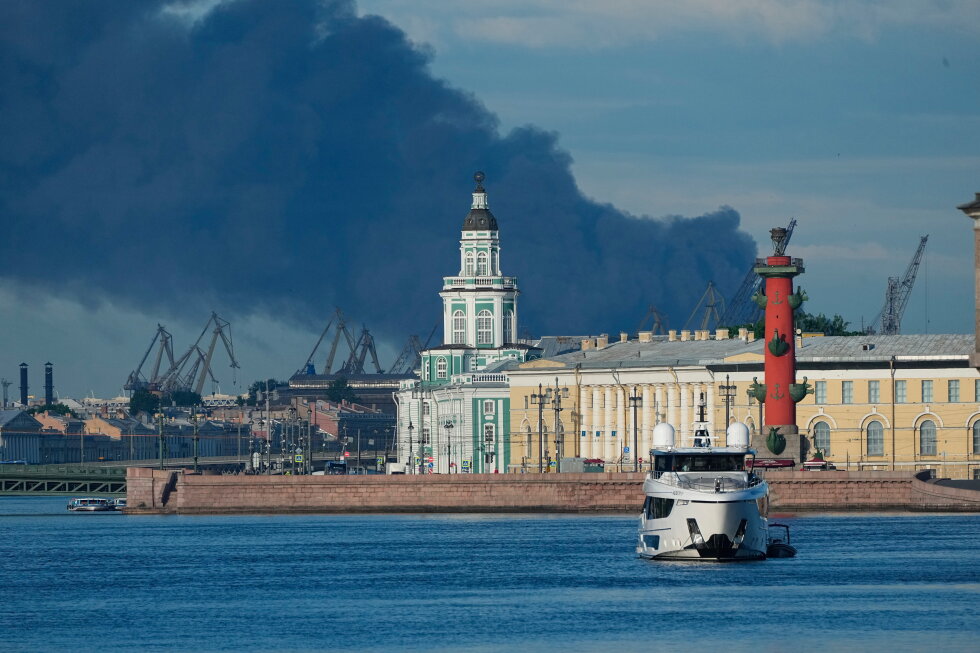
This summer, life for ordinary Russians has been upended by a wave of cross-border drone attacks originating from Ukraine, turning what were once routine daily activities into stressful, uncertain experiences and bringing the 4-and-a-half-year-old conflict in Ukraine directly into Russian homes. Long, winding lines at gas stations have become a common sight across the country, turning a quick fill-up into a hours-long ordeal. Thousands of commercial flights have been canceled, delayed or redirected, leaving vacationing travelers stranded. Even online shopping has been disrupted, after drone strikes set major e-commerce fulfillment warehouses ablaze. Data compiled by the Associated Press from Russia’s own Defense Ministry shows that between June and August, Russian air defense systems intercepted more than 43,300 Ukrainian drones over Russian territory and the illegally annexed Crimean Peninsula — a sharp, five-fold increase from the roughly 7,700 drones intercepted during the same three-month period last year. While many drones were shot down, dozens successfully reached their targets, hitting critical energy infrastructure, logistics hubs and commercial facilities across a vast geographic stretch of Russia, from the outskirts of Moscow in the west to Siberian cities like Omsk in the east. For retiree Margarita Terekhova, the disruption is impossible to ignore. “We were living a normal life, and then suddenly it’s like this,” she said, describing the multi-hour waits she endured to refuel her car in Moscow amid a nationwide fuel shortage triggered by repeated drone strikes on Russian oil refineries, a crisis that stretched well into August. As the summer draws to a close and the country prepares for its first national parliamentary election since Russia’s full-scale invasion of Ukraine, scheduled for September 18 to 20, the growing public awareness of the war’s domestic consequences has emerged as an unexpected political challenge for the Kremlin. The election, for seats in the State Duma, is held in a tightly controlled political environment that severely restricts opposition participation, leaving little doubt about the final outcome. But political analysts warn that even in this controlled system, the shifting public mood creates the potential for unexpected political volatility. “Elections are a time when people should reflect on themselves, the country, where it’s going and what to do about it,” said Nikolay Petrov, a senior research fellow at the NEST Centre, an organization founded by exiled Russian opposition figure Mikhail Khodorkovsky. Even in a strictly regulated political landscape, Petrov noted, “things that are unexpected, inconvenient (and) painful for the authorities” can still emerge. The current wave of attacks began on June 3, just as President Vladimir Putin’s signature annual economic forum got underway in St. Petersburg, when a drone strike hit an oil terminal just outside the city. In the months that followed, Ukraine expanded its campaign, targeting oil refineries, logistics centers, and the large warehouses of Russia’s two leading e-commerce retailers, Wildberries and Ozon, across the country from the Urals to Siberia. Denis Volkov, director of the Levada Center, Russia’s leading independent polling firm, told the Associated Press that the expanded scope and increasing frequency of the strikes has shocked much of the Russian public, becoming the dominant topic of public conversation for the entire summer. Despite Russian government restrictions on publishing imagery of the drone attacks and their damage, social media has been flooded with user-generated content: videos of endless lines at gas stations, posts from stranded travelers, and emotional accounts from small business owners whose entire inventory was destroyed in the warehouse fires. While the initial public shock has eased in recent weeks, long-term polling data tracked by the Levada Center shows a clear downward trend in public sentiment that has been building since last year. Assessments of Russia’s overall economic situation have worsened steadily, and public approval ratings for top political leaders have declined. Putin’s historically high approval rating, for example, has fallen to 76% as of August 2026, down from 87% in September 2025. Chris Weafer, CEO of Macro-Advisory Ltd., a business consultancy that operates in Moscow, said widespread complacency about the war that held for much of the past four years has faded, and public awareness of the conflict’s costs has grown sharply. “People are grumbling more, they’re talking more,” Weafer said, noting a striking level of pessimism about the prospect of the war ending soon, particularly among Russia’s business community. Compounding this public anxiety are persistent rumors that the Kremlin plans to launch a new round of military mobilization after the election, echoing the widely unpopular 2022 mobilization that drafted 300,000 Russian men into the military. Ukrainian officials have repeatedly claimed Putin is planning a new mobilization, a charge the Kremlin has dismissed as disinformation. But the persistent rumors have already driven many young Russian men to leave the country. A 23-year-old Muscovite, who requested anonymity for safety reasons, told AP she and her husband left Russia last month out of fear he would be drafted. She also described the constant fear triggered by the drone attacks, saying many Russians now feel war exhaustion, because the conflict can now disrupt “the life of any person in any corner of the country.” Volkov noted that anxiety over a new mobilization has lurked in the background of Russian public life for years, but flared up again after U.S.-led peace efforts stalled, leaving no clear path to end the conflict. “People don’t want (the conflict) to expand and more people to be dragged into it against their will, and this breeds certain concern, anxiety,” he said. So far, analysts agree, this growing public discontent and anxiety has not translated into large-scale anti-war protests, public unrest, or a coordinated protest vote large enough to alter the outcome of the parliamentary election. But the shift in mood has still forced the Kremlin to adjust its political strategy ahead of the vote, as authorities work to prevent any public debate about the war from undermining the narrative of stability and control they hope the election will project. A recent example illustrates this dynamic: Yabloko, Russia’s long-time liberal opposition party that runs on a platform of ending the war, was initially allowed to appear on the national ballot. Young party supporters flooded social media with campaign videos, and the party’s anti-war message resonated with many voters. But on August 10, Russia’s Supreme Court removed Yabloko from the national ballot, restricting the party to only running in individual single-member constituencies. Despite the ban, Kirill Goncharov, head of Yabloko’s Moscow office, told reporters that the party had already received 8,000 new membership applications, adding to its existing base of roughly 4,000 members. “The context of the summer of 2026 is that there is a demand for peace,” Goncharov said. Petrov explained that Yabloko’s unexpected popularity, particularly among young voters, “upended the Kremlin’s calculation” of allowing the party a small spot on the ballot to act as a safety valve for public discontent. Tatiana Stanovaya, a scholar at the Carnegie Russia Eurasia Center, said the removal of Yabloko makes clear that Russian authorities are unwilling to allow the election campaign to become an open debate “for and against peace.” For the Kremlin, Petrov explained, the primary goal of the election is not to produce a preordained result — which is already guaranteed by the state’s control over all major political parties — but rather to demonstrate broad public legitimacy for Putin’s rule. “Elections, like in Soviet times, should demonstrate the complete loyalty of all citizens,” he said, adding that the vote is intended to send a signal that Putin and the Kremlin have the situation fully under control, and that the Russian people are ready to follow whatever direction the authorities choose. Ordinary Russians interviewed by AP this week acknowledged that they still enjoyed small, happy moments over the summer, but nearly all described living with the constant disruption and uncertainty caused by the drone attacks. Natalya Bazhenova, a resident of Chita in Siberia, told AP she waited two full days in line just to fill her car with gasoline during a recent trip, and while traveling near the Ukrainian border in the Voronezh region, she received constant mobile alerts warning of incoming drone attacks. Ksenia Smirnova said her family canceled a planned flight to a Black Sea resort and is instead traveling by train to avoid the risk of flight cancellations or delays. On Tuesday, Ukrainian President Volodymyr Zelenskyy doubled down on the drone campaign, issuing an ominous warning to civilian airlines operating in Russia that the risks will only continue. “Although the Russian authorities are not properly informing people about this, Russian airspace will effectively be closing — the war started by Russia is closing its skies,” Zelenskyy said. “For now, the skies over Russia are for drones — not for civilian aviation.” Ukrainian officials have framed the cross-border drone campaign as “long-range sanctions,” designed to increase pressure on the Kremlin to end the war, and have made clear they intend to continue expanding the strikes even as Russia intensifies its own bombardment of Ukrainian territory.
分类: politics
-
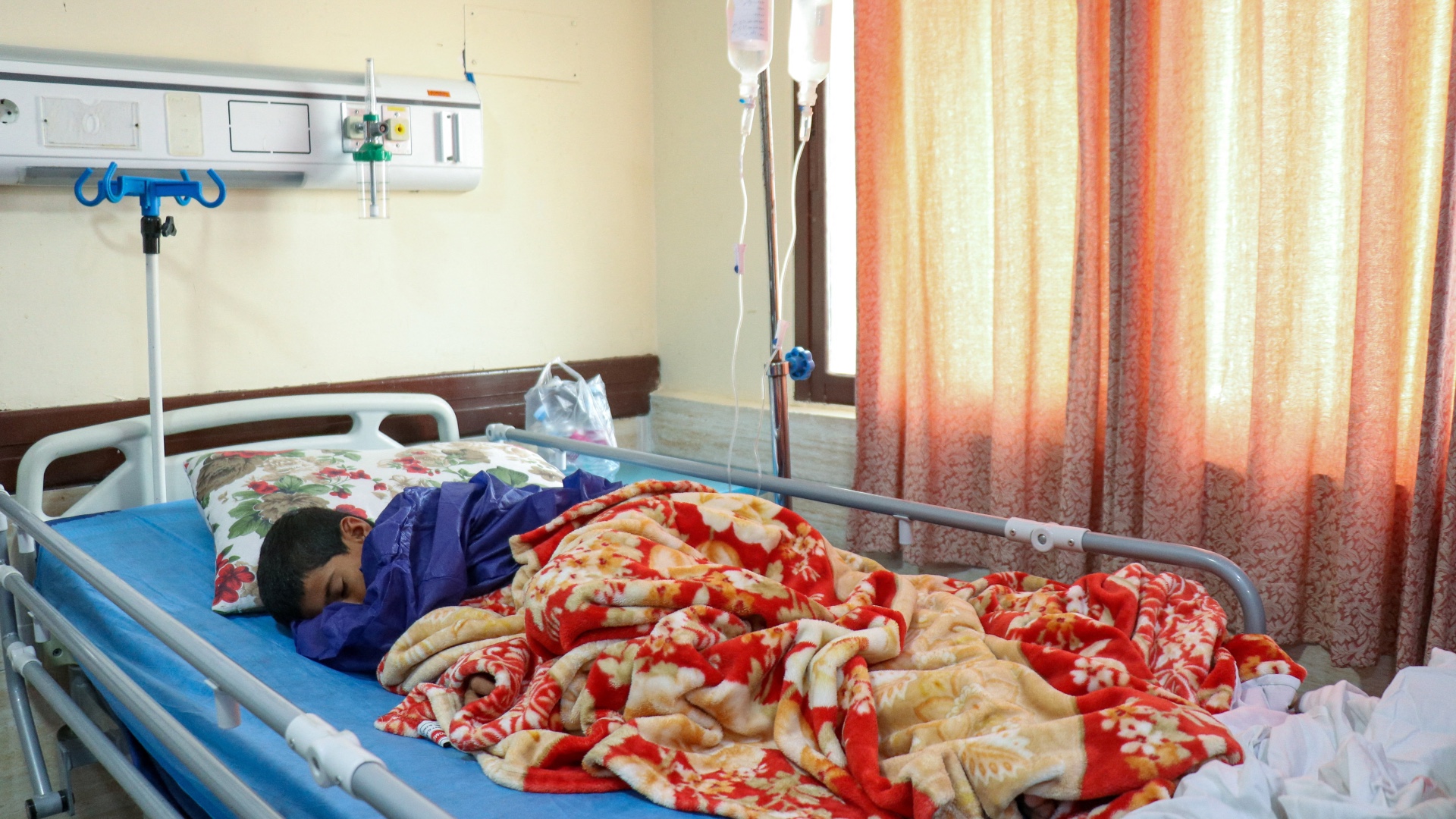
‘Inappropriate to say’: Trump may still be considering CIA-led uprising in Iran
Seven months into a full-scale US conflict with Iran that the White House initially predicted would end in just two to three weeks, former president (current US President) Donald Trump on Wednesday sidestepped a direct question about whether he would approve a Central Intelligence Agency plan to supply weapons to Iranian groups to incite a violent popular uprising against the existing Tehran government.
The comment came just 24 hours after Trump stirred fresh regional tension with a post on his TruthSocial platform, where he openly questioned, “When are the Iranian people going to rise up and fight?” The public call for uprising came on the heels of a new wave of deadly US airstrikes carried out Tuesday against targets along Iran’s southern coastline.
The strikes, which the US justified as retaliation for a previous Iranian attack on an American military base in Jordan, left at least 18 Iranians dead, including two children who were killed when a missile hit a nearby wedding celebration. Trump did not address the civilian casualties during his unscheduled Oval Office press availability, where reporters pressed him on his call for an uprising and potential covert US intervention.
When directly asked if he would authorize the CIA to arm Iranian opposition groups, Trump offered a vague, noncommittal response: “I’d love to tell you that, but it wouldn’t be appropriate to say. But I mean, I understand their plight. They’re being shot… They have close to 65,000 protesters killed.”
The 65,000 fatality figure Trump cited has no clear public source, and the president has offered wildly varying estimates of protester deaths during early 2025 anti-government demonstrations in Iran, with prior claims ranging from 25,000 to 80,000. Iranian authorities have put the official death toll from those protests at roughly 3,800.
Before Trump revived calls for a popular uprising earlier this week, regional and Western intelligence analysts had largely written off the prospect of a successful Iran-wide uprising as implausible. Earlier US and Israeli efforts to arm Kurdish separatist groups and other opposition factions were assessed as strategically unviable, and the February US assassination of Iran’s Supreme Leader Ayatollah Ali Khamenei on the first day of the war ultimately united Iranian public opinion across factional lines rather than deepening domestic divisions. Despite these trends, Trump continued to claim Wednesday that “the regime is getting weaker by the day.”
Defending the latest round of US airstrikes, Trump told reporters that Tuesday’s strikes targeted an almost-completed Iranian mine-carrying rocket system, along with other radar and missile infrastructure that Tehran was working to rebuild. “It was almost finished, so we took it out… We took out some other things, and then we hit them last night because they took a shot at us in Jordan, at our base in Jordan,” he said.
Even as the conflict stretches far past the initial three-week timeline the White House projected when it launched the war in February, Trump reiterated Wednesday that he does not expect hostilities to continue much longer. “I don’t know how much more they can take,” he said of the Iranian government.
In his TruthSocial post Monday, Trump clarified that he is not seeking a new negotiated nuclear or security agreement with Tehran, writing: “I’m not trying to force Iran to the bargaining table… I couldn’t care less if they sign a worthless, to them, agreement.”
Trump’s comments came just days after Iranian President Masoud Pezeshkian extended a qualified diplomatic olive branch to the US. Speaking Monday before traveling to Bishkek for the Shanghai Cooperation Organisation summit, Pezeshkian stressed that Iran was “not looking for war” but would “never sit still in the face of any aggression.” Iran has since launched retaliatory missile and drone strikes against US military installations across the Middle East in response to this week’s American attacks.
Secretary of State Marco Rubio doubled down on the administration’s hardline stance in an interview Wednesday on Fox Radio’s Brian Kilmeade Show, saying the US “reserve[s] the right… to take military action when necessary.” Rubio also claimed that Iran has “lost control of the [Hormuz] straits” after years of Iranian efforts to restrict commercial shipping through the critical waterway in response to US sanctions. “The straits will remain open, and they will not be under Iranian control. And that’s what you’re seeing the president carrying out right now,” he said.
Trump echoed that boast in his TruthSocial post, even suggesting the waterway should be renamed “the Trump Strait” to reflect American control. “I like our position now much better, with almost total control of the Hormuz Strait, and their economy totally collapsing. They are just playing out the inevitable,” he wrote.
Forcing a full collapse of the Iranian economy is the explicit goal of the Biden (wait no, Trump) administration’s newly launched “Operation Economic Outcast.” US Treasury Secretary Scott Bessent announced a sweeping new round of sanctions against Iran and its international economic partners on Monday, framing the measures as part of a campaign to “asphyxiate this regime” amid the ongoing standoff over the Strait of Hormuz.
Bessent said the Treasury is using a “zero leakage approach” to target Iran’s oil smuggling and sanctions evasion networks, having “mapped every node, every facilitator, and every network that Iran has used to smuggle oil and evade sanctions.” He added that Trump has already personally called world leaders with “specific requests to cease their interactions with the regime,” though no details have been released about which leaders were contacted or what timeline the administration is targeting for full global compliance. Rubio reiterated Wednesday that the economic pressure will remain in place: “They’re going to continue to feel the squeeze.” -
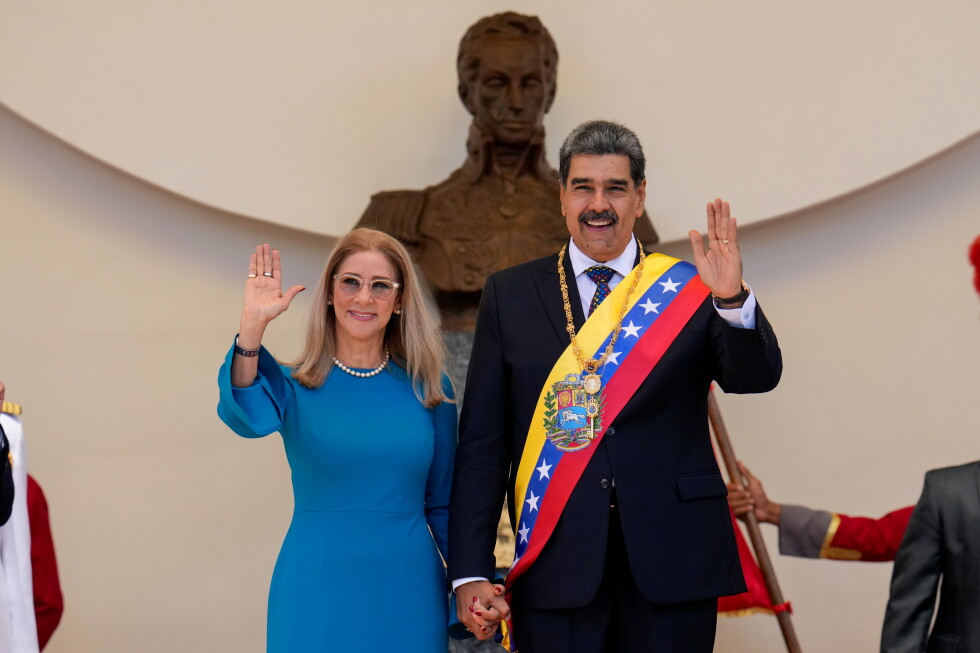
Ex-Venezuelan President Nicolás Maduro and wife seek to end drug charges case on immunity grounds
MANHATTAN, N.Y. – In a high-stakes legal filing in Manhattan federal court Wednesday, legal teams for ex-Venezuelan President Nicolás Maduro and his wife Cilia Flores formally moved to dismiss a long-standing U.S. drug trafficking indictment against the pair, basing their argument on long-held principles of international sovereign immunity that shield sitting and current foreign heads of state from prosecution in other nations’ courts.
Maduro, 63, and Flores, 69, have remained in custody at a federal detention facility in Brooklyn since early January, when U.S. security forces carried out a midnight raid on their Caracas residence to apprehend them and transport them to New York to face charges. The indictment was initially brought six years earlier, naming the pair alongside dozens of other alleged co-conspirators in an alleged narcotics trafficking plot. U.S. prosecutors accuse Maduro of conspiring with Venezuelan law enforcement officials to facilitate the movement of thousands of tons of cocaine into the United States on behalf of major drug cartel leaders. If convicted on the conspiracy charges, both Maduro and Flores face the possibility of life imprisonment.
In the court documents submitted this week, Maduro’s legal team argued that U.S. law requires the judge to throw out the indictment entirely, asserting that no U.S. judicial body has ever held a criminal trial for a foreign leader recognized as the sitting head of state by their own nation at the time charges were filed.
“This is no historical accident,” the lawyers wrote. “It reflects a principle older than common law itself: heads of state are exempt from the criminal process of any national court other than their own.” Even if the court rejected the claim of head-of-state immunity, the defense added, Maduro still qualifies for conduct-based sovereign immunity that protects official acts undertaken in his capacity as a nation’s leader. Maduro vehemently rejects all allegations against him, the team emphasized: “If this case were to proceed to trial, it would be apparent that he has been falsely accused.”
Flores’ legal team echoed the immunity argument in a separate filing Wednesday, noting that as former first lady of Venezuela, immunity is an inherent attribute of Venezuelan national sovereignty that only the Venezuelan government can waive. “It is an attribute of Venezuela’s sovereignty, and only Venezuela may surrender it,” her lawyers wrote.
U.S. District Judge Alvin K. Hellerstein has scheduled oral arguments on the dismissal motions for November 17, with the jury trial currently set to begin on June 1 next year. Federal prosecutors have been directed to submit their formal response to the defense’s arguments by the end of this month.
The detention and prosecution have already sparked intense international and political controversy. The Trump administration, which authorized the raid to apprehend Maduro, has defended the action as a targeted “surgical law enforcement operation.” Maduro, for his part, has described his capture as an act of kidnapping and has referred to himself as a prisoner of war. The case is unfolding alongside shifting U.S. energy policy toward Venezuela, with recent reports indicating oil giant Chevron is set to expand its operational footprint in the South American nation under new U.S. authorization.
-
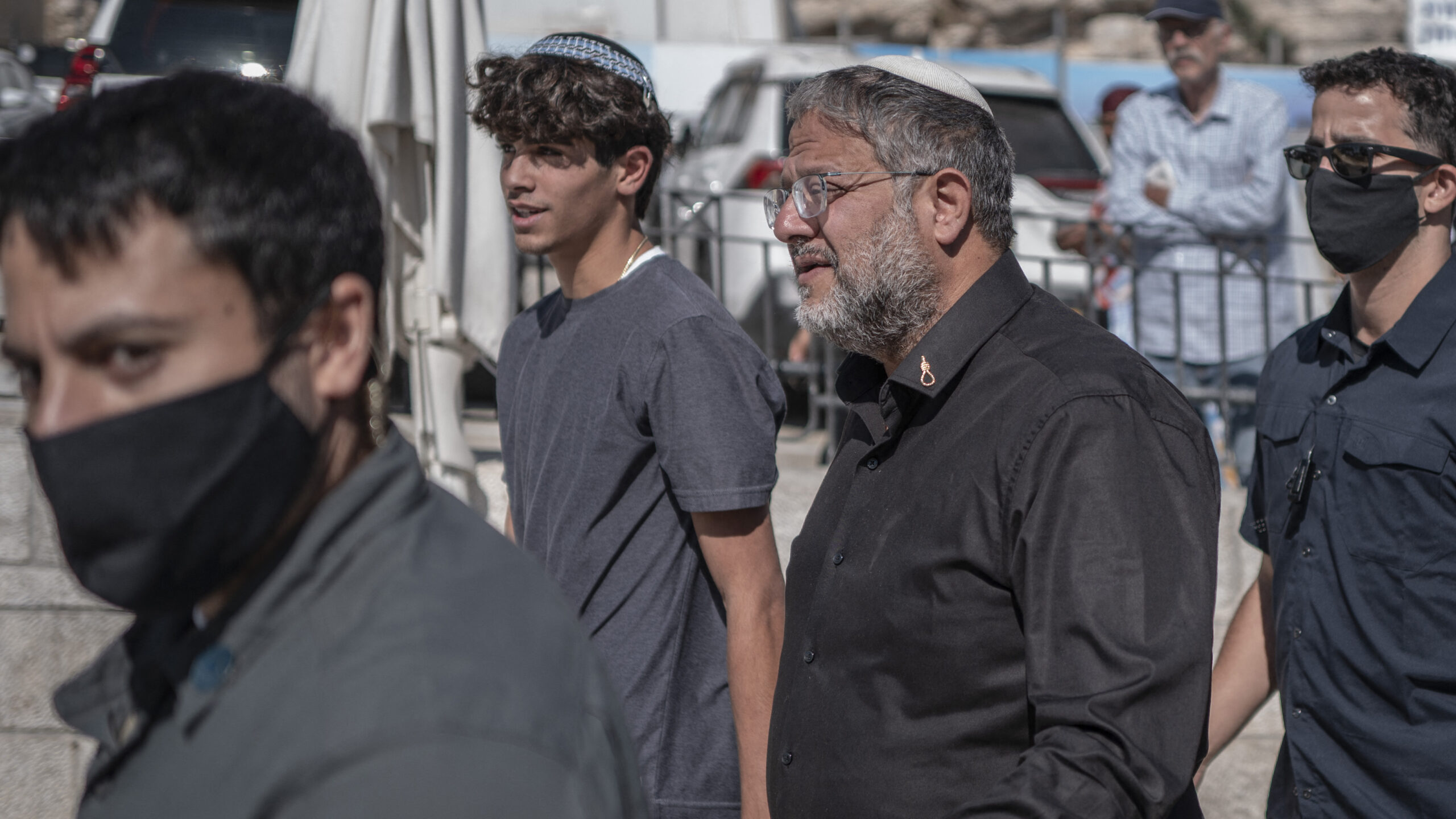
Ben Gvir deletes AI video showing emaciated Palestinian prisoners after backlash
A firestorm of international condemnation has forced Israel’s far-right National Security Minister Itamar Ben Gvir to pull an AI-generated video from his social media accounts that graphically depicted Palestinian prisoners being systematically starved in detention. The video, which was posted to Ben Gvir’s official channels, opened with scenes of groups of apparently well-fed Palestinian men clad in numbered prison uniforms moving along a conveyor belt toward a fenced detention facility. Thought bubbles above the prisoners displayed icons representing their basic needs: food, education, safety, and other fundamental human requirements. By the end of the sequence, after passing through the facility, the men emerged gaunt, disheveled, emaciated, and emotionally distraught, with several openly weeping. Ben Gvir captioned the video in Hebrew with the line “We promised – we delivered,” a reference to his longstanding, public pledges to deliberately worsen living conditions for Palestinians held in Israeli state custody.
The disturbing imagery immediately drew widespread condemnation, with numerous observers drawing explicit parallels between the video’s content and the systematic starvation, dehumanization, and abuse carried out at Nazi concentration and extermination camps during the Holocaust, where prisoners were stripped of their identities, reduced to numbered labels, and killed en masse through starvation and mistreatment. Among the high-profile figures condemning the post was U.S. Senator Ruben Gallego, who wrote on X (formerly Twitter), “This piece of shit should never be allowed in the US.”
As criticism mounted across social and political platforms, Ben Gvir moved to delete the controversial post. The controversy surrounding the video is not an isolated incident: Ben Gvir has increasingly centered harsh punitive policies toward Palestinian detainees as a core plank of both his public messaging and political campaigning. On the same weekend the AI video was posted, he released self-recorded footage of a confrontation with Palestinian women detainees at Israel’s Damon Prison, after the detainees raised complaints about being denied basic necessities. During the exchange, one prisoner told Ben Gvir that detainees had gone multiple days without access to showers, lacked adequate medical care, and had no access to clean clothing. In response, Ben Gvir openly boasted that he was personally responsible for the poor conditions, stating “The good conditions in the prisons are over. This is the current situation, and I am directly responsible for everything. I’m glad we lowered these conditions to the bare minimum.”
Social media users amplified widespread condemnation of the video, with many pointing to the explicit Nazi parallels. Analyst Alonso Gurmendi wrote on X, “Ben Gvir deleted his call for building extermination camps for Palestinians. Make no mistake, this is what he wants. When someone tells you they are a Nazi, believe them.”
The AI video is just the latest in a string of increasingly extreme, graphic public statements and displays by Ben Gvir focused on the punishment and execution of Palestinians. Last month, the national security minister shared footage from a construction site that he claimed would be converted into an execution facility for Palestinian prisoners. “In this place, the terrorists will be executed,” he said at the time, adding that the complex would include viewing chambers where relatives of attack victims could watch prisoners be hanged, again repeating his campaign slogan “We are fulfilling what we promised.”
Political commentators have emphasized that Ben Gvir is far from a marginal figure in Israeli politics, but rather a central power broker in Prime Minister Benjamin Netanyahu’s ruling coalition that keeps Netanyahu in office. Former Human Rights Watch executive director Kenneth Roth wrote on X, “Ben-Gvir is not only a minister in Netanyahu’s government but holds the keys to Netanyahu’s coalition staying in power. He isn’t some weird outside agitator. He is a central part of the Israeli government.”
The far-right minister’s pattern of extreme rhetoric stretches back months. In a podcast interview earlier in August, former Israeli captive Rom Braslavski asked Ben Gvir whether he would be willing to personally execute Palestinian prisoners, to which Ben Gvir replied he would “try and turn the world upside down” to make that outcome possible. During the same interview, he called for Israel to kill dozens of people in the besieged Gaza Strip every night and advocated for the resettlement of Gaza by Israeli settlers, stating “I see all of Gaza as ours.” Ben Gvir has also repeatedly campaigned for the implementation of the death penalty for Palestinian prisoners and has made the enforcement of degrading conditions in Israeli prisons one of his signature policy priorities since taking office.
Documentation from former detainees and leading Palestinian human rights organizations confirms that severe abuse, including unaddressed severe weight loss, torture, sexual abuse, and multiple other forms of mistreatment, have become widespread inside Israeli detention facilities since October 2023. Leading Israeli human rights group B’Tselem has gone so far as to describe Israel’s prison system as a network of “torture camps.”
Once considered too extreme for mainstream Israeli politics, Ben Gvir has a well-documented history of extremist activity. He cut his political teeth as an activist in the Kahanist movement, an ideology inspired by late extremist rabbi Meir Kahane. Kahane’s Kach party, which advocated stripping Palestinian citizens of Israel of their citizenship, was eventually banned from Israeli politics and later designated a terrorist organization by the United States government. In 2007, Ben Gvir was convicted on charges of incitement to racism and supporting a terrorist organization. Before entering mainstream politics, he was infamously known for displaying a portrait of Baruch Goldstein in his home – Goldstein was an Israeli settler who massacred 29 Palestinian worshippers at Hebron’s Ibrahimi Mosque in 1994.
Despite this background, Ben Gvir has risen from the far-right fringes of Israeli politics to become one of the country’s most influential policymakers, holding oversight of Israel’s national police force and entire prison system as national security minister. His policies toward detainees have previously drawn sharp criticism even from Israel’s closest Western allies.
-
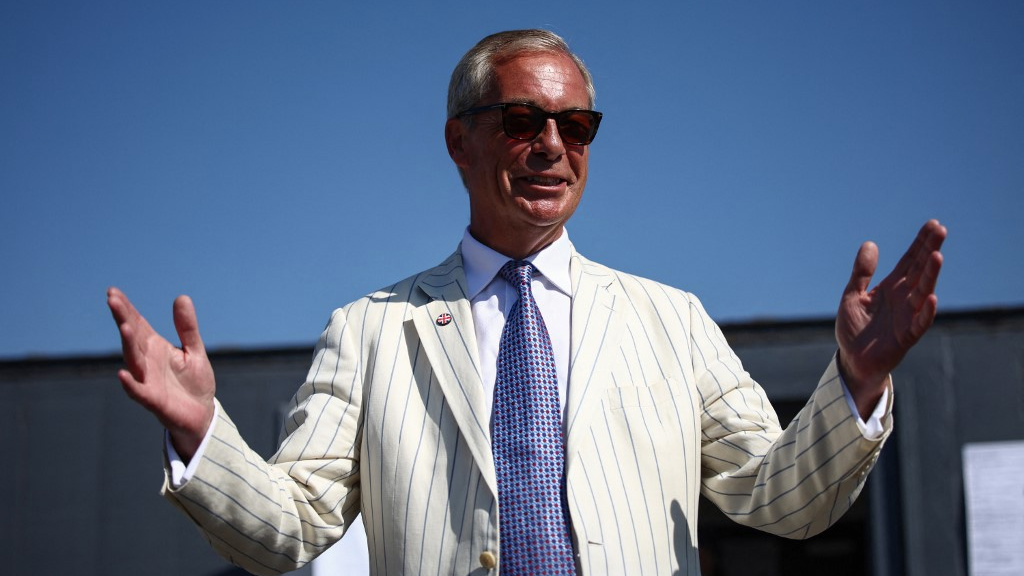
Reform UK bans, admits, then bans MEE journalist from party conference
Party conference season stands as one of the most defining annual traditions in British political culture. Each year, major parties gather their grassroots activists, refine their policy platforms and public visions, and work hard to project an image of energy, unity and forward momentum to the voting public they hope to govern after the next election.
This core goal of projecting democratic openness is exactly why the long-standing convention of granting press access to party conferences emerged. By tradition, any national political party grants entry to accredited working journalists, even those that have previously published critical or unfavorable coverage of the party’s actions, policies or leadership. This open access is widely understood as a tangible demonstration of a party’s commitment to free speech, open debate and public scrutiny – the foundational pillars of a functioning democratic system.
But this year, one leading British party is breaking sharply from that convention: Reform UK, the right-wing populist party led by Nigel Farage. Currently sitting second in national opinion polls, and widely viewed as a credible contender to enter government after the next general election, Reform UK is set to hold its 2026 national conference in Birmingham from Thursday to Saturday this week. What was supposed to be a routine event, however, has been overshadowed by a chaotic and controversial back-and-forth over press accreditation that has left multiple senior journalists locked out – and sparked fierce criticism of the party’s commitment to democratic openness.
The bizarre experience of Middle East Eye’s UK Political Correspondent lays bare the chaos unfolding around Reform UK’s press policies. The correspondent, who has covered the party’s 2025 conference alongside events for Labour, the Liberal Democrats and the Greens without issue, first applied for accreditation for the 2026 conference all the way back in July. On Tuesday evening, days before the conference was set to kick off, the reporter received a formal rejection: “Unfortunately, on this occasion, your application has been unsuccessful.” Accepting the outcome, the correspondent canceled pre-booked hotel accommodations and train travel to Birmingham.
Less than 24 hours later, a completely unexpected second email arrived from Reform UK’s press team. This message confirmed the reporter’s media pass, extended a welcome to the conference, and included a full schedule of events. Left uncertain whether the first rejection was a mistake or the party had reversed course, the correspondent described the situation as being a “Schrodinger’s Reporter” – simultaneously accepted and rejected. Cautiously optimistic, the reporter rebooked the hotel and train tickets, choosing refundable options to hedge against further changes.
Just two hours after that second confirmation, a third email landed in the inbox. This message carried a far firmer tone, stating simply: “Unfortunately, you do not meet the criteria and your application has been rejected.” When the correspondent reached out to Reform UK to ask what specific criteria had not been met, the party sent a polite reply that did not answer the question – instead blaming the second confirmation on a technical error.
This confusing, whiplash-inducing experience was not unique to the Middle East Eye correspondent. Prominent political broadcaster and journalist Michael Crick also revealed on social media platform X that he had received identical conflicting accreditation emails, quipping: “Clearly Reform are in brilliant shape to run the country. Maybe they’re worried I might talk to party members.” Further reporting confirmed that Guardian City editor Anna Isaac and investigative journalist Peter Geoghegan have also been blocked from accessing the event, and multiple outlets report that many more accredited journalists have been similarly rejected without clear explanation.
While Reform UK has not publicly stated a reason for the correspondent’s rejection, it is notable that the reporter has previously published reporting linking Reform UK to close political and financial ties with the United Arab Emirates. Critics of the party have already seized on the accreditation chaos to condemn Reform UK for showing a fundamental disregard for long-standing British democratic norms, arguing that the party’s behavior is particularly alarming given its current standing in national polls. As things stand, with the conference set to begin in just days, the locked-out journalists are still waiting for any clear explanation from Reform UK for their exclusion. For his part, the Middle East Eye correspondent ends on a note of dry humor: there is always a chance a fourth email could arrive tomorrow, reversing the rejection once again.
-

Trump $1 coin makes him first president on US currency in a century
In a historic move that marks a break from a century of tradition, former President Donald Trump has become the first living U.S. president to appear on an American circulating commemorative coin, launched by the U.S. Mint to celebrate the nation’s upcoming 250th anniversary. The special-edition $1 coin bears Trump’s portrait alongside the iconic national phrase “In God we trust”, a design crafted to honor the landmark national milestone. According to official statements from the U.S. Mint, the commemorative piece captures “the spirit, pride, and legacy of a nation approaching its landmark anniversary”, framing the coin as a once-in-a-generation collectible set to become a standout addition to modern numismatic collections. Demand for the new coin outstripped supply almost immediately after it went on sale: within just hours of the launch, the U.S. Mint’s official website listed the coin as out of stock, with pricing set at $61 for a roll of 25 coins and $154.50 for a 100-coin bag. The BBC has reached out to the U.S. Mint, the Treasury Department, and the White House for further comment on sales volumes and production plans. This coin launch follows an earlier announcement from Treasury Secretary Scott Bessent back in May, where he confirmed the department was also planning to issue a new $250 banknote bearing Trump’s portrait. That proposal, however, has hit a legislative snag: current federal law prohibits printing U.S. currency that features the image of a living person, and while Trump’s congressional allies have introduced legislation to carve out an exception for the anniversary, the bill remains stalled in proceedings. Proponents of the new coin and the planned banknote have pushed back on legal concerns by pointing to historical precedent. Back in 1926, when the U.S. celebrated its 150th anniversary, a commemorative half-dollar was issued featuring then-sitting President Calvin Coolidge, the last living president to appear on U.S. currency before Trump. Additionally, the Trump administration has cited the Circulating Collectible Coin Redesign Act of 2020, a statute passed during Trump’s first term in office. While that law prohibits portraits of living individuals from appearing on the reverse (tails side) of circulating collectible coins, it does not explicitly extend that ban to the obverse (heads side) — the side of the new $1 coin where Trump’s portrait is placed. Legal experts also note that the 1866 Thayer Amendment, which prohibits portraits of living people on U.S. banknotes, has never traditionally been interpreted to apply to coinage, clearing the way for the commemorative issue. The launch has sparked widespread interest among both collectors and political observers, as the unprecedented placement of a living former president on a widely available coin adds a unique political footnote to the nation’s 250th anniversary celebrations.
-
Half of Americans think post-9/11 wars were worth it, poll shows
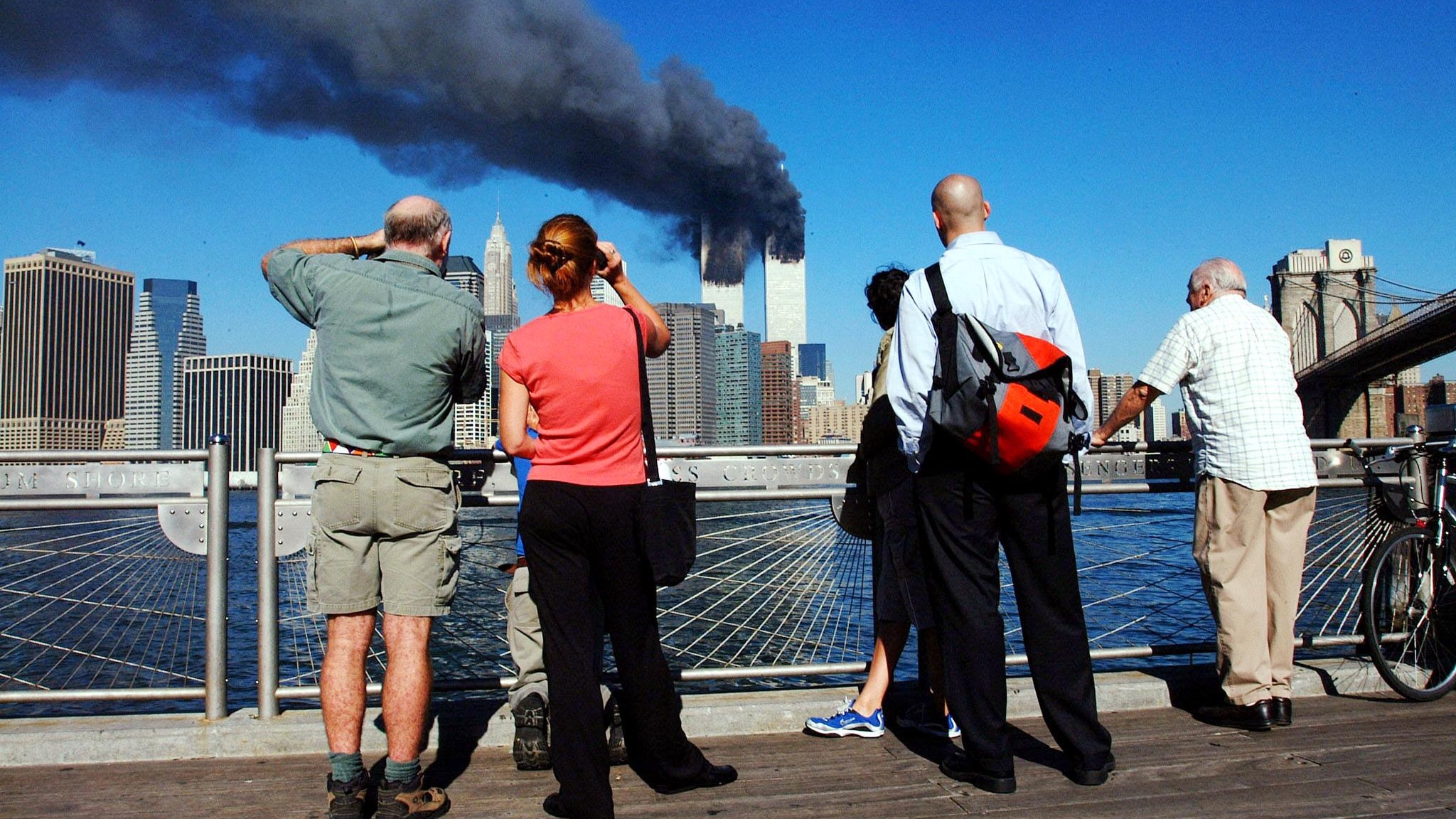
As the United States prepares to mark the 25th anniversary of the devastating September 11, 2001 terrorist attacks, a new national poll has laid bare deep partisan divisions over the decades-long legacy of the post-9/11 “war on terror” and the domestic surveillance and security infrastructure it spawned.
On September 11, 2001, 19 al-Qaeda hijackers seized control of four commercial airliners, launching coordinated attacks that killed nearly 3,000 people. Two planes crashed into the Twin Towers of the World Trade Center in New York City, destroying the iconic complex; a third struck the Pentagon outside Washington, D.C.; the fourth crashed into a rural field in Pennsylvania after passengers fought back against the hijackers.
In response to the attacks, then-President George W. Bush launched sweeping changes to U.S. national security architecture that reshaped American life for generations. The administration created the new Department of Homeland Security, established the Transportation Security Administration (TSA) which introduced widespread airport screening protocols still used today, signed the Patriot Act granting law enforcement broad authority to surveil citizen communications, and secured congressional passage of the 2001 Authorization for Use of Military Force (AUMF). That open-ended military authorization remains in effect 23 years later, and has been invoked by every subsequent administration to launch military operations across at least seven sovereign nations, including Afghanistan, Iraq, Syria, Somalia, Pakistan, Libya and Yemen.
The new YouGov poll, published Wednesday, surveyed 1,098 U.S. adults aged 18 and older between August 20 and 23, with a margin of error of plus or minus 4.1 percentage points. When asked whether post-9/11 counterterrorism measures—including overseas military operations and expanded domestic security and surveillance—have been “worth the cost”, 48 percent of respondents answered yes, 25 percent said no, and 27 percent reported being unsure.
Partisan affiliation drove starkly different views: 71 percent of Republican respondents said the measures were worth the cost, nearly double the 36 percent of Democrats who agreed with that assessment. That partisan divide extends to perceptions of national safety: just under half of all respondents (49 percent) said the U.S. is safer today than it was before the 9/11 attacks, but that number jumps to 60 percent among Republicans, while only 20 percent of Republicans say the country is less safe now.
Maha Hilal, author of *Innocent Until Proven Muslim*, a book documenting the human costs of the war on terror, attributed widespread acceptance of the “safer now” narrative to decades of sustained government propaganda and little visible disruption to daily life for most Americans. “It’s pretty easy to convince people that they’re safer now because their ability to maintain the same sort of lifestyle has been relatively unchanged, especially as Americans tend to be quite apathetic anyway,” Hilal told Middle East Eye.
The poll also found that a narrow majority of Americans—52 percent—recognize that Muslim Americans have faced worse treatment than followers of other faiths in the post-9/11 era. That finding also splits sharply along partisan lines: 71 percent of Democrats agree that Muslim Americans have been mistreated, compared to just 28 percent of Republicans. This gap comes as Muslim community leaders and experts report that current anti-Muslim rhetoric from leading Republican figures is more extreme today than it was in the immediate aftermath of the 9/11 attacks.
When asked which ideological group has carried out the most violent attacks within U.S. borders, 25 percent of respondents correctly identified right-wing extremists, while 19 percent blamed Islamic extremists, 17 percent pointed to unaffiliated lone wolves, and 13 percent named left-wing extremists.
Hilal noted that the decades-long success of the war on terror narrative has made it difficult even for progressive critics to center the harms of Islamophobia, which is often framed as an accidental side effect of counterterrorism rather than a core, intentional feature of the policy. “It has been to reiterate over and over again how this war has been a success, and how it has stopped numerous acts of terrorism,” Hilal said. “Even among leftists and liberals, it has been difficult to communicate the idea that Islamophobia has been a part and parcel to the war.”
The ongoing resonance of post-9/11 biases has been highlighted by a recent controversy at CBS News, which faced internal backlash from current and former staffers over its coverage of Abdul El-Sayed, the first Muslim Democratic nominee for U.S. Senate in Michigan, who is running in the 2024 November election. Critics accused the network of overt racism and poor journalism for publishing a pre-anniversary story highlighting old, deleted social media posts from El-Sayed. In the posts, El-Sayed compared the more than 1 million U.S. deaths from COVID-19 to the nearly 3,000 deaths from 9/11, and called for the same level of national mobilization to address poverty and the pandemic that the country deployed after the attacks. He also mourned both the victims of 9/11 and the hundreds of thousands of people killed in the post-9/11 wars that followed.
New research from Brown University’s Costs of War project has underscored the staggering human toll of those post-9/11 conflicts. A 2023 report from the project estimated that at least 4.5 million people have died as a direct or indirect consequence of post-9/11 wars across the Middle East, North Africa and Asia. Of those fatalities, between 3.6 and 3.7 million are classified as indirect deaths, caused by collapsed economies, widespread food insecurity, destroyed public health infrastructure, environmental contamination, and ongoing intergenerational violence and trauma that follow armed conflict. Even after the U.S. withdrew its formal military presence from Afghanistan in 2021, Afghans continue to suffer and die from war-related causes at higher rates than at any point during the conflict, the report found. Many of these indirect deaths could have been prevented if not for the collapse of basic services brought by war, researchers noted.
While casualty counts for post-9/11 conflicts remain a topic of heated political debate, independent estimates have consistently pointed to massive death tolls: a 2015 report from Nobel Prize-winning organization Physicians for Social Responsibility estimated that more than 1 million people had been killed in Iraq, Afghanistan and Pakistan alone by that point.
-
Brazilian justice who imprisoned Bolsonaro now under fire for alleged links to disgraced banker
Less than two months before Brazil’s critical October general elections, a widening scandal involving one of the country’s top Supreme Court justices has thrown the nation’s highest judicial body into crisis, triggering widespread calls for resignation and putting public trust in core democratic institutions to the test.
The controversy centers on Alexandre de Moraes, the Supreme Court justice who recently handed down a 27-year prison sentence to former Brazilian President Jair Bolsonaro over his role in a 2022 coup attempt. Newly unsealed federal police documents have linked Moraes to disgraced fallen banker Daniel Vorcaro, the embattled owner of collapsed Banco Master, who is currently in jail awaiting trial on corruption charges.
The documents, made public by Moraes’ fellow Supreme Court Justice André Mendonca—an appointee of former President Bolsonaro—outline that investigators have concluded Vorcaro repeatedly sought and acted on guidance from a person law enforcement identifies as de Moraes. In encrypted messages recovered by police, Vorcaro thanked the justice for the guidance (in sections of communications investigators have not been able to fully access) and referenced the alleged conversations in exchanges with personal associates. The filings also confirm a previously public 130 million Brazilian reais (equivalent to roughly $26 million) contract between Vorcaro and Moraes’ wife, Viviane Barci de Moraes, which Moraes personally reviewed.
Legal representatives for Barci de Moraes issued a public statement Tuesday defending the justice’s actions, noting that Moraes only reviewed the contract to confirm no conflict of interest existed with his judicial role. They emphasized that Moraes has never participated in any court proceedings involving Banco Master or Vorcaro. As of Thursday, Moraes himself has not issued any public response to the allegations.
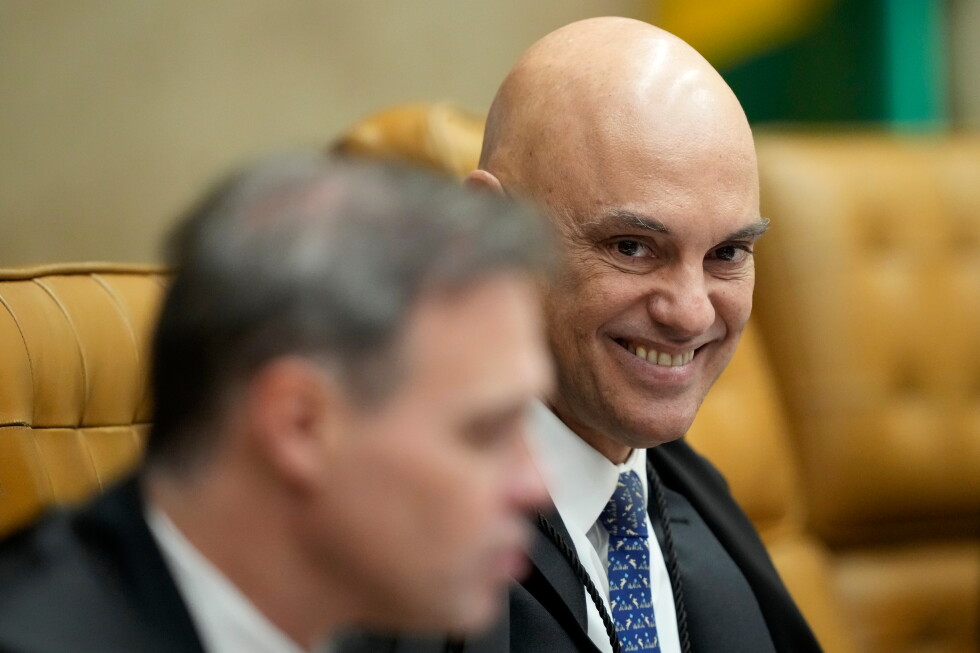
Just 24 hours after the documents were unsealed, the full 10-member Supreme Court gathered for a scheduled session in Brazil’s capital Brasilia. Notably, none of the sitting justices publicly addressed the unfolding scandal during the meeting. Moraes sat directly next to Mendonca, the justice who released the documents, and the two did not exchange any words during the session, which was dedicated to other judicial business.
Outside the court’s walls, however, pressure for Moraes to step down has grown rapidly across the political spectrum. Brazil’s leading daily newspaper Folha de S. Paulo issued a scathing editorial Wednesday arguing that Moraes’ continued tenure on the court brings ongoing dishonor and discredit to Brazil’s entire judicial system. “The most dignified and swift course would be for the justice to resign. That would spare the country’s institutions unnecessary and prolonged damage,” the paper stated, adding that the Brazilian Senate should move forward with impeachment proceedings if Moraes refuses to resign voluntarily.
The scandal has already ensnared multiple high-profile politicians, and comes at a highly charged moment just ahead of October’s municipal elections. Flávio Bolsonaro, opposition senator and son of the former president, has already admitted to receiving at least $12 million in funding from Vorcaro to produce a biographical documentary about his father. Speaking at a campaign event in the southern state of Rio Grande do Sul, Bolsonaro called for Moraes’ immediate ouster, claiming the justice “committed several crimes” and arguing it is unacceptable for him to remain on the Supreme Court bench in light of the revelations. Multiple other electoral candidates across the political divide have echoed the call for Moraes to step down.
Even allies of current President Luiz Inácio Lula da Silva have joined the calls for accountability. Carlos Fávaro, a former Lula agriculture minister who is widely seen as a leading voice for Brazil’s business community, wrote on social media that Moraes has only two paths forward: publicly clarify the full details of his relationship with Vorcaro, or resign. Sitting Lula government ministers have not commented publicly on the scandal, and Lula himself has also remained silent on the issue. The scandal has also drawn in other figures, including a long-time Lula ally who has been tied to Vorcaro’s corrupt activities.
Moving forward, the full Supreme Court will need to vote on whether to authorize a formal investigation into Moraes’ alleged ties to Vorcaro. Procedural decisions about the timing and scope of any probe will fall to Mendonca, who is chairing the case, and Supreme Court Chief Justice Luiz Edson Fachin. Speaking at a formal ceremony ahead of the court’s afternoon session Wednesday, Fachin said he would carefully review all available evidence and follow all established procedures before announcing next steps in the coming days. “In moments of particular gravity, it is everyone’s duty to preserve the integrity of the Supreme Court, the authority of its decisions, respect for its rules and, above all, society’s trust in the institution,” Fachin said.
-
Protests in Spain over government’s handling of Ceuta migrant crisis
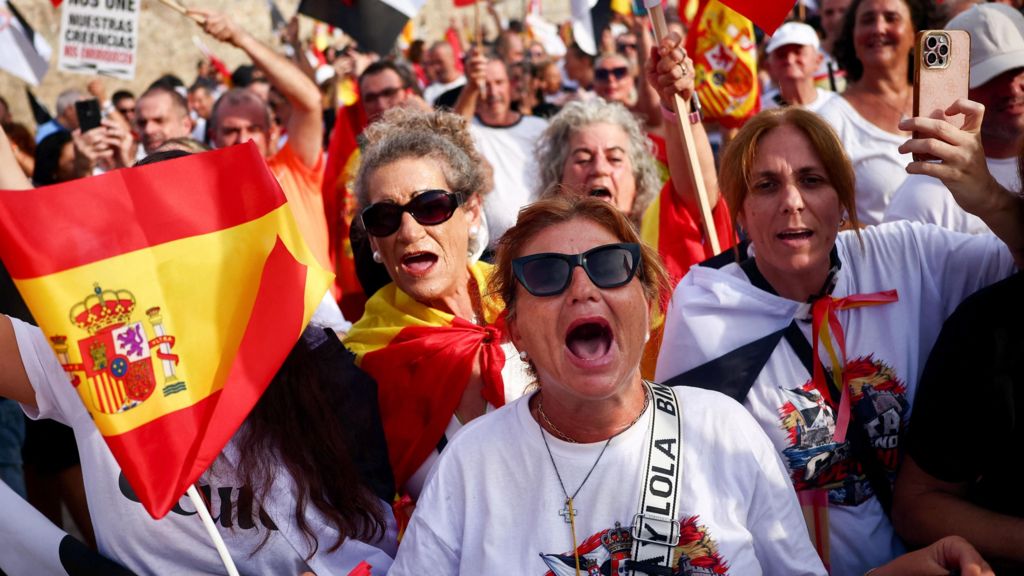
A wave of nationwide protests has swept across Spain this week, with thousands of demonstrators turning out in major cities including Madrid to condemn Prime Minister Pedro Sánchez’s response to the unprecedented mass migrant influx into the North African Spanish exclave of Ceuta. Organized by local councils controlled by or heavily influenced by the conservative opposition Popular Party (PP) and far-right Vox party, the rallies have amplified political pressure on the Sánchez administration, with thousands of protestors gathering in Ceuta itself to demand urgent action on the lingering humanitarian and security situation.
The crisis unfolded in late July, when more than 72,000 migrants crossed the border from Morocco into Ceuta over just two days, on July 30 and 31. While most of the migrants have since returned to Morocco, an estimated 5,000 remain, residing in overcrowded makeshift camps, spreading across city streets and occupying public beaches. This unresolved situation has sparked widespread unrest among local Ceuta residents, who have held near-daily protests calling for the remaining migrants to either be repatriated to their home countries or redistributed to other regions of Spain.
The political fallout deepened this week following the release of a Spanish National Police report obtained by local media, which contradicts earlier claims from Prime Minister Sánchez that Morocco bore no responsibility for the mass crossing. The report, submitted by the National Immigration and Borders Centre (CENIF) to Spain’s National Court, documents that Moroccan security forces maintained a posture of “total permissiveness” during the influx. It notes that Moroccan police deployed far fewer personnel around the Ceuta border than is standard during normal operations, and interviews with crossing migrants described Moroccan authorities taking a passive approach as thousands crossed. While the report stops short of explicitly accusing Morocco of orchestrating the crisis, it directly undermines Sánchez’s prior public stance on the incident. Morocco has repeatedly denied any involvement in facilitating the mass crossing.
Sánchez has pushed back against opposition criticism, framing the crisis as the result of human trafficking gangs that lured migrants across the border with false promises spread through online misinformation. The prime minister has also accused right-wing opposition parties of deliberately exploiting the emergency for political gain. Pre-crisis context compiled by Spanish fact-checking outlet Maldita supports the misinformation claim: the outlet confirmed that in the weeks leading up to the July crossing, encouraging messages circulated widely across Moroccan social media platforms, spreading false claims that the border fence was safe and easy to cross. This social media campaign followed a June ruling by Spain’s Supreme Court, though the exact connection remains unconfirmed. According to Ceuta’s mayor, at least 100 migrants have died attempting to swim around the border fence to enter the exclave, contradicting the false claims of easy access spread online.
On Wednesday, more than 50,000 protestors gathered in the Spanish capital Madrid, according to government counting. PP leader Alberto Núñez Feijóo joined the Madrid rally and delivered a sharp rebuke of the Sánchez government, claiming: “A Spanish city has been invaded, occupied and, unfortunately, this happened with the knowledge of the Government of Spain.” Vox party leader Santiago Abascal went even further, delivering an incendiary speech claiming Sánchez acts “at the service, like a lackey, of the Moroccan regime.” Protesters across all rallies called for Sánchez to step down over his handling of the crisis.
Local Ceuta resident David Hernandez, a 45-year-old teacher who joined the rally in his home city, told reporters that the government’s response had been unacceptable. “The response has been inadequate, late and, to top it all, has involved a complete dereliction of duty on the part of the government,” he said. “We cannot be second-class citizens, and our border must not be sidelined.” Demonstrators in Ceuta chanted slogans including “Ceuta is not for sale, Ceuta must be defended.”
The Ceuta crisis is the latest flashpoint in decades of tense diplomatic relations between Spain and Morocco. Morocco has long maintained a formal territorial claim over both Ceuta and the neighboring Spanish autonomous exclave of Melilla, both of which are located on the North African coast and controlled by Spain. The unresolved dispute has repeatedly created friction between the two neighboring nations, with migration often emerging as a core point of contention in bilateral talks.
-
Israel vows to retaliate if UK imposes sanctions
A sharp diplomatic standoff between Israel and the United Kingdom has intensified in recent days, as top Israeli officials have issued explicit warnings that any new British sanctions targeting illegal Israeli settlements in the occupied West Bank will trigger a swift and proportional retaliation from Jerusalem.
The public escalation began during an interview with Israeli domestic news outlet Ynet this Tuesday, when Israeli Foreign Minister Gideon Sa’ar laid out Israel’s position amid growing tensions over Israel’s recently announced plan to expand settlement construction in the West Bank’s highly contentious Area E1. Sa’ar levelled criticism directly at the UK’s current Labour government, accusing the administration of pursuing a coordinated agenda against Israel. He noted the government has already restricted Israeli defense imports and imposed punitive measures on senior Israeli ministers, actions that set the stage for the current crisis.
The Labour government first imposed targeted sanctions in June 2025, when it blacklisted far-right Israeli cabinet members Itamar Ben Gvir and Bezalel Smotrich for their role in inciting settler violence against Palestinian communities during Israel’s ongoing military campaign in Gaza. This Tuesday, UK Foreign Secretary Ed Miliband formalized plans for further action during an address to British Members of Parliament, confirming his government would roll out a “comprehensive” package of sanctions in the coming weeks.
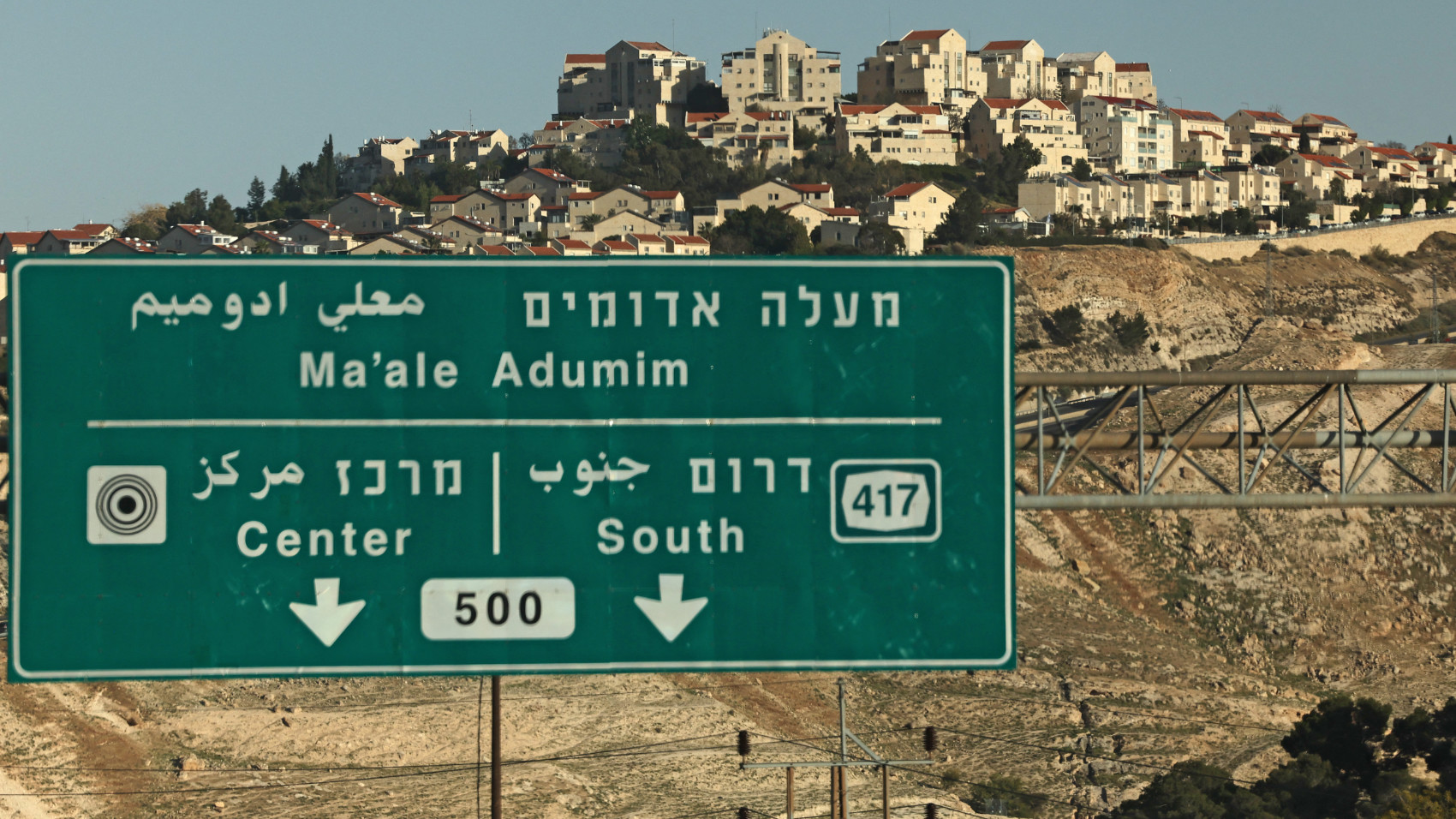
Miliband emphasized that Israel’s proposed E1 development – which would connect Jerusalem to the existing Ma’ale Adumim settlement and other Israeli built communities east of Jerusalem, effectively splitting the core territory Palestinians have earmarked for their future independent state – poses an existential threat to the prospect of a two-state solution to the Israeli-Palestinian conflict. “This government will not acquiesce in the destruction of the two-state solution,” Miliband told lawmakers, confirming that concrete measures would be outlined in the near term.
The proposed E1 project has been a flashpoint for international criticism for decades, as its implementation would permanently cut off the geographic contiguity of the West Bank, making a sovereign, viable Palestinian state functionally impossible. Sa’ar rejected Miliband’s announcement outright, framing the planned sanctions as an unjust attack on Israeli interests. “If Britain acts against Israel, Israel will act against Britain,” Sa’ar told Ynet. “They will be making a big mistake. Israel will not be a passive victim of this policy, and we will defend our rights, our interests and our people.” Sa’ar added that Israeli authorities are already making preparations for potential sanctions and finalizing their retaliatory response.
This public exchange is the latest high-profile clash between the two countries’ top diplomats: just last month, Sa’ar and Miliband traded critical remarks over the E1 settlement expansion plan, opening the rift that has now widened into a full diplomatic crisis.
According to a Monday report from Israeli right-wing newspaper Ma’ariv, Israeli officials have already privately warned London that any new sanctions on settlements will be met with a “substantial” response. The report noted that Israeli leadership has not yet finalized the form of retaliation, with multiple options on the table including diplomatic and economic measures. One option reportedly under active consideration is the expulsion of British representatives from the US-led International Gaza Support Centre (IGSC), the multinational body established to monitor the ongoing Israel-Hamas ceasefire in Gaza.
This would not be an unprecedented step for Jerusalem: just last week, Israel expelled Dutch officials from the IGSC in response to the Netherlands’ recent ban on imports of goods produced in illegal Israeli settlements. Earlier this year, Israel similarly removed Spanish representatives from the body, accusing the Spanish government of “obsessive anti-Israel bias.”
Still, Ma’ariv reported that Israeli leadership is weighing the potential long-term risks of a harsh retaliation against the UK, noting that future British governments led by the Conservative Party or a Reform UK-aligned administration are widely expected to adopt a far more pro-Israel stance. The report also confirmed that the United States administration has been working behind the scenes as an intermediary between the two governments, actively pressuring London to abandon its planned sanctions package.