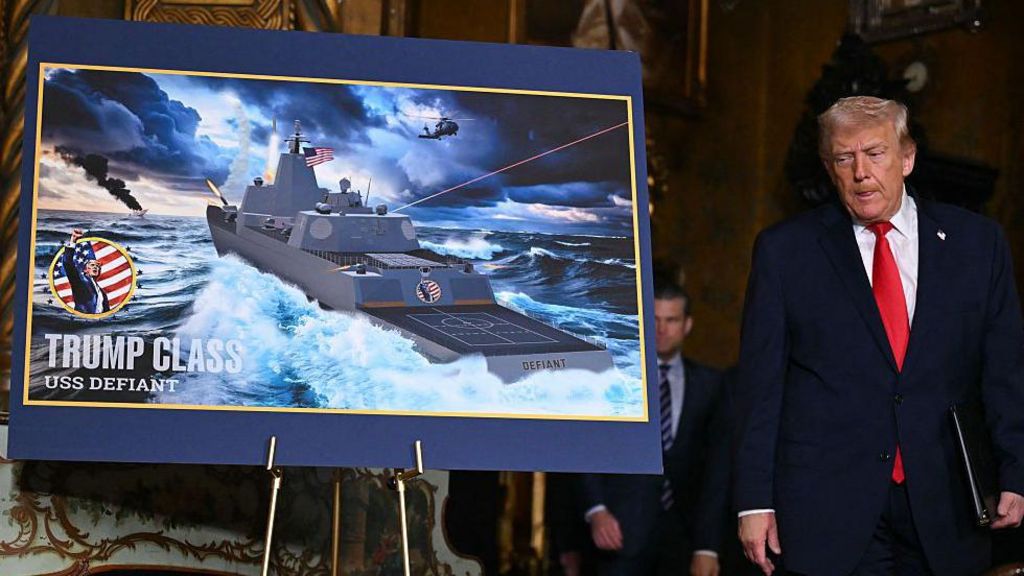
The Trump administration has tabled a historic proposal on Capitol Hill that would push U.S. defense spending to $1.5 trillion — the single largest expansion of military outlays since World War II — in a push to advance the president’s long-stated goal of rebuilding domestic defense manufacturing and bolstering national defense capabilities. If approved, the budget would mark a 42% jump in defense spending compared to the prior fiscal year, representing the most dramatic reordering of federal spending priorities in decades. The massive request, which requires congressional approval to take effect, is structured separately from the separate $200 billion in emergency funding the Pentagon has already requested to support ongoing military operations in Iran. Breaking down the $1.5 trillion total, roughly $1.1 trillion would be allocated as discretionary Pentagon spending, a figure that sets a new all-time record for the department. An additional $350 billion earmarked for expanding the domestic defense industrial base would advance through the budget reconciliation process, a Senate procedural rule that allows the measure to pass with a simple 51-vote majority rather than the 60-vote threshold usually required for most major legislation. Among the top funded priorities outlined in the proposal is the White House’s ambitious Golden Dome missile defense initiative, a multi-layered system designed to shield the continental U.S. from advanced next-generation missiles and drone attacks. The system will integrate interception and sensor technology positioned on land, at sea, and in orbit, according to administration officials. While the White House has pegged the total cost of Golden Dome at $185 billion, independent analysts have raised major concerns about the true long-term price tag. The nonpartisan Congressional Budget Office has already estimated that just the space-based components of the system alone could cost $542 billion over 20 years, and many defense experts warn the full cost could eventually consume a large share of the total expanded defense budget. The proposal also allocates $65.8 billion for expanded U.S. naval shipbuilding, part of the administration’s plan to build what Trump has called a “Golden Fleet” of next-generation warships. This funding supports the production of the newly unveiled Trump-class battleships, a class of heavily armed vessels first announced by the president in December. Trump confirmed earlier this year that construction on the lead ship of the class, the USS Defiant, will begin shortly after budget approval, with the first vessels projected to enter active service within two and a half years. Administration officials have repeatedly justified the expanded shipbuilding investment by warning that the U.S. currently lags far behind China in both overall shipbuilding capacity and total naval vessel output, a gap they argue must be closed quickly to protect U.S. strategic interests globally. In addition to capital investments, the budget also includes funding for targeted pay raises for active-duty military personnel, a long-sought priority for uniformed service members. To offset the massive increase in defense spending, the administration has proposed deep cuts to non-defense domestic programs, cutting overall domestic spending by 10% — a reduction of roughly $73 billion. The cuts target a range of federal initiatives, including existing climate action programs, housing assistance, and public education initiatives. In an online summary of the budget proposal, the administration frames the cuts as a necessary step to eliminate what it calls “woke, weaponised and wasteful programmes,” and to shift control of domestic social programs back to state and local governments, in line with longstanding conservative policy priorities. President Trump doubled down on this framing during a private White House event earlier this week, where comments caught on camera reaffirmed his view that national defense must be the top federal priority moving forward. “It’s not possible for us to take care of daycare, Medicaid, Medicare, all of these individual things, they can do it on a state basis,” Trump told attendees, adding that the federal government’s core focus must remain on “military protection.” The proposal now heads to Congress, where it will face debate and a vote before any spending changes can be enacted.
分类: politics
-
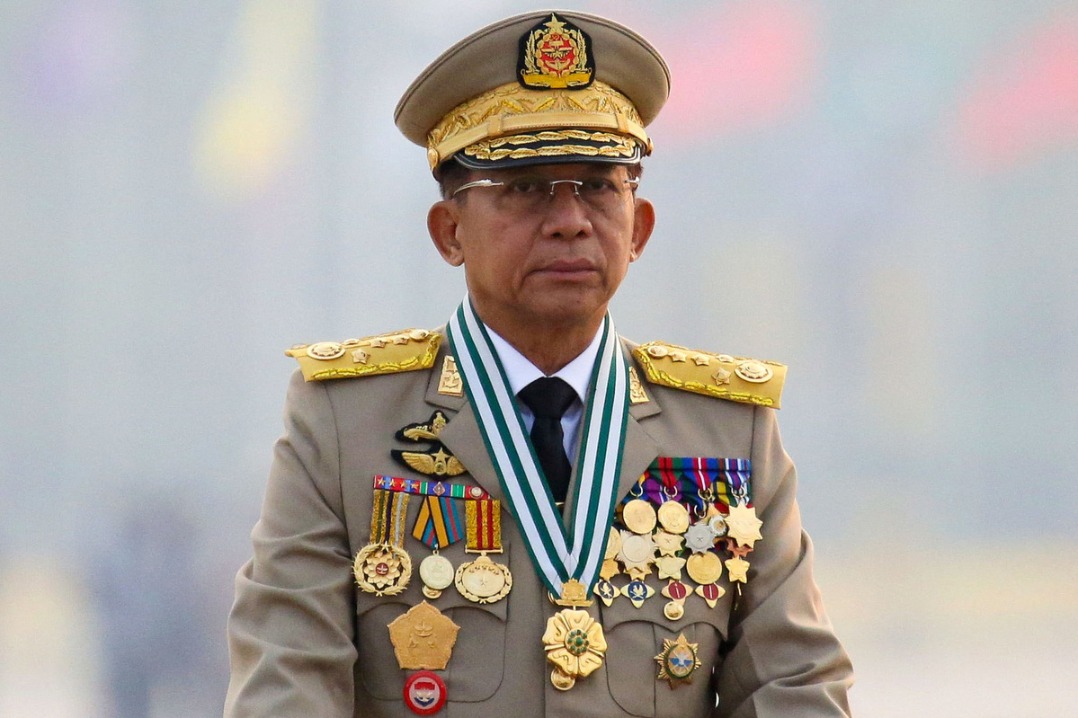
Min Aung Hlaing elected Myanmar’s president
In a landmark electoral vote held in Myanmar’s capital Nay Pyi Taw on Friday, junta leader Min Aung Hlaing has secured a decisive victory in the country’s presidential election, earning more than half of all votes cast by the Union Parliament, according to a Xinhua update published on April 3, 2026.
The vote unfolded through the country’s Presidential Electoral College, a legislative body made up of all sitting Union Parliament representatives. A total of 584 members of the Electoral College attended Friday’s voting session, which drew three competing candidates each nominated through different parliamentary blocs under Myanmar’s current electoral framework.
Under the country’s existing system, three vice presidents are first selected to serve as the only eligible candidates for the presidency. Earlier that week on Tuesday, Min Aung Hlaing, U Nyo Saw, and Nan Ni Ni Aye had been confirmed as the three vice presidents, and by Thursday, the Union Parliament had completed mandatory qualification reviews, clearing all three to appear on the presidential ballot.
When votes were counted, Min Aung Hlaing — who was put forward as a candidate by members of the Pyithu Hluttaw, Myanmar’s lower parliamentary house — collected 429 votes, a clear majority of the 584 ballots cast. His closest competitor, U Nyo Saw, who ran as a representative of the joint military caucus from both parliamentary houses, secured 126 votes. The third candidate, Nan Ni Ni Aye, who received a nomination from members of the upper parliamentary house, the Amyotha Hluttaw, won 29 votes to round out the results. The outcome of the election formalizes Min Aung Hlaing’s assumption of the country’s highest office, capping a weeks-long electoral process laid out by the country’s current legislative structure.
-
France’s Muslim gathering ban overturned by courts
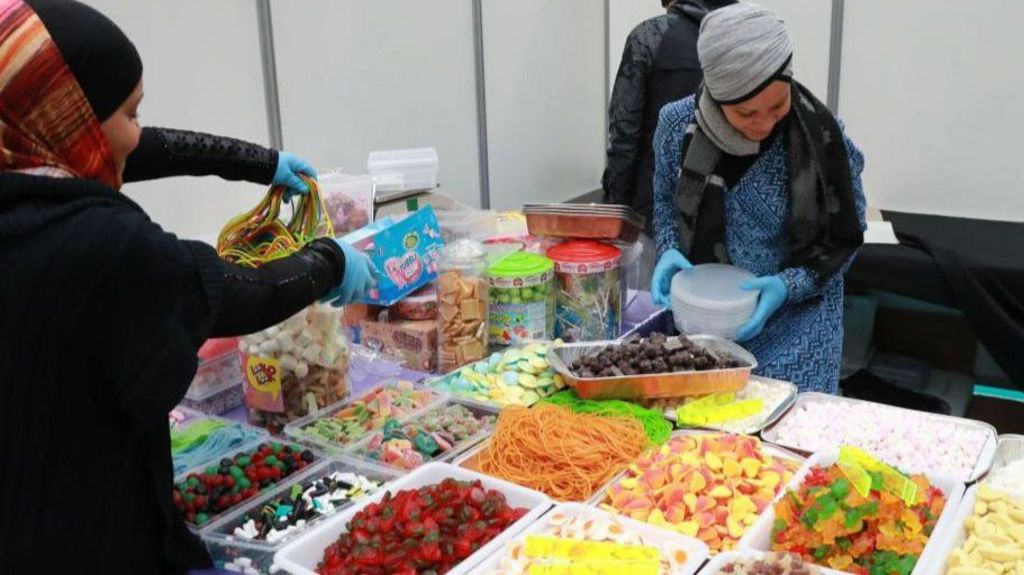
A major four-day annual gathering of French Muslims in northern Paris will proceed as scheduled after a French administrative court struck down a government attempt to ban the event in a last-minute ruling delivered just two hours before the gathering was set to open at 14:00 local time.
The Paris Police Prefecture had justified the ban by citing heightened national and international security tensions, arguing the event — known as the Annual Encounter of Muslims of France — faced significant risk of terrorist targeting against attendees, and that far-right extremist groups could mobilize to disrupt the gathering, potentially with remote backing from foreign actors. French authorities have repeatedly accused nations including Russia and Iran of fomenting domestic division through proxy groups carrying out small-scale provocations and sabotage. Police also claimed the gathering would place an unsustainable strain on local law enforcement resources.
Organized by the Muslims of France (MF) association, the largest Muslim representative body in the country, the event combines religious and cultural conferences with a commercial trade fair. The gathering was a long-running annual tradition that regularly drew tens of thousands of attendees from across Europe before it was paused in 2019. Critics have long claimed MF has close ties to the international Muslim Brotherhood, an allegation the organization repeatedly denies.
Following the ban announcement, MF filed an emergency injunction to challenge the government order, arguing that a prohibition would violate fundamental French civil liberties. In its ruling, the court sided with organizers, finding that evidence provided by police failed to prove a concrete risk of counter-protests or targeting by far-right groups. The court also rejected the police resource strain argument, noting that event organizers had already committed to funding and deploying additional private security measures.
The court decision comes amid a broader policy push by the French government to advance a new anti-separatism law, primarily targeting religious institutions that promote ideologies deemed inconsistent with French republican principles. Interior Minister Laurent Nunez explained the proposed legislation would build on a similar law enacted five years prior, which allowed the government to shut down associations accused of spreading Islamic separatism. Nunez noted that existing legal powers left gaps in regulation, particularly for oversight of collective childcare services, and that the new law would also enable authorities to ban publications that incite hatred, violence, and discrimination.
During the injunction hearing, MF lawyer Sefen Guez Guez argued that the proposed ban represented a clear violation of the constitutional right to peaceful assembly, and that the government’s push for the prohibition was primarily a political maneuver to build support for its new anti-separatism legislation. In response, legal representatives for the police maintained that the ban was rooted exclusively in public safety concerns, and rejected claims that the order was anti-Muslim or anti-Islam.
-
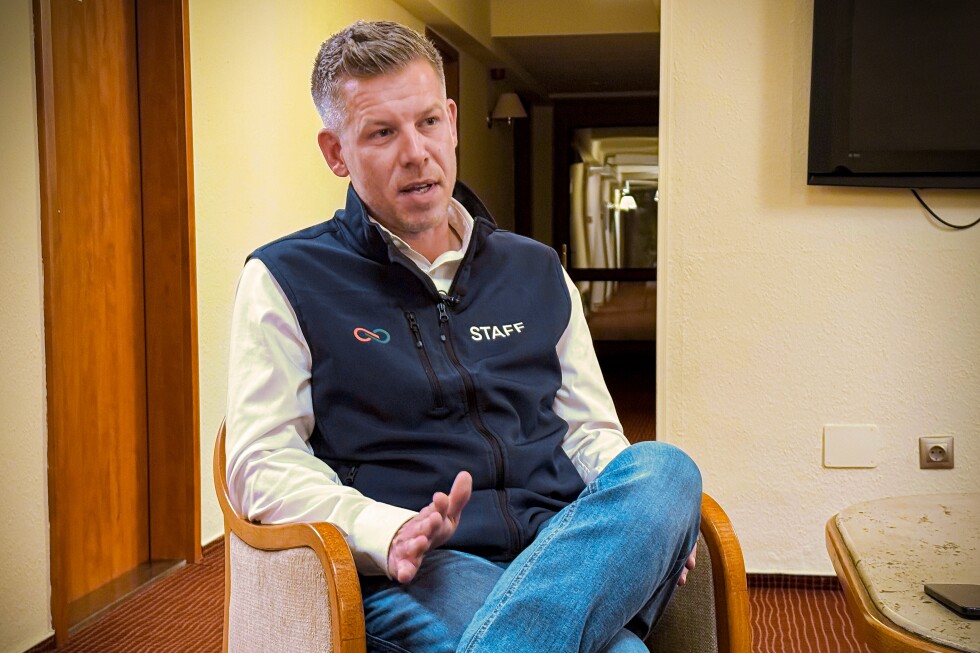
Exclusive: Orbán challenger Magyar says election is a ‘referendum’ on Hungary’s place in the world
With just one week remaining until Hungary’s high-stakes national election on April 12, opposition leader Péter Magyar has cast the upcoming vote as a defining national referendum: will Hungary continue its shift toward Eastern authoritarianism, or reaffirm its place in Europe’s democratic community? A one-time ally of long-serving pro-Russian Prime Minister Viktor Orbán, Magyar has emerged as the most formidable threat to Orbán’s hold on power since the nationalist leader first took office in 2010.
In an exclusive interview with The Associated Press following a campaign rally for his center-right Tisza Party in the southern Hungarian city of Kiskunhalas, Magyar argued that Orbán has steered the country on a 180-degree ideological turn over his tenure, endangering Hungary’s longstanding Western alignment while building closer political and economic ties to Moscow. Despite this shift, Magyar emphasized that a majority of Hungarians still view EU and NATO membership as the only guarantee of the country’s long-term peace and sustainable development. “I think this really will be a referendum on our country’s place in the world,” he told AP.
Magyar’s grassroots campaign has been relentless: he has crisscrossed Hungary, holding hundreds of rallies in cities, towns and rural settlements, stopping at as many as six communities a day in the lead-up to voting. The rapid rise of Magyar and Tisza has shocked political observers across Europe. For 14 years, Hungary’s fragmented opposition groups failed repeatedly to unseat Orbán, with most opposition leaders neglecting outreach to Orbán’s core rural base and leaving many opposition supporters demoralized and apathetic after a string of crushing electoral defeats.
A 45-year-old lawyer and former insider within Orbán’s ruling Fidesz party, Magyar has unique insight into the ruling party’s system: he previously worked as a diplomat in Brussels, held roles in Hungarian state institutions, and was once married to a former Fidesz justice minister and close Orbán ally. His break with the ruling party came in early 2024, amid a public scandal over a presidential pardon granted to an accomplice in a child sexual abuse case. After publicly cutting ties, he accused Fidesz of systemic, entrenched corruption and the systematic capture of Hungary’s independent institutions.
Magyar launched Tisza, named for Hungary’s second-longest river, just four months before the 2024 European Parliament elections, where the new party won an surprising 30% of the national vote. Its skyrocketing popularity spawned the rallying chant that has become the party’s unofficial motto: “The Tisza is flooding.”
Heading into the national election, Magyar leads Orbán in most public opinion polls. He has centered his campaign on pocketbook and quality-of-life issues that resonate with everyday Hungarians: the crumbling state of Hungary’s public healthcare system, underfunded public transportation, and widespread government corruption that he says has left Hungary the poorest and most corrupt member state in the EU. He promises voters a “peaceful, humane and functioning” Hungary that is within reach if Fidesz is voted out.
On the international stage, Magyar has drawn sharp lines with Orbán’s approach to Europe and Russia. Orbán, the EU’s longest-serving national leader, has built a reputation as a persistent disruptor within the bloc, using his veto power to block key EU initiatives repeatedly – most recently holding up a €90 billion ($104 billion) macroeconomic assistance package for Ukraine. His hardline euroskeptic posturing has prompted renewed calls within the EU to reform its unanimity requirement for key policy decisions, a change intended to prevent obstructionist member states from paralyzing bloc-wide action.
Magyar argues that Orbán’s vetoes are almost always performative, used solely to rally his domestic base rather than advance genuine Hungarian interests. A Tisza government, he says, will take a “constructive but critical” approach to EU governance: Hungary will remain a willing participant at the negotiating table, will advocate forcefully for Hungarian national interests when needed, and will retain the power to veto decisions as a legitimate tool when appropriate. “The European leaders have no problem with this, they have a problem with the unnecessary troublemaker role,” Magyar said.
Orbán’s closest alignment with Russia has drawn particular condemnation from European leaders. Following Russia’s full-scale invasion of Ukraine in 2022, nearly all EU member states cut ties with Russian fossil fuel suppliers – but Hungary, alongside Slovakia, maintained and even increased its imports of Russian energy, drawing accusations from across the bloc that it is indirectly funding Putin’s war effort. Orbán’s warm relationship with Putin has also led many analysts and opposition figures to accuse Russian intelligence of meddling in the 2025 election to boost Orbán’s chances of victory.
Magyar has condemned both Orbán’s pro-Russian drift and alleged Russian election interference, but says a Tisza government will pursue a pragmatic, sovereign approach to Moscow: “Pragmatism means that we have no say in Russia’s internal affairs, and they don’t have any say in our affairs. We are both sovereign countries, and we respect each other, but we don’t have to like each other.” He has criticized Orbán’s failure to diversify Hungary’s energy supply, a critical vulnerability for the landlocked country, and has called for new infrastructure and trade agreements to bring energy from alternative suppliers, while noting that an immediate full cut-off of Russian oil is not practical, and that EU funds should be leveraged to facilitate a gradual transition.
Notably, Magyar has retained popular positions from Orbán’s policy platform that enjoy broad support among Hungarian voters, including the southern border fence designed to block irregular migration and the widely used utility price reduction program. Unlike the rising tide of far-right nationalist populist movements across Europe and North America that hold Orbán up as a ideological model, Tisza is a member of the center-right European People’s Party, the largest political grouping in the European Parliament. Orbán enjoys strong support from American right-wing populists, including former U.S. President Donald Trump’s MAGA movement; U.S. Vice President JD Vance is scheduled to travel to Budapest next Tuesday to publicly endorse Orbán’s re-election campaign.
Across the EU, national leaders are closely watching the election results, with many quietly hoping for an Orbán defeat. For Magyar, however, the outcome will be decided by Hungarian voters’ core values: even many Fidesz supporters do not want their country to become a Russian client state rather than a full member of the European democratic community. “I think that Tisza will have an overwhelming electoral victory,” he said.
-
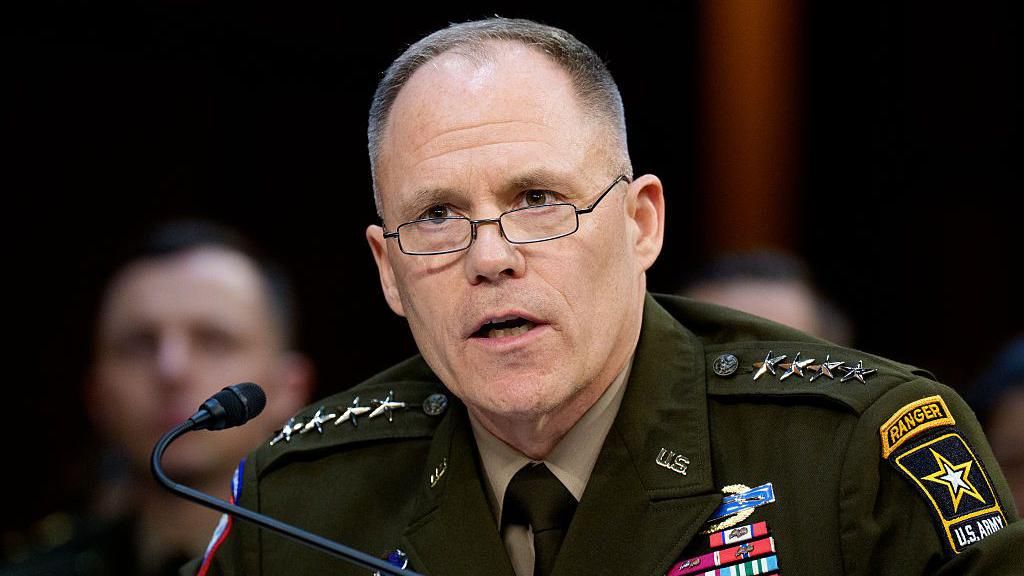
Who is Christopher LaNeve, set to lead the US Army?
A major leadership shift is underway at the top of the United States Army, after Defense Secretary Pete Hegseth requested the incumbent chief of staff Randy George step down from his post. George, who assumed the role in 2023, was serving a standard four-year term as the service’s highest-ranking officer before the leadership change.
Vice Chief of Staff Gen Christopher LaNeve will step into the role as acting chief of staff, the Pentagon confirmed this week. Pentagon spokesman Sean Parnell highlighted LaNeve’s decades of frontline experience in an official statement, framing him as a proven combat leader who fully enjoys Hegseth’s confidence to advance the current administration’s national security and military strategy without error.
The leadership shake-up at the Army’s top ranks comes against two key backdrops: ongoing United States military operations targeting Iran, and a sweeping overhaul of senior uniformed leadership that Hegseth has pursued since taking office. Over just more than a year, the defense secretary has removed more than a dozen senior military leaders, a series of changes that has cleared the way for LaNeve’s rapid ascent through the Pentagon’s ranks.
This appointment marks LaNeve’s third promotion under Hegseth’s tenure. Most recently, he was elevated to vice chief of staff in February 2026, filling an early vacancy created by the retirement of James Mingus. At the time of that appointment, Hegseth praised LaNeve as an exceptional generational leader, saying he would lead efforts to reinvigorate the Army’s warrior culture, modernize the force for 21st-century battlefield challenges, and strengthen deterrence against adversaries across the globe.
Before taking the vice chief role, LaNeve served as a senior military assistant to Hegseth starting in April 2025. He stepped into that position after Hegseth fired Lt Gen Jennifer Short, just months after Hegseth took office at the Pentagon in January 2025.
Commissioned into the Army through the University of Arizona in 1990, LaNeve has built a 36-year career marked by a string of high-profile command and staff assignments. His prior leadership posts include commander of the Eighth Army based in South Korea and head of the elite 82nd Airborne Division. He has also deployed on multiple combat tours, with service in both Afghanistan and Iraq, giving him deep on-the-ground experience in counterinsurgency and large-scale operational missions.
-
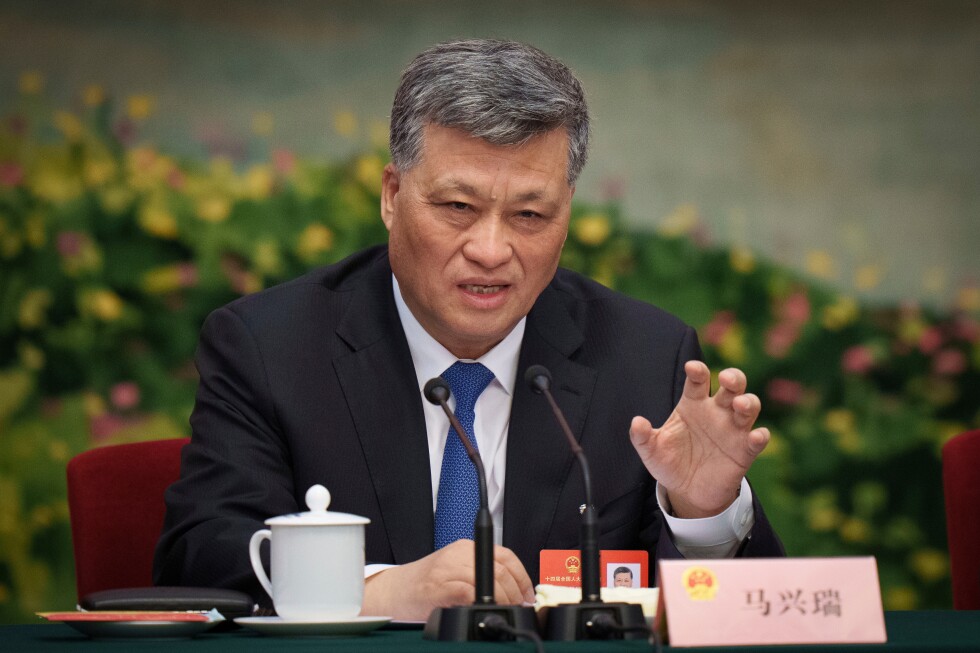
China’s Communist Party investigates ex-Xinjiang leader Ma Xingrui
BANGKOK (AP) — In an announcement made Friday, the Central Commission for Discipline Inspection, the top anti-graft watchdog of the Communist Party of China, confirmed that it has launched a formal investigation into Ma Xingrui, a former top regional party official and sitting member of the party’s Central Committee, over suspected violations of disciplinary rules and national law.
Ma, who has held a series of high-level leadership positions across China, served as the Communist Party Secretary of the northwestern Xinjiang Uyghur Autonomous Region between 2021 and early 2025. Prior to taking on the top role in Xinjiang, he held posts including director of the National Ethnic Affairs Commission and deputy Communist Party Secretary of southern China’s Guangdong Province. As of the announcement, no specific details have been released regarding the nature of the alleged violations linked to Ma.
The investigation of Ma marks the latest high-profile leadership shakeup within China’s senior ranks this year. Back in January, Chinese leader Xi Jinping oversaw the removal of the country’s top military general from his post, in a move that drew widespread international attention.
Ma was actually replaced as Xinjiang’s top party official by Chen Xiaojiang back in July 2024, months before the formal investigation was announced. Xinjiang has long been a region at the center of global controversy, due to a years-long Chinese government campaign that has been widely criticized by international observers and human rights groups.
For years, international reporting and investigations have documented that Chinese authorities detained over 1 million ethnic minority groups, predominantly Uyghur Muslims, in a network of extrajudicial detention camps across the region. Beijing has repeatedly defended the policy, framing it as a necessary counterterrorism measure aimed at addressing violent attacks carried out by a small faction of Uyghur extremist groups.
By the time Ma took up his post as Xinjiang’s party secretary in 2021, Beijing announced that it had closed the vast majority of the original detention centers. But reporting from the Associated Press, based on leaked internal information, has confirmed that many former camp facilities were converted into formal, prison-like facilities. Documentation shows that thousands of Uyghur detainees have been transferred to these facilities to serve long criminal sentences, which independent legal and policy experts have widely described as baseless, politically motivated charges.
Earlier this year in March, China’s national legislature passed a new national-level ethnic affairs law. Independent analysts who study the region say this new law formalizes and codifies the government’s long-running assimilationist policies targeting ethnic minority communities across the country, building on incremental policy changes that have been rolled out at the provincial level in Xinjiang and other regions with large ethnic minority populations over the past decade.
-
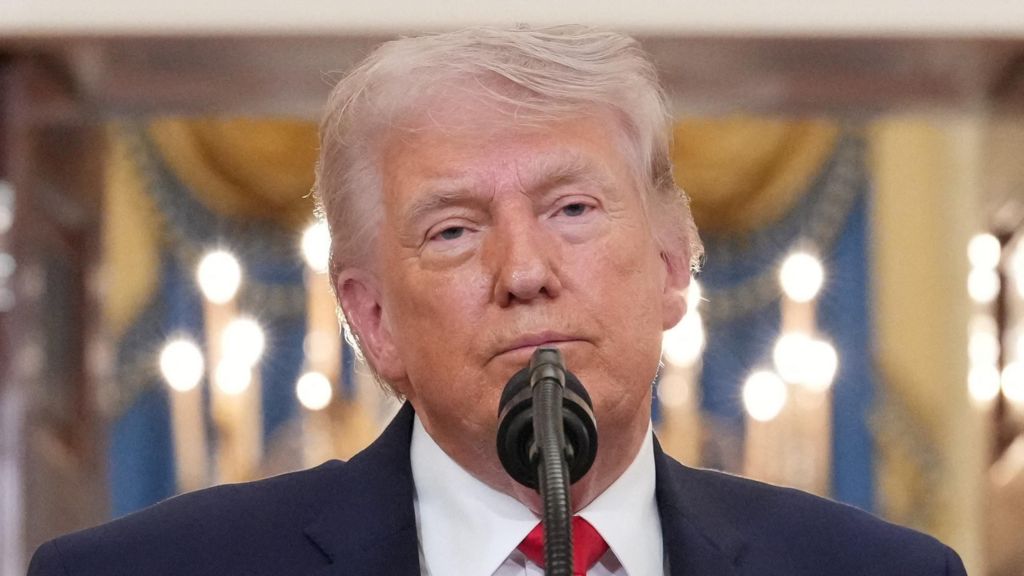
When will the Iran war end? Tracing the Trump administration’s timelines
Since U.S. President Donald Trump launched military operations against Iran in late February, conflicting and constantly shifting timelines for the conflict’s conclusion from the White House and senior administration officials have drawn widespread attention and scrutiny. In his first primetime national televised address dedicated to the war on Wednesday, Trump offered the latest update, claiming U.S. forces are on track to meet their stated military objectives “shortly, very shortly.”
In the address, Trump sought to frame the ongoing conflict as relatively brief compared to protracted historical U.S. engagements like World War II and the Vietnam War, before laying out a new 2 to 3 week timeline for decisive action. “Over the next two to three weeks, we’re going to bring them back to the Stone Ages, where they belong,” he told the American public.
This shifting forecast is far from an isolated incident. Since Trump first announced the start of operations on February 28, when he said the campaign would continue “as long as necessary to achieve our objective,” the president has repeatedly flipped between contradictory claims: that the U.S. has already secured victory, and that the campaign will drag on for somewhere between two and six weeks. The six-week mark since the operation launched will fall on April 11.
Internal inconsistencies across the administration have only added to the confusion. Just over a month ago, Defense Secretary Pete Hegseth told CBS News’ *60 Minutes* that the military action taken up to that point was “only just the beginning,” a statement the Department of Defense echoed in a social media post less than 24 hours later. Yet that same day, Trump claimed during a Florida press conference that the U.S. had already made “major strides” toward its goals, adding that “some people could say they’re pretty well complete.”
Secretary of State Marco Rubio has struck a middle ground between the two officials. A day before Trump’s Wednesday address, he told Fox News: “We can see the finish line. It’s not today, it’s not tomorrow, but it’s coming.”
For his part, Hegseth has defended the fluid timelines, arguing that intentional ambiguity offers tactical benefits on the battlefield. “Don’t tell your enemy what you’re willing to do or not do, and don’t tell your enemy when you’re willing to stop,” he told reporters Wednesday. “It could be any particular number, but we would never reveal precisely what it is, because our goal is to finish those objectives, and we’re well on our way.”
Foreign policy and historical experts interviewed by the BBC note that adjusting war timelines as a conflict evolves is not unprecedented, but the frequency and scope of contradictions in the Trump administration’s messaging stands out in modern U.S. history.
“Presidents have often offered timelines to buy time with the public during wars, and almost all of them underestimate the time,” explained Thomas Patterson, a historian at the Harvard Kennedy School. Looking back at past examples, Lyndon B. Johnson’s famous 1967 “light at the end of the tunnel” rhetoric about Vietnam failed to mask an eight-year extension of the conflict that ultimately ended Johnson’s presidency. In 1999, Bill Clinton predicted a brief NATO bombing campaign against Yugoslavia, only for the strikes to stretch on for more than two months. George W. Bush’s infamous 2003 “Mission Accomplished” speech on an aircraft carrier early in the Iraq War was followed by eight more years of U.S. troop presence in the country.
Eric Min, a professor of conflict resolution and diplomacy at the University of California, Los Angeles, pointed out that forecasting war duration is inherently uncertain, as conflicts regularly shift in unexpected ways. Even so, he noted, the level of inconsistency across the Trump administration is unique. “The inconsistency of positions throughout the administration is pretty unique. There’s not really a historical analogue that I can think of,” Min said.
The White House has pushed back against these criticisms, with press secretary Karoline Leavitt claiming last month that “Trump and his entire team have consistently laid out clear objectives.”
Wednesday’s highly anticipated primetime address had already sparked widespread speculation in Washington ahead of its delivery, with many political observers expecting Trump to announce a major policy shift — either an expansion of the conflict to include ground troops, or a drawdown of operations. Instead, the address delivered only another revised timeline for the war’s end, continuing the pattern of shifting forecasts that has defined the administration’s public messaging on the Iran conflict.
-
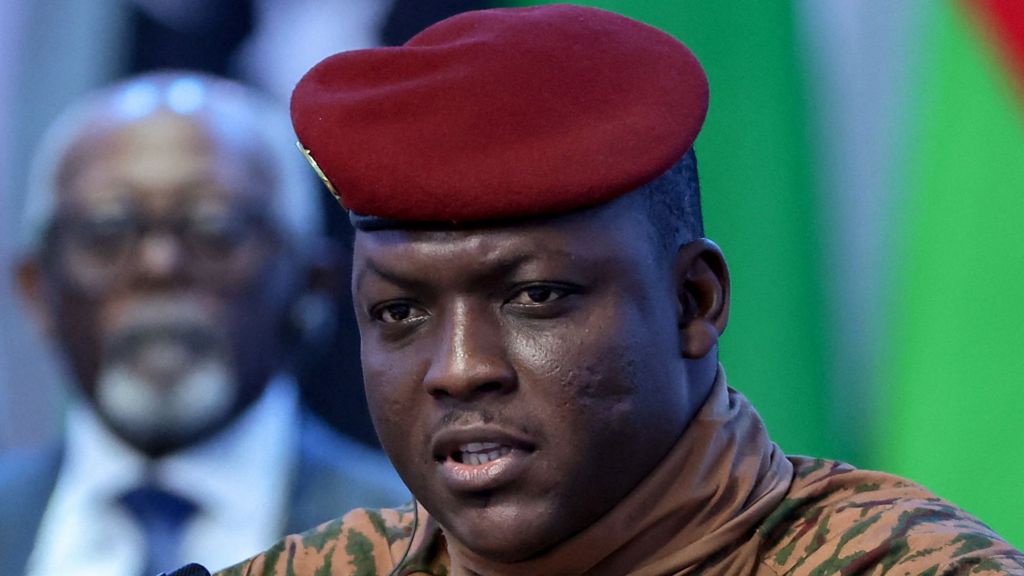
Burkina Faso must ‘forget’ about democracy, military leader says
In a stark public interview broadcast on Burkina Faso’s state television, the West African nation’s military ruler Captain Ibrahim Traoré has delivered a sweeping rejection of liberal democratic governance, claiming the system is inherently harmful to African nations and calling on his people to abandon calls for democratic transition. Traoré, who seized power in a 2022 coup, initially committed to restoring civilian democratic rule by July 2024, but the ruling junta reversed that pledge earlier this year, extending its hold on power for an additional five-year term.
During the interview, the 38-year-old leader, who frames himself as a revolutionary leader pushing back against Western neocolonial interference, argued that democracy is not suited for the African continent. To back his claim, he pointed to the chaos that has engulfed Libya since the 2011 NATO-backed uprising that removed longtime autocratic leader Muammar Gaddafi. “Wherever Western powers try to establish democracy in the world, it’s always accompanied by bloodshed,” Traoré stated. “People need to forget about the issue of democracy. Democracy is not for us.”
Earlier this year, the junta moved to ban all formal political parties as part of a broader plan to rebuild national governance from the ground up. Expanding on this decision during the interview, Traoré labeled political parties as divisive, dangerous forces fundamentally incompatible with his administration’s revolutionary project. He went on to criticize the culture of African politics as he has observed it in Burkina Faso, claiming that conventional politicians in the country embody corruption and moral failing, describing them as habitual liars, sycophants, and manipulative smooth-talkers.
While Traoré declined to lay out detailed blueprints for a formal alternative governing system, he emphasized that Burkina Faso will pursue an entirely homegrown approach, rejecting pressure to copy Western institutional models from abroad. The new framework he outlined centers on national sovereignty, radical patriotism, and mass grassroots revolutionary mobilization, with key governance power allocated to traditional community leaders and local grassroots structures. The junta leader also stressed the critical importance of economic and military self-reliance, arguing that modest 6 to 8-hour workdays are insufficient for the country to close the development gap with wealthy global nations.
Traoré’s rule has been marked by widespread crackdowns on political dissent, with restrictions imposed on opposition groups, independent media outlets, and civil society organizations. Credible reports have even accused his administration of punishing political critics by forcing them to serve on the front lines of the country’s long-running war against Islamist insurgents. Despite these authoritarian measures, Traoré has built a large, enthusiastic following across the African continent, where his pan-Africanist rhetoric and unapologetic criticism of Western geopolitical influence resonate strongly with many people.
Like neighboring military-ruled states Mali and Niger, Burkina Faso under Traoré has cut long-standing security partnerships with Western nations – most notably former colonial power France – in its counter-insurgency campaign. All three Sahel nations have instead turned to Russia for military support, but deadly Islamist violence has continued to spread across the region, with no signs of abating.
The same week of Traoré’s interview, Human Rights Watch released a damning new report documenting that more than 1,800 civilians have been killed in violence across Burkina Faso since Traoré took power in September 2022. The report attributes roughly two-thirds of these civilian deaths to the Burkinabé military and its allied civilian militias, with the remaining deaths blamed on Islamist insurgent groups.
It is important to note that while West Africa has seen a wave of military coups over the past five years, most African sovereign states still hold regular national elections, even though many of these votes have faced widespread international criticism for irregularities and bias in favor of sitting incumbent leaders. In two recent cases, military leaders who seized power in Gabon and Guinea have organized national elections and emerged victorious, cementing their hold on power through formal electoral processes.
-
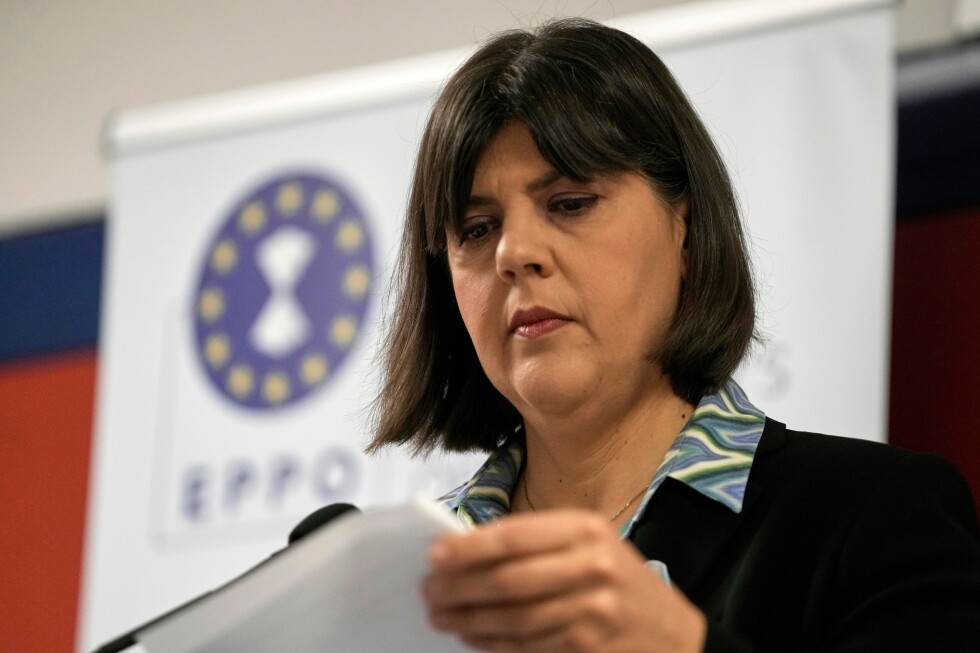
3 Greek ministers quit as EU investigates alleged farm subsidy fraud
ATHENS, Greece — In a significant political upheaval tied to a cross-continental corruption probe, three senior Greek government ministers officially stepped down from their posts on Friday, as the European Union pushes forward with an investigation into widespread alleged fraud involving EU agricultural subsidy funds.
The departing officials include Agriculture Minister Kostas Tsiaras, Civil Protection Minister Yiannis Kefalogiannis, and Deputy Health Minister Dimitris Vartzopoulos. In public statements following their resignations, all three have outright rejected any claims of personal wrongdoing. They emphasized that their decision to leave office was made intentionally to remove procedural barriers and allow the investigation to move forward unimpeded.
At the heart of the unfolding scandal is an alleged scheme centered on a Greek national agency that failed to stop the misappropriation of millions in EU agricultural funding, via false subsidy claims submitted for non-existent land plots and unregistered livestock. This probe is being directly led by the European Public Prosecutor’s Office (EPPO), headed by chief prosecutor Laura Codruta Kovesi, who traveled to Athens last year to hold in-person coordination talks with Greek government leaders.
Currently, the EPPO is requesting the Greek parliament to lift legal immunity for 11 sitting Greek lawmakers who are implicated in the case. The scandal has already sparked intense public outrage across Greece, while also casting uncertainty over the already struggling domestic agricultural sector.
This resignation wave marks the second major shakeup tied to the fraud scheme, after five senior Greek administrative officials stepped down from their roles last year. In recent months, Greece’s farming industry has been roiled by escalating unrest: weeks of mass protests have been organized by farmers angered by delayed subsidy payments, which have been put on hold as a direct result of the ongoing investigation. Earlier this year, thousands of agricultural workers drove tractors into central Athens and major hubs of central Greece to stage demonstrations over the disruptions.
Within hours of the Friday resignations, Greece’s ruling center-right administration moved quickly to reorganize its cabinet, naming former European Commission Vice President Margaritis Schinas to fill the vacant agriculture minister post.
-

Bridging China-US divide, one wish at a time
Against a backdrop of often tense and headline-dominating high-level geopolitical discussions between China and the United States, a quiet, people-centered initiative is anchoring the bilateral relationship in mutual understanding and friendship, one handwritten wish at a time.
This past March, between the 14th and 22nd, 100 student delegates from the U.S. state of Iowa embarked on a multi-city tour of China, stopping in Beijing, Shanghai, and Shijiazhuang, the capital of China’s Hebei province. At Shijiazhuang Foreign Language School, alongside their Chinese peers, the visiting students tied handwritten red wish cards to the budding branches of a ginkgo tree, filling each small note with hopes for peace, shared prosperity, and lasting friendship between the two nations. This collective act was the core of the China-U.S. Friendship Tree — Ginkgo Project, an initiative designed to carry forward the decades-old sister-state relationship between Hebei and Iowa.
The exchange is part of the transformative “50,000 in Five Years” youth exchange program, first announced by Chinese President Xi Jinping during his 2023 visit to San Francisco, with the goal of expanding and deepening people-to-people connections between the youth of both countries.
The Ginkgo Project, founded by Luca Berrone, a board member of Iowa Sister States, draws on long-standing cultural symbolism of the ginkgo tree: a species renowned for its resilience, longevity, and ability to form enduring, deep roots over centuries. The initiative invites participants from both China and the United States to express their hopes for bilateral relations through writing or art, tying those aspirations to the tree as a permanent, visible testament to shared goodwill.
While the project itself centers on the simple, intimate act of exchanging wish cards, its origins stretch back more than 40 years, to 1983, when Hebei and Iowa formally established their sister-state relationship. What began as a formal intergovernmental agreement has grown over decades into a critical lifeline for sub-national diplomacy, serving as a stable counterweight to shifts in top-level geopolitical dialogue. As Berrone emphasizes, the most enduring bilateral bonds are almost always built from the bottom up, one personal connection at a time.
During their 9-day tour, the Iowa students experienced the full breadth of Chinese life, from exploring iconic historical landmarks including Beijing’s Palace Museum to engaging with hands-on traditional cultural activities such as Chinese knot weaving and martial arts training. They competed in friendly sports matches with local Chinese youth, toured university and high school campuses, and for many delegates, the trip included the deeply personal experience of staying with local Chinese families, bringing them face to face with the warmth and hospitality of ordinary Chinese people.
For Berrone, the project and the 2026 student exchange hold deeply personal meaning. His own connection to China dates back to 1985, when as a young county official in Iowa, he helped coordinate then-visit of a Chinese delegation led by Xi Jinping, and traveled alongside the group across the state. He still recalls Xi as a sharp, curious, and inherently warm person, a memory that has shaped his decades-long commitment to building cross-Pacific friendship.
That long history of connection led Berrone and other Iowa friends of China to send New Year greetings to President Xi earlier this year, affirming their commitment to growing people-to-people ties. On February 16, President Xi responded with a personal Chinese New Year card, recalling the warm welcome he received in Iowa 41 years earlier. In his reply, Xi emphasized that the future of China-U.S. relations rests with the people, its foundation lies in grassroots connections, its growth depends on youth engagement, and its vitality comes from sub-national exchanges.
For Berrone, the reply was a moving confirmation of what the Ginkgo Project has worked to prove: that ordinary people’s connections remain the most important ballast for the bilateral relationship, even during periods of uncertainty. Sarah Lande, another long-time Iowa friend of China who has nurtured cross-Pacific ties for decades, echoed that sentiment in a pre-recorded video message delivered at an icebreaking event for Chinese and American students. Recalling her own friendship with Xi dating back to his 1985 visit, Lande described that connection as “a living testament to how genuine human connections can bridge differences and build lasting bonds of understanding and respect.”
“Real diplomacy is rooted in people-to-people ties, in shared laughter, shared experiences and mutual respect,” Lande told the assembled students, noting that the young participants themselves are not just beneficiaries of this long history, but active ambassadors of friendship, peace, and mutual understanding between the two countries.
For many of the visiting Iowa students, the trip reshaped their understanding of China far beyond what they had seen in media or learned in classrooms. What had once felt like a distant, unfamiliar nation quickly became a place of familiar human connection, where shared hopes and kindness transcended political differences — one handwritten wish on a ginkgo tree branch at a time.