分类: politics

  • Iran ‘offers US firms investment opportunities’ as crunch talks resume

    Iran ‘offers US firms investment opportunities’ as crunch talks resume

    As high-stakes nuclear negotiations resume in Geneva, Iran is reportedly attempting to leverage President Donald Trump’s business background by presenting potential investment opportunities in its energy sector. According to Financial Times sources, Tehran believes offering substantial financial returns could appeal to Trump’s deal-making instincts and create diplomatic breakthroughs.

    The proposed economic incentives, described by insiders as ‘a major economic bonanza,’ specifically target Trump’s business sensibilities with offers in oil and gas development, mining rights, and critical minerals. This unconventional diplomatic approach emerges as Iranian Foreign Minister Abbas Araghchi prepares to meet with US envoys Steve Witkoff and Jared Kushner for the third round of talks amid escalating tensions over Iran’s nuclear activities.

    US officials have responded cautiously, with a senior administration official stating that no formal commercial offer has been presented to Washington. ‘President Trump has been clear that Iran cannot have a nuclear weapon or the capacity to build one,’ the official emphasized, maintaining the administration’s consistent position on non-proliferation.

    Sources indicate Iran is studying Venezuela’s situation as a potential model, referencing Trump’s promise to open Venezuela’s oil industry to US companies following President Nicolas Maduro’s removal. Meanwhile, Iran has reportedly presented a proposal through Omani mediators designed to test US diplomatic sincerity. Iranian state media IRNA suggested that rejecting the proposal would ‘confirm the initial suspicion that the United States is not genuinely committed to diplomacy.’

    The economic overtures coincide with new US sanctions targeting over 30 individuals and entities allegedly enabling Iran’s illicit petroleum sales and weapons programs. Iranian officials have consistently denied developing nuclear weapons, with President Masoud Pezeshkian referencing Supreme Leader Ayatollah Ali Khamenei’s long-standing ban on weapons of mass destruction dating back to the early 2000s.

  • Danish PM calls snap election with Greenland issue centre-stage

    Danish PM calls snap election with Greenland issue centre-stage

    Danish Prime Minister Mette Frederiksen has dissolved parliament and called an early general election, framing the next four years as critically decisive for Denmark’s national security and international positioning. The surprise announcement comes after months of political turbulence sparked by former U.S. President Donald Trump’s repeated attempts to acquire Greenland, a semi-autonomous Danish territory.

    Addressing parliament, Frederiksen emphasized that security considerations would form the cornerstone of Danish politics for years to come. ‘We as Danes and as Europeans will really have to stand on our own feet,’ she declared, specifically noting the need to ‘define our relationship with the United States.’

    The political crisis erupted when Trump publicly floated the idea of annexing Greenland, even briefly threatening military action against the NATO ally to seize the strategically valuable Arctic territory. Although Trump later withdrew threats of force, his administration continued pursuing avenues to establish American control over the entire island.

    Greenland’s significance stems from its geographic position between North America and the Arctic, making it ideally situated for early warning systems against potential missile attacks. Trump made unsubstantiated claims that the territory is ‘covered with Russian and Chinese ships all over the place,’ despite minimal evidence supporting these assertions.

    The United States maintains a permanent military presence of over 100 personnel at Thule Air Base in northwestern Greenland, a facility operated since World War II. Existing bilateral agreements permit the U.S. to deploy unlimited troops to the territory, though both Denmark and Greenland have consistently rejected ceding sovereignty.

    The confrontation escalated recently when Trump proposed sending a ship filled with medical supplies to Greenland, alleging inadequate healthcare provision—a claim promptly refuted by Greenlandic Prime Minister Jens-Frederik Nielsen, who highlighted Greenland’s universal free healthcare system unlike the United States.

    European allies have rallied behind Denmark, while Frederiksen’s electoral gamble represents a strategic pivot toward European unity and increased self-reliance. ‘We must rearm to ensure peace on our continent,’ she told lawmakers, stressing the need to ‘stick together in Europe and secure the future of the Danish Commonwealth’—comprising Denmark, Greenland, and the Faroe Islands.

    Frederiksen’s political future hinges on the mandate voters grant her Social Democratic party, the lead partner in Denmark’s current coalition government. The election outcome will determine Denmark’s approach to transatlantic relations amid growing geopolitical competition in the Arctic region.

  • Hillary Clinton to appear before US House panel investigating Epstein

    Hillary Clinton to appear before US House panel investigating Epstein

    In a significant reversal of their previous position, former Secretary of State Hillary Clinton and former President Bill Clinton have consented to provide testimony before the House Oversight Committee regarding their connections to the late financier and convicted sex offender Jeffrey Epstein.

    The Clintons, who had previously denounced the investigation as politically motivated and resisted subpoenas, agreed to testify as congressional contempt proceedings loomed. Their decision to cooperate averted potential legal consequences for defying congressional demands.

    Hillary Clinton, scheduled to appear before the panel on Thursday, has maintained through representatives that she has no recollection of ever meeting or communicating with Epstein. Former President Clinton, who will testify separately on Friday, has acknowledged knowing Epstein but stated he severed ties with him approximately twenty years ago. He has expressed regret over their past association and denied any awareness of or involvement in Epstein’s criminal activities.

    This deposition marks a historic event, representing the first time a former U.S. president has testified before a congressional committee since President Gerald Ford did so in 1983. The hearings will be conducted in Chappaqua, New York, near the Clintons’ residence. While such proceedings are typically closed-door, the couple reportedly negotiated for their testimonies to be public to prevent selective leaks to the media.

    The investigation, led by Republican committee chairman James Comer, has been described by him as a bipartisan effort to demonstrate that ‘no one is above the law.’ In contrast, the Clintons have previously accused Comer of engaging in ‘partisan politics’ and characterized the subpoenas as a ploy orchestrated by former President Trump to embarrass political rivals.

    The release of documents by the U.S. Department of Justice has revealed the extensive network of high-profile individuals connected to Epstein, including Bill Clinton. It is crucial to note that mere appearance in these documents does not imply any wrongdoing. Both Democratic and Republican committee members are expected to brief the press following Hillary Clinton’s deposition.

  • US justice department accused of withholding Trump-related Epstein files

    US justice department accused of withholding Trump-related Epstein files

    A significant political confrontation has erupted between Congressional Democrats and the Justice Department regarding the handling of sensitive documents related to Jeffrey Epstein’s criminal network. Representative Robert Garcia, the top Democrat on the House Oversight Committee, has publicly accused federal authorities of deliberately concealing files containing sexual abuse allegations against former President Donald Trump.

    According to Garcia, who has personally reviewed unreleased documentation, these files contain specific allegations made by a woman who claims she was sexually abused by Trump between 1983 and 1985, when she would have been between 13 and 15 years old. The Congressman asserts these allegations are not reflected in the publicly released Epstein documents.

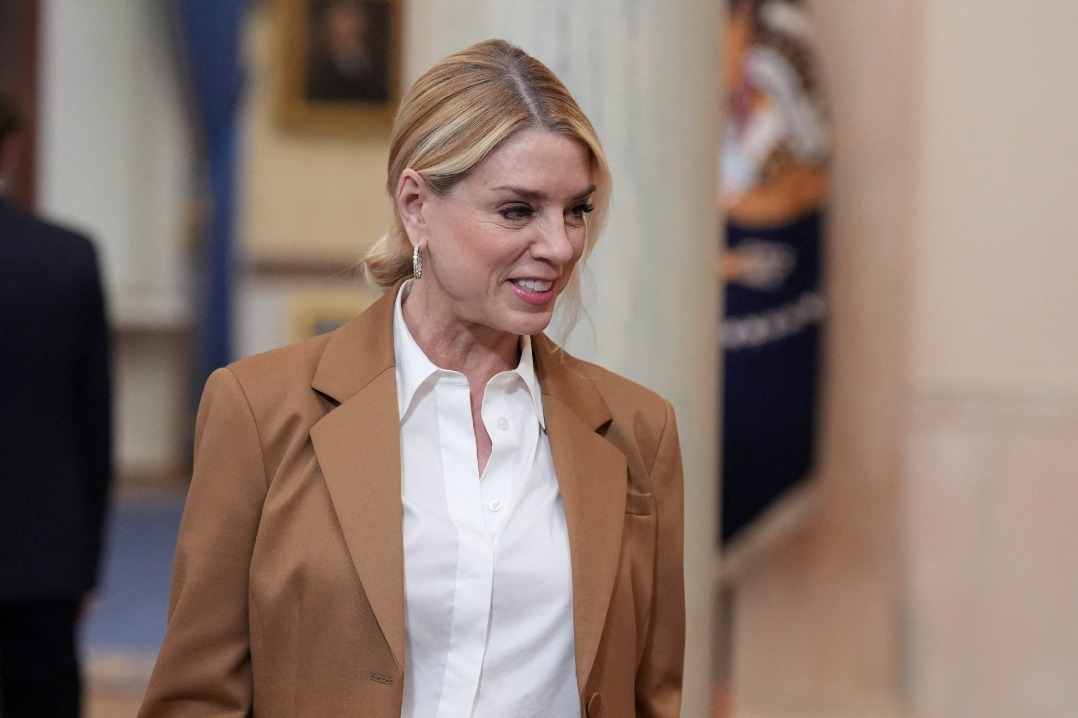
    The Justice Department, under Attorney General Pam Bondi, has vehemently denied these accusations, stating that ‘NOTHING has been deleted’ and that documents were only withheld if they were ‘duplicates, privileged, or part of an ongoing federal investigation.’ The department maintains that some files contain ‘untrue and sensationalist claims against President Trump’ that lack credibility.

    This controversy follows reports from NPR and The New York Times indicating that three FBI witness interviews totaling over 50 pages appear to be missing from the publicly available Epstein documentation. These interviews were conducted in 2019 as part of the investigation into Ghislaine Maxwell, Epstein’s accomplice who was convicted of sex trafficking in 2022.

    The White House has responded through spokeswoman Abigail Jackson, who emphasized that President Trump has ‘done more for Epstein’s victims than anyone before him’ by releasing thousands of pages of documents, cooperating with Congressional subpoenas, and signing the Epstein Files Transparency Act.

    Historical context reveals that Trump and Epstein maintained a social relationship from the late 1980s through the following decade, with Trump describing Epstein in a 2002 interview as a ‘terrific guy’ who ‘likes beautiful women… many of them on the younger side.’ The two reportedly fell out in the early 2000s, prior to Epstein’s first arrest.

    The released documents include emails from Epstein to Maxwell in 2011 suggesting Trump’s presence with an alleged victim, though the White House has identified this individual as the late Virginia Giuffre, who previously stated Trump was not involved in any wrongdoing.

    Garcia has formally demanded full disclosure of all withheld materials, accusing the Trump administration of orchestrating ‘the largest government cover-up in modern history.’ The Justice Department has committed to reviewing whether any files were improperly withheld while simultaneously accusing Democrats of ‘manufacturing outrage from their radical anti-Trump base.’

  • Danish prime minister calls a parliamentary election on March 24

    Danish prime minister calls a parliamentary election on March 24

    COPENHAGEN, Denmark — In a significant political development, Danish Prime Minister Mette Frederiksen declared on Thursday that the Scandinavian nation will conduct parliamentary elections on March 24. This electoral process will determine the composition of the Folketing, Denmark’s parliamentary body, for the subsequent four-year legislative term.

    The Danish parliamentary system comprises 179 seats, with 175 allocated to representatives from mainland Denmark and two seats each reserved for lawmakers from the kingdom’s semi-autonomous territories of Greenland and the Faroe Islands. While Danish law mandates general elections at minimum four-year intervals, the Prime Minister retains constitutional authority to call early elections at their discretion.

    The upcoming vote follows the previous general election held on November 1, 2022, which produced an unusual cross-spectrum governing coalition. Frederiksen, a center-left Social Democrat who has held the premiership since June 2019, currently leads a tripartite government comprising her Social Democratic party, the right-leaning Liberal Party led by Defense Minister Troels Lund Poulsen, and the centrist Moderate party headed by Foreign Minister Lars Løkke Rasmussen, a former prime minister.

    This political arrangement represents a rare coalition bridging traditional left-right ideological divisions in Danish politics. The March election will test the durability of this unconventional governing alliance and determine Denmark’s political direction for the coming term.

  • Human rights situation in Colombia is backsliding, UN warns as nation heads into elections

    Human rights situation in Colombia is backsliding, UN warns as nation heads into elections

    The United Nations has issued a stark warning that Colombia faces a dangerous regression to pre-peace accord human rights conditions, potentially undermining both national security and upcoming electoral processes. In its annual assessment released Thursday, the UN High Commissioner for Human Rights documented alarming escalations across multiple conflict indicators throughout 2025.

    Rural communities have become battlegrounds for armed factions and drug trafficking organizations vying for territories vacated by the Revolutionary Armed Forces of Colombia (FARC) following their historic 2016 disarmament. The statistical evidence reveals a disturbing trend: forced displacements surged by 85% to approximately 94,000 citizens, while murders targeting human rights defenders increased by 9%. Simultaneously, illegal armed groups imposed 12% more lockdowns—coercive measures that restrict civilian movement, prohibit farming activities, and force closures of educational institutions and businesses.

    Scott Campbell, the UN’s Colombia representative, characterized the report as “an early warning” highlighting numerous indicators demanding immediate attention to prevent further deterioration. While current violence levels haven’t reached the peak conflict era’s annual displacement of 300,000 people, the assessment emphasizes that governmental protections remain insufficient.

    A particularly insidious development involves rebel groups leveraging social media platforms to forcibly recruit minors. Although the UN verified 150 such cases in 2025, officials acknowledge significant underreporting due to families’ legitimate fears of retaliation.

    The administration of President Gustavo Petro—a former guerrilla member who pioneered “total peace” negotiations with remaining insurgent groups—has struggled to translate ceasefires into enhanced civilian protection. The report notes these diplomatic efforts have frequently failed to reduce attacks against non-combatants.

    Electoral security emerges as a critical concern, with documented attacks against 126 political leaders and 18 assassinations in the past year. The assassination of conservative presidential candidate Miguel Uribe in Bogotá—the first such incident in three decades—exemplifies the deteriorating security environment for democratic participation.

    With congressional elections scheduled for March 8 and presidential voting in May, the UN urges both current and future administrations to fully implement the 2016 peace agreement’s outstanding provisions. These include establishing agrarian conflict resolution mechanisms and developing sustainable alternative livelihoods to coca cultivation. Campbell emphasized that the existing peace accord provides a definitive “road map” toward achieving lasting stability and human rights protection.

  • China Coast Guard drives away Philippine vessels illegally intruding into Huangyan Island waters

    China Coast Guard drives away Philippine vessels illegally intruding into Huangyan Island waters

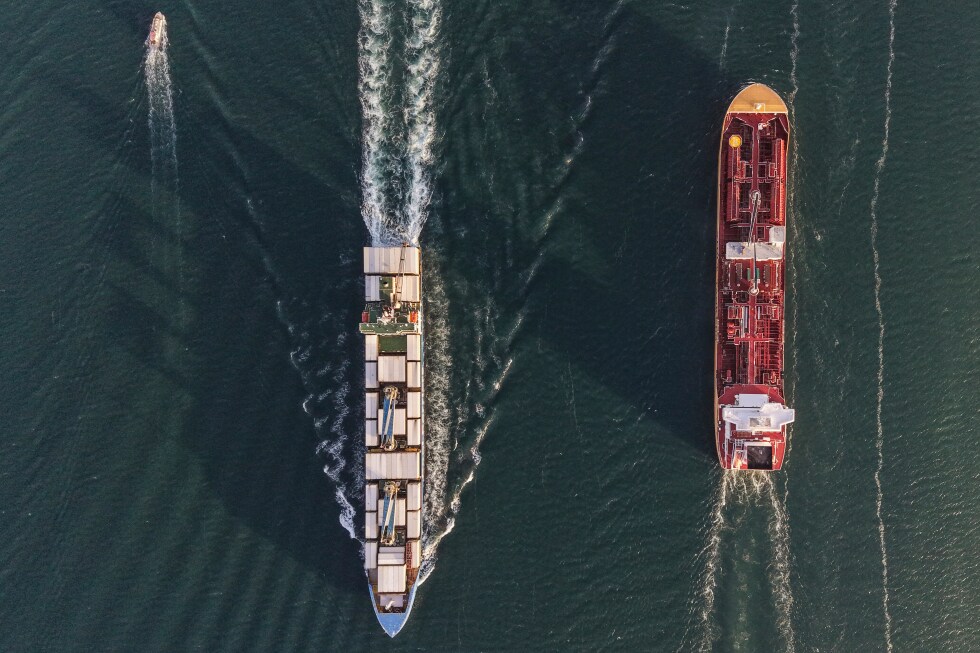
    In a recent maritime incident near Huangyan Island, Chinese Coast Guard vessels implemented lawful enforcement measures against Philippine ships that had entered contested waters. The encounter occurred on February 21, 2026, when multiple Philippine vessels gathered and crossed into what China claims as its territorial waters in the South China Sea.

    According to official reports, the Philippine ships engaged in photographing Chinese vessels and executing dangerous navigation maneuvers that involved crossing the paths of patrolling CCG ships. The Philippine Coast Guard vessel 4409 was additionally observed maintaining presence at a distance from the main engagement.

    The China Coast Guard responded with repeated verbal warnings before escalating to regulatory actions. These measures included targeted water cannon sprays and tactical navigation control operations that ultimately compelled the Philippine vessels to depart the area.

    Chinese authorities emphasized that their response demonstrated appropriate restraint and full compliance with international legal standards. The CCG’s on-duty fleet characterized the Philippine actions as a staged performance under the guise of escort and rights protection missions, noting that these activities occurred despite challenging weather conditions and increased maritime accident risks in the region.

    China reaffirmed its commitment to fulfilling maritime rescue responsibilities while maintaining an uncompromising position regarding territorial sovereignty. The incident highlights ongoing tensions in the strategically significant South China Sea waterways where multiple nations maintain competing territorial claims.

  • US seeks indefinite nuclear deal with Iran: report

    US seeks indefinite nuclear deal with Iran: report

    WASHINGTON – The United States is pushing for a nuclear agreement with Iran that would impose permanent restrictions on Tehran’s nuclear activities, according to a report by Axios. Steve Witkoff, the US president’s special envoy, articulated this position at a private gathering in Washington, D.C., stating the administration’s foundational premise that “there is no sunset provision” in any future deal.

    Witkoff emphasized that regardless of whether an agreement is reached, the expectation remains that Iran must maintain compliant behavior indefinitely. The current negotiations are reportedly centered on two critical issues: Iran’s uranium enrichment capabilities and the disposition of its existing stockpile of enriched uranium.

    While discussions currently focus on nuclear matters, the White House intends to pursue subsequent negotiations addressing Iran’s ballistic missile program and its support for proxy militias throughout the Middle East should an initial nuclear accord be achieved.

    This stance represents a significant departure from the 2015 Joint Comprehensive Plan of Action (JCPOA) negotiated during the Obama administration, which included expiration dates for most nuclear restrictions between 8 and 25 years after implementation. President Trump withdrew from that agreement in 2018.

    According to officials familiar with the matter, the administration might consider allowing limited “token” enrichment in Iran if Tehran provides verifiable assurances that such activities would not contribute to nuclear weapons development. Mediators including Oman, Qatar, Egypt, and Turkiye are reportedly applying substantial pressure on Iran to reach an agreement with the United States that would avert military conflict.

    The diplomatic efforts continue with a new round of US-Iran talks scheduled for Thursday in Geneva, where uranium enrichment levels and sanctions relief are expected to dominate the agenda. The negotiations occur against a backdrop of heightened military preparedness, with the US having deployed significant forces to the region. President Trump recently warned that while he prefers a diplomatic solution, failure to reach an agreement would result in “a very bad day” for Iran, alluding to potential military action.

  • US and Iran begin talks seen as crucial to prevent conflict

    US and Iran begin talks seen as crucial to prevent conflict

    GENEVA – Critical indirect negotiations between the United States and Iran have entered a third round in Geneva, facilitated by Omani diplomatic channels, as both nations demonstrate what mediators describe as “unprecedented openness to new and creative ideas” despite escalating military posturing.

    Omani Foreign Minister Badr Albusaidi, serving as primary mediator in the talks held at Oman’s ambassador’s residence, reported constructive engagement from both delegations. The U.S. contingent, led by Special Envoy Steve Witkoff and Presidential Advisor Jared Kushner, faces Iranian officials headed by Foreign Minister Abbas Araghchi in discussions aimed at preventing open conflict.

    The negotiations unfold against the backdrop of the largest U.S. military deployment in the Middle East since the 2003 invasion of Iraq, including two aircraft carrier groups and thousands of troops that President Trump has characterized as an “armada.” This show of force coincides with explicit threats from Trump regarding potential limited strikes on Iranian nuclear facilities and Revolutionary Guard assets if diplomatic efforts fail.

    Iranian officials have maintained their longstanding position against nuclear weapons development, with Araghchi publicly affirming that Iran would “under no circumstances ever develop a nuclear weapon” while expressing optimism for an “historic opportunity to strike an unprecedented agreement.”

    Substantive discussion points reportedly include potential establishment of a regional uranium enrichment consortium and disposition of Iran’s existing stockpile of approximately 400kg of highly enriched uranium. In exchange, Tehran seeks relief from crippling economic sanctions that have devastated its economy.

    Significant obstacles remain, however, as Iran continues to reject limitations on its ballistic missile program or cessation of support for regional proxy groups comprising what Tehran terms the “Axis of Resistance” – including Hamas, Hezbollah, and Yemen’s Houthi rebels.

    The political landscape is further complicated by Israeli Prime Minister Benjamin Netanyahu’s opposition to any agreement excluding missile and proxy limitations, while regional U.S. allies express concerns about potential escalation into broader conflict. Congressional leaders have received classified briefings on the situation, with Senate Minority Leader Chuck Schumer acknowledging the seriousness of the situation and emphasizing the administration’s need to “make its case to the American people.”

    Military analysts note the considerable risks associated with strikes against Iranian targets, potentially drawing the U.S. into prolonged engagement, despite Trump’s assertions that any conflict would be “easily won.” Iran has vowed to retaliate against any attack by targeting U.S. military assets throughout the Middle East and Israel.

    The negotiations represent the most significant diplomatic engagement between the two nations since U.S. airstrikes destroyed Iranian nuclear facilities eight months ago during the Israel-Iran conflict, after which Iran claims to have halted enrichment activities though international inspectors have been denied access to verify these claims.

  • Iran-US talks begin in push to avert war

    Iran-US talks begin in push to avert war

    Diplomatic efforts to prevent armed conflict between the United States and Iran commenced Thursday in Geneva through Omani mediation, marking a critical juncture following the largest American military mobilization in the Middle East in decades. The negotiations unfold against a backdrop of heightened tensions, with former President Donald Trump having issued a 15-day ultimatum to Tehran just last week.

    The discussions, held under tight security at the Omani ambassador’s residence, proceeded despite recent disruptions from Iranian exile protests. Oman’s Foreign Minister Badr Albusaidi characterized the dialogue by noting an “unprecedented openness to new and creative ideas and solutions” from both delegations.

    A fundamental divergence in negotiation priorities emerged immediately. Iranian President Masoud Pezeshkian reiterated the nation’s peaceful nuclear intentions, stating, “Our Supreme Leader has already stated that we will not have nuclear weapons at all.” Conversely, the US stance, articulated by officials like Secretary of State Marco Rubio, demands that talks must comprehensively address Iran’s ballistic missile program and its regional support for militant groups, which he labeled “a big, big problem.”

    The diplomatic push occurs alongside significant military posturing. The USS Gerald R. Ford, the world’s largest aircraft carrier, has been deployed to the Mediterranean, underscoring the serious threat of force. This tension is further amplified by recent domestic turmoil within Iran, where a severe crackdown on widespread protests has resulted in significant casualties according to human rights organizations.

    While Iranian Foreign Minister Abbas Araghchi hailed the talks as “a historic opportunity,” the shadow of past failures looms large. A previous negotiation round collapsed following Israeli airstrikes on Iranian nuclear sites. The current dialogue represents a fragile attempt to bridge deep-seated mistrust and conflicting demands, with the alternative being a potentially devastating regional war.